
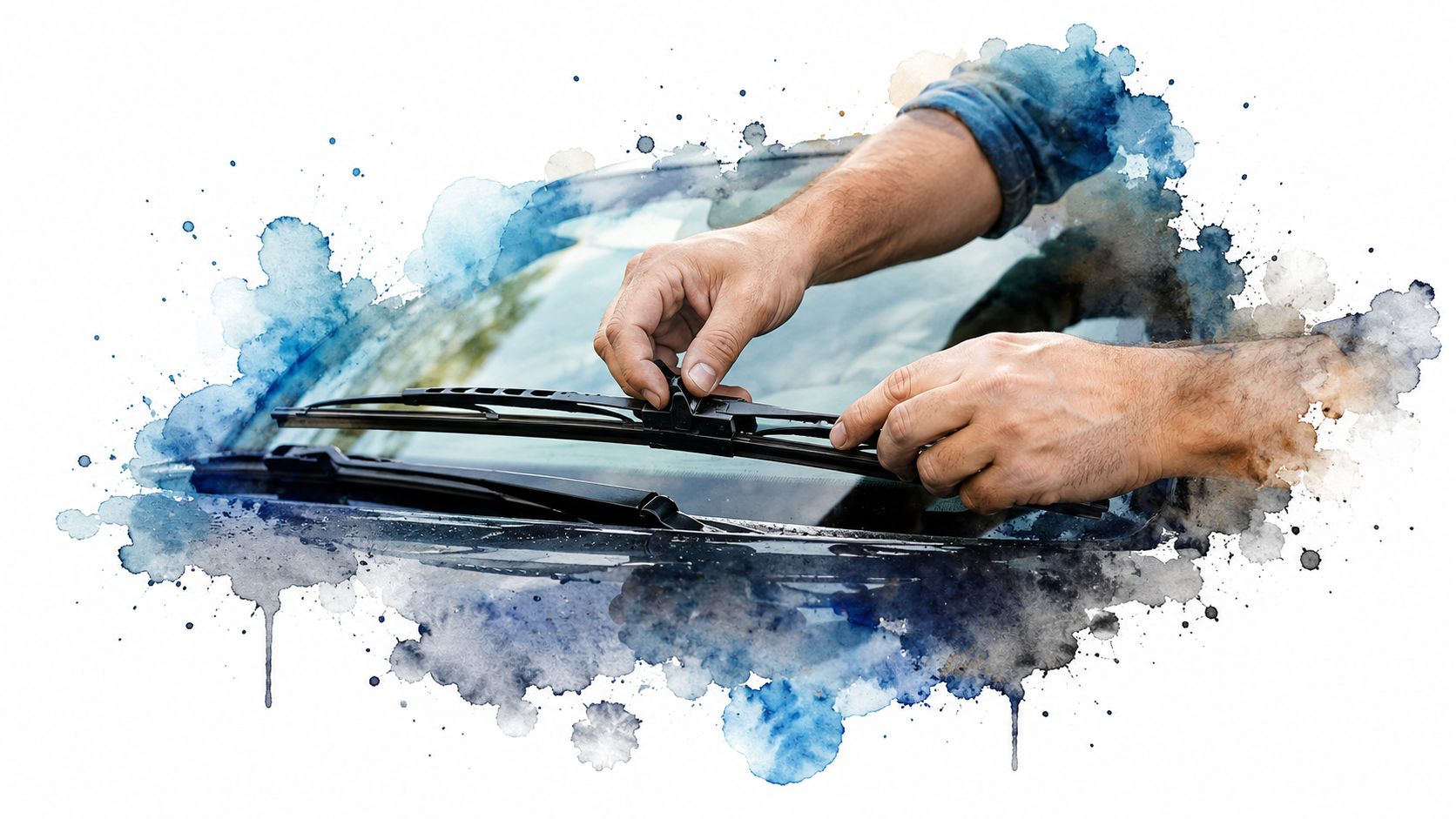
Last week, a new driver in Georgia gets caught in a sudden rainstorm, the kind that turns headlights into glowing streaks and lane lines into guesses. The wipers start smearing instead of clearing, and every swipe makes the windshield harder to read. That's the moment to realize a windshield wiper replacement guide isn't just about car upkeep, it's about being able to see the road you're trying to learn.
A good set of wipers turns a stressful drive into a manageable one. The replacement itself is usually a short, repeatable task, park safely, lift the arm, release the old blade, slide the new one into the J-hook or clip until it clicks, then test it on wet glass for streaks or skipping, and major automotive guides describe it as a job that typically takes only a few minutes to finish (Fleetio's windshield wiper guide). That matters for new drivers because confidence starts with small wins, especially when the weather changes fast.
If glare is part of the problem too, a useful companion resource is reduce glare with Essilor lenses, since seeing clearly is a full-vision issue, not just a wiper issue. For rainy conditions, the safest habit is to prepare before you're forced to react, and that idea shows up again in this rain-driving safety guide.
Why Clear Vision Is Your Most Important Safety Feature
A driver can know the route, trust the GPS, and still lose control of the situation if the windshield turns into a gray blur. In Georgia, that can happen quickly when rain hits after a dry stretch and road film lifts off the pavement. When the blades smear, squeak, or skip, the issue is not cosmetic. You lose the ability to judge lanes, brake lights, and distance with confidence.
Practical rule: if the wipers are not clearing the glass cleanly, do not treat it like a minor annoyance.
That simple rule is why wiper replacement teaches more than maintenance. It builds a habit that every new driver needs, checking the car before the weather tests you. A driver who learns to notice poor visibility early is already practicing the same judgment Georgia road safety expectations rely on, staying alert, keeping control, and avoiding preventable risks before they become a problem. For rainy conditions, a helpful companion is safe driving habits in the rain, because clear vision and safe decisions go together.
The first repair step is not the blade itself, it is the mindset. A new driver who replaces worn wipers learns to treat small warning signs seriously, the same way a driving instructor would want them to respond to a dim headlight or a loose mirror. That habit matters because clear glass gives you time to read the road, and time is what helps calm nerves during bad weather.
If glare is part of the problem too, another useful companion resource is reduce glare with Essilor lenses, since seeing clearly is a full-vision issue, not just a wiper issue. Learning to keep your car ready makes the whole driving routine feel more predictable, and that confidence starts with tasks that are easy to ignore until the weather changes.
Choosing the Right Wipers for Your Car
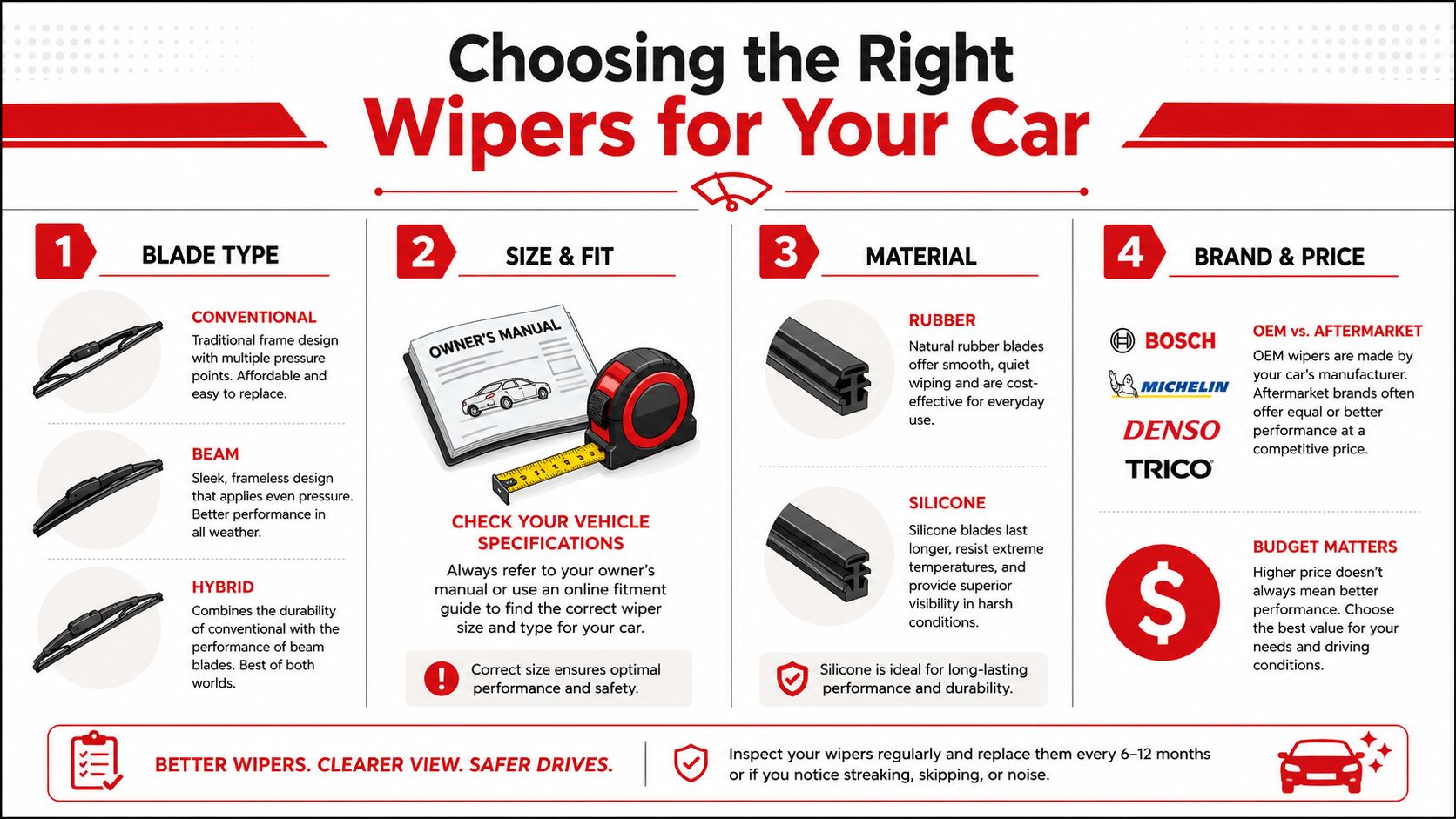
The first mistake is buying blades before you know what fits. A windshield wiper replacement guide only helps once it shows you how to match the blade to the car, not just to the package on the shelf. For a new driver in Georgia, that kind of careful checking matters because car readiness is part of the same responsibility you are taught before a road test, and clear visibility supports the safe habits expected on the road. Blade length is the place to start, since sizes vary by model and the driver-side blade is often longer than the passenger-side blade (Allstate's wiper blade replacement guide).
Start With the size, then confirm the connector
Measure the old blade or check the owner's manual first. Some replacement packages include several adapters, but those adapters still have to match the arm type correctly, or the blade will not sit the way it should. That is why the box alone is not enough.
Georgia driver education often stresses careful vehicle checks before you head out, and this is one of those small tasks that shows why. The connector matters just as much as the blade length, because a good blade that attaches badly can leave streaks or sit crooked, which is no help in rain. If you are choosing parts for the first time, bring the old blade with you or compare the attachment point before you leave the store.
Many guides explain the common J-hook well, but drivers also run into bayonet and pin-style arms, and manufacturers do vary, so the manual or the connector itself should guide the choice (AutomotoFlux). That is why a blade that looks close enough on the shelf can still be wrong for your car.
What to look for before you pay
A simple checklist keeps the purchase clear:
- Blade length: Match each side separately, because the two sides are not always the same.
- Connector style: Confirm whether your car uses a J-hook, bayonet, or pin-style arm.
- Package adapters: Make sure the included adapter matches the arm, not just the blade brand.
- Owner's manual: Use it when the old blade is too worn to read clearly.
Good fit beats guesswork every time. A blade that is close enough can still chatter, skip, or sit crooked.
If you want to narrow things down further, consider how and where you drive most often. Heavy rain, road grit, and frequent use make fit and contact more important than flashy packaging. The right choice is the one that attaches cleanly, sits straight, and clears the windshield edge to edge.
Your Step-by-Step Wiper Replacement Process
Before you touch the blades, park on level ground, shift into park, and set the emergency brake. That steady setup matters because a wiper arm can spring back hard if it slips from your hand, and a cracked windshield turns a simple lesson into an expensive problem. For a new Georgia driver, this is the same careful habit you need for pre-drive checks, the kind of methodical routine that also supports safe driving habits for how to fix a flat tire.
Remove the old blade cleanly
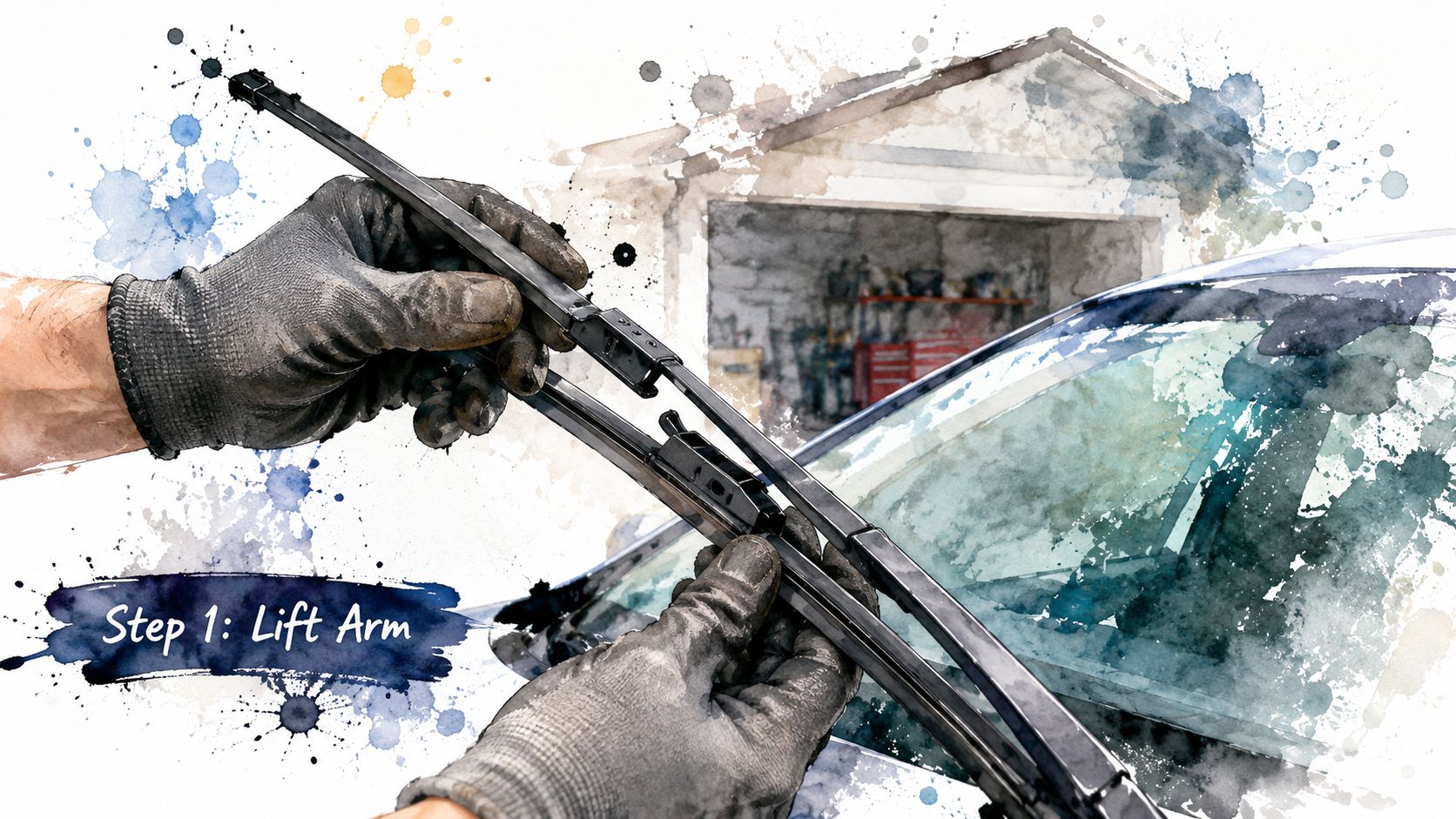
Lift one wiper arm away from the windshield and keep a firm hold on it. Find the tab or release button where the blade connects to the arm, then press it so the old blade can slide free. Keeping the second blade in place gives you a reference point, which helps if the connector shape or blade direction starts to feel confusing.
That matters for beginners because the parts only fit one way, even when the new blade looks close to the old one. If both blades are off at once, it is easy to forget which side faced which direction or how the connector sat in the arm. Work with one side at a time, just like you would follow one step at a time during a driver training checklist.
Install the new blade and test the lock
Slide the replacement blade or adapter into the arm until it clicks or snaps into place. That sound is your sign that the lock has engaged, but it is still smart to give the connection a gentle tug to make sure it stays put. Check that the blade sits straight before you lower the arm back to the glass.
Lower the arm slowly and let it settle on its own. If you let go too quickly, the metal arm can strike the windshield and damage it, which is why patient hands matter here just as much as they do during a road test. Then start the wipers on wet glass and watch the sweep from the driver's seat, looking for streaks, skipping, or chatter.
The goal is not just to get the blade on the car. It is to build the same calm, repeatable habit that helps Georgia drivers keep their cars ready for the road and their vision clear in bad weather.
Maintenance Tips and Quick Roadside Fixes
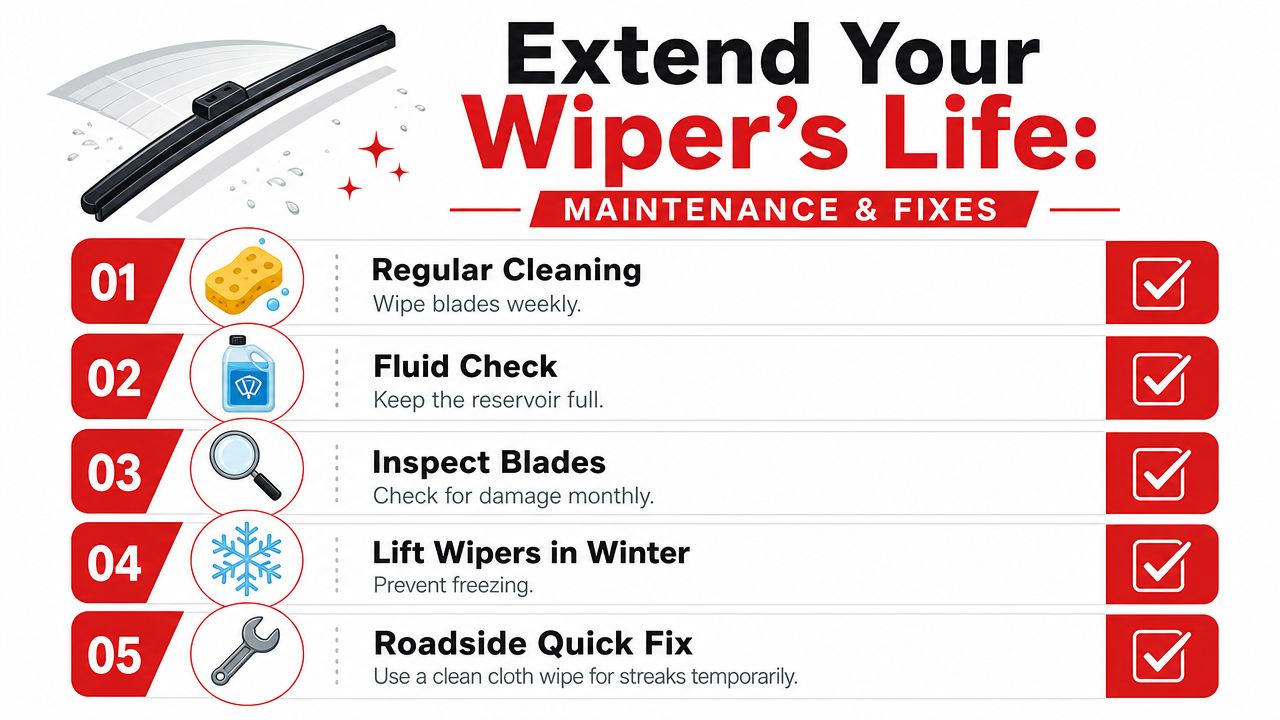
Wiper blades don't fail all at once. They usually give warning signs first, like streaking, squeaking, chattering, or visible cracks in the rubber, and replacement guidance consistently points drivers toward every 6 to 12 months for most vehicles, with some lighter-use situations stretching to 1 to 2 years (Mobile Car Care's replacement guide). Harsh sun, heat, snow, and frequent use break the rubber down faster.
Keep them working longer
Simple habits help more than most drivers expect. Wipe the rubber edge clean, keep washer fluid topped up, inspect for splits or hard edges, and don't ignore chatter on dry glass. If you live where winter freezing is common, lifting the blades when parked can prevent them from sticking to the windshield.
Handle a bad moment without panicking
If a storm catches you and the blades are already failing, a quick clean cloth wipe across the rubber edge can remove grit long enough to improve contact for a short drive to safety. That's not a repair, just a temporary visibility boost. For the longer drive, plan to stop soon and replace the blades properly.
Short rule for the road: if visibility is still poor after a quick cleanup, don't keep pushing through the weather.
A flat tire and a bad wiper situation can feel different, but the mindset is similar, get to a safe spot, solve the immediate problem, then deal with the root cause. If that kind of practical roadside confidence matters to you, the same calm approach is useful in this flat tire fix guide.
From Clear Vision to a Clear Path to Your License
A driver who can see clearly is a driver who can make better choices early. That habit matters in Georgia, where new drivers are expected to show steady judgment, good timing, and respect for changing road conditions. Replacing your wipers fits that same pattern of care. It is a small maintenance job, but it trains you to slow down, check your setup, and handle the car with patience instead of guessing.
That mindset carries over to every part of driving practice. A student who checks visibility, follows a system, and avoids rushing a small task is building the same discipline that helps during a road test and in everyday traffic. For a broader understanding of stopping space and reaction room, understanding the Assured Clear Distance Rule reinforces a simple point, you need enough space to respond to what is ahead.
Build the habit that supports every mile
If you are a Georgia teen working through Joshua's Law, a parent helping a new driver, or an adult brushing up on basic car care, clean visibility belongs beside mirror checks and signal use. A vehicle inspection routine is a good place to keep that habit, and a practical checklist can help you remember the small details before they turn into larger problems, as shown in this vehicle inspection checklist.
Driver training works best when the classroom lesson matches what happens in the car. Clear instructions, practice behind the wheel, and steady preparation for the road test give new drivers a calmer way to build confidence. The same is true with maintenance. When you learn to treat even a simple task like wiper replacement with care, you build the kind of judgment that helps you stay ready on Georgia roads.