You grip the wheel a little tighter the first time Atlanta traffic starts moving around you all at once. A car cuts across two lanes toward an exit. Brake lights flicker ahead. A delivery van blocks part of your view. You are trying to read signs, hold your lane, and remember every rule you studied.
That feeling is normal.
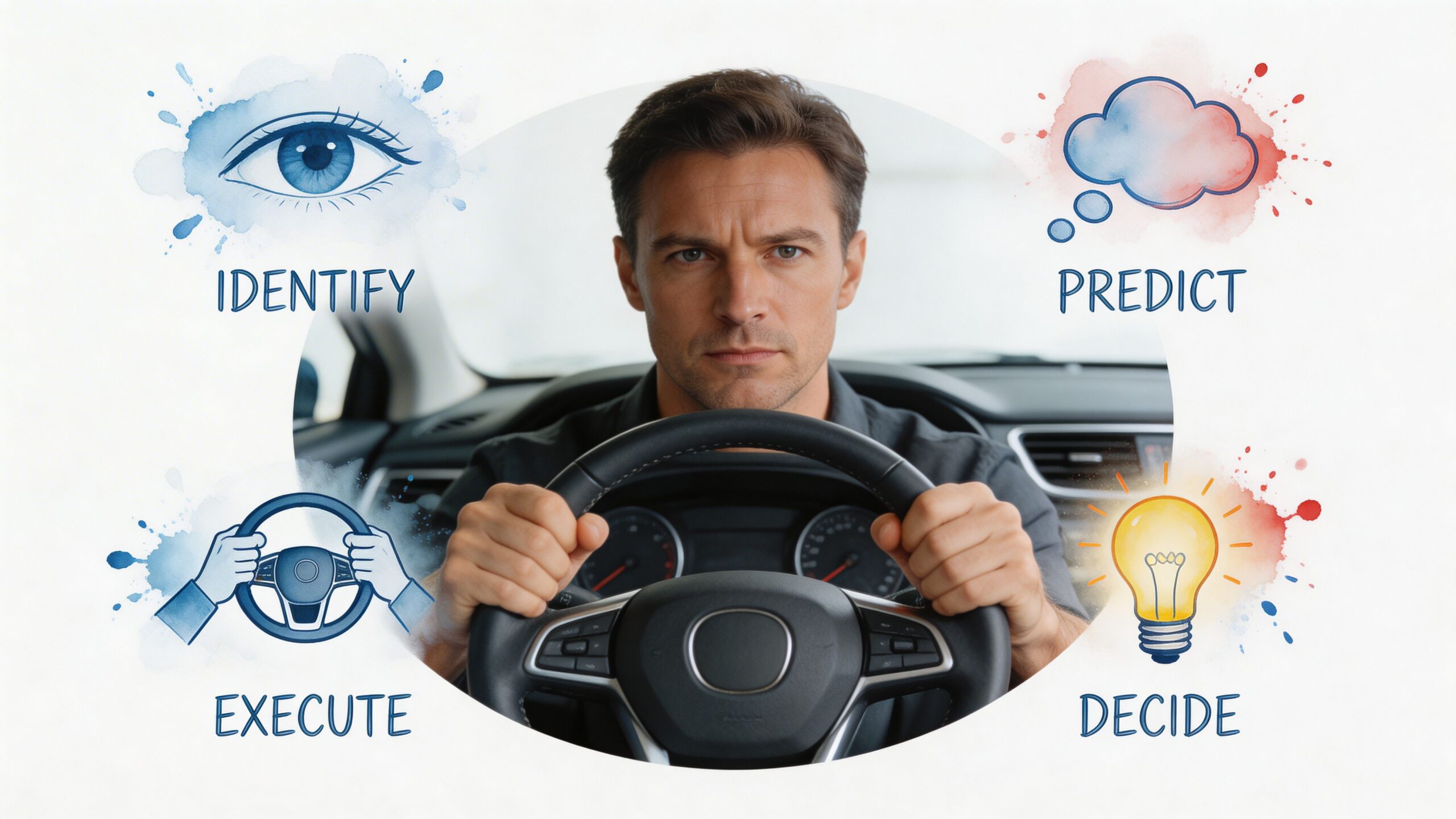
New drivers often think safe driving is about quick hands. It is not. Safe driving starts with a repeatable way of thinking. If you have ever wondered what is the IPDE process, the short answer is this. It is a mental checklist that helps you see trouble early and respond before a small risk turns into a serious problem.
For teen drivers in Georgia, this matters far beyond the classroom. It helps during practice drives, on the road test, and on crowded roads around metro Atlanta. This also provides a calm system to fall back on when the road feels busy.
Your First Drive on the Atlanta Perimeter
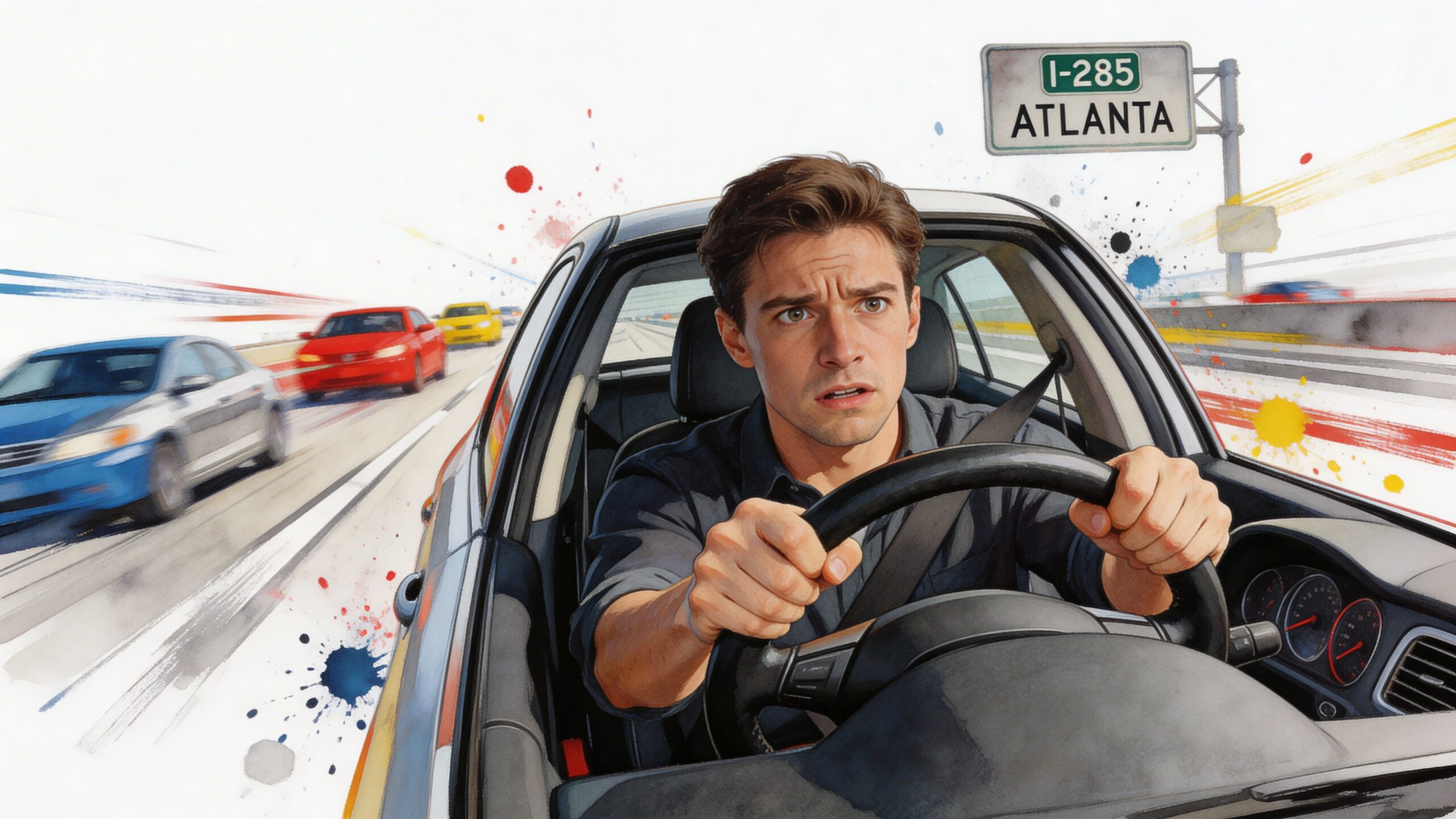
Your first drive on I-285 can feel like too much at once. Cars move fast. Some drivers change lanes late. Others brake suddenly when traffic stacks up near an interchange. If you are new behind the wheel, your brain can lock onto one thing and miss three others.
That is where IPDE helps. Instead of reacting emotionally, you work a simple sequence in your head. You identify what matters, predict what could happen next, decide on the safest response, and execute that response smoothly.
A lot of beginners get confused because they think experienced drivers just “know” what to do. In reality, skilled drivers usually follow a process so often that it feels automatic. IPDE gives new drivers that same structure.
Consider a common Georgia moment. You are entering the Perimeter during heavy traffic. A pickup is beside you, a sedan ahead taps its brakes, and your merge lane is ending. Without a system, that scene feels chaotic. With IPDE, it becomes manageable. You look for open space, judge what other drivers are likely to do, choose whether to slow down or merge, and then carry out that choice without jerking the wheel.
Tip: Nervous drivers often stare straight ahead. Safer drivers keep their eyes moving and build a wider picture of the road.
That is why IPDE shows up so often in driver education. It turns stress into steps. For a new Georgia driver, that can be the difference between feeling overwhelmed and feeling prepared.
Deconstructing the IPDE Process
On a Georgia road test, the examiner is not only watching whether you stop, turn, and park. They are also watching how you think. IPDE gives that thinking a clear order: Identify, Predict, Decide, Execute.
It is a system for managing risk while the road keeps changing. A good driver does not wait for trouble to fully form. A good driver notices clues early, judges what may happen next, picks a safe response, and carries it out with control.
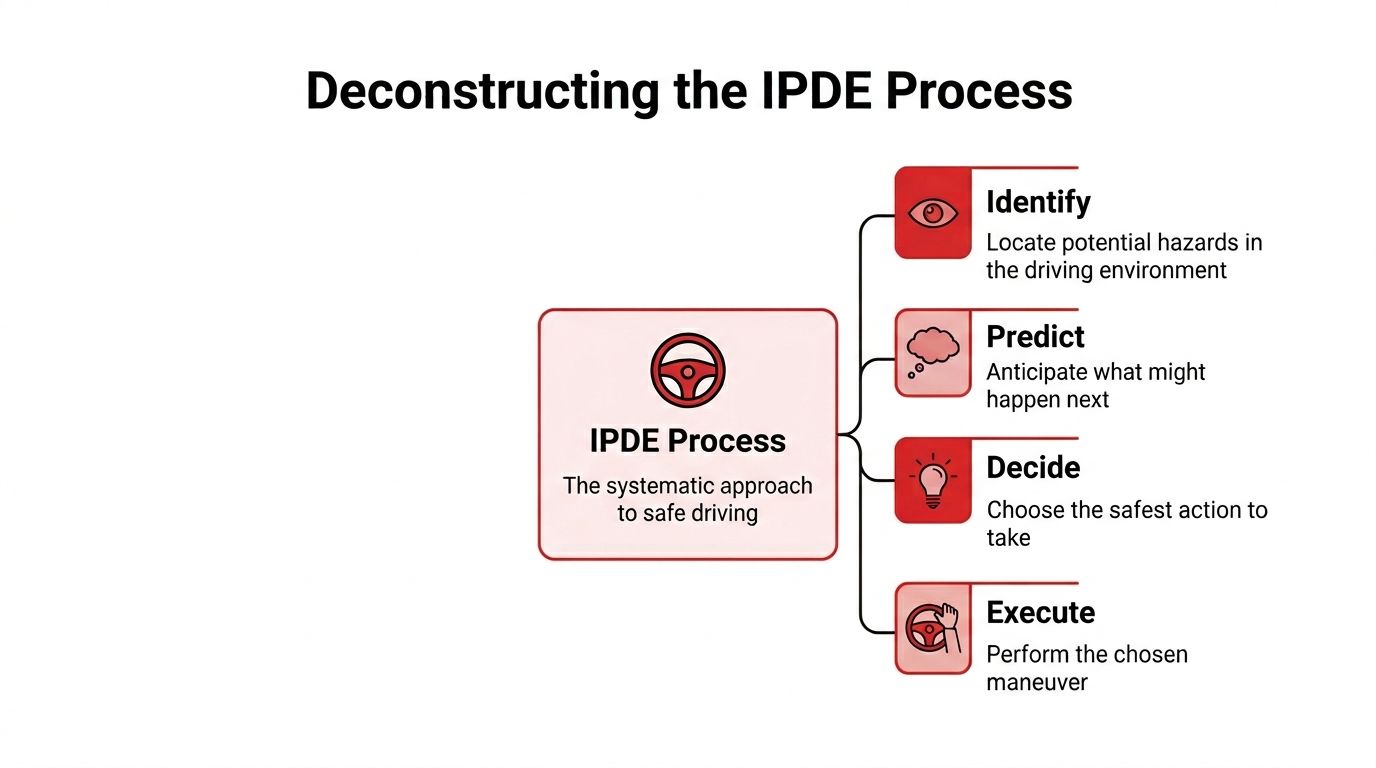
The four steps at a glance
| Step | Action |
|---|---|
| Identify | Notice hazards, signs, signals, lane changes, and traffic around you. |
| Predict | Judge what those hazards or road users may do next. |
| Decide | Choose the safest response early. |
| Execute | Perform that response smoothly with steering, braking, or speed control. |
Why this process matters
New drivers often believe safe driving is mostly about quick reflexes. Reflexes help, but timing starts much earlier than that. If you spot a hazard late, every choice after that gets harder.
That matters in Atlanta traffic. A car on I-285 may cut across two lanes to reach an exit. A pedestrian in Midtown may step off the curb while looking at a phone. A driver near a school zone may stop suddenly. IPDE gives you a way to sort those situations before they turn into panic.
That is also why IPDE shows up so often in Joshua's Law classes and behind the wheel training. It matches what instructors coach and what examiners want to see: awareness, judgment, and calm control. If you want the bigger safety mindset behind the system, A-1's guide to defensive driving habits for Georgia drivers connects IPDE to the choices you make every day in the car.
Where new drivers get mixed up
Students usually do not struggle with the letters. They struggle with what each step really means.
Identify means gathering facts from the road. You are checking mirrors, scanning ahead, and noticing what could affect your path. Brake lights three cars ahead matter. A bicyclist near the right edge matters. A green light that has been green for a long time may matter too.
Predict means asking a simple question: what is the most likely next move? A car drifting toward the lane line may merge. A ball near the street may mean a child is close by. Prediction is not about fear. It is about reading patterns.
Decide means choosing one safe plan soon enough to use it. Slow down. Cover the brake. Change lanes if space is open. Wait an extra second before turning left. Indecision is where many beginner mistakes start.
Execute means doing the plan smoothly. That sounds simple, but it takes practice. A rushed jerk of the wheel can create a new problem, especially on fast roads around Atlanta. In A-1 lesson packages, students repeat these moments until the response feels steady instead of rushed.
Key takeaway: IPDE works best when you start early. Early scanning gives you more time, more space, and simpler choices.
The Four Steps in Action on Georgia Roads
Your first weeks behind the wheel in metro Atlanta can feel like being asked to solve a puzzle while it keeps changing shape. A delivery van stops near the curb. A pedestrian edges toward the crosswalk. A driver on the Perimeter realizes too late that this is the exit they needed. IPDE gives you a repeatable way to sort that out fast, which is exactly why A-1 practices it in lesson packages and Joshua's Law classes.
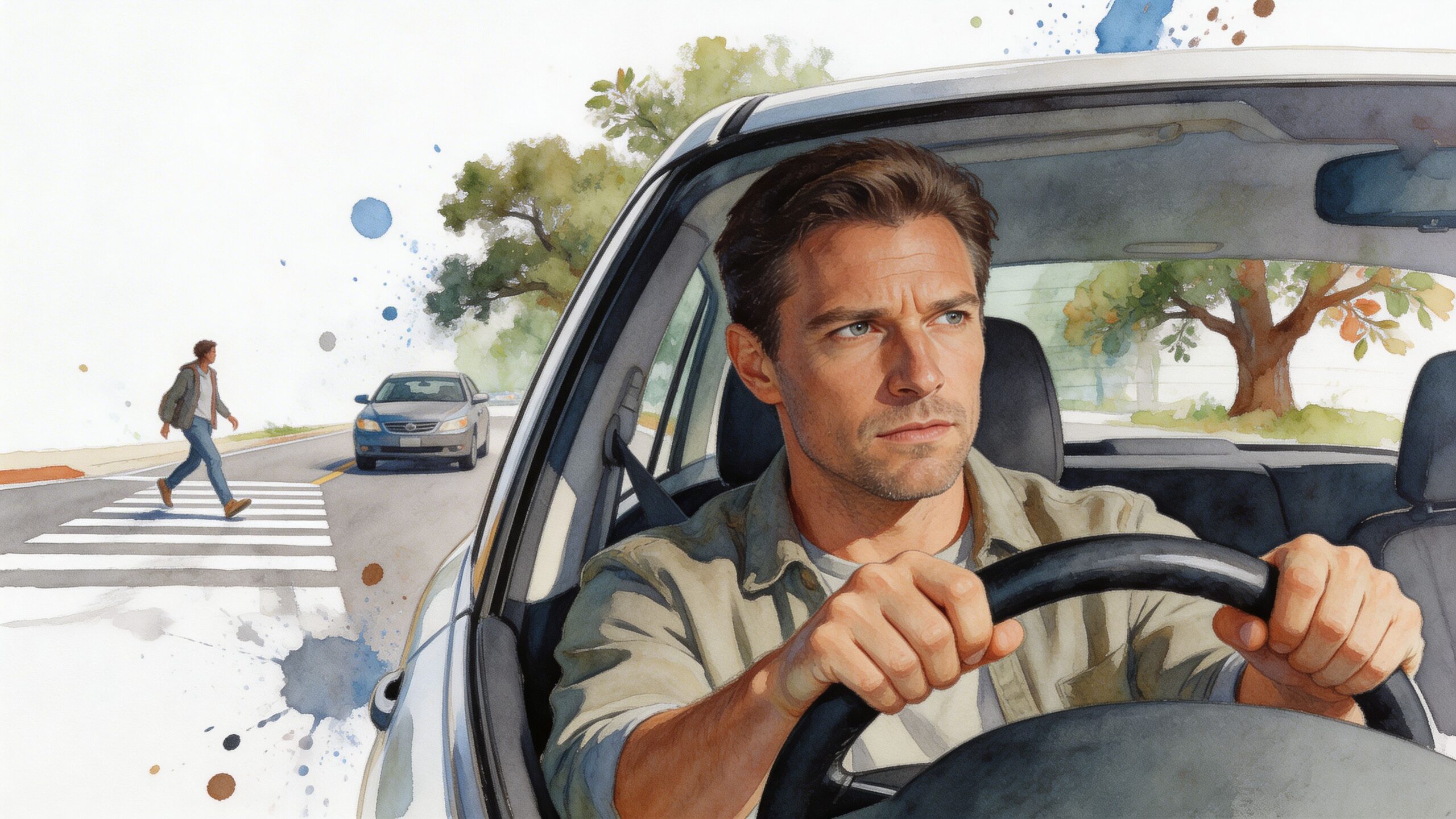
Identify what could affect you
Start by gathering the right clues.
Say you are driving near Centennial Olympic Park on a busy afternoon. You have tourists near the curb, a rideshare car slowing by a hotel entrance, and a bus taking up part of the next lane. A new driver may stare at the bumper ahead and miss the bigger picture. An alert driver scans farther out and notices which parts of the scene could change the path of the car.
On Buford Highway, that wider scan matters even more. You may spot a car waiting to turn left across traffic, brake lights several vehicles ahead, a person standing near a bus stop, or water sitting on the road after a storm. Each one changes how much space and time you really have.
A good way to remember Identify is this. You are building a map before you need it.
Watch for three categories at once:
- Road users: pedestrians, cyclists, motorcycles, scooters, buses, delivery vehicles
- Road conditions: standing water, construction barrels, potholes, faded lane markings
- Traffic flow: backups near exits, sudden merges, short yellow lights, aggressive lane changes
Students in Atlanta often get in trouble because their eyes stay too close to the hood. Wider vision gives you earlier warnings, and earlier warnings make every later step easier.
Predict what happens next
After you spot the clues, ask the question that keeps drivers out of trouble. What is the most likely next move?
You are nearing an exit around GA-400. A car in the next lane drifts toward the line while traffic starts stacking up. You cannot know with certainty what that driver will do, but the clues point to a possible last second merge. That prediction should change your readiness.
Neighborhood driving gives you another version of the same skill. You pass a parked SUV after school and notice a ball near the curb. The child is not visible yet. The hazard still exists. Good prediction fills in the missing piece before it appears.
This part confuses beginners because they think prediction means guessing wildly. It does not. It means reading patterns the way you read body language in a conversation. If a driver is braking late, edging over, or looking for a turn, their car is already telling you a story.
Your prediction might sound like this in your head:
- That SUV may stop hard.
- That pedestrian may step out.
- That pickup may merge without much room.
- Traffic may bunch up near the work zone.
As noted earlier, driver training programs use predictive scanning because looking ahead helps reduce surprise. On the road test and in everyday Atlanta traffic, fewer surprises usually mean calmer choices.
Decide on the safest response
A lot of teen drivers can see a problem but still wait too long to choose a plan. Then the car ends up doing something rushed.
Suppose you are on I-75 coming into a construction area. The lanes narrow, speeds vary, and a tractor-trailer is holding steady beside you. If you delay the decision, you may brake late or crowd the lane line. If you decide early, you give yourself room to act in a controlled way.
The best response may be simple:
- Slow early: create extra following distance before you enter the tight area
- Hold your lane: stay where you are if a lane change adds risk
- Shift lane position: give yourself a better cushion from a truck, barrier, or puddle
- Wait for a better gap: especially when turning left or merging into faster traffic
Patience wins a lot of Georgia driving situations. It also helps on the DDS exam, where examiners are watching whether you choose safe, reasonable actions instead of hurried ones. If you want a clearer picture of the test itself, A-1 breaks it down in this guide to what to expect on the Georgia road test.
Tip: If you are torn between two choices, choose the one that gives you more time and more space.
Here is a short visual explanation of hazard detection and response. Watch how early scanning changes the whole situation.
Execute without panic
Now you carry out the plan with your hands, feet, and timing.
A pedestrian is waiting near a crosswalk in Midtown. You have already identified the risk, predicted that they may enter, and decided to slow. Execution means easing off the gas, braking with steady pressure, and keeping the wheel quiet and controlled. You are still checking what is behind you, but you are not letting that pressure push you into a bad move.
The same principle applies on the Perimeter. If traffic compresses ahead, the goal is not to react dramatically. The goal is to reduce speed early, keep your lane position steady, and avoid creating a second problem with a sharp swerve.
Good execution usually has three traits:
- It matches the plan. You do not change your mind at the last second.
- It stays controlled. You avoid jerking the wheel, slamming the brakes, or darting into another lane unless there is no safer option.
- It protects your next move. The car stays balanced, so you still have choices if traffic changes again.
Rain makes this even more important on Georgia roads. Quick, harsh inputs can upset traction, especially on painted lane lines, metal plates, and slick intersections.
In A-1 lessons, students repeat these moments until the process starts to feel natural. That repetition matters. Joshua's Law gives new drivers the foundation, and guided practice turns the four letters into a habit they can use in real Atlanta traffic.
Using IPDE to Pass Your Georgia Road Test
The Georgia road test is not just a check of whether you can move a car. It also reflects how you think while driving. An examiner watches for signs that you notice hazards, manage space, and control the vehicle with purpose.
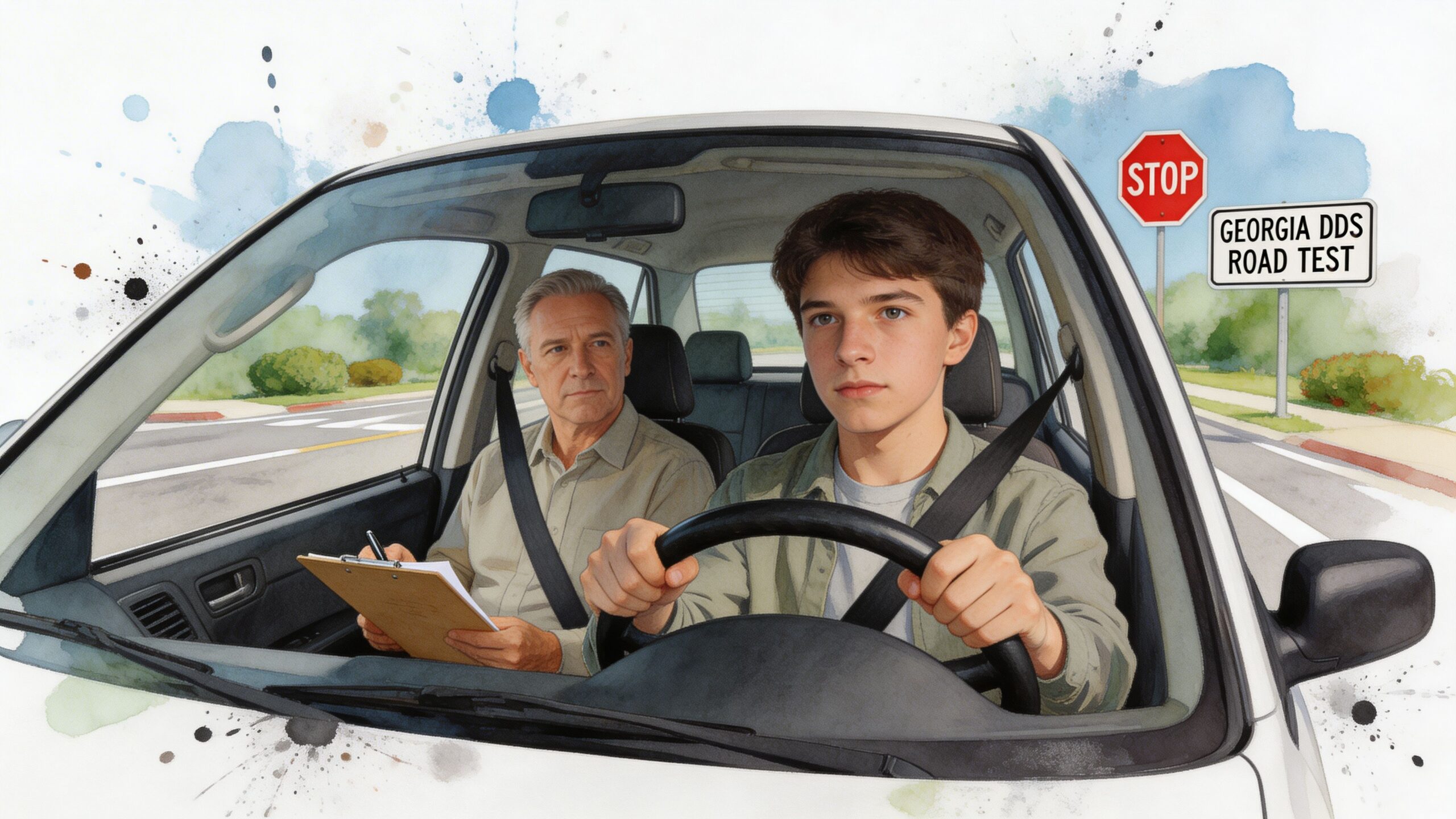
What examiners are really noticing
A lane change is a good example. The mechanical part is simple. Signal, check mirrors, check blind spot, move when clear. But underneath that maneuver is IPDE.
- Identify: you notice traffic around you, road markings, and lane position.
- Predict: you judge whether another driver may speed up or drift.
- Decide: you choose whether to change lanes now or wait.
- Execute: you make a smooth move without cutting too close.
The same idea shows up in following distance. If you tailgate during the test, you are showing weak prediction. If you rush a turn, you are showing weak decision-making. If you stop harshly, execution needs work.
Where students lose points
The mistakes are usually mental before they are physical.
A student may know how to do a three-point turn but fail to scan carefully before starting. Another may set up for parallel parking but rush because of nerves. IPDE slows your thinking in a good way. It helps you break one big task into smaller safe choices.
For a practical preview, this guide on https://a1drivingschools.com/georgia-road-test-what-to-expect/ walks through road test expectations in Georgia.
Road test reminder: Examiners want controlled driving. Smooth, observant, and deliberate usually scores better than fast and flashy.
A simple way to practice before test day
Before every maneuver, ask yourself four silent questions:
- What do I see?
- What might happen?
- What is my safest move?
- Can I do it smoothly right now?
That habit makes your driving look more polished because your thinking is more organized.
How A-1 Driving School Builds Your IPDE Reflexes
Reading about IPDE helps. Practicing it out loud with a trained instructor helps much more.
A student often understands the idea in the classroom but loses it once traffic starts moving. That is normal. IPDE becomes useful when you repeat it in real situations until it feels natural.
From concept to habit
One strong teaching method is commentary driving. The instructor talks through what is happening as the lesson unfolds.
You might hear prompts like these:
- Scan farther ahead: look beyond the car in front of you.
- Read that clue: the parked car’s brake lights just came on.
- Call the conflict: the pedestrian near the curb may cross.
- Choose early: decide now whether you will slow or hold position.
Those verbal cues train your eyes and your timing. Over time, students begin making the same observations on their own.
Why this matters for Georgia learners
This matters whether you are a teen in a Joshua’s Law program, an adult who wants more confidence, or a parent trying to help a new driver practice safely. Structured training gives you a place to make mistakes early, correct them, and try again.
Georgia families also look for flexible ways to complete driver education. Some students do better in person. Others prefer online coursework for the classroom portion and then build skill through private lessons and guided practice. For students comparing safety-focused course options, https://a1drivingschools.com/drivers-education/in-person-defensive-driving-course/ shows one example of structured instruction.
Support beyond the classroom
Behind-the-wheel coaching is where many drivers make the biggest leap. A worksheet cannot fully teach merge timing, turning judgment, or mirror habits. Road experience can.
That is also why lesson packages matter so much. One lesson can introduce the process. A series of lessons helps turn it into reflex. Students can also explore options such as Georgia road test support, online coursework, and the Georgia Driver’s Education Scholarship Grant Program if they need a more affordable path into training.
Common IPDE Mistakes and How to Avoid Them
Even strong students make predictable IPDE mistakes. The key is noticing them early.
The most common slip-ups
- Tunnel vision during Identify: You stare at the bumper ahead and miss side threats. Fix it by scanning in a pattern. Far ahead, mirrors, lane area, then back ahead.
- Guessing wildly during Predict: You assume every driver will do the worst thing possible. Fix it by using visible clues, not fear.
- Freezing during Decide: You spot the issue but delay too long. Fix it by choosing the option that gives you the most space.
- Overcorrecting during Execute: You brake too hard or jerk the wheel. Fix it by practicing smooth pressure and smaller steering inputs.
A simple drill that helps
On a quiet practice drive, say the steps softly to yourself.
“I identify the parked car, I predict a door could open, I decide to give extra space, I execute by easing left within my lane.”
That spoken rhythm can calm your nerves and sharpen your attention.
One more point matters for older teens and adults. Unsafe choices do not just affect a road test. Serious driving behavior can lead to legal trouble. If you want a plain-language example of how traffic behavior can cross into more severe allegations, this guide to reckless driving charges explains the kind of conduct courts examine.
Key takeaway: Most IPDE mistakes are not knowledge problems. They are habit problems, which means practice can fix them.
Beyond the Road Test The Lifelong Value of IPDE
Passing your test is a milestone. It is not the finish line. Its true value shows up months later when you drive at night, in rain, through heavy traffic, or with friends in the car and distractions all around you. A driver who uses a consistent thinking process is better prepared to stay calm and make cleaner choices.
That has practical value too. As noted in DriversEd’s discussion of the IPDE process and defensive driving, hard data varies, but mastering IPDE through certified defensive driving courses can be a factor in qualifying for ticket dismissal or insurance discounts in Georgia. The same source notes that A-1 Driving School has a 38-year history and has trained over 100,000 drivers, giving courts and insurance carriers a credible signal that a driver has pursued serious safety training.
IPDE also carries over into family responsibility. Once a teen driver becomes the person transporting younger siblings, safety habits expand beyond lane position and braking. If that stage is coming soon, these car seat safety guidelines are a useful companion resource for learning how to protect younger passengers correctly.
Safe driving is built one repeatable choice at a time. IPDE gives those choices a structure you can use for years.
If you want help turning IPDE into a real driving habit, A-1 Driving School offers Georgia driver’s education, Joshua’s Law courses, online class options, road test support, scholarship program information, and behind-the-wheel driving lesson packages for teens and adults across metro Atlanta.