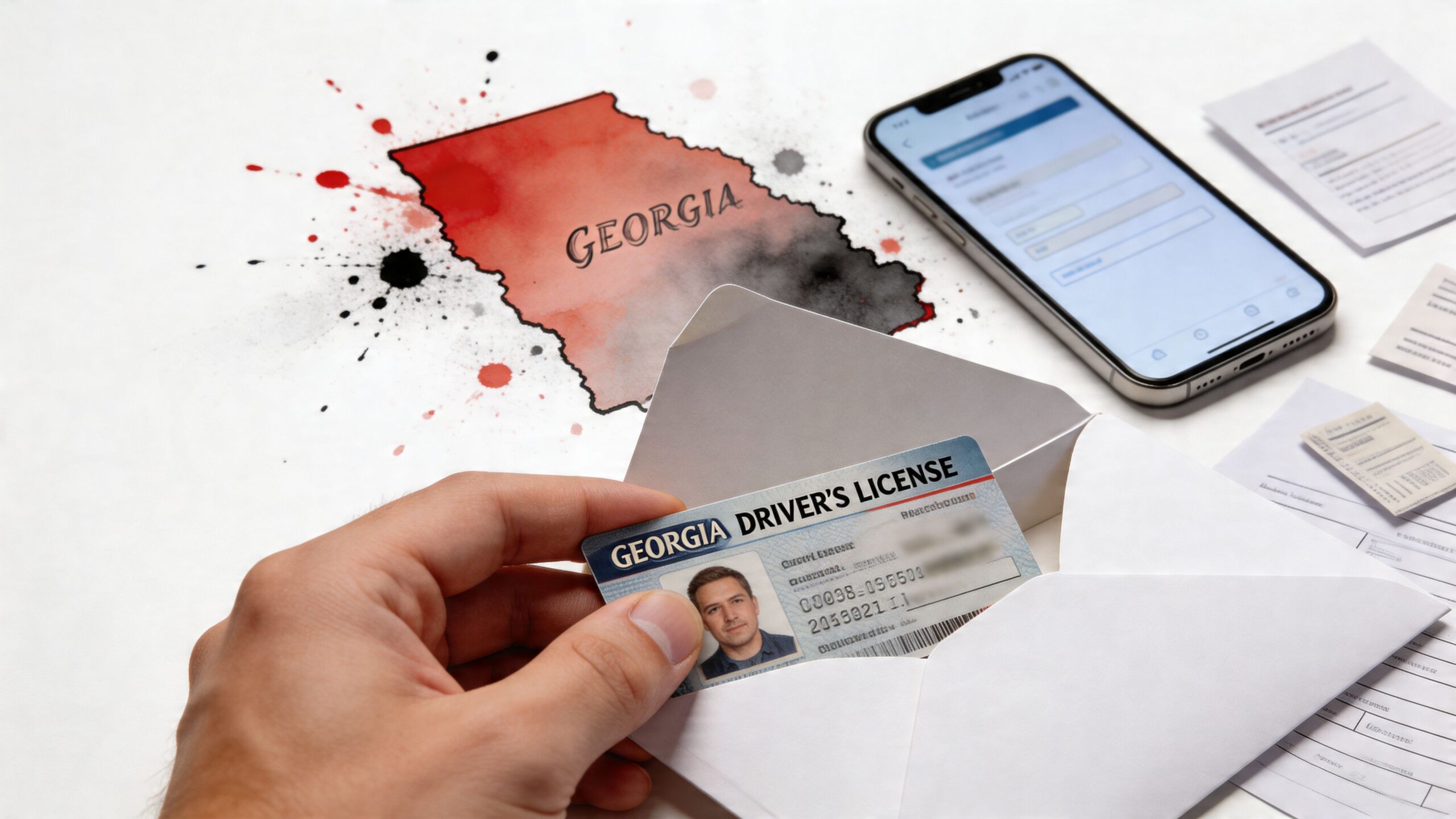
Losing your license can turn an ordinary day into a stressful one fast. You reach for your wallet, check the car, check yesterday’s jacket, then check everything again. If you’re searching replace my drivers license, you probably need clear steps, not vague instructions.
The good news is that license replacement is usually manageable once you know what to gather, when to go online, and when an in-person visit makes more sense. That matters because a driver’s license is more than a driving credential. For many people, it’s the ID they use for work forms, banking, travel, and everyday errands. In the U.S., there were approximately 243 million licensed drivers as of 2023, which shows why replacement systems matter so much for daily life and mobility, according to ConsumerAffairs on the number of drivers in the U.S..
That Sinking Feeling When Your Georgia License is Gone
That first moment is usually panic. Was it stolen, dropped in a parking lot, left in a different bag, or damaged beyond use? The frequency of reaching for a license often goes unnoticed until it’s suddenly missing.

A missing license creates two separate problems at once. One is practical: you may need identification right away. The other is emotional: you’re unsure how quickly you can drive normally again, especially if you’re a teen driver, a parent helping one, or a new Georgia resident still getting settled.
Here’s the reassuring part. Replacing a Georgia license is usually easier when you slow down and handle it in the right order.
Start with the type of problem
Not every replacement situation is the same. Your next step depends on what happened.
- Lost license means you can’t find it and don’t know where it went.
- Stolen license means you suspect theft or know your wallet was taken.
- Damaged license means the card is cracked, faded, bent, or no longer readable.
- Outdated information means you also need to deal with a name or address issue.
If you’re in the stolen category, think about security first. If you’re in the lost or damaged category, focus on document readiness and eligibility.
Practical rule: Treat a missing license like both a driving issue and an identity issue until you know otherwise.
Keep the process simple
When drivers get overwhelmed, it’s usually because they try to solve everything at once. A better approach is:
- Confirm whether the card is gone.
- Gather the documents you may need.
- Decide whether online or in-person replacement fits your case.
- Protect yourself if theft is possible.
- Keep any temporary paperwork in a safe place while you wait.
That order cuts down on repeat trips and avoidable confusion. It also helps parents guide teens without turning the situation into a bigger crisis than it needs to be.
Gathering Your Essential Documents for Replacement
Most replacement delays happen before you ever reach the counter. The issue usually isn’t the form itself. It’s the paperwork behind it.
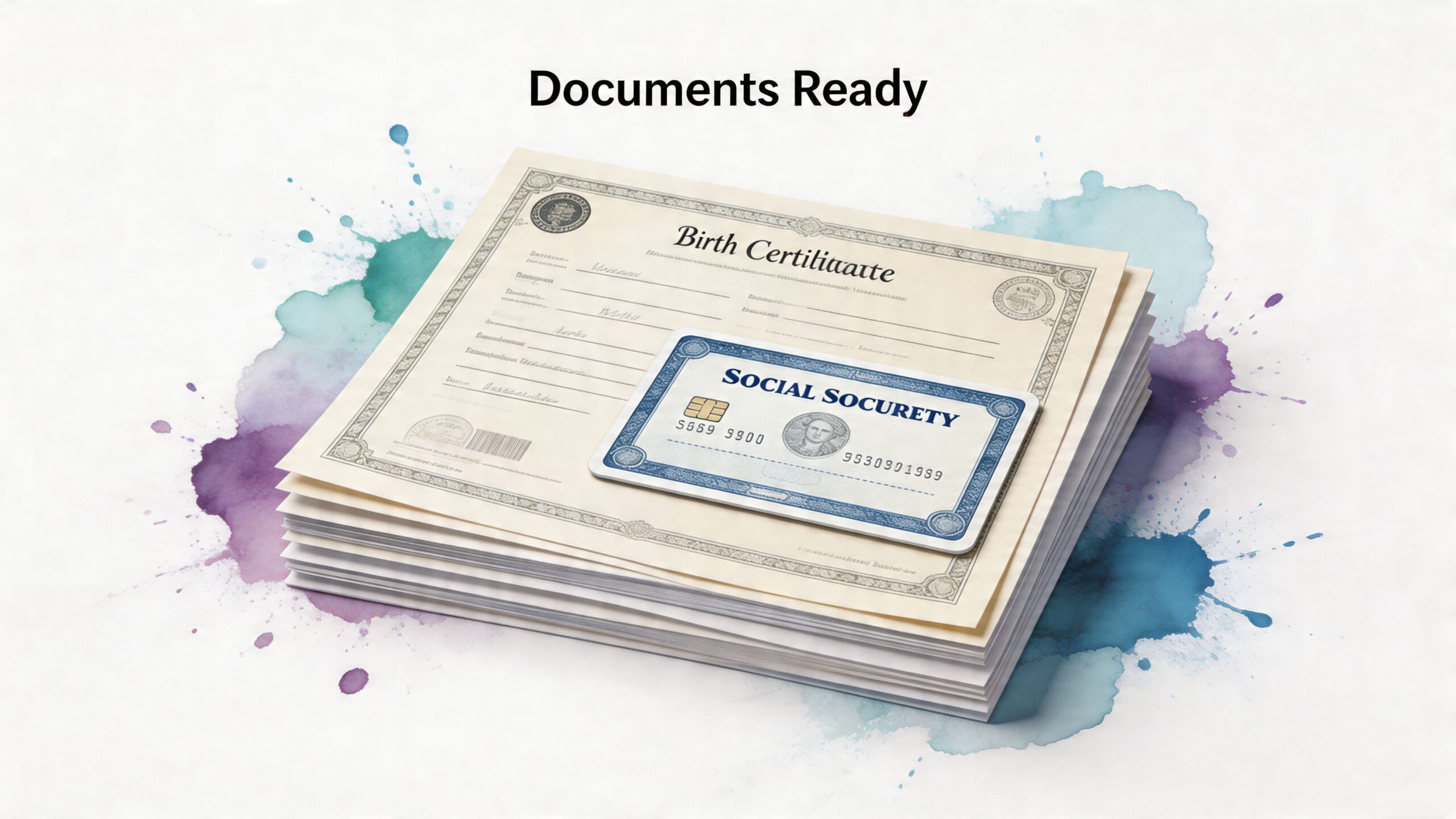
If you want the process to go smoothly, build a document folder first. Even in states outside Georgia, paperwork problems are a major cause of delays. For example, in California, up to 20% of in-person license applications are delayed due to mismatched documents, and the most important factor is having identity, Social Security, and residency documents that match your legal name, as noted by the California DMV replacement guidance.
What Georgia is trying to verify
The state generally needs to confirm three things:
- Who you are
- That your Social Security record matches
- That you live in Georgia
If any of those records conflict with each other, the replacement process gets slower. That’s why small details matter so much. A missing middle name, a married name on one document and a prior name on another, or an old address can create unnecessary friction.
Your document checklist
Use this as a practical prep list before you start your replacement request.
Proof of identity
Bring a government-issued identity document that clearly supports your legal name. Many drivers use a birth certificate or passport.Proof of Social Security number
You may need a Social Security card or another acceptable document showing your full SSN record.Proof of Georgia residency
Be ready with documents tied to your current Georgia address, such as statements or bills accepted by the state.Name-change support, if needed
If your current legal name differs from older documents, bring the paperwork that connects the names.
For a Georgia-specific rundown of common document categories, review Georgia ID requirements at A-1 Driving School.
The detail that trips people up
The name on your documents needs to line up. That doesn’t just mean “close enough.” It means your records should match in a way the state can verify without guessing.
A few common examples:
| Situation | Why it causes trouble | Better move |
|---|---|---|
| Old address on one document | Residency check may not line up | Update records before applying |
| Marriage or divorce name difference | Identity trail isn’t obvious | Bring legal name-change support |
| Nickname on informal records | Not a legal identity match | Use legal-name documents only |
That’s especially important for first-time Secure ID or REAL ID compliance, where document review can be stricter than people expect.
To make the checklist easier to visualize, this short video can help:
Secure ID and basic replacement questions
Some drivers just need a duplicate of what they already had. Others are trying to replace a card while also changing their compliance status. Those are very different situations.
If your goal is only to replace a lost or damaged card, the paperwork may feel simpler. If you’re also trying to update to a more federally compliant credential, expect more document review.
Bring more documentation than you think you’ll need, but only bring documents that are current, readable, and consistent with your legal name.
A quick self-check before you leave home
Ask yourself these five questions:
- Does every document show my current legal name?
- Does my residency proof show my current Georgia address?
- If my name changed, do I have the linking legal document?
- Are my documents originals or accepted official copies?
- Am I replacing only, or am I also changing something else?
If you can answer those confidently, you’ve already removed the biggest source of stress.
Online vs In-Person Replacement Which is Right for You
Most drivers want the fastest, least stressful path. Sometimes that’s online. Sometimes it absolutely isn’t.
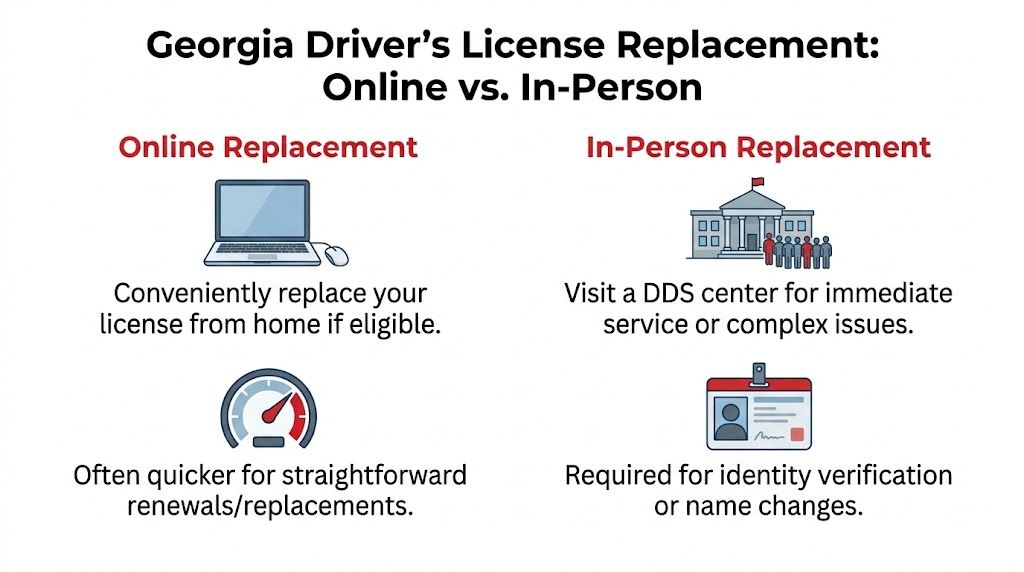
The smart move is to choose your method based on your situation, not just convenience. Online replacement can save time when everything in your record already matches. In-person service is usually better when anything about your identity, address, age, or eligibility is more complicated.
When online replacement makes sense
Online service is usually the first option people look for, and for good reason. You don’t have to travel, sit in a waiting area, or reorganize your day around office hours.
Online replacement tends to fit drivers who:
- still have the same legal name
- still live at the same address already on file
- aren’t trying to make first-time REAL ID type changes
- don’t need special review because of age or license category
If your record is clean and current, online is often the easiest route.
When in-person is the better choice
Some cases need face-to-face review. That isn’t a setback. It’s just the right channel for the issue.
According to the California DMV eligibility guidance, minors needing parental signatures, drivers with recent name or address changes, and those upgrading to a REAL ID for the first time are typically ineligible for online services, which makes an in-person visit mandatory. Georgia drivers run into similar practical barriers when their records don’t line up neatly.
A side-by-side way to decide
| If this sounds like you | Better option |
|---|---|
| My information hasn’t changed | Online may be simplest |
| I recently moved | In person is often safer |
| I changed my name | In person is usually the better path |
| I’m a teen with parent involvement | In person often avoids confusion |
| I’m replacing and updating status at the same time | In person is usually easier |
The biggest online rejection triggers
People often assume an online denial means something serious is wrong. Usually, it means the system found a mismatch or a condition that requires manual review.
Watch for these common problems:
Recent address changes
If your address was updated recently or not fully reflected across records, the system may not let you continue.Name mismatches
This happens after marriage, divorce, or court-ordered changes when one record has been updated and another hasn’t.Minor status or parent signature requirements
Teen drivers may need extra documentation or approval that can’t be handled cleanly online.First-time compliance upgrades
If you’re not just replacing but changing the type of credential, online replacement may not fit.
If the website rejects your application, don’t keep submitting the same information repeatedly. Stop and identify what changed in your record.
A simple decision path
Use this quick framework before you choose.
Choose online if
- your current license information is unchanged
- you only need a straightforward duplicate
- your address and name already match state records
- you don’t need a special review
Choose in person if
- you’re unsure whether your record is current
- you’ve had a recent move or legal name change
- you’re helping a teen through a parent-signature situation
- you want direct confirmation from a DDS staff member
What parents of teen drivers should know
Teens often don’t realize a replacement issue can overlap with broader licensing requirements. If a permit or license goes missing during training, parents may suddenly be juggling school schedules, document prep, and road test timing all at once.
In those cases, in-person service can reduce confusion because you can ask direct questions and resolve document issues before they create a bigger delay.
If your license problem is tied to reinstatement
Replacement and reinstatement aren’t the same thing. A driver sometimes searches replace my drivers license when the actual issue is unpaid fines, a suspension matter, or another record issue that has to be cleared first. If that might be your situation, review A-1’s guide on paying fines and reinstating a Georgia driver’s license online.
That distinction matters because replacing a card won’t fix an underlying license status problem.
Special Cases for Georgia Drivers
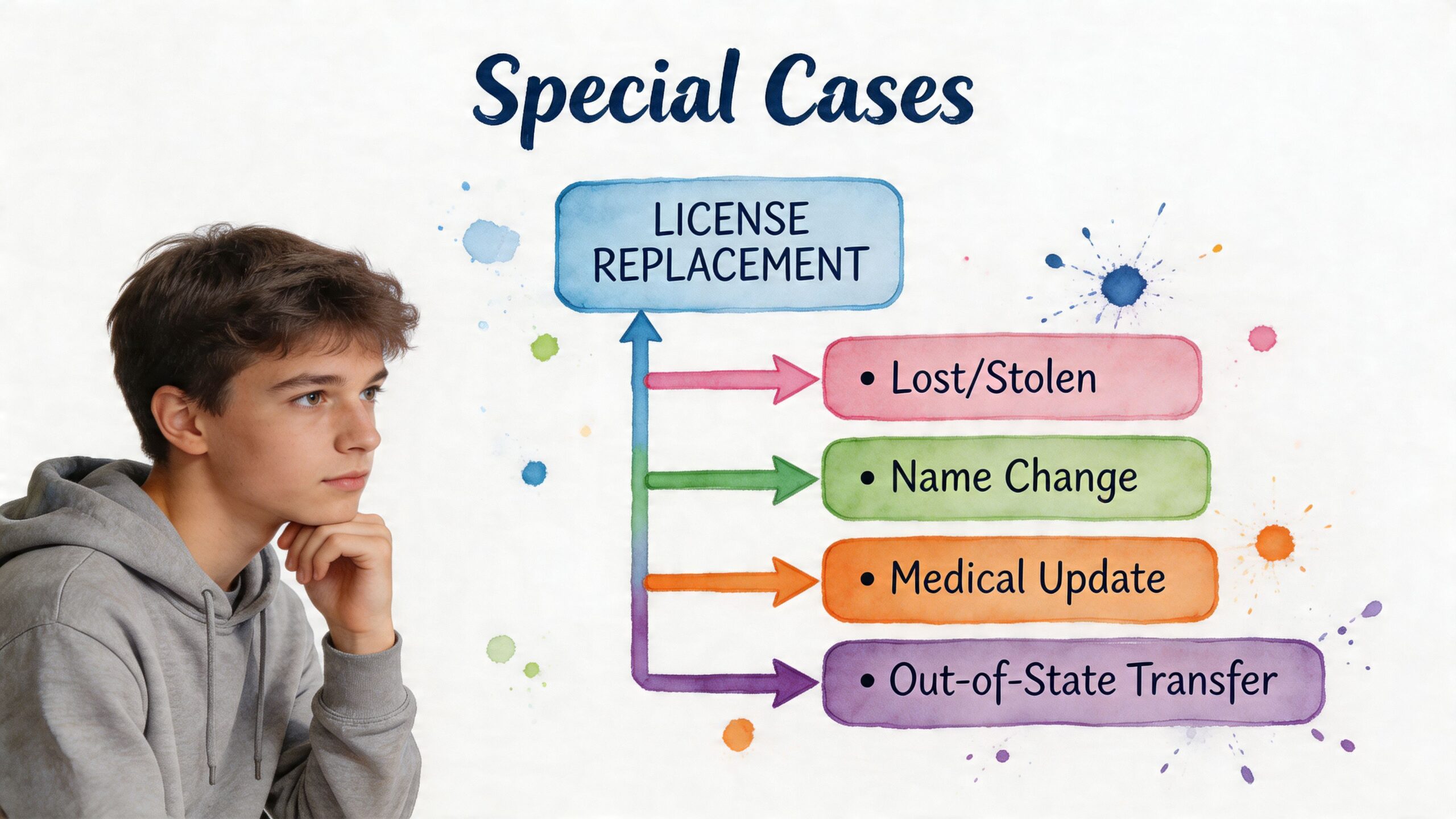
A replacement request can feel simple until real life gets mixed in. A teen loses a permit the week before a lesson. A parent realizes the name on one document no longer matches another. A family moves, and half the mail still shows the old address. These are the moments that turn a basic duplicate into a bigger paperwork problem.
At A-1 Driving School, we see this across the full driver journey. A student may come to us first for Joshua’s Law or driving lessons, then return later with questions about permits, road tests, or replacing a license. The state process is still the state process, but a calm plan makes it much easier to handle.
Teen drivers working through Joshua’s Law
For teens, a missing permit or license often feels bigger than it is. The card is small, but it affects lessons, practice driving, and confidence. Parents usually feel that pressure too because they are keeping track of school, schedules, and state requirements at the same time.
The best approach is to treat the missing card like a dropped binder clip, not a broken school year. You pause, gather what belongs together, and get the system back in order before papers start scattering.
A simple folder helps. Keep these items in one place:
- Current identity records
- Any driver education completion paperwork
- Parent contact information
- Road test planning notes
- Residency documents tied to the teen’s current address
If anything about the permit status is unclear, clear that up before the next lesson or testing step. That keeps a Class D timeline from getting sidetracked by a preventable document issue.
Name changes after marriage or divorce
Name changes cause confusion because drivers often think they are asking for a replacement card, while the state sees a record update that needs proof first.
The easiest way to handle this is to build a clean paper trail. Your license name should match the legal name supported by your records. If one document shows a prior surname and another shows a new one, DDS may need that gap explained before issuing the replacement.
| Situation | What to do first |
|---|---|
| Marriage name change | Make sure supporting legal records reflect the new name |
| Divorce-related reversion | Gather the legal document tying your current name to prior records |
| Hyphenated or combined name use | Use the legal version consistently across documents |
One small mismatch can slow down the whole request. Consistency matters more than speed here.
Address changes and replacement at the same time
A recent move creates its own kind of mess. The apartment lease shows one address, the bank statement shows another, and a parent may still have school mail going to the old place.
Treat your address proof like a separate checklist item. If your replacement request and your address details do not line up, the process can stall while DDS looks for clearer proof.
A good rule is simple. If you moved, gather your current Georgia residency documents first, then deal with the replacement. That order saves time and cuts down on back-and-forth.
New Georgia residents exchanging an out-of-state license
Drivers who recently moved to Georgia often have two tasks happening at once. They are joining a new state system and trying to fix a missing, damaged, or outdated card. That is less like replacing a library card and more like transferring schools. You are not only getting a new card. You are also proving where you belong now.
This pattern shows up in relocation data too. In the first half of 2025, Miami-Dade recorded 10,451 out-of-state driver’s license exchanges, up 22% from 8,575 in the same period of 2019, according to the Miami Realtors report on out-of-state driver license exchanges.
For new Georgia residents, identity documents and Georgia residency documents both matter. Drivers in this situation also ask whether a phone-based ID changes what they need to carry. A-1 breaks that down in this guide on digital driver’s licenses in Georgia.
Damaged but not missing
A damaged license deserves attention even if it never left your wallet.
If the card is bent, peeling, faded, cracked, or hard to read, replace it before it creates trouble during a traffic stop, check-in, age verification, or identity check. A worn-out card can cause the same practical headache as a lost one because the information on it may no longer do its job clearly.
After You Replace Your License Practical Next Steps
Submitting the request feels like the hard part, but the waiting period creates a different kind of stress. Most drivers immediately wonder whether they can still drive, what to carry, and what to do if the card doesn’t arrive when expected.
A common source of anxiety is confusion about temporary licenses. Many drivers aren’t sure whether a temporary permit is valid, how long it lasts, or what happens if the permanent card is delayed, a problem highlighted in iDriveSafely’s discussion of replacement-license confusion.
Keep your temporary document protected
If DDS gives you temporary paperwork, treat it like an important original record. Don’t fold it into a messy glove box, leave it loose in a backpack, or assume you can easily replace it if it disappears too.
A good routine is simple:
- Store it flat in a clean sleeve or folder
- Carry it consistently if you’re driving
- Keep a photo copy for reference if you need to check the details later
- Read the printed terms carefully so you know what the state gave you
Can you drive with a temporary license
Drivers usually want a yes-or-no answer here. In practice, you should follow the terms printed on the temporary credential issued to you and any Georgia DDS instructions tied to it. If it was issued as your legal interim driving document, carry it exactly as directed.
The confusion starts when people hear different timelines from friends, family, or internet posts from other states. That’s why the temporary document in your hand matters more than generic advice online.
If your temporary document is close to expiring and your permanent card still hasn’t arrived, contact Georgia DDS before the date passes. Don’t guess.
If your license was stolen, handle the security side too
A stolen license is not just a transportation headache. It can also become an identity problem.
Take these actions quickly:
- Write down when and where it likely went missing
- File a police report if theft seems likely
- Watch your mail and financial accounts for unusual activity
- Be extra cautious with texts, calls, or emails asking for identity details
- Replace the credential promptly rather than waiting it out
If your wallet was taken with other documents, widen your response. Think beyond the license itself.
If the card doesn’t arrive
Mail delays happen. Addresses get entered incorrectly. A card can also be returned if the mailing information doesn’t match what the system expects.
If your replacement hasn’t arrived in the expected window:
- Check the address on file
- Confirm whether your request was fully processed
- Look for missed notices
- Contact DDS for status guidance
- Ask what to do if your temporary document is about to expire
If you later find the old card
This surprises people all the time. They replace the license, then find the original in a coat pocket, couch cushion, or travel bag.
Don’t keep using both. Once a replacement is issued, treat the older card as something that should no longer circulate. Destroy it so it can’t be mistaken for a current credential or used by someone else.
Your Partner on the Road Ahead
Replacing a license is one of those moments that reminds you driving isn’t just about passing a test once. It’s an ongoing responsibility. Records have to stay current. Skills have to stay sharp. Confidence on the road comes from practice, not luck.
That’s why good driver support matters beyond the replacement process. A teen may be starting with Joshua’s Law requirements and trying to build enough experience to feel steady behind the wheel. An adult may need more practice with lane changes, parking, highway driving, or road test preparation after years away from formal instruction. Those are very different situations, but both benefit from clear coaching.
For Georgia families, the most useful help is usually practical help. That often means choosing a structured Joshua’s Law course, finding online driver’s education options that fit a busy schedule, and booking driving lessons that focus on actual weak spots instead of generic practice. Some students need a single refresher. Others do better with lesson packages that build skills over time.
Road testing matters too. Many new drivers feel more settled when they can prepare in a familiar learning environment instead of walking cold into a high-pressure testing experience.
If you’re looking for next steps after replacing your license, these are the kinds of services worth exploring:
- Driver’s education for teens
- Joshua’s Law online coursework
- Private driving lessons for teens and adults
- Lesson packages for steady skill-building
- Road test preparation
- Georgia road testing with a third-party examiner
- Information about the Georgia Driver’s Education Scholarship Grant Program
The thread that connects all of them is simple. A valid license lets you drive legally. Good training helps you drive well.
Frequently Asked Questions About License Replacement
What if I’m out of state when I realize my Georgia license is missing
Start by sorting out the actual issue. Is it only a lost card, or did your license also expire, change addresses, or need a name update? That first step matters because a simple replacement is often easier than a record change.
If you are away from Georgia, carry any other ID you have and check whether your situation can be handled remotely. Do not assume another state’s rules match Georgia’s. They often do not.
Will replacing my license change my driving record
Usually, no. A replacement card is just a new copy of the same credential.
If you are worried about points, a suspension, or another status problem, treat that as a separate issue. The card in your wallet and the record in the system are related, but they are not the same thing.
I changed my name. Can I still do a simple online replacement
Often, no. A legal name change usually means DDS needs more than a duplicate request.
The goal is a clean paper trail. Your old name, your new name, and your supporting documents need to line up clearly, much like matching the names on school records, insurance paperwork, and a permit. If they do not match, in-person verification is often the safer path.
I moved recently. Should I replace the card first or update my address first
Update the underlying record first whenever possible. It is easier to order the right card once your current address is properly reflected.
Parents often run into this with teens after a move. The permit or license still shows the old address, but every new document in the house shows the new one. Getting those records straightened out early can save a second trip and a lot of frustration.
Can I legally drive with only a temporary license
Follow the terms printed on the interim document Georgia DDS gives you. If it is your current legal credential, carry it exactly as instructed.
If anything about the dates, restrictions, or conditions is unclear, contact DDS before you drive. Guessing is a bad plan here.
What if my temporary document is lost too
Act quickly and ask DDS what to do next. Temporary paperwork still matters, and waiting can make a stressful problem harder to fix.
Does Georgia’s digital driver’s license replace the physical card
Do not treat digital ID as a full substitute in every situation. It may help in some places, but acceptance depends on where you are and what kind of identification is being checked.
A phone-based ID works a bit like a backup key. Helpful to have, but not something you should assume opens every door.
My teen lost their permit during driver training. Does that affect driver’s ed progress
It can slow things down, but it does not mean all progress is lost. Replace the permit quickly and keep every training record in one folder so nothing gets misplaced while you sort it out.
That is one place families often need support beyond state instructions. A good driving school does more than teach turns and parking. It helps families keep the whole process organized, from Joshua’s Law and early lessons to testing and license upkeep.
I found my old license after ordering a replacement. Can I keep it just in case
No. Destroy it.
An old card can create confusion and adds risk if it was ever out of your possession. Once a replacement is issued, treat the old one like an outdated school ID. It had its time, but it should not stay in use.
If you need more than replacement guidance, A-1 Driving School can help at every stage of the driving journey. Teens may be starting with Joshua’s Law. Adults may want refresher lessons after years away from formal practice. Some families need road test preparation. Others need help building calm, consistent habits behind the wheel after the paperwork is settled. Replacing a license gets you legal again. Ongoing training helps you stay confident and capable on the road.