

You're probably here for a practical reason. You typed in defensive driving class online ny because you want to cut points, lower insurance costs, or knock out a requirement without spending half your week in a classroom.
That's fair. But I'll give you the same advice I give families and adult students every day. A compliance course can solve a paperwork problem. It does not, by itself, build a capable driver.
Beyond a Basic Defensive Driving Class
If your goal is New York compliance, start with the rule that matters most. In New York, DMV-approved Point and Insurance Reduction Program courses can provide up to a 10% reduction in liability, no-fault, and collision insurance premiums for 3 years, and can reduce up to 4 points from a driver's record, according to this overview of the New York PIRP insurance discount and point reduction benefit.
That benefit is real. It's useful. And if you need it, take it.
What I don't recommend is treating that course like the whole answer to safer driving. It isn't. A short online program can remind you about risk, laws, and habits. It cannot watch your mirror checks, correct your lane position, coach your turns, or stop you from freezing in dense traffic.
What a good course does, and what it can't do
A state-approved online class is good at a few things:
- Handling compliance: You need an approved course, not a random “defensive driving” product with good marketing.
- Refreshing judgment: Hazard awareness, distraction avoidance, and basic crash-prevention thinking matter.
- Saving money: If you qualify, the insurance benefit is worth pursuing.
What it can't do is replace actual driver training.
Practical rule: Use online defensive driving for compliance. Use real instruction for competence.
That's the gap most drivers miss. They think the issue is points on paper. Instead, the issue is often weak habits behind the wheel. If you brake late, drift through lane changes, stare at the car in front of you instead of scanning ahead, or drive tense in heavy traffic, an online module won't fix that on its own.
The better question to ask
Instead of asking only, “Which defensive driving class online ny should I take?” ask this:
What kind of training makes someone calm, alert, and predictable on the road?
The answer starts with a framework, not a coupon or a certificate. One of the best examples is the IPDE process, which teaches drivers to identify, predict, decide, and execute in traffic. If you want a clean explanation of that mindset, this breakdown of the IPDE driving method is worth your time.
A defensive driving course can help you meet the rule. A complete driver education path helps you meet reality.
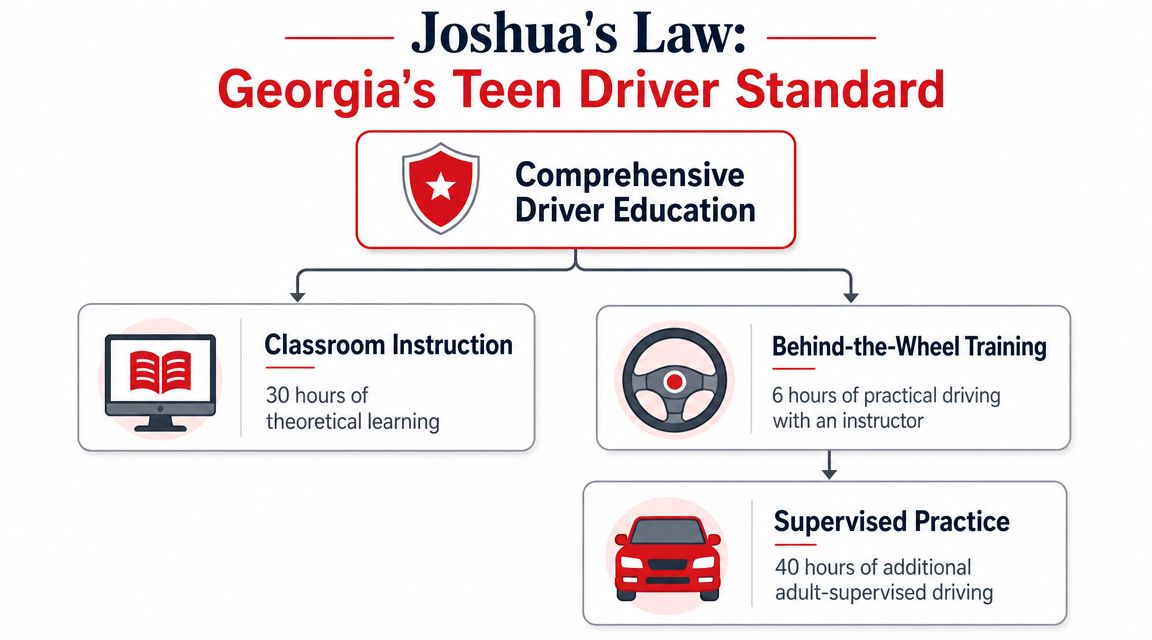
The Gold Standard for Teen Drivers Joshua's Law
If you want to see what serious driver education looks like, look at Georgia's teen model under Joshua's Law. It's more demanding than the average “take a quick course and move on” mindset, and that's a good thing.
For new drivers, especially teens, depth matters. They need structured education, guided practice, and repetition under pressure. They don't need a bare-minimum box check.
Why Joshua's Law sets a higher bar
Joshua's Law is a better model because it combines classroom learning with supervised driving. That approach recognizes something every experienced instructor knows. Students don't become safe because they read the right content once. They become safe when instruction and repetition work together.
A strong teen program should include:
| Training element | Why it matters |
|---|---|
| Online or classroom study | Builds vocabulary, rules knowledge, and hazard recognition |
| Instructor-led driving | Turns theory into steering, braking, scanning, and judgment |
| Supervised family practice | Reinforces habits outside formal lessons |
That combination creates better drivers than theory-only training ever will.
Online options are useful, but only if they connect to real skill
I'm not against online learning. In fact, online courses are often the most practical starting point for busy families. Teens can work through the knowledge portion on a flexible schedule, and parents can focus their energy on arranging quality behind-the-wheel time.
That's where many families make a mistake. They assume finishing the online piece means the hard part is done. It isn't. The hard part is applying that knowledge when a left turn gets crowded, a merge lane closes fast, or another driver does something reckless.
A teen who knows the rule but can't apply it in motion is not ready.
That's why Joshua's Law stands out. It treats driver education as a process, not a transaction.
What parents should look for
If you're evaluating any teen driving program, use these filters:
- Does it include real driving instruction? If it doesn't, it's incomplete.
- Can the student take the academic portion online? Flexibility helps, especially for school schedules.
- Does the program explain the law clearly? Parents shouldn't have to guess what qualifies.
- Can the school support the next step after coursework? Good schools don't disappear once the certificate is issued.
For Georgia families trying to understand the background and purpose of the law, this overview of who Joshua was and why Joshua's Law matters adds important context.
If you compare that structure to a basic defensive driving class online ny search, the contrast is obvious. One is designed to solve an immediate administrative need. The other is designed to build a driver from the ground up.
Why Driving Lessons Are Our Differentiator
Here's the blunt truth. Driving lessons are where drivers are made.
Online coursework matters. It gives students terminology, rules, and a framework. But the real transformation happens in the car, with an instructor who sees mistakes as they happen and corrects them before they become habits.
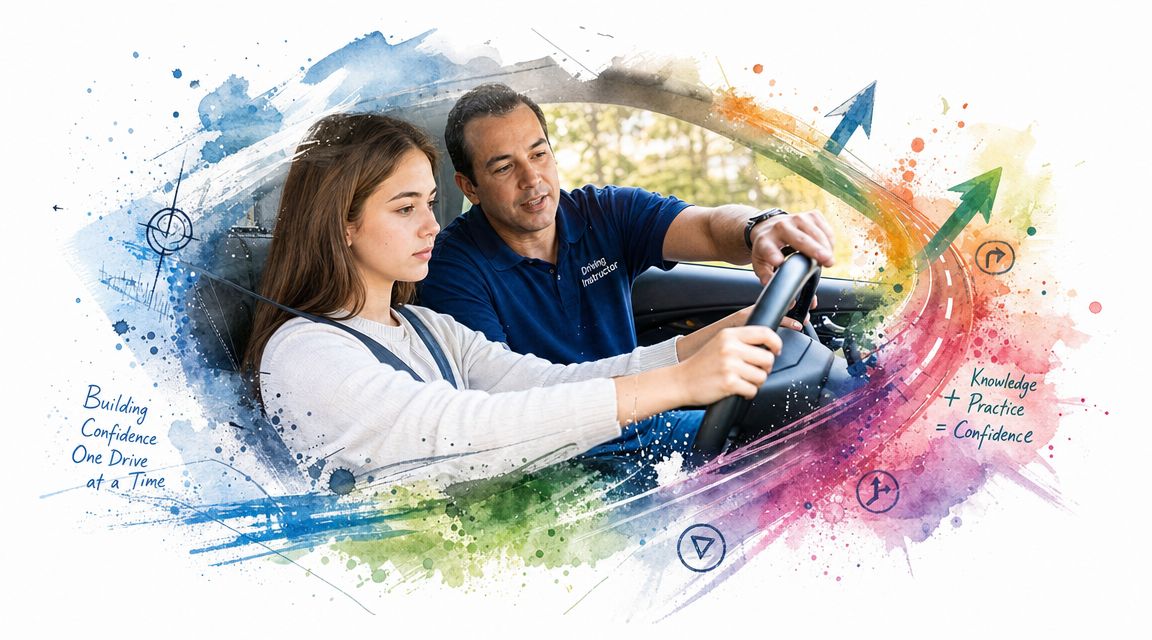
A nervous teen doesn't need more slides. That student needs someone in the passenger seat teaching lane control, mirror timing, turning accuracy, speed management, and how to stay composed when traffic gets messy.
An adult who's delayed licensing for years doesn't need a lecture on confidence. That adult needs guided repetition, patient feedback, and a plan that starts simple and builds toward independence.
What quality driving lessons should cover
A real lesson program should move from fundamentals to pressure situations in a deliberate order.
Some students start with basics:
- Vehicle setup: seating, mirrors, steering position, visibility
- Low-speed control: smooth starts, braking, turning, backing
- Space management: following distance, side clearance, stopping position
Others need higher-level work:
- Lane changes in active traffic
- Highway merging and exits
- Unprotected left turns
- Parking lot judgment
- City driving with distractions and aggressive drivers
That's the difference between information and training. Information tells you what to do. Training helps you do it when your heart rate goes up.
The best instructors don't just teach maneuvers
A weak lesson focuses only on whether the student completed the turn. A strong lesson focuses on how the student approached the turn. Did they scan early enough? Did they brake smoothly? Did they choose the right gap? Did they recover after a mistake instead of panicking?
That's why professional instruction matters. You need someone who can diagnose the problem under the surface.
Instructor insight: Most bad driving isn't random. It comes from rushed observation, poor planning, or hesitation at the wrong moment.
For a concise explanation of why this matters so much, this guide on the benefits of taking driving lessons from an instructor makes the case well.
Lesson packages beat one-off sessions
One lesson can help. A structured package is usually smarter.
Why? Because students rarely struggle in just one area. A teen may steer well but brake late. An adult may understand parking but avoid highways. Another student may know the route but crumble under test pressure. Packages give instructors room to build skills progressively instead of trying to “fix everything” in a single drive.
A smart lesson package should adapt to the student:
| Student type | Best training focus |
|---|---|
| First-time teen | Fundamentals, neighborhood driving, intersections, parking |
| Test-prep student | Route familiarity, compliance habits, common scoring mistakes |
| Nervous adult | Confidence building, traffic exposure, repeated controlled practice |
| Returning driver | Refreshing judgment, speed control, lane discipline |
This kind of coaching is what separates a school that teaches drivers from one that just sells certificates.
Here's a useful look at what that instruction feels like in practice.
Why this matters more than a basic online course
If you started this search looking for defensive driving class online ny, you were probably thinking about a quick fix. That's understandable. But the biggest gains in safety don't come from clicking through modules. They come from building repeatable habits with real feedback.
Good drivers don't just know the rules. They manage space, anticipate trouble, and stay steady when the road gets complicated.
That doesn't happen by accident. It happens in lessons.
From Lessons to License Your Complete Path
The best driver education doesn't stop when the coursework ends. It should carry a student all the way from learning, to practice, to testing, to licensing.
That full-path approach matters because most students don't struggle with one isolated task. They struggle with the handoff between tasks. They finish the course but don't know what to schedule next. They take lessons but don't know when they're test-ready. They prepare for the road test in one environment and then test in a completely different one.
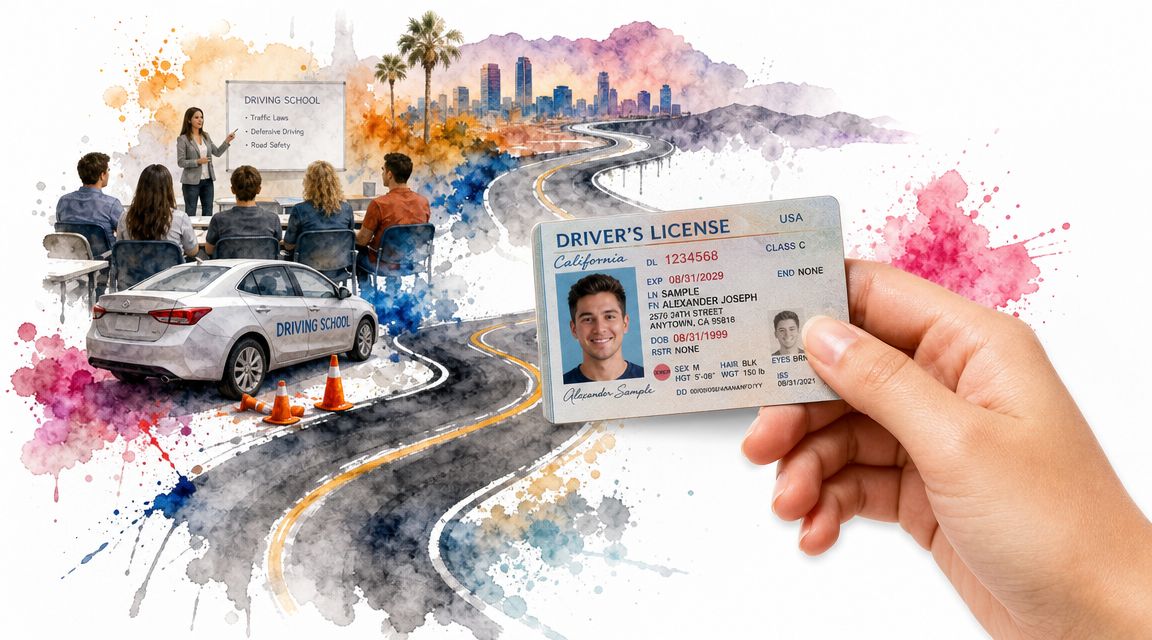
Road testing should feel like the next step, not a new problem
When students can test through a school setting they already know, they usually feel more settled. Familiar cars, familiar procedures, and a familiar environment reduce confusion and help the student focus on driving correctly.
That doesn't mean the test gets easier. It means the process gets cleaner.
A complete path to licensing should include:
- Coursework that matches the student's stage
- Professional lessons that target weaknesses
- Road test preparation with realistic practice
- A clear testing path without unnecessary friction
That model serves teens well, and it serves adults just as well.
Access matters as much as instruction
A lot of families want professional driver education but assume it's out of reach. That's why scholarship and grant pathways matter. The Georgia Driver's Education Scholarship Grant Program is especially important because it opens the door for eligible students who need formal training but may be worried about cost.
That kind of support changes what's possible. It helps students move from “maybe later” to “let's start now.”
The schools that do this right don't just teach. They remove obstacles.
There's another useful perspective here. Licensing systems work best when they treat driving as staged development, not a one-time event. If you want a clear example of that broader idea, these G1 graduated licensing details show how step-by-step progression supports safer driver development.
The details differ by state or province, but the principle holds. Drivers improve when training, supervised practice, and testing are connected instead of fragmented.
Start Your Journey with Georgia's Trusted Driving School
If you came looking for a defensive driving class online ny, the immediate answer is simple. Choose a DMV-approved program if you need the New York benefit and want the course to count.
But don't stop there.
A safe driver isn't built by a single online module. Safe drivers come from structured education, guided practice, professional lessons, and a testing path that makes sense. That's why the strongest programs don't obsess over shortcuts. They focus on skill.
For Georgia families and adult drivers, the better route is clear:
- Take a proper driver's education course, including online options when flexibility matters
- Complete professional behind-the-wheel lessons instead of relying only on family coaching
- Prepare for the road test in a deliberate way
- Use scholarship opportunities when eligible so cost doesn't become the reason to delay training
If you care about long-term confidence, not just short-term compliance, put most of your energy into lessons and practice. That's where judgment gets sharper. That's where nervous drivers become capable ones. That's where good habits take hold before bad ones do.
The best schools know that licensing is not the finish line. It's the beginning of how someone will drive for years.
If you're in Georgia and want more than a box-check course, A-1 Driving School offers online and in-person driver's education, Joshua's Law training, road testing support, and driving lesson packages built for teens and adults who want real skill behind the wheel.