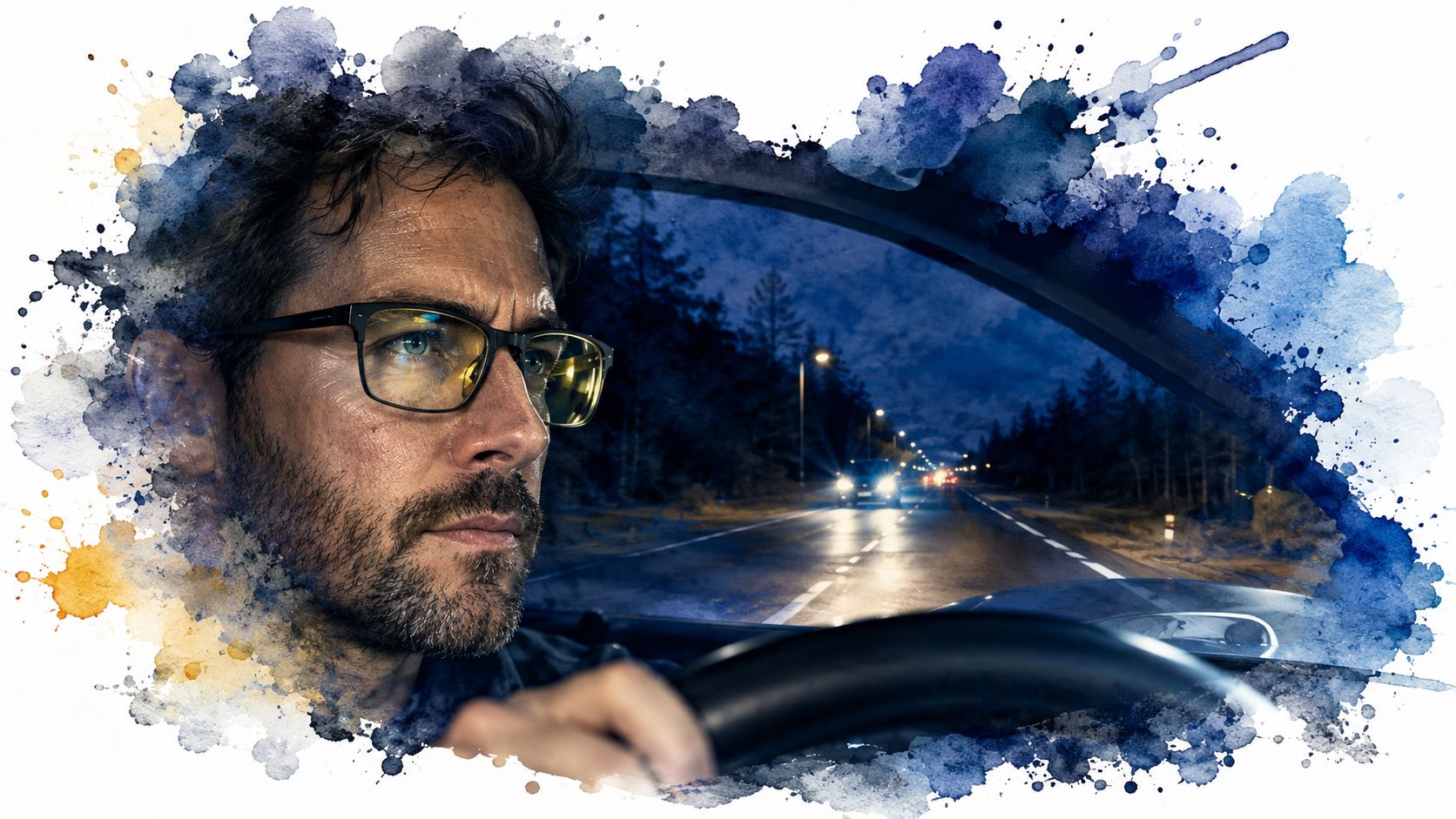
Driving home after sunset can make even a calm driver feel tense. The lane markings seem dimmer, road signs appear later, and oncoming headlights can turn a simple trip into a tiring one. In Georgia, that stress shows up everywhere, from dark suburban turns to fast multilane roads around metro Atlanta and two-lane stretches outside town.
The term night vision improvement typically refers to one of two scenarios. Either their eyes aren't handling low light well, or their driving habits aren't giving them enough margin for darkness and glare. Those are different problems, and they need different solutions.
As driving instructors, we see this confusion all the time. A driver says, "I can't see at night," but the underlying issue might be an outdated glasses prescription, a dirty windshield, poorly aimed headlights, or following too closely for the amount of road they can see. The fix starts by separating eye health, vehicle setup, and driving skill.
Why Driving at Night Can Feel So Difficult
Night driving feels harder because the road gives you less information. In daylight, you pick up lane edges, brake lights, pedestrians, shoulder movement, and curves much earlier. After dark, your margin shrinks. You have less contrast, less depth detail, and more glare.
That matters on real Georgia roads. Think about turning left across traffic on a dim corridor, merging onto a highway with bright headlights behind you, or judging distance on a wet road after an evening storm. None of those situations are unusual. They just become less forgiving at night.
Three reasons drivers struggle after sunset
The first issue is your eyes. If your vision isn't corrected well, darkness exposes the problem fast. Small blur in daytime can become major glare at night.
The second is your vehicle. A windshield film, hazy headlight lenses, streaked mirrors, or weak wiper performance can scatter light and make every approaching car seem brighter than it should.
The third is your technique. Many drivers look straight into glare, drive too fast for the amount of road they can see, or fail to increase following distance when visibility drops.
Night driving confidence doesn't come from one trick. It comes from fixing the weak point that's actually causing the problem.
Even your headlights can add to the challenge if the lenses are cloudy or discolored. If you want a plain-language explanation of why older lights lose clarity and color over time, this expert guide for PA drivers gives a useful breakdown that applies to everyday drivers anywhere.
Start with Your Eyes Your Most Critical Tool
If you're serious about night vision improvement, start with your eyes before you change your driving style. Too many people assume night driving trouble is normal aging or something they just have to live with. Often, it isn't.
Harvard Health notes that uncorrected vision is one of the most common causes of difficulty seeing at night. Often, the solution isn't a special driving hack but an updated eyeglass prescription, dry-eye treatment, or proper cataract care from an eye doctor in its article on difficulty seeing at night and what to do.
What drivers often mistake for bad night vision
Many drivers say "I have bad night vision" when they mean one of these:
- Blur from an outdated prescription. Road signs look soft. Headlights bloom.
- Astigmatism-like glare symptoms. Lights may streak or starburst.
- Dry eye. Your vision fluctuates, especially late in the day.
- Early cataract changes. Glare becomes more annoying even when daytime driving still feels manageable.
- Health-related vision changes. If vision has changed suddenly or noticeably, that's a doctor conversation, not a driving workaround.
A practical test is simple. If you find yourself squinting to read signs, avoiding unfamiliar roads at night, or feeling unusually drained after short evening drives, schedule an eye exam.
Best first step: See an optometrist regularly, and go sooner if glare, halos, blur, or eye fatigue have increased.
What helps and what doesn't
Some drivers want a quick fix such as special supplements, internet hacks, or a pair of cheap yellow glasses. Be careful. If the issue is your eyes, gimmicks won't solve it.
What can help:
| Issue | Practical response |
|---|---|
| Blurry distance vision | Get an updated prescription |
| Dry, irritated eyes | Ask about dry-eye treatment |
| Glare from lenses | Ask about anti-reflective coating |
| Headlight halos getting worse | Get checked for cataracts or other eye issues |
| Trouble only when driving | Bring that specific complaint to the exam |
Anti-reflective coating is worth asking about if you already wear glasses for driving. It doesn't replace proper correction, but it can reduce distracting reflections from headlights and streetlights.
What doesn't deserve blind trust:
- Random "night vision" products that promise dramatic change
- Delaying an exam because you think you'll just drive slower
- Assuming age is the only reason your night driving has become harder
Keep expectations realistic
Eye care and driving skill work together, but they don't replace each other. A sharp prescription helps you detect hazards sooner. It doesn't teach you when to slow down for a dark curve, how to handle glare, or how much following distance you need in low light.
If the problem is in your eyes, fix that first. If the problem is in your habits, practice better habits. Many drivers have both.
Optimize Your Vehicle for Maximum Night Visibility
Once your eyes are checked, move to the car. Working on the car can yield some of the fastest night vision improvements, because small maintenance problems create big visibility problems after dark.
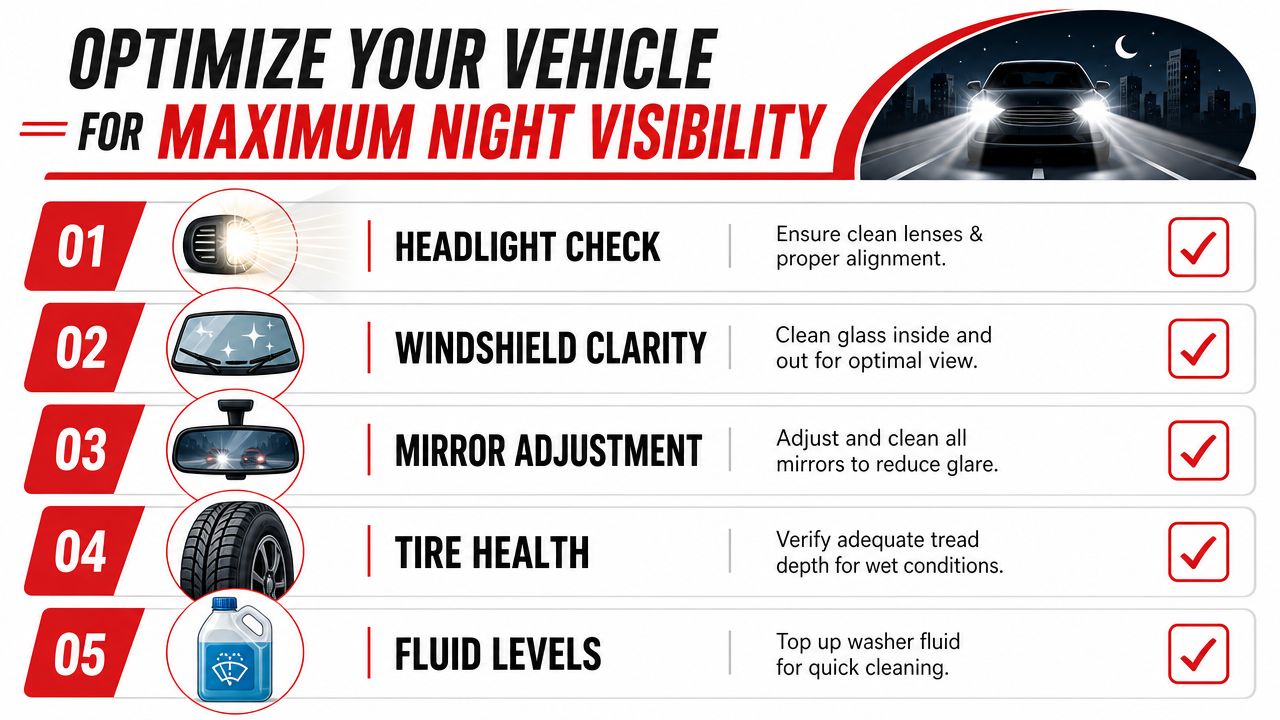
A car that's easy to drive in daylight can become difficult at night if the glass is dirty or the lights aren't doing their job. Interior windshield haze is a common example. Drivers clean the outside and forget the film on the inside, then wonder why headlights smear across the glass.
Your night visibility checklist
Use this before blaming the road:
- Clean the windshield inside and out. Film, smoke residue, dust, and cleaner streaks all scatter light.
- Wipe every mirror. Side mirrors and the rearview mirror collect grime faster than people think.
- Check the headlight lenses. If they look cloudy, yellowed, or dull, your beam pattern may be weaker than you realize.
- Test the washer fluid and wipers. Georgia rain and road spray can turn a clear view into a glare mess fast.
- Use the day-night rearview setting if your mirror has one. Many drivers forget it's there.
- Inspect your tires. Night visibility and wet-road control go together. If the road is shiny, tire condition matters more.
For cloudy lenses, restoration can be worthwhile. If you want to understand what professional restoration involves, this overview of expert headlight detailing by Derek's shows the kind of issue drivers should look for before assuming they need brighter bulbs.
Headlight aim matters more than most drivers think
A clean headlight pointed in the wrong direction still gives poor visibility. If the lights aim too low, you lose distance. If they aim too high, you create glare for others and still don't light the road properly.
Signs your headlights may be misaligned:
| What you notice | What it may mean |
|---|---|
| You feel like your lights stop too close to the bumper | Aim may be too low |
| Other drivers flash you often | Aim may be too high |
| One side of the road is much brighter than the other | Uneven alignment or lens issue |
| Night driving got worse after front-end work | Headlight aim may need checking |
Stick with legal, approved bulb types for your vehicle. "Brighter" isn't always better if it creates a poor beam pattern or extra glare. Good night visibility comes from clean lenses, proper aim, and clear glass, not from trying to out-muscle darkness with the wrong equipment.
For a practical refresher on when stronger lighting is appropriate, this guide on when you should have your brights on covers responsible high-beam use in everyday driving.
Practical rule: Before you try to drive better at night, make sure your car is actually helping you see.
Mastering Anti-Glare and Low-Light Driving Techniques
Good night drivers don't rely on sharper eyesight alone. They build habits that reduce glare, protect reaction time, and keep the car inside a safe stopping zone.
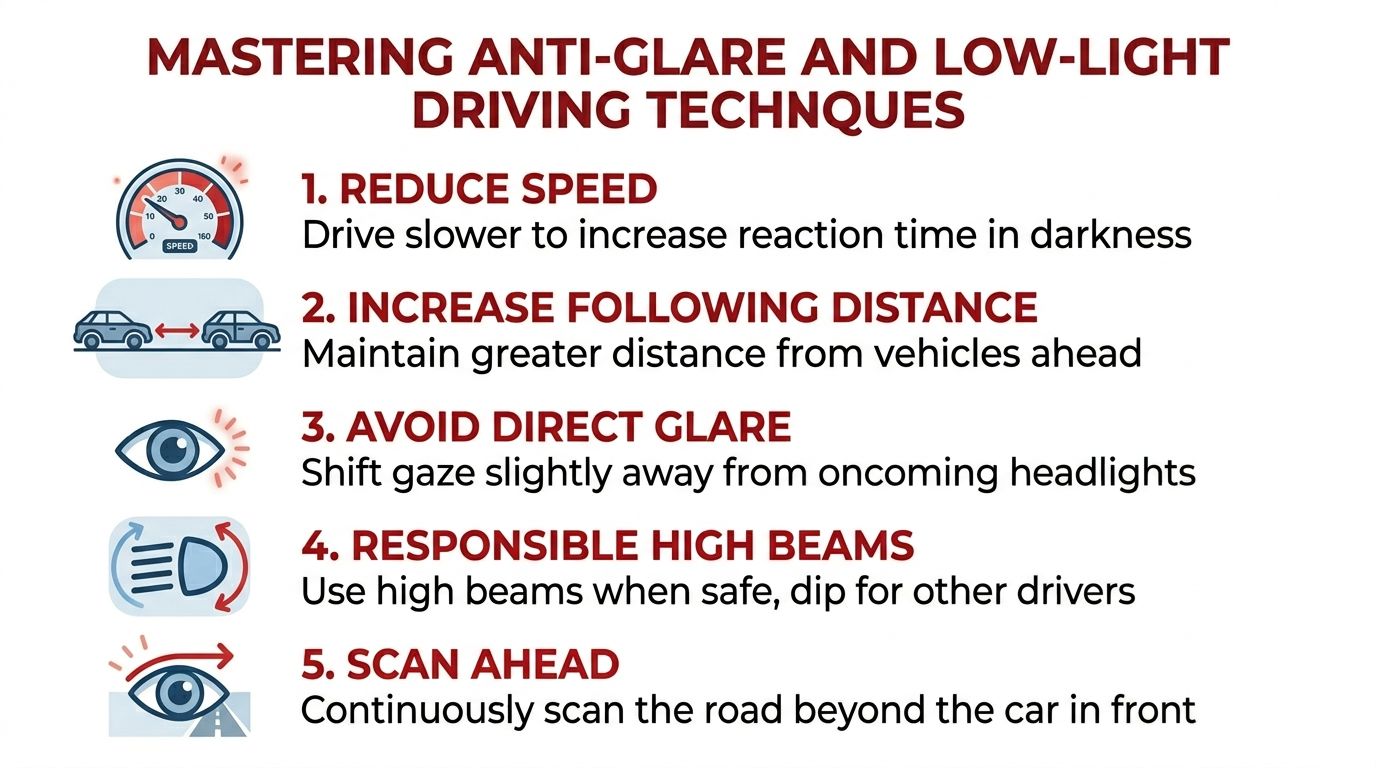
One useful way to think about this is simple. At night, you can't control darkness. You can control where you look, how fast you go, and how much space you leave.
Handle glare without freezing your vision
The biggest mistake drivers make with oncoming headlights is staring right at them. That locks your eyes onto the brightest object in the scene and reduces your ability to track lane position.
Instead, shift your gaze slightly down and to the right. On many roads, the right edge line or road edge gives you a safer visual reference. You are not closing your eyes or looking away from the road. You're changing your focal target so glare doesn't dominate your vision.
Use the same idea with bright taillights, reflective signs, and wet pavement glare. Keep scanning. Don't fixate.
For drivers who wear multifocal eyewear, lens design can affect comfort behind the wheel. If that applies to you, this guide for South Florida drivers' progressive lenses offers practical questions to discuss with your eye doctor.
Don't over-drive your headlights
This is one of the most important night driving habits. If you're driving so fast that you couldn't stop within the area lit by your headlights, you're over-driving them.
On a dark road, that can happen without you noticing. The car feels stable, traffic is light, and then a curve, stalled vehicle, animal, or debris appears inside the limited area you can see.
Use this mental check:
- If the road ahead looks short, reduce speed.
- If the lane markings appear late, reduce speed.
- If rain, glare, or hills cut your view, reduce speed further.
- If you're following another car too closely to see around it, back off.
This isn't timid driving. It's disciplined driving.
Look where you need information, not where the brightest light is pulling your attention.
Increase space and scan farther ahead
Following distance matters more at night because you identify trouble later. If the car ahead brakes hard near a dark intersection, a tight following gap gives you fewer options.
Create extra space and scan beyond the vehicle in front of you. Watch for:
- Brake light patterns farther ahead
- Cross traffic movement near side roads
- Pedestrians near unlit corners
- Lane changes from drivers who may not see you well
- Road edge clues such as reflectors, mailbox lines, and shoulder shape
A blind-spot check becomes even more important when mirrors are full of glare and limited contrast. This guide on how to check blind spots while driving is a useful refresher if nighttime lane changes make you uneasy.
A short visual lesson can help make these habits stick:
Training works in low light
Drivers often assume that once visibility drops, performance falls apart no matter what. That's not a helpful mindset. People can perform well in low light when they have the right tools and training.
In a study of medical procedures performed in blackout conditions using night-vision devices, there were no significant differences in success rates compared to standard lighted conditions, showing that with the right training and tools, humans can perform complex tasks safely and effectively in low light according to this PubMed-indexed study on blackout conditions and night-vision devices.
Driving isn't surgery, of course. But the lesson carries over. Skill reduces chaos. Repetition reduces panic. A driver who has practiced anti-glare habits, speed control, scanning, and lane discipline will handle darkness much better than a driver who just hopes to "see better somehow."
From Theory to Practice Building Real-World Confidence
Knowing the rules of night driving and using them smoothly are different things. Confidence comes from repetition in the right order.
Start small. Use a familiar route first, ideally one with clear lane markings, lower speeds, and moderate lighting. Practice reading signs earlier, checking mirrors without staring at glare, and judging safe speed based on what your headlights reveal.
A smart practice progression
Don't jump straight from daylight errands to the darkest road you can find. Build skill in layers.
Begin in early evening
Drive while there's still some ambient light. This helps you adapt to changing visibility without going straight into full darkness.Move to familiar nighttime routes
Choose roads you already know. When the layout is familiar, your attention can stay on technique.Add moderate traffic
Practice judging closing speed, oncoming glare, and lane position around other drivers.Introduce harder conditions carefully
Wet roads, brighter commercial corridors, and faster multilane roads require more control. Add one challenge at a time.
What teens and parents in Georgia should focus on
For Georgia teens, night driving isn't just a comfort issue. It's part of real license preparation. New drivers need repeated exposure to dark-road decisions, headlight use, glare management, and speed control in conditions that feel different from daytime driving.
Parents often try to coach this on their own, but they run into a common problem. It's hard to teach and supervise at the same time, especially when the person in the passenger seat is also nervous. That can lead to vague advice like "slow down" or "watch out," which doesn't teach a repeatable method.
A better approach is to focus on one skill per drive:
- One night, work on glare control
- Another night, work on turns and lane placement
- Another, practice scanning and following distance
- Another, focus on smooth braking and hazard recognition
Confidence grows when the driver knows exactly what skill they're practicing and gets immediate correction.
Adults returning to driving after a long break should use the same approach. Night anxiety usually drops when the driver has a system instead of relying on guesswork.
If you want a practical framework for steady improvement behind the wheel, this article on how to improve driving skills breaks down the kind of deliberate practice that leads to lasting results.
Your Path to Safer Driving and a Georgia License
Night vision improvement isn't one magic fix. It's a chain. Check your eyes. Prepare your vehicle. Use disciplined low-light driving habits. Then practice until those habits feel normal.
That's especially important in Georgia, where teens working toward a license, adults returning to driving, and nervous test-takers all need more than generic advice. They need a clear path that connects classroom learning, night-driving practice, and road-test readiness.
If cost is part of the concern, it's worth looking into the Georgia Driver's Education Scholarship Grant Program. And if flexibility matters, online learning options can make it easier to complete driver education while still making time for behind-the-wheel training and road test preparation.
Night driving confidence isn't something you're born with. It's something you build.
If you're ready to turn night driving practice into real skill, A-1 Driving School offers Georgia-focused options that fit where you are now. You can explore Joshua's Law driver education, online course options, road test support, the Georgia Driver's Education Scholarship Grant Program, as well as driving lessons and lesson packages specifically built for teens and adults who want hands-on practice. If your goal is to feel calmer, see hazards sooner, and drive more confidently after dark, A-1 gives you a clear next step.