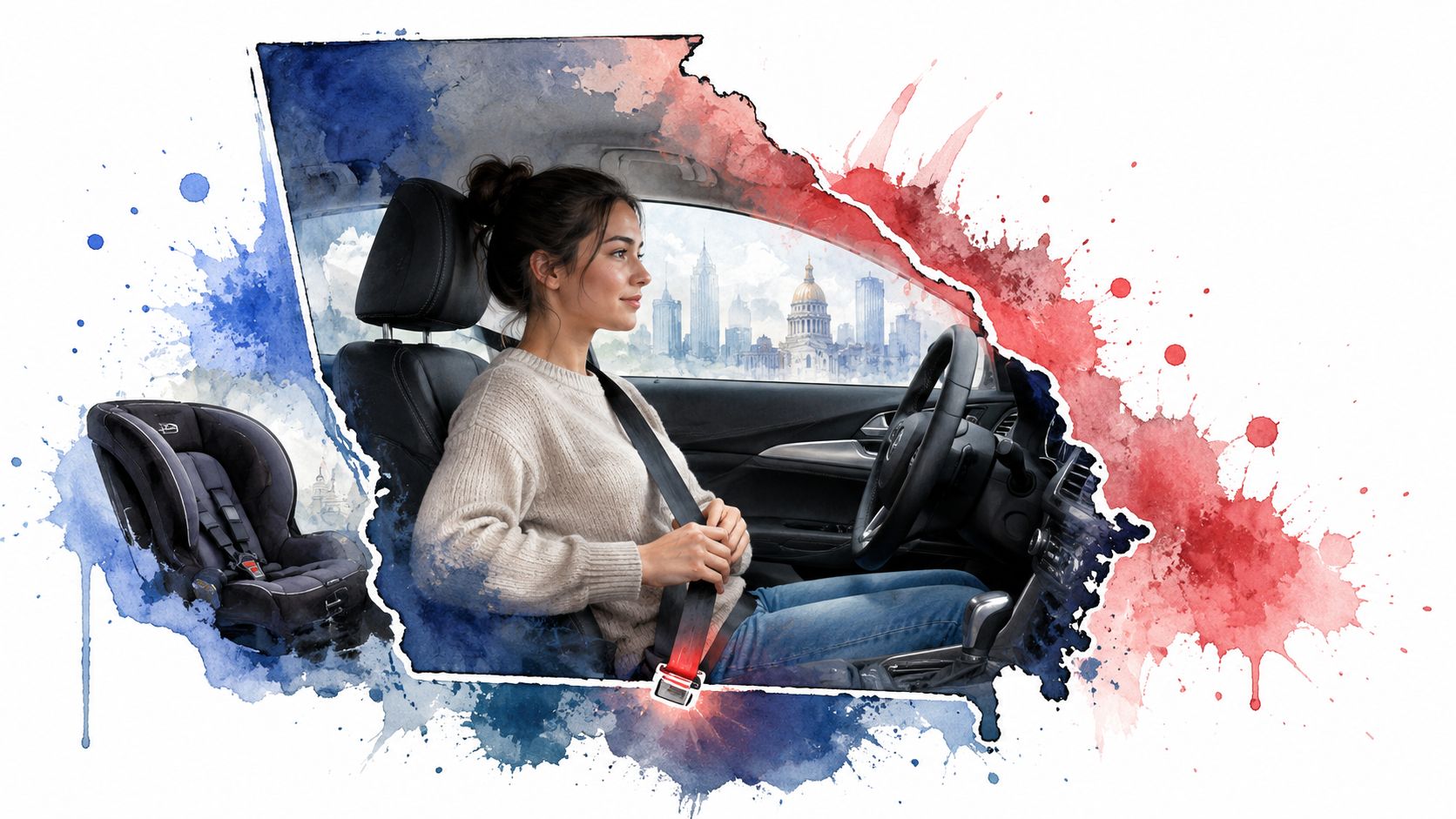
In Georgia, every front-seat occupant must wear a seat belt, and children 8 years old or older must also be restrained in a passenger vehicle on public roads. The ticket is small compared with the serious stakes, because seat belt use affects safety first and, in some cases, can now affect civil liability after a crash.
If you're a new driver, a parent of a teen, or someone getting ready for a road test, this is one of the first habits to lock in. Buckling up isn't a detail you remember later. It should happen before the car moves, every single trip.
Why Georgia Seat Belt Laws Matter for Every Driver
Your teen has the permit, the practice log, and a road test date circled on the calendar. You back out of the driveway for another practice drive, and before the car even rolls, there is a small moment that sets the tone for everything else. Click. Belt on. Check mirrors. Feet set. Then go.
That first click is part of learning to drive in Georgia. Seat belt use belongs in the same category as checking traffic before a turn or stopping fully at a stop sign. It is one of the first repeatable habits that shows a new driver how to prepare before the vehicle moves.
That is why seat belt compliance fits naturally into the teen driver journey. A student working through Joshua's Law is not just collecting hours. They are building routines that stay steady under pressure. The road test works the same way. Examiners look for drivers who follow safe procedures in the right order, and a calm pre-drive routine starts with buckling up.
There is also a legal and financial side that families should understand early. A seat belt choice can affect more than a traffic stop after a crash. In some cases, it can become part of the civil liability discussion too, which makes this more than a handbook rule for parents and teens planning for the long term.
A simple way to teach it is to treat the seat belt like the key to the routine. Before the car moves, the belt goes on. Before a teen shifts into gear, they check that the people who must be restrained are ready too. Repeating that sequence every trip turns a reminder into a habit.
At A-1, that is how we teach it. Seat belt use is part of the foundation, right alongside scanning, signaling, lane position, and pre-drive checks. If you want a simple refresher to use at home, A-1 also explains why drivers should always use seatbelts in plain language for students and parents.
Teen drivers benefit from this approach because early mistakes usually happen at the start of the drive. A rushed student may forget a mirror check, a signal, or the belt. A practiced routine solves that problem by giving the brain the same starting sequence every time.
For families, the goal is bigger than avoiding a ticket. The goal is teaching a new driver that safe driving begins before the wheels roll.
The Law for Adults and Front Seat Passengers
A parent hands the keys to a teen for a practice drive. Everyone is focused on mirrors, signals, and staying calm in traffic. Then one small step gets missed before the car even moves. The front-seat belt is still hanging at the door.
In Georgia, that is not a minor detail. For adults and front-seat passengers, seat belt use is a rule an officer can enforce on its own. If an officer has a clear, unobstructed view that the driver or front-seat passenger is not buckled, the stop can begin there.
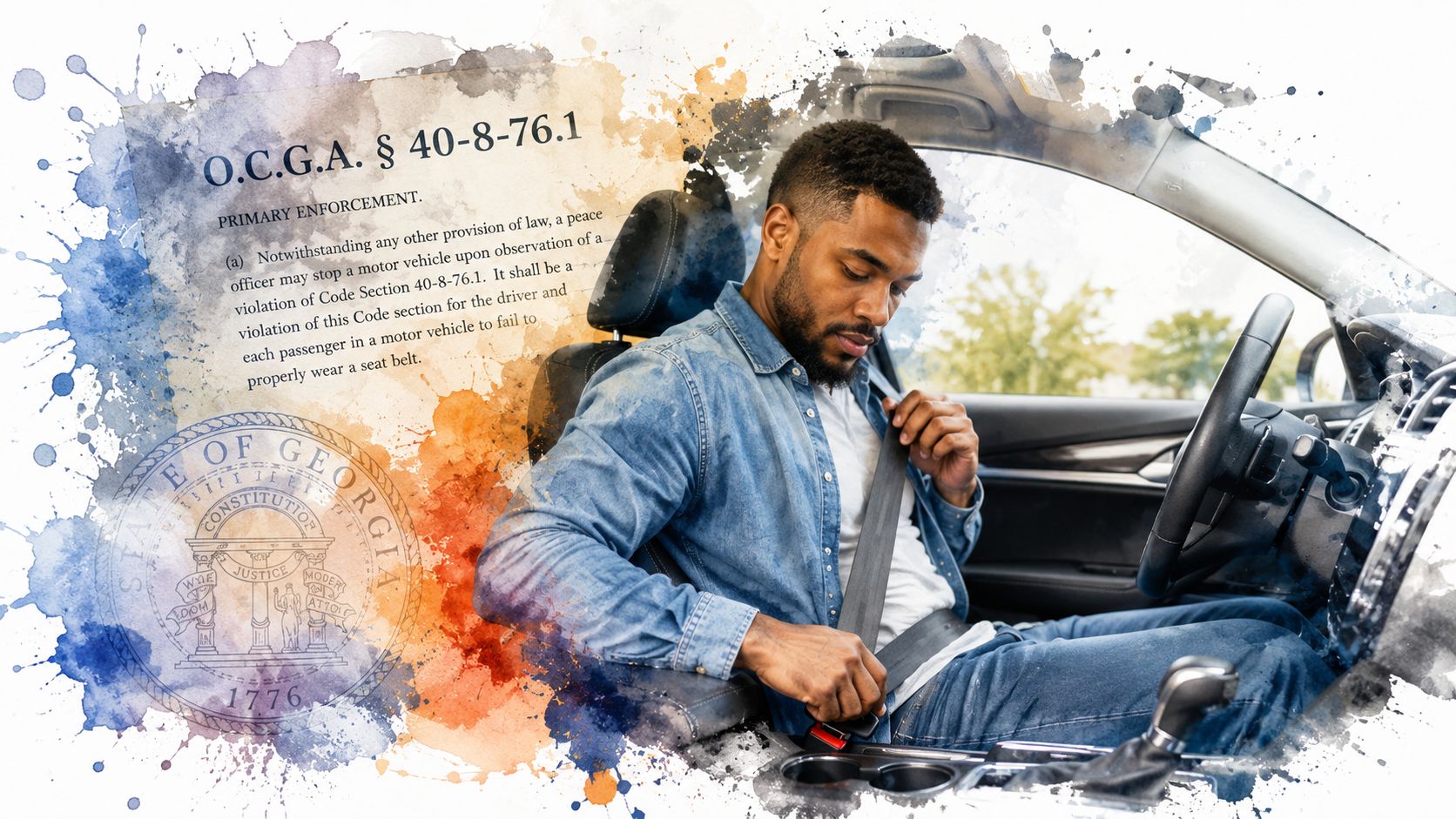
That point clears up a common misunderstanding. Some Georgia drivers still repeat an older idea that police need some other reason to pull the car over first. For front-seat belt violations, that is not how the rule works.
What adults need to know
Start with the simple version. If you are driving or riding in the front seat, wear the seat belt.
For families teaching a teen, it helps to treat this like the first item in the start-up checklist. The belt goes on before the car shifts into gear, just like checking mirrors before backing out. A-1 teaches that sequence early because safe driving habits are easier to build than to repair.
Georgia also requires children age 8 or older to be restrained in a passenger vehicle on public roads, as noted earlier in this guide. For many older kids and teens, that means using the vehicle's regular seat belt correctly, with the lap and shoulder portions positioned as designed.
| Seating situation | Basic Georgia rule |
|---|---|
| Driver in front seat | Must wear a seat belt |
| Adult front-seat passenger | Must wear a seat belt |
| Child age 8 or older | Must be restrained in the vehicle |
Parents sometimes ask a practical question here. If a teen is old enough for a regular belt, does fit still matter? Yes. The law sets the floor, but good protection also depends on proper use and proper fit. Families who need help with younger passengers can review A-1's child safety seat installation guidance, and it can also help to compare how another state explains age-based restraint rules in Bryan Fagan on Texas car seats.
Why primary enforcement changes driver behavior
Primary enforcement works like a teacher checking the first step before the lesson starts. The rule is not waiting in the background until something else goes wrong. It stands on its own.
Georgia adopted this approach years ago, and researchers later reported that observed belt use increased after the change, according to a Georgia policy study published in PMC. The law's history shows it was changed specifically to alter driver behavior.
That is one reason this rule belongs in every teen driver's routine, not just in a legal summary for adults. A student who learns to buckle up automatically is practicing the same kind of disciplined sequence that helps on the road test and in real traffic.
Child Restraint Systems A Guide for Parents
Your teen has almost finished a driving lesson, and a younger brother or sister climbs into the back seat for the ride home. That moment matters more than many families realize. Seat belt law is not only about the person learning to drive. It also covers how that new driver carries younger passengers safely, which is one reason A-1 treats child restraint checks as part of building real-world driving habits, not as a side topic.
Parents usually agree on the goal. The confusing part is the transition from one stage to the next. A child can look ready for a regular seat belt and still fit it poorly. A booster works like a positioning tool. It helps the vehicle belt sit where it can protect the body correctly instead of riding too high on the stomach or too close to the neck.
Georgia law draws an age-based line, and as noted earlier, children age 8 or older must be restrained in the vehicle. For children under 8, parents need to use the child restraint system that fits the child and follow both the product instructions and Georgia law.
Georgia child restraint requirements at a glance
| Child Age | Requirement | Position |
|---|---|---|
| Under 8 | Use the appropriate child restraint system for the child | Follow the child restraint system instructions and Georgia law |
| 8 or older | Must be restrained in the vehicle | Seat belt or age-appropriate restraint, depending on fit and circumstance |
That chart gives the quick answer. Real life needs one more step. Age answers part of the question, but fit answers the safety question parents care about most.
Three problems come up again and again:
- Leaving the booster too soon: A child may meet an age threshold and still not sit in a way that lets the belt rest properly.
- Assuming kids buckle correctly without help: Younger passengers miss steps, twist belts, or tuck the shoulder belt behind the back.
- Treating short local trips casually: School runs, practice drop-offs, and quick errands still require the same check every time.
A good pre-drive routine helps. Before the car moves, the driver should confirm each child is in the right seat, strapped in correctly, and sitting the right way. That habit matters for parents now, and later for teens who will soon be responsible for passengers of their own.
Families who want extra help can review A-1's child safety seat installation resource. It gives practical guidance on setup and fit, which can prevent mistakes that are easy to miss in a rushed parking lot.
If your family travels, remember that child restraint rules change from state to state. A comparison like Bryan Fagan on Texas car seats shows why parents should not assume every state uses the same age cutoffs or restraint rules.
That mindset also prepares teens for the bigger picture of driving responsibility. A driver who learns to check every passenger, including younger children, is practicing the same careful routine that supports road test success, Joshua's Law training, and better decisions if a crash ever leads to questions about fault or safety choices.
Fines Penalties and a Major New Liability Rule
A seat belt ticket can look small on paper, which is why many drivers brush it off. In Georgia, the fine for an adult or front-seat passenger who is not buckled is limited, and a driver can also be fined for transporting an unbelted minor age 8 or older. State law also limits added court costs and similar extra charges for that offense, as noted earlier in the article.
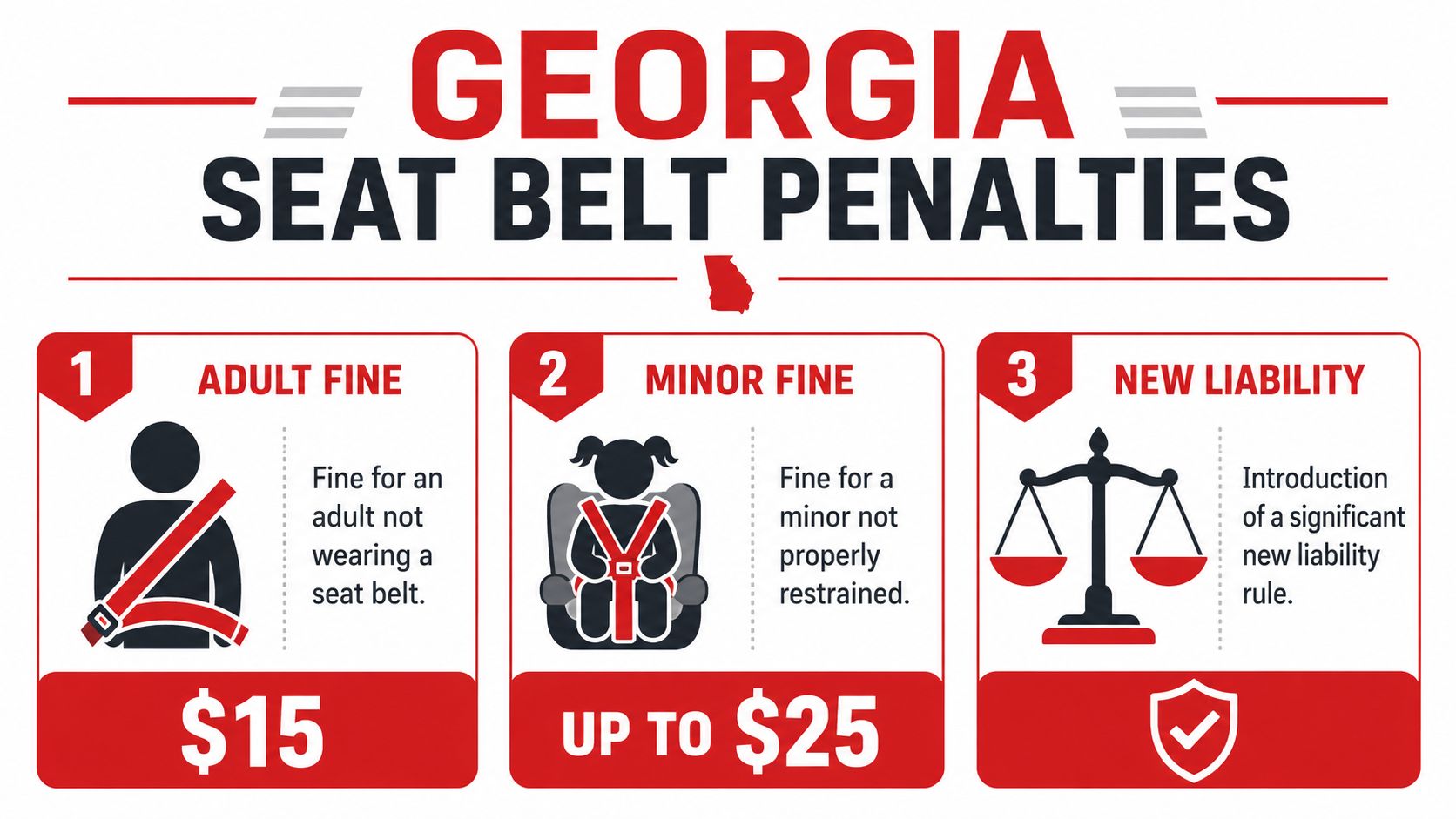
The fine is only the easy-to-see part.
The overlooked consequence after a crash
As of April 2025, SB 68 allows defendants in civil cases to raise a plaintiff's seat belt non-use as evidence tied to negligence, fault allocation, injury causation, and related questions, according to the Washington Legal Foundation summary of Georgia's 2025 change.
For a new driver, that changes the lesson completely. Buckling up is not only about avoiding a ticket during a traffic stop. It can also affect what happens later if a crash leads to an insurance dispute or lawsuit.
What that means in plain English
A driving instructor would separate this into two different problems.
- Traffic enforcement: Can an officer issue a citation for not wearing a seat belt?
- Civil liability: If someone is hurt in a crash, can seat belt non-use become part of the argument about fault or injuries?
The 2025 change makes the second question far more significant than many families realize. A small roadside fine may fade fast. A civil case can stay with you much longer.
That is one reason A-1 teaches seat belt use as part of a full pre-drive routine, the same kind of routine students need while working through the steps for a Georgia provisional license process. Good habits protect you in the moment, and they also protect you if someone later examines your choices after a collision.
For teens, this point lands early. The seat belt click at the start of a trip is a legal step, a safety step, and now more clearly than before, a liability step too.
Seat Belts Joshua's Law and Your Road Test
A teen pulls up for the road test, remembers the turn signal rules, and knows where the headlights are. Then nerves take over, and one of the first steps gets skipped before the car even moves. The examiner notices right away.

Seat belt use shows up early in a Georgia driver's training path because it belongs early. During permit practice, Joshua's Law coursework, and test prep, students are learning how to build a routine they can repeat under pressure. If you're working toward a Georgia Class D license, A-1's guide on how to get a provisional license helps place that habit inside the full licensing process.
Why examiners pay attention to it
A road test measures more than steering and stopping. It also shows whether the student follows a pre-drive sequence in the right order. Seat, mirrors, belt, then vehicle setup. That order works like the first steps of a checklist before takeoff. Miss an early item, and the rest of the routine gets less reliable.
At A-1, instructors teach seat belt use as part of the startup pattern, not as a fact to recite from memory. That approach helps students stay calm because the body already knows what to do.
Strong students usually practice these behaviors until they feel automatic:
- Entering in order: Sit down, adjust the seat, set the mirrors, buckle up, then finish the rest of the setup.
- Checking passengers: If a younger sibling or friend is in the car, make sure that person is secured before the vehicle moves.
- Restarting after a distraction: If conversation, a phone notification, or test nerves interrupt the routine, begin the checklist again from the top.
Why parents should care before the first solo drives
Many parents focus on passing the test, but the bigger goal is what happens the week after the license is issued. Teen drivers often start with short familiar trips, and those drives can create false confidence. The seat belt habit has to be strong enough to survive a rushed school morning, a chatty passenger, or the pressure of driving younger siblings.
That sibling example comes up often. One of a teen's first real responsibilities after licensing is taking a brother or sister to school, practice, or a friend's house. As noted earlier, Georgia can hold the driver responsible when an older child in the vehicle is unbelted, so this is a real-world habit, not just a classroom rule.
A short visual refresher can help reinforce safe pre-drive habits:
Good test performance starts before the engine starts. Examiners watch what you do before the vehicle moves.
That is also why A-1 connects seat belt training to the broader idea of developing a driver safety culture inside the car. For a teen driver, the click of the belt is one small action that supports three bigger goals at once. It helps with the road test, supports Joshua's Law training habits, and shows the kind of judgment that matters if a crash later raises questions about responsibility.
Build Safe Habits From Day One with A-1 Driving
Most drivers don't break seat belt rules because they're making a big statement. They break them because they're distracted, rushed, or overconfident. That's why the best approach isn't just "know the law." It's building a routine that works even on your busiest day.
A simple habit stack that works
Try this sequence every time you enter the vehicle:
- Seat first: Get your seating position right before anything else.
- Mirrors next: Set what you need to see before the car moves.
- Belt before ignition: Treat the seat belt as part of starting the drive, not an optional extra.
- Passenger check: If anyone else is riding with you, confirm they're ready too.
That routine helps teens, adults returning to driving, and parents supervising permit practice. It also creates a safety culture inside the car, which lines up with broader guidance on developing a driver safety culture in training programs.
A note on exceptions and real-world judgment
Georgia law does contain limited exceptions in certain circumstances, such as some medical situations or particular vehicle categories. If someone believes an exception applies, they shouldn't rely on guesswork or family folklore. They should confirm the rule directly before assuming they're exempt.
For almost everyone, though, the practical answer is straightforward. Buckle up every trip, require passengers to do the same, and make child restraint checks part of the driver's routine.
The larger lesson from Georgia seat belt laws is simple. Safe driving isn't built from one dramatic choice. It's built from small actions repeated until they become automatic.
If you're ready to turn those habits into real driving confidence, A-1 Driving School offers the services Georgia families need: driver's education for Joshua's Law, flexible online course options, road test support, information on the Georgia Driver's Education Scholarship Grant Program, and especially, behind-the-wheel driving lessons and lesson packages that help teens and adults practice safe routines until they stick.