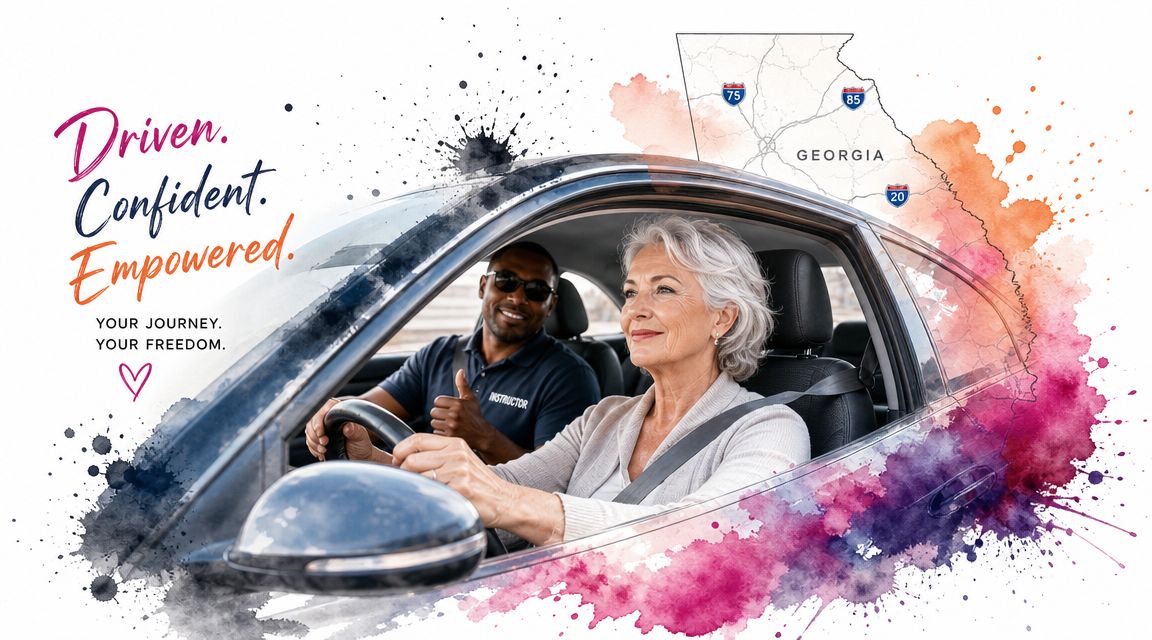
You've probably felt this at least once. You're still a capable driver, but traffic feels faster than it used to. Intersections seem busier. A newer car has more screens, alerts, and buttons than you expected. You still want the freedom to drive yourself to church, the grocery store, family events, and doctor visits. You just want to feel a little steadier doing it.
That's exactly where senior driving lessons can help.
As a driving educator, I can tell you this with confidence. A refresher lesson isn't a step backward. It's a smart way to protect your independence. Most experienced drivers don't need beginner training. They need calm, practical coaching focused on the situations that now feel less comfortable than they once did.
Sometimes the issue isn't driving skill alone. Comfort, flexibility, and body positioning can affect how safely you move in and out of the car and how easily you check mirrors and blind spots. If balance and mobility are part of the bigger picture, this guide on how to prevent falls with these exercises can be a useful companion resource.
Maintaining Your Independence on the Road
Many older adults I meet say the same thing in different words. “I'm not ready to stop driving. I just don't like how rushed the roads feel now.” That's a practical concern, not a failure.
Senior driving lessons work best when you treat them like a routine checkup. You're not waiting for a major problem. You're staying ahead of one. That might mean reviewing left turns across traffic, getting more comfortable with lane changes, or practicing in the exact areas of Georgia where you now feel tense.
Why confidence matters
Driving isn't only about knowing the rules. It's about making smooth decisions under pressure. A little hesitation at the wrong moment can make a simple trip feel stressful.
Older adults are also a growing part of the driving population. The IIHS estimates that in the United States in 2023, there were about 40 million people age 70 and older, with approximately 35 million licensed drivers in that age group. That's up 98% since 1997, and 88% of people 70+ held licenses, compared with 73% in 1997 (IIHS older driver research).
Practical rule: If driving still matters to your life, it's worth maintaining the skill the same way you maintain your health.
What a lesson can do right away
A strong refresher lesson can help you:
- Reduce tension at busy intersections by practicing timing, scanning, and right-of-way judgment
- Feel more settled in traffic by working on speed matching and lane positioning
- Adjust to physical changes with better mirror setup, seat position, and easier driving habits
- Keep your freedom longer by making driving safer and less draining
The goal isn't perfection. The goal is safe, confident mobility.
What Senior Driving Lessons Are and Why They Matter
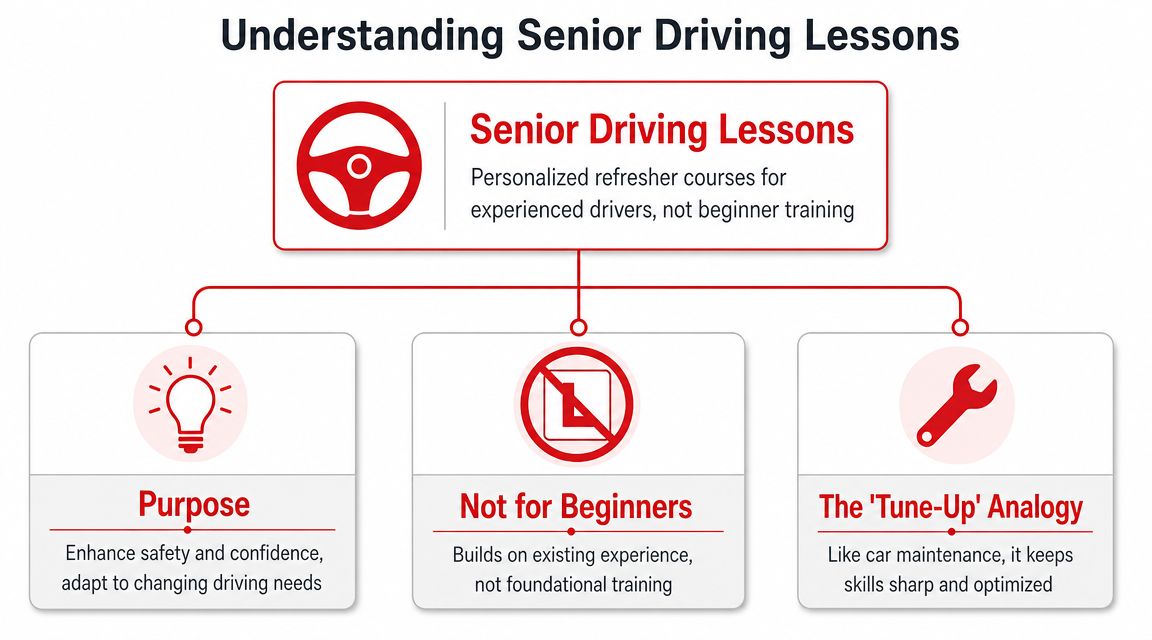
Senior driving lessons are personalized refresher lessons for experienced drivers. They aren't beginner classes. Think of them as a driving tune-up. You already know how to drive. You're updating the parts of driving that have changed, or the parts that now take more effort than they used to.
What they are
A senior lesson usually focuses on real-world needs, such as:
- Driving your current car instead of a generic training vehicle
- Practicing your routes like local errands, medical offices, or church
- Working on one challenge at a time such as merging, parking, or turning left in heavy traffic
- Learning modern vehicle features without feeling rushed
Many seniors are driving newer vehicles, but misunderstanding advanced driver-assistance systems can create overconfidence or avoidance. Professional lessons help older adults learn the controls in their own car, understand which tech features reduce crash risk, and set up the vehicle for maximum comfort and safety (older driver technology overview).
What they are not
These lessons aren't about treating you like a teenager with a permit. They don't start from zero unless you want a very basic review. They also aren't meant to shame or pressure you.
A good instructor looks at what's still strong and builds from there.
A refresher lesson should leave you feeling clearer, not smaller.
Why they matter now
The roads have changed. Cars have changed. In some cases, your body has changed too. That doesn't mean you can't drive well. It means your training should match your current reality.
Some drivers want to review road rules and age-specific safety concepts through an AARP-based format before getting back behind the wheel. If that sounds helpful, this explanation of why a senior might take an AARP course can help you decide whether that kind of classroom refresher fits your needs.
Here's the simplest way to understand it:
| Focus area | Why it matters |
|---|---|
| Busy roads | Traffic density can make timing and spacing harder |
| New technology | Backup cameras and alerts help only if you know how they work |
| Physical comfort | Good seat and mirror setup can reduce strain and improve visibility |
| Confidence | Calm practice helps you make decisions more smoothly |
Signs It Might Be Time for a Driving Refresher
You pull up to a busy Georgia intersection you have driven through for years. The light changes, cars move from three directions, and for a second everything feels faster than it used to. You still get through safely, but the drive no longer feels as relaxed or predictable.
That kind of moment is often the first signal.
A refresher is not about proving you can still drive. It is about catching small changes early, while they are still manageable. A good lesson works like a tune-up for a car. You are not waiting for something to fail. You are keeping a good system working well.
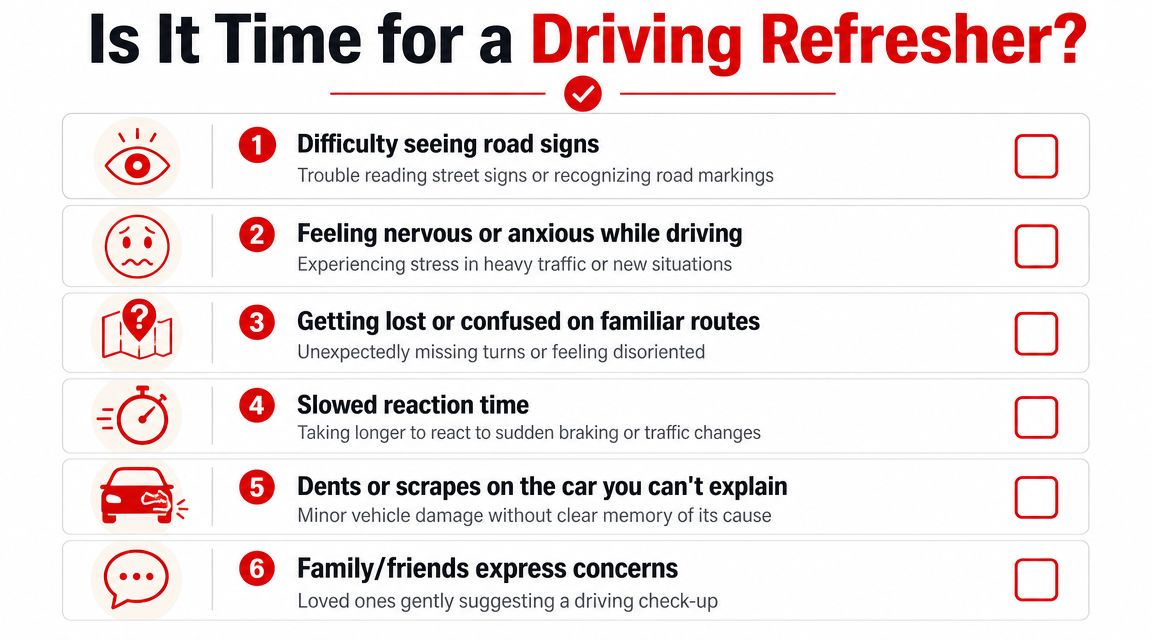
Common signs that deserve attention
You may be ready for a refresher if you notice one or more of these patterns:
- Intersections feel busy in a new way. You have more trouble judging gaps, tracking signals, or deciding when to turn.
- Lane changes require more concentration. Checking mirrors, judging speed, and moving over smoothly takes longer than before.
- Night driving feels draining. Glare, bright headlights, and lower contrast make evening trips harder to enjoy.
- You have started avoiding certain roads. Highways, left turns, or heavy traffic may feel more stressful, even on familiar routes.
- A newer vehicle feels harder to read. Screens, alerts, camera views, and touch controls can pull your attention if they are not yet second nature.
- Someone close to you has mentioned a concern. That does not automatically mean anything is wrong. It may mean an outside opinion could help.
Sometimes drivers ask us, "Is avoiding one situation really a sign?" It can be. Avoidance is often the road-testing version of a sore knee. You may still be functioning well, but your body or your habits are telling you something needs attention.
One skill area deserves a closer look
Intersections are a good example because they combine timing, scanning, speed judgment, and decision-making all at once. According to the IIHS, older drivers are more likely to be involved in certain crash types at intersections. In 2023, multiple-vehicle intersection crashes accounted for 39% of fatal-crash involvements among drivers 80 and older, compared to 21% for drivers under 60 (IIHS older driver research).
That does not mean every older driver is at high risk. It means intersection practice is a smart place to focus, especially if turns, signals, and cross traffic feel more demanding than they once did.
A simple self-check
Ask yourself:
- Do I feel tense before certain trips?
- Am I skipping roads or situations I used to handle comfortably?
- Do I understand every major safety feature in my current car?
- Would a calm practice drive with an instructor likely make me feel steadier?
If you answered yes to even one, it may be time to review your options for senior driving lessons in Georgia.
The best time to act is when you first notice a change. Early practice can help you stay safe, capable, and independent for longer.
Driving Lessons and Packages for Georgia Seniors
Georgia drivers often need flexibility more than anything else. Some want one calm review session. Others want a package that gives them time to practice, absorb feedback, and return for another lesson after they've had a chance to settle in.
That's why lesson packages matter.
What to look for in a lesson package
A useful package should fit your goal, not force you into a one-size-fits-all plan.
Some seniors do best with a single refresher focused on one issue, such as:
- Merging onto faster roads
- Parallel parking or angle parking
- Handling busy intersections
- Getting comfortable after a long break from driving
Others want a broader package that covers several sessions. That's often the better choice when the driver wants repeated practice in different settings, such as neighborhood roads, multi-lane traffic, parking lots, and main commuter routes.
Why behind-the-wheel coaching works
Classroom review can help with road rules. But skill confidence often returns fastest when the lesson happens in the car, on the road, with a patient instructor.
That's especially true for older-driver training. Research confirms that the most effective older-driver training includes individualized, behind-the-wheel feedback from a professional. This strengths-based approach has been shown to improve both road-safety knowledge and a driver's own perception of their ability (FHWA older driver training summary).
What does that look like in practice? It looks like an instructor saying, “Your scanning is strong. Let's now tighten up your lane position on this turn.” That kind of feedback is specific, respectful, and useful.
Road testing support can make the process easier
For some seniors, the stress isn't only the lesson. It's the road test process itself. Using a school that offers road testing support can reduce confusion and make the day more manageable.
This is especially helpful if you want:
- Practice that matches test expectations
- A familiar process instead of last-minute uncertainty
- Coaching on exactly what examiners watch for
- A smoother path from lesson to test day
A driving school with dedicated senior options can also help you choose the right level of support. If you want to compare lesson formats and package options built for older adults, take a look at these driving lessons for seniors in Georgia.
For drivers who like to see how a school approaches instruction and support, this overview is helpful:
What about online courses and other Georgia options
Not every need belongs behind the wheel. Some drivers want a short review of signs, right-of-way rules, or current Georgia expectations before scheduling lessons. That's where online driver's education options can help.
Families may already know a school because of teen driver's education, Joshua's Law courses, or road test prep. That can be a benefit. A school that teaches new drivers, adults, and older adults usually has broader experience adjusting instruction to different comfort levels.
The important thing is this. For senior drivers, the key differentiator is often the quality of the driving lesson itself. Not just a course login. Not just a handbook review. Real coaching in real traffic.
Choosing Your Course and Understanding Costs
The right course should feel manageable from the first phone call. You shouldn't have to guess what kind of lesson to book or worry that the instructor will move too fast.
Start by choosing based on your actual need. If your main concern is skill confidence, look first at driving lessons. If you need a road rules review, an online option may help. If you're helping a grandchild at the same time, you may also notice schools that offer Joshua's Law and driver's education programs for younger Georgia drivers. That broad offering can be convenient for families, but your focus should stay on the service that fits you.
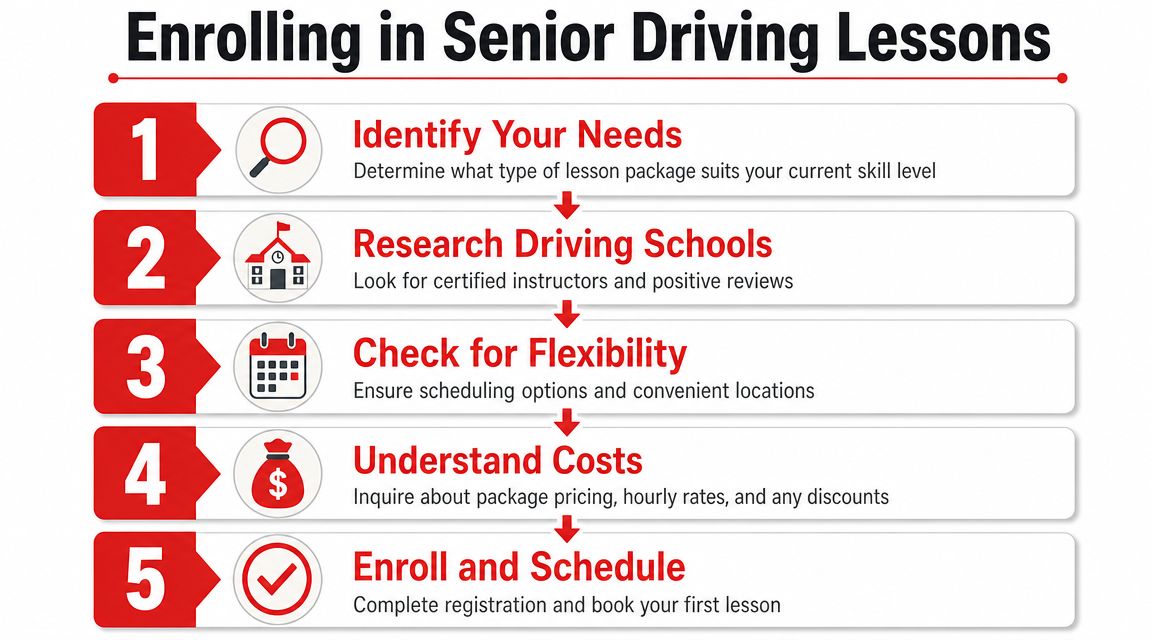
What to ask before you enroll
Use a short checklist:
- Lesson type. Ask whether the school offers one-time refreshers and multi-lesson packages.
- Scheduling. Make sure lesson times fit when you feel most alert.
- Locations. A school with many Georgia locations can make practice simpler and less stressful.
- Vehicle options. Ask whether you can train in your own vehicle or a school car.
- Road testing. Confirm whether the school offers test preparation or testing services.
What the first lesson should feel like
A good first lesson is calm and focused. The instructor should ask what you want to work on, observe without rushing you, and give feedback that is specific but respectful.
You don't need someone to “judge your driving.” You need someone to help you sharpen it.
That may mean beginning in a low-pressure area before moving into busier traffic. It may also include simple vehicle setup checks. Georgia's older-driver safety guidance supports self-assessment, certified driver safety courses, medication awareness, route planning, and CarFit-style adjustments so the seat, mirrors, head restraint, pedals, and belt fit the driver properly (Georgia older driver safety guidance).
About costs and scholarship help
Costs vary by school and by package, so it's smart to ask for clear pricing before you book. The most affordable choice isn't always the lowest single-session price. In many cases, a package gives you better continuity and more time to build confidence.
If your family is also exploring driver training for a teen, Georgia's Driver's Education Scholarship Grant Program may be worth asking about through schools that participate. It's primarily discussed in relation to driver education access, and it can make training more reachable for qualifying families. Schools that serve both seniors and younger drivers can often explain those options clearly, along with online classes, road test services, and lesson scheduling.
If physical limitations are part of the decision, this guide to finding top disability driving schools may help you think through what specialized support to ask for.
Your Checklist for a Confident Return to the Road
A good return to driving often starts with one ordinary trip. You may want to get to church, meet a friend for lunch, or drive across town without feeling tense at every turn. Senior driving lessons help you rebuild that comfort one skill at a time, so everyday travel in Georgia feels more manageable again.
A lesson works like a practice drive with a clear purpose. Instead of hoping confidence comes back on its own, you give it a routine, feedback, and time to grow.
Before your first lesson, keep this checklist handy:
- Bring your license and any paperwork the school asks for
- Write down your goals such as parking, lane changes, downtown traffic, left turns, or highway driving
- Pick the time of day when you feel sharpest so you can focus without extra strain
- Wear comfortable shoes that let you feel the pedals clearly
- Get a good night's rest so you begin the lesson with a clear head
- Mention any vision concerns if glare, road signs, or judging distance has become harder
- Share any worries early so your instructor can shape the lesson around real situations you want to handle
If vision is part of your concern, it helps to review what the DMV vision test checks before your lesson or road test.
Keep your expectations simple for the first session. You do not need to fix everything in one day. A strong lesson often starts with basics such as seat position, mirror setup, smooth braking, and choosing safe gaps in traffic. Those small adjustments work like tuning an instrument. When the setup is right, the whole drive feels steadier.
Many Georgia seniors also do best when they choose support that fits their needs, whether that means a single refresher, a lesson package for steady practice, or road testing help through a school such as A-1.
One solid lesson can change the feel of the road. The traffic may stay busy, but you can feel calmer, more prepared, and more in control.
If you're ready to refresh your skills, practice with a patient instructor, or explore road testing and course options in Georgia, A-1 Driving School offers driving lessons, online courses, and support for drivers at every stage.