Choosing Your Teen's First Car: Safety Beyond the Steel
As a Georgia parent, what's the most important factor when choosing your teen's first car? If you said safety, you're not alone. The vehicle your new driver operates is a huge piece of the peace-of-mind puzzle.
At A-1 Driving School, with over 38 years of experience, we know the most important safety feature isn't the car. It's the driver. A safe vehicle helps, but it only works as well as the teen behind the wheel.
That's why any list of the safest used cars for teens needs one extra idea built into it. The car is safety equipment, but training is what teaches a teen how to use that equipment well. A student who completes a Joshua's Law course, practices with a professional instructor, and gets real behind-the-wheel coaching is in a much better position to make good choices in traffic, parking lots, and on Georgia highways.
This list gives you strong used-car options to consider, along with the practical reasons each one fits a new driver. If you want broader context on how people compare safe vehicles, you can also review these AutoProv insights on vehicle safety.
1. Toyota Corolla (2017–2019; also 2023+)
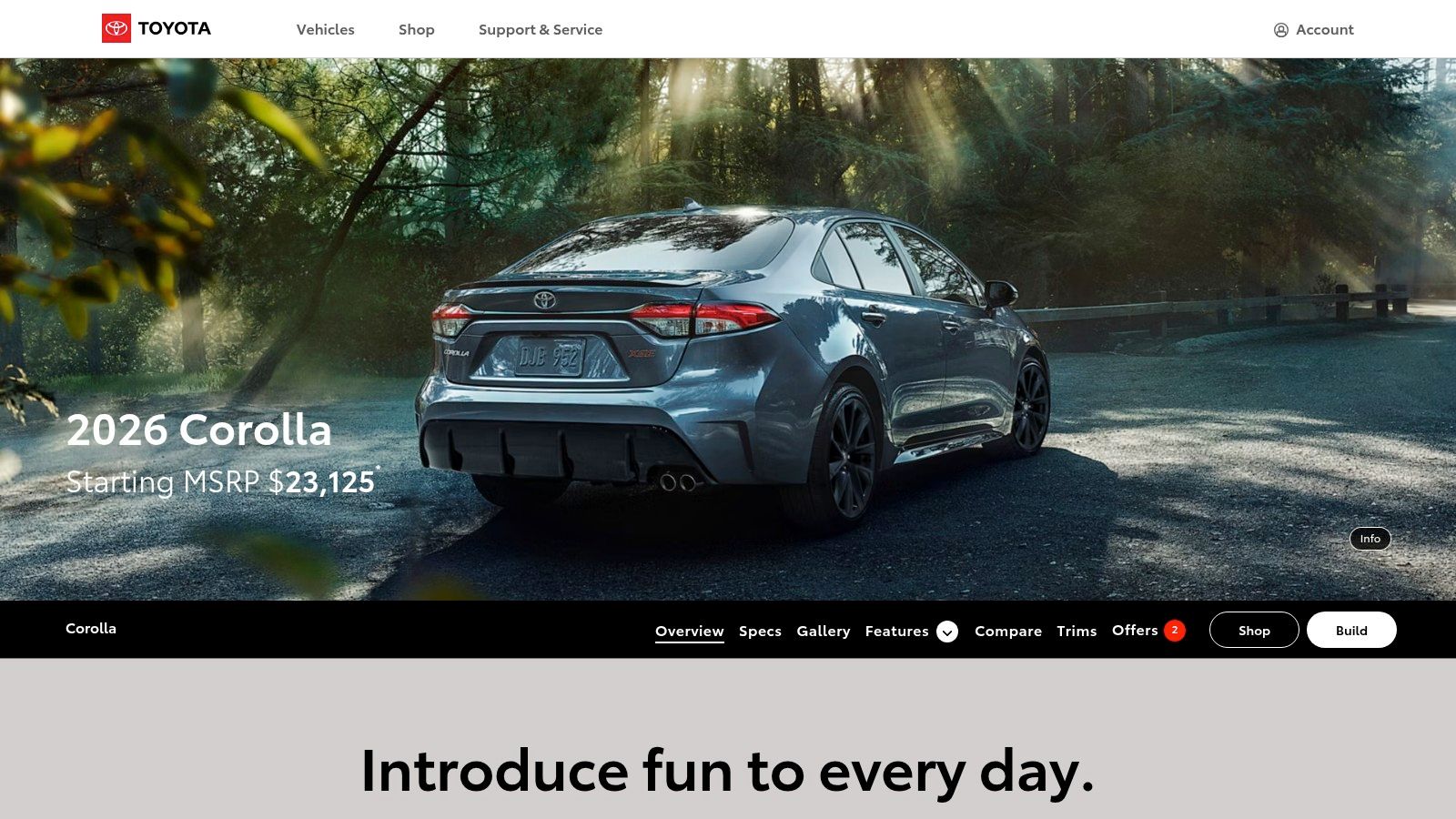
If you want a car that doesn't fight a beginner, start here. The Toyota Corolla has a long reputation for being simple to drive, easy to place in a lane, and predictable in everyday traffic.
That matters for a teen. New drivers need calm steering, clear sightlines, and controls that don't distract them.
Why it works for beginners
The Corolla is widely recommended in teen-car discussions because it combines manageable size with modern safety thinking. Recent guidance on newer safety equipment also points to the Toyota Corolla as one of the models that can include features like automatic emergency braking, lane-keeping assist, blind-spot monitoring, and rear cross-traffic alert in newer versions, which is why many families keep it on the shortlist when comparing older value against newer tech in the Kelley Blue Book teen car overview.
For a first-year driver, the biggest strength is its personality. It's not trying to feel exciting. It's trying to feel easy.
- Easy dimensions: Parking, turning, and judging space are simpler in a compact sedan than in a large SUV.
- Straightforward controls: Teens usually learn faster in cars with uncluttered dashboards and familiar layouts.
- Widely available: It's one of the easier models to find in many used-car markets, so parents can be selective about condition and maintenance history.
Practical rule: If your teen still struggles with smooth braking, speed control, or right turns, a Corolla-sized sedan usually teaches better habits than a large vehicle.
A car like this also pairs well with structured practice. Parents often try to teach everything at once, but teens usually improve faster when lessons are broken into small skills like lane position, mirror use, parking, and scanning. A good starting point is this guide on how to teach a teenager to drive.
You can review model details on the Toyota Corolla website.
2. Toyota Camry (2018 or newer)
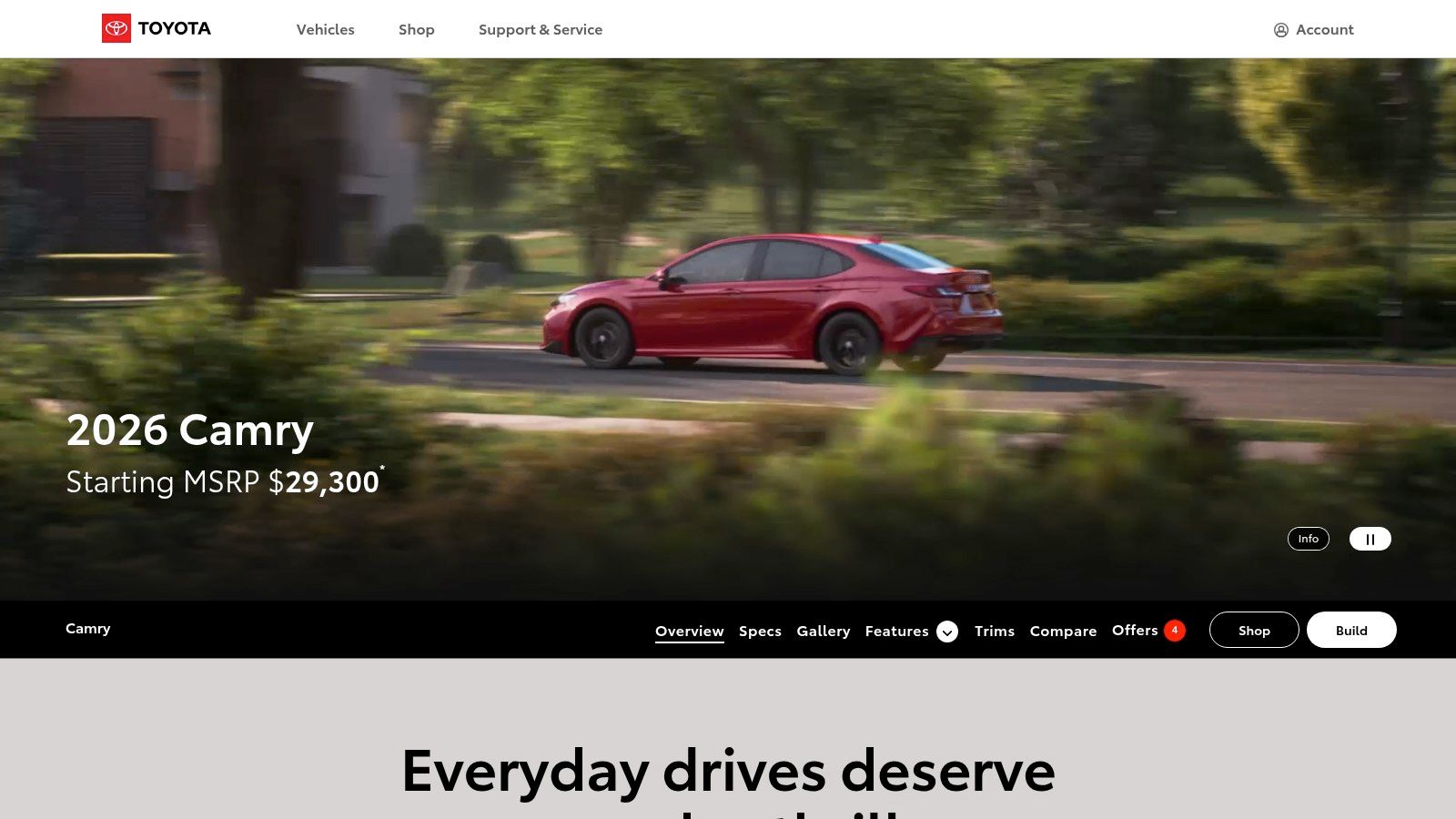
What if your teen has to merge onto busy highways before they have much real-world experience?
That is where the Camry makes sense. It gives a new driver a little more planted feel than a compact sedan, especially on faster roads, but it still behaves like a car a beginner can learn in. That balance matters. A safe vehicle helps most when the driver can predict what it will do.
The Camry works like a sturdier set of training gear. It can give a teen more confidence on long commutes, rough pavement, and heavy traffic, but it does not replace good habits. The strongest safety feature is still driver training. Families comparing vehicles and practice plans should also review these teen driver safety tips and training basics.
Why the Camry fits some teens better
A midsize sedan can be a smart step up for a student who has outgrown the feel of a small car or regularly drives on multi-lane roads.
Here is what parents usually like:
- More settled highway feel: The car often feels calmer during merges, lane changes, and steady-speed driving.
- Room without SUV bulk: Teens get more passenger space and visibility without the parking challenges of a larger crossover or three-row vehicle.
- Predictable controls: For instruction, that matters as much as crash ratings. Students learn faster in cars that brake, steer, and respond in a consistent way.
A simple way to picture it is this. A compact sedan is often easier in a parking lot. A midsize sedan like the Camry can feel easier at 60 mph. The better choice depends on where your teen will drive.
There is also the money side. Families often look past the sale price and ask what ownership will cost month to month. If you're weighing that part of the decision, it helps to understand whether adding your teen to your insurance can raise your rates.
Best fit for this car
The Camry is a strong match for:
- Highway commuters: Teens driving to school, work, or activities on faster roads.
- Taller students: Drivers who feel cramped in smaller sedans and sit better with more cabin space.
- Families focused on practice: Parents who want a car that works well for lessons, supervised driving, and eventually the road test.
One caution. More size can feel reassuring, but it also means a teen still needs practice judging stopping distance, lane position, and parking angles. A Camry can protect well, but the driver has to know how to use that margin wisely. That is why Joshua's Law classes, private lessons, and road test preparation often do more for teen safety than choosing between two good sedans.
You can compare trims and features on the Toyota Camry website.
3. Mazda3 Sedan (2020 or newer)
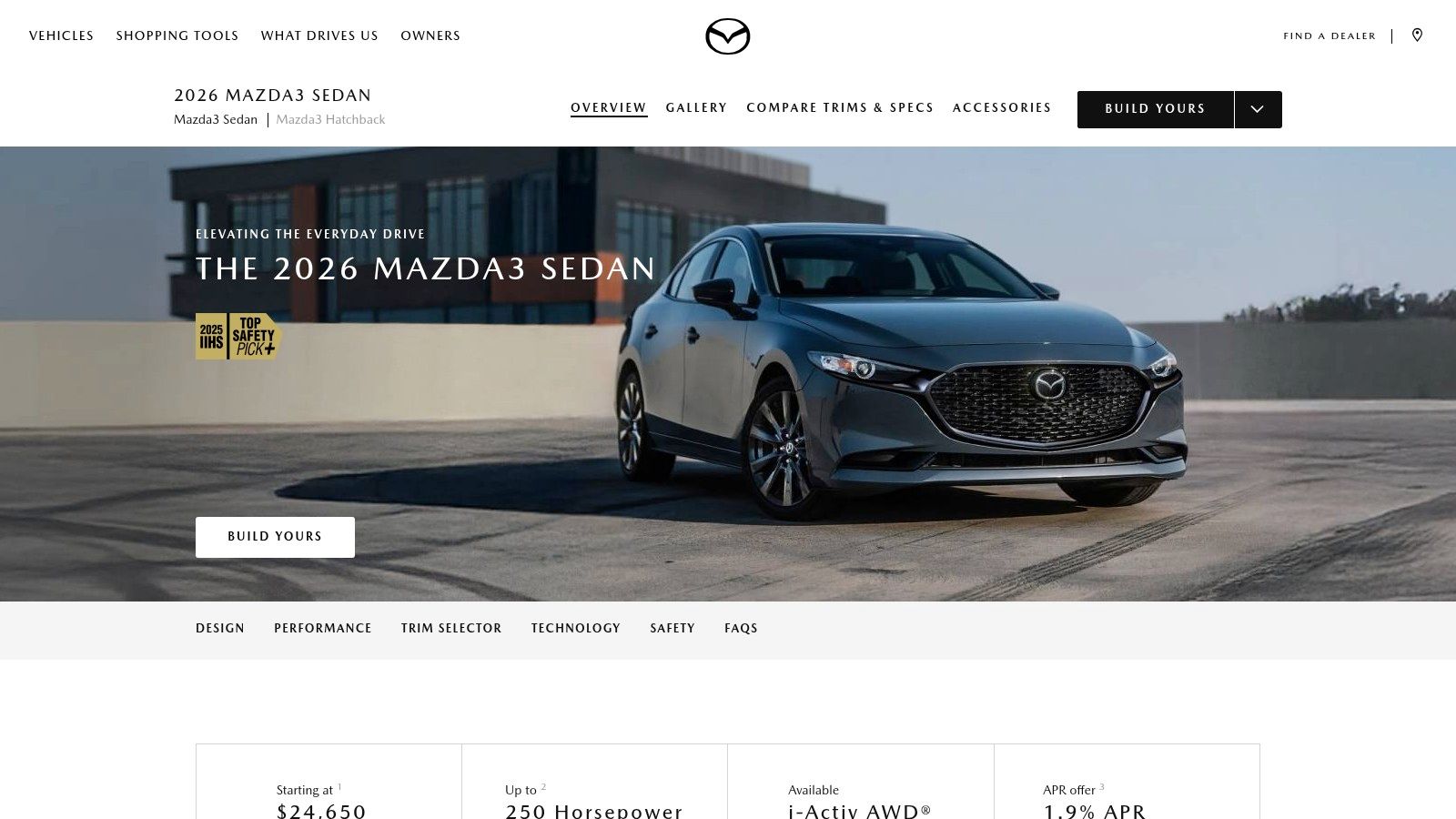
The Mazda3 Sedan is for families who want a compact car that feels a little more polished without becoming too much car for a beginner. It's tidy, controlled, and usually gives the driver a good sense of what the car is doing.
That last part matters in driver training. A teen learns faster in a vehicle with predictable steering and braking.
A good match for skill-building
Some safe cars protect well in a crash but still aren't ideal for a novice. Guidance aimed at teen suitability notes that power and size shape first-year risk, and one source says a sedan with about 110 to 150 hp is ideal for a young driver still learning, while larger, higher-powered vehicles can be harder to control in the first year in the Linos Law discussion of teen-safe cars.
That's why the Mazda3 earns attention. It gives a teen enough confidence to learn smooth cornering, braking, and lane control without pushing them toward an oversized vehicle or a performance mindset.
- Clear road feel: The car responds in a way that helps students understand steering input.
- Compact footprint: Easier for parallel parking and neighborhood driving practice.
- Modern safety focus: Newer model years are usually the ones worth targeting for this type of car.
For parents, training proves to be the key differentiator. A car can be stable and well designed, but a teen still needs coaching on following distance, scanning intersections, mirror timing, and controlled lane changes. Those are exactly the habits covered in focused teen driver safety training.
When to choose it
Choose the Mazda3 Sedan if your teen is careful, coachable, and ready for a car that rewards precise driving. Skip it if rear-seat space is a top priority for siblings or regular carpool duty.
You can explore specs and trims on the Mazda3 Sedan website.
4. Subaru Forester (2019 or newer)
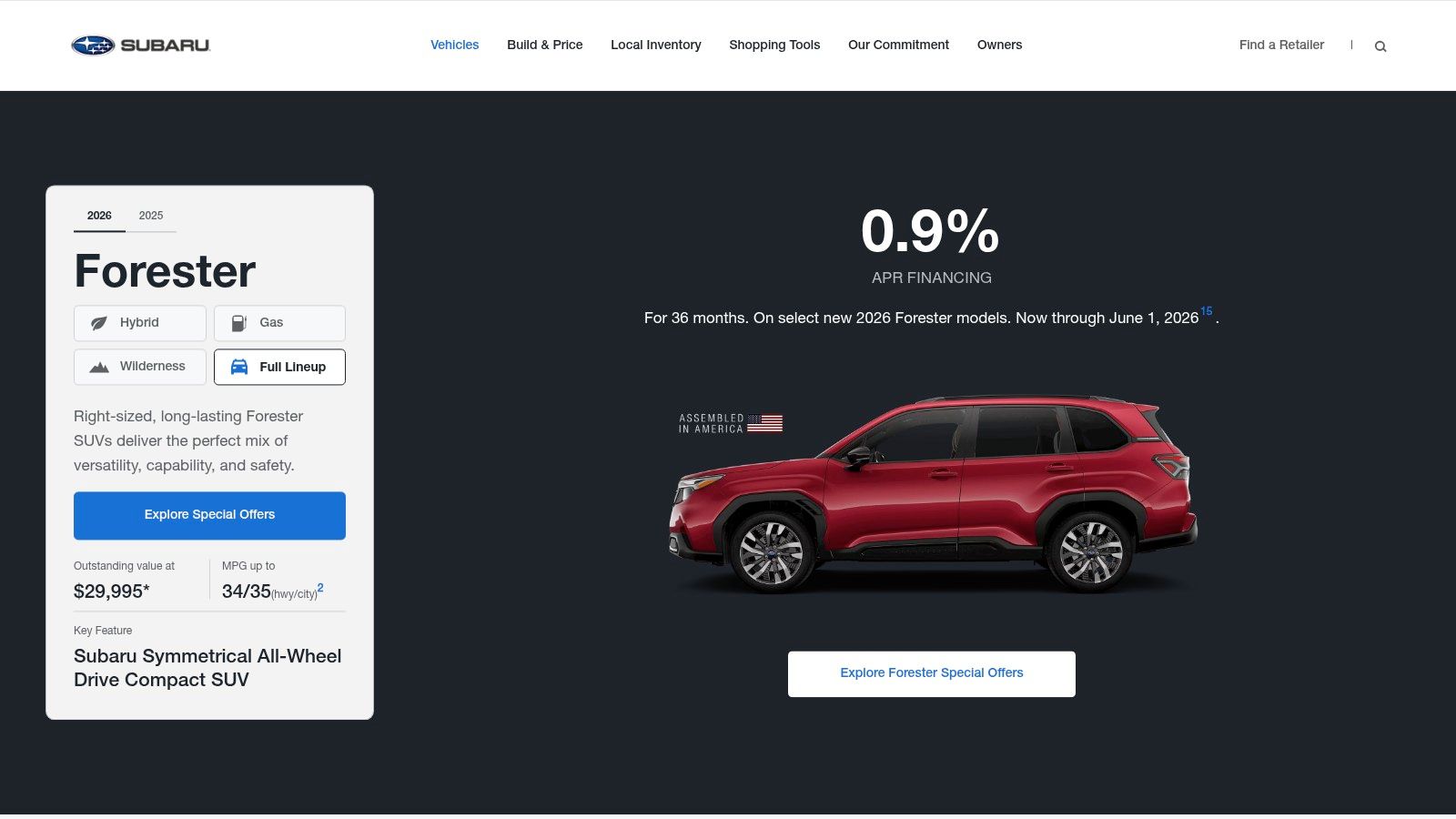
Not every teen wants a sedan, and not every family needs one. The Subaru Forester is a strong choice for parents who want a small SUV with good visibility and easy day-to-day usability.
Visibility is one of the Forester's best traits. New drivers benefit when they can clearly see traffic, curbs, pedestrians, and parking-space lines.
Why the Forester stands out
The current IIHS teen-safe guidance includes newer vehicles such as the Subaru Forester (2019+) among recommended models, showing how the market has moved toward vehicles that meet stronger crash-test criteria and include active safety systems rather than relying on size alone in the IIHS recommendations for teen vehicles.
That shift is important because older thinking often pushed families toward the cheapest small car they could find. Better guidance now pushes parents to think about structure, crash performance, and stability first.
The easiest SUV for a teen to drive is usually the one that lets them see well in every direction.
The Forester is also practical. It has room for backpacks, sports gear, instruments, and the everyday clutter that comes with school and activities. It's easier to get in and out of than many lower sedans, which parents and teens both notice quickly.
Best use case
This is a good fit when your teen needs one vehicle to handle school, errands, weather changes, and family use. It's also helpful for students who feel more comfortable sitting a little higher than in a sedan, as long as they still get good parking practice.
You can review trims and safety features on the Subaru Forester website.
5. Mazda CX‑5 (2020 or newer)
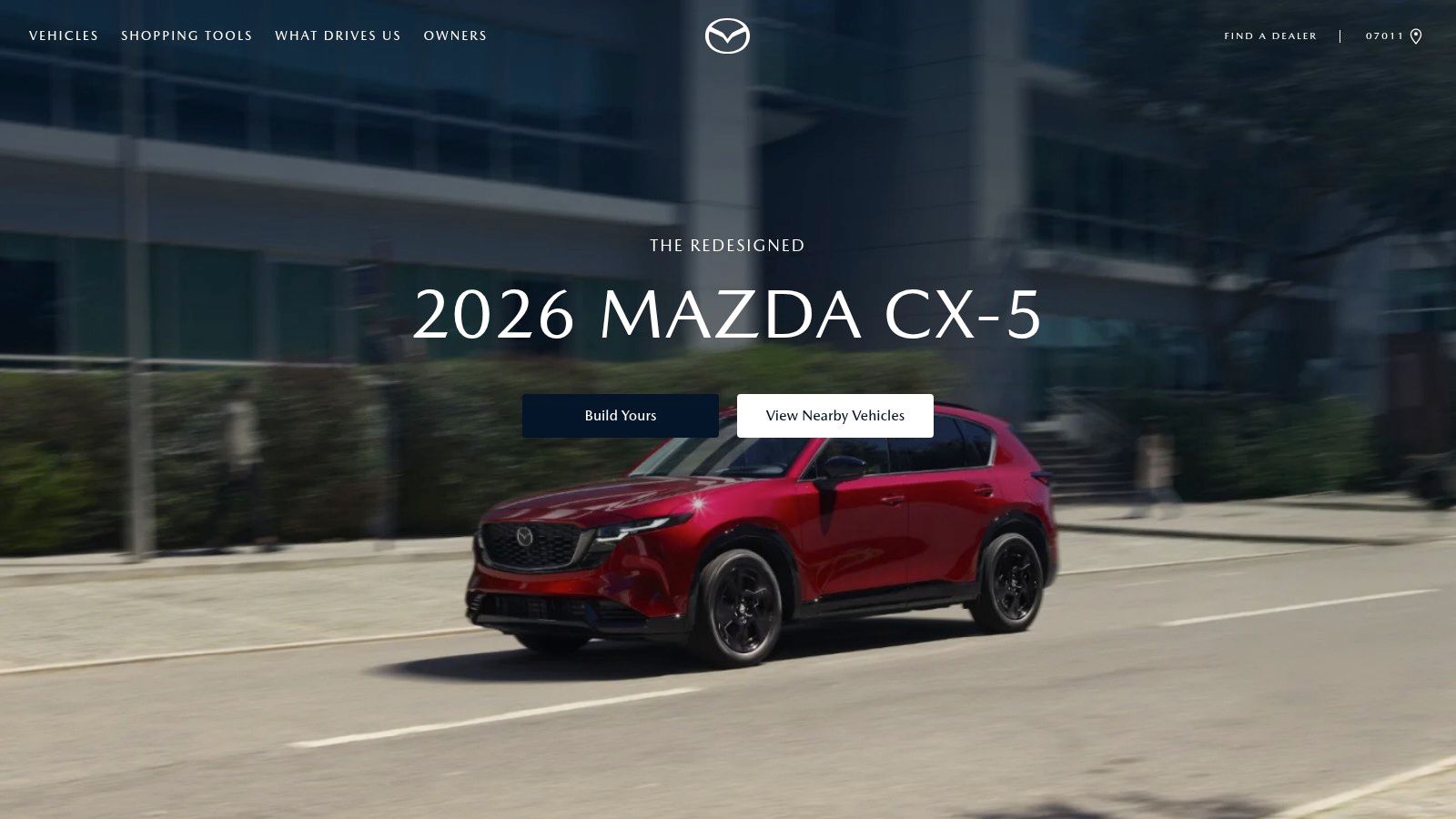
Want an SUV that feels calm and predictable without stepping up to a large family hauler?
The Mazda CX‑5 often appeals to families for that reason. It has the higher seating position many teens like, but it does not feel as bulky as a three-row SUV. For a beginner, that matters. A vehicle that responds in a steady, easy-to-read way can help a new driver make smaller, cleaner inputs instead of jerky corrections.
Why the CX‑5 works for many teens
The CX‑5 sits in a useful middle ground. It gives you SUV practicality, but it usually feels closer to a well-controlled car than a heavy truck-based vehicle. That can make lane changes, curves, and everyday commuting feel less intimidating.
It also teaches an important lesson. A safe vehicle is only part of the system. The car is safety equipment, just like a good helmet or a quality child seat. It works best when the person using it knows what to do. A teen in a newer CX‑5 still needs training in space management, mirror checks, braking distance, and parking judgment.
A few strengths stand out:
- Predictable handling: Helpful for teens who are still learning how much steering input is enough.
- Useful size: Easier to place on the road than many larger SUVs.
- Comfort for practice: Better seating and visibility can make longer lessons less tiring.
One thing to teach on purpose
The CX‑5 still asks more of a new driver than a compact sedan in tight spaces. Your teen should practice backing into parking spots, judging the front corners, and making smooth right turns without clipping curbs.
That is where driver training becomes the key safety feature. Joshua's Law classes build the rules and habits. In-car lessons turn those habits into routines. A road test checks whether your teen can apply them under pressure. The vehicle helps, but the trained driver is what makes that safety count.
You can review current trim details and features on the Mazda CX‑5 website.
6. Toyota Highlander (2017 or newer)
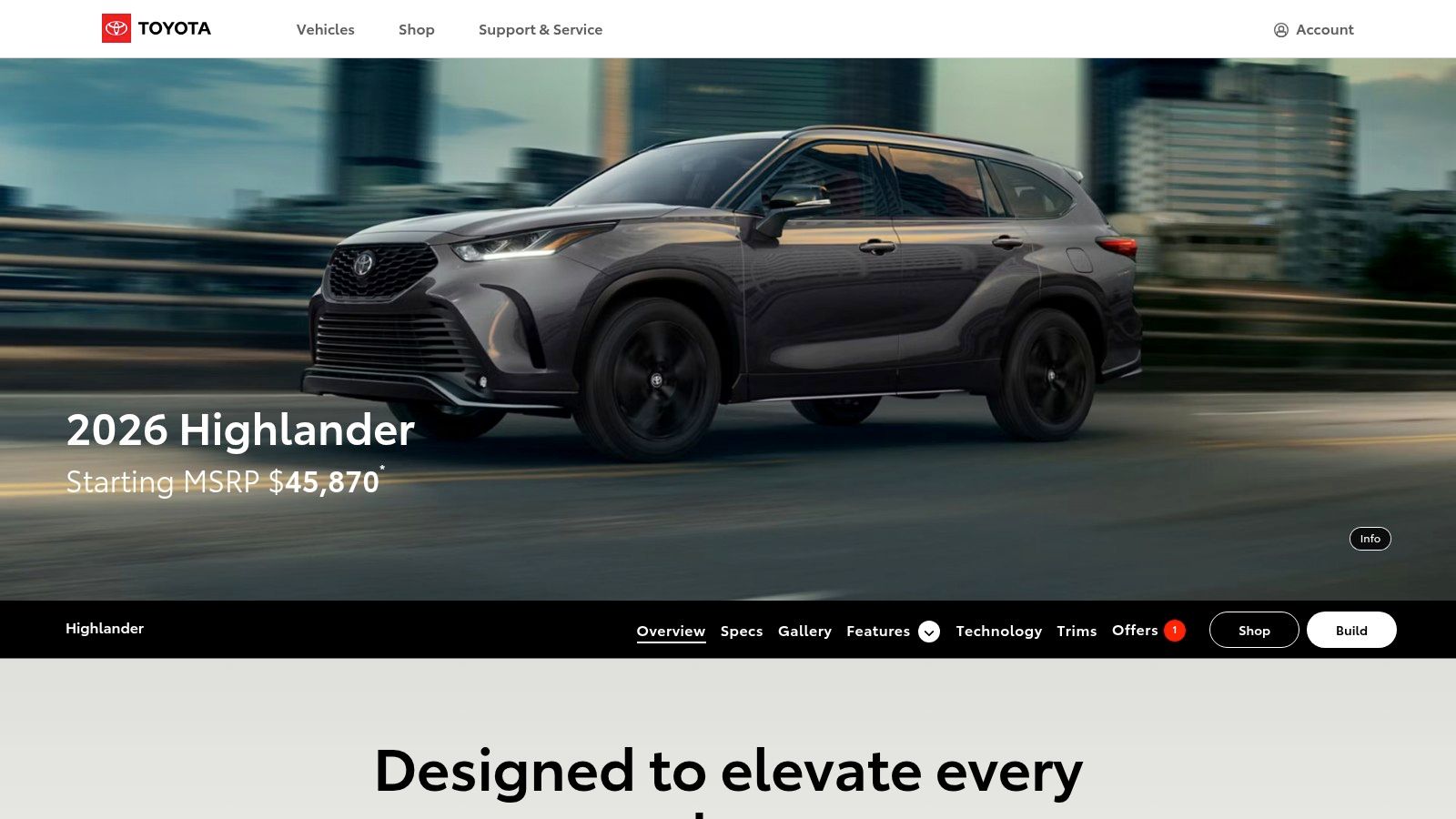
Need one vehicle that can handle school drop-offs, sports bags, younger siblings, and a new driver? The Toyota Highlander often makes that short list for a simple reason. It gives families SUV space without jumping to the bulk of a full-size model.
That extra size can help in a crash. It also changes the learning curve.
A Highlander is a little like giving a student a larger backpack. It carries more and offers more structure, but it also takes more body control to move through a crowded hallway without bumping into things. New drivers feel that same tradeoff in parking lots, drive-thrus, and tight right turns.
Why families consider it
The Highlander makes sense for teens who will regularly drive passengers or use the same vehicle the rest of the family depends on. It has the seating, cargo room, and ride height many parents want, and Toyota includes current model information and safety feature details on the Toyota Highlander website.
Safety ratings still matter, but fit matters too. A vehicle only helps if the teen can place it well on the road, judge stopping room, and keep it centered in the lane without constant correction.
What parents should evaluate honestly
This is not the easiest vehicle on this list for a brand-new driver to judge.
Focus on three skills before you hand over the keys for regular solo trips:
- Parking control: Can your teen pull into and back out of tighter spaces without rushing?
- Corner awareness: Can they judge the front end and rear swing when turning near curbs or other cars?
- Gap management: Can they leave enough room for braking and lane changes in a heavier vehicle?
If those answers are not consistent yet, the solution is more training, not just more confidence.
That is the core safety angle with the Highlander. The vehicle is safety equipment. The trained driver is the part that makes that equipment work. Joshua's Law classes teach the rules. In-car lessons build habits like mirror use, speed control, and space management. A road test shows whether the teen can do those things under pressure, in a vehicle that takes a bit more judgment than a compact car.
For the right family, the Highlander can be a smart and safe pick. For the right teen, it can also be a good long-term vehicle. Just make sure the driver grows into the size of the SUV, instead of assuming the SUV will do the hard part for them.
7. Honda Accord (2021 or newer)
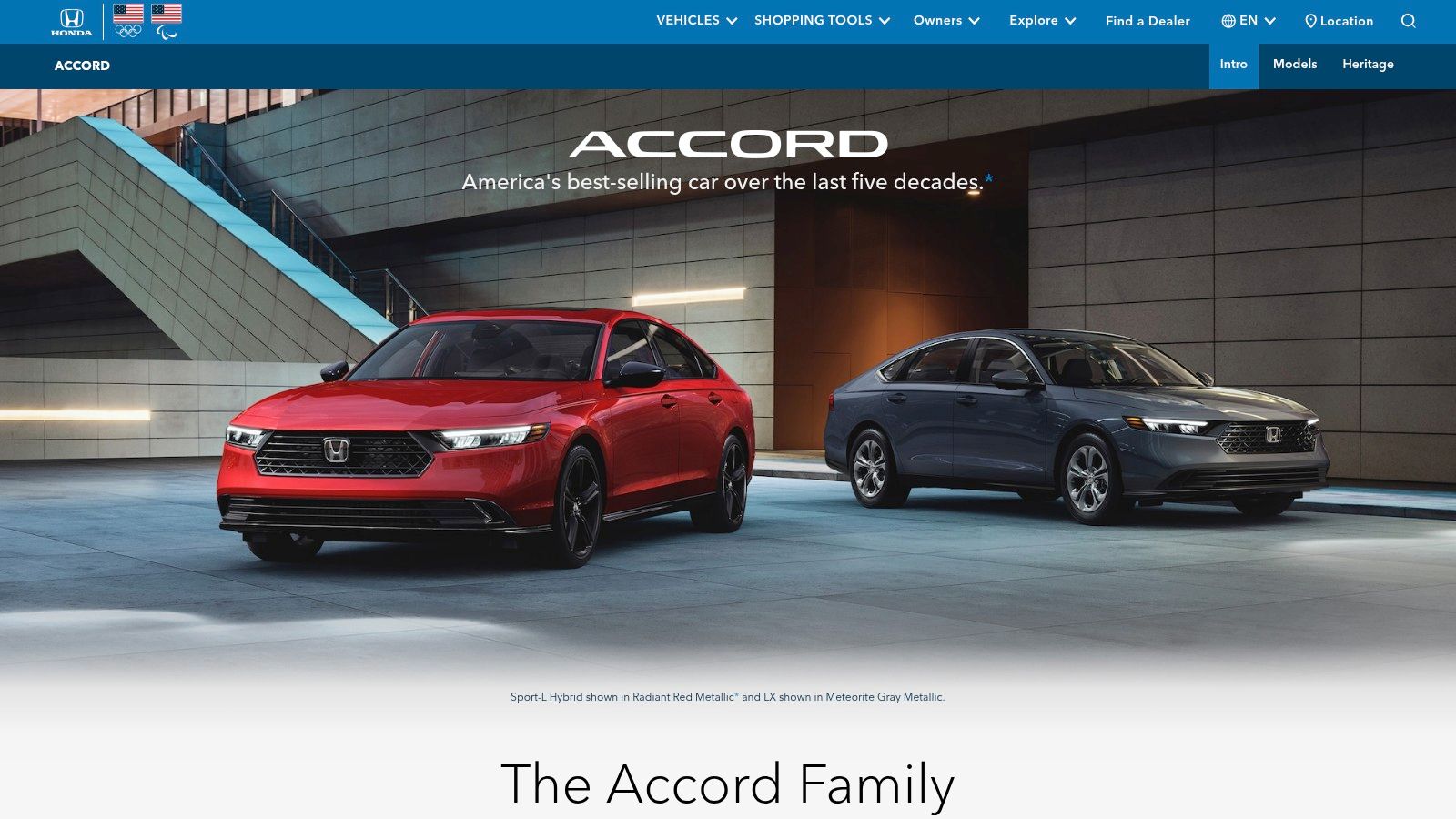
What if your teen needs a car that feels calm at 70 mph but is still simple to place in a parking lot? That is where the 2021 or newer Honda Accord makes sense.
The Accord gives a new driver something many families want but do not always define clearly. It feels stable, roomy, and predictable without adding the bulk of an SUV. For a teen, that matters. A car that stays composed on the highway can lower stress and reduce overcorrection, especially during lane changes, merges, and long commutes.
Why it belongs on this list
The Accord works well for teens who have moved past the very first stage of learning and are starting to handle more real-world driving. School routes, part-time jobs, evening trips, and highway miles all ask for steady braking, clear sightlines, and a cabin that does not feel cramped or distracting.
It also teaches useful habits. A midsize sedan gives the driver enough car to manage without forcing them to judge the height and extra rear length of many crossovers.
A good fit for many teens comes down to a few practical strengths:
- Balanced size: Larger than a compact sedan, but still easier to judge than many SUVs.
- Composed highway behavior: Helpful for teens who need confidence at speed without feeling tossed around.
- Room to grow into: Comfortable for taller drivers and realistic for carpools or family use.
- Newer safety tech: Recent model years are the ones to target if safety equipment is a top priority.
What parents should pay attention to
The Accord can feel polished enough that a teen starts to trust the car more than their own training. That is a common mistake. Safety features support good decisions. They do not replace them.
Watch for three habits in practice drives:
- Following distance: Can your teen keep enough space when traffic speeds up and slows down?
- Speed discipline: Can they hold a safe pace without drifting faster just because the car feels quiet and smooth?
- Passenger management: Can they stay focused when friends are in the car and conversation starts competing with the road?
Those skills are the true safety system.
The car is the helmet. The trained driver is the person using it correctly. Joshua's Law classes cover rules and risk awareness. In-car lessons build judgment, scanning habits, and speed control. A road test checks whether your teen can stay calm and consistent when the pressure goes up. That combination does more to keep a teen safe than buying a well-rated sedan and hoping the technology handles the hard part.
You can check current model information on the Honda Accord website.
7-Car Safety Comparison for Teen Drivers
| Model | Ease of use / Learning curve | Ownership costs & resources | Expected safety & performance | Ideal use cases | Key advantages | Primary drawbacks |
|---|---|---|---|---|---|---|
| Toyota Corolla (2017–2019; 2023+) | Very easy to drive; simple controls; minimal learning curve | Low, excellent fuel economy, cheap parts, lower insurance | Strong crash protection and AEB on qualifying years; reliable safety record | First-time drivers, commuting, budget-minded families | Low purchase/ownership cost, excellent reliability and resale | Road noise; earlier/base trims may lack some driver aids/infotainment |
| Toyota Camry (2018 or newer) | Comfortable, stable highway manners; straightforward to operate | Low–Moderate, better fuel economy for size but higher purchase/insurance than compacts | Strong crash-test results and standard AEB in qualifying years | Teens who do highway driving or need a roomy sedan | Spacious cabin, strong protection, wide dealer/parts support | Higher used prices; some safety features optional on lower trims |
| Mazda3 Sedan (2020 or newer) | Engaging, precise handling; infotainment knob has a learning curve | Moderate, good fuel economy; slightly higher insurance than compact Toyotas | Top-tier IIHS scores, standard AEB and rated headlights; AWD available | Drivers who want skill-building handling with strong safety | Sporty handling, upscale interior, good value vs rivals | Limited rear seat/trunk space; firmer ride on some trims |
| Subaru Forester (2019 or newer) | Calm, predictable handling; excellent visibility; CVT feel may require acclimation | Moderate, AWD reduces MPG and increases tire costs; good resale | Strong crashworthiness, standard AEB and AWD; IIHS Best Choice | Variable-weather regions, families needing practical cargo space | Standard AWD, easy ingress/egress, roomy rear/cargo area | Modest acceleration; some wind/road noise; CVT feel not for everyone |
| Mazda CX‑5 (2020 or newer) | Refined, planted handling; intuitive controls | Moderate, reliable and efficient; higher-cost tires on larger wheels | Excellent crash-test results; AEB standard on qualifying models; i‑Activsense available | Teens/families wanting a compact SUV with confident driving dynamics | Secure road manners, upscale interior, strong safety value | Smaller cargo than some rivals; higher trims can be pricey |
| Toyota Highlander (2017 or newer) | Stable but larger footprint; more challenging to park for novices | Moderate–High, higher fuel, tire, and insurance costs for a midsize SUV | Greater mass offers strong protection; AEB in qualifying years; IIHS Best Choice | Families who need occasional 3‑row seating or extra passenger space | Three‑row flexibility, Toyota reliability, solid crash ratings | Bigger vehicle can intimidate new drivers; higher used prices |
| Honda Accord (2021 or newer) | Roomy, comfortable, very stable on highways; easy to operate | Moderate, excellent reliability but higher used/insurance costs | Excellent crash protection and standard Honda Sensing driver assists | Teens who prioritize comfort and long-distance stability | Spacious cabin, strong reliability and resale, advanced safety suite | Higher purchase price; sport trims may encourage spirited driving |
From a Safe Car to a Safe Driver
What protects a teen more: a safe car or safe habits behind the wheel?
The honest answer is both. A Corolla, Camry, Mazda3, Forester, CX-5, Highlander, or Accord can give a new driver a stronger safety buffer through better crash protection, driver-assistance features, and predictable handling. But a car works like a helmet. It helps most when the person using it knows what to do before trouble starts.
That is why families should treat the vehicle as one piece of safety equipment, not the whole plan. The car can help with braking, visibility, stability, and protection in a crash. The driver still has to judge speed, leave space, scan intersections, manage distractions, and stay calm when traffic gets messy.
Older bargain cars often miss the safety features and crash protection that help teens most. As noted earlier, vehicle age can affect risk. Model-specific differences matter too, which is why it helps to compare real crash performance and safety equipment instead of shopping by size alone. CarGurus highlights that point in its teen used car roundup.
Training is the part that turns a safer car into a safer routine.
For Georgia families, that usually means three things:
- A Joshua's Law course to build the rules-and-risk foundation
- Behind-the-wheel lessons to practice scanning, turns, lane changes, parking, and speed control
- Road test preparation so the teen can perform the right habits under pressure, not just during casual practice
New drivers face challenges beyond just car control. They also struggle with timing, attention, and decision-making. A trained instructor can spot problems a parent may miss, such as late braking, incomplete mirror checks, wide turns, or hesitation in traffic. Catching those habits early is a lot easier than fixing them after a close call.
At A-1 Driving School, we focus on that part of the safety system. We offer online and instructor-led driver's education in Georgia, road test support, and lesson packages built for beginners who need practice with purpose. Families can also look into the Georgia Driver's Education Scholarship Grant Program to help with training costs.
If you are choosing among the safest used cars for teens, pair that car with professional instruction from A-1 Driving School. Joshua's Law courses, driving lessons, and road test services help teens build the habits that make any good safety feature work better.