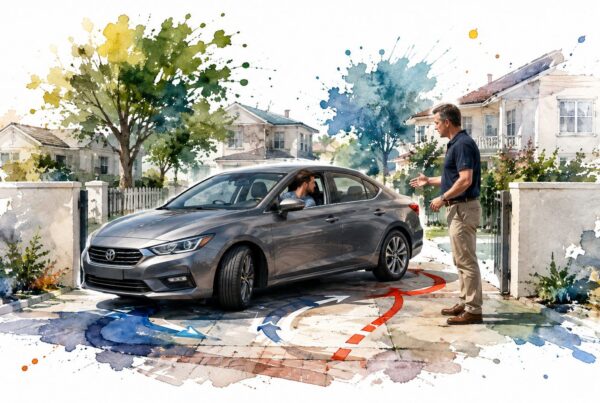
Your phone rings after a grocery run with your mom. She says she took the long way home because the usual intersection felt confusing. A week later, you notice a fresh scrape on the passenger-side bumper. Then your dad mentions she's started avoiding left turns after dark.
That's usually how this starts. Not with one dramatic crash, but with small changes that don't feel small once you add them up.
Families searching for guidance on driving tests for elderly parents are rarely looking for a fight. They're trying to protect someone they love without stripping away dignity. That's the right instinct. The right move isn't to wait for a crisis. It's to evaluate skill, judgment, vision, and confidence early, while there's still room to improve and adapt.
Navigating the Journey of Senior Driving
You might already know something's off, but you're still hoping you're overreacting. That's normal. Adult children often spot the change before the older driver admits it. The family sees hesitation at busy intersections, new anxiety in traffic, or stories that don't quite line up with what happened on the road.
Start from this truth: driving retirement is not the only possible outcome. Sometimes the best next step is a vision check. Sometimes it's a medical review. Sometimes it's a refresher behind the wheel with a trained instructor. The point is to stop guessing and start assessing.
In 2024, drivers aged 70 and older had significantly higher fatal crash rates per mile traveled than middle-aged drivers. Notably, 70% of those killed in these crashes were the older drivers themselves (57%) or their passengers (13%), which shows that the greatest danger often falls on the senior driver and the people riding with them, not just others on the road, according to the Insurance Institute for Highway Safety's older driver research.
Practical rule: Treat a driving evaluation like a health screening. Done early, it protects independence longer.
That's why families in Georgia need a plan, not a panic response. You need to know what warning signs matter, which tests are useful, what Georgia requires, and how to act if your loved one refuses to self-limit. If you want a broader look at common concerns, A-1's overview of risks associated with older drivers is a good companion read.
What a good process looks like
A solid approach usually includes three things:
- Objective observations: Write down what you've seen, not what you fear.
- A neutral evaluation: Use professionals, not family arguments, to judge fitness to drive.
- A support plan: Build safer habits, route restrictions, or training before talking about license loss.
That shift matters. Families get stuck when they frame the issue as “keep driving” versus “stop driving.” Real life is messier than that. A driver may still handle daytime local trips but struggle with night driving, lane changes, or complex intersections. A careful evaluation helps you define that line.
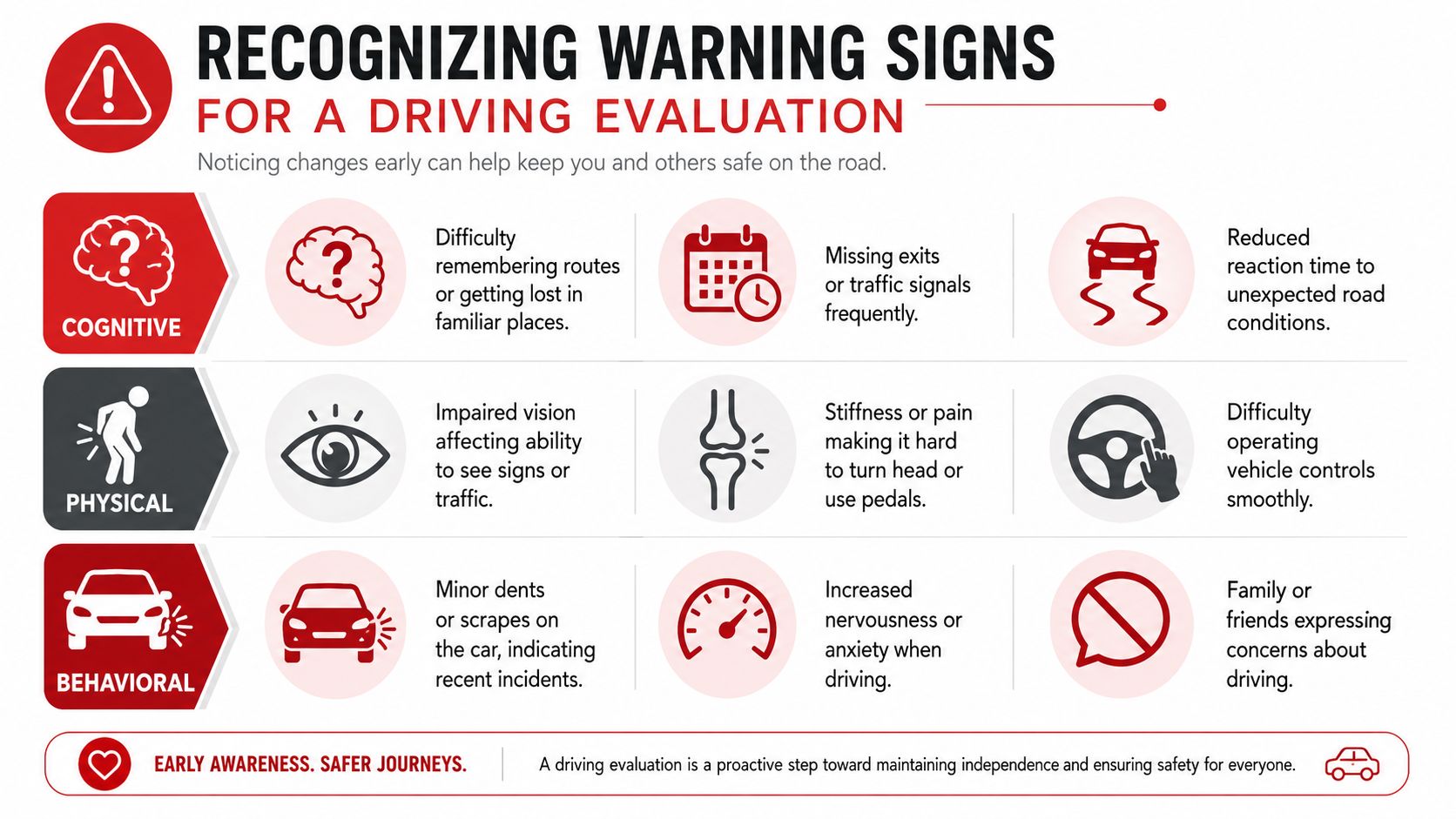
Recognizing Warning Signs for a Driving Evaluation
The best evidence in family conversations is specific behavior. “I'm worried” won't go far. “You missed two stop signs on roads you've driven for years” gets attention.
Cognitive signs
Memory and decision-making problems often show up before a family gets a formal diagnosis.
- Route confusion: Getting lost in familiar areas or needing repeated directions on routine drives.
- Intersection hesitation: Freezing when traffic gets complicated, especially at multi-lane turns or busy signals.
- Missed traffic information: Overlooking lights, signs, lane markings, or exits that used to be easy to track.
If memory changes are part of the picture, Velma's insights on senior memory can help families understand the difference between ordinary aging and patterns that deserve closer attention.
Physical signs
Aging doesn't automatically make someone unsafe. Physical changes can still make driving harder in ways seniors sometimes hide.
- Reduced neck and shoulder mobility: Trouble checking blind spots or backing out safely.
- Slower foot movement: Delayed braking or accidental pressure on the wrong pedal.
- Vision strain: Complaints about glare, trouble reading signs, or avoiding rain and night driving.
These aren't character flaws. They're functional issues. Functional issues can be evaluated.
If a driver has started limiting themselves in quiet ways, believe the pattern. Self-restriction often means they know something has changed.
On-road behavior that should not be ignored
The car itself often tells the story before the driver does.
- New dents or scrapes: Minor damage on mirrors, bumpers, or garage edges.
- Close calls: Family members notice sudden braking, drifting, or poor gap judgment.
- Driver stress: Increased anger, panic, or fatigue after ordinary trips.
One event doesn't prove unfitness. A pattern does. When several of these signs show up together, book a real evaluation instead of debating at the kitchen table. A practical next step is to look into driving lessons for seniors, where a trained instructor can observe skills in a neutral setting.
What to document before the conversation
Bring facts, not labels. Write down:
- The date and place of each concerning incident.
- What happened in plain language.
- What kind of road condition was involved, such as merging, parking, turning left, or night driving.
- Whether anyone else saw it, including a passenger, neighbor, or physician.
That record helps you talk with your loved one, and it also helps if a doctor or state agency later needs details.
Understanding the Types of Driving Assessments
Not all senior driving evaluations measure the same thing. Families often ask for “the test” as if there's one gold-standard answer. There isn't. A good decision comes from matching the concern to the right type of assessment.
Four common assessment paths
| Assessment Type | What It Measures | Who Performs It |
|---|---|---|
| Vision screening | Visual acuity and basic visual fitness for driving | DDS staff or an eye doctor |
| Clinical cognitive screening | Attention, executive function, visuospatial skills, and mental processing related to driving | Physician, neuropsychologist, or other clinician |
| On-road driving evaluation | Real-world lane use, turning, speed control, scanning, judgment, and reactions | Driving evaluator or licensed instructor |
| Comprehensive driving evaluation | Combined clinical and behind-the-wheel review of functional fitness to drive | Occupational therapist with driver rehab expertise |
Vision screening
This is the most familiar test because it's straightforward. It checks whether the driver can see well enough for basic licensing purposes. That matters, but it's only one slice of the problem.
A driver can read a chart and still struggle in traffic. Vision screening won't tell you whether they process information quickly enough at a crowded intersection, judge gaps correctly, or stay organized during lane changes.
Clinical cognitive screening
Families often get confused on this point. They hear about memory tests and assume any cognitive screen can settle the driving question. That's not true.
While some cognitive screens like the Mini-Mental State Examination (MMSE) are not validated for determining driving privileges, others like the Freund Clock Drawing Test (scores ≤4 are a concern) and the Trail-Making Test Part B (abnormal if >180 seconds) significantly improve accuracy in identifying drivers who may need further evaluation or rehabilitation, according to the MSD Manual's guidance on functional assessment of the older driver.
That distinction matters. A weak screening tool can create false confidence. A more targeted tool can identify executive-function and visuospatial problems that families often notice on the road but can't name.
Expert view: No single paper-and-pencil screen should decide driving privileges on its own. It should trigger deeper evaluation when the result is concerning.
Practical on-road evaluation
If your main question is “Can they still handle normal driving tasks safely?” this is usually the clearest next step. A road evaluation shows what the driver does with traffic signs, speed selection, lane position, turns, parking, and real-time surprises.
It also exposes something families miss. Some older drivers perform much better with a calm professional than with a tense spouse or adult child in the passenger seat. Others fall apart once the route becomes unfamiliar. Both results are useful.
Comprehensive driving evaluation
This is the most thorough option. It combines clinical review with behind-the-wheel performance. If a driver has a medical condition, recent functional decline, or mixed signals from family and physicians, this is often the best route.
A detailed evaluation is especially helpful when the issue isn't obvious. Maybe the driver looks sharp in conversation but struggles with divided attention. Maybe they move stiffly but compensate well. You won't know from one short office test.
What families should choose first
Choose based on the problem in front of you:
- Mostly visual complaints: Start with an eye exam and renewal-related vision requirements.
- Memory, confusion, or poor judgment: Ask for clinical screening and follow-up driving evaluation.
- Repeated near misses or dents: Go straight to an on-road assessment.
- Medical complexity or family disagreement: Seek a full evaluation.
The wrong move is relying on denial, family debate, or a generic checklist alone.
Georgia's Specific Rules for Senior Driver Renewals
Georgia families often assume the state automatically road-tests older adults at a certain birthday. That's a myth. Age by itself does not trigger an automatic road test in Georgia.
What matters more is whether there's evidence of a functional issue that affects safe driving. That's where renewal requirements and the state review process come in.
What Georgia families should know
Georgia does have specific renewal procedures for older drivers, and families should verify current DDS details directly when a renewal is coming up. The bigger point is this: if your concern is safety, don't wait around for the state to notice on its own.
For families concerned about an unsafe senior driver in Georgia, the official pathway is to contact the Georgia Department of Driver Services (DDS) to initiate a formal medical review. This process requires documentation, often from a physician, to compel a re-evaluation of license privileges, as described in the clinician guide covering Georgia's formal medical review pathway.
When to use the DDS medical review process
Use it when private conversations have failed and the risk is real.
- Recent crashes or near misses: Especially when the driver minimizes what happened.
- Medical concerns: Medication effects, cognitive decline, blackouts, or diagnoses that could impair driving.
- Persistent warning signs: Repeated confusion, poor judgment, or unsafe decisions on the road.
This isn't punishment. It's a legal safety valve for families who can't solve the problem alone.
If you'd trust the DDS to evaluate a teen or a new driver, trust the process when an older driver's safety is in question too.
What to gather before you contact DDS
Come prepared. The more concrete your information, the better.
- Incident notes: Dates, locations, and a brief description of what happened.
- Medical input: A physician's observations about diagnoses, medications, or functional limitations.
- Driving pattern details: Whether the concern is limited to night driving, intersections, highways, parking lots, or general confusion.
If your loved one is also dealing with license or identification paperwork questions, Georgia families often need to review Georgia ID requirements alongside the driving issue so there's no scramble during renewal.
The bottom line is simple. Don't rely on age alone, and don't rely on hope alone either. If the driver is unsafe, use the formal path.
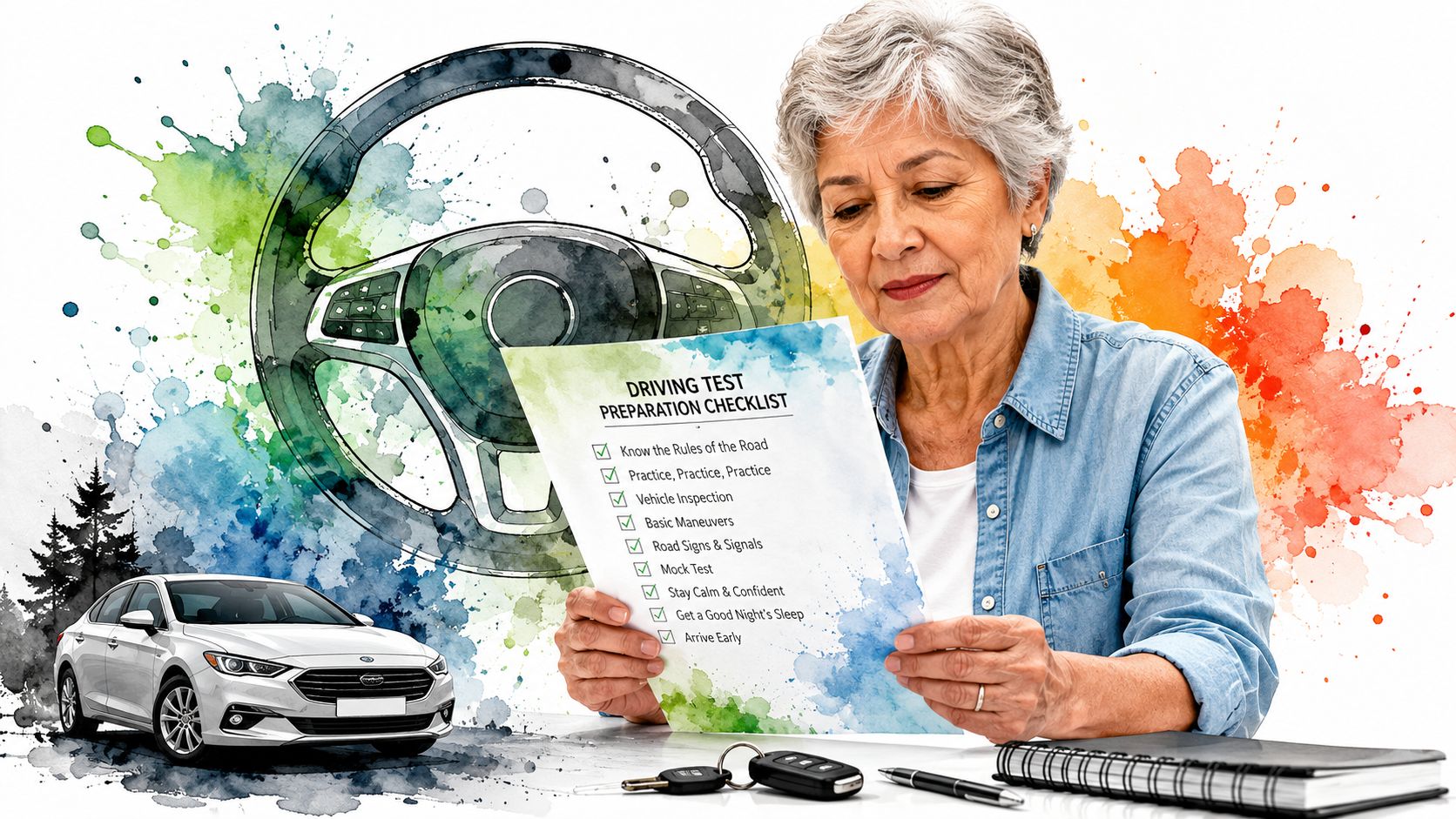
A Proactive Checklist for Assessment Preparation
The best preparation lowers anxiety and gives the driver a fair shot. People do worse when they feel ambushed. They do better when they know what's being evaluated and have time to sharpen rusty skills.
Start with health, not the car
Before any road evaluation, schedule a full medical checkup. Ask the physician to review diagnoses, medication side effects, sleep issues, dizziness, pain, and changes in vision or hearing. Driving problems often start with a treatable medical issue.
Then review the basics of Georgia driving rules. A lot of experienced drivers carry old habits for years without realizing the law or best practice has changed. Refreshing signs, right-of-way rules, and lane-use expectations can clean up preventable mistakes fast.
Practice in a low-pressure setting
Don't throw a nervous older driver into rush hour and call it a test. Build back confidence in stages.
- Neighborhood driving first: Right turns, stops, scanning, and speed control on quiet roads.
- Parking lot work: Backing, steering control, brake pressure, and mirror use.
- Short familiar routes: Grocery store, church, pharmacy, or a relative's house.
- Challenge zones later: Left turns, multi-lane roads, merges, and higher-speed traffic.
That progression matters. You're not trying to “catch” failure. You're trying to identify strengths and limits accurately.
US studies suggest that in-person renewal and vision testing requirements correlate with lower fatality rates for drivers 85+, but the overall evidence for mandatory, age-based screening is inconsistent. This suggests that proactive skill improvement through training may be a more reliable path to individual safety than relying on state mandates alone, based on the European Road Safety Decision Support System synopsis on age-based screening.
Treat lessons like a tune-up
Many families make a mistake. They treat driving lessons as remedial or embarrassing. That's backwards. Refresher lessons are one of the smartest ways to assess and improve skill without turning every family practice drive into an argument.
A professional instructor can spot habits a spouse won't explain clearly. They can also separate confidence problems from actual safety problems. That distinction is huge.
Here's a useful walkthrough on test-day mindset and road performance:
A practical preparation checklist
- Book a medical review and bring a current medication list.
- Schedule a vision exam if glare, night driving, or sign recognition has become harder.
- Review the Georgia Driver's Manual and discuss any rules that feel unclear.
- Practice short drives at the driver's best time of day.
- Arrange a neutral lesson or road evaluation with a trained professional.
- Decide in advance what comes next if the driver passes, needs restrictions, or should stop driving.
Preparation should protect dignity. A fair evaluation is easier to accept than a family ultimatum.
How A-1 Driving School Supports Senior Drivers in Georgia
A lot of driving schools are set up for teenagers only. That's not enough. Older drivers need patient instruction, realistic feedback, and flexible support that respects decades of driving experience without pretending everything is fine.

For Georgia families, the strongest option is usually a mix of driving lessons, lesson packages, and road test preparation. That combination helps older drivers rebuild comfort with turning, merging, parking, scanning, and lane changes in a structured setting. It also gives families a neutral outside opinion, which often lowers tension immediately.
Where the school's broader course options fit
Senior-driver concerns don't happen in isolation. Many families are helping more than one driver at once. One household may have a grandparent needing refresher lessons, a teen working toward licensure, and a parent trying to coordinate training around school and work schedules.
That's where a provider with multiple formats matters. A-1 offers driver's education, online course options in Georgia, and support for the Joshua's Law course, which is especially useful for families managing both teen and adult driver needs. Under Joshua's Law, Georgia teens under age 18 must complete a 30-hour DDS-approved Driver's Education course and 40 hours of supervised driving, including 6 hours at night, according to this Joshua's Law overview. The law also requires 6 hours of professional behind-the-wheel instruction delivered in person by a DDS-certified driving instructor from a licensed school, which can't be replaced by online training, as explained in this Georgia Joshua's Law parent and teen guide.
For families concerned about cost, the Georgia Driver's Education Scholarship Grant Program is another option worth checking for eligible students. That won't solve a senior driving issue directly, but it can ease the financial load on households paying for training across generations.
Why road testing support matters
Road tests make nervous drivers worse. Practicing with instructors who know the process helps reduce avoidable mistakes. Taking the road test through a familiar training environment and using a school vehicle can also lower stress for drivers who are capable but anxious.
If you're dealing with driving tests for elderly family members, don't wait for a frightening incident to force the issue. Start with a calm assessment, get skilled instruction where needed, and use the legal process when safety demands it.
If your family needs a practical next step, A-1 Driving School is a strong place to start. You can explore adult driving lessons, lesson packages, road test preparation, Georgia online driver education, Joshua's Law options, and information about the Georgia Driver's Education Scholarship Grant Program, then build a plan that fits your driver's real needs.