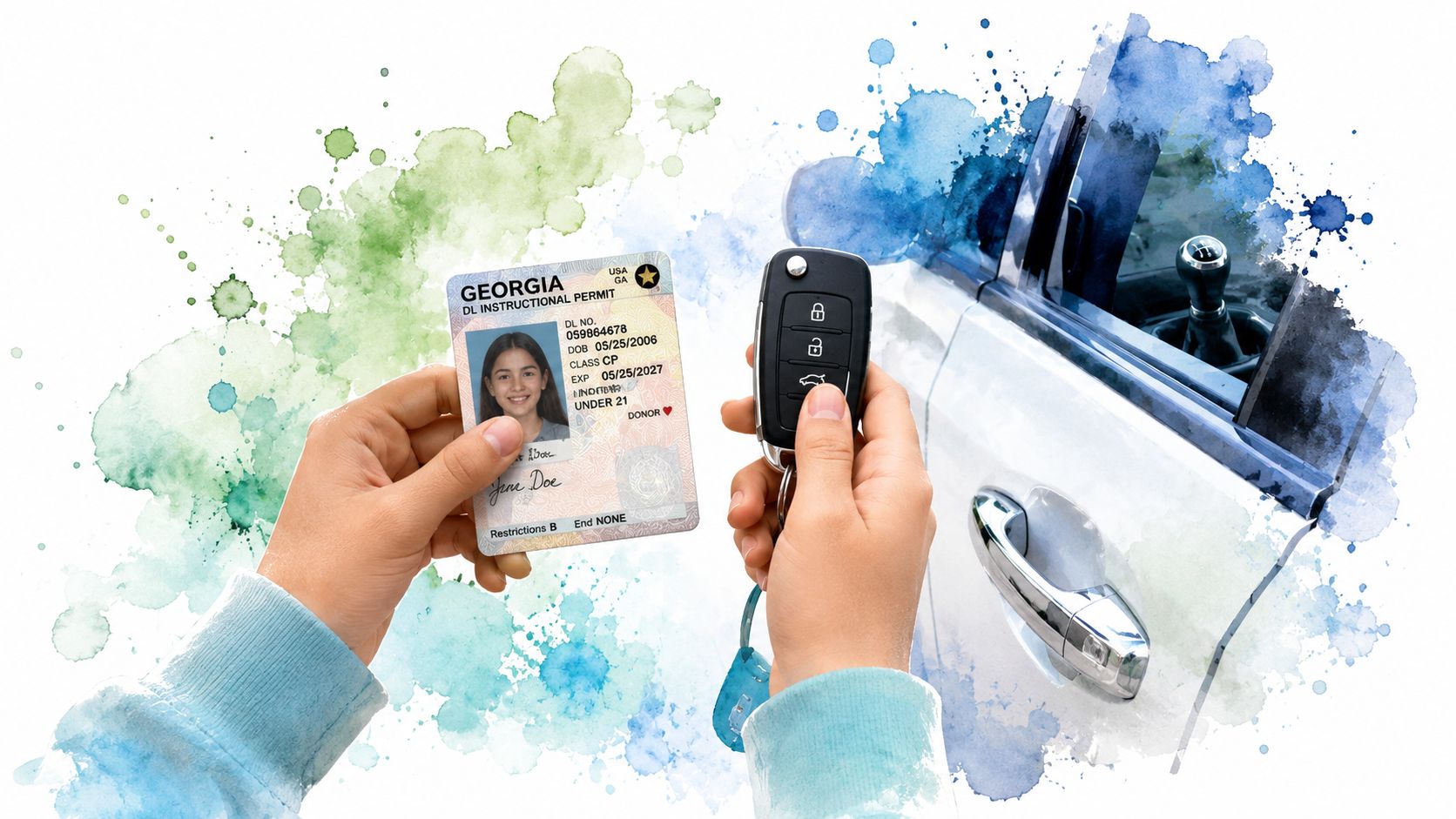
You're sitting in the parking lot with your permit in your pocket, one hand on the steering wheel, the other checking the time for the third time. Your stomach's tight, your shoes feel wrong, and you're not even sure what the instructor will ask you to do first. That first lesson gets a lot easier when you treat it like a real appointment, not a leap into the unknown.
A lot of new drivers think how to prepare for driving lessons means memorizing every road rule before the car moves. It doesn't. The drivers who settle in fastest usually arrive rested, organized, and mentally ready to listen, which is why preparation affects everything from confidence to how much feedback you can absorb.
Why Preparation Changes Everything About Your First Lesson
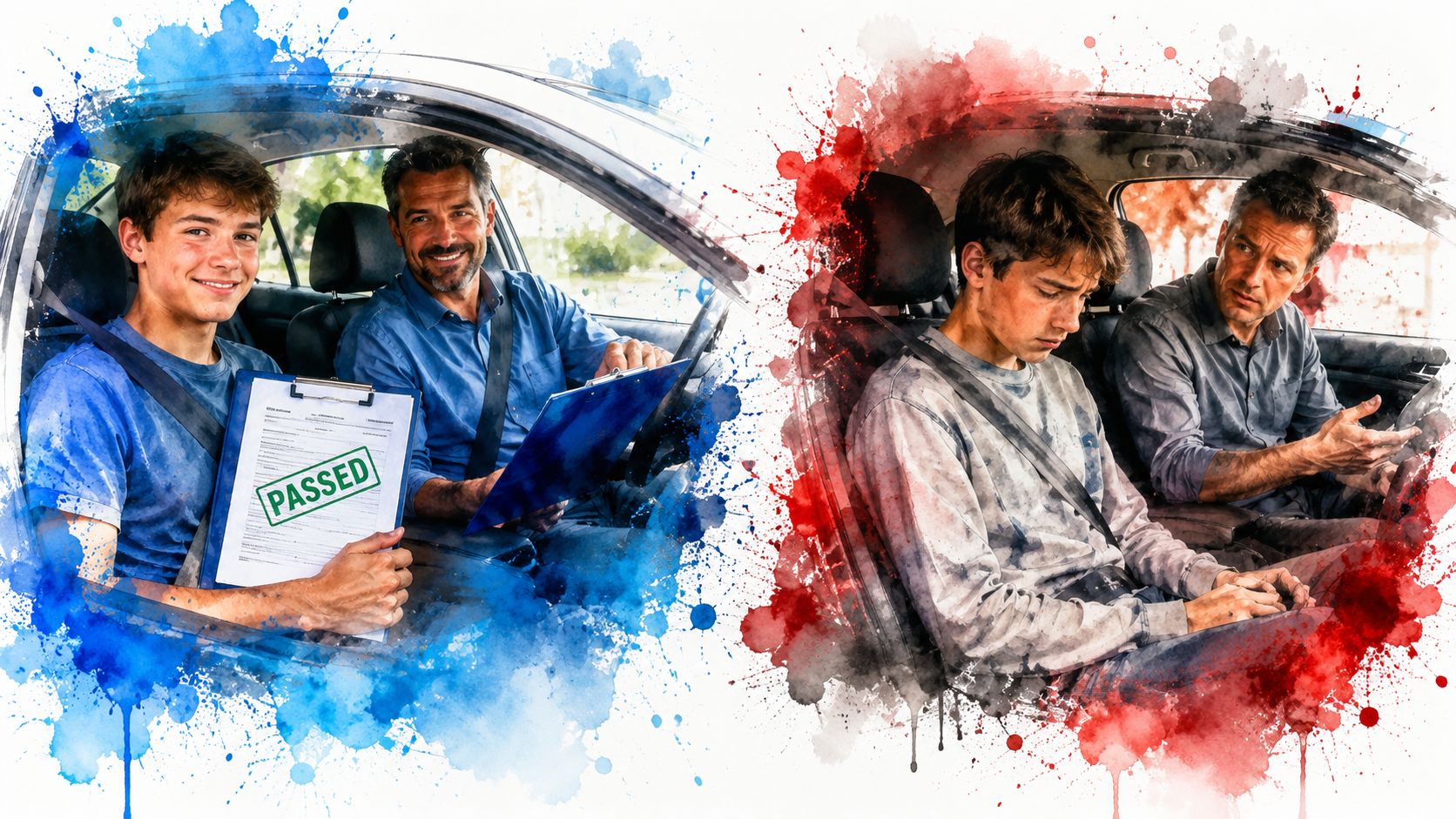
The first lesson often feels calm or chaotic before the car even moves. One learner arrives with the right documents, comfortable shoes, and a clear head. Another shows up rushed, unsure what will happen first, and already worried about forgetting something obvious. The car is the same, the instructor is the same, but the lesson feels very different.
Prepared learners let me teach driving instead of fixing avoidable problems. That matters because learner progress builds over time, not in one dramatic session. The first lesson should feel like the start of a process, the same way a student prepares for before your next detailing appointment by getting the car and schedule in order before anyone arrives. In Georgia, that mindset matters even more because families are often balancing lesson planning with Joshua's Law requirements, school schedules, and scholarship paperwork tied to driver education through a licensed school such as the Georgia license requirements overview from A1 Driving School.
What a prepared learner notices sooner
A prepared student usually catches instructions faster because their attention is not split between nerves, paperwork, and basic logistics. That leaves more room for simple corrections, like where to look, how to ease off the brake, or when to check mirrors.
Practical rule: the calmer your arrival, the more of the instructor's feedback sticks.
There is another advantage. Learners who prepare well are more likely to accept that early lessons can feel messy, which makes them less likely to shut down after a mistake. That mindset often leads to steadier progress than confidence alone.
Georgia Paperwork and Legal Requirements You Must Have Ready
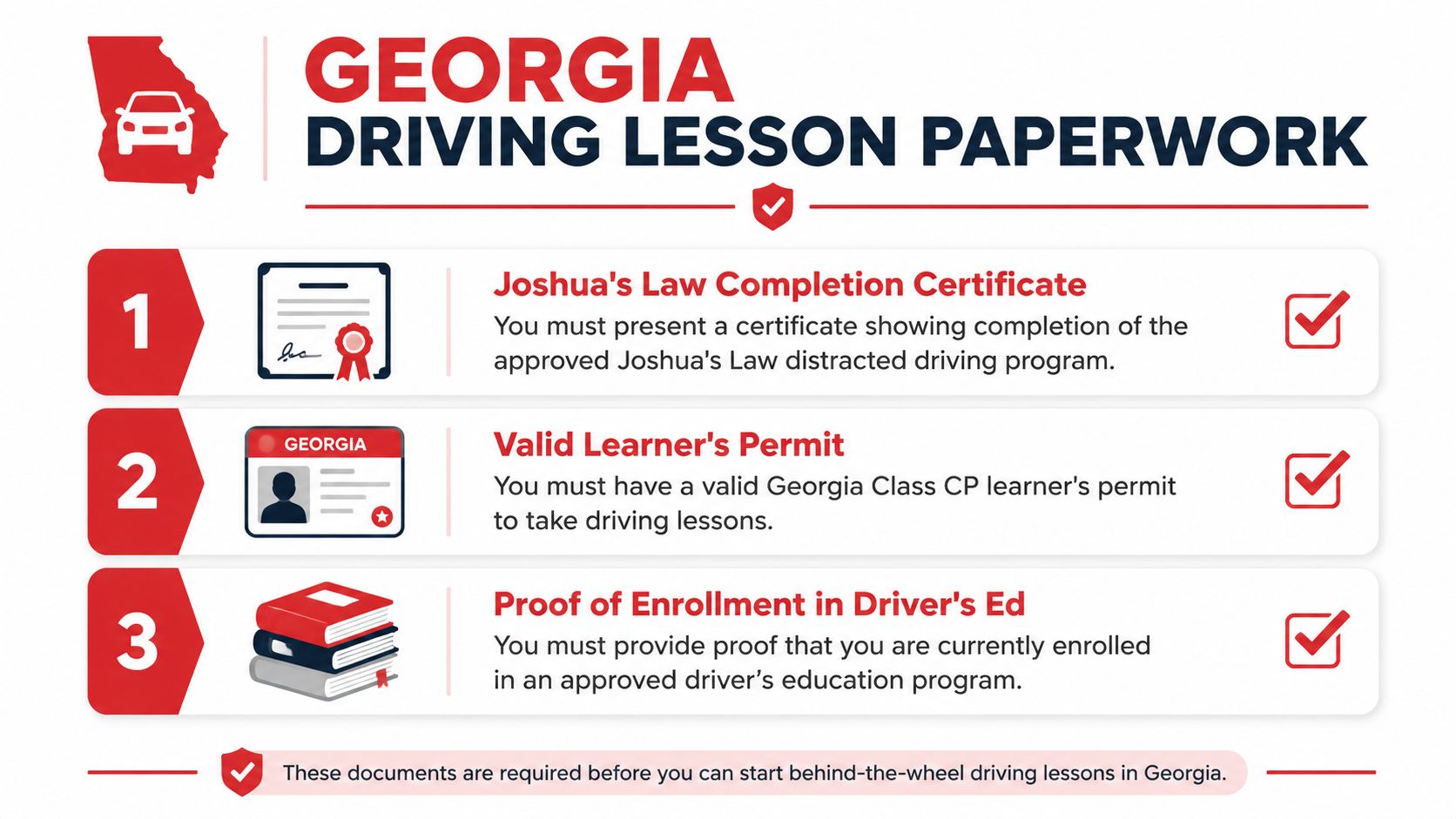
Georgia's first-lesson preparation starts with paperwork, not parking skills. If you're a teen aiming for a license at 16, you need to complete a 30-hour classroom or online driver education course under Joshua's Law and at least 6 hours of driving instruction with a certified driving school or instructor. That requirement is the legal backbone of a first lesson plan in Georgia, and it's one reason parents and students should sort out enrollment early A-1 Driving School's Georgia license requirements overview.
If you're looking for a broader document checklist before any official exam process, the required ID for G1 knowledge test page is a useful example of how much smoother everything feels when the paperwork is already sorted. Georgia families should use that same mindset before lessons.
The Georgia items to verify first
A teen learner should confirm three things before the first session: a valid learner's permit, proof of Joshua's Law completion or current enrollment, and a plan for the required supervised practice that comes later. If the student is under 18, parental consent and the permit timeline also need to be checked carefully, because those details affect when practice can legally begin.
The Georgia Driver's Education Scholarship Grant Program is another important option for families who qualify. It can help cover training costs, and it's worth asking about early, not after you've already paid out of pocket and built a schedule around the wrong assumption.
A clean file makes the rest of the process simpler:
- Driver education proof shows the classroom or online requirement is handled.
- Learner's permit proves the student is legally allowed to be in the car.
- Enrollment confirmation helps the instructor verify that the lesson plan matches the licensing path.
For families who prefer to keep everything in one place, the paperwork should live in a folder or phone note that gets checked the night before every lesson. That small habit prevents the most common avoidable delay, which is discovering a missing document in the driveway.
What to Bring and How to Arrive Ready
A first lesson goes better when you show up like a person who's ready to learn, not someone who rushed out the door. Bring your learner's permit, any enrollment paperwork, and a small notebook or notes app for instructor feedback. Wear shoes with thin, steady soles so you can feel the pedals properly, and choose clothing that lets you turn your head and shoulders without fighting the fabric.
The hours before the lesson matter more than most beginners expect. Official learner guidance recommends practicing on as many types of road as possible, in different traffic and weather conditions, and even in the dark, because those conditions may appear on the test nidirect planning and recording guidance. You're not trying to master all of that before your first appointment, but you are trying to arrive mentally organized enough to build toward it.
A simple arrival routine
Industry prep guidance recommends 10 to 15 minutes of early arrival, phone silence, and a written note-taking habit so you can turn instructor comments into a plan between lessons Florida New Driver first-lesson checklist. The 10-minute parked-car setup is worth doing too. Adjust the seat, set the mirrors, locate the steering-wheel adjustment, and make sure you can press the brake with your heel on the floor and a slight bend in your elbows.
Arriving early gives you time to breathe, settle your hands, and stop your brain from sprinting ahead of the lesson.
Two mistakes show up over and over. Learners forget to confirm logistics 48 hours ahead, or they show up in bulky shoes that dull pedal feel. Both are small problems that create big tension once the car moves.
Practical Skills You Can Rehearse Before You Touch a Steering Wheel
Not every learner has access to a car before lesson day, and that's fine. You can still prepare by rehearsing the sequence of driving in your head, starting with mirror checks, blind-spot scans, and the order of actions for starting, stopping, and turning. Mental practice won't replace actual driving, but it does make the first real attempt feel less foreign.
If you do have access to a parked car, use it for cockpit familiarization with the engine off. Learn where the indicators, handbrake, seat controls, and mirrors are located. That way, your first few minutes with the instructor aren't spent hunting for switches while your nerves climb.
Start with low-risk practice
The staged learning approach matters because it keeps overload down. Begin in an empty parking area or quiet street, then move to low-traffic roads, and only later to busier roads once the basics feel automatic. Guidance for teen training follows the same pattern, quieter times of day first, then more complex traffic, merging, and lane discipline YouTube safety and staged-learning guidance.
If you're planning ahead for manual lessons, spend a little time learning the idea of clutch control and gear changes before you sit down. You don't need to memorize every move, but you should understand the basic sequence well enough that the instructor isn't introducing the whole system from zero.
Ask your instructor to demonstrate a maneuver before you try it. Watching once often makes the second attempt far easier.
The biggest win here is familiarity. A learner who already knows the words, the controls, and the rough order of actions can focus on timing, not panic.
Managing Nerves and Staying Focused Behind the Wheel
The emotional side of a first lesson gets ignored too often. Learners worry about stalling, freezing, or making a mistake in traffic, and those fears can eat up attention before the car even moves. The goal isn't to eliminate nerves. It's to keep them small enough that you can still hear instructions.
Short, frequent lessons work better than marathon sessions because your brain gets time to process what just happened. That's especially true early on, when every movement, mirror check, and pedal change takes mental effort. If you push too long, the lesson stops being instructional and starts becoming fatigue management.
How to keep the stress from taking over
Use slow breathing between maneuvers. Say what you're nervous about out loud if you need to, because instructors can adjust their pace when they know what's happening. If traffic feels overwhelming, ask for a quieter stretch or ask the instructor to demonstrate the next step first.
A helpful resource on why overthinking causes anxiety can make the mental side of learning feel less mysterious. Overthinking usually turns one driving task into ten imaginary disasters, which is exactly why simple, direct communication matters so much in the car.
Mistakes are expected in early lessons. A missed mirror check, a rough stop, or a slow reaction doesn't mean you're failing. It means you're learning something real.
Use the driving anxiety strategies guide as a reminder that steady exposure beats self-pressure every time.
Scheduling Lessons and Communicating with Your Instructor
The best lesson schedule is the one that gives your brain time to remember what it learned. Random bookings, long gaps, and last-minute reschedules usually slow progress because each lesson starts with a replay of the last one instead of new skill-building. Consistency matters more than chasing the biggest block of time.
Tell your instructor what you want to work on before the car moves. If you're worried about lane position, parking, or speed control, say so plainly. If you learn best by watching first and then trying, say that too. A good instructor can adjust the session style, but only if you give them something accurate to work with.
What a useful lesson plan looks like
A solid schedule usually alternates between new skills and review. That gives you time to consolidate what you just learned, then return to it before it fades. Practice drives with a parent or guardian between professional lessons can help, as long as they reinforce the same habits and don't overload you with too many new rules at once.
If you're in metro Atlanta, flexible scheduling across multiple locations can make that consistency easier to maintain. The point is not convenience for its own sake. The point is getting enough repetition in the right order so the car starts to feel predictable.
For common scheduling and lesson questions, the Georgia driving school FAQ is a helpful place to compare what different lesson paths usually include. Road test preparation should come later in the sequence, after the basics stop feeling like a puzzle and start feeling like habits.
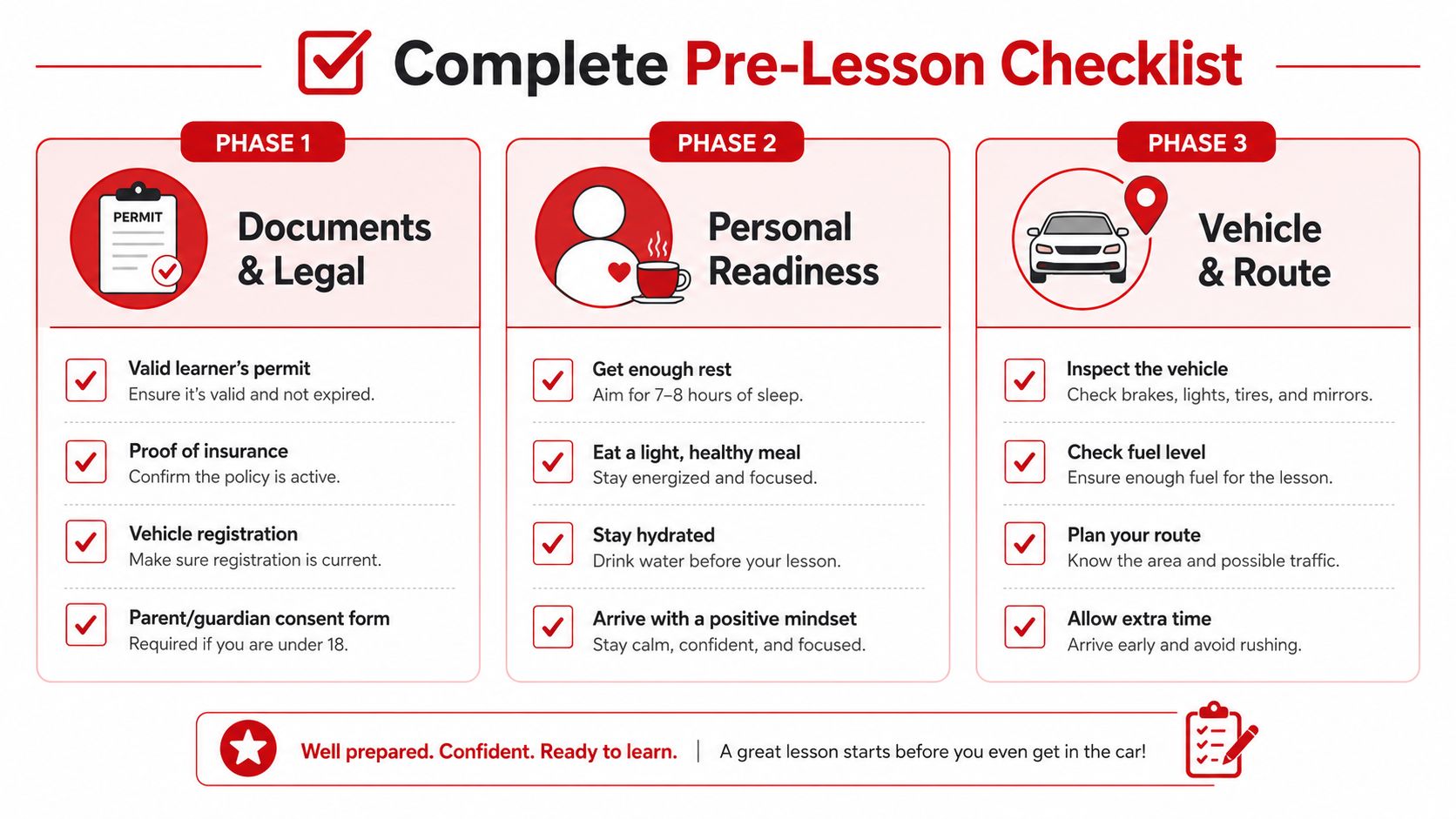
Your Complete Pre-Lesson Preparation Checklist
Print this, save it, or screenshot it. The best learners treat preparation as a repeatable routine, not a one-time scramble.
One week before
- Check your documents, permit, enrollment proof, and any course completion records.
- Confirm your lesson time, location, and instructor contact details.
- Plan your footwear, choose shoes that give you steady pedal feel.
The night before
- Set out your clothes, pick something comfortable and easy to move in.
- Charge your phone, then plan to silence it before the lesson.
- Review basic controls, mirrors, pedals, indicators, and seating position.
The morning of
- Arrive early, give yourself time to settle.
- Bring a notebook, so you can capture feedback.
- Eat, hydrate, and breathe, then walk into the car ready to listen.
If you're in Georgia and want a clear path from classroom to road test, look into driving lesson packages, Joshua's Law course options, and the Georgia Driver's Education Scholarship Grant Program before your next appointment.
If you're ready to turn preparation into real progress, A-1 Driving School can help with driving lessons, Joshua's Law courses, and Georgia road test support in one place. They also offer lesson packages that make it easier to build skill step by step instead of guessing what comes next. Visit their site and pick the path that fits your schedule, your budget, and the kind of driver you want to become.