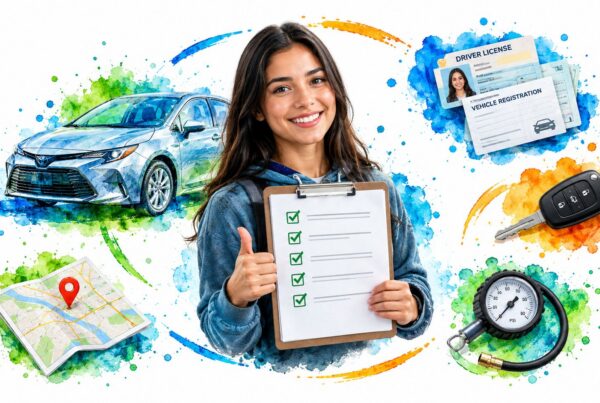

A basic defensive driving course in Georgia typically costs between $25 and $100, depending on the format, provider, and purpose. Most Georgia families, however, aren't really shopping for a short defensive driving clinic. They're trying to price Joshua's Law driver education, behind-the-wheel lessons, road-test preparation, and a package that gives a new driver real confidence.
That distinction matters when your teenager is ready to drive. A low-cost online theory course may satisfy one classroom requirement, but it won't teach a student how to judge traffic gaps, control the vehicle smoothly, change lanes safely, or handle the Georgia road test. For families, the better question usually isn't only “how much defensive driving course?” It's “what combination of education, driving lessons, and testing support gives my student the strongest value?”
Understanding Defensive Driving and Education Costs
A standard defensive driving course is usually a short, standardized intervention, not a complete driver-training program. Across major U.S. markets, course fees commonly fall between $20 and $100, depending on the state, delivery format, and provider, according to an overview of defensive driving course costs. The course itself often fits into a single day, which makes it practical for an experienced driver dealing with a ticket, point-related issue, or possible insurance benefit.
That course serves a narrow purpose. It reviews risk awareness, traffic rules, collision avoidance, and responsible decision-making. It may support formal benefits such as point reduction or an insurance discount where state and insurer rules allow it. It doesn't replace the repeated, supervised practice a new driver needs before earning a license.
Defensive driving is not the same as driver education
Georgia families often search for defensive driving when they need Joshua's Law driver education. These programs address a much broader goal. A teen must learn the rules, understand safe driving decisions, develop vehicle-control skills, and complete supervised practice before applying for a Class D license.
A short online defensive driving module can be an efficient compliance purchase for the right driver. A teenager starting from a learner's permit needs a more complete plan, usually combining classroom or online theory with instructor-led lessons and parent-supervised driving. Families comparing course options can also review practical intensive course defensive driving tips, especially when they want to understand how concentrated instruction differs from ordinary practice.
Practical rule: Pay for a defensive driving course when you need a defensive driving benefit. Pay for driving lessons when you need someone to become capable behind the wheel.
Budget for ability, not just eligibility
A course certificate proves that a student completed instruction. It doesn't prove that the student can merge into busy traffic, manage an unfamiliar intersection, or recover calmly from a mistake. Those abilities develop through coaching, repetition, correction, and exposure to different road conditions.
That's why I recommend that parents compare the total package rather than the cheapest advertised course. Ask whether the price includes classroom instruction, behind-the-wheel time, vehicle use, road-test preparation, and testing assistance. The right package may cost more than a theory-only course, but it addresses the actual work between getting a permit and driving independently.
Factors That Influence Driving Course Prices
A Georgia family can spend little on a basic defensive driving clinic and still face a much larger licensing bill. The short course may refresh an experienced driver's judgment, while a teenager may need Joshua's Law education, behind-the-wheel instruction, supervised practice, and road-test support. Compare the full path before choosing the lowest advertised fee.
Providers charge different prices because they sell different services. A self-paced theory course, a live classroom program, and instructor-led driving lessons require different levels of teaching time, vehicle use, scheduling, insurance, and staff support.
A practical market range for defensive driving is roughly $15 to $100. Classroom formats often cost more because training centers set their own prices, according to The Hartford's defensive driving cost guidance. Use that range to evaluate a short course, not to estimate the cost of a teen's full education and lesson plan.
What changes the price
Format is the first major variable. Online theory offers flexible scheduling and avoids a classroom visit. In-person education provides live instruction at a fixed time. Behind-the-wheel lessons add an instructor, an equipped vehicle, fuel, insurance, appointment coordination, and practice on public roads.
Course purpose changes the value as well. Defensive driving helps an experienced driver review safe decisions. Joshua's Law education prepares a new driver for licensing. A road-test package focuses on final practice and examination support. Treating these services as interchangeable encourages families to buy too little instruction.
Course length and delivery also affect the price. Defensive-driving programs commonly run about 6 to 8 hours, although formats vary by provider and jurisdiction. Online programs are often self-paced, while classroom courses may require completion in one sitting, as explained in defensive driving course guidance from DMV.org.
Compare the purchase, not just the price
| Course Format | Primary Cost Drivers | Best For |
|---|---|---|
| Online defensive driving | Digital delivery, provider administration, and course approval | Experienced drivers seeking a short compliance or insurance-related course |
| In-person defensive driving | Classroom facility, instructor time, and scheduled attendance | Drivers who learn better with live instruction |
| Online driver education theory | Structured curriculum, platform access, and state-compliance requirements | Busy teens who need flexible classroom learning |
| Behind-the-wheel lessons | Instructor time, vehicle, fuel, insurance, and individualized coaching | Teens and adults building practical driving skill |
| Complete lesson package | Multiple appointments, skill progression, road-test preparation, and testing support | Families seeking a path from permit to license |
Include testing costs and logistics in the budget. Families can review how much is the driving test, then ask whether the school provides a vehicle or testing assistance. A low course fee can rise after separate lessons, vehicle rental, and additional test appointments.
For local choices, compare Georgia defensive driving classes with the exact service your student needs. Georgia families should also ask about the state-funded Driver's Education Grant Scholarship Program before paying for every part of the plan. The right purchase builds driving ability, not just a certificate.
Navigating Joshua's Law and Online Course Options
For Georgia teens, Joshua's Law is the requirement that should drive the purchasing decision. Georgia requires 16- and 17-year-olds applying for a Class D license to complete an approved driver education course and 40 hours of supervised driving with a parent or guardian, including 6 hours at night, according to the Georgia Department of Driver Services requirements.
The state's approved structure can be completed through either a traditional 30-hour classroom course with 6 hours behind the wheel or a 30-hour online theory course with 6 hours behind the wheel. The online option doesn't eliminate practical training. It changes how the classroom portion is delivered.

How the requirement fits together
Think of Joshua's Law as two connected layers:
- Theory instruction: The student completes approved classroom education, either in person or online. Lessons cover traffic laws, signs, safe-driving decisions, vehicle operation principles, and the consequences of risky or impaired driving.
- Instructor-led driving: The student completes the required behind-the-wheel instruction with a qualified provider. The instructor evaluates vehicle control, observation, lane positioning, turning, stopping, and decision-making.
- Parent-supervised practice: The family completes the required supervised driving, including the nighttime experience specified by Georgia.
- Licensing preparation: The student builds enough consistency to approach the road test with a clear plan rather than relying on last-minute practice.
Online theory works well for students with demanding school, sports, work, or family schedules. A student can work through lessons at convenient times instead of attending every classroom session at a fixed hour. But online learning is no substitute for physical practice. A student may understand right-of-way rules on a screen and still hesitate at a real intersection.
Pair flexibility with coaching
The strongest arrangement is usually online theory plus a deliberate lesson package. The online course handles academic material efficiently. The instructor-led sessions expose weak habits that parents may not notice, such as late mirror checks, inconsistent braking, poor steering recovery, or failure to scan before changing lanes.
Families should confirm that the online program is approved for the specific Joshua's Law pathway and that the behind-the-wheel portion is included or arranged separately. Georgia online driver education options can help parents compare a flexible theory schedule with the practical training their student still needs.
The certificate is only one milestone. The objective is a student who can make safe decisions without constant passenger instruction.
Maximizing the Georgia Driver's Education Scholarship Grant
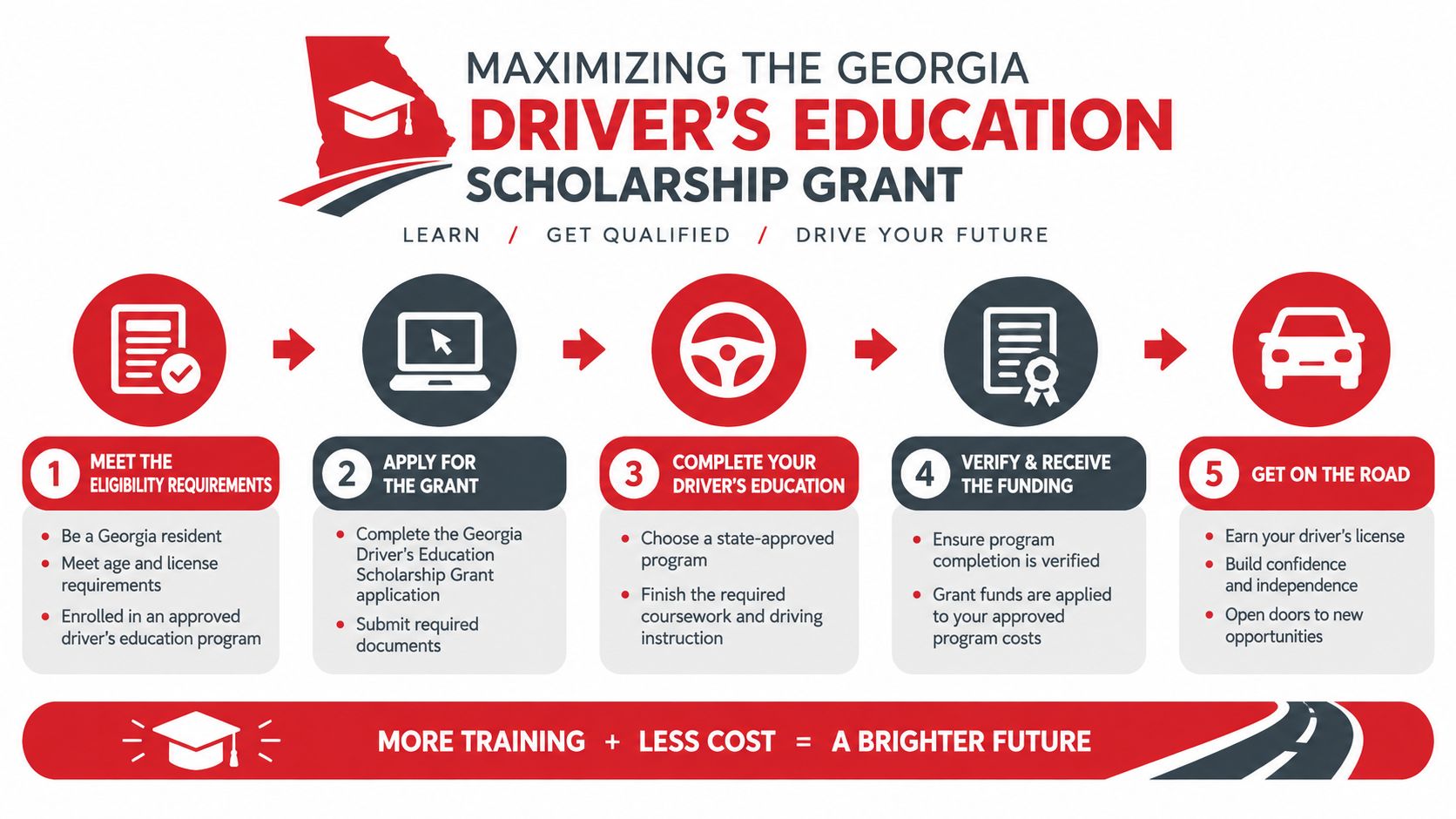
The Georgia Driver's Education Grant Scholarship Program is the first place eligible families should look before paying out of pocket. It's a statewide program for Georgia residents ages 15 through 17 who have a valid Georgia instructional permit or driver's license and want to complete Joshua's Law training, according to the Georgia scholarship rules.
The scholarship-supported package follows the standard 30/6 structure, with at least 30 hours of classroom instruction and 6 hours of behind-the-wheel training. That makes it far more valuable than a narrow defensive driving clinic for a teen who needs to meet licensing requirements and develop practical skill.
Eligibility comes first
Parents should verify the basic conditions before choosing a class:
- Age: The student must be a Georgia resident within the eligible age range.
- Permit or license: The student needs a valid Georgia instructional permit or driver's license.
- Program type: The award applies to the standard 30-hour classroom and 6-hour driving package.
- Provider: The family must select an authorized provider from the approved list.
The scholarship isn't a general coupon for any driving service. It's tied to the approved package and redemption process. A family that purchases unrelated private lessons first may not be able to apply the award retroactively to that expense.
Timing determines access
Georgia's application mechanics require attention to the calendar. Students must apply by the last day of the month before the class begins. Scholarships are awarded on the first day of the month, and approved students receive a redemption code that they use to select an authorized provider, according to the program application information.
Use this sequence:
- Confirm the student's age, residency, and permit or license status.
- Identify an upcoming standard 30/6 class.
- Submit the application before the required monthly deadline.
- Wait for the award decision and redemption code.
- Choose an authorized provider and reserve the approved package.
Parent advice: Don't wait until the student is ready to test. Start the scholarship process early enough to match the class calendar with school, sports, work, and supervised practice.
The scholarship changes the value calculation completely. Instead of comparing a low-cost theory course with a full paid package, an eligible family may be able to use state support for the approved education and initial behind-the-wheel training. Families can review the Georgia Driver's Education Grant Scholarship Program details, then confirm current eligibility, deadlines, provider status, and package terms before enrolling.
Remember that the scholarship-supported 30/6 package doesn't replace the parent or guardian's supervised driving requirement. It also doesn't guarantee road-test readiness. Students still need practice in varied traffic, careful feedback, and enough repetition to make safe actions automatic.
Preparing for the Georgia Road Test with Lesson Packages
A student may know every rule and still fail the Georgia road test. Picture a teenager arriving at the appointment, feeling pressure, missing a shoulder check, or losing vehicle control during a basic maneuver. Classroom education and instructor-led training provide the foundation, but consistent performance behind the wheel determines readiness.
A driving lessons package gives the instructor enough time to build skills in order. Early sessions focus on steering, braking, observation, and vehicle control. Later practice adds intersections, lane changes, speed management, parking, traffic judgment, and the maneuvers that often cause testing errors.
What strong preparation looks like
A worthwhile package should include a clear plan, not just a block of driving time:
- Skill diagnosis: The instructor identifies weak habits before assigning more practice.
- Targeted repetition: The student repeats difficult maneuvers until performance is consistent.
- Traffic variety: Practice covers neighborhood roads and busier traffic situations.
- Test preparation: The instructor explains the testing sequence and corrects habits that could lead to failure.
- Testing assistance: Where offered, the school helps with the vehicle, appointment, and other road-test logistics.
Smooth lane changes, controlled stops, intersection navigation, observation, and parking improve through feedback and repetition. Parents provide valuable supervised practice, but a professional instructor brings a separate perspective and can correct problems without turning every drive into a family argument.
Bundling reduces wasted effort
A lesson package also gives the family a manageable schedule. Parents can track progress across planned appointments and decide whether more practice is needed based on observed performance. That approach is more useful than booking isolated lessons after each near miss or waiting until the test date is close.
Road-test preparation differs from a basic defensive-driving course. A classroom or online course may satisfy an education requirement, while test readiness depends on repeated, accurate performance in a vehicle. The student must demonstrate safe decisions under changing traffic conditions, not merely complete assigned instruction.
Ask the school whether the package includes road-test preparation, use of the school vehicle, and testing assistance. Confirm what each item covers before comparing advertised prices. A package with targeted feedback and practical test support may provide better value than a cheaper set of lessons that leaves the family to arrange the final details.
Choosing the Right Driving School for Long-Term Safety
The cheapest course is rarely the best value for a first-time driver. A basic defensive driving class can help an eligible driver pursue an insurance discount or point benefit, but it isn't designed to build the full set of habits a teenager needs for independent driving. Industry summaries commonly place potential insurance savings around 5% to 10%, with Georgia drivers often told they may save up to 10% on applicable coverages, but the actual benefit depends on state rules and the insurer, as outlined by New York DMV's point and insurance reduction information.
For a Georgia family, I'd evaluate a school using four questions:
- Does it offer the required pathway? Confirm that the school provides an approved Joshua's Law option and can explain how classroom, online, behind-the-wheel, and parent-supervised requirements fit together.
- Does it teach, not just certify? Look for individualized correction, structured practice, and instructors who prepare students for real traffic.
- Can it support the final test? Road-test preparation and testing assistance can prevent a student from reaching the appointment underprepared.
- Can the schedule work for your family? Online enrollment, multiple time slots, and convenient locations matter when school and work fill the calendar.
A-1 Driving School is a family-owned Atlanta-area provider that offers in-person and online driver education, customized teen and adult driving lessons, road-test preparation, and testing assistance. It also works with Georgia families on scholarship-supported training and operates locations across the metro Atlanta area, including Athens.
The best investment is a complete path from education to independent driving, not a certificate purchased as cheaply as possible.
Parents should compare the package contents in writing, ask how instructors measure readiness, and verify current scholarship and state requirements before paying. A course that fits the budget but leaves the student needing unplanned lessons later may not be the economical choice.
Choose a training plan that combines Georgia-compliant driver education, focused behind-the-wheel lessons, and road-test preparation instead of stopping at a theory certificate. Visit A-1 Driving School to review online enrollment, lesson packages, scholarship options, and road-test support for your Georgia teen or adult driver.