A traffic ticket has a way of ruining your whole afternoon. You search defensive driving class online texas, and what you really want is a straight answer. How long is the course, what does it cost, and how do you make sure it counts?
That's a fair question. It's also a good reminder that driving rules are always state-specific. Texas handles ticket dismissal one way. Georgia handles teen driver education, road testing, and licensing in a different way. If you live in Georgia, the smarter move is to follow Georgia's process from the start so you don't waste time, money, or a course that doesn't fit your actual need.
Your Guide to State Driving Requirements
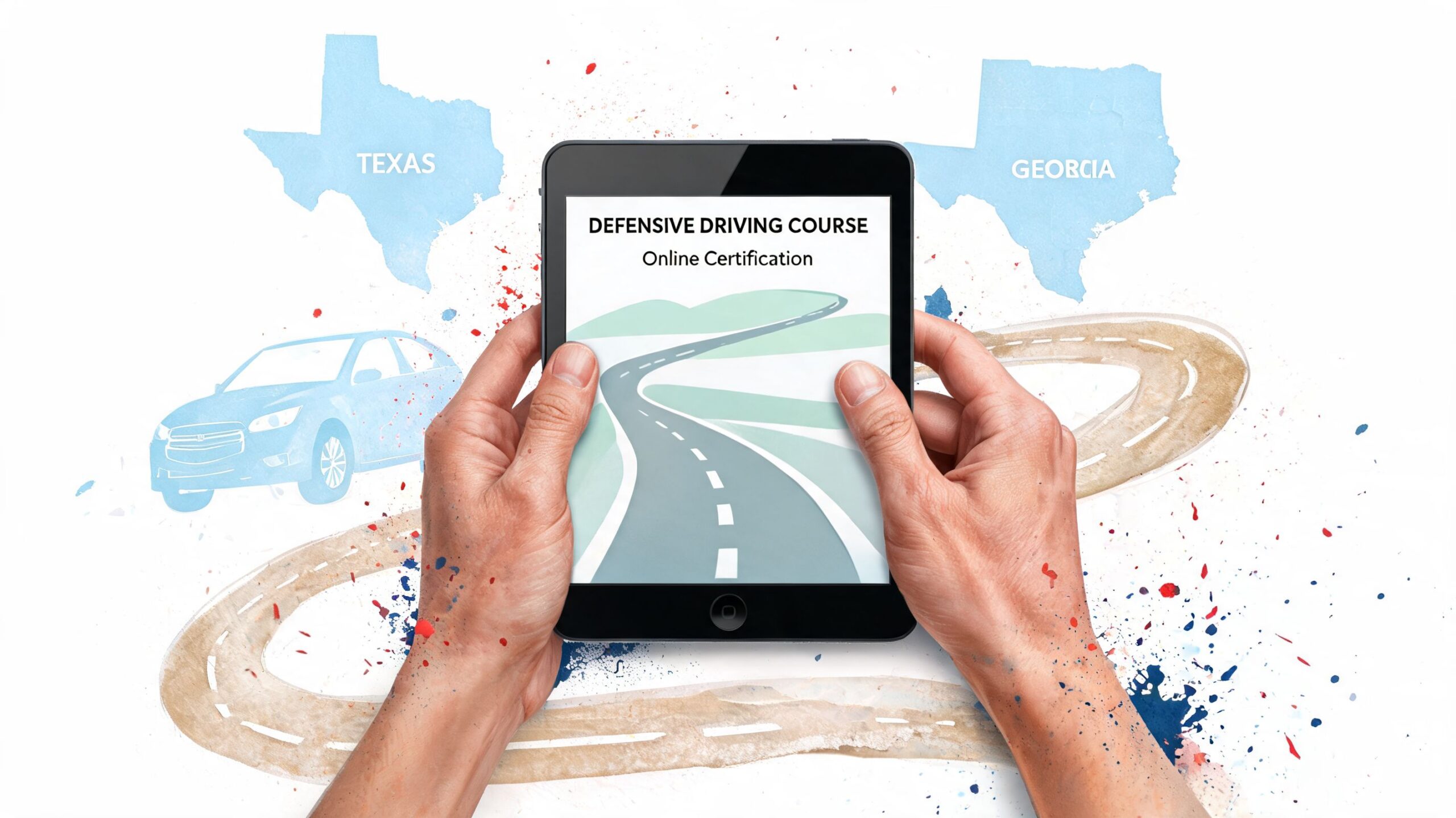
If you're looking up defensive driving class online texas, you're probably dealing with one of two situations. You either need a course for ticket dismissal, or you want a fast online option that fits around work, school, and family life.
Texas does offer that kind of path. But the important lesson is bigger than Texas. Driving education isn't one-size-fits-all. Courts, licensing agencies, and training requirements all depend on the state where you're handling your case or earning your license.
Practical rule: Always match the course to the state requirement first, then match it to your schedule.
That matters a lot for Georgia families. Parents often assume any online driving course will count for a teen license requirement. Adult drivers sometimes assume road practice alone is enough. In reality, Georgia has its own structure for teen education, online learning options, behind-the-wheel instruction, and road testing.
Why drivers get confused
A lot of websites mix together very different services:
- Ticket-related classes for court or insurance purposes
- Driver's education for teens working toward a license
- Driving lessons for real practice in traffic, parking, lane changes, and test preparation
- Road testing services for the final licensing step
Those aren't the same thing, even if the names sound similar.
For Georgia drivers, the bigger opportunity isn't just checking a compliance box. It's building skill before the road test and before solo driving starts. That's where online learning, structured lessons, and clear licensing guidance make a real difference for both teens and adults.
Answering the Texas Defensive Driving Question
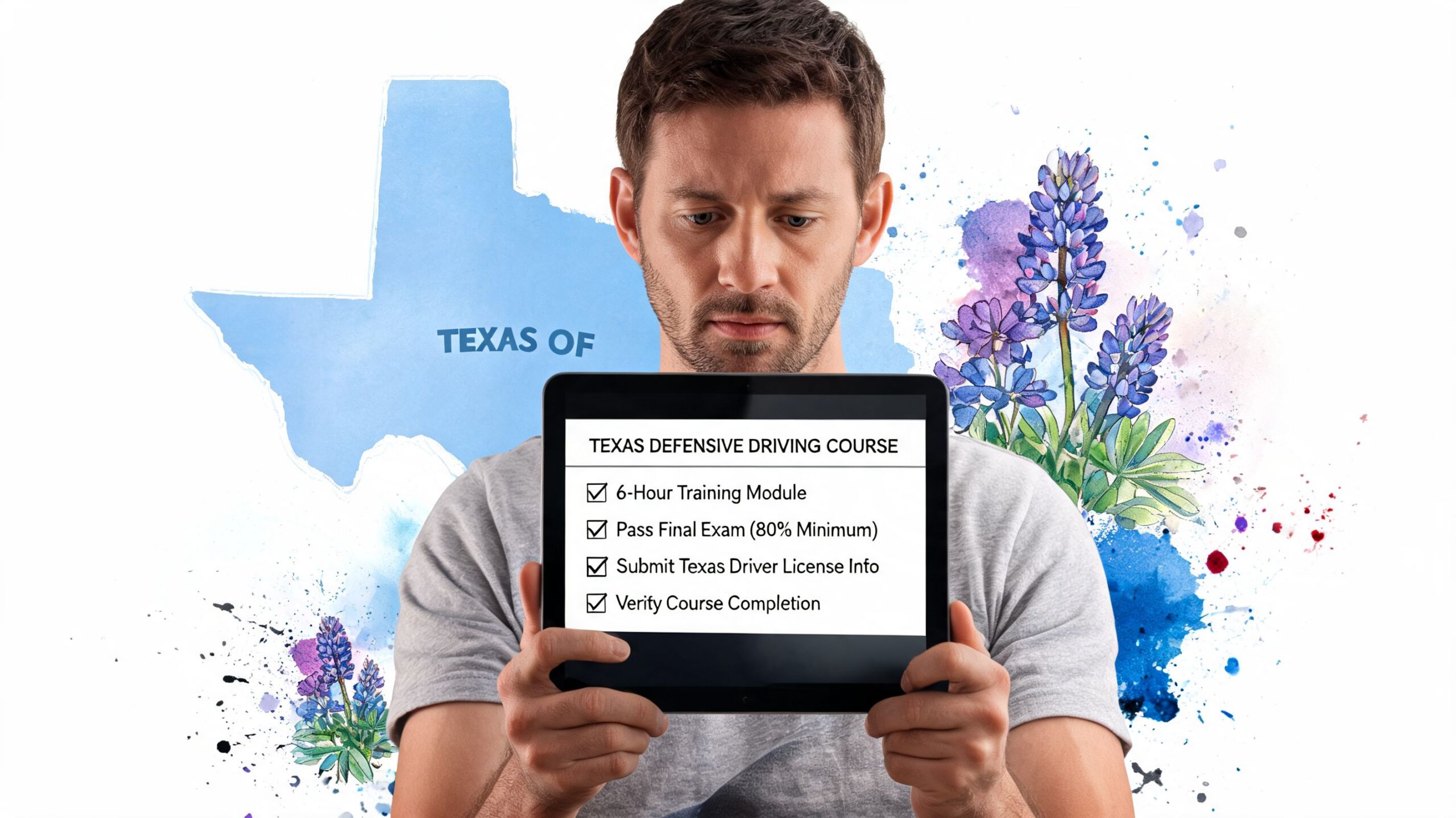
Here's the short, direct answer. In Texas, online defensive driving courses are built around state rules. The course must be at least 6 hours long under Texas law, the base course price is commonly $25 plus a state-required administrative fee, and legitimate courses are approved by the Texas Department of Licensing and Regulation according to Texas defensive driving course requirements.
What that usually looks like in practice
Most drivers go through a simple workflow:
- Register online and get access quickly
- Complete the course at your own pace
- Receive a certificate of completion for the court or other required use
Some providers also explain that the class is broken into smaller units instead of one big final test, with quiz checkpoints and saved progress so you can stop and return later.
Don't assume the hard part is the material. For many drivers, the bigger issue is missing a court deadline or waiting too long to start.
If you need a virtual option tied to this topic, you can review online class options here. Just make sure the course matches your state and your reason for taking it. That step prevents a lot of avoidable problems.
For Georgia Drivers Navigating Joshua's Law
Georgia parents usually ask a different question. It's not about a ticket. It's about getting a teen licensed the right way, without guessing.
For teen drivers, Joshua's Law shapes the early path. Families need to think about classroom learning, behind-the-wheel training, and enough practice to turn a nervous beginner into a steady driver.
What online learning does well
An online driver's education course works well for the knowledge side of learning to drive. Students can study from home, review material again when something doesn't click the first time, and fit coursework around school, sports, and part-time jobs.
That format helps with common beginner questions like:
- Right-of-way confusion at four-way stops
- Lane change decisions in moderate traffic
- Following distance in rain or heavy flow
- Sign recognition when the road gets busy fast
Online coursework gives teens a place to slow down and understand the rules before they have to apply them under pressure.
What parents should look for
A useful Georgia program should be easy to access, clear to follow, and designed around state expectations rather than generic driver tips. It should also fit into the rest of the licensing process instead of leaving families to piece everything together afterward.
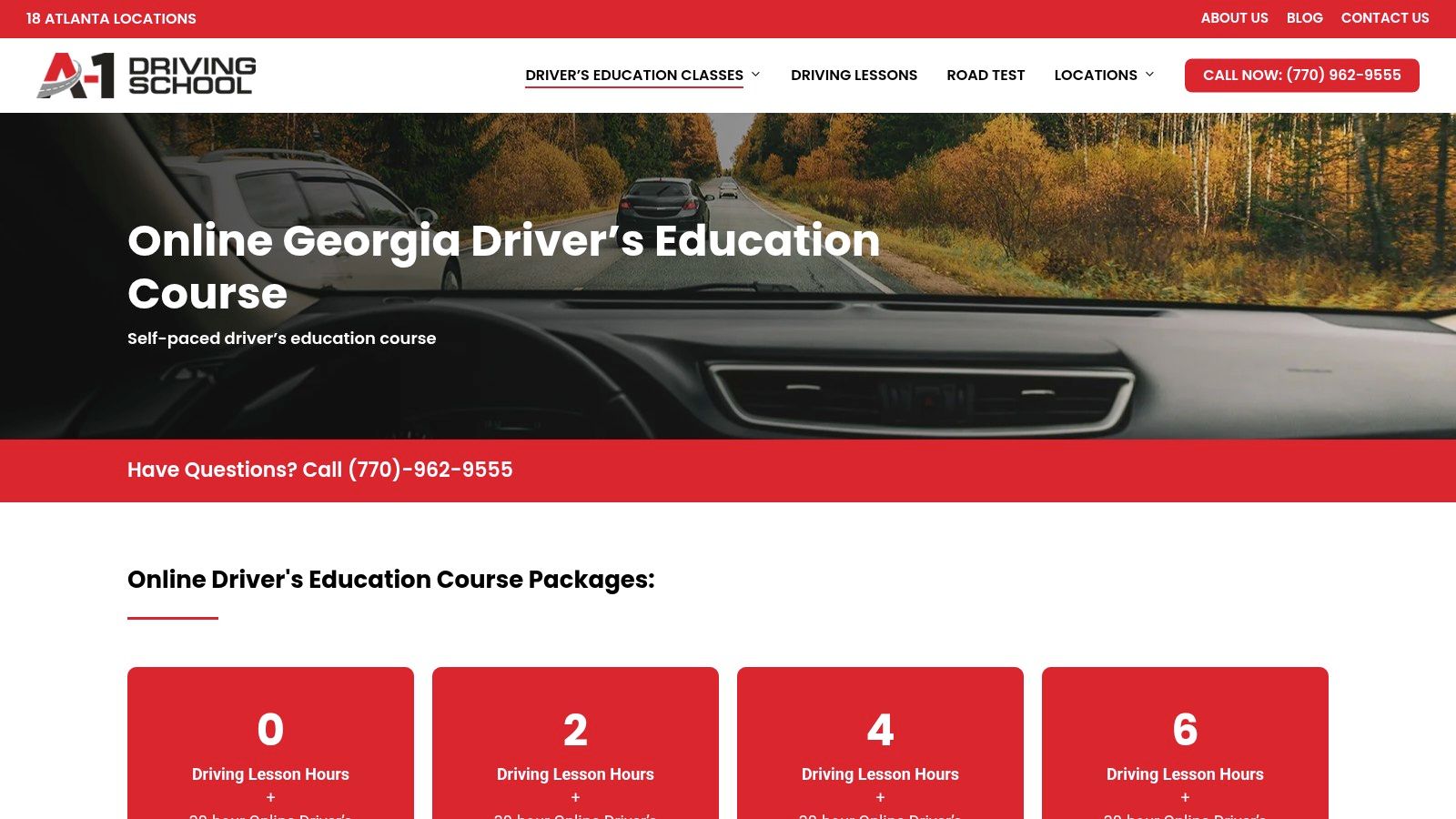
If you're comparing Georgia options, Georgia online driver's ed choices can help you see what kind of course format fits your schedule.
A quick visual overview can help if you're sorting through options at home:
A teen can pass a quiz and still feel unsure in live traffic. That's normal. Online learning builds understanding, but road experience builds judgment.
Where the real growth happens
The classroom side teaches rules. The car teaches timing, awareness, and calm decision-making. A student might know that a left turn requires yielding, but it often takes guided practice to judge speed, distance, and when to wait.
That's why families should treat online learning as the start of driver education, not the finish line.
Master the Road with Professional Driving Lessons
The biggest jump in driver confidence doesn't happen while reading a chapter. It happens in the car, with an instructor who can correct a mistake before it becomes a habit.

What students actually need on the road
New drivers usually don't struggle with starting the engine. They struggle with combining small tasks at the same time. They need to steer smoothly, scan mirrors, watch signal timing, judge space, and stay calm while traffic keeps moving.
A professional lesson helps break that overload into manageable pieces.
Here's where guided instruction tends to help most:
- Parking practice: Students learn how to control speed, line up the vehicle, and fix a bad setup instead of freezing.
- Lane positioning: Instructors catch drifting, late corrections, and poor mirror habits early.
- Intersections and turns: Students learn when to commit, when to wait, and how to read what other drivers are doing.
- Test preparation: Practice becomes more focused when a student knows what the road test expects.
Why parent practice isn't always enough
Parents are important, but teaching your own teen can be stressful for everyone in the car. Parents often know how they drive, but they don't always know how to explain it step by step. They may also miss small patterns that trained instructors spot quickly, like braking too late, turning too wide, or hesitating in ways that confuse other drivers.
That's one reason many families add lessons even when they already practice at home. The benefits of instruction from a driving teacher are often less about learning the basics and more about building safer habits earlier.
Students improve faster when feedback is immediate, specific, and calm.
Lessons for teens and adults
Driving lessons aren't only for teenagers. Adults often come in with very different needs. Some are first-time drivers. Some are licensed but rusty. Others need help with highway driving, parking, or preparing for a road test after years away from driving.
One school that offers these kinds of Georgia services is A-1 Driving School, including online driver education, road test preparation, and lesson packages built around teen and adult needs.
That package approach matters because not every student starts at the same level. One driver may need confidence in neighborhoods before moving to major roads. Another may already handle traffic but need targeted work on parking, lane changes, or test routes.
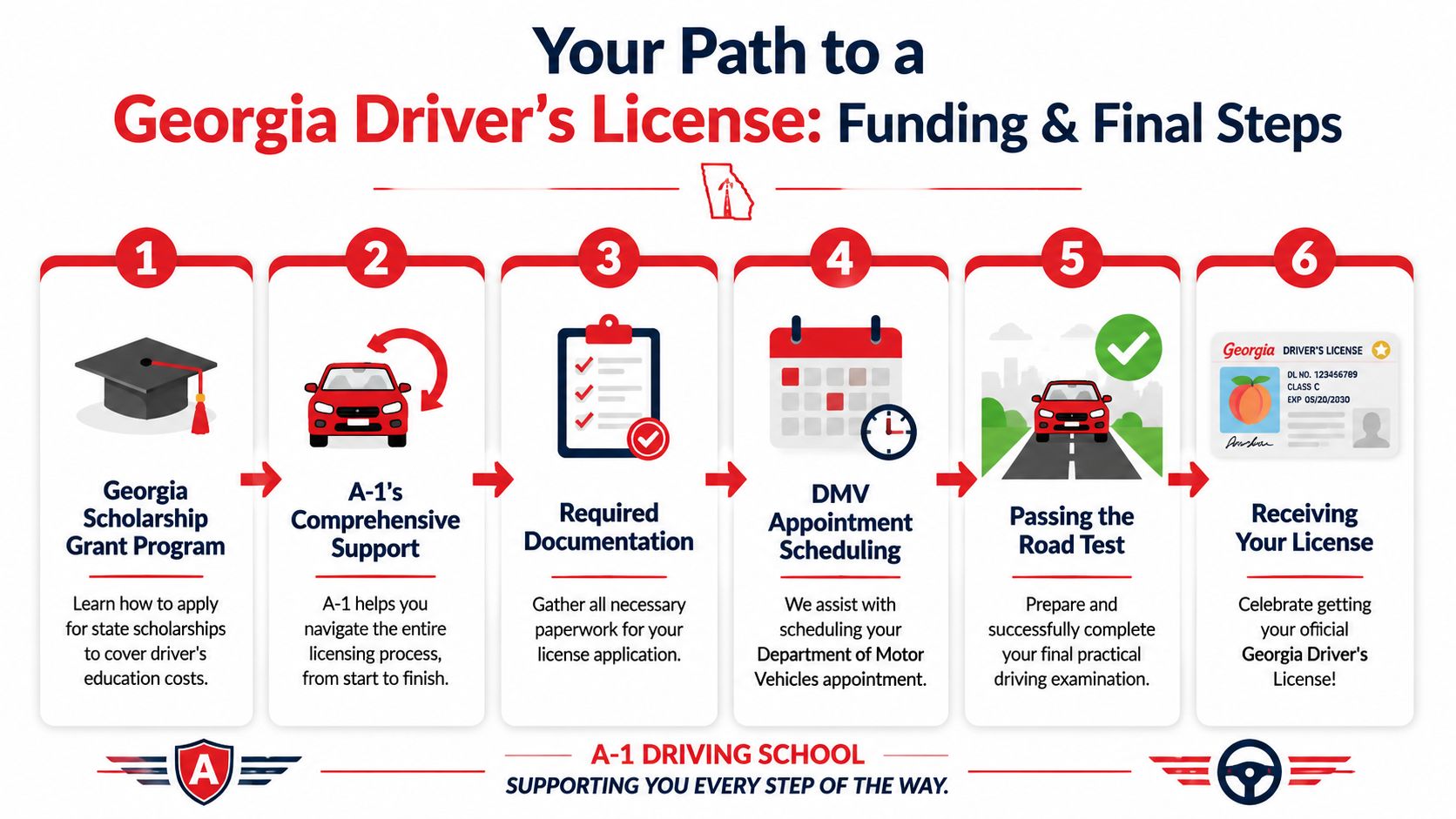
Funding and Finalizing Your Georgia License
Cost matters for many families. So does convenience near the end of the licensing process. Those two issues often decide whether a student moves forward smoothly or keeps delaying the next step.
Help with paying for driver education
Georgia families should look into the Georgia Driver's Education Scholarship Grant Program if cost is a concern. Programs like this can make formal training more accessible for eligible students, which is especially helpful when a family is balancing school costs, transportation needs, and work schedules.
The key is to ask questions early. Don't wait until a teen is ready for the road test to start looking for support. Training slots, paperwork, and scheduling can all take time.
A good first step is reviewing Georgia driver's license requirements so you know what paperwork and milestones apply before you book anything.
The road test feels easier when the process is familiar
Many students get nervous at the testing stage, even when they drive reasonably well in lessons. That's normal. The final test brings pressure, and pressure can make simple skills feel harder.
What helps most is familiarity:
- Knowing the vehicle: Students are calmer when they already know where everything is and how the car responds.
- Knowing the routine: A predictable check-in and testing flow reduces avoidable stress.
- Knowing what gets evaluated: Students do better when they understand that observation, control, and decision-making all matter.
A practical approach for families
If you're helping a teen through this process, keep it simple. Handle the licensing checklist in the same order every time.
| Step | What to focus on |
|---|---|
| Course planning | Choose the right Georgia education format |
| Practice phase | Build real skill, not just time in the car |
| Paperwork review | Confirm documents before test day |
| Road test prep | Rehearse common maneuvers calmly |
The smoothest licensing process usually comes from early planning, not last-minute problem solving.
Your Georgia Driving Questions Answered
Georgia families usually need a complete path, not a single class. That means learning the rules, getting coached on the road, preparing for the test, and understanding what paperwork belongs where. When those pieces line up, students feel less overwhelmed and parents spend less time trying to decode the process on their own.
Common questions from Georgia drivers
Does an online course replace driving lessons
No. Online learning helps with rules, signs, and decision-making concepts. Students still need real driving practice to build control, awareness, and confidence.
Are driving lessons only for teens
Not at all. Adult drivers often take lessons for first-time licensing, refresher training, road test prep, or help with specific issues like parking or highway driving.
Why do some students struggle even after studying
Because knowing the rule and applying the rule are different skills. A student may understand who has the right-of-way and still hesitate in live traffic until they've practiced that situation enough times.
What should parents focus on first
Start with the state requirement, then choose the right mix of online education, in-car lessons, and test preparation. That order keeps the process clear.
Is road test preparation worth it
Usually, yes. Students benefit when someone corrects small habits before test day, especially around stops, turns, observation, and parking.
If you're in Georgia and want a clearer route from first lesson to license, A-1 Driving School offers online courses, driving lessons, road test support, and guidance for families trying to move through the process with less confusion.