
Your teen is ready to start driving, but the paperwork, classroom hours, supervised practice, scholarship rules, and road test can make the first step feel harder than it should. One parent may be comparing online drivers ed classes in Georgia with a traditional classroom, while the teen is asking when they can get behind the wheel.
The path becomes clearer when you separate it into three parts: complete the required driver education, build supervised driving experience, and prepare for the Georgia DDS road test. The right school can make those pieces easier to coordinate through flexible course formats, structured driving lesson packages, and road test support.
Planning Your Path to a Georgia Driver's License
A Georgia family might begin with a simple question: should the teen enroll in a classroom course, start an online program, or learn mainly with a parent? The answer depends on the teen's schedule, learning style, budget, and the family's ability to provide consistent practice. Before choosing, it helps to understand how the classroom requirement, professional instruction, supervised driving, and testing fit together.
A practical starting point is the permit and licensing information in this Georgia learner's permit guide. Once the teen has the appropriate permit, the family can plan regular practice while also scheduling instructor-led lessons. Classroom learning can begin separately from behind-the-wheel training, so families don't have to coordinate every milestone on the same day.
The main decisions families face
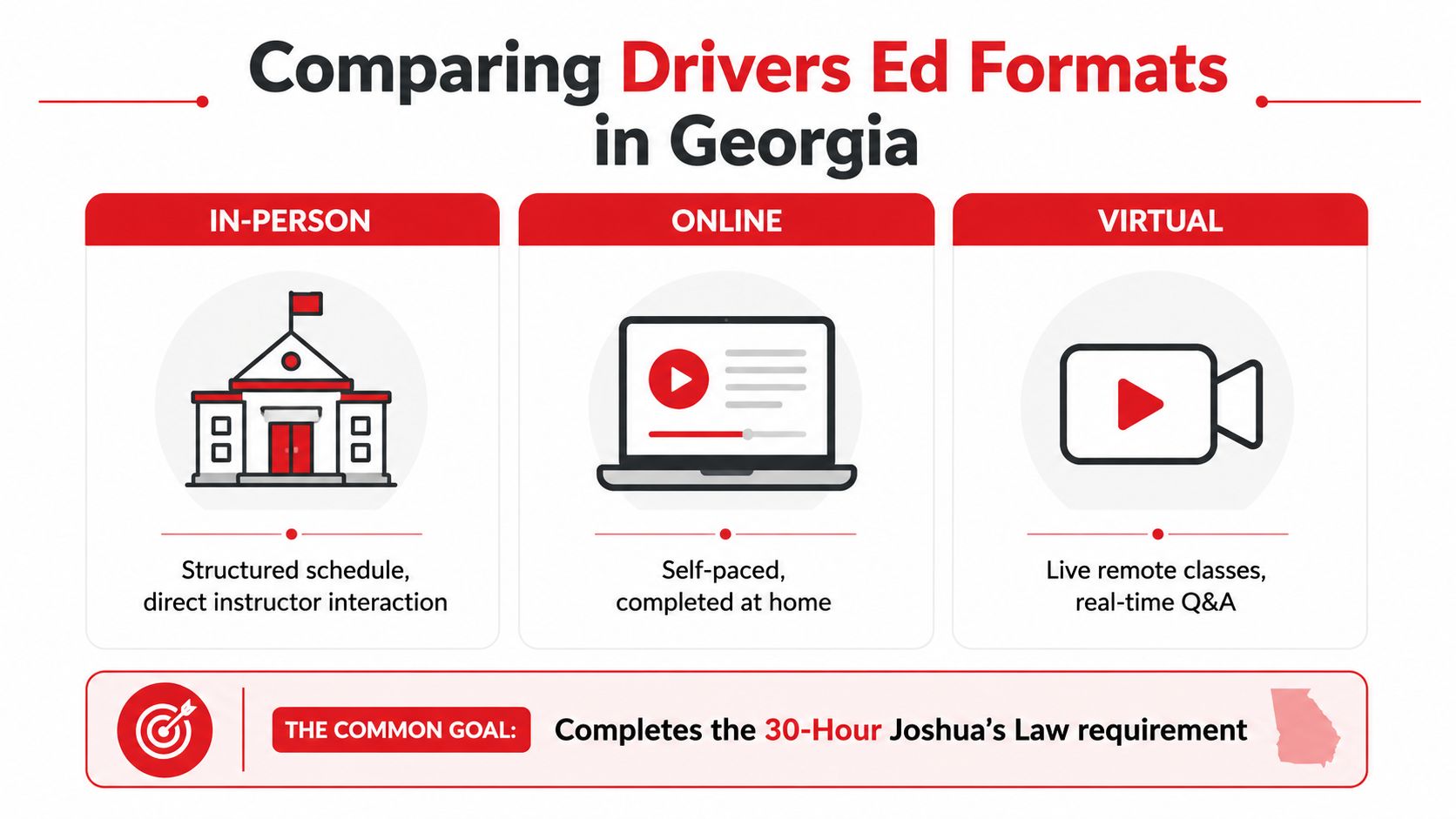
The first decision is how to complete the theoretical portion of Joshua's Law. Georgia allows the required instruction through a classroom setting or a DDS-approved online course. Some students learn best with a teacher physically present, while others need the flexibility of completing lessons at home. A live virtual option can suit families who want real-time questions without commuting to a school.
The second decision concerns practical training. A professional instructor can teach vehicle control, observation, lane positioning, parking, and road-test techniques. Parent practice remains important because the learner needs repeated experience in different traffic situations, but a lesson package can give the family a structured starting point and identify habits that need correction.
The final decision is how to handle the road test. DDS road testing is appointment-only, and families must prepare the vehicle, documents, practice plan, and test-day schedule. A provider that combines driving lessons with road test preparation or testing assistance can reduce the number of separate arrangements the family has to make.
Practical rule: Choose the compliance path first, then select lessons and testing support that match the teen's actual schedule.
The goal isn't only to collect certificates. Your teen should finish with a clear understanding of Georgia's rules, enough supervised practice to make sound decisions, and confidence operating the vehicle independently.
Understanding Joshua's Law Requirements
A 16- or 17-year-old preparing for a Georgia Class D license must coordinate classroom instruction, supervised practice, and the road test. Joshua's Law is the central driver-education requirement for Georgia teens, and the Georgia DDS Joshua's Law requirements specify an approved course plus 40 hours of supervised driving, including 6 hours at night.
The knowledge portion requires at least 30 hours of instruction. DDS permits families to complete it in a traditional classroom or through an approved online course. Approval matters because a course that only discusses driving topics may not satisfy the licensing requirement. A-1's guide to driver education in Georgia explains how the 30-hour course fits into Joshua's Law.
Separating instruction from supervised practice
The behind-the-wheel portion gives families two practical choices. The teen may complete 6 hours of training with a certified driving school, or the family may use the parent-taught driving option. Either route still requires the broader supervised-driving experience, including nighttime practice.
These requirements fit together like three parts of one plan, but they are not interchangeable. The 30-hour course teaches rules and theory. The 6 hours with a certified instructor provide professional behind-the-wheel instruction. The 40-hour supervised-driving benchmark measures the teen's wider practice, including night driving. Keeping separate records for each part helps prevent a last-minute documentation problem.
Four routes and one important tradeoff
Georgia recognizes four approved methods for satisfying Joshua's Law. A 2022 state evaluation found that 61% of teens completing driver-education requirements used the parent/teen driving guide, as reported in the Georgia driver education evaluation report. This figure describes that evaluation period, not necessarily current families.
Parent-taught practice can reduce scheduling pressure when an available adult can coach consistently. The parent must still record practice accurately and expose the teen to varied traffic conditions, rather than repeating only familiar neighborhood routes.
A school package with instructor-led lessons may suit a teen who needs direct feedback, a parent who prefers not to teach, or a family seeking organized road-test support. Compare what each package includes before choosing.
Georgia expanded the requirement on July 1, 2021, adding driver training for 17-year-olds, not only 16-year-olds, while retaining the same supervised-driving benchmark.
Choosing Between In-Person, Online, and Virtual Drivers Ed
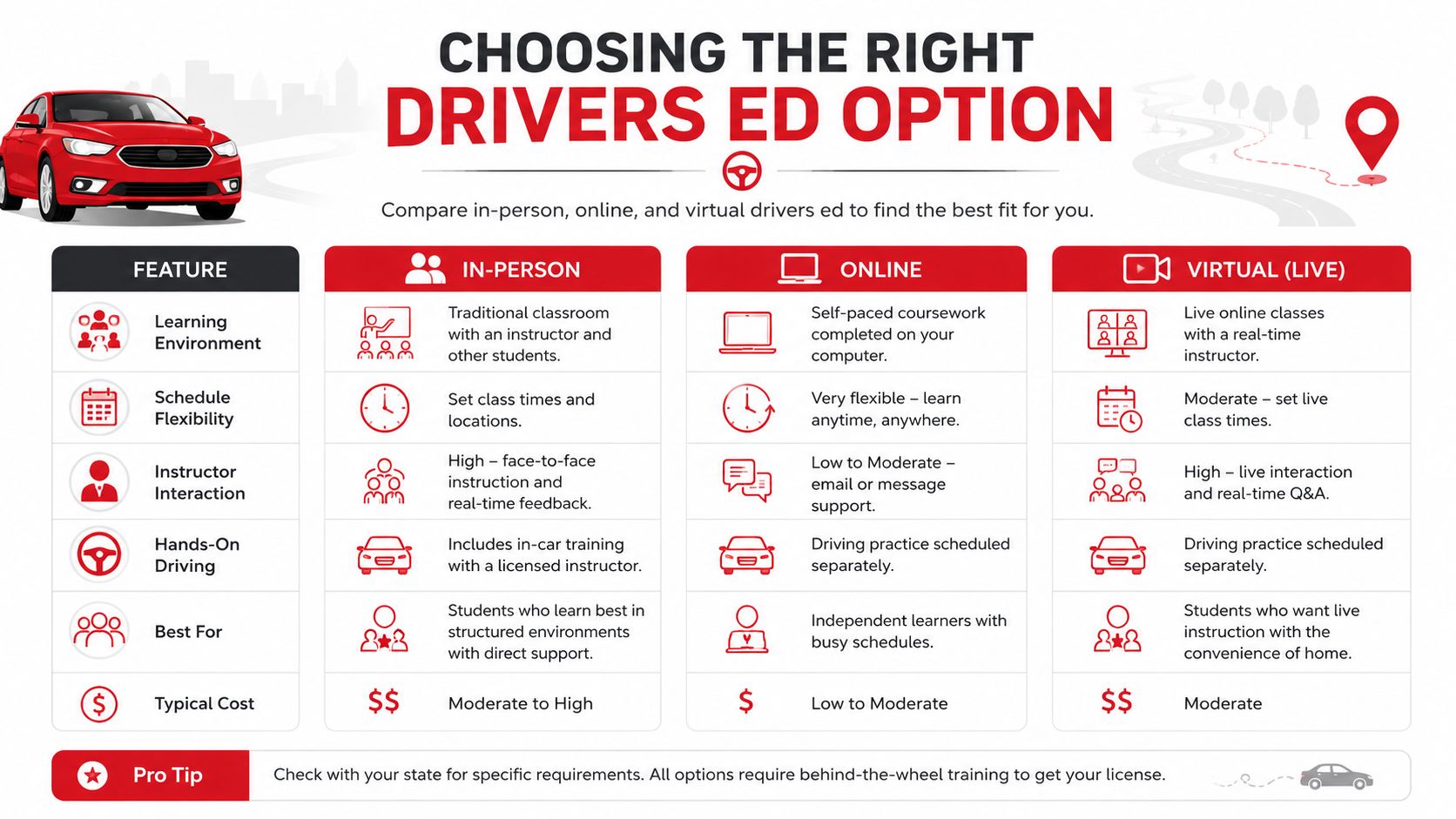
The best format is the one your teen will complete attentively and on schedule. Georgia's approved options for the 30-hour classroom requirement include traditional in-person instruction and approved online learning. A live virtual class can offer remote participation with direct interaction, but families should confirm that the provider and course satisfy Georgia requirements.
Match the format to the student
In-person classes provide a fixed structure. The teen attends scheduled sessions, hears explanations from an instructor, and can ask questions during the lesson. This format often suits students who get distracted at home or need accountability to keep progressing.
Online courses offer more control over timing. A teen can complete coursework at home, which helps families balancing school, work, sports, or transportation challenges. The tradeoff is that the student must manage time independently and stay engaged without a teacher physically present.
Virtual classes combine remote access with live instruction. Students can participate from home while asking questions in real time. This can work well for teens who want interaction but can't easily travel to a classroom.
The classroom format doesn't replace driving practice. After completing the theoretical component, the teen still needs the appropriate supervised driving and practical training for the selected compliance route. A family choosing online instruction should schedule behind-the-wheel lessons early rather than treating the classroom certificate as the finish line.
Questions to ask before enrolling
Ask whether the course is DDS-approved, how completion is documented, how the program handles missed sessions or technical problems, and whether the provider offers separate driving lessons. Also ask whether the school has packages that combine instruction, practice, and road test support.
A flexible course may be convenient, but convenience has little value if the teen doesn't finish it. Likewise, a formal classroom may be a poor fit if the schedule makes attendance unreliable. Choose the format that gives your teen both access and accountability.
Making the Most of Driving Lessons and Road Test Prep
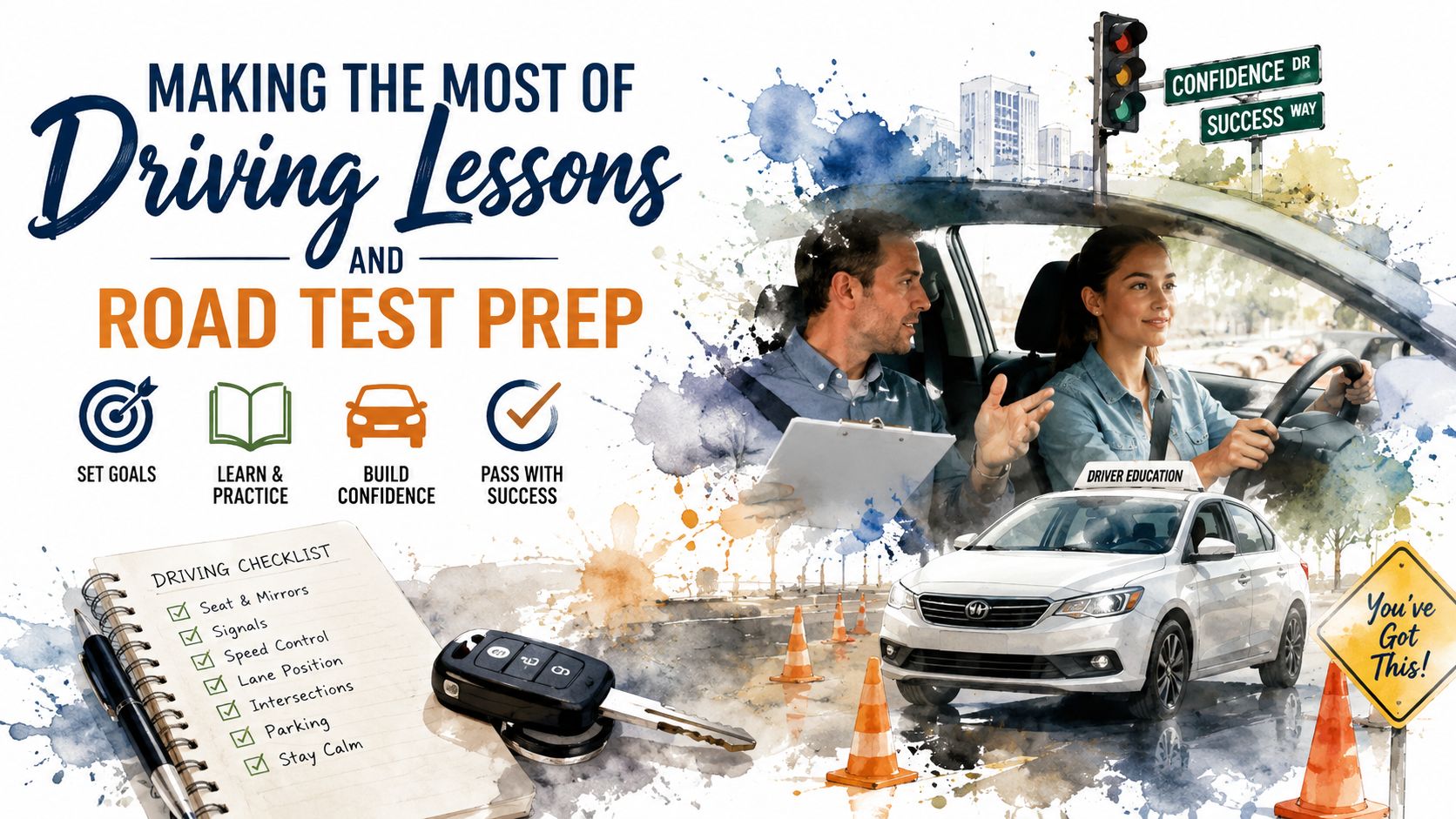
Classroom instruction explains rules. Driving lessons turn those rules into repeatable habits. A useful lesson package should give the instructor enough time to observe the teen, correct unsafe patterns, and build skills progressively instead of rushing through isolated maneuvers.
Early lessons may focus on vehicle controls, smooth starts and stops, steering, mirror use, turns, lane position, and basic observation. Later sessions can address parking, intersections, traffic flow, judgment, and the specific maneuvers the teen needs to perform confidently. The instructor should adjust the pace to the student rather than treating every learner as if they arrive with the same strengths.
Why packages help
Families often benefit from booking a package instead of arranging each lesson separately. A package can create a predictable sequence, make scheduling easier, and give the instructor a clearer view of progress. It can also pair practical instruction with Georgia road test preparation, so the student practices skills with the final evaluation in mind.
A strong package may include different forms of support, such as:
- Skill-building lessons: The instructor identifies weaknesses and works through them in a controlled order.
- Practice planning: Parents receive clearer direction about what to reinforce between professional sessions.
- Test-focused preparation: The student reviews vehicle control, observation, and road-test habits before the appointment.
- Testing assistance: The family may be able to coordinate vehicle requirements and test-day logistics through the provider.
Professional lessons don't eliminate the parent's role. They give parents a more useful framework for practice, including what to observe and how to avoid turning every drive into a stressful correction session.
Preparing the vehicle and appointment
Georgia DDS road testing is appointment-only. The vehicle must be a four-wheel vehicle with valid registration and license plate, valid liability insurance, and a safety inspection. If the vehicle doesn't have turn signals, the applicant must know the required hand signals.
For drivers 18 and over, DDS requires a valid non-commercial learner's permit, completion of the knowledge exam, and an affidavit confirming 40 hours of supervised driving, including 6 hours at night, before the road test can be scheduled. DDS states that the road test requires a minimum passing score of 75%, and the non-commercial test may be administered in a virtual or traditional format, as explained in the DDS testing information.
Don't wait until test day to discover an insurance, registration, or vehicle-control problem. Include a complete vehicle check in the final preparation plan.
Applying for the Georgia Driver's Education Scholarship Grant
The Georgia Driver's Education Scholarship Grant Program helps eligible teens pay for approved driver education. State program materials describe grants of up to $350, paid directly to approved driver-education providers, as outlined in the Georgia driver education policy brief.
The program has specific eligibility rules. Applicants must be 16 years old, Georgia residents, and enrolled in a public school, home study program, or eligible private school. Families should confirm current application procedures and provider participation before paying for a course or assuming reimbursement will be available.
What the grant covers
The scholarship is tied to an approved driver-education course consisting of 30 hours of classroom training and 6 hours of behind-the-wheel training. That connection matters because Joshua's Law also recognizes alternative compliance methods, including parent-taught driving. A parent-taught route may fit a family's schedule, but it may not provide the same scholarship pathway as the approved standard course package.
Georgia administrative rules define a statewide Driver's Education Grant Scholarship Program for students seeking a course with that 30-hour classroom and 6-hour behind-the-wheel structure. The Georgia administrative rules also place the broader program within a state-funded driver-training framework for eligible youth.
A sensible application sequence
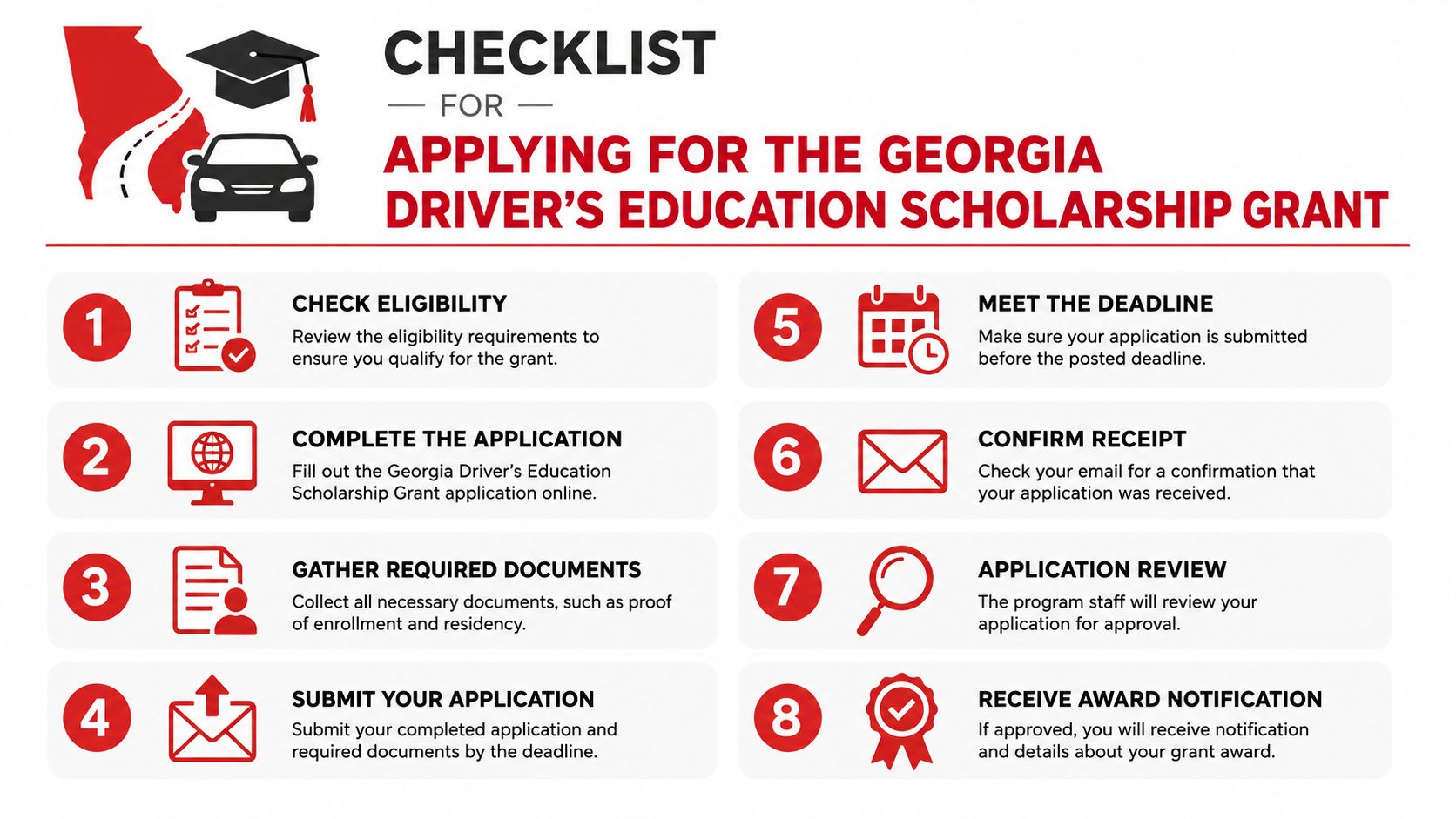
Start by confirming that the teen meets the age, residency, and enrollment requirements. Then check whether the selected school is an approved provider and whether the course package matches the program's classroom and behind-the-wheel structure.
Keep enrollment records and any documentation requested by the program. Because the grant is paid directly to approved providers, families should ask the school how the award is applied, what costs remain, and whether the application must be approved before enrollment.
Before paying: Verify eligibility, provider approval, package details, and the grant's payment process with both the program and the driving school.
The scholarship can make professional training more accessible, but it shouldn't be the only factor in choosing a course. Compare lesson quality, schedule availability, instructor support, and road-test preparation alongside the financial assistance.
How to Choose the Right Georgia Driving School
A driving school should make the licensing path easier to manage, not add another layer of uncertainty. Start by confirming that the provider offers a course recognized by Georgia DDS and can explain exactly how its classroom instruction, behind-the-wheel lessons, supervised practice, and road-test services fit together.
Use a practical comparison
Look for a school that offers the format your teen can complete reliably. Some families need a physical classroom, others need self-paced online study, and some prefer live virtual instruction. Ask how the school schedules lessons after the classroom portion and whether it can accommodate the teen's school, work, or activity commitments.
Location also affects consistency. Families in Fulton County, the broader metro Atlanta area, or Athens may want a provider with accessible locations and instructors who understand the roads where the student will practice. A nearby school can make regular lessons easier to maintain than a provider that requires a long, complicated commute.
Evaluate the practical support
Driving lesson packages should be clear about what the student receives. Ask:
- Lesson scope: What skills will the instructor cover, and how does the school evaluate readiness?
- Scheduling: Can the family book lessons around school and work?
- Vehicle access: Does the provider explain which vehicle will be used for lessons or testing?
- Road-test help: Does the school provide preparation, testing assistance, or both?
- Parent communication: Will the instructor explain what the teen should practice between lessons?
- Scholarship participation: Is the provider approved for the Georgia Driver's Education Scholarship Grant Program?
Experience can matter because established schools often have established scheduling systems, instructor procedures, and community relationships. A-1 Driving School, a family-owned Atlanta-based provider, offers in-person, online, and virtual driver education, customized driving lessons, and Georgia road test preparation and testing assistance. It also holds a Fulton County Board of Education contract for driver education across Fulton County Schools and numerous Atlanta high schools.
Read reviews for specific details rather than relying on star ratings alone. Look for comments about communication, punctuality, instructor patience, vehicle condition, and whether families understood the next step after each appointment.
Your Next Steps to Getting on the Road
The process is easier when you turn it into a short working checklist. You don't need to solve every decision at once, but you do need to keep the requirements connected.
- Confirm the licensing path. Determine whether the teen is pursuing a Class D license as a 16- or 17-year-old and review the Joshua's Law route that fits the family.
- Choose the classroom format. Compare in-person, approved online, and live virtual options based on the teen's learning habits and schedule.
- Plan practical instruction. Book certified behind-the-wheel lessons or select the parent-taught alternative, while keeping the broader supervised-driving requirement in view.
- Track nighttime practice. The supervised-driving record must include 6 hours at night, so don't leave that part until the final week.
- Check scholarship eligibility. If the teen is 16, a Georgia resident, and enrolled in an eligible school setting, investigate the state grant before committing to an approved course package.
- Prepare for DDS testing. Schedule the appointment, confirm the vehicle's registration, plate, insurance, and safety condition, and review the required documentation.
- Use the final lessons strategically. Ask the instructor to focus on the teen's weak areas and test-day habits rather than repeating skills the student already performs consistently.
A good provider connects these steps without taking responsibility away from the family. Parents still supervise practice, teens still need to develop judgment, and everyone should understand which documents and requirements remain outstanding.
The strongest plan is usually the one your family can follow consistently. Choose the course your teen will complete, the lesson package that gives them useful feedback, and the testing support that removes avoidable surprises.
A-1 Driving School offers in-person, online, and virtual Georgia driver education, along with customized driving lesson packages and road test preparation and testing assistance. Review the available course and lesson options through A-1 Driving School and choose the support that best fits your teen's route to a Class D license.