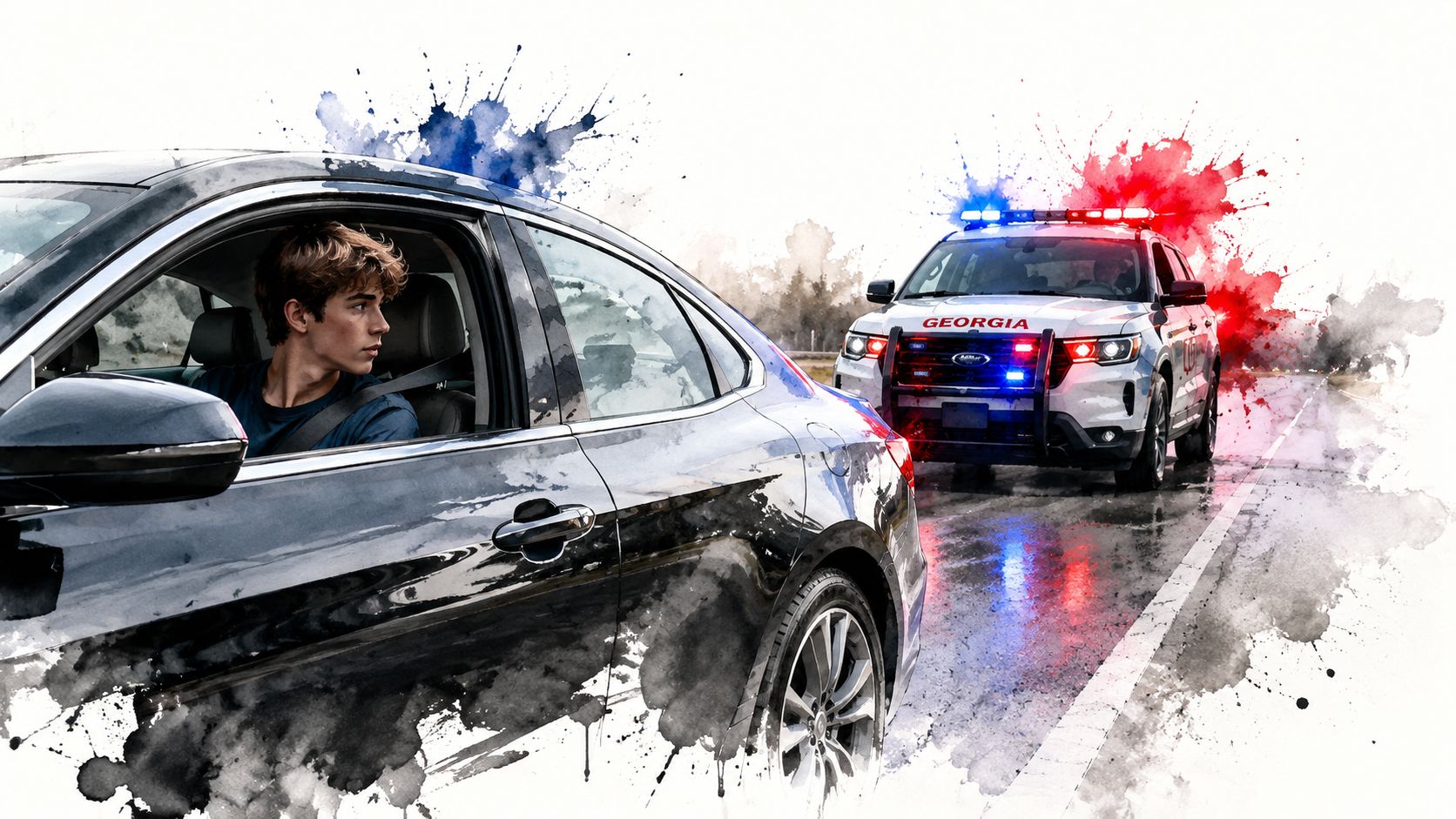
You're on Peachtree Road, the light turns green, and the car ahead of you is creeping through a busy Atlanta intersection. Then you hear it, a siren behind you, and you spot flashing lights in the mirror. That moment rattles a lot of new drivers, because the wrong move can block traffic, confuse the emergency crew, or put you in the path of another car.
Emergency vehicle response is one of those skills that looks simple until you're the one behind the wheel. Georgia teens need more than the old “pull over” advice, because real roads have turn lanes, medians, roundabouts, and heavy traffic that make the decision less obvious. Once you know how to read the lights, hear the siren, and position your car, the whole thing gets calmer fast.
What Counts as an Emergency Vehicle on Georgia Roads
A teenager coming home from school on Roswell Road might hear a siren first, then spot an ambulance sliding up behind traffic near a crowded intersection. A few seconds later, a police car may appear in the next lane, and a fire truck could be right behind it. That's when the confusion starts for a lot of new drivers, because the word “emergency vehicle” sounds narrow, but the road reality is wider.
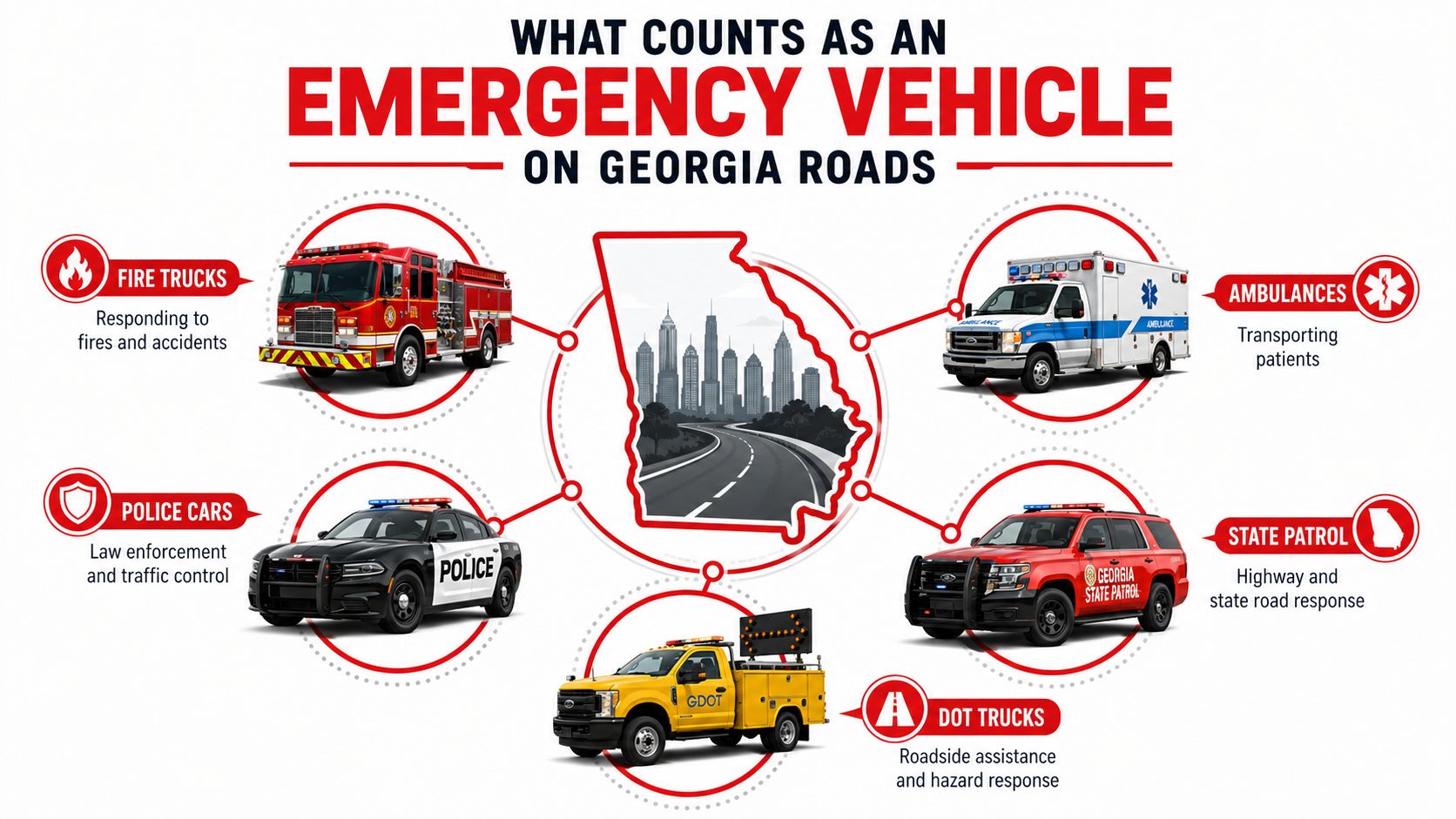
In Georgia, the vehicles you need to react to aren't just ambulances. The rule of thumb is simple, if a vehicle is using authorized lights and sirens, you need to treat it as an emergency response vehicle and give it space. These include the obvious ones, police cars, fire trucks, and ambulances, plus highway and roadside response units that are working to protect a scene.
Why that matters on a busy Atlanta road
The tricky part is that emergency response isn't always happening at high speed. A police car may be trying to close a lane, a fire truck may be blocking a crash scene, or a roadside vehicle may be protecting workers near traffic. In those cases, the vehicle's job is not just movement, it's scene protection.
Practical rule: If the vehicle has lights and sirens on, don't guess. Slow down, look for a safe path, and give the crew room to work.
For a simple extra read that connects emergency readiness with healthy energy habits, como reemplazar bebidas energeticas is a useful resource to keep in mind.
The main thing to remember is that the rule applies to the vehicle's job, not just its color or shape. Once you train your eye to notice the lights and your ear to pick up the siren, you'll stop treating these situations like surprise events and start treating them like part of normal driving.
Recognizing the Lights, Sirens, and Signals You Must Obey
A lot of teens hear a siren and look around too late because they're trying to figure out which car it belongs to. Don't wait for certainty. Train yourself to scan mirrors, side windows, and cross traffic the moment you hear a warning sound.
Georgia drivers need to recognize flashing red, blue, and white lights, along with the different sound cues that go with them. Some sirens are steady, some cycle faster, and some emergency vehicles also use air horns in traffic. The point isn't to memorize sound patterns like a musician, it's to understand that those signals mean a trained driver is trying to move through traffic with priority.
What your eyes and ears should catch
The safest habit is to react to the first warning, not the last one. If you hear a siren, check where the sound is coming from, then scan for any vehicle with active lights. If you see lights but don't yet hear a siren, still treat the situation seriously, because you may be dealing with a slower-moving response vehicle, a blocked scene, or a crew that's setting up space around a crash.
Drivers get in trouble when they stare straight ahead and hope the emergency vehicle will work around them.
That's exactly why the legal duty matters. Georgia drivers are expected to yield the right-of-way to an authorized emergency vehicle using audible and visual signals. The same mindset helps with other roadside responders too, including tow trucks, utility vehicles, and HERO units when the situation calls for the Move Over response.
If you want a plain-language refresher on what to do the moment you spot an ambulance, the guide at what to do when you see an ambulance is a solid companion read.
The key is pattern recognition. Once you can spot the lights early and hear the warning before the vehicle is on top of you, your reaction gets smoother, and that smooth reaction is what keeps everyone safer.
Georgia's Move Over Law and the Basic Yielding Rule
A lot of new drivers mix up two different duties, and that's where mistakes start. One rule applies when an emergency vehicle is approaching you with lights and sirens. The other applies when a stopped emergency or response vehicle is already at the roadside with lights flashing. Both matter, but they're not the same move.
The basic yielding rule is straightforward. If an emergency vehicle is coming up behind you, pull to the right and stop when that can be done safely. If you're on a roadway with several lanes and the vehicle is stopped on the side with lights flashing, Georgia's Move Over rule expects you to shift over one lane when possible. If you can't change lanes safely, you slow down and pass with care.
Move Over vs. approaching emergency vehicle
| Situation | What Georgia Law Requires | Common Mistake |
|---|---|---|
| Emergency vehicle approaches with lights and sirens | Yield right-of-way, move right, and stop if needed | Slamming the brakes in your lane without checking traffic |
| Stopped emergency vehicle with flashing lights | Move over one lane if safe, or slow down if you can't | Drifting past without changing lane or reducing speed |
| Tight traffic where you can't move over | Slow down and keep clear space around the scene | Forcing a lane change at the last second |
| Intersection with active response vehicles | Clear the path safely and don't block the box | Freezing in the middle of the intersection |
The biggest mistake is panic braking. That feels safe to a new driver, but it can trap the car behind you or cause a rear-end crash. A cleaner move is to check your mirrors, signal if you're changing lanes, and get out of the emergency vehicle's path without creating a new hazard.
For Georgia families who want a deeper legal overview, the explanation at what is the Move Over law helps connect the road rule to the daily driving habit.
Practical rule: Your job is not to “get out of the way fast.” Your job is to get out of the way safely.
Federal emergency-response guidance also says drivers should not use aggressive driving to force others to yield, and they must operate with due regard for safety, especially when road, traffic, or weather conditions make faster travel unsafe. That same mindset belongs in a teen driver's head from the start. Calm is faster than panic.
Five Real-World Scenarios Georgia Drivers Face
The rules make more sense when you can see them in real traffic. A teen driver in metro Atlanta might deal with all of these on the same week, sometimes on the same trip.
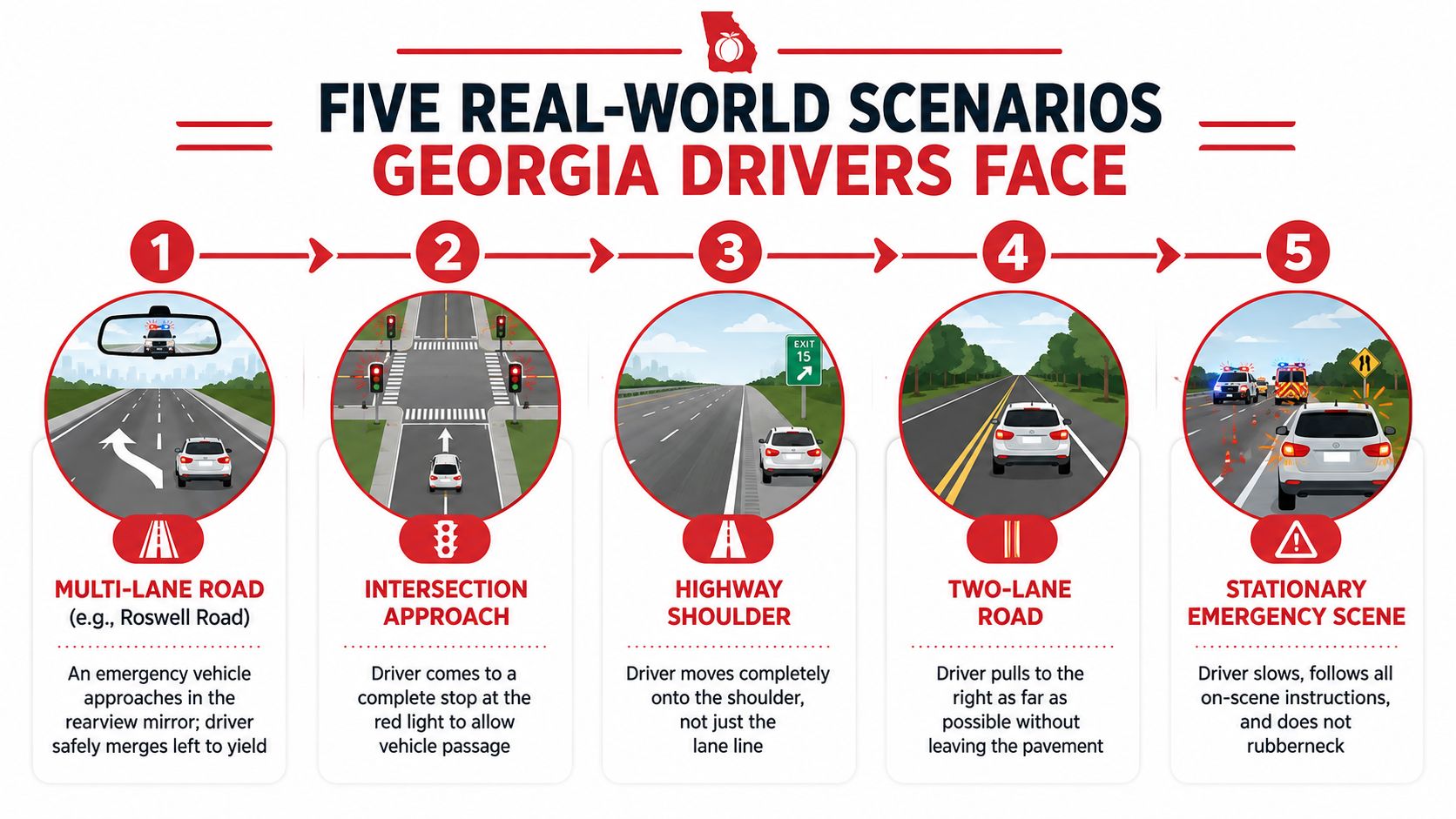
Multi-lane road like Roswell Road or Cobb Parkway
If an emergency vehicle comes from behind on a road with several lanes, check your mirrors first, then signal and merge right if that lane is open. Don't drift across lanes slowly without looking, because the driver behind you may already be trying to split traffic safely. If you're in the far-right lane and can't move farther over, hold a steady line and give room.
Signalized intersection in heavy traffic
At a red light, don't creep into the crosswalk or roll forward because you think that makes you easier to see. If an emergency vehicle needs the intersection, stay stopped until you can tell it's safe to move. If the light is green and the vehicle is coming from behind, clear the way without blocking the box or freezing in the intersection.
Highway or interstate like I-285, I-75, or I-85
On a highway, the shoulder is not a cruising lane. If you're in the lane nearest the shoulder and it's safe, move right and leave a clear path. If traffic is heavy, hold your lane and slow down just enough to create space, because a rushed lane change on the interstate can be worse than staying put.
Roundabout
Roundabouts make teens nervous even without sirens. If an emergency vehicle enters the circle or approaches from behind, yield to its path and avoid stopping in a spot that blocks the flow. The safest choice is usually to keep the circle clear and wait for a safe opening rather than guessing halfway through the turn.
Stopped traffic on a two-lane road
On a narrow road, you may not have a shoulder or an extra lane. Pull as far right as the pavement allows, but don't leave the car in a way that risks the ditch, curb, or another stopped vehicle. Keep watching for pedestrians near the scene, because people often step into the road when they think traffic has already slowed enough.
The one habit that helps in every scenario is scanning ahead and behind before you act. That gives you time to spot secondary emergency vehicles, cones, lane closures, or people walking near the edge of the road.
Mistakes That Get Teen Drivers in Trouble
A lot of bad reactions come from fear, not rebellion. A teenager sees the lights, gets tense, and makes the first move that comes to mind. That's normal, but it can still put everyone at risk.
One common mistake is hard braking in a travel lane instead of moving over. Another is stopping in the middle of a multi-lane road because the driver thinks “stop” is always the safest answer. It isn't, if stopping suddenly creates a chain reaction behind you.
Safer choices instead
- Brake with a plan: Check mirrors first, then slow in a controlled way so the driver behind you isn't surprised.
- Don't block the intersection: If you're already in the box, clear it when you can. If you're approaching, stay behind the line unless traffic officers direct otherwise.
- Move right, not left: Pulling left usually puts you deeper into the path emergency crews need.
- Keep the car rolling only when safe: Panic stalling is common for new drivers, so breathe, hold the brake, and reset before you move.
Another mistake is acting like the emergency vehicle will somehow thread through a tiny gap. That's how side-swipes happen, and it's how people get trapped in close traffic. The safer move is a deliberate lane change, or a controlled slowdown when the road doesn't give you room.
If your first thought is “I need to get out of the way now,” pause for one second and ask, “What path is actually open?”
That tiny pause saves drivers from pulling left into another lane, jumping the curb, or freezing in place. The goal is not perfect speed, it's predictable movement.
How Driver's Education Builds These Habits
Emergency vehicle response gets easier when it's not your first time thinking about it under pressure. That's why the habit starts in Joshua's Law classroom or online Driver's Education, not on the day of the road test. Teens who study yielding, lane discipline, and scene awareness early are less likely to blank when they hear a siren in traffic.
Georgia's required training path gives drivers more than a book lesson. The 6 hours of behind-the-wheel training and the parent-supervised 40 hours of practice, including 6 at night, give teens chances to deal with real traffic, real mirrors, and real decision-making. That practice matters because the road doesn't hand you one clean situation at a time.
The best programs connect that classroom knowledge to real movement on city streets, suburban arterials, and highways. Online course options, in-person classes across metro Atlanta, and road test services all fit together when the goal is the same, build a driver who can stay calm and respond correctly the first time. If you're comparing course paths, the Georgia driver education options at driver's education courses are a practical place to start.
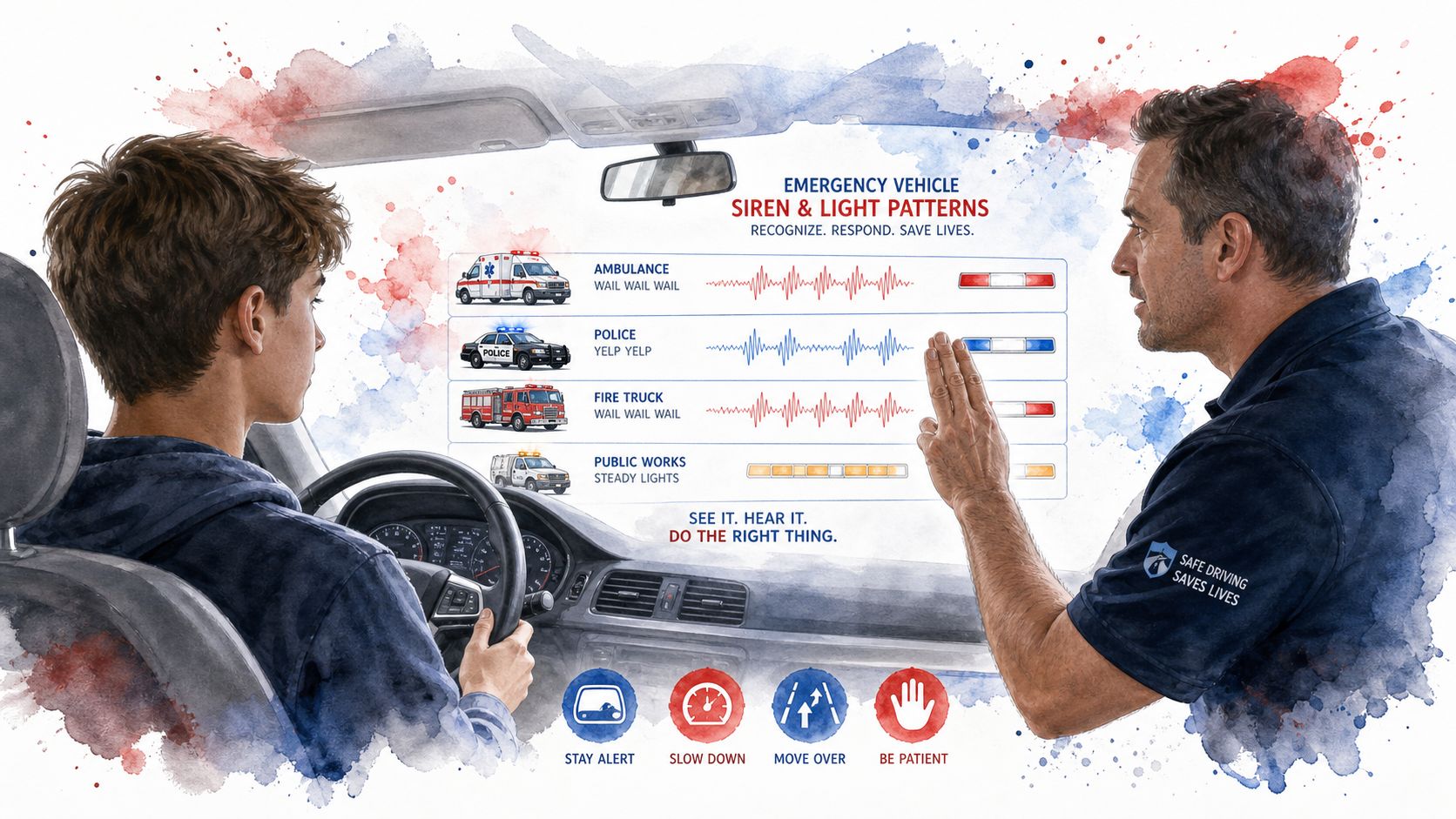
The road test checks whether you can control the car, but lessons and practice build the judgment that keeps you calm when the sirens start. That's why emergency response belongs in driver education long before the test day nerves kick in.
Practice These Skills and Lock Them In
The drivers who handle emergency vehicles well usually do three things without thinking about it. They scan early, they move predictably, and they don't freeze when traffic gets loud. That comes from practice, not from hoping you'll remember a rule under stress.
Here's the short version to keep in your head:
- Spot the warning early. Lights and sirens mean you need to look around right away.
- Give a clear path. Pull right, move over, or slow down safely, depending on the road.
- Protect the scene. Don't stop in the box, don't crowd the shoulder, and don't rubberneck.
- Stay predictable. Quick panic moves cause the crashes nobody wanted.
If you're a Georgia teen, this is exactly the kind of skill that improves with more seat time on real roads. Driving lessons packages help you rehearse situations like multi-lane traffic, intersections, and highway merges with an instructor beside you, which is a lot better than guessing alone when a siren hits behind you. Families who qualify should also look at the Georgia Driver's Education Scholarship Grant Program, because the right support can make training more accessible.
The safest drivers aren't the ones who memorize the most rules. They're the ones who practice enough that the right move feels normal.
A-1 Driving School helps Georgia teens turn classroom knowledge into calm, confident road habits with Joshua's Law Driver's Education, behind-the-wheel training, road test support, and flexible lesson packages. If you're ready to build real skill for situations like emergency vehicle response, visit A-1 Driving School and find the training path that fits your schedule.