
A Georgia teen can be ready for a learner's permit and still feel completely unprepared for the next step. School, sports, part-time work, and family schedules leave little room for a traditional classroom, so many families look for an online drivers ed book that can fit around real life. The important question isn't only whether the material is digital. It's whether the course helps a student complete the required education, practice correctly, and arrive at the road test with usable driving skills.
For Georgia families, the most practical path connects online study with supervised driving, certified lessons, road test preparation, and available financial support. This guide follows that path in plain language, from choosing and using the digital course to understanding Joshua's Law, scheduling lessons, applying for the Driver's Education Grant Scholarship Program, and preparing for DDS testing.
Getting Started with Your Online Drivers Ed Book in Georgia
A 15-year-old in Marietta might be working through AP classes, rushing to soccer practice, and trying to meet a learner's permit deadline at the same time. That student doesn't need a course that assumes every weekday afternoon is free. They need a clear sequence, flexible access, and an adult who understands that learning the rules is only the first part of becoming a licensed driver.
An online drivers ed book provides the classroom or digital-study foundation. Instead of carrying a printed manual to a scheduled classroom, a teen can study through a phone, tablet, or laptop and return to difficult material when needed. The format is useful because students can fit lessons around school, but flexibility works only when the student follows a steady schedule and completes the required assessments.
Georgia's licensing process also requires more than reading. For a teen pursuing a Class D license, Joshua's Law connects approved education with supervised driving and documentation. The online material should therefore be treated as one part of a larger plan, not as a standalone substitute for practice behind the wheel.
A practical roadmap
Use this order to keep the process manageable:
- Confirm the approved course: Make sure the provider and course satisfy Georgia requirements.
- Create a study routine: Set recurring study blocks instead of relying on last-minute sessions.
- Complete knowledge checks: Quizzes reveal misunderstandings before they become driving habits.
- Schedule driving lessons: Pair rules with coached practice in real traffic.
- Prepare for the road test: Work on examiner-evaluated skills, vehicle control, and test procedures.
- Review financial options: Check whether the Georgia scholarship program can support eligible training.
The sections ahead explain what the digital book includes, how Joshua's Law affects completion, how A-1 Driving School combines online education with lessons packages, and what families should do before booking the DDS road test.
What an Online Drivers Ed Book Actually Is
A printed handbook gives you information. A structured online course gives you information, checks whether you understand it, and records your progress. In practical instructor terms, an online drivers ed book is a digital curriculum that may combine reading, traffic-scenario videos, interactive questions, and completion tracking inside one learning platform.
That difference matters. A downloadable PDF can be useful for reviewing a sign or rule, but it usually won't tell a parent whether a student finished the required material or struggled with right-of-way questions. A properly designed course organizes Georgia traffic laws, sign recognition, lane rules, safe decision-making, and risk awareness into lessons that students complete in sequence.
The format also gives learners more control. A teen can pause after a difficult intersection example, replay a visual explanation, or review a missed answer before moving forward. For adults comparing flexible education formats beyond driver training, this resource on flexible online classes for adults offers broader context about learning around work and family responsibilities.
Where it fits in Georgia licensing
Georgia's approved pathway uses a classroom or digital education component alongside driving instruction. The state's official materials include both a Georgia Driver's Manual and related manuals, so students should use official DDS information when checking rules and documentation.
A digital course may satisfy the 30-hour classroom portion of Joshua's Law when completed through an approved provider. It doesn't replace certified behind-the-wheel instruction, and it doesn't turn reading into driving ability. Students still need actual practice, feedback, and proof of completion before moving through the licensing process.
For a closer explanation of how digital coursework works, review what online driver's education includes. The strongest programs treat the book as an active learning tool, not a screen-based version of a paper manual.
How Joshua's Law Shapes Your Online Course
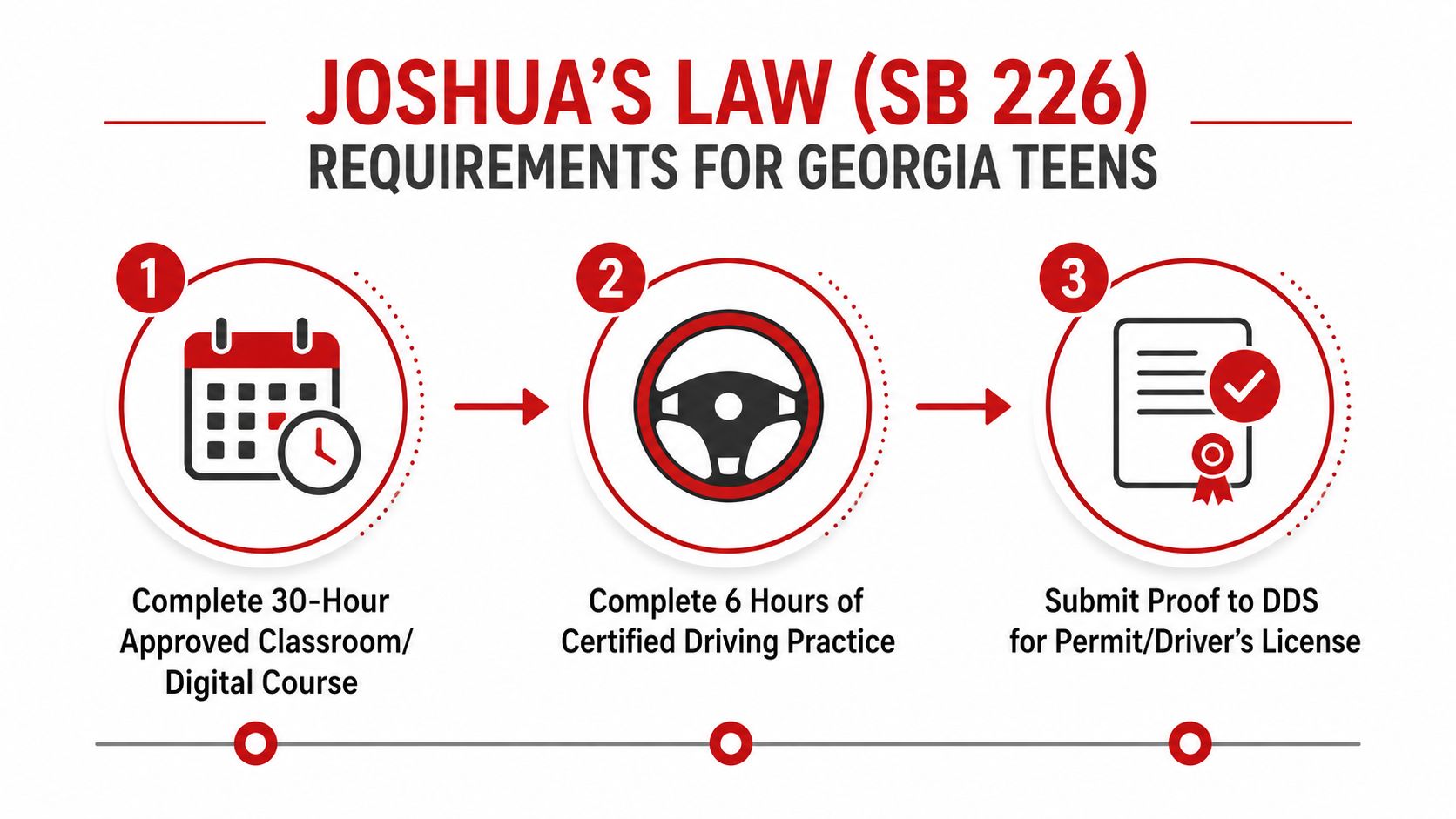
Joshua's Law is easiest to understand when you separate the requirements into education, driving practice, and proof. Georgia DDS states that teen applicants for a Class D license must complete an approved driver education course and 40 hours of supervised driving, including 6 hours at night. Approved classes can be available online, but the online portion isn't the entire licensing experience. See the official Joshua's Law requirements before enrolling, because the provider, documentation, and training path must align with state rules.
For the classroom requirement, a Georgia teen generally follows an approved 30-hour course. The digital book fulfills that portion only when it's delivered through a provider and program recognized for the requirement. The driving portion must be completed through an accepted combination of certified instruction and supervised practice, depending on the path the family chooses.
Certified instruction and parent practice
Parents often ask whether they can teach everything themselves. Georgia allows multiple approved paths that combine classroom, online, behind-the-wheel, and parent-taught driving components. A certified school can make the education and documentation easier to organize, while parent-guided practice gives the teen repeated exposure to ordinary traffic, neighborhood streets, and family vehicles.
The online modules should map to the approved curriculum. A parent can compare the course content with the Georgia Driver's Manual, watch for completion records, and confirm what certificate the provider issues. For families choosing a school-based route, the online Joshua's Law course provides a direct place to review course details and enrollment information.
The practical sequence is simple:
- Complete the approved classroom or digital course.
- Complete the required driving instruction and supervised practice.
- Keep the completion documents ready for DDS and licensing appointments.
A certificate proves education was completed. It doesn't prove that a teen can park, control speed, scan an intersection, or respond calmly under examination pressure. That is why driving lessons belong in the same plan.
How A-1 Driving School Delivers the Online Book
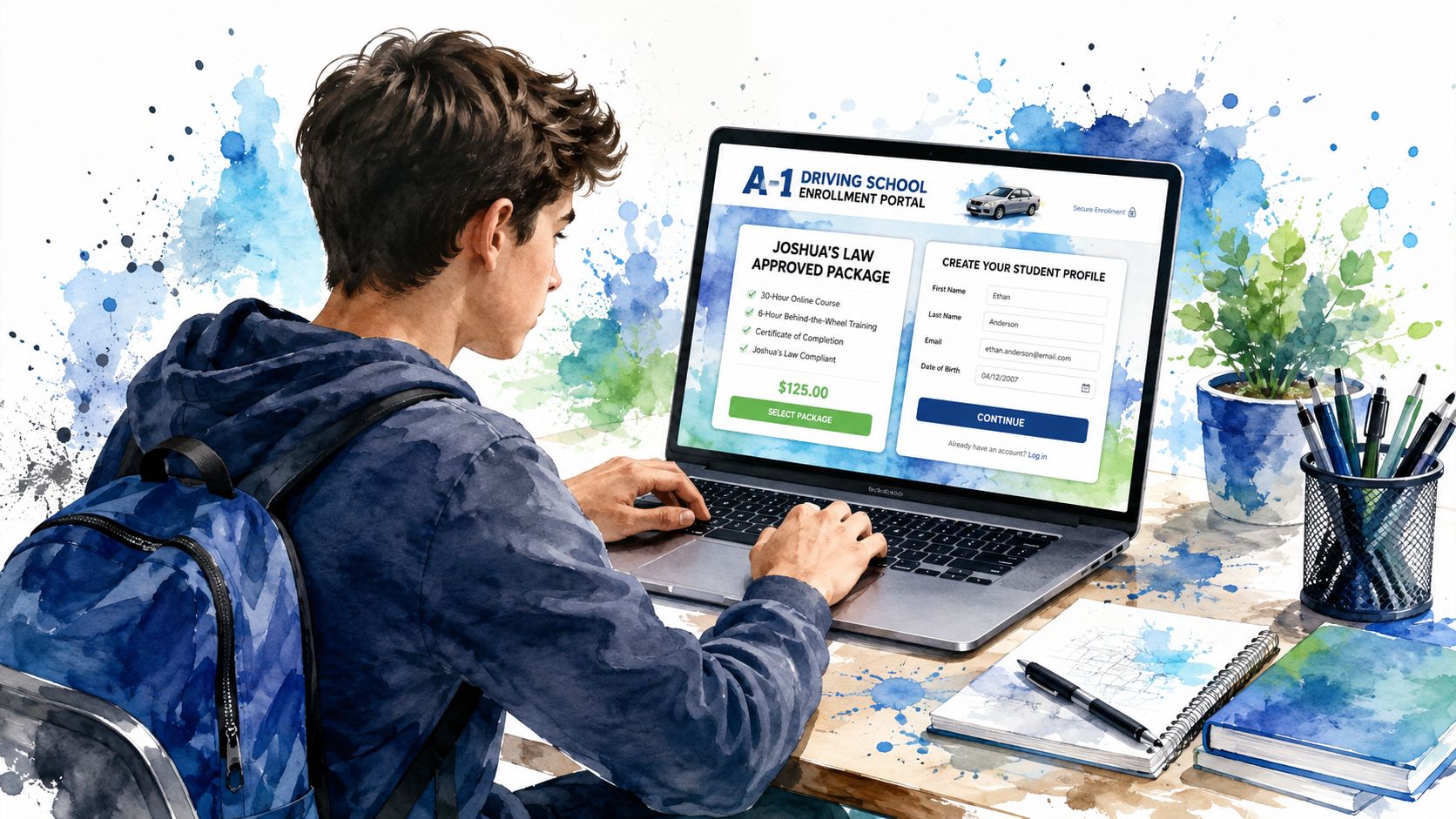
Enrollment should feel like the beginning of a process, not the purchase of an isolated e-book. With A-1 Driving School, a student starts online by selecting an approved Joshua's Law course or package, creating a profile, and following the enrollment steps provided by the school. Once access is active, the student can work through the digital material using a compatible browser and device.
The value of a learning platform is organization. Students can return to unfinished material, review completed lessons, and use quizzes to identify weak areas. Parents also need a practical way to see whether a teen is moving forward rather than just saying, “I studied.”
What to look for inside the platform
A useful online course should make these details clear:
- Course progress: The student can see completed modules and remaining work.
- Assessment history: Quiz results show which subjects need review.
- Device flexibility: Progress remains available when the student changes from a laptop to a tablet or phone.
- Accessible presentation: Reading, video, and other learning modes support different study preferences.
- Scheduling connection: The family can move from online completion to driving lessons without rebuilding the entire plan elsewhere.
The A-1 platform is designed to connect online course access with lesson scheduling and other driver-training steps. That connection reduces a common problem: a teen finishes the knowledge portion but has no organized plan for practicing the skills that knowledge describes.
The student dashboard should be treated as a planning tool. Use it to identify unfinished work, record questions for an instructor, and decide when to schedule behind-the-wheel training. A screenshot of the student experience is shown below.
Don't choose a course only because it opens on a phone. Ask whether it tracks meaningful progress, provides feedback, and leads naturally to driving lessons and road test preparation.
Study Strategies That Help You Finish the Course
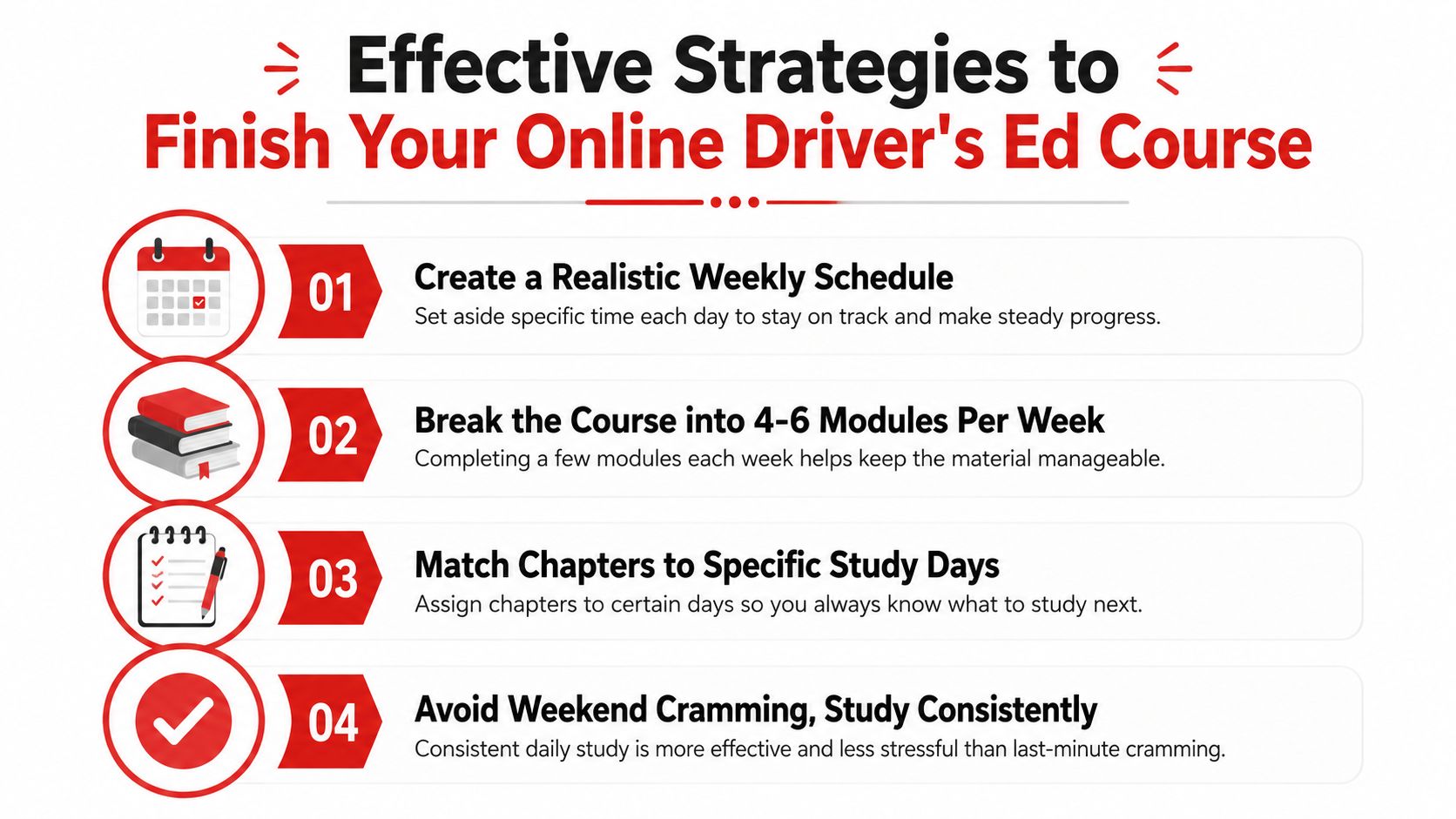
Thirty hours of online education can disappear from a calendar if a student keeps postponing it. It can also become exhausting if the student tries to complete everything in a single burst. A steady routine works better because it gives the learner time to connect traffic rules with actual driving situations.
Start by opening the calendar, not the course. Choose recurring blocks after school, before practice, or on weekend mornings. The suggested rhythm is four to six modules per week, with each module followed by its quiz and a short review of missed answers.
A routine that supports retention
Use this sequence rather than clicking through:
- Read or watch one lesson: Focus on one topic, such as signs, lane positioning, or intersections.
- Take the quiz immediately: Testing yourself shows whether you understood the lesson.
- Review every missed answer: Don't memorize the correct letter. Understand the rule behind it.
- Write a short note: Keep a Georgia-specific study file for rules that are easy to confuse.
- Practice the topic in the car: If the lesson covers right-of-way, discuss that rule while approaching real intersections with a qualified supervising adult.
Audio narration can help reinforce material when a student can't keep looking at a screen, although it shouldn't replace focused study or testing. A teen can listen to a previously studied topic and then return to the platform for the quiz and review.
Check readiness before the official exam
After several chapters, take a practice permit test and record the subjects that cause errors. The point isn't to chase a perfect score on one attempt. The point is to identify patterns, such as confusing warning signs, stopping rules, or right-of-way decisions.
Practical rule: If you can't explain why an answer is correct, you're not finished reviewing it.
Parents can help by asking the teen to explain a traffic situation in plain language. That conversation often reveals gaps that a quick click-through misses. Consistent study also gives the instructor a stronger foundation to build on during driving lessons.
From the Digital Book to the Road Test
The online book teaches the rules. The car reveals whether the student can apply them while watching traffic, controlling speed, choosing a lane, and responding to changing conditions. Those are different skills, so a teen shouldn't treat course completion as proof of road-test readiness.
Georgia DDS describes the road test as an on-the-road evaluation. The examiner checks eyesight, understanding of traffic-control devices, safe-driving knowledge, and the applicant's ability to control the vehicle safely. Review the Georgia DDS road test requirements before scheduling, because an appointment requires a valid Georgia Non-Commercial Learner's Permit and a passed knowledge exam.
Why lessons packages matter
A scheduled lesson gives the student feedback that a digital book can't provide. An instructor can see whether the teen checks mirrors at the right time, brakes smoothly, maintains lane position, and understands what to do before entering an intersection.
A-1 Driving School connects its online education with driving lessons packages and road test preparation. Depending on the selected package and student needs, practice can focus on highway merging, parallel parking, three-point turns, residential speed control, and other skills commonly used during evaluation.
The lesson plan should answer three questions:
- What skill needs work? For example, the student may know the rule for backing but struggle to control the vehicle.
- Where will it be practiced? Instructors can choose roads and traffic conditions that match the student's current ability.
- How will progress be measured? A mock evaluation gives the teen a clearer picture than general reassurance.
Road test preparation may include a vehicle inspection walkthrough, examiner-style scoring, and a practice drive that follows the structure of the DDS evaluation. The exact package should be confirmed during enrollment, especially if the family wants the school to provide testing assistance.
The best transition is continuous. Finish a digital topic, discuss it with the instructor, practice it on the road, and revisit the book when a driving mistake exposes a knowledge gap.
Scholarship Grant and Driving Lessons Packages
The Georgia Driver's Education Grant Scholarship Program helps eligible Georgia residents ages 15 through 17 who hold a valid Georgia Instructional Permit or Driver's License and want to satisfy Joshua's Law. The program supports an approved driver education course consisting of 30 hours of classroom training and 6 hours of behind-the-wheel training, according to the Georgia Driver's Education Grant Scholarship Program rules.
Families should verify current application steps, eligibility, and provider requirements before assuming that a course or package qualifies. A practical starting point is the scholarship eligibility information, followed by confirmation of the documents the grant administrator requires.
Match financial support with actual practice
The scholarship can address approved training costs, but the family still needs a plan for supervised driving and road-test readiness. Lessons packages become important here. A six-hour behind-the-wheel package may address the certified training component, while additional practice sessions can help a parent supervise mileage with better structure.
A family may choose:
- A required training package: Coursework paired with the certified driving component.
- A road-test preparation package: Targeted practice on parking, turns, vehicle control, and test procedures.
- Additional coaching: Extra drives for students who need more repetition or parents who want guidance on supervising practice.
Don't select a package by price alone. Ask which required hours are included, what documentation is issued, whether road test assistance is part of the package, and what the student should complete before the first drive.
| Income/Household Size | Scholarship Status | Lessons Package Included | Add-On Options |
|---|---|---|---|
| Eligibility depends on the current program rules and household information | Confirm approval through the state process | Select an approved education and behind-the-wheel combination | Additional practice, road-test preparation, or parent coaching may be available |
| Not eligible or not approved | Family-funded enrollment | Choose the package that matches the student's training needs | Add lessons based on skill gaps and appointment timing |
| Application still under review | Wait for confirmation before relying on the award | Discuss scheduling and documentation with the provider | Reserve optional preparation after approval and course planning |
The grant and lessons solve different problems. Financial assistance can make approved education more accessible. Professional driving practice helps turn the online book into controlled, repeatable behavior on Georgia roads.
Frequently Asked Questions from Georgia Teens and Parents
How long does the online book take?
The required classroom portion is 30 hours, but calendar time depends on the student's schedule, course pacing, and review habits. A teen who studies consistently may finish sooner than someone who logs in only when there's spare time. The course should be completed carefully, not rushed to reach the certificate.
Can a student pause and resume?
That's one of the main reasons families choose a digital format. A student can usually study in planned blocks, pause between lessons, and return later through the same account. Confirm the provider's specific access and completion rules before enrollment, and use the progress dashboard to avoid losing track.
What happens after a missed quiz answer?
A missed answer is a study signal, not a failure of the entire process. Review the explanation, return to the relevant lesson, and retake the quiz according to the platform's rules. If the same subject keeps causing trouble, write down the question and ask an instructor or parent to discuss the underlying driving situation.
Does the online book replace driving lessons?
No. It covers knowledge and course completion. Georgia's requirements also involve supervised driving, including nighttime practice, and the road test evaluates actual control of the vehicle. Schedule behind-the-wheel instruction early enough to leave room for correction and additional practice.
What does DDS require before the road test?
The applicant must hold a valid Georgia Non-Commercial Learner's Permit and pass the driver's license knowledge exam before a road test appointment. The student should also keep the required course and driving documentation organized so there's no last-minute search for proof.
Can parents track progress?
Ask the provider whether parent access is included and what information the parent account displays. Progress tracking is useful when it shows completed work, quiz results, and remaining course requirements. It shouldn't become constant monitoring. A short weekly check-in usually works better than asking about every login.
Families often build their own question list as they move through enrollment, study, and lessons. A structured ultimate FAQ chatbot guide can help organize recurring questions, but official DDS materials and the driving school remain the right places to verify licensing requirements.
After the digital course is complete, schedule the required behind-the-wheel lessons, confirm the certificate process, and book road-test preparation before making the DDS appointment. The online book starts the journey, while coached driving is what helps a teen finish it with confidence.
A-1 Driving School connects Georgia's online Joshua's Law education with scheduled driving lessons packages, road test preparation, and testing assistance. Visit A-1 Driving School to review course options, scholarship information, and driving lesson packages that can take your teen from digital study to the road test.