
Your teen has just watched a friend post a new driver's license photo, and suddenly the kitchen counter is covered with questions. A parent pulls up the Georgia Department of Driver Services website, while the student wants to know one thing: can the classroom work be completed online?
Yes, an approved online course can make the classroom portion more manageable. But a Georgia drivers ed online course is only one part of the licensing journey. Joshua's Law, the learner's permit, supervised practice, professional driving lessons, and the road test all fit together. The certificate starts the process, but it doesn't replace time behind the wheel.
A Teen's First Step Toward a Georgia Driver's License
For a Georgia teen, the path often begins with a practical decision. The student needs the classroom requirement, but school, sports, work, and family schedules make fixed class times difficult. An approved online course can let the student complete the academic portion from home while a parent plans the driving practice that follows.
The legal journey has several connected stages:
- Classroom education: Complete an approved 30-hour Joshua's Law course.
- Learner's permit: Meet Georgia DDS requirements for the instructional permit.
- Supervised practice: Build 40 hours of driving with a parent or guardian, including 6 hours at night, under the applicable pathway described by Georgia DDS. (Georgia DDS Joshua's Law requirements)
- Professional instruction: Complete the required certified behind-the-wheel training when the selected compliance method calls for it.
- Road test: Fulfill the Class D checklist and demonstrate practical driving skills.
- Class D license: Apply after completing the required licensing steps.
The order matters because classroom knowledge and vehicle control develop differently. An online lesson can explain right-of-way rules, lane positioning, weather hazards, and safe decisions. It can't show whether a student checks mirrors consistently, brakes smoothly, or turns into the correct lane in live traffic.
Practical rule: Treat the online certificate as a starting document, not proof that a teen is ready to drive alone.
Families should also look at cost assistance early. Georgia's Driver's Education Grant Scholarship Program is designed to help eligible students complete approved classroom and behind-the-wheel training, so the funding question belongs near the beginning of the plan, not after every appointment has been scheduled. (Georgia's driver education grant rules)
How Joshua's Law Shapes Georgia Drivers Ed Online Courses
A teen may finish an online lesson on right-of-way rules, then hesitate at a busy intersection during the first supervised drive. That gap explains Joshua's Law. Georgia connects approved driver education with the Class D licensing process, and an approved online course includes 30 hours of instruction. The certificate starts the licensing plan. It does not replace practice or vehicle-control training. (Georgia DDS Joshua's Law requirements)
Georgia recognizes four compliance methods:
- Approved online instruction, followed by the driving components required for that method.
- Licensed in-person driver education through an approved school.
- A public or private school driver education program that meets the state standard.
- A parent-taught equivalent under DDS oversight, when the family follows the applicable requirements.
A parent can supervise practice, but supervision alone does not satisfy the classroom requirement. The certificate must come through a qualifying education pathway, so families should confirm provider approval and course details before enrolling.
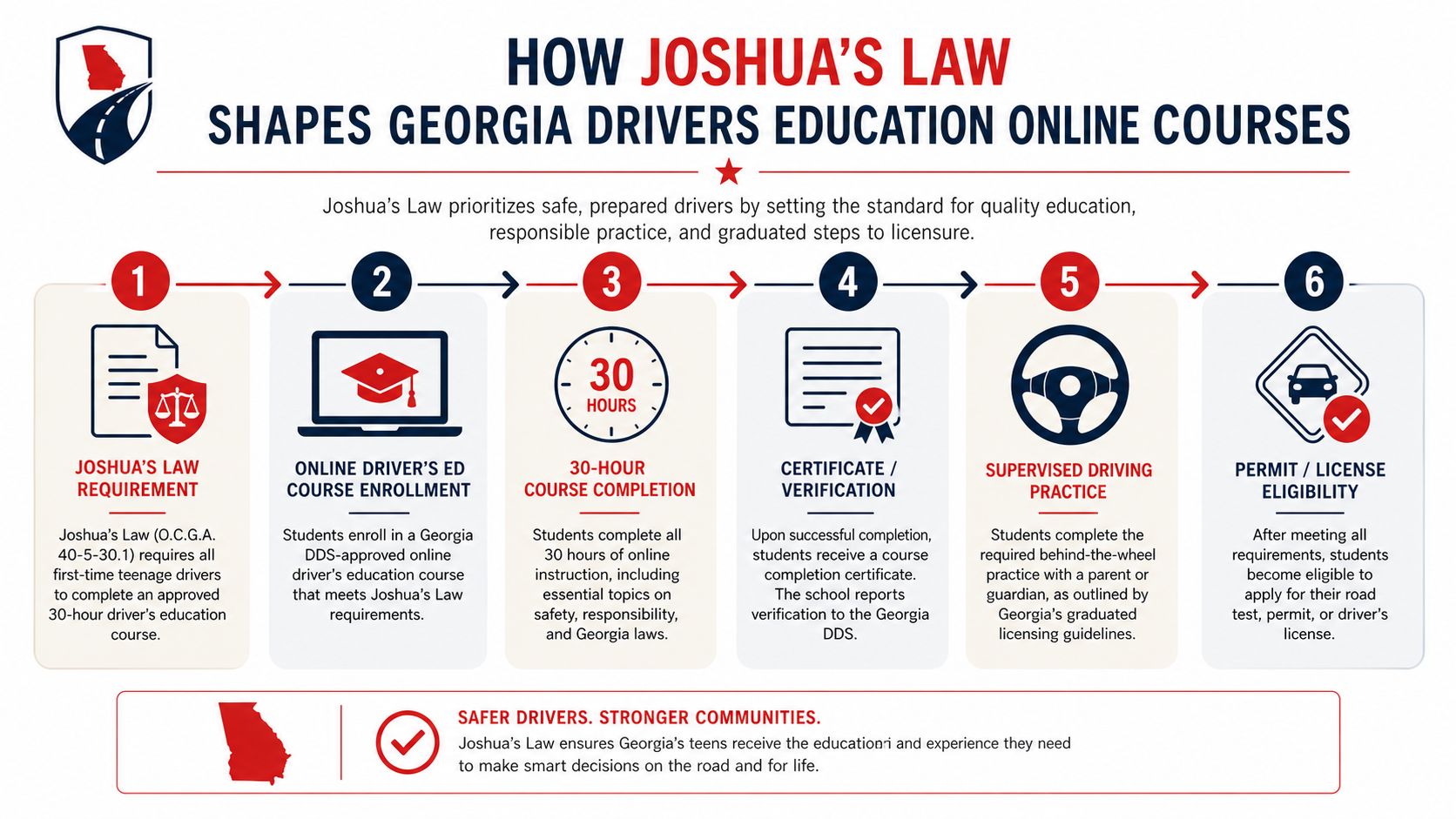
The two online pathways described by DDS show why families should arrange practice and lessons before the certificate arrives. Method 3 combines 30 hours of online instruction, 6 hours of behind-the-wheel training at a certified school, and 40 hours of supervised driving with a parent or guardian, including 6 hours at night. Method 4 combines the 30-hour online course with 40 hours of parent-taught behind-the-wheel training. The course supplies classroom knowledge, while the supervised drives and professional lessons build the habits the road test measures.
Georgia expanded the training requirement to 17-year-olds as of July 1, 2021, rather than limiting Joshua's Law driver training to 16-year-olds. DDS guidance also describes an exception involving a 17-year-old with a valid out-of-state license. Families should check the rule that fits their teen instead of relying on an old checklist or informal advice.
Families can review A-1 Driving School's online Joshua's Law course as one course option. Before paying, verify that the provider appears on the DDS-approved list and that its certificate is accepted for licensing. General traffic-safety content is not automatically the same as approved driver education. (Georgia DDS driver education FAQs)
Online vs In-Person Drivers Ed in Georgia
A teen may understand a right-of-way rule online, then hesitate when rain, traffic, and a short merge lane appear together. The classroom format affects how that knowledge is learned, but neither format creates real-traffic judgment by itself.
Online instruction gives students control over timing and review. One module might walk a student through a rain-slicked merge using a side-view camera video, followed by a quiz asking when to check mirrors, signal, adjust speed, and enter the lane. If the answer is wrong, the student can revisit the explanation before continuing. Support may come through chat or phone, depending on the provider.
In-person instruction follows a fixed schedule and gives students immediate access to an instructor during class. A teen who asks why one driver has the right of way can discuss the situation in real time, while the instructor can notice confusion before it affects later topics. This setting also gives students a regular routine and built-in attendance accountability.
| Feature | Online Course | In-Person Classroom |
|---|---|---|
| Schedule | Study around school, sports, and family commitments. | Attend scheduled class sessions. |
| Pacing | Pause, review, and repeat difficult material. | Follow the instructor's pace and the group's progress. |
| Learning activities | Videos, driving scenarios, knowledge-check quizzes, and digital support. | Live explanations, discussion, and questions during the lesson. |
| Accountability | Parents may need to set study times and check progress. | Class attendance provides regular structure. |
| Feedback | Help is available through the provider's listed support channels. | The instructor can respond immediately and clarify a misunderstanding. |
| Road preparation | Classroom learning must be followed by supervised practice and driving lessons. | Classroom discussion also must be followed by actual driving practice. |
Online courses often suit teens whose school or extracurricular schedules change. A parent can set consistent study periods, ask the teen to explain a merging decision, and check whether the student can apply a rule rather than repeat its definition. Flexible access works best with that routine.
In-person classes may better fit a student who delays independent work or needs frequent explanation. Social accountability can keep the student engaged, while direct discussion helps expose gaps that a rushed quiz attempt might miss.
Families should compare more than tuition. Confirm that the provider is approved, understand how the certificate is issued, identify available support, and determine which driving services are separate. Families can also check a provider through the DDS driver education approval lookup before enrolling.
For many households, a hybrid path connects the pieces most effectively: online classroom study, structured driving lessons, and parent-supervised practice. The certificate starts the process. Repeated coaching and supervised time behind the wheel turn classroom decisions into habits needed for Georgia roads and the road test.
What the A-1 Driving School Online Course Includes
A teen may finish the online class, receive the certificate, and still feel unsure behind the wheel. That is normal. The course builds the knowledge needed for supervised practice, while driving lessons and parent coaching turn those decisions into usable habits.
The A-1 Driving School Georgia drivers ed online course is a 30-hour DDS-approved program arranged in 12 self-paced modules. Lessons cover traffic law, right-of-way, interstate driving, adverse weather, distracted driving, impaired driving, and basic vehicle maintenance. These topics give students a mental map for driving before they begin handling more complex traffic situations.
Students can sign in from a device, save their progress, and return around school or extracurricular commitments. Flexible scheduling works best when a parent sets regular study periods. A teen who clicks through quickly may complete the material without developing the judgment needed to choose a safe gap, respond to weather, or recognize a developing hazard.
What students do inside the course
The course combines several activities rather than relying on reading alone:
- Knowledge-check quizzes let students test their understanding after lessons.
- Animated driving scenarios show how different choices affect common traffic situations.
- A final exam must be passed before the certificate is issued.
- Support options include phone or chat assistance when a student gets stuck.
- Language access is available in English and Spanish.
Parents can reinforce the lessons with short questions. Ask the teen to explain a right-of-way decision or describe a safe response to poor weather. The answer shows whether the student understands the rule or has only remembered a definition.
How the certificate fits the DDS process
After completion, the certificate becomes one part of the teen's licensing file. The family may upload it through the DDS process when that option is available or bring it to an in-person visit with other required documents, including the permit and parent affidavit when applicable. Confirm the current submission method and document list with DDS before the appointment.
The certificate satisfies the Joshua's Law classroom requirement only. It does not teach vehicle control, replace supervised practice, or substitute for the road test. Approval concerns the provider and required curriculum. It does not mean online instruction can replace coaching, practice, and evaluation in an actual vehicle. The state's driver-education guidance explains these process details. (Georgia DDS driver education FAQs)
Driving Lessons Packages After the Online Course
The certificate marks the end of classroom study, not the end of learning to drive. A teen may know the rule for merging or stopping, yet still need practice judging gaps, checking mirrors, holding lane position, and responding calmly after a mistake. Repetition turns those rules into usable habits.
Professional lessons add an outside set of eyes. Parents supervise the required practice and know their teen's comfort level, while an instructor can spot late mirror checks, short following distance, or uneven steering that may be missed from the passenger seat. Georgia's young-driver safety information provides a reason to take this stage seriously. A 2023 Georgia traffic-safety report records 253.8 fatal crashes per 100,000 traffic crashes involving drivers ages 15 to 20, so the online course should serve as one part of a broader safety plan. (Georgia 2023 young driver traffic safety facts)
A-1 Driving School offers packages for different levels of support:
| Package | Lessons | Professional Training Credit | Best For |
|---|---|---|---|
| Starter | Six two-hour lessons | Builds professional driving experience and skill foundations. | Students beginning behind-the-wheel practice. |
| Standard | Ten lessons | Satisfies the 6-hour professional training requirement for the provisional license. | Families wanting instruction plus additional guided practice. |
| Premium | Fourteen lessons | Provides expanded professional coaching. | Students who need more repetition and exposure to highway, night, and adverse-weather driving. |
Parent-led practice should follow a planned progression. Begin on quiet residential streets, then introduce local roads, busy intersections, highways, parking areas, and night driving. Add safe practice in changing weather as the teen's control improves. Keep an accurate record of each drive, including the required 6 nighttime hours within the 40 supervised hours required by the selected pathway. For the current requirements, families can review the Georgia Joshua's Law requirements guide.
Parent coaching works best when difficulty increases gradually. A calm ten-minute conversation after each drive can reveal more than general praise or criticism.
A simple routine helps. After a lesson, ask the teen to name one skill that felt steady and one that needs another attempt. Then schedule the next practice in a setting that repeats the weak skill without adding too many new demands.
Families can schedule lessons online, arrange pickup from a convenient A-1 location, and reschedule with 24 hours' notice, subject to school policies. Instructors document progress on a state-approved skills log, giving the family a clearer record for later road-test preparation. The driving lessons and behind-the-wheel packages connect the online certificate with vehicle coaching, so classroom study, supervised practice, and professional instruction work as one licensing path.
Preparing for the Georgia Road Test
The road test is the point where classroom knowledge becomes observable driving. Georgia DDS requires applicants to complete the Class D requirements before testing, and the road-test process directs applicants to bring the documents required for the Class D Provisional License. Passing the exam alone isn't enough if the rest of the licensing checklist is incomplete. (Georgia DDS road-test requirements)
A student should prepare for four broad evaluation areas:
- Vehicle inspection: The examiner checks whether the vehicle can be operated safely, including essential equipment.
- Basic control maneuvers: The student demonstrates turns, backing, parking, and controlled movement.
- Traffic observance: The examiner watches scanning, signals, signs, lane position, and responses to traffic.
- Road driving: The student must make safe decisions while operating in normal roadway conditions.
Each area maps directly to practice. A warm-up lesson can address parking and backing, while regular lessons can develop observation habits and road judgment. Highway and night practice also help a student avoid treating the test route as the only driving environment that matters.
A-1 offers three road-test service choices:
- Pre-test warm-up lesson: A focused session before the appointment or on the preceding day.
- Third-Party Road Test: A certified examiner administers the test using the DDS scoring rubric.
- Road Test Package: A warm-up, the test, and a post-test debrief are combined into one service.
The third-party option may offer a shorter wait than a DDS branch schedule, while using the official forms and scoring process. Families should confirm current availability and eligibility when booking.
On test day, bring the permit, Joshua's Law certificate, parent-signed practice log, and proof of insurance. The vehicle should have working lights, signals, brakes, and tires. Wear comfortable clothing and shoes that let the student operate the pedals without restriction.
The road test is a milestone, not the end of instruction. Class D provisional restrictions still apply during the first year, so parents should continue supervising judgment-heavy driving after the license is issued.
Georgia Driver's Education Scholarship Grant Program
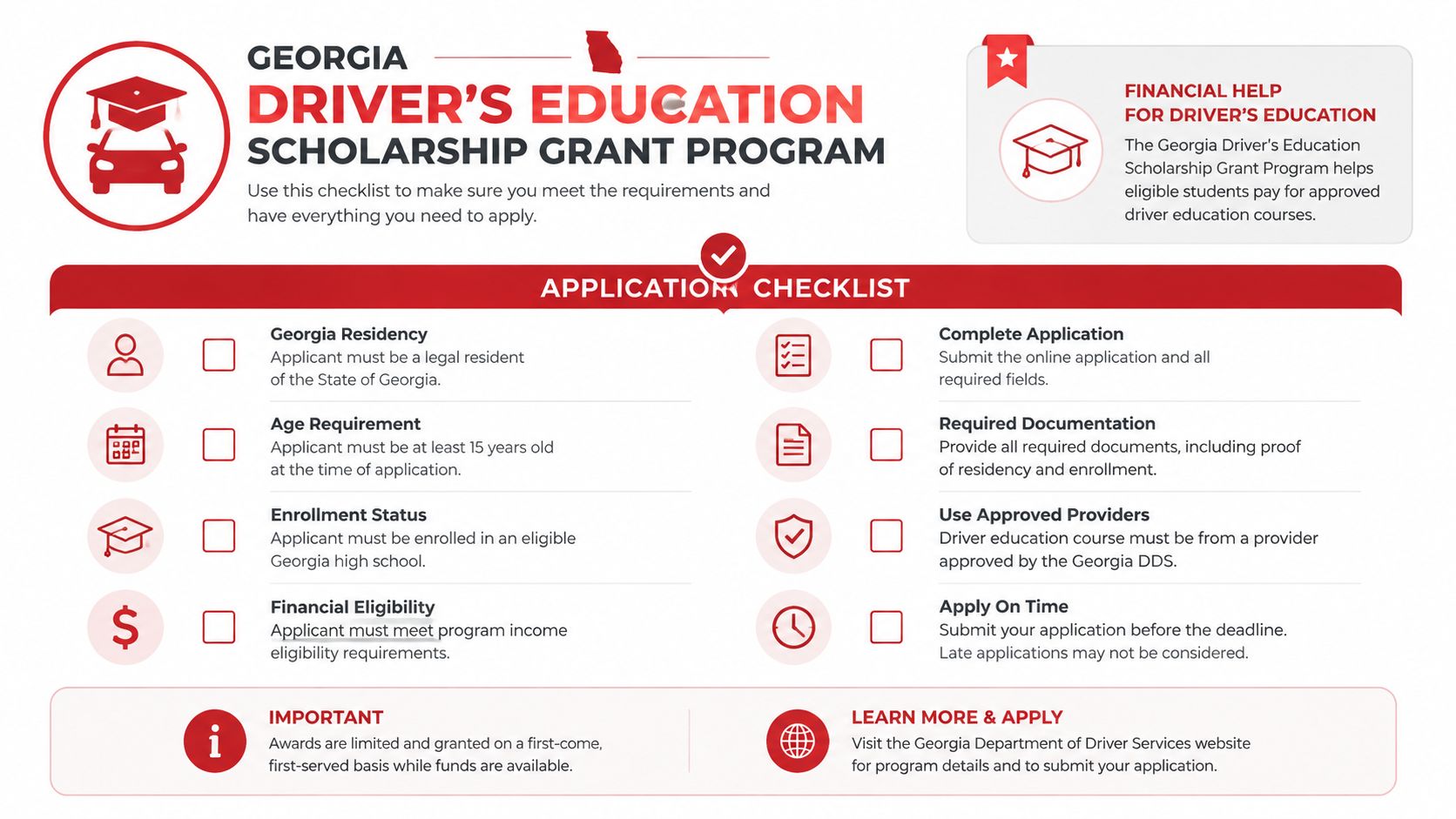
A family may receive a Georgia Driver's Education Grant Scholarship Program award while a teen is preparing to move from an instructional permit toward a Class D license. The program is intended for eligible Georgia residents ages 15 to 17 who hold a valid Georgia instructional permit or driver's license and need to meet Joshua's Law requirements. The approved pathway includes 30 hours of classroom training, 6 hours of professional behind-the-wheel instruction, and 40 hours of parent-supervised practice, including 6 nighttime hours. Review the current Georgia driver education grant rules before applying.
The certificate is one piece of the process, much like a map before a road trip. It explains traffic rules and safe-driving concepts, while professional lessons show how those ideas work in a vehicle. Parent-supervised practice then gives the teen repeated opportunities to build judgment, observation, and control in everyday conditions.
What families should verify
Before applying, confirm the student's Georgia residency, age, permit or license status, and the school's approval. The grant applies to qualifying driver education, not automatically to every traffic-safety course or driving product.
Ask the program and provider which documents are needed, how enrollment is confirmed, and whether the award covers the specific online classroom course and professional driving lessons the family plans to use. Confirm how the required supervised practice fits into the schedule as well. Application and payment procedures can change, so current program instructions should guide the decision.
The scholarship can make the complete training path more accessible. Families should plan for the classroom certificate, professional instruction, and supervised practice together, rather than treating the online course as a substitute for time behind the wheel.
A-1 Driving School provides information about the Georgia Driver's Education Grant Scholarship Program and can explain how enrollment and lesson packages may fit together. Confirm eligibility and covered services before booking, because the grant rules determine what the award pays for.
Putting It All Together and Common Questions
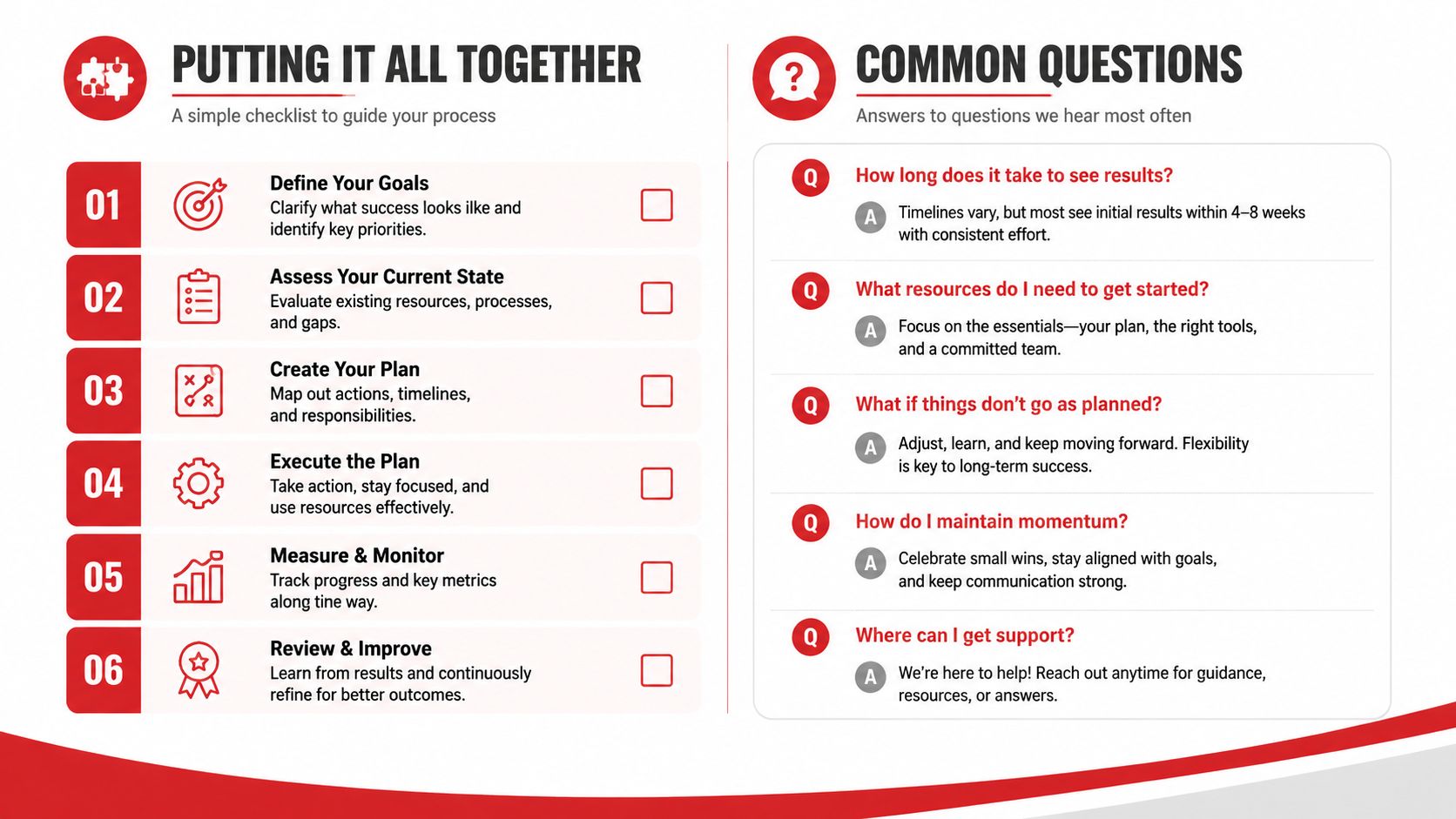
A teen's licensing journey works best as one connected plan. The online classroom builds knowledge, supervised practice turns that knowledge into habits, professional lessons correct technique, and road-test preparation helps the student demonstrate those skills safely.
- Choose an approved course: Enroll in a DDS-approved 30-hour online course.
- Finish the classroom work: Complete the lessons, pass the required final assessment, and receive the certificate.
- Practice with supervision: Complete 40 hours, including 6 nighttime hours, under the applicable Georgia pathway. Confirm the current requirements with DDS, as noted earlier.
- Complete professional training: Finish the certified behind-the-wheel requirement when required. This is also the point to select a driving-lesson package that addresses the student's weak areas.
- Prepare and test: Gather the required documents, rehearse the road-test maneuvers, and pass the Georgia road test.
- Apply for Class D: Complete the remaining DDS licensing checklist.
Common questions from Georgia families
Can a teen start at 15? Scholarship guidance covers eligible students ages 15 to 17, while the licensing path has separate permit and license requirements. Confirm the student's current status with DDS.
Does the certificate expire? Do not assume either way. Ask the course provider and DDS how long the certificate remains acceptable before booking the licensing appointment.
How quickly can the online course be completed? The curriculum requires 30 hours. Calendar time depends on the student's schedule, course pacing, and provider rules.
Will an out-of-state certificate transfer? Verify it with Georgia DDS before relying on it. The course must meet Georgia's accepted requirements.
What's the difference between a permit and a license? A permit allows supervised learning under Georgia's restrictions. A Class D license follows the required education, practice, testing, and documentation.
Can the scholarship be combined with a sibling discount? Ask the program and school before payment. Funding rules and private discounts may not stack.
Online study cannot replace time behind the wheel. Families should schedule parent-supervised practice and professional lessons after the certificate, so classroom knowledge has a clear path into road-test performance.
A-1 Driving School offers DDS-aligned online driver's education, behind-the-wheel lesson packages, and Georgia road-test preparation. Families can visit A-1 Driving School to review course options, lessons, scholarship information, and road-test services before choosing the next licensing step.