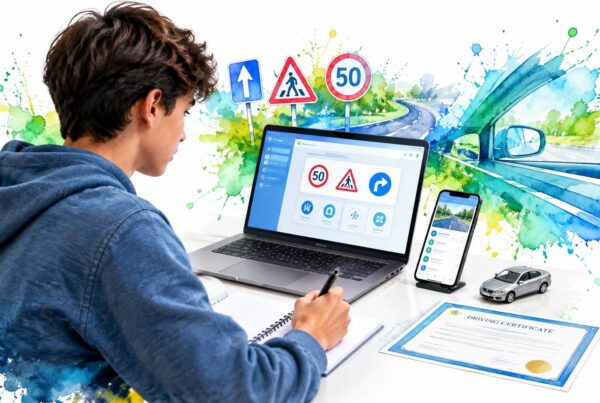
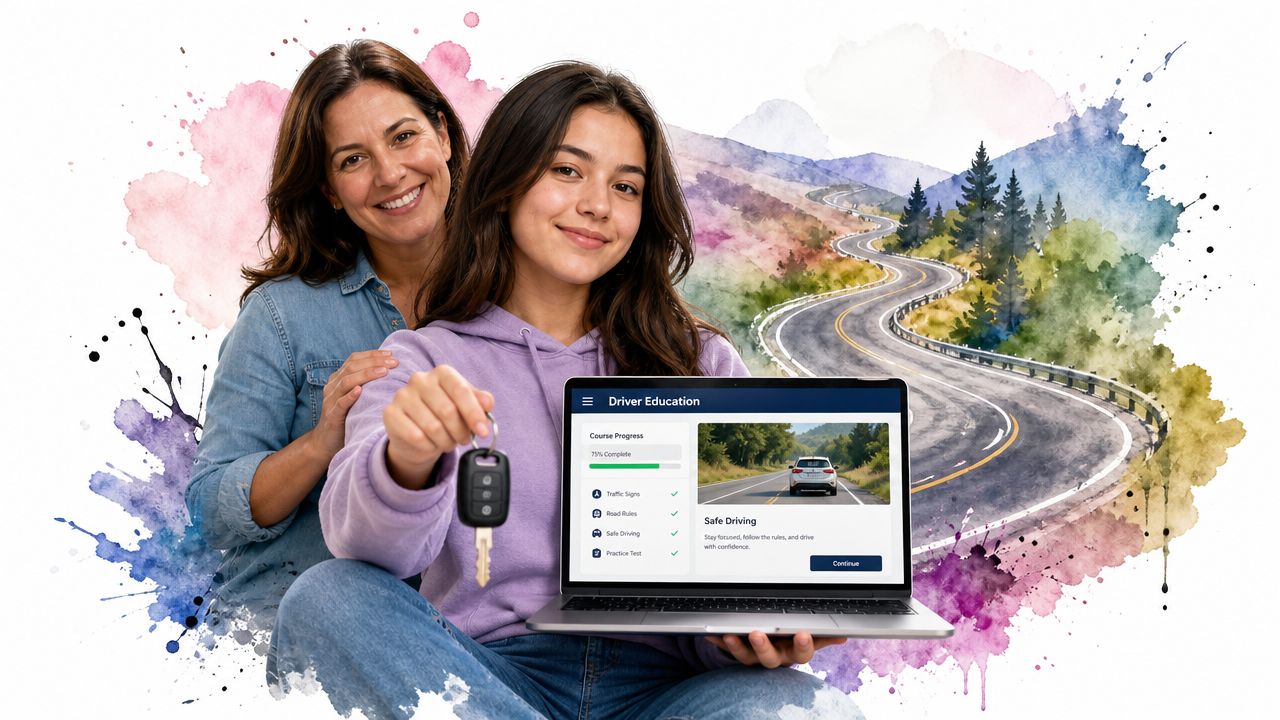
A lot of Georgia families reach the same moment at about the same time. A teen is ready to start driving, a parent is trying to sort out what counts for Joshua's Law, and both of them are wondering which parts can be done online and which parts still have to happen in a car with an instructor.
That's where most confusion starts. An online driver education course for teens sounds simple, but the actual path to a license includes more than a laptop and a final quiz. Teens need the knowledge piece, yes. They also need guided practice, feedback behind the wheel, and a clear plan for getting from permit to road test without last-minute surprises.
The good news is that the process is manageable when you break it into steps. If you're a Georgia teen working toward a Class D license, or a parent helping one, the smartest approach is to think of driver's ed as a full training path, not just a box to check.
The First Step on the Road to Freedom
A new driver usually starts with excitement. They're thinking about school, work, sports, seeing friends, and not having to ask for a ride every time they need to go somewhere. Parents usually start in a different place. They're thinking about safety, state rules, scheduling, and whether their teen is really ready.
Both reactions make sense.
Online driver's ed became such a common starting point because it fits real family life. Teens can work through lessons from home. Parents can keep the process moving without building every week around a classroom schedule. That convenience matters, especially when school calendars, activities, and work shifts are already packed.
Why formal training matters
This isn't just about convenience. Teen driving comes with real risk. The Insurance Institute for Highway Safety reports that teenagers have crash rates nearly 4 times those of drivers age 20 and older per mile driven, and that since graduated licensing programs began in 1996, teenage crash deaths have fallen by 48% (IIHS teen driver research).
That tells families two things at once. Teen drivers need structure, and structured training works.
Practical rule: Treat online coursework as the starting line, not the finish line.
What families usually need most
Most teens don't struggle because they can't memorize signs or rules. They struggle when the process feels scattered. One part is online. Another part is paperwork. Then there's permit prep, supervised driving, professional lessons, and eventually the road test.
A better approach is to keep the full path in view from day one:
- Start with the knowledge base: Learn traffic laws, signs, right-of-way, and risk awareness.
- Build real habits early: Practice scanning, lane control, speed management, and decision-making.
- Use professional instruction wisely: An instructor can correct mistakes before they become normal habits.
- Plan the license path in order: Course first, permit, lessons, supervised driving, then road test.
That's what gives teens confidence. Not just passing one requirement, but knowing what comes next.
Understanding Georgia's Joshua's Law Requirements
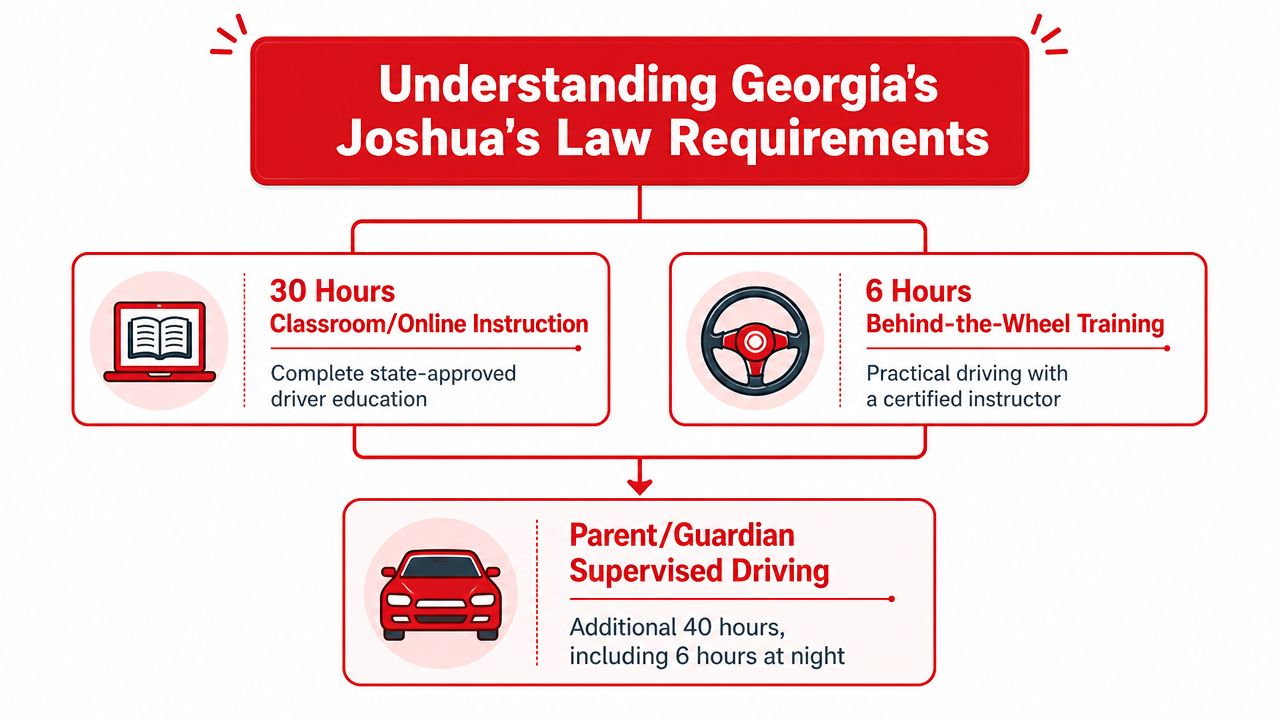
Georgia families hear “Joshua's Law” all the time, but what matters most is understanding what it means in practice. For most teens, it's a training framework that combines classroom learning with actual time behind the wheel.
The law is built around two different kinds of learning. One teaches what the rules are. The other teaches how to apply them in traffic, parking lots, neighborhoods, and busier roads.
The classroom or online requirement
The knowledge portion is the part most families look at first. Georgia teens often choose an online format because it gives them flexibility without losing the state-required curriculum. That can make a big difference for students balancing school, sports, part-time jobs, or long commutes.
The point of this section of training isn't just to help a teen pass a knowledge test. It's meant to build judgment before the first serious solo drives happen. Good coursework covers traffic signs, laws, space management, hazard awareness, consequences of distraction, and the basics of responsible driving.
If you're comparing providers, make sure the course is approved to satisfy Georgia requirements. A practical place to review options is Georgia driver's education courses.
The behind-the-wheel requirement
This is the part families should never treat as an afterthought. A teen can understand the rules on a screen and still feel unsure in a left turn lane, at a four-way stop, or merging into faster traffic.
Professional driving instruction gives students something parents often can't provide consistently: calm correction in real time. An instructor watches how the teen brakes, checks mirrors, positions the car, handles turns, and reacts under pressure.
Teens don't become safer because they've “covered the material.” They become safer when someone helps them apply it correctly, again and again, until good choices become routine.
The parent practice piece
Joshua's Law is also about supervised practice outside formal lessons. That's where teens start turning coached actions into habits. Parents play a big role here, especially by giving their teen exposure to different conditions instead of repeating the same short route.
A strong practice plan includes:
- Neighborhood driving: Low-speed control, turns, stop signs, and awareness
- Main roads: Lane changes, traffic flow, and signal timing
- Parking work: Backing, space judgment, and low-speed steering control
- Night practice: Visibility changes, headlight use, and hazard recognition
The families who handle this process best usually do one thing well. They stop thinking of driver's ed as one class and start treating it like a sequence.
Online vs In-Person Courses Which Is Right for You
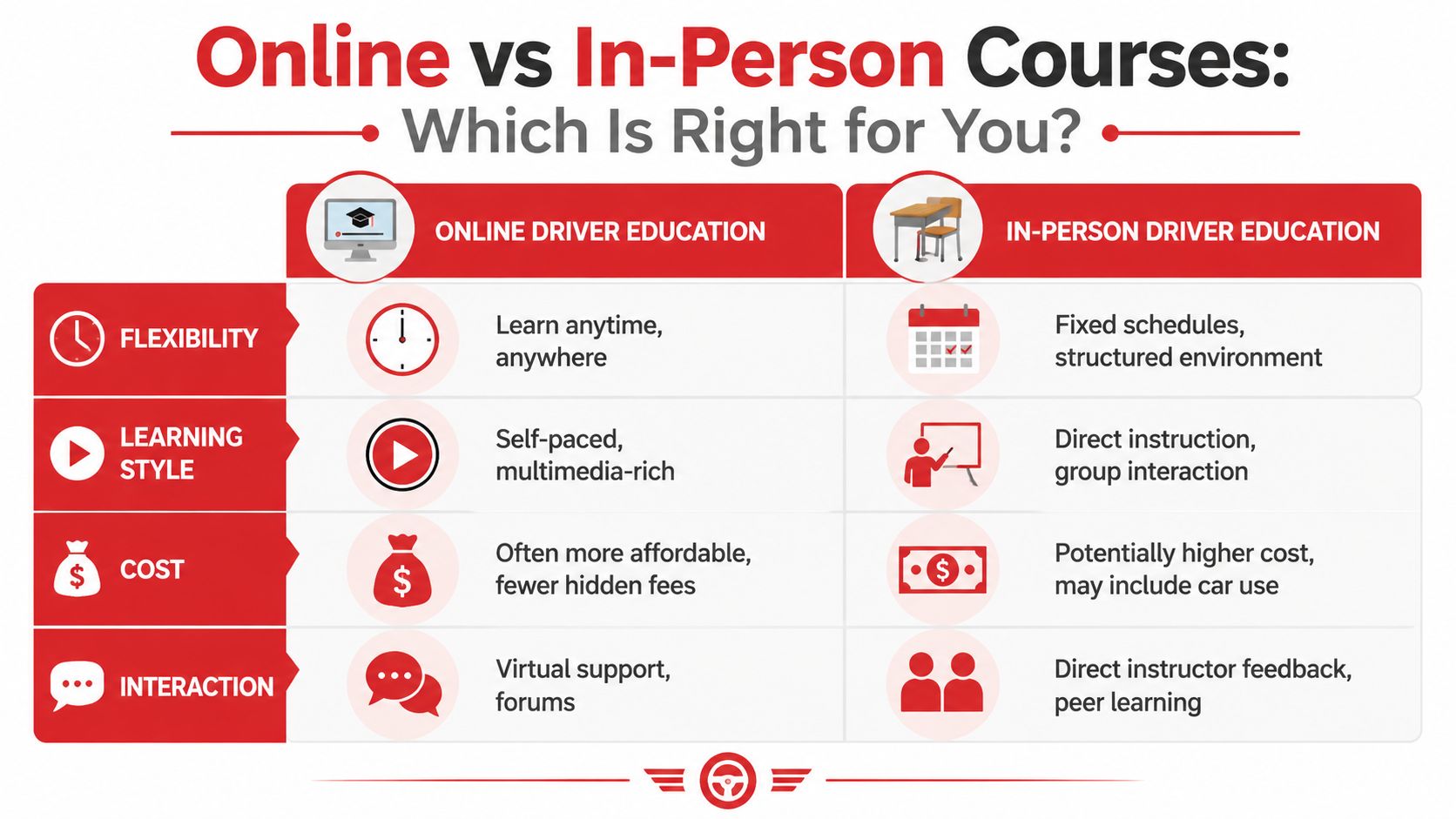
When families ask whether online or in-person driver's ed is better, the honest answer is that both can work. The better question is which format helps your teen stay engaged, finish the course properly, and retain the material.
The National Safety Council reports that teens in formal driver education experience fewer crashes and traffic violations, with one study showing a 4.3% reduction in crashes and a nearly 40% reduction in convictions (National Safety Council teen driver data). What matters most is formal training itself, not choosing one format because it sounds trendy.
When online makes more sense
Online learning fits teens who are organized enough to work steadily without needing a classroom routine. It also helps families who need scheduling flexibility. If your teen plays sports, has after-school commitments, or learns better by reviewing material at their own speed, online can be the practical choice.
Good online instruction isn't just a long slideshow. It should pace the material clearly, break concepts into manageable lessons, and keep attention from drifting. Some of the same ideas that improve virtual learning in school settings also help in driver education, especially short modules, clear visuals, and active review. ClipCreator.ai's teaching insights offer useful guidance on what makes online instruction easier to follow and remember.
A second benefit is accessibility. Teens can revisit weak areas without waiting for the next scheduled class meeting. If a student needs another pass through right-of-way rules or sign recognition, that's simple in an online environment.
When in-person is the better fit
Some students do better when they have a set place and time to learn. They focus more in a classroom, ask more questions face-to-face, and absorb information better when an instructor controls the pace.
That's especially true for teens who tend to rush through self-paced work. If your teen is likely to click quickly just to finish, an in-person class may produce better results even if it's less convenient.
Here's a quick side-by-side view:
| Format | Often works best for | Watch out for |
|---|---|---|
| Online | Independent students, busy schedules, flexible pacing | Rushing, multitasking, low attention |
| In-person | Students who want structure and live guidance | Schedule conflicts, less flexibility |
What doesn't work in either format
The biggest mistake isn't picking online. It's treating the course like the whole job. Families sometimes assume that once the knowledge portion is done, their teen is basically ready. That's where confidence gets overestimated.
A completed course means a teen has started learning the system. It doesn't mean they can yet handle pressure, timing, and judgment in live traffic.
If you want a clearer look at how the online format works in practice, review what online driver's education includes. The right choice is the one your teen will complete carefully, then build on with real driving practice.
Your Step-by-Step Path to a Georgia Class D License
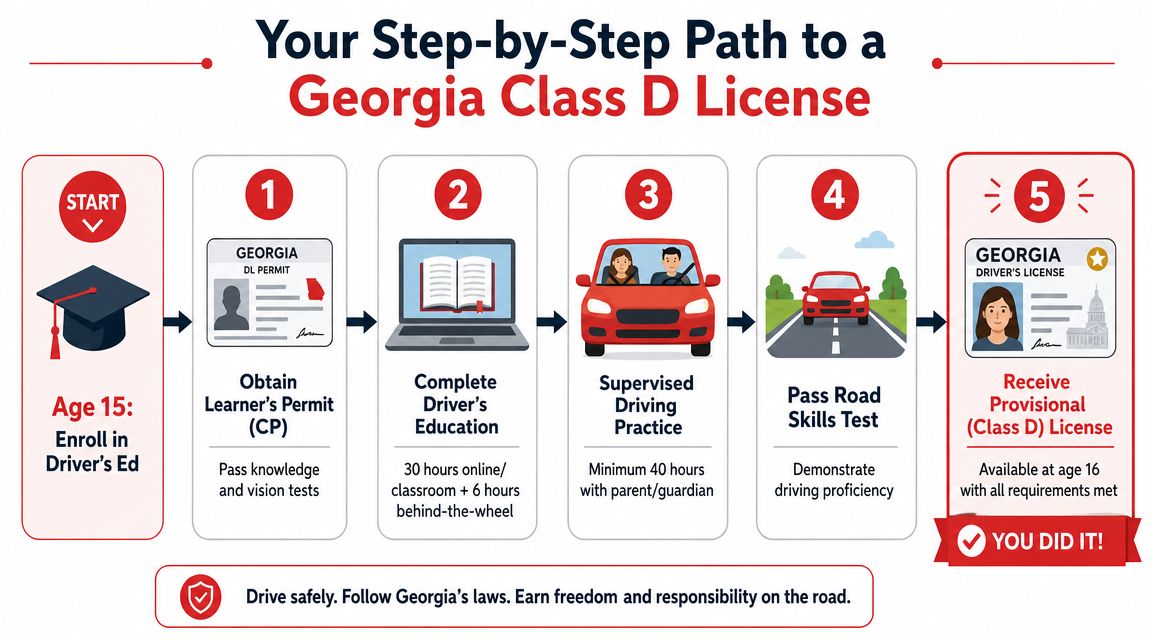
The Georgia licensing process feels much easier when you stop looking at it as one big milestone and start treating it as a checklist. Each part builds on the one before it. Skip steps or rush them, and the weak spots usually show up during lessons or on the road test.
Step 1 Enroll in driver's education
Start with the knowledge portion. For many families, an online driver education course for teens is the easiest way to begin because it can fit around school and home schedules.
The key is not just signing up. It's finishing the course with attention. Teens should take notes on signs, right-of-way, lane positioning, and common mistake areas. Those topics keep coming back later in permit prep and driving lessons.
A simple way to make the course more useful is to pause and connect lessons to real roads. If a chapter covers school zones, lane markings, or turning rules, discuss where your teen has seen those situations locally.
Step 2 Get the learner's permit
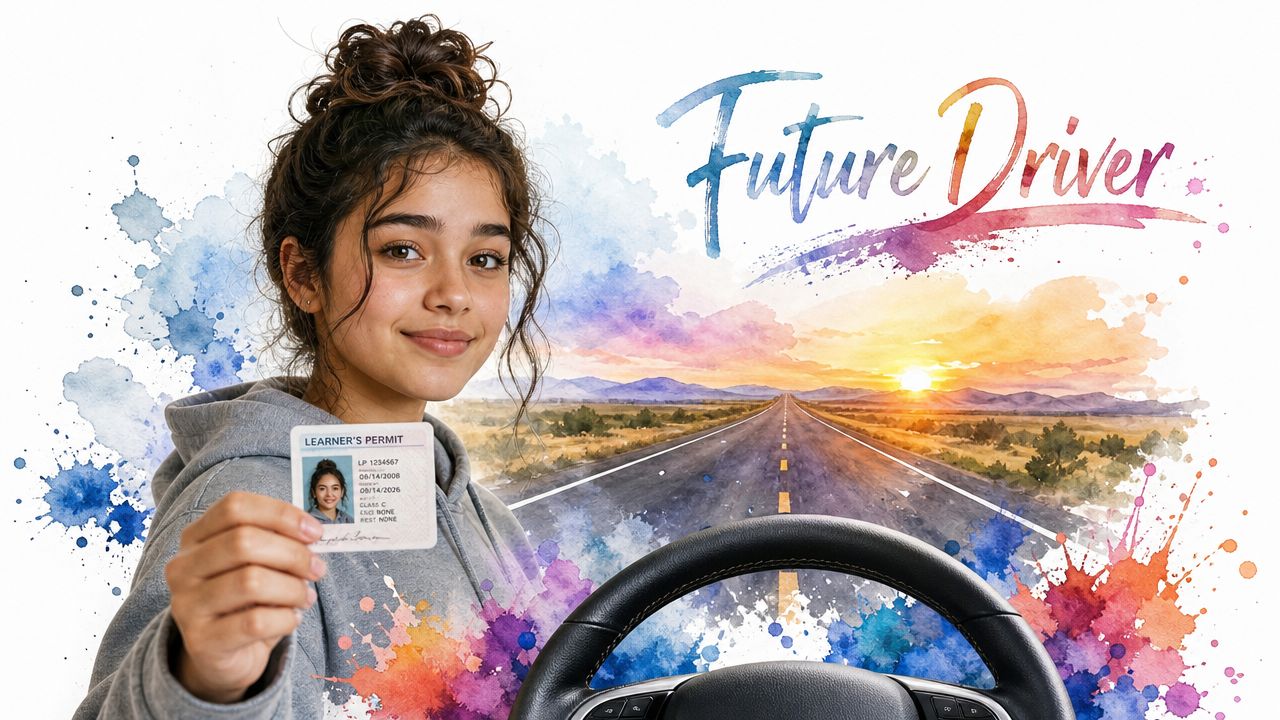
Once the teen is ready, the next move is the learner's permit. At this stage, many families realize they should have been preparing more intentionally for the knowledge and vision requirements.
A permit changes the process from studying to supervised practice. That shift matters. Some teens feel a burst of confidence once they have a permit in hand, but permit-level driving is still early-stage driving. The goal at this point is controlled repetition, not independence.
Step 3 Complete professional driving lessons
This step is where real improvement usually becomes visible. Professional lessons help teens connect rules to timing, steering, spacing, observation, and decision-making.
A lesson should do more than drive around and hope experience fills the gaps. Strong instruction usually focuses on specific performance areas such as:
- Mirror and scanning habits: Looking far enough ahead and checking the right places at the right time
- Speed control: Matching conditions instead of guessing
- Turns and lane placement: Entering and exiting correctly, staying centered, and avoiding drift
- Parking and backing: Moving slowly, staying accurate, and using reference points well
- Traffic judgment: Knowing when to wait, when to proceed, and when to reset calmly
One reason families choose structured lesson packages is that the minimum requirement often isn't the same as real readiness. A teen may technically complete the required instruction and still need more work on lane changes, parking, or test nerves.
Step 4 Build supervised practice at home
Home practice is where consistency wins. Short, purposeful drives are usually more helpful than occasional long ones with no clear goal.
Try rotating practice by condition instead of just by destination:
- Quiet roads first for steering, stopping, and turns
- Moderate traffic next for lane changes and timing
- Parking lots and curb work for precision
- Busier roads later for confidence under more demand
- Night driving after basic daytime control feels steady
Here's a useful mindset for parents. Don't try to coach everything at once. Pick one focus for each drive, such as smooth stops, better scanning, or unprotected left turns.
A teen who hears ten corrections in ten minutes usually remembers none of them.
To see the road-test environment many students are working toward, this walkthrough can help:
Step 5 Prepare for and pass the road test
The road test is where scattered preparation becomes obvious. Teens who've had only random practice often know the basics but struggle with polish. They stop too hard, miss checks, park inconsistently, or let nerves disrupt simple maneuvers.
Road-test prep works best when it becomes specific. Instead of “practice driving,” practice the skills that commonly matter most:
| Skill area | What to look for before test day |
|---|---|
| Stops and starts | Smooth control, no panic braking, good spacing |
| Turns | Proper speed, lane discipline, steady steering |
| Observation | Mirror use, head checks, awareness at intersections |
| Parking | Slow, controlled, repeatable technique |
| Confidence | Calm recovery after small mistakes |
Families who plan ahead also reduce stress by arranging lessons and test preparation early instead of waiting until the teen feels “almost ready.” Almost ready usually means the same thing every instructor sees. A student has pieces of the skill set, but not the consistency yet.
The A-1 Advantage Driving Lessons and Road Test Success
The biggest gap in teen driver training usually appears after the online coursework is done. A teen may know signs, signals, and rules well enough on paper, yet still hesitate at a busy intersection, drift in the lane, or freeze during parking. That's why driving lessons matter so much more than families sometimes expect.
The difference between barely meeting a requirement and becoming road-ready usually comes down to coached repetition. An instructor sees the small habits that turn into big problems later, such as late braking, weak mirror routines, turning too wide, or failing to judge speed from cross traffic.
Why extra lessons often make sense
Some teens need only the required professional driving time to settle in. Others need more guided work before they feel steady. That isn't failure. It's normal.
A few signs that a student would benefit from additional lesson packages:
- They know the rule but miss the timing: Common with merges, left turns, and four-way stops.
- They get tense under pressure: Test anxiety often shows up as rushed decisions or forgotten checks.
- Their parent practice stays too limited: If most drives happen on the same roads, skill growth can stall.
- Parking still feels unpredictable: Repetition with coaching usually helps more than trial and error.
For families weighing whether instruction is worth it, the benefits of taking driving lessons from an instructor outline the practical value clearly.
The safest new drivers usually aren't the ones who felt fearless early. They're the ones who practiced until routine traffic situations stopped feeling rushed.
Road testing gets easier when the process feels familiar
Road test stress is rarely about one skill. It's usually about the whole moment. New location, unfamiliar car, pressure to perform, and worry about making one mistake.
That's why convenience matters more than people think. When a teen can prepare through structured lessons and then move into a road-testing process that feels organized and predictable, they usually perform closer to their real ability. Familiar routines help. Clear expectations help. So does practicing in the kind of environment where the test will happen.
A-1 Driving School offers online driver's education, driving lesson packages, and road testing support in Georgia, which is useful for families who want the knowledge portion and the on-road portion handled through one training path.
The scholarship question families should ask early
Many parents wait too long to look into the Georgia Driver's Education Scholarship Grant Program. If cost is part of the decision, ask about scholarship eligibility before delaying lessons. That can open the door to fuller training instead of trying to piece the process together slowly.
A practical approach is to ask three questions up front:
- Does my teen qualify for scholarship help?
- What lesson package fits their current skill level?
- Can we line up road-test prep instead of scrambling later?
That combination matters because the strongest results usually come from continuity. The teen studies the rules, practices them with an instructor, builds more control with supervised driving, and heads into the road test with a realistic sense of what to expect.
Common Questions from Georgia Teens and Parents
A few questions come up in almost every conversation about teen licensing in Georgia. Here are the ones families usually need answered most clearly.
Can my teen do driver's ed online in Georgia
Yes, many Georgia teens choose an online format for the classroom portion because it's easier to fit around school and family schedules. The important part is making sure the course meets state requirements and is taken seriously. Convenience helps, but attention and follow-through matter just as much.
Does an online course mean my teen can skip driving lessons
No. Online learning covers the knowledge side. It doesn't replace actual time in the car learning turns, lane control, observation habits, parking, and traffic judgment. That practical side is where many teens need the most coaching.
What if my teen is nervous behind the wheel
That's common, especially early on. Nervous students usually improve when practice is structured instead of random. Start in easier conditions, repeat core maneuvers, and build gradually into more demanding roads. Confidence tends to grow from familiarity, not from pressure.
Should we only do the minimum required driving time
Sometimes the minimum is enough. Sometimes it isn't. If a teen still struggles with lane changes, parking, left turns, or test nerves, more guided practice usually makes more sense than rushing into the road test and hoping it works out.
Can my teen take their road test through a driving school
Many families prefer that option because it can make the process feel more organized and less intimidating. What matters most is understanding the testing process early and preparing for it on purpose instead of treating it like the final errand after everything else is done.
How does the Georgia Driver's Education Scholarship Grant Program help
It can help qualifying families access driver training without putting the full cost on the household all at once. If budget is a concern, ask about scholarship options early. That gives you more flexibility in planning both the course and the lesson schedule.
What's the smartest next step if we're just getting started
Start with a clear sequence. Pick the right driver's ed format, get the permit plan in place, schedule professional lessons before calendars get crowded, and build a supervised practice routine at home. Families who do that early usually avoid the last-minute stress that slows everything down.
If you're ready to move from research to action, A-1 Driving School is a practical place to review online driver's ed options, driving lessons, road testing information, and scholarship details so your teen can follow one clear path from course enrollment to license readiness.