You're driving on I-285 after school. Traffic is moving fast, then the brake lights ahead flare up all at once. A driver two lanes over cuts in without much space. At the same moment, someone on the right shoulder starts edging toward the road. A new driver often sees the first problem only when it's already urgent.
An experienced driver usually notices the clues earlier. They've already been scanning farther ahead. They saw traffic bunching up. They noticed the drifting car before it changed lanes. They had a backup plan before anything fully happened.
That skill is hazard perception. It's the habit of spotting trouble early enough to stay calm, make a smooth decision, and avoid turning a close call into a crash. It isn't luck, and it isn't something only “naturally good drivers” have. It's a trainable skill.
For Georgia teens and parents, that matters a lot. Busy interstates, crowded suburban intersections, school zones, parking lots, and road tests all reward the same thing. Not just steering control, but awareness. If you can read the road well, you're safer, more confident, and better prepared for the kind of driving you'll do every day.
Introduction Beyond the Steering Wheel
Hazard perception sounds technical, but the idea is simple. It means reading the road before the danger becomes obvious. A child near a parked SUV. A car waiting at a side street with its wheels already turned. A green light that's been green long enough that stale traffic might start rushing the yellow.
Most beginners focus on what's directly in front of the hood. That's normal. New drivers are busy remembering speed, lane position, mirrors, and signals. But safe driving depends on widening your attention.
What Georgia drivers usually miss first
In lessons, I see the same pattern again and again. A teen driver checks the box on the basic task, but misses the clue before the task.
- At intersections: They see the light, but not the car that may run it.
- Near neighborhoods: They see the road, but not the ball or bicycle that hints a child may follow.
- On multi-lane roads: They see their lane, but not the driver in the next lane creeping toward the divider.
- In parking lots: They see open space, but not reverse lights or a walking shopper between cars.
Practical rule: Good drivers don't wait for a hazard to become a problem. They watch for signs that a problem may be forming.
That's why hazard perception training matters for more than test day. It teaches drivers to scan in a smarter way, predict what others might do, and get ready early enough to respond smoothly instead of slamming the brakes in panic.
What Exactly Is Hazard Perception
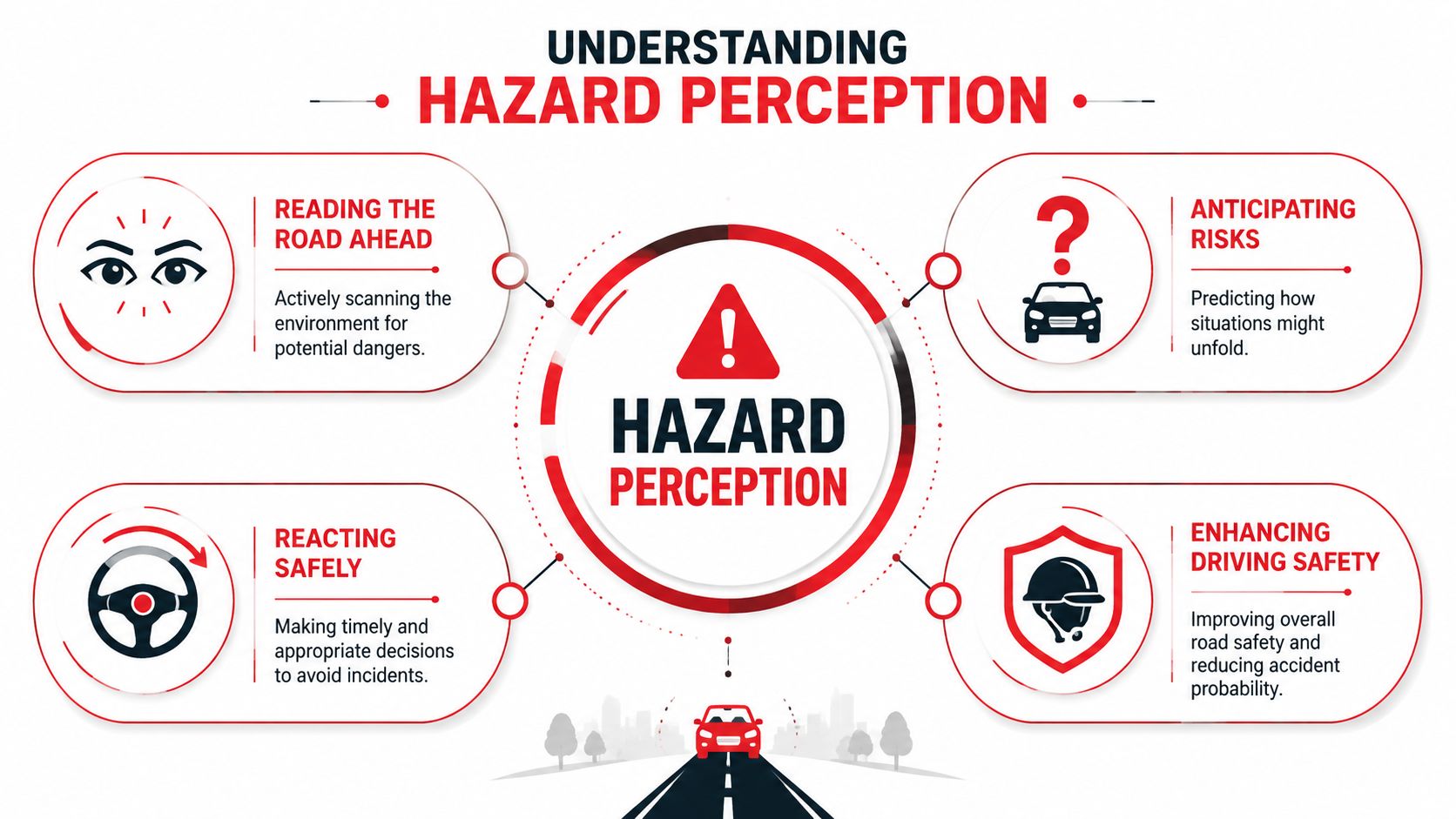
Think of hazard perception as learning to read the road ahead. A quarterback doesn't stare at one player and hope for the best. He scans the whole field, reads movement, and expects what could open up next. Driving works the same way.
Scanning the full picture
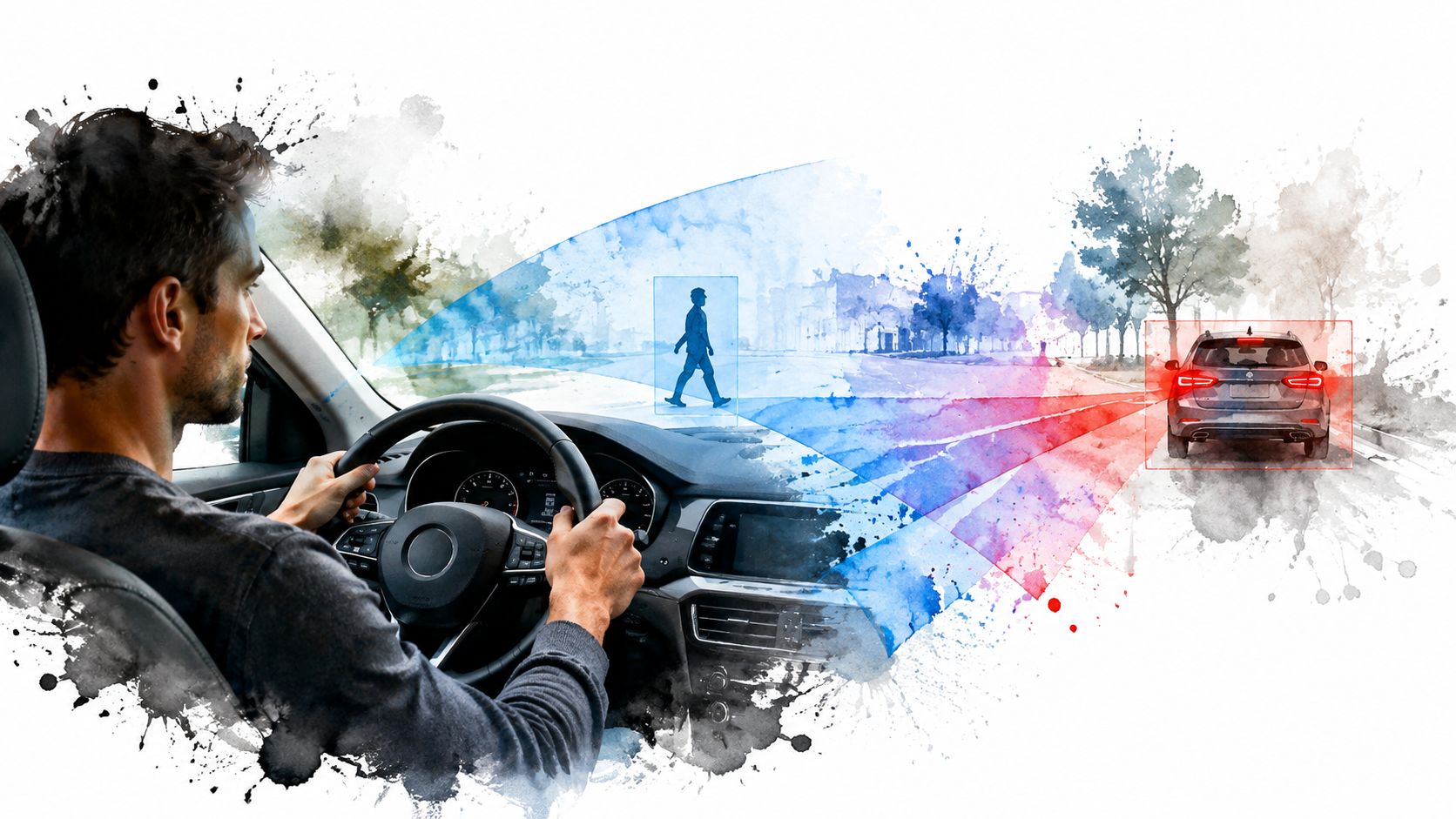
Scanning means your eyes keep moving with purpose. You look ahead, check mirrors, notice side streets, and stay aware of pedestrians, cyclists, and the space around your car. You're not staring. You're gathering information.
A lot of families also like tools that support awareness outside the lesson itself. Something like CARLOCK GPS protection can help parents keep an eye on vehicle activity, while the driver focuses on building road awareness behind the wheel.
Anticipating what could happen
This is the “what if” part of driving.
A parked car by itself isn't always a hazard. A parked car with brake lights on, a driver inside, and a narrow lane beside you is different. A pedestrian on the sidewalk isn't always a hazard. A pedestrian near a crosswalk, facing traffic, and looking ready to step off the curb is.
Ask yourself simple questions:
- What might that driver do next
- If that light changes now, what's my plan
- If someone steps out, do I have space to slow down
- Am I boxed in, or do I have an escape option
Reacting early and smoothly
The best reaction often starts before the emergency. You ease off the gas. You cover the brake. You increase following distance. You avoid driving right beside another vehicle. Those small choices give you time.
Research explains why this works. The core mechanism behind hazard perception training is that it retrains visual search patterns. Trained road users perform better because they fixate more on dangerous areas of the roadway, giving them more time to detect and react to developing threats, as explained in the SafetyCube hazard perception evidence summary.
If you've heard hazard perception discussed as part of safer, more proactive driving, that overlaps with ideas in A-1's explanation of defensive driving. The big difference is that hazard perception focuses tightly on seeing risk early enough to act before the situation gets ugly.
When your eyes find the risky area sooner, your hands and feet don't have to rush.
Why This Skill Is a Lifesaver for Georgia Drivers
For new drivers, hazard perception isn't just a nice extra. It changes outcomes.
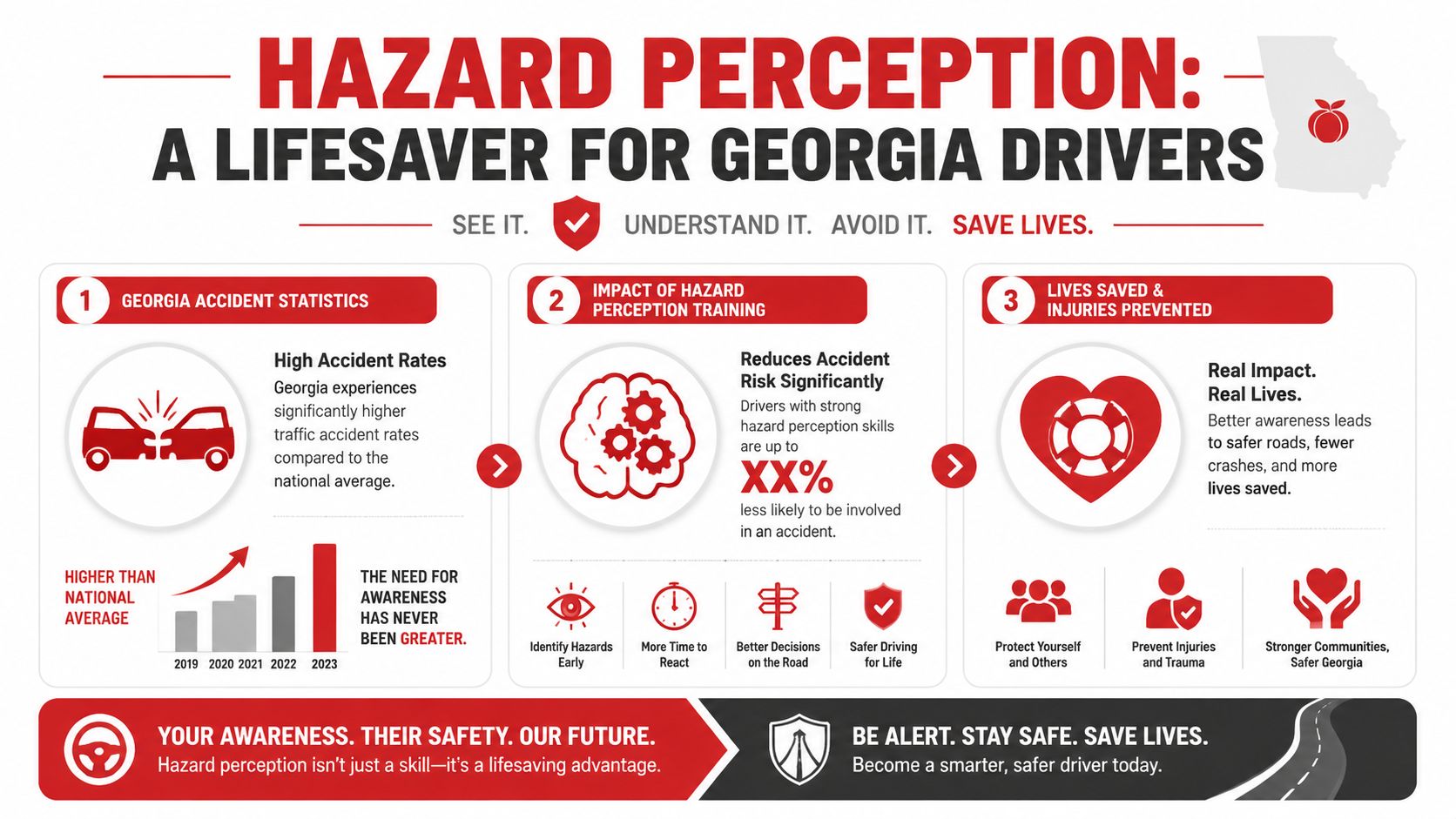
A major NHTSA-reviewed evaluation found a 23.7% lower crash risk for male drivers who completed RAPT, a hazard perception program. The same body of research reported that trained drivers identified 64% of potential hazards compared with 37% for untrained drivers, and in another evaluation their mean hazard hits improved from 2.0 out of 9 before training to 6.8 out of 9 after training, according to the NHTSA countermeasures summary on young drivers.
Why parents should care
Parents often ask what makes a teen safer. The answer usually isn't one magic trick. It's a pattern of better observations and earlier decisions.
Hazard perception helps teens:
- Notice trouble sooner: That includes merging traffic, hidden pedestrians, and sudden slowdowns.
- Stay calmer under pressure: Early recognition reduces panic responses.
- Build judgment, not just control: Steering and braking matter, but timing matters more.
- Drive more consistently: Smooth choices are easier to repeat than last-second saves.
That can also affect the bigger financial picture over time. Once a young driver is licensed, families often start to compare auto insurance quotes and think harder about risk, coverage, and how safe driving habits fit into overall costs.
Why it matters for the Georgia road test
A road test examiner isn't only watching whether you can turn the wheel and stop at a sign. They're watching whether you drive like someone who notices what's developing around the car.
Here's what stronger hazard perception looks like during a test:
| Situation | What the examiner may notice |
|---|---|
| Lane changes | Mirror checks, blind spot checks, timing, and safe gaps |
| Intersections | Controlled approach, scanning left and right, awareness of others |
| School or neighborhood areas | Appropriate speed and readiness for pedestrians |
| Turns and parking lot movement | Looking through the path, not just at the bumper line |
A driver can know the rules and still fail to show awareness. Examiners look for both.
That's why this skill helps with two goals at once. It supports safer everyday driving, and it makes road test performance look more mature and controlled.
Proven Methods to Sharpen Your Hazard Perception
There isn't just one way to build this skill. Different training formats can help, but they don't all do the same job.
Online learning builds the base
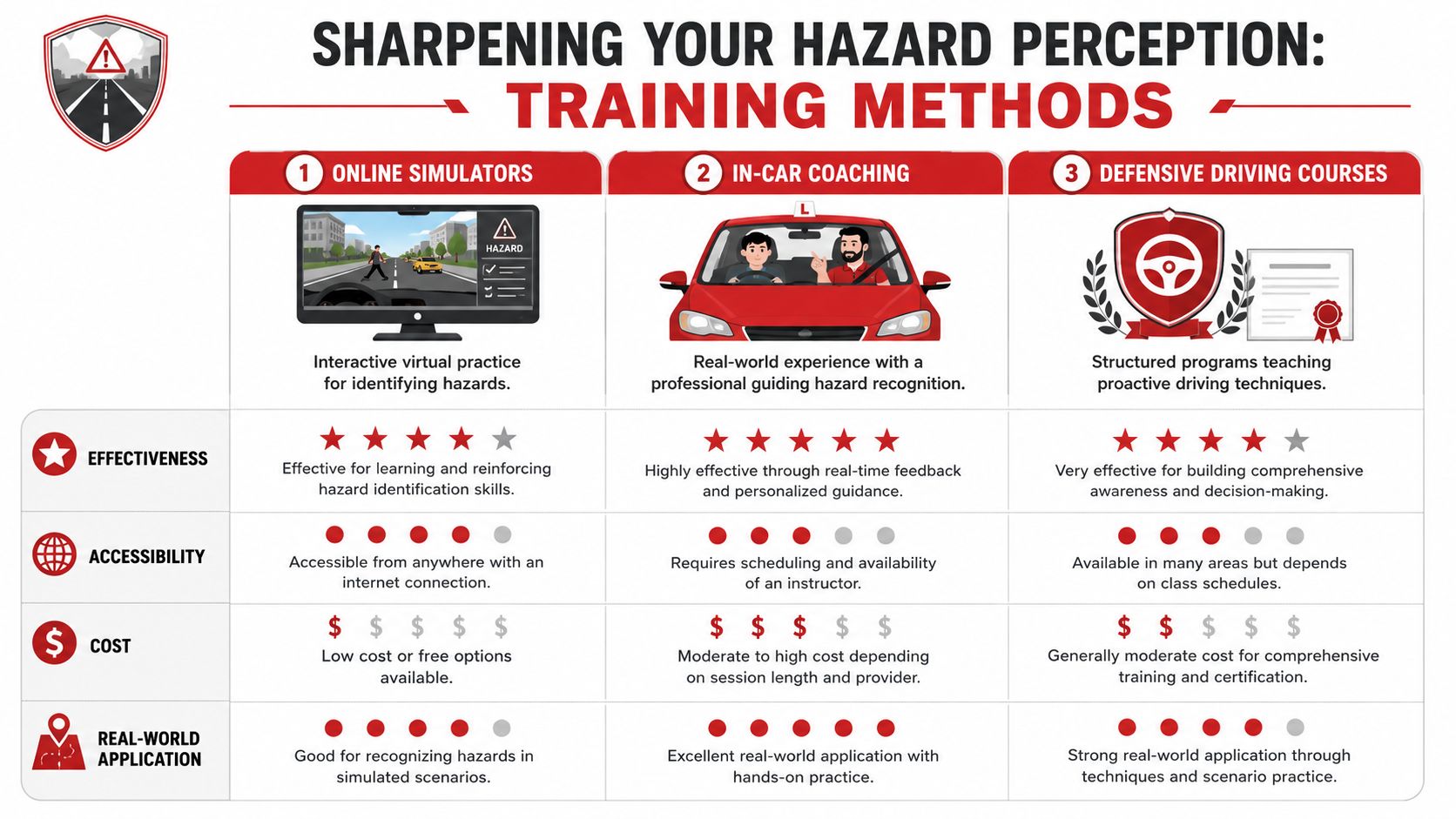
Online courses are great for learning the rules, common risk patterns, and the logic behind safe decisions. For Georgia teens working on driver's education or Joshua's Law requirements, that flexibility matters. You can learn from home, review material more than once, and move at a steady pace.
Online modules work especially well for:
- Foundational knowledge: Signs, right-of-way, speed management, and scanning concepts.
- Visual examples: Seeing common conflict situations before meeting them in traffic.
- Convenience: Easier scheduling for busy families.
- Preparation before lessons: Students arrive with a better mental map of what to look for.
Simulators and clips help pattern recognition
Video clips and simulator-style exercises can sharpen the ability to spot developing hazards. They let learners pause, replay, and compare good and bad decisions in a controlled setting.
Research supports the general value of these formats, while also raising a practical question. A systematic review noted that different methods can produce gains, but the main issue is when a low-cost module is enough and when higher-fidelity practice, such as simulator work or real-world driving lessons, is worth it for stronger real-world skill, as discussed in this review of hazard perception training formats.
That same idea shows up in other fields too. People often start with online instruction, then move into coached practice when judgment and consistency matter. It's similar to how businesses look for effective customer service training solutions that combine instruction with live application, because knowing the principle and using it under pressure aren't the same thing.
In-car lessons turn knowledge into habit
The biggest change usually happens on real roads. Real roads force you to manage timing, speed, space, and uncertainty all at once. You can't click replay on a left turn across traffic. You have to read the scene in real time.
An instructor can coach the exact moments new drivers miss:
- A stale green light that may change before you enter.
- A rolling vehicle at a side street that may not stop fully.
- A hidden pedestrian path near parked cars.
- A lane position problem that blocks your view ahead.
One of the best exercises is commentary driving. The student says out loud what they see, what might happen next, and what they're doing about it. That could sound like, “Car waiting on the right, wheels turned toward my lane, I'm easing off the gas and covering the brake.” Saying it forces the brain to connect observation with action.
If you want a simple mental process for that, the IPDE process explained by A-1 is useful because it breaks driving judgment into clear steps.
Which method should you choose
A practical way to think about it is this:
| Training method | Best use | Main limitation |
|---|---|---|
| Online driver's education | Learning rules and concepts | Doesn't fully recreate live traffic pressure |
| Video or simulator practice | Spotting patterns and hazard cues | Limited physical realism |
| In-car coaching | Real-time judgment and habit-building | Requires scheduling and supervised practice |
If your teen is just starting, online learning is a smart first step. If your teen freezes in busy traffic, misses cues, or needs road test readiness, behind-the-wheel coaching usually makes the difference faster because it converts information into repeatable behavior.
The A1 Advantage From Online Course to On-Road Confidence
A lot of families need more than one piece of the puzzle. They need driver's education for Joshua's Law, a flexible online option, real driving lessons, road test prep, and a path that doesn't feel confusing.
That's where a full-service school matters. A-1 Driving School has served Georgia drivers since 1987 and offers driver's education, Joshua's Law options, road test services, and behind-the-wheel lessons across the metro Atlanta area. For families trying to line up classroom learning with actual road practice, that kind of continuity saves time and reduces guesswork.
Why driving lessons matter most
Online coursework can teach the rules. Driving lessons teach what those rules look like in motion.
In a real lesson, students work through the exact situations where hazard perception either grows or falls apart:
- Busy Atlanta-area traffic: Judging gaps, lane changes, and following distance
- Neighborhood driving: Watching for children, pets, parked cars, and hidden driveways
- Major intersections: Reading turn lanes, signal timing, and cross traffic
- Road test routines: Mirror use, blind spot checks, smooth stops, and controlled turns
Parents are important teachers, but instructors bring a different skill set. They spot habits that families often miss because they've seen the same errors across many students. They also know how to correct those habits before they become normal.
Here's a look at the school in action:
A practical path for Georgia teens
For many students, the best sequence looks like this:
- Start with Joshua's Law driver's education, online or in person.
- Add driving lessons or a lesson package to build scanning, anticipation, and calm decision-making.
- Practice with a clear focus at home instead of just “getting hours in.”
- Use road test prep and testing support when it's time to earn the license.
- Check scholarship eligibility if cost is part of the concern.
A-1 also highlights the Georgia Driver's Education Scholarship Grant Program, which can help qualifying students access training. That matters because the right instruction should be easier to reach, not harder.
Your Next Steps to Becoming a Safer Driver
A few questions usually come up at this point.
Is hazard perception actually graded on the road test
Not as a separate box with that exact name. But it shows up in almost everything the examiner watches, including observation, timing, mirror use, lane changes, and decision-making.
Is practice with a parent enough
Parent practice is valuable. It gives teens repetition. But a certified instructor usually catches blind spots in technique and judgment that families don't always see in the moment.
What should a beginner do first
Start with structured learning, then move quickly into guided driving practice. If you want extra help building confidence between lessons, these tips on how to improve driving skills are a useful next read.
The main thing to remember is simple. Safe driving isn't only about controlling the car. It's about seeing the road clearly enough to make calm choices before trouble reaches you.
If you're ready to build real-world hazard perception, explore A-1 Driving School for Joshua's Law courses, online driver's education, road test support, and especially behind-the-wheel driving lessons and lesson packages that help Georgia teens and adults turn knowledge into safe habits.