
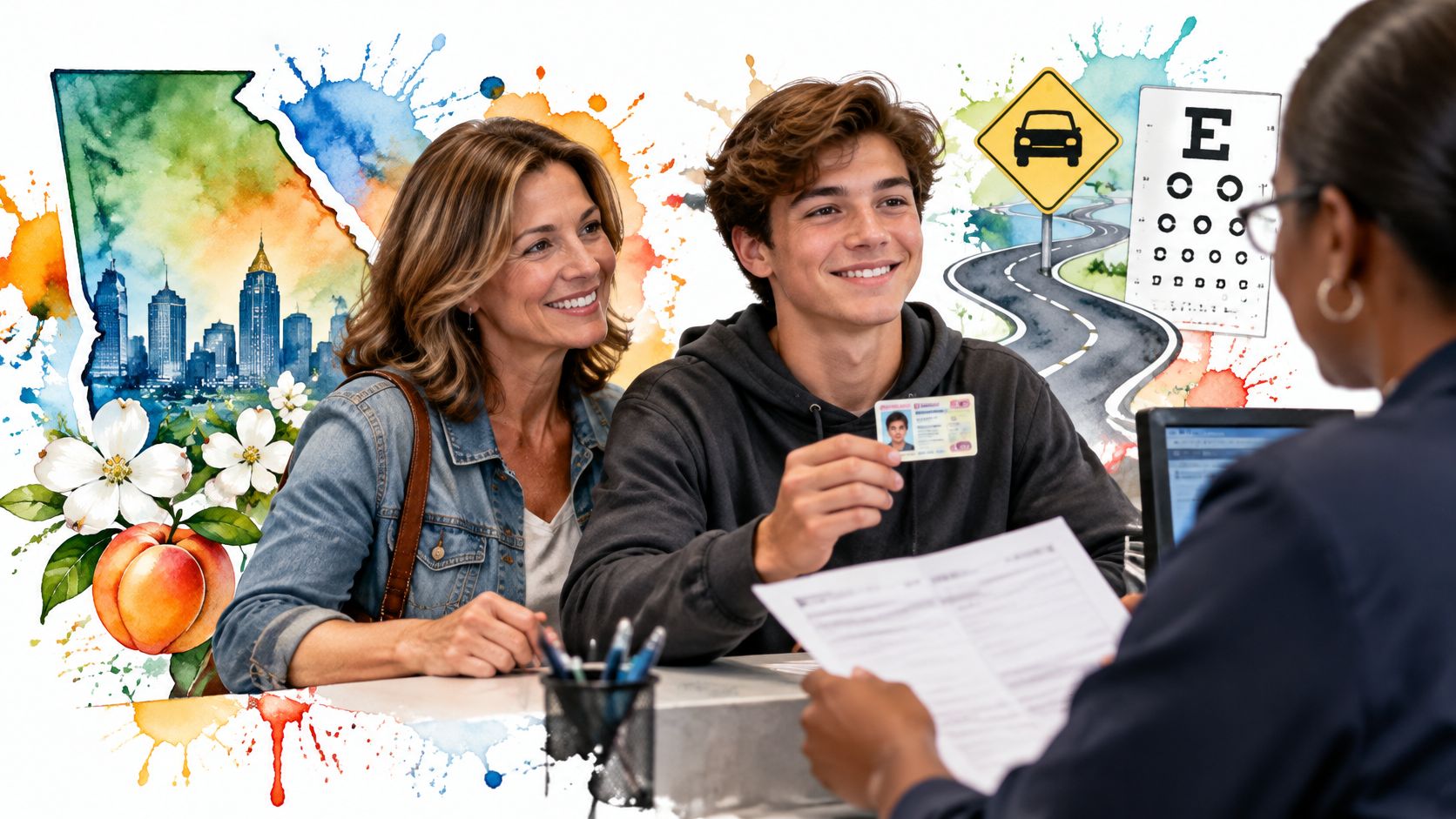
Georgia's learner's permit is the Class CP instructional permit. You must be at least 15, pass vision and knowledge exams, bring documents proving identity, Georgia residency, and U.S. citizenship or lawful presence, provide a Social Security number or proof of ineligibility, and pay $10 before testing; if you're under 18, add school-status proof and an adult signature.
But what do you need for a driver's permit beyond the right papers? The permit isn't just a card you pick up after one test. It's a supervised-driving authorization, and it opens the way to Joshua's Law instruction and practice behind the wheel.
Georgia Class CP Permit Requirements at a Glance
Use this checklist to prepare for the DDS visit. Each row is a separate requirement, so don't assume one document will prove identity, residency, and lawful presence all at once.
| Requirement | Who | What to have or do |
|---|---|---|
| Minimum age | Everyone | At least 15 years old |
| Vision exam | Everyone | Pass a mechanical vision screening |
| Knowledge exam | Everyone | Pass questions on road signs and road rules |
| Identity, residency, and lawful presence | Everyone | Documents proving identity, Georgia residency, and U.S. citizenship or lawful presence |
| Social Security | Everyone | Social Security number or proof of ineligibility |
| Testing fee | Everyone | Pay $10 before testing; no refund if any portion is failed |
| School status | Under 18 | Notarized Certificate of School Enrollment valid for 30 days, or proof of high-school completion or enrollment in an approved equivalency or postsecondary program |
| Adult signature | Under 18 | Parent, guardian, responsible adult, or authorized driver-training instructor; signer may revoke the permit before age 18 |
The Georgia government's Class CP permit requirements and the Georgia DDS learner's permit guide describe the exams, documents, fee, school-status paperwork, and adult authorization. The vision screening checks visual fitness; the knowledge exam covers two distinct areas, signs and rules. Prepare for both rather than focusing only on memorizing sign shapes.
Sort out the documents before you book
For an applicant under 18, school paperwork can be the detail that delays a visit. A Certificate of School Enrollment must be signed and notarized, and it's valid for 30 days. A form signed in March may no longer be usable for an April appointment. If the student has completed high school or is enrolled in an approved equivalency or postsecondary program, bring documentation of that status instead.
The adult signature is separate from the school requirement. A parent, guardian, responsible adult, or authorized driver-training instructor must sign the application. That signer can revoke the permit before the applicant turns 18, so this is ongoing consent, not just a one-time signature.
Before paying: Check that names match across the documents and resolve questions about an out-of-state ID or recent move first. Missing paperwork can hold up issuance even if the applicant passes both exams.
Use this Georgia ID document checklist to organize your paperwork before heading to DDS. Once the permit is issued, the learner may drive only with a qualified adult beside them in the front seat, ready and legally able to take control.
What a Learner's Permit Means on Georgia Roads
Think of the Class CP permit as a hall pass for practice, not a pass to drive alone. A new permit holder can learn on Georgia roads only with a qualified supervising adult in the vehicle.
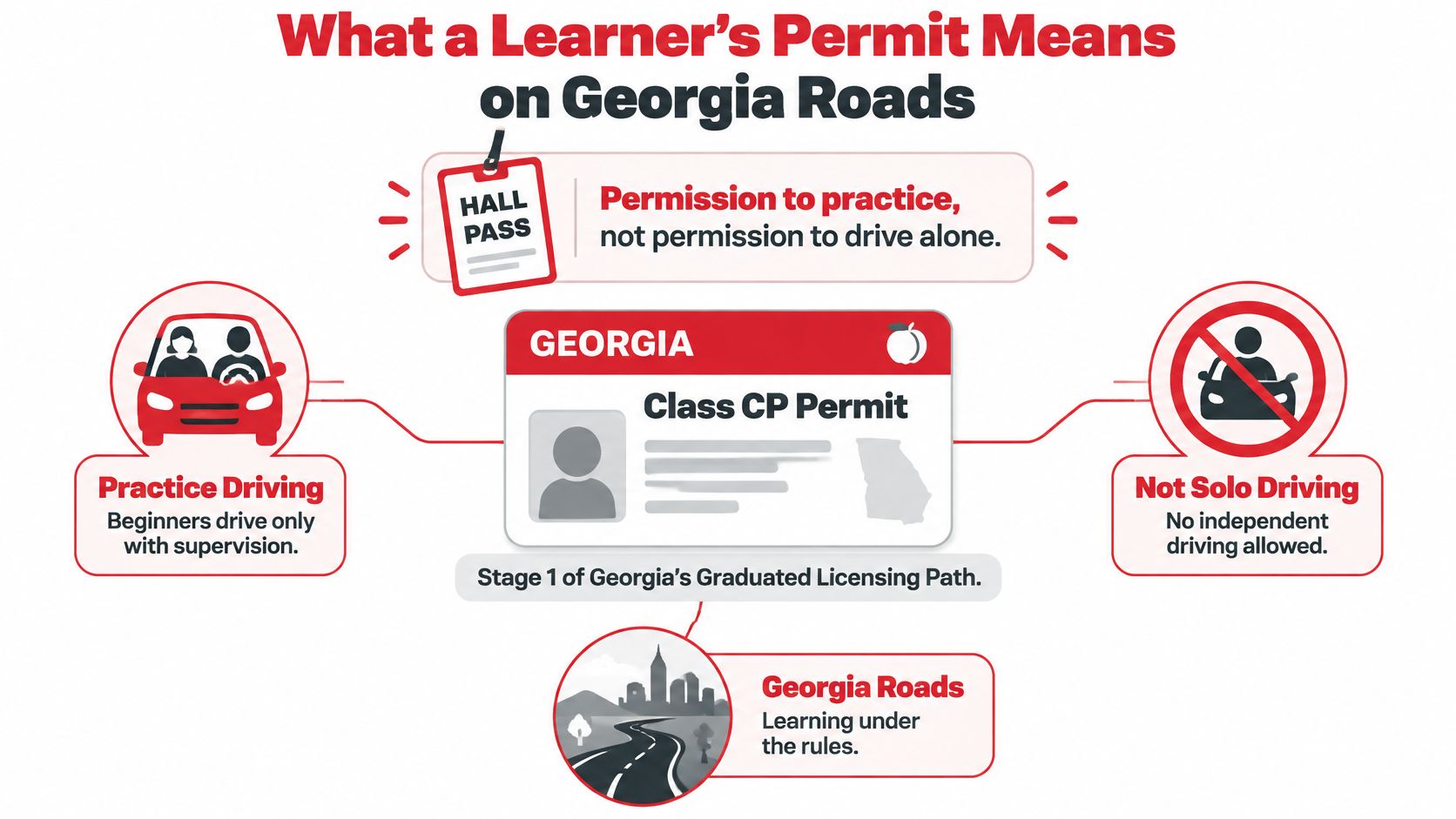
Georgia uses a graduated licensing path: supervised beginner driving comes first, followed by a provisional Class D license with restrictions, and later fuller driving privileges. The Georgia DDS Class D requirements set the permit-holding milestone at 1 year and 1 day before a teen can receive a Class D license. For a 16-year-old, that supervised period is the time to develop road skills, not a stretch to wait out.
The permit also matters for training. Behind-the-wheel instruction that counts toward the licensing pathway can't begin counting until the learner has the permit. That makes the permit the practical gate between studying traffic rules and working with a driving instructor on real roads.
For example, a teen who earns a permit and then starts instructor-led driving can build on classroom learning with coached practice. A parent can also help the teen practice, but a permit never turns a trip to the store into a solo drive. Review the Georgia rules for driving with a permit before choosing routes or planning practice.
How the Permit Visit and Retest Fees Work
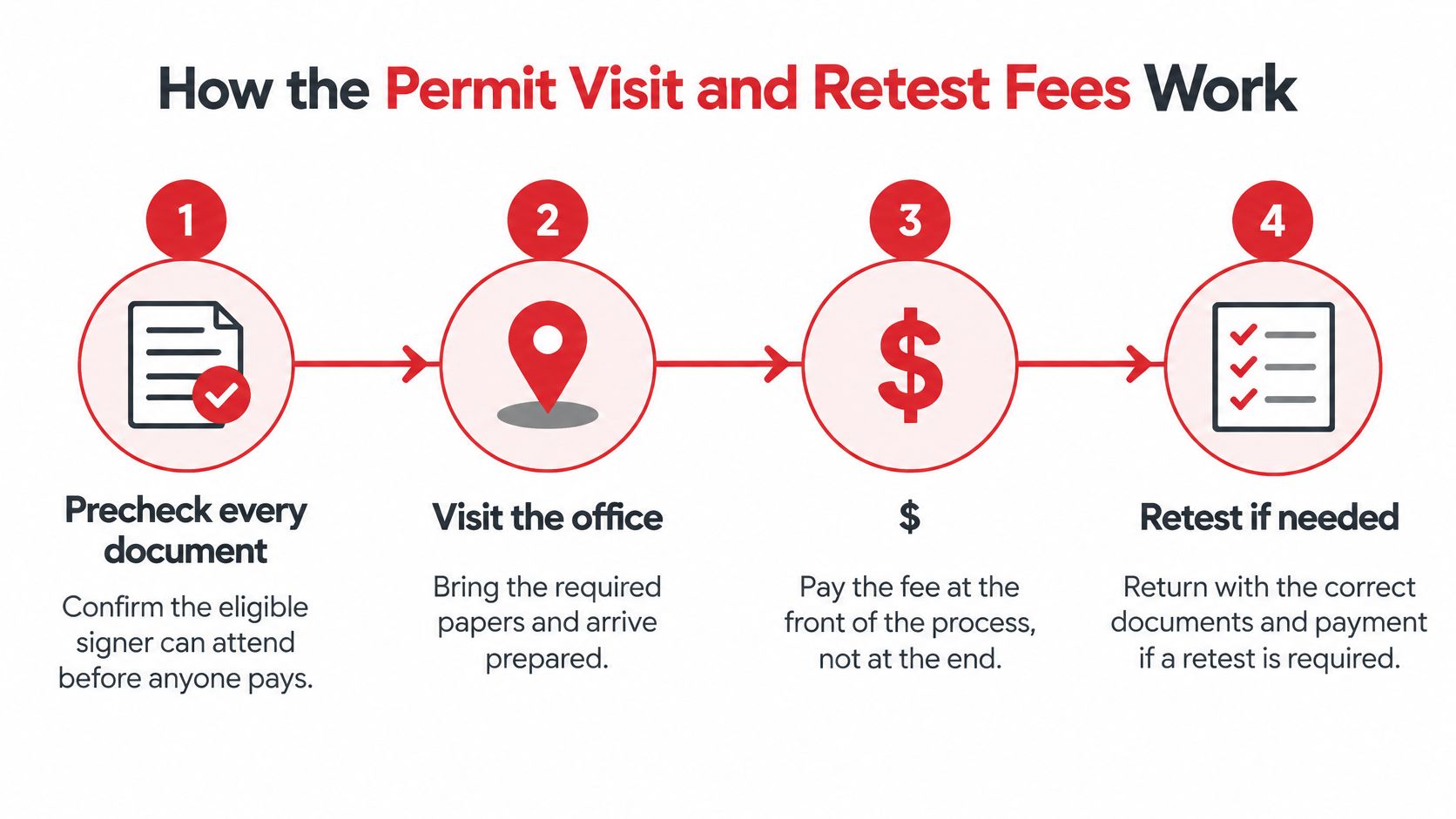
The $10 knowledge-test fee is paid before testing, and it isn't refunded if any portion is failed. Treat the appointment as a sequence with a real cost at the front, not as a paperwork stop where the fee only matters after a pass. The Georgia DDS permit and testing guidance says the fee is due before every testing attempt.
Follow the visit in order
Precheck documents and the signer. Confirm that every required document is ready and that the adult who must sign can attend. For a teen, don't schedule around a school form that hasn't been notarized or may be out of date.
Pay before testing. The fee comes before the exams. If the applicant has to retest, plan for another paid attempt rather than expecting the first fee to carry over.
Complete the vision screening. DDS conducts a mechanical vision screening. The applicant needs to pass this as well as the knowledge exam.
Take the knowledge exam. Prepare for both road-sign recognition and road-rule decisions. Practice identifying signs, then work through what to do at intersections, in school zones, and when another driver has the right of way.
Get the required signature. If the applicant is under 18, the parent, guardian, responsible adult, or authorized driver-training instructor must sign the application.
Use the permit only for supervised practice. Passing the visit doesn't authorize independent driving. Every trip still requires a qualified adult in the front seat.
The order matters. Paying before checking the documents or confirming the signer's availability can turn a simple visit into a wasted appointment and a repeat expense. Class CP permits are issued through Georgia Department of Driver Services driver services offices, so check the current office location and appointment rules on the DDS site before leaving home.
A passed visit starts supervised practice. It doesn't start solo driving or replace the later road-skills test.
Who Can Ride Along During Permit Practice
Every drive with a Georgia Class CP permit requires a supervising adult who's at least 21, holds an unexpired Class C license, sits in the front seat beside the learner, and is physically and legally able to take control. The permit doesn't allow independent driving, even for a short trip.
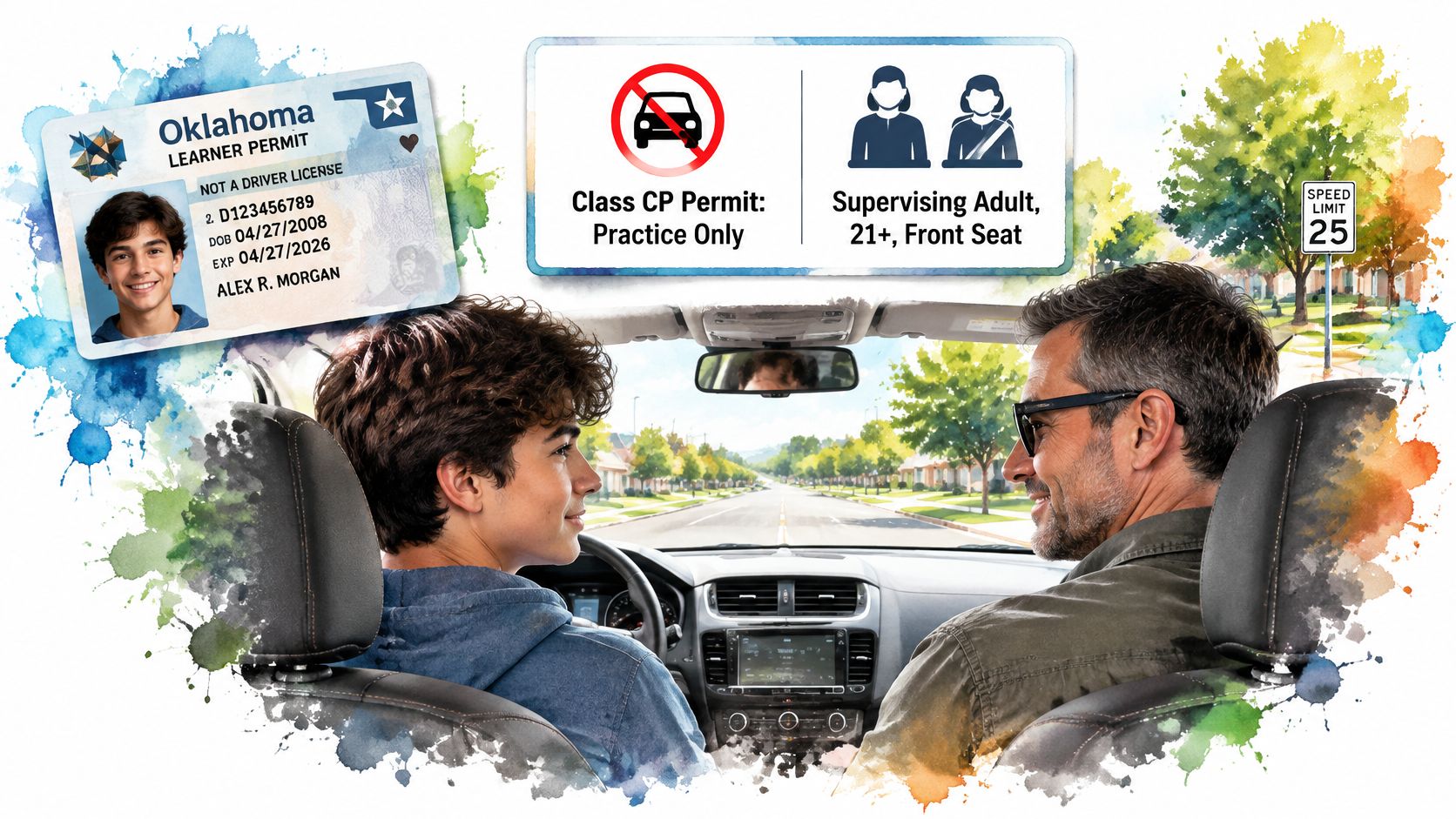
A friend who's 16 and already licensed doesn't qualify. A licensed parent sitting in the back seat doesn't qualify either. The Georgia DDS teen-driving FAQ specifies that the adult must sit beside the permit holder and be capable of intervening.
Make practice deliberate
Supervised drives build the experience needed before a teen moves toward a Class D license. Applicants under 18 must complete 40 hours of supervised driving, including at least 6 hours at night, and provide sworn confirmation from a parent, guardian, or DDS-certified driver-education instructor. The nighttime requirement exposes a learner to lower visibility and the challenge of judging speed as conditions change.
Don't leave night driving until the last week or treat it as a box to tick on an empty road. Work it into practice alongside daytime driving, traffic, and different types of roads. Choose a route that gives the learner useful experience while letting the accompanying driver coach calmly and intervene if necessary.
The permit-holding period is also a good time to schedule instructor lessons, especially if the family wants coached behind-the-wheel practice rather than relying only on parent-led driving. Pick an adult who can stay patient, explain decisions clearly, and take control when needed. Then plan nighttime practice on purpose.
Joshua's Law Course Paths After the Permit
Say a teen in the Atlanta area gets a Class CP permit in spring at age 15 and plans to seek a Class D license after turning 16 and holding the permit for 1 year and 1 day. For a 16-year-old seeking a Class D license, Joshua's Law requires an approved driver-education course. The Georgia DDS Joshua's Law requirements set out four ways to complete the coursework and driving practice.
| Path | Theory hours | Driving instruction | Supervised practice |
|---|---|---|---|
| Classroom plus instructor | 30 classroom hours | 6 hours with a certified instructor | 40 hours, including 6 at night |
| Classroom plus parent-taught | 30 classroom hours | Parent/Teen Driving Guide | 40 parent-taught hours |
| Online plus instructor | 30 DDS-approved online hours | 6 hours with a certified instructor | 40 hours, including 6 at night |
| Online plus parent-taught | 30 DDS-approved online hours | Parent/Teen Driving Guide | 40 parent-taught hours |
The classroom or approved online component covers the theory side of driver education. Instructor-led time adds coached driving, while supervised practice gives the teen more opportunities to use those skills with an adult. In the parent-taught paths, the parent provides the driving instruction through the Parent/Teen Driving Guide.
The DDS says a driving log isn't required for supervised or parent-taught driving, but a parent or guardian must be present when the teen applies for the license. Parents should still pay attention to how the teen's practice is progressing, rather than treating the lack of a required log as a reason to practice without a plan.
Families comparing these options can review the Joshua's Law course requirements and paths. If school scheduling is the main constraint, the example student could choose the online-plus-instructor path: complete the approved theory hours online, then arrange certified behind-the-wheel instruction after the permit is issued. Parent-taught practice can still be part of the plan, but a parent-only route doesn't put a professional instructor in the car.
Book Driving Lessons After the Permit Is Issued
Once the Class CP permit is in hand, make a driving plan instead of waiting out the permit-holding period with only occasional errands. Regular practice helps a teen turn traffic rules into habits, while professional instruction gives the learner a chance to receive direct coaching behind the wheel.
A-1 Driving School offers in-person and online driver education that meets the classroom requirement, plus behind-the-wheel lessons and lesson packages. Families choosing the 30-and-6 route can arrange certified instructor time; families choosing parent-taught practice may still add lessons so the teen gets professional feedback. A-1 also offers Georgia road-test preparation and testing assistance through a certified school, and its Georgia Driver's Education Scholarship Grant Program can help qualifying students access training with state support. Ask which lesson package may fit the student's schedule and whether the grant can apply.
Gather the permit documents, pass the vision screening and the $10 knowledge test with the right signer present, then put the permit to work through supervised practice and professional lessons.
View courses and lesson packages, choose in-person or online driver education, and ask about behind-the-wheel lessons, road-test support, and the Georgia Driver's Education Scholarship Grant Program at A-1 Driving School.