

A Georgia defensive driving course approved by DDS is 6 instructional hours, whatever the approved format; the calendar time depends on how the provider schedules those hours. Completing the instruction doesn't automatically mean you've satisfied a court, insurance, or licensing requirement.
For a new driver, the more important question may be which kind of education to book. A defensive driving clinic, a Joshua's Law course, and behind-the-wheel lessons serve different purposes. Choosing the right one first prevents you from spending time on a certificate that doesn't move you toward your actual goal.
Defensive Driving Course Length in Georgia by Format
Georgia's official Driver Improvement Program requires 6 instructional hours, according to the Georgia Department of Driver Services.
Georgia defensive driving course length by format
| Format | Instructional hours | Typical calendar time | What changes it |
|---|---|---|---|
| Online self-paced | 6, where the format is approved for the intended use | Several sessions over days or weeks | Provider daily caps and the student's pace |
| Virtual instructor-led | 6 | Scheduled live sessions, often across 2-3 days | Fixed class dates and session length |
| In-person classroom | 6 | One full day or two 3-hour sessions | Classroom availability and break schedule |
Treat the calendar arrangements in the table as scheduling examples, not a promise that every provider offers them. In particular, don't assume an advertised online course is self-paced or accepted for your purpose. A live remote classroom and an on-demand course are different products.
Instructional time isn't total clock time
With a self-paced option, where accepted, you work through permitted segments around your own schedule. You still need to meet the provider's attendance, timing, and completion rules. Clicking quickly through material doesn't shorten required instruction.
Virtual instructor-led classes require you to attend at set times. You may avoid the drive to a classroom, but you still need an uninterrupted place to participate, a working connection, and availability for every scheduled session.
In-person classes require travel and attendance at a fixed location. Check-in, breaks, and certificate processing can make the appointment longer than the instructional portion alone.
Booking rule: Ask for the start time, release time, attendance policy, and certificate delivery process before arranging work or transportation.
Choose acceptance before convenience
A-1 Driving School offers in-person and online options, including live remote instruction. Other providers may advertise different delivery arrangements, so compare the actual class description rather than relying on the word online.
Extra study can improve your understanding, but it doesn't automatically earn extra regulatory credit. Likewise, finishing exercises early doesn't erase the attendance requirement.
If you're asking how long are defensive driving courses because you have a deadline, ask the provider when you'll receive usable completion documentation. Then confirm with the court, DDS, or insurer that the exact course and format are accepted before paying.
Joshua's Law Hours for Georgia Teen Drivers
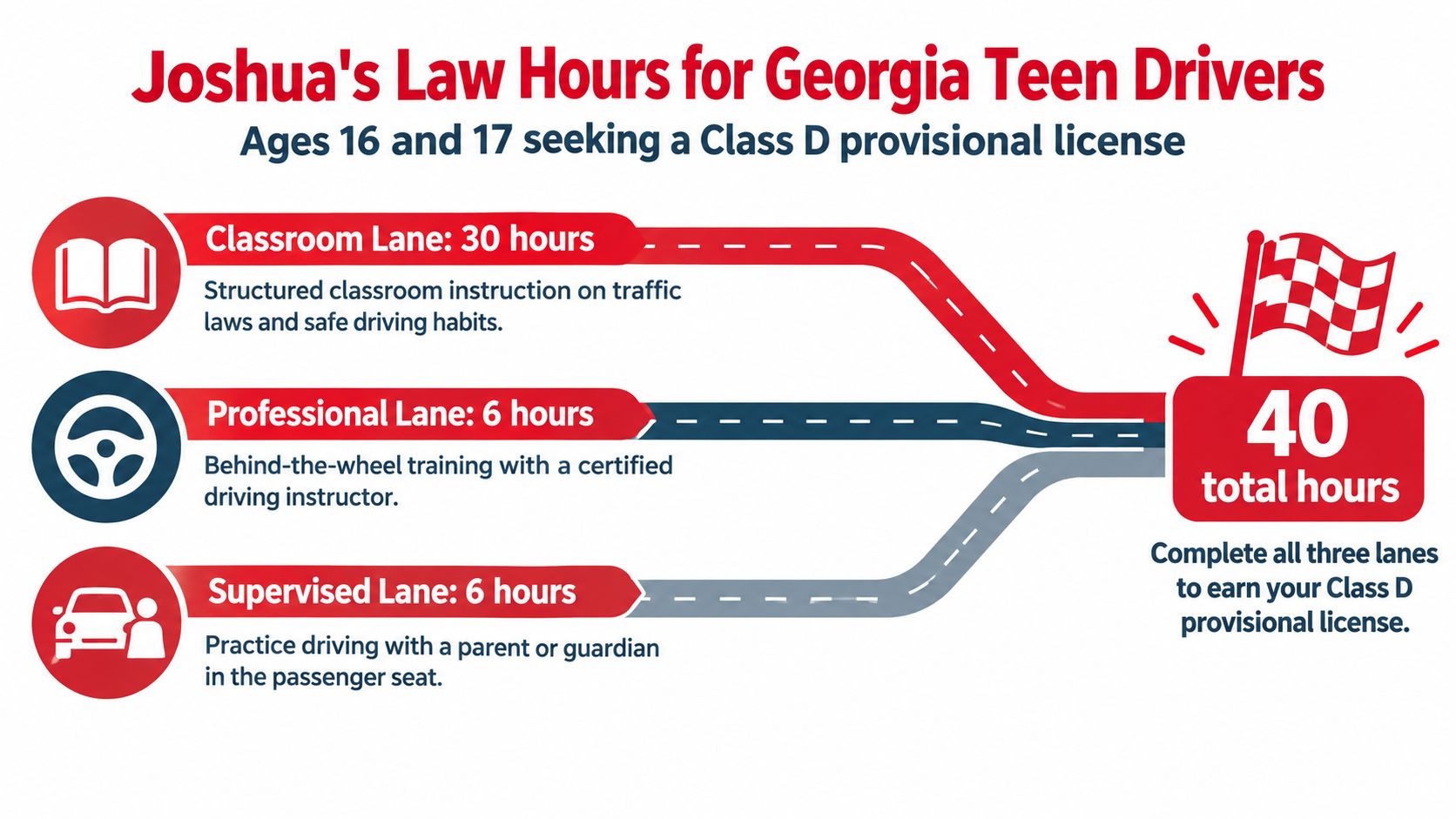
Joshua's Law applies to Georgia drivers aged 16 and 17 seeking a Class D provisional license, and the DDS teen-driver guide sets out the education, driving practice, permit-holding, and testing requirements. Those requirements include 30 hours of approved driver education, 6 hours of certified behind-the-wheel instruction or the approved parent-training alternative, and at least 40 hours of supervised driving, including 6 at night.
Think of the process as a three-lane road: classroom learning, practical driving, and the permit-holding period move toward the same licensing destination. Completing one lane doesn't let you skip the others.
Follow the licensing sequence
- Start with the Class CP instructional permit. The required holding period is at least 1 year and 1 day under the DDS requirements linked above. Use that period for steady practice rather than treating it as waiting time.
- Complete approved driver education. Choose classroom instruction or an equivalent approved online virtual course. The purpose is to understand traffic rules and safe decisions before applying them in traffic.
- Arrange practical instruction. Book certified behind-the-wheel lessons, or follow the approved parent-training alternative. An instructor can identify habits a family member may overlook, such as steering too late or checking mirrors without checking blind spots.
- Document supervised practice. Keep a driving log and certify the required experience on the DDS affidavit. Record nighttime practice separately so it doesn't get lost among daytime trips.
- Complete the remaining licensing requirements. Finish the Alcohol and Drug Awareness Program and pass the required road test.
The timeline visual is a planning aid, but its total-hours wording shouldn't be used to calculate eligibility. Supervised driving is a separate requirement, not the sum of classroom and professional lesson hours.
Pair the course with a practice plan
A-1's Joshua's Law course options and behind-the-wheel lessons can be planned together. Review the Joshua's Law requirements before selecting a course, especially if your family is deciding between instructor-led training and the parent-training route.
Parents should reserve driving lessons early instead of waiting until the permit anniversary approaches. Leave room between lessons for supervised practice so the student can apply feedback before the next appointment.
The Georgia Driver's Education Scholarship Grant Program may offer a funding route for qualifying students' classroom education and driving training. Confirm current eligibility, participating course options, and payment procedures with A-1 and DDS before paying. Don't assume an enrollment purchase will qualify for reimbursement afterward.
Choosing Online or In-Person Driver's Education
Choose a format around the student's actual week, not the idea that online is always faster or classroom learning is always better. A student who attends reliably and asks questions will gain more than one who selects a convenient format but rarely engages.
Self-paced online learning is like a self-guided museum tour: you control when to pause and revisit an exhibit. Instructor-led learning is a guided tour with a fixed start time and someone available to explain a confusing point.
Compare the practical differences
- Schedule fit: Fixed classes work when the student can protect those appointments. Flexible modules suit a changing schedule, provided the student reserves study time.
- Self-discipline: Independent learners can maintain steady progress online. Students who postpone assignments may benefit from scheduled attendance.
- Parental involvement: Decide how a parent will check progress without completing the work for the teen.
- Learning style: A live instructor can answer a question immediately. Online modules may let students revisit difficult explanations.
- Completion pace: Open calendar space helps only if the student uses it consistently. Confirm access periods and completion rules before enrolling.
An equivalent online course can satisfy the 30-hour classroom component, but it doesn't replace the 6-hour instructor route or approved parent-training alternative, the 40 supervised driving hours, including 6 at night, or the road-skills examination, as explained in the Georgia DDS driver's manual.
Match the course to the lessons
A-1 offers online Driver's Education alongside in-person classes and multiple time slots. Compare the online Driver's Education and behind-the-wheel packages by looking at both the academic schedule and the driving appointments.
Before enrolling, parent and teen should answer these questions:
- When will studying happen? Name the actual days or recurring openings.
- Who will monitor completion? Agree on how progress will be checked.
- How will learning reach the road? Arrange supervised practice and lessons that reinforce the topics being studied.
How Course Length Affects Tickets, Points and Insurance
Taking the course doesn't automatically make a ticket disappear or lower your insurance premium. You complete the instruction; the court, DDS, or insurer decides whether that completion satisfies its rules.
Keep the certificate and the intended outcome separate when reviewing your options.
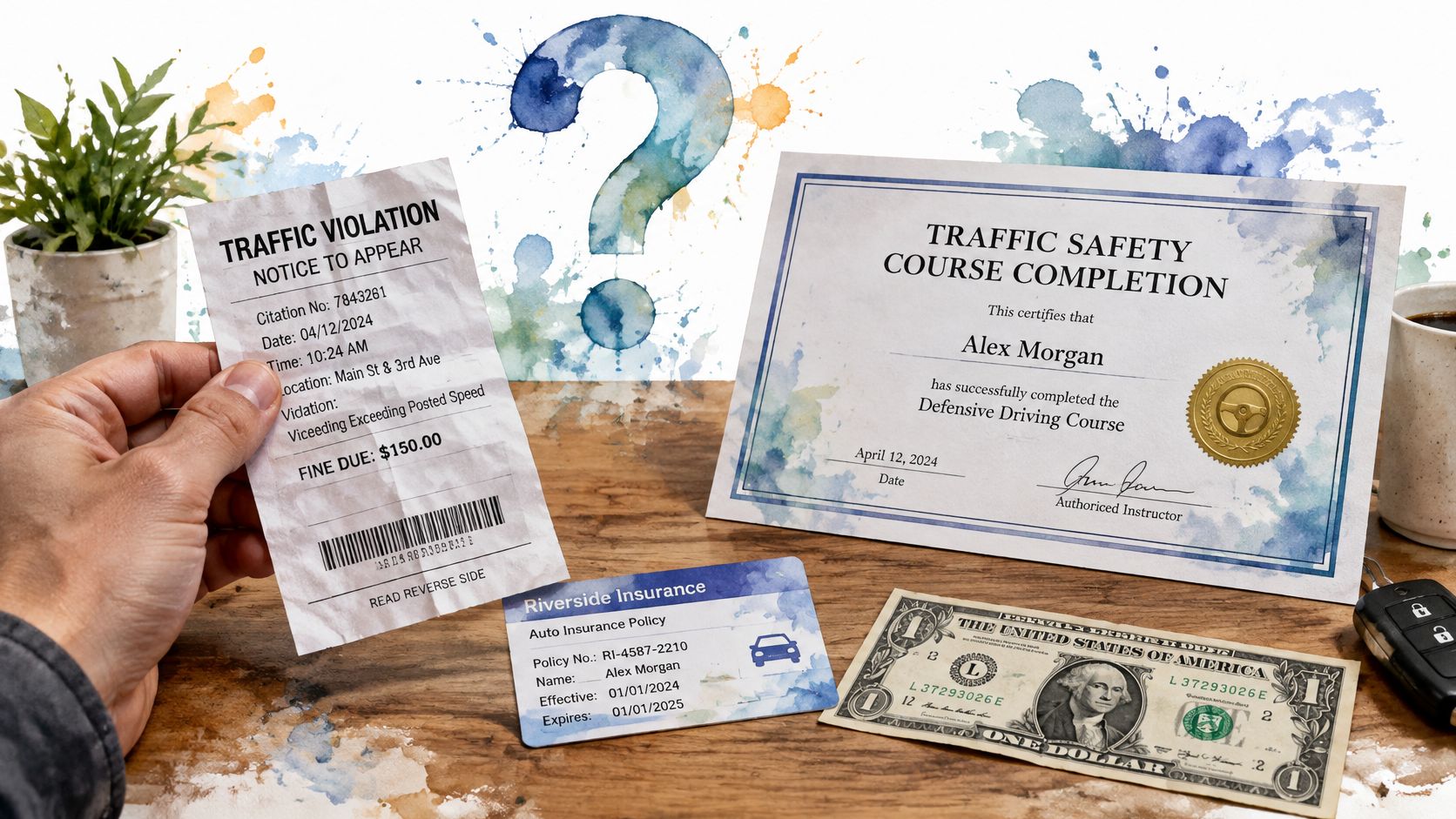
Duration tells you what you sit through. Approval tells you what it counts for.
The Georgia DDS defensive driving FAQs describe point reduction of up to 7 points once every 5 years, qualifying pre-court completion offering a 20% fine reduction with no points assessed, and a $95 fee cap for court, reinstatement, and point-reduction classes. For the pre-court benefit, the original completion certificate must be presented to the court.
Course purpose, what the course can do and the checkpoint
| Goal | Course to take | Checkpoint before enrolling |
|---|---|---|
| Court-ordered completion | DDS-approved 6-hour program | Court deadline and certificate filing requirements |
| Pre-court completion | DDS-approved program taken before the court date | Original certificate presented for the qualifying fine reduction and no points assessed |
| Points reduction | DDS-approved 6-hour program | Eligibility, the reduction limit and frequency, and the applicable fee cap |
| License reinstatement | DDS-approved program | DDS reinstatement instructions and approved provider list |
| Insurance discount | A course approved by the insurer | Insurer's eligibility rules and discount amount |
| Voluntary education | Any suitable educational course | Learning value only unless separately accepted for official credit |
Insurance savings follow the insurer's rules, not the course's duration alone. Ask whether your policy qualifies and which completion documents the insurer requires.
For a citation issued outside Georgia, consult guidance for that jurisdiction rather than applying Georgia rules. Ticket Shield, PLLC's legal guidance for ticketed Florida drivers is a jurisdiction-specific resource for that situation.
This video provides another way to consider defensive driving course decisions.
Before enrolling, confirm the deadline, approval for your particular purpose, and how to submit the certificate. A-1's explanation of how to reduce points on a license can help you prepare questions before booking.
Driving Lessons Packages and Road Test Preparation
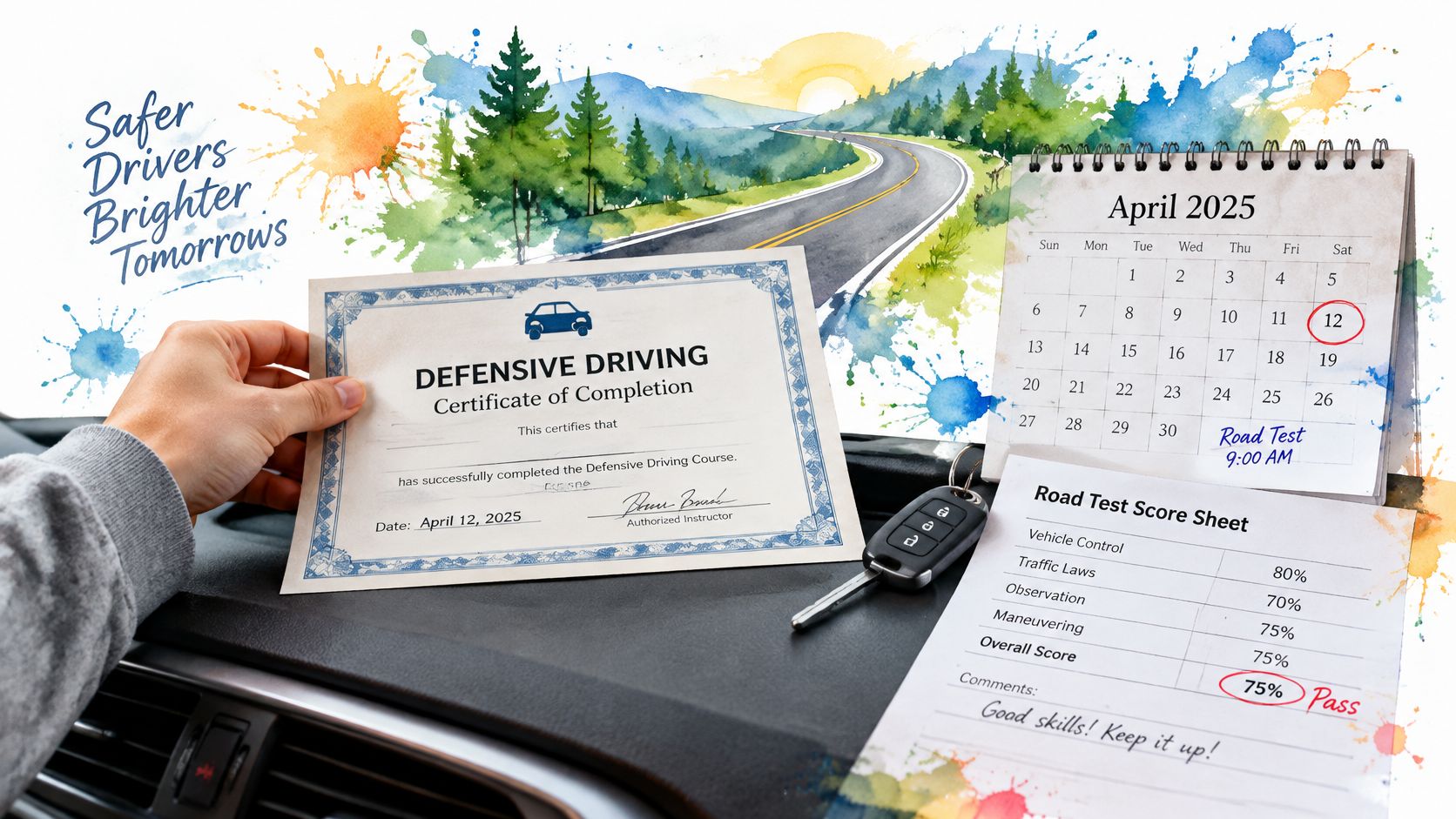
Georgia's traditional road test requires a minimum score of 75%, an appointment because walk-ins aren't accepted, a valid Georgia noncommercial learner's permit, satisfaction of the applicable Class D requirements, and an accompanying licensed driver at least 21 years old, according to the DDS test and examination information. DDS also specifies an eligible four-wheel vehicle with valid registration or license plates that meets testing requirements; its guidance limits vehicle occupants to the applicant and accompanying licensed driver, with no children, other minors, or pets.
A course certificate isn't proof that a student can perform safely under test conditions. Lessons should build repeatable habits, not just familiarity with a test route.
Practice the skills you'll need
- Vehicle control: Start and stop smoothly without abrupt acceleration or braking.
- Turns and stops: Position correctly, signal, and stop fully at stop signs.
- Lane changes: Check mirrors, check the blind spot, and move only when the gap is safe.
- Parking: Practice positioning and slow-speed steering without rushing.
- Road judgment: Adjust speed for traffic and weather while watching for pedestrians and cyclists.
Rolling through stops, forgetting to signal, and panicking after a small error are habits worth addressing before test day. If something goes wrong during practice, recover safely and discuss the correction afterward.
A-1 driving lessons packages and road test preparation
| Option | Hours | Best for |
|---|---|---|
| Joshua's Law behind-the-wheel lessons | Required instructor component; confirm the booked lesson schedule | Teens completing licensing |
| Teen driving lessons package | Select practice hours with A-1 after discussing experience | Teens who want practice beyond the minimum |
| Adult driving lessons package | Choose hours around current skills and goals | New or returning adult drivers |
| Road test preparation and testing assistance | Confirm preparation time and testing arrangements when booking | Anyone booking the Georgia road test |
Book for readiness
A lessons package can combine behind-the-wheel training with road test preparation and testing assistance. Confirm the current hours, price, included services, and testing eligibility with A-1 before booking.
Before test day, check documents, vehicle condition, appointment status, and the supervising driver's availability. Ask how A-1's road testing arrangements apply to your appointment rather than assuming every testing location follows the same check-in procedure.
Confirm Your Course and Build the Calendar
Start with the purpose, not the shortest advertised course. A teen earning a license needs a different plan from an adult responding to a court order, seeking point reduction, pursuing reinstatement, asking about insurance savings, or studying voluntarily.
Write that purpose at the top of your enrollment notes. Then ask the organization that will accept the completion record which provider, course, and delivery format it recognizes. Save the answer with your booking confirmation.
Reverse-plan from the date you need
For a teen, work backward from a realistic road-test target. Check the permit eligibility date first, then place lessons, supervised practice, classroom study, and document preparation on the calendar. Leave time for more practice if an instructor identifies a skill that isn't ready.
For example, a student receiving a permit at the beginning of summer shouldn't assume the next summer's first available testing appointment will meet the holding requirement. Verify the exact eligibility date before paying for a test appointment or planning around a school break.
A summer road-test goal may make spring a useful time to complete remaining classroom work and assess driving skills. That's a scheduling choice, not a licensing rule. Students who need more practice should adjust the testing target instead of compressing training into the final days.
Planning insight: Book around the student's readiness and legal eligibility, not just the earliest opening on the calendar.
Make room for practice and changes
- Separate lessons with practice: Give the student time to work on instructor feedback before the next appointment.
- Reserve driving appointments early: Ask about availability around school breaks instead of assuming openings will remain.
- Protect attention: Avoid loading classroom work onto exam weeks or already crowded sports schedules.
- Allow administrative time: Adults facing a court deadline should leave room for certificate delivery and submission.
- Plan for disruption: Ask about cancellation and rescheduling policies, and identify an alternative appointment where possible.
Keep completion certificates, the supervised-driving affidavit, permit information, and appointment confirmations together. A shared folder helps parents and teens find the right document without searching through separate email accounts.
Before purchasing a package, request a clear description of what it includes. Check whether classroom enrollment, driving appointments, road-test preparation, and testing assistance are separate bookings or coordinated services. Ask how additional lessons are arranged if the student needs more time.
Finally, choose a manageable weekly routine. A parent might handle practice after school while the instructor works on lane changes and parking during scheduled lessons. An adult returning to driving might begin with vehicle control before moving into busier traffic.
A useful training calendar ends with demonstrated readiness, not merely a completed course. Keep the target date flexible enough to support safe driving beyond test day.
A-1 Driving School offers Joshua's Law online courses, teen and adult driving lessons packages, and Georgia road test preparation and testing assistance. Visit A-1 Driving School to compare course formats, confirm package details and scholarship options, and build a schedule that connects classroom learning with confident driving.