Your teen has a learner's permit, a DDS checklist on the counter, and a calendar that suddenly looks too full. One relative says the permit must be held for a year, another says a driving school handles everything, and an online search produces several different answers. The confusion is understandable, because Joshua's Law requirements combine formal education, professional instruction, parent-supervised practice, and separate DDS eligibility rules.
The process becomes much easier when you treat it as a sequence instead of one large assignment. Georgia's framework gives families clear benchmarks: approved instruction, documented practice, a learner's permit, ADAP completion, and a road test. This guide explains how those pieces fit together, with special attention to course formats, driving lessons packages, scholarship assistance, and practical road-test preparation.
Why Joshua's Law Matters for Georgia Teen Drivers
A Georgia teenager may start with a simple goal, getting a Class D license, but the state requires more than passing a written exam and turning 16. Joshua's Law was designed to make teen licensing more structured, requiring formal driver education and supervised practice before eligible applicants receive a Class D license. The Georgia Department of Driver Services outlines the current training framework in its Joshua's Law requirements.
The law is named for Joshua Brown, whose death in a 2003 crash helped focus attention on the risks facing inexperienced teen drivers. The practical lesson for families is straightforward. A new driver needs classroom preparation, professional coaching, and repeated practice with a responsible adult before driving independently.
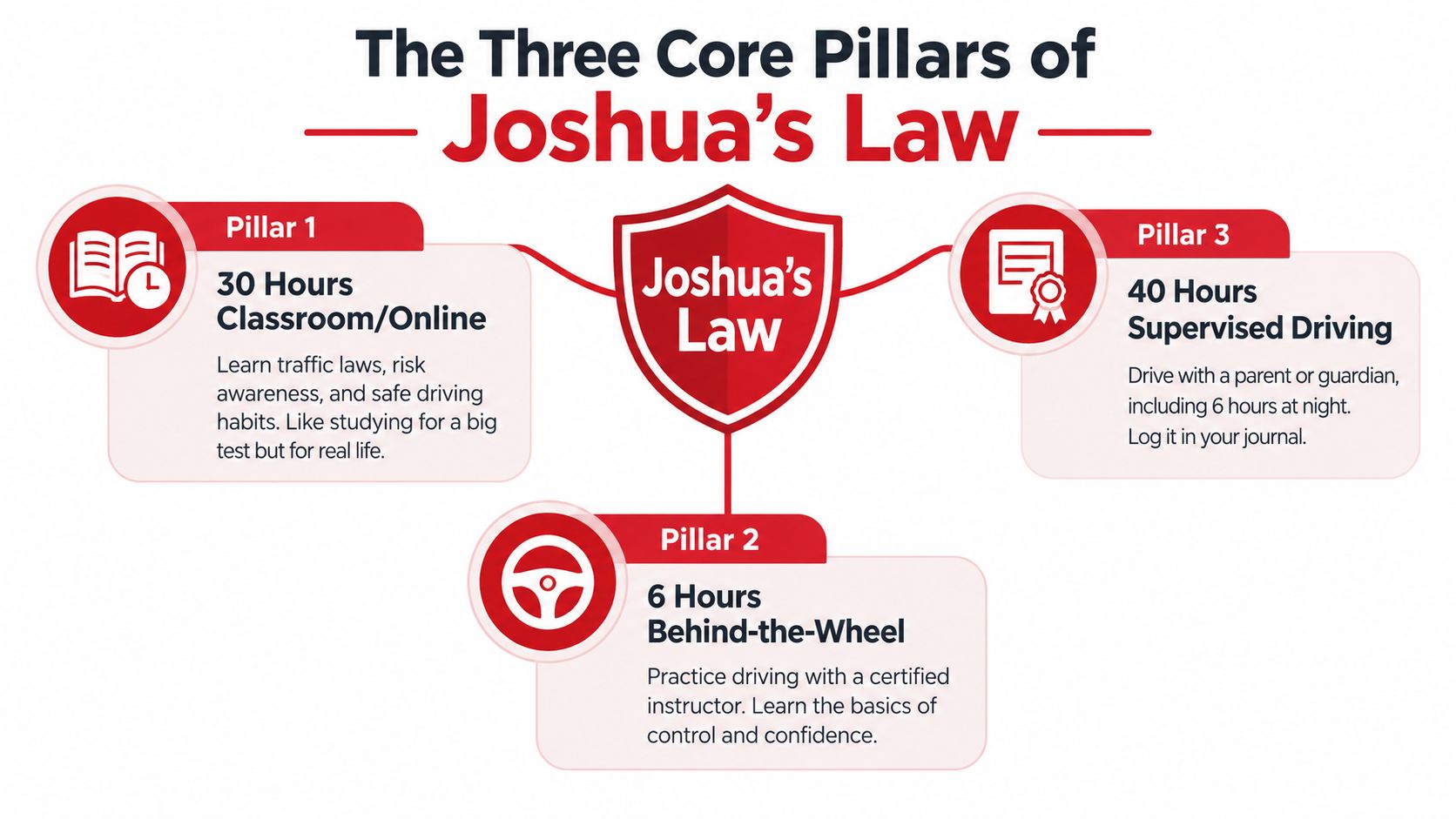
Georgia's system combines 30 hours of classroom or equivalent online instruction, professional behind-the-wheel training, and 40 hours of supervised driving, including 6 hours at night. The formal course teaches the rules and decision-making concepts. Instructor-led lessons show the teen how to apply those concepts behind the wheel. Parent-supervised practice then gives the teen repeated opportunities to build consistency.
A useful way to think about the law: the course teaches what to do, the instructor demonstrates how to do it, and supervised practice helps the skill become dependable.
The requirement also applies to older teens in an important way. The Governor's Office of Highway Safety explains that, as of July 1, 2021, Joshua's Law driver training became a required step for 17-year-olds before they receive a Class D license, with a military-related exception for some applicants. Families can review the state explanation of that Joshua's Law expansion.
If the story behind the law still feels abstract, who Joshua was and why the law carries his name provides additional context. The most helpful mindset is to treat each requirement as preparation for the next one, not as paperwork standing between a teen and independence.
The Three Core Pillars of Joshua's Law Requirements
The easiest way to remember the framework is to picture three separate pillars. Each one answers a different question: What must the teen learn? Who must teach the physical skills? How much real-world practice must happen afterward?
Pillar one is the study portion
The first pillar is 30 hours of classroom or equivalent online instruction through an approved pathway. Think of it as study hall for driving. The teen learns traffic laws, signs, risk awareness, safe decisions, and the reasoning behind common driving rules.
The Georgia DDS describes the approved course structure as 30 hours of classroom or equivalent online instruction, paired with either professional behind-the-wheel training or parent-taught driving. At the end of the classroom component, the student should receive documentation showing course completion. Keep that certificate with the rest of the licensing paperwork.
Pillar two is professional coaching
The second pillar is 6 hours of behind-the-wheel training with a certified instructor, unless the family uses the permitted parent-taught pathway described by DDS. A certified instructor is authorized through an approved driving-school program to provide the required training.
These hours should involve actual driving, not sitting in the passenger seat while someone else drives. The instructor evaluates vehicle control, turns, stopping, lane position, observation, and decision-making in real traffic. The school's completion documentation should show that the required instruction was completed.
Pillar three is supervised practice
The third pillar is 40 hours of supervised driving, including 6 hours at night. A parent or another qualified licensed adult supervises this practice, and the family records it in a driving log.
The log matters because it supports the parent's certification that the teen completed the practice requirement. It should identify the driving sessions and include the required night practice. Professional lesson records and the parent-supervised log serve different purposes, so families should keep both.
A simple file system prevents last-minute searching:
- Course certificate: Proof of the classroom or online instruction.
- Instructor record: Documentation of professional behind-the-wheel training.
- Parent driving log: Record of the supervised practice hours.
- License paperwork: Permit, ADAP documentation, and other DDS forms.
Practical rule: professional lessons build technique, while parent-supervised driving builds repetition. Plan for both.
Your Step-by-Step Path to a Georgia Class D License
The Class D process has several gates, and completing one doesn't automatically erase the others. For Georgia teens under 18, DDS requires a Class CP learner's permit held for at least 1 year and 1 day, completion of ADAP, and satisfaction of the Joshua's Law training requirements. The Georgia DDS driver's manual explains these connected requirements and notes that a teen may wait until age 17 to obtain a Class D license without satisfying the driver-education requirement, while the other eligibility rules still apply.
Follow the sequence carefully
Complete approved education and training. Finish the 30-hour classroom or equivalent online course and the required behind-the-wheel component, or follow the approved parent-taught route described by DDS.
Obtain the learner's permit. Visit a DDS Customer Service Center with the required identity and eligibility documents, complete the knowledge exam, and receive the learner's permit.
Practice and hold the permit. Maintain the permit for at least 1 year and 1 day while completing and documenting 40 hours of supervised driving, including 6 hours at night.
Complete ADAP. The Alcohol and Drug Awareness Program is a separate prerequisite. Finishing driver's education doesn't replace it.
Take the road test. The applicant must meet DDS testing requirements and demonstrate safe, controlled driving.
The 2021 policy expansion created a different timing path for some 17-year-olds. A 17-year-old who completes the required supervised driving and ADAP may receive a Class D license without following the full permit-year timeline, subject to the applicable provisional night and passenger restrictions, which lift at age 18. Families should confirm their exact situation with DDS before scheduling the application.
| Step | Requirement | Standard Age 16 | Expanded Age 17 |
|---|---|---|---|
| Education | Approved driver education and required driving training | Complete before Class D eligibility | Complete before Class D eligibility unless an applicable exception applies |
| Permit | Hold a Class CP permit for at least 1 year and 1 day | Required | Alternative timing may apply after required practice and ADAP |
| Practice | Supervised driving, including night practice | Required | Required |
| ADAP | Complete the Alcohol and Drug Awareness Program | Required | Required |
| Road test | Pass the DDS driving test | Required | Required |
The sequence prevents a common mistake. A teen can finish the course and still need to wait for the permit period, finish ADAP, or complete the road test.
Classroom, Online, and Virtual Course Options in Georgia
The 30-hour education requirement can fit different family schedules, but the delivery format changes how the teen learns. A traditional classroom gives immediate access to an instructor. An asynchronous online course offers flexible pacing. A live virtual course preserves scheduled interaction without requiring travel.
A-1 Driving School describes its Georgia driver education courses as options for families choosing among in-person, online, and virtual learning. Whichever approved format you choose, confirm that the program satisfies the same 30-hour standard and that the teen can receive acceptable completion documentation.
| Format | Pacing | Instructor Access | Best For |
|---|---|---|---|
| In-person classroom | Fixed sessions and scheduled attendance | Immediate questions and discussion | Students who learn well with structure and live interaction |
| Asynchronous online | Log in when convenient and progress through modules | Questions may be handled through the course platform | Teens balancing school, activities, or changing schedules |
| Live virtual classroom | Set schedule from home | Real-time instructor teaching and questions | Students who want live guidance without commuting |
Attendance verification differs by format. In-person programs generally verify presence in the classroom. Online programs track progress through the learning platform and required activities. Live virtual programs use scheduled participation and the provider's attendance process. Quizzes and knowledge checks also vary, so parents should ask how completion is recorded before enrollment.
Families managing flexible school schedules may also find Georgia homeschool resources useful for organizing education planning alongside driver training. The driving-school course still must meet the applicable DDS approval standard.
The classroom portion and behind-the-wheel portion work together. A teen may understand right-of-way rules online but still need coaching to judge gaps, maintain lane position, or stop smoothly. Choose the format that the student will complete consistently, then schedule the practical training rather than leaving it until the last minute.
Driving Lessons and Packages That Build Real Confidence
The 6-hour professional requirement is a legal minimum, not a complete measure of readiness. A teen may technically finish the required instruction and still feel tense at a busy intersection, uncertain during a merge, or uncomfortable with parking. Additional driving lessons give an instructor time to identify those gaps and address them deliberately.
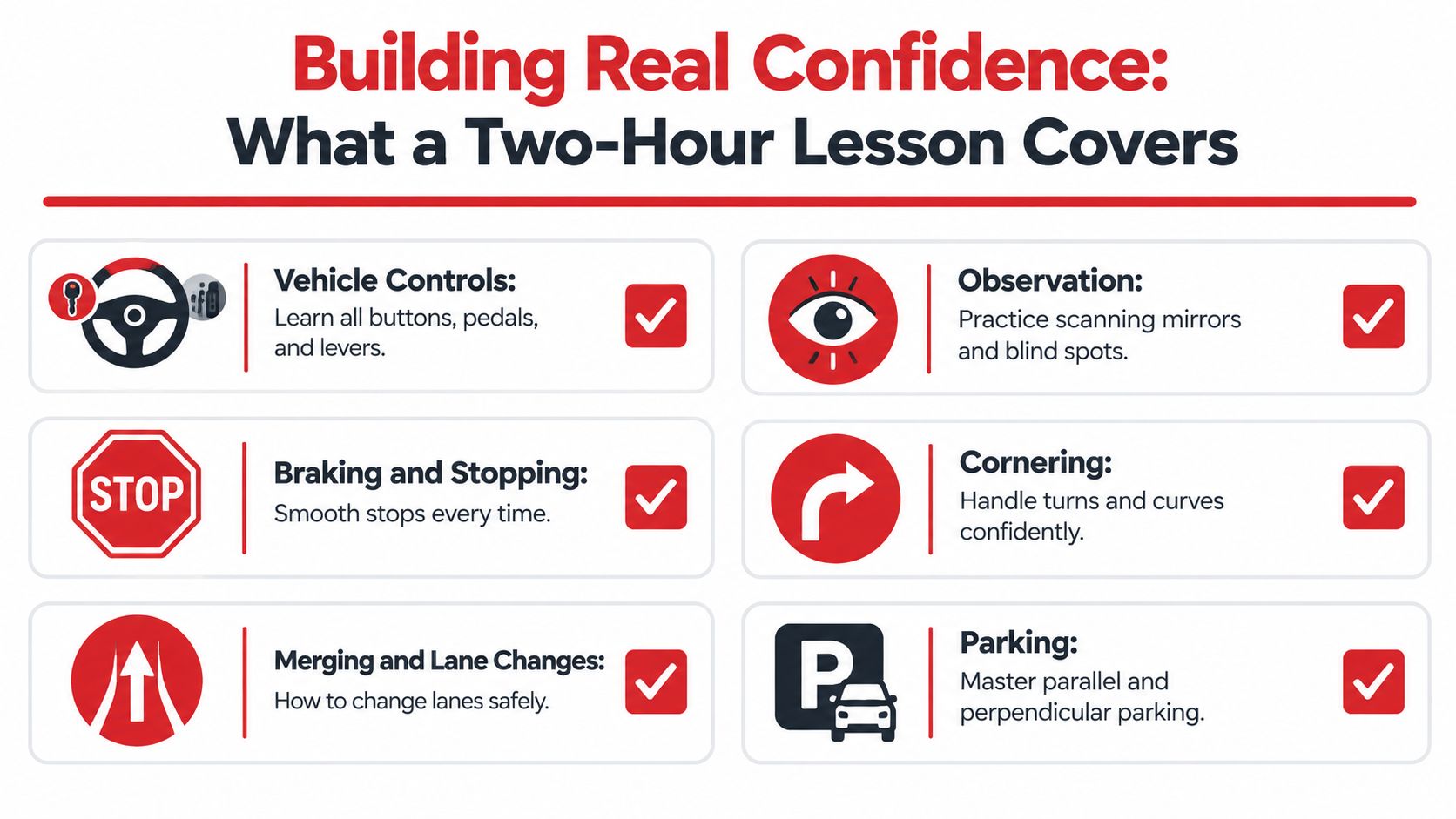
A typical two-hour lesson can move through several skills instead of repeating one familiar route. The instructor may begin with vehicle controls and observation, then work on residential intersections, lane changes, highway entry, parking maneuvers, and feedback after each exercise. Pickup may be arranged from home, school, or work through the school's online booking process, depending on availability.
Match the package to the student
A family can start with the required training and add practice where the teen needs it most. Common package choices include 6-hour, 10-hour, and 20-hour bundles. The right choice depends on current ability, available parent practice, and the road-test skills still needing attention.
- 6-hour package: Covers the required professional behind-the-wheel component for a student who already has consistent supervised practice.
- 10-hour package: Adds room for parking, lane changes, intersections, and an end-of-training review.
- 20-hour package: Provides a broader progression for a beginner who needs repeated coaching across different roads and traffic conditions.
The parent-supervised 40-hour log remains separate from professional instruction. Parents should continue recording their own practice sessions, while using instructor feedback to reinforce the same techniques during daily driving.
A useful lesson plan might assign one session to vehicle control and quiet roads, another to intersections and lane changes, and later sessions to merging, parking, and test-route readiness. More professional practice can also help a teen approach the test with less anxiety, and some insurance providers may recognize approved driver education when determining available discounts. Families should confirm eligibility directly with their insurer.
The strongest combination is structured instruction plus calm repetition at home. Parents don't have to guess which skill to practice next, and teens get feedback before a small habit becomes a test-day problem.
Road Test Preparation and On-Site Testing at A-1
Road-test preparation should begin before the appointment is booked. During a final assessment, an instructor can watch for smooth steering, mirror checks, speed control, timely signals, lane position, controlled turns, and complete stops. Those details often separate a technically prepared student from one who still needs focused practice.
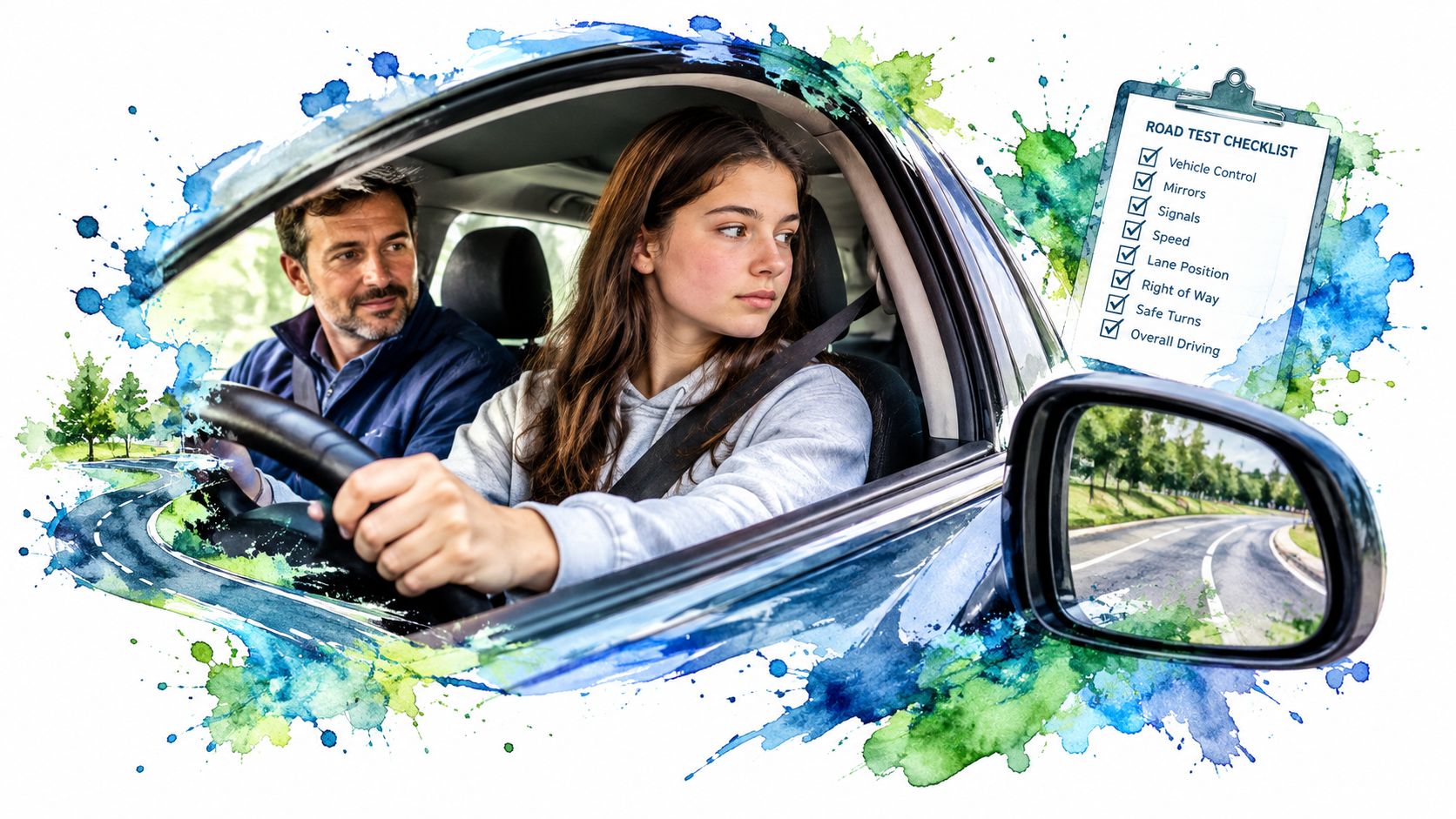
Georgia DDS says a road-test applicant must hold a valid Georgia Non-Commercial Learner's Permit and pass the driver's license knowledge exam before testing. The official DDS road-test eligibility page is the right place to verify current requirements before the appointment.
A-1's on-site testing option can let a student test at an approved school location with a vehicle familiar from lessons, subject to scheduling and eligibility. Families should ask the school which documents are required for their appointment. A practical preparation folder may include:
- Learner's permit: Bring the valid permit.
- Joshua's Law certificate: Include proof of approved education and training.
- ADAP documentation: Confirm completion before test scheduling.
- Parental consent: Bring any required consent form.
- Insurance information: Carry the requested vehicle documentation.
Use the following video as another way to review the testing process and expectations before the appointment.
The road test is an official DDS step, so families should verify appointment details directly with DDS and the testing provider. Thorough preparation protects the teen's time, confidence, and testing opportunity, especially because repeated unsuccessful attempts can trigger additional requirements.
Using the Georgia Driver's Education Scholarship Grant
The Georgia Driver's Education Grant Scholarship Program helps eligible students pay for the formal education portion of Joshua's Law. The state rules limit the program to Georgia residents who are actively enrolled in school, ages 15 through 17, and who already hold a valid Georgia instructional permit or driver's license. The program covers 30 hours of classroom instruction and 6 hours of behind-the-wheel instruction with an approved instructor. Families can review the eligibility rules through the Georgia Driver's Education Grant Scholarship Program.
The grant is directed at the approved course components, not the separate parent-supervised practice requirement. It doesn't eliminate the need to complete and document the 40-hour practice log, and it doesn't replace the permit, ADAP, or road-test steps.
Prepare before contacting the school
A practical enrollment conversation with A-1 should confirm the student's age, Georgia residency, school enrollment, permit or license status, and the course dates that fit the family's schedule. The school can explain what documentation it needs to verify enrollment and how the application is handled.
The grant operates through the approved school and course process rather than as a general payment for unrelated driving expenses. Ask about current availability, required forms, and processing expectations before reserving a class.
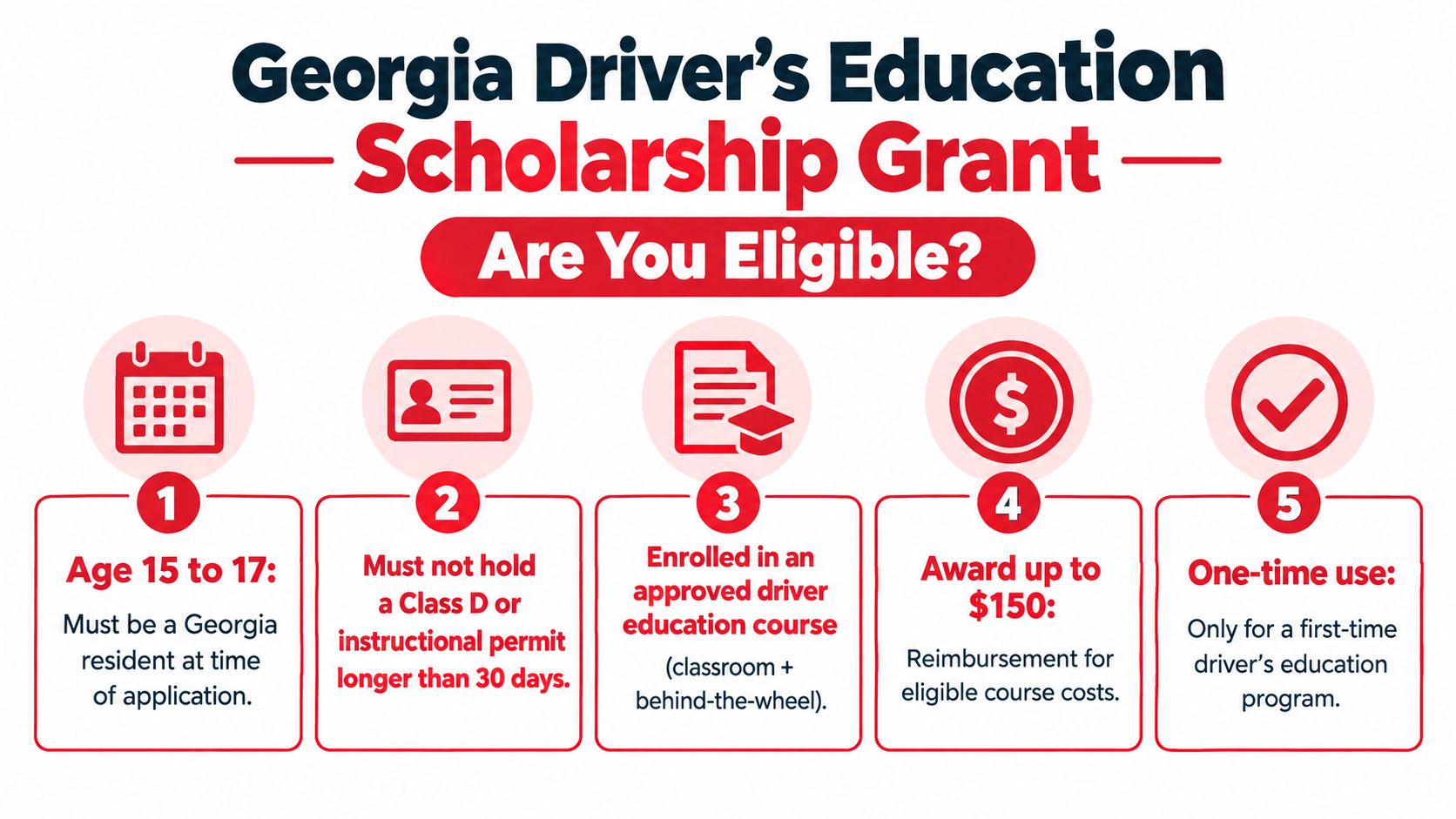
For families who qualify, the scholarship can remove a major barrier at the point where classroom education and professional lessons need to begin. The teen still completes the same training pathway, but the funding connects eligibility with a scheduled course and instructor-led practice.
Your Next Steps to Get Behind the Wheel
Start with the course format your teen can complete consistently. Choose in-person instruction for a structured classroom experience, asynchronous online learning for flexible pacing, or live virtual instruction for real-time teaching from home.
Next, schedule the professional behind-the-wheel requirement and consider a package that adds practice for parking, merging, intersections, and road-test confidence. At the same time, begin the separate 40-hour supervised driving log with a parent or qualified adult, including the required night practice.
Finally, confirm the permit timeline, ADAP completion, documents, and road-test eligibility before booking the exam. Use the relevant A-1 pages for course options, driving lessons and packages, scholarship information, and road-test assistance. A clear checklist turns the process into manageable appointments, practice sessions, and records.
A-1 Driving School offers Joshua's Law education, online and virtual course options, professional driving lessons packages, scholarship enrollment support, and road-test preparation for Georgia families. Visit A-1 Driving School to choose a course, schedule lessons, and take the next step toward a confident Class D license.