

A lot of Georgia families hit the same moment at about the same time. A teen is excited to start driving. A parent starts searching. Then the questions pile up fast. Do we need a permit first? What counts for Joshua’s Law? Should we choose online class, school class, or driving lessons first?
That confusion is normal.
If you're trying to figure out how to enroll in drivers ed in Georgia, the easiest path is to treat it like a checklist, not a mystery. Start with eligibility. Choose the right training format. Register correctly. If cost is a concern, look at the state scholarship grant before you pay. Then line up the driving lessons and road test plan so your teen keeps moving forward instead of stalling out halfway through.
Your Guide to Getting Started with Georgia Drivers Ed
A common scenario goes like this. Your teen just got serious about driving, or maybe they’re close to permit age and already asking when they can start. You search online and find a mix of state rules, school options, online courses, and lesson packages. Some of it sounds similar. Some of it doesn’t.
That’s where families usually get stuck.
The most important thing to understand early is that Georgia teen driver education isn’t just “take any class and drive with a parent.” For many teens, the path ties directly to Joshua’s Law, permit status, and a specific classroom plus driving requirement. Once you know that structure, the rest gets much easier.
Parents usually don’t need more information. They need the right order.
A simple way to think about the process is this:
- Check that your teen is eligible
- Choose the class format that fits your schedule
- Enroll with the correct student information
- Arrange the driving portion
- Use the scholarship grant if your family qualifies
- Prepare for the road test, not just the class
The part that often gets overlooked is the driving lessons package. Families tend to focus on the classroom requirement first, but true confidence-building happens in the car. A teen can complete the academic part and still feel nervous about lane changes, turns, parking, traffic judgment, or the road test itself. That’s why it helps to choose a program that doesn’t stop at the online login screen.
Confirming Your Eligibility for Georgia Drivers Ed
Before you pay for anything, make sure your teen is ready to enroll under Georgia’s rules.
Start with Joshua’s Law
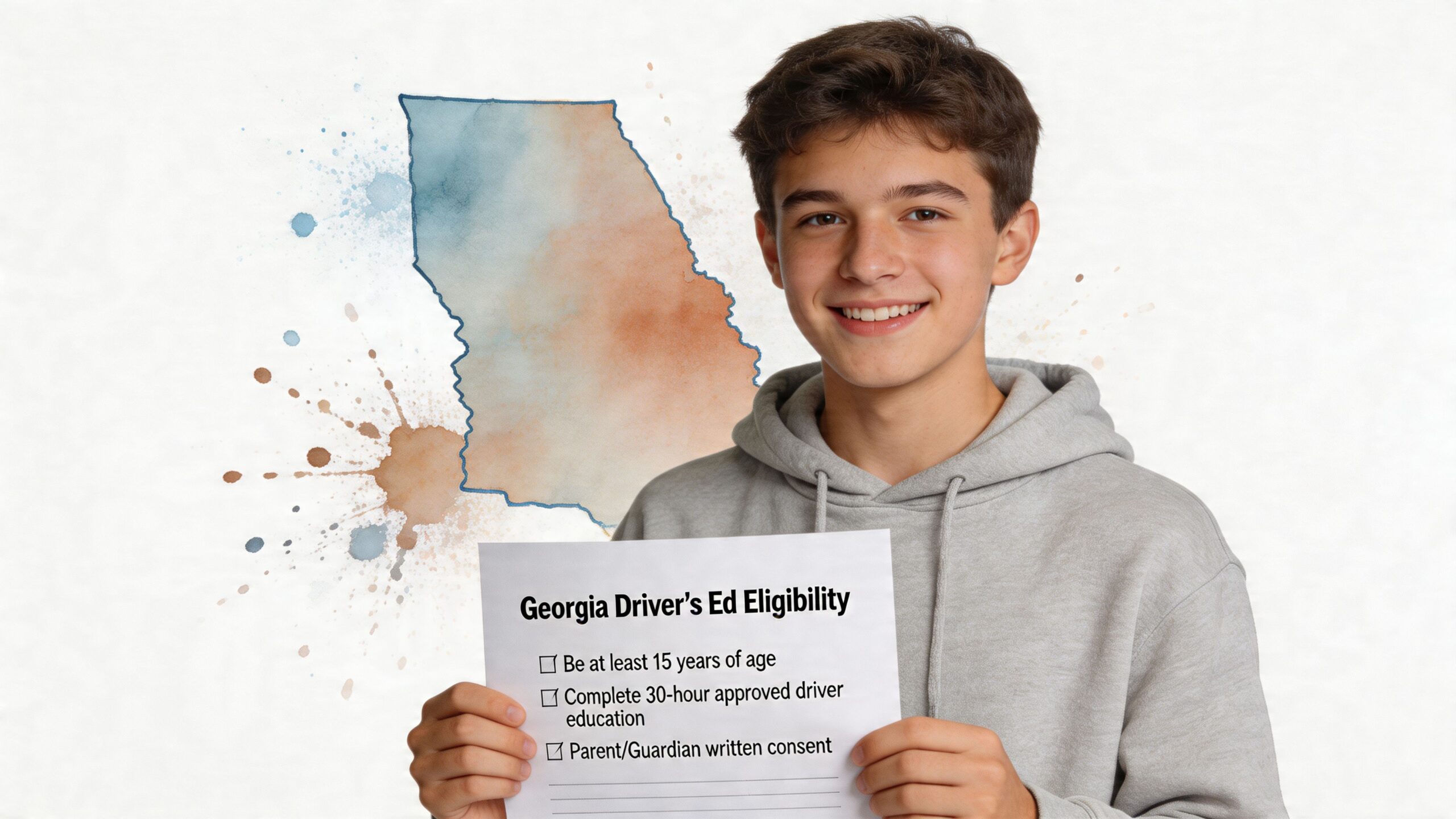
In Georgia, Joshua’s Law is the rule that shapes the teen drivers ed process. It was passed in 2005 and created the 30/6 curriculum standard, meaning 30 hours of classroom instruction and 6 hours of behind-the-wheel training for teens under 18. Teens ages 15 to 17 must first have a valid Georgia Instructional Permit before enrolling, and they can take the course through school districts or authorized driving schools, according to the Georgia Joshua’s Law requirements overview.
That’s the foundation.
If your teen doesn’t have the permit yet, stop there and handle that first. Enrollment gets easier once that piece is in place.
The quick eligibility checklist
Use this before signing up:
- Age check: Your teen should be in the age group that qualifies for Georgia teen drivers ed under Joshua’s Law.
- Permit check: They need a valid Georgia Instructional Permit before enrollment.
- Program check: The course must satisfy the 30 classroom hours plus 6 driving hours requirement.
- Provider check: The school or program should be authorized to provide Joshua’s Law training.
If your family is also asking licensing questions beyond enrollment, this guide on what you need to get your license at 16 helps connect the education requirement to the bigger Class D licensing timeline.
Practical rule: Don’t register first and hope the documents are fine later. Check the permit, student name, and age details before you choose the class.
Where families usually get confused
The biggest misunderstanding is thinking the classroom and driving portions are interchangeable with casual practice at home. They aren’t. Parent-supervised practice matters, but it doesn’t replace the professional training requirement built into Joshua’s Law.
Another point of confusion is timing. Some parents want to wait until their teen feels “more ready” before enrolling. That can work, but it can also create unnecessary delay if your teen already has the permit and is eligible. When the paperwork is ready, starting the course often creates momentum.
A final issue is assuming every school pathway looks the same. Georgia teens may enroll through high schools, online providers, or driving schools, but the right fit depends on how your family wants to handle class time, driving lessons, and scheduling.
Selecting the Right A-1 Program for Your Needs
A lot of parents reach this point and ask the same question: “We know our teen can start. What exactly should we sign up for?”
That is the right question. Choosing the program is less about picking a class name and more about matching the course to your teen’s habits, confidence level, and schedule. The easiest path is the one your teen will successfully complete, with the right amount of support behind the wheel.
Start with the classroom piece
For many Georgia families, the first decision is simple. Does your teen learn better with a fixed class time, or do they do better working independently at home?
Some students like the rhythm of an in-person classroom. They show up, listen, ask questions, and stay on track because the structure is built in. Other teens have packed weeks with school, sports, work, or family responsibilities. For them, an online option often fits better because they can complete the required coursework in smaller chunks.
If you are weighing flexibility against structure, this guide to online driver education in Georgia can help you decide which format fits your family.
A good comparison is school itself. Some teens thrive in a traditional classroom. Others do just as well, or better, when they can work at their own pace and return to a lesson when they need a second pass.
Then decide how much road training your teen needs
Generic enrollment guides often stop too early. They explain the Georgia requirement, but they do not help families choose the right level of driving practice after the coursework.
At A-1, that choice matters because the right package can make the whole process feel much more straightforward.
A teen who is calm, attentive, and already getting steady supervised practice at home may only need the required education course plus a clear plan for next steps. A different teen may know the rules perfectly and still tense up at four-way stops, left turns, lane changes, or busy Atlanta traffic. That student often benefits from professional lessons sooner rather than later.
Here is a practical way to sort the options:
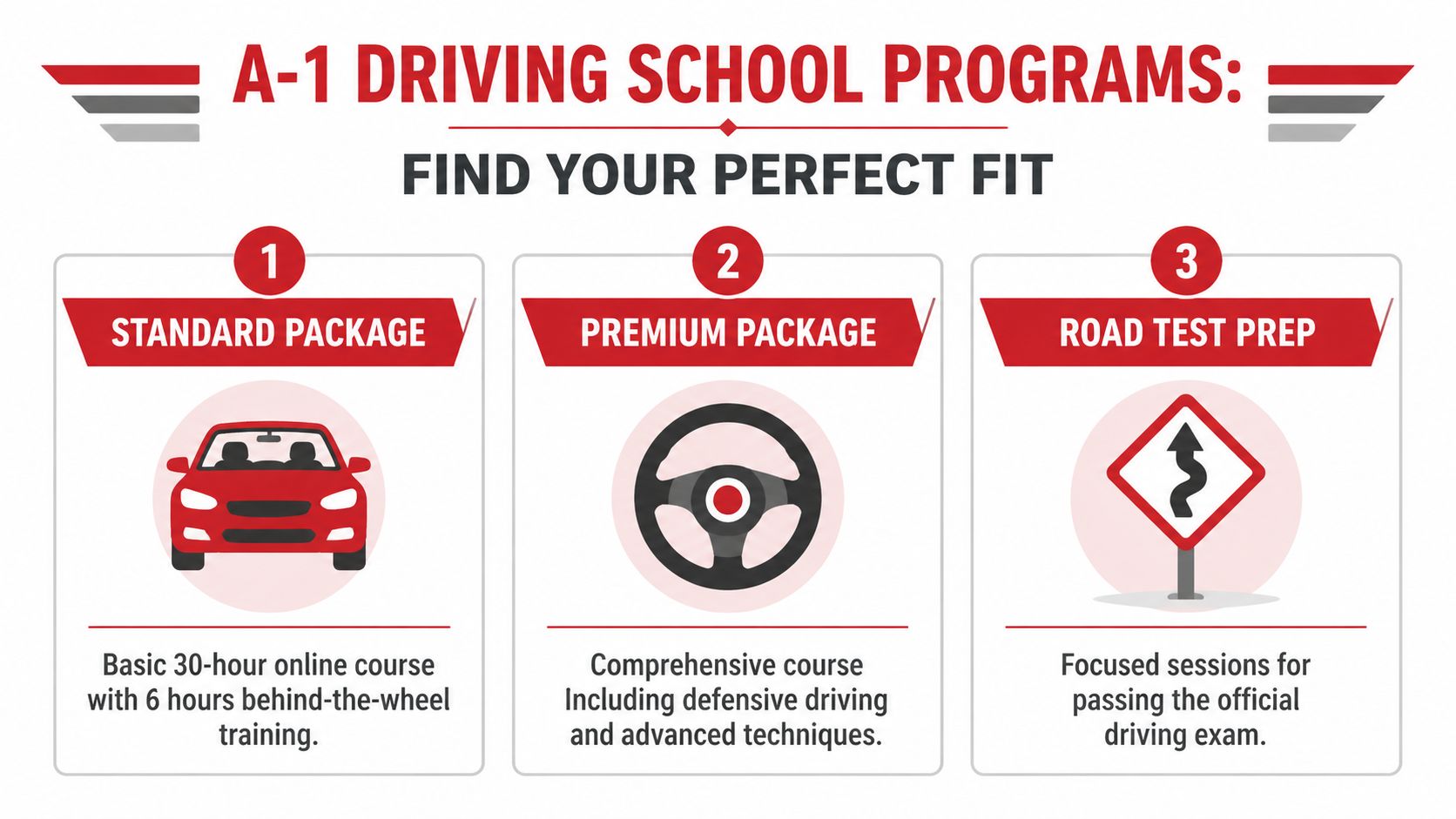
| Program type | Best fit for | Main benefit | Keep in mind |
|---|---|---|---|
| Online Joshua’s Law course | Teens with busy schedules who work well independently | Flexible pacing | They need to stay consistent and finish the lessons |
| In-person classroom course | Teens who focus better with live instruction and routine | Built-in structure | Class times are less flexible |
| Driving lessons package | First-time drivers, nervous drivers, or teens with skill gaps | Guided road practice with an instructor | Lesson times should be booked in advance |
| Road test prep | Teens who are close to the driving test | Targeted practice for test-day skills | It works best once basic driving habits are already in place |
How to tell which package fits
Parents sometimes ask whether driving lessons are really necessary if they are already practicing with their teen. In many cases, yes, they help a lot.
Home practice teaches repetition. Professional lessons teach correction.
That difference is easy to miss until a parent realizes they have been repeating the same reminder for weeks. An instructor can spot patterns quickly, explain them clearly, and give the teen a chance to reset before those habits stick.
A lesson package is often a strong fit if your teen:
- gets anxious in traffic or at intersections
- avoids lane changes, merging, or parking practice
- understands the rules but struggles to apply them calmly
- argues with a parent during practice and stops learning well
- feels almost ready for the road test but still looks unpolished
The course teaches Georgia driving rules. The lessons teach how to apply those rules in real traffic, with judgment and control.
A-1 offers a more direct path than a generic provider
Some schools only give you the classroom requirement and leave the rest for you to piece together. A-1 gives families a clearer path by offering the Joshua’s Law course, driving lesson packages, and road test preparation in one place.
That matters for Georgia families because enrollment is rarely just about checking a box. Parents are usually trying to answer three questions at once. How does my teen meet Joshua’s Law? Can we use scholarship funding if we qualify? What is the simplest way to move from coursework to actual driving readiness?
Choosing a program with those pieces already connected saves time and reduces confusion.
Choosing the right fit for your teen
If your teen is organized and self-directed, the online course is often the easiest starting point.
If your teen learns best with a teacher and a schedule, the classroom route may be the better match.
If your teen is hesitant behind the wheel, brand new to traffic, or close to the test but still uneven, adding driving lessons usually gives the most practical support. It improves skill, lowers family stress, and helps your teen feel more prepared before test day.
A Step-by-Step Guide to A-1's Online Enrollment Process
The online registration part is usually easier than parents expect. Most mistakes happen because families rush through the account details or choose the wrong course format.

The cleanest way to register
Follow the steps in order:
- Go to the school website and find the enrollment area for driver education.
- Choose the correct course type. If your teen needs the Joshua’s Law academic portion, select the 30-hour online driver’s education course or the classroom equivalent.
- Enter the student’s information carefully. Families frequently mix up parent and teen details during this step. Use the student’s legal information where the form asks for the student.
- Review the program details before checkout. Confirm whether the package includes only the classroom portion or also includes driving lessons.
- Complete payment or apply scholarship instructions if you already have grant approval.
- Save the confirmation email so you can log back in, track progress, and schedule the next steps.
If your family is still deciding whether an online format makes sense, this page on what online drivers education is gives a useful overview before you register.
Where enrollment errors happen
Most issues come from one of these:
- Wrong course selected: A family wants Joshua’s Law but accidentally registers for something else.
- Student name mismatch: The permit name and course enrollment name should match.
- Assuming lessons are automatic: In many cases, the classroom portion and driving lesson scheduling are separate steps.
- Not saving login details: That creates frustration later when it’s time to track course progress.
If you’re enrolling a teen, pause at the checkout screen and confirm exactly what’s included. “Drivers ed” can mean classroom only, driving only, or a bundled package.
What to have ready before you click enroll
Keep these nearby:
- Student permit information
- Parent contact information
- Payment method or scholarship award details
- A clear idea of whether you want online study, in-person class, driving lessons, or a package
That small bit of preparation saves time and usually prevents the back-and-forth that makes enrollment feel harder than it really is.
Funding Your Driver's Education The Scholarship Grant and Other Options
Cost is one of the biggest reasons families delay starting. That’s exactly why the Georgia Driver’s Education Grant Scholarship Program matters so much.

What the Georgia scholarship grant covers
The Georgia Driver’s Education Grant Scholarship Program provides full funding for the 30/6 course for eligible Georgia residents ages 15 to 17. Applications are due on the last day of every month, awards are emailed on the 1st, and once awarded, students have 30 days to choose an authorized provider and 180 days to complete the course, according to the Georgia Driver’s Education Grant Scholarship Program details.
For a lot of families, that changes the decision from “Can we afford to start now?” to “Why would we wait?”
Who should apply
The grant is worth checking if your teen:
- Lives in Georgia
- Is between 15 and 17
- Has a valid instructional permit or driver’s license
- Needs help covering the cost of the 30/6 requirement
The program also uses priority levels. Some applicants receive priority because of family connection to public safety or military line-of-duty loss, some based on financial need, and others through the general pool. If your family might qualify, it’s smart to apply instead of assuming you won’t be selected.
What to do after the award email arrives
This is the part families often need help with.
When the scholarship approval email comes in, don’t let it sit in an inbox. Use it quickly. Your redemption window matters.
A simple post-award checklist:
- Open the email and locate the award information
- Note any redemption code or instructions
- Choose your authorized provider within the allowed time
- Register for the correct 30/6 program
- Keep a copy of the confirmation and completion timeline
If you want guidance specific to this process, the Georgia Driver's Education Grant Scholarship Program page explains how families can move from award notice to active enrollment.
Don’t wait until the end of the month after approval. Choose your course and secure your spot while the grant timeline is still fresh.
If you aren’t using the grant
Some families will pay directly, especially if they want to move quickly or don’t meet the grant rules. In that case, the key decision isn’t only price. It’s value.
Compare based on questions like these:
| Question | Why it matters |
|---|---|
| Does the package include the required driving hours? | Some options cover only the academic portion |
| Can we add extra lessons? | Helpful for nervous beginners or test prep |
| How flexible is scheduling? | Important for school, sports, and work calendars |
| Is road test help available too? | Makes the full path easier to manage |
Families often save themselves stress by choosing a package that covers both compliance and skill-building instead of piecing the process together one item at a time.
Your Roadmap After Enrollment Scheduling Lessons and Acing the Road Test
Once enrollment is finished, your focus shifts from paperwork to practice.
For most teens, driving starts to become real. The classroom requirement gives them the rules. The lessons turn those rules into habits.
Scheduling the driving portion
As soon as the academic side is underway or complete, schedule the behind-the-wheel sessions as early as you can. Families who wait too long often end up trying to fit lessons around a crowded school calendar, sports schedule, and testing timeline.
When you book lessons, think beyond “first available.” Choose times when your teen will be alert, not rushed, and able to absorb feedback. A lesson after a stressful school day isn’t always the most productive choice.
Bring the basics to the first session:
- Valid permit
- Any required confirmation details
- Comfortable shoes and glasses if needed
- A calm mindset and willingness to ask questions
What makes lesson packages useful
The required driving hours are important, but many teens benefit from more guided practice after that requirement is met. A lesson package can help bridge the gap between legal completion and real confidence.
That extra coaching is often where students improve on:
- Parking consistency
- Turning judgment
- Lane position
- Traffic scanning
- Test-day routines
A parent can absolutely help with practice. But a professional instructor often spots patterns parents miss because they’ve seen the same beginner mistakes over and over.
The goal isn’t just finishing the course. The goal is reaching the point where your teen makes calm, repeatable driving decisions.
Preparing for the road test
A lot of teens think, “I’ve done the class, so I’m ready.” Sometimes that’s true. Often, they still need focused road test preparation.
The road test is easier when the student already knows the vehicle, the testing expectations, and the sequence of basic maneuvers they’ll be asked to perform. That’s why many families look for road test preparation and road testing services as the final step.
If your teen tends to get nervous during evaluations, practice under test-like conditions before the actual exam. That includes simple things many new drivers overlook, such as complete stops, smooth lane changes, controlled turns, and listening carefully to directions instead of rushing.
Frequently Asked Questions for Georgia Parents and Teens
Can my teen take the online class with one provider and do the driving lessons somewhere else
Yes, families often split those pieces. The main thing is making sure the course and driving instruction meet Georgia’s requirements and that your records are organized. Before enrolling separately, confirm what each provider includes so you don’t pay twice for something you already have.
How can parents keep track of progress in an online course
Start by saving the login information, confirmation email, and any completion notices. Then set a simple study routine. Parents usually don’t need to hover, but they should check that the teen is moving through the coursework and not waiting until the last minute.
We got the scholarship approval email. What should we do first
Open the email right away, read the redemption instructions carefully, and identify any code or deadline attached to the award. After that, choose the correct Joshua’s Law course and complete the registration steps while the approval window is still open.
What if we need to reschedule a driving lesson
That depends on the school’s scheduling policy, so check the lesson confirmation details as soon as you book. Don’t wait until the day of the lesson to read the rules. If a schedule conflict seems likely, contact the office early.
Should we choose the cheapest course or the most complete package
That depends on your teen. If they’re organized, calm behind the wheel, and already getting steady parent practice, a basic package may be enough. If they’re nervous, inconsistent, or close to the road test without much confidence, a package with more driving support often makes the process smoother.
If you're ready to turn the checklist into action, visit A-1 Driving School to review Georgia driver education courses, Joshua’s Law options, driving lesson packages, scholarship grant information, and road test services.