A teen is ready to drive home after dark. The windshield carries a faint glare, the headlight settings are unfamiliar, and the driver has practiced only in daylight. That first nighttime trip can feel manageable until an unlit vehicle, sharp curve, pedestrian, or animal appears outside the narrow area illuminated by the headlights.
Safer nighttime driving starts before the car moves. These night driving safety tips follow a practical progression, from preparing the vehicle and managing visibility to controlling speed, recognizing fatigue, anticipating hazards, and deciding when a trip should wait. For Georgia teens and parents, the path also includes supervised practice, Joshua's Law education, online course options, customized driving lessons, driving lessons packages, scholarship access, and road-test preparation. A-1 Driving School offers in-person and online Driver's Education, driving lessons, and road-testing assistance for families building confidence one step at a time.
1. Adjust Your Headlights and Use High Beams Strategically
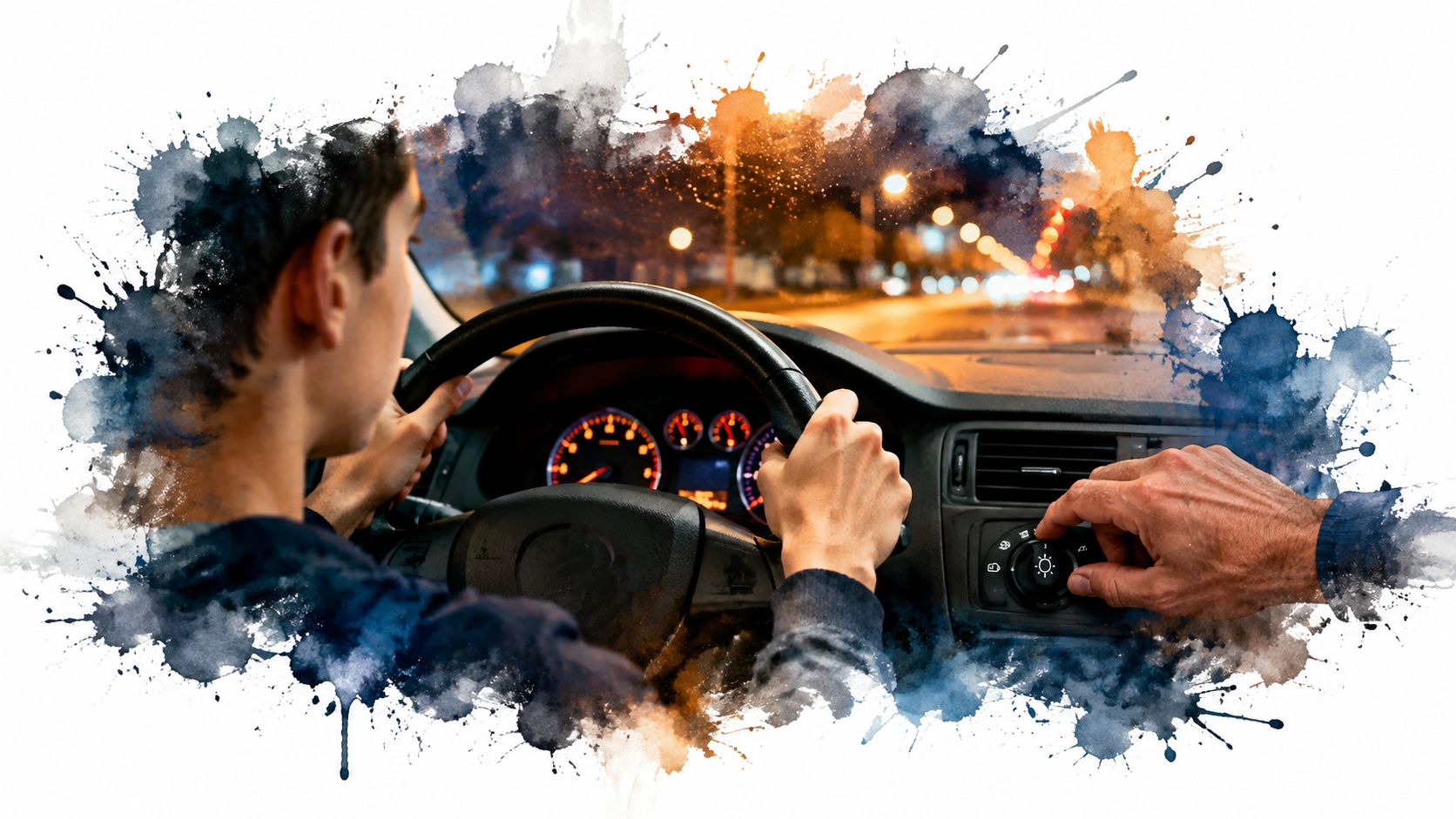
Headlights only help when they're aimed correctly and used with judgment. A beam pointed too high can distract other drivers, while a beam aimed too low can leave a rural road, shoulder, or curve poorly illuminated. Before a teen begins regular night practice, check that both headlights work, the lenses are clean, and the beams appear balanced.
Georgia's roads change quickly. On a rural highway, high beams can help reveal a deer near the shoulder or an object ahead when traffic is sparse. On an Atlanta street, low beams are usually the better choice around intersections, businesses, pedestrians, and frequent opposing traffic. The driver should switch back to low beams whenever another vehicle approaches or when following a vehicle closely.
Practical rule: Use the brightest setting that helps you see without interfering with someone else's vision.
The guide to when you should have your brights on can help new drivers understand the difference between useful illumination and careless glare. Automatic high-beam systems may assist in newer vehicles, but the driver still needs to monitor traffic and take control when conditions change.
Use this quick pre-drive check:
- Clean the lenses: Remove dirt and film that can reduce useful light.
- Check alignment: Ask a qualified technician to inspect the aim if the beams seem uneven or point into mirrors.
- Use high beams selectively: Rural roads and lightly traveled highways may justify them, but urban streets often do not.
- Avoid unverified upgrades: Any replacement bulb or headlight system should be compatible with the vehicle and properly aimed.
A silver SUV on a dark Georgia road may encounter wildlife before the driver sees the surrounding forest clearly. Headlight technique gives the driver more information, but it never replaces a speed that allows time to respond.
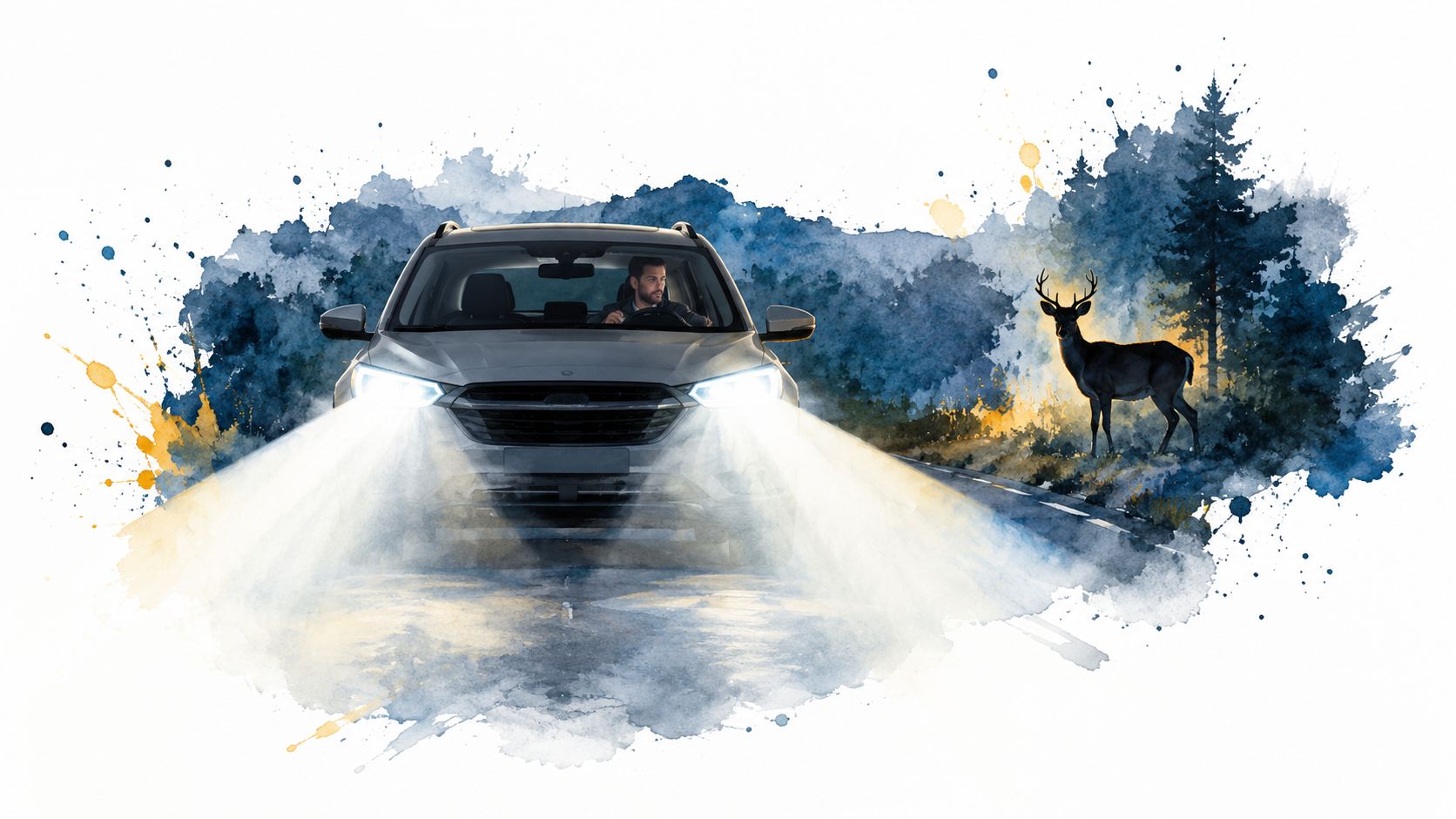
Drivers can also benefit from practicing beam changes during supervised lessons instead of learning the controls during a stressful trip.
2. Reduce Speed and Increase Following Distance
Darkness reduces the amount of road a driver can evaluate at once. Even when the lane appears clear, a pedestrian, disabled vehicle, fallen branch, or animal may remain outside the headlight beam until the car is close. Lowering speed gives the driver more time to identify the hazard, choose a response, and stop smoothly.
Night travel represents about 25% of vehicle miles traveled, yet 46% of driving fatalities occur at night, according to the Federal Highway Administration's nighttime safety information. The National Safety Council also summarizes the broader pattern as about one quarter of driving and half of traffic deaths occurring at night in its night-driving safety guidance. Those figures support a simple training priority, speed and space matter more after sunset.
A teen practicing near Atlanta's I-75 corridor may need to ease off the accelerator when traffic density, construction, lane changes, or limited sight distance make the road harder to read. On Georgia mountain roads, curves and elevation changes can conceal hazards. In residential areas, a person may step from a dark driveway or between parked vehicles.
Build a larger space cushion
Use a consistent visual count rather than guessing. Choose a fixed roadside object, such as a sign or utility pole, and begin counting when the vehicle ahead passes it. If your car reaches the object before you finish a comfortable count, increase the gap.
- Slow for visibility: Choose a speed that matches the road, weather, lighting, and traffic.
- Watch the speedometer: Drivers can gradually accelerate when the road feels empty.
- Leave room to brake: Following farther back reduces the need for sudden decisions.
- Respect posted limits: A speed limit is not a promise that the road is safe at that speed under every condition.
A driving lesson can turn this into a repeatable skill. An instructor can ask a student to identify the sight distance, select a safe pace, and explain why the following gap needs to change.
3. Manage Fatigue and Recognize Drowsy Driving Warning Signs
A late drive home can feel routine, yet fatigue can change judgment before a driver notices it. Heavy eyelids, repeated yawning, trouble focusing, lane drifting, missed turns, and poor memory of the last part of the trip are signals to stop.
A college student traveling between Georgia campuses, a shift worker leaving an overnight job, or a teen returning from a late activity may misjudge alertness because the route is familiar. Familiar roads still require the same attention after dark.
Make the decision before departure
Set the rule while parked, before tiredness affects judgment: if the driver feels sleepy, the trip waits, a parent drives, or another ride is arranged. Opening a window, increasing the music, or relying on coffee does not make an unsafe driver ready for a demanding trip.
During supervised practice, parents and instructors can help teens identify early changes in attention. The student should stop in a safe, legal location, contact a parent or trusted person, and arrange another ride when needed. Continuing toward home is not a reliable plan once drowsiness begins.
Use this quick readiness check:
- Check alertness: Notice sleepiness before turning the key.
- Review the route: Know the destination and planned stopping points before departure.
- Consider the timing: Postpone optional trips when the driver may be tired.
- Plan a backup: Agree that calling a parent or trusted adult for a ride is always acceptable.
- Stop early: Act at the first warning sign, before drifting or missed turns develop.
- Treat sleep as preparation: Rest belongs on the vehicle-readiness checklist.
The A-1 Driving School resource on drowsy driving explains why recognizing fatigue early matters. A short break may provide time to reassess, but it does not replace adequate rest or a different driver. For Georgia teens preparing through Joshua's Law education, online coursework, driving lessons, or a road-test package, this decision rule is worth practicing alongside vehicle checks and visibility habits. It supports safer supervised sessions and helps families decide when night practice should wait.
4. Minimize Distractions and Avoid Night Driving Impairments
A notification sounds as a teen leaves a well-lit Atlanta street for a darker road. Reaching for the phone, adjusting the dashboard, or responding to a passenger can occupy the driver's attention just as a cyclist, pedestrian, or vehicle becomes harder to see. Night driving requires the roadway scan to remain the priority.
Prepare before shifting into drive. Enter the destination, set the mirrors and seat, choose music, adjust climate controls, and secure loose items while parked. Activate the phone's driving mode, silence notifications, and place the device out of reach.
Make stopping the default
A route change, passenger request, warning light, or spilled drink can wait until the vehicle is stopped in a safe, legal location. A red light is not always enough. Nearby pedestrians, cyclists, and moving traffic still require attention, so handling the phone or another task should happen only after parking safely.
Use this pre-trip agreement:
- Silence the phone: Turn on “Do Not Disturb While Driving” or a comparable setting.
- Finish personal tasks: Eat, groom, and secure belongings before departure.
- Set passenger expectations: Keep conversation calm and avoid requests that divide attention.
- Check medication warnings: Read the label and ask a healthcare professional about driving concerns when needed.
- Avoid alcohol and drugs: Arrange a sober ride instead of driving after use.
A teen preparing through Joshua's Law education, an online course, driving lessons, or a lesson package can rehearse this routine during supervised practice. Parents can coach one rule: eyes scan the roadway, hands stay ready for steering, and every other task waits until the car is safely stopped.
Make “call me for a ride” a family safety policy, not a punishment trigger. That gives a new driver a clear choice if impairment, distraction, or an unexpected problem makes continuing unsafe. It also supports road-test readiness, because controlled attention matters as much as vehicle control.
5. Use Proper Lighting Techniques and Understand Visibility Limitations
A Georgia road can change quickly after sunset. Streetlights around an Atlanta shopping district may make lane markings easy to read, while a wooded rural road can hide a curve, animal, or pedestrian beyond the headlight beam. Give your eyes time to adjust when moving between those settings.
Before practice, complete a visibility check. The A-1 guide to driving safely at night recommends keeping the glass clean, checking exterior lights, and reducing distracting interior brightness. Clean the windshield on both sides, since haze and streaks scatter light. Set the dashboard display low enough that it does not compete with the roadway, and avoid staring into oncoming headlights.
Headlight performance also has limits. The Insurance Institute for Highway Safety on headlights reports that better-rated headlights are associated with fewer nighttime single-vehicle and pedestrian crashes than poor-rated headlights. The practical lesson is simple: improve the light and visibility features you can control, then adjust speed and attention to what remains hidden.
Build a visibility routine
When opposing headlights create glare, look toward the right edge of your lane while checking that the vehicle remains centered. Reflective clothing and road markings can help others see, but dark clothing, unlit objects, and poorly marked edges may blend into the background.
Use this supervised-practice checklist:
- Check every light: Test headlights, taillights, brake lights, and turn signals.
- Clean all glass: Remove fingerprints, residue, and haze before leaving.
- Read beyond the beam: Treat a dark curve, hill, or shoulder as a place where hazards may be concealed.
- Choose readable routes: Begin on streets with clear markings and familiar intersections before practicing darker roads.
- Address vision concerns: Persistent halos or blur call for advice from an eye-care professional.
A learner completing Joshua's Law education, an online course, or driving lessons can have a parent ask for a visibility check before each session. This habit supports later road-test preparation and helps connect vehicle setup with sound decisions.
For drivers who notice persistent halos or blurry vision, 2026 astigmatism glasses advice may offer general guidance. Eyewear does not replace suitable lighting, safe speed, or professional vision care.
6. Anticipate Hazards and Practice Defensive Night Driving Strategies
A dark shoulder, a gap between parked cars, or a vehicle without visible lights can hide the next hazard. Night driving improves when the learner reads these clues early instead of reacting after danger enters the headlights.
Use Georgia examples to make the lesson concrete. Around Atlanta entertainment districts, pedestrians may cross near restaurants, rideshare pickups, or poorly lit crossings. On rural Georgia roads, wildlife can appear from wooded edges. Before reaching each area, a parent or instructor can ask, “What could change here, and where would you create space?”
Turn observation into a coached decision
Give the learner a simple cycle to repeat:
- Scan: Look well ahead, check mirrors, and notice vehicles beside or behind the car.
- Predict: Identify a possible pedestrian, animal, sudden stop, turn, or unlit vehicle.
- Prepare: Ease off the accelerator, hold a steady lane position, and keep an escape area open.
- Reassess: Update the plan as lighting, traffic, intersections, and road edges change.
For example, a dark wooded shoulder suggests that an animal could enter the lane. The appropriate response is to reduce speed smoothly and preserve space ahead, not to swerve without a clear path. The aim is not perfect guessing. It is avoiding surprises that the road conditions made reasonably foreseeable.
Keep the coaching calm and specific. Ask the student to name the clue, explain the risk, and state the response before the hazard appears. This builds decision-making skills that support Joshua's Law education, an online course, driving lessons packages, and later road-test preparation.
Begin supervised practice on familiar, lower-pressure roads. Change one factor at a time, such as route, traffic level, or darkness, and expand only after the learner maintains steady control. A parent can record situations that caused hesitation, while an instructor can revisit them in a safer setting.
Route planning also needs judgment. Even drivers researching scenic trips such as the best driving roads in Wales should remember that familiarity reduces uncertainty, but it does not remove changing traffic, pedestrians, animals, or limited sight distance.
7. Maintain Vehicle Condition and Prepare for Night Driving Challenges
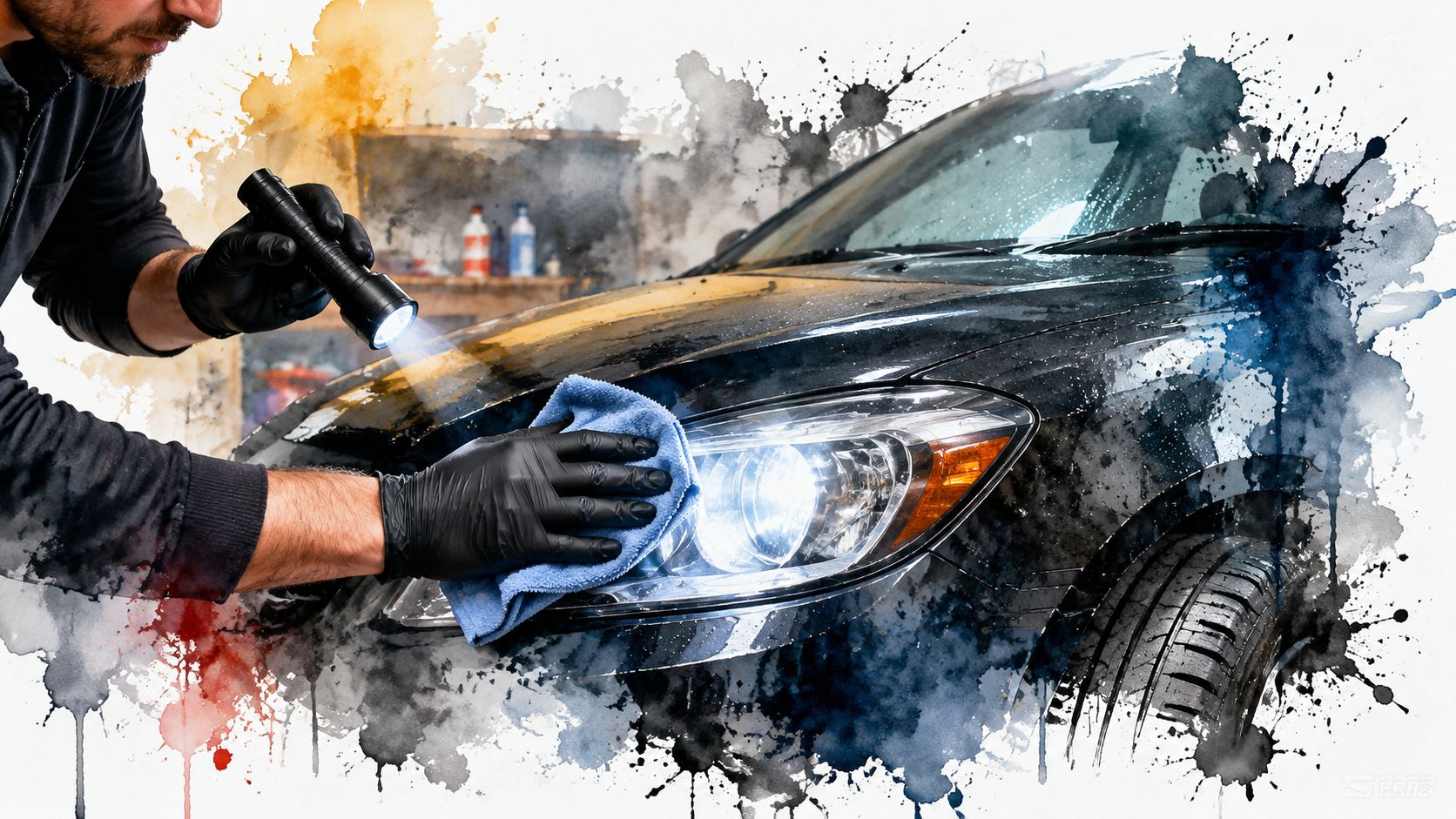
Night practice should begin with a vehicle check, not the ignition. In daylight, have the teen walk around the car and identify anything that could affect visibility or control. A failed brake light, worn wiper, dim bulb, or damaged tire is easier to address before the lesson than beside an unfamiliar road after dark.
Use this quick inspection as a teaching exercise:
- Lights: Test the headlights, taillights, turn signals, and brake lights. Clean cloudy headlight lenses and both sides of the windshield.
- Wipers and glass: Confirm that the wipers clear water without broad streaks. Rain, glare, and reflections can hide lane markings and hazards.
- Tires: Look for visible damage and adequate tread. Low pressure or a damaged tire can change how the vehicle responds.
- Brakes: Notice whether braking feels responsive and predictable. Limited sight distance leaves less time to correct a problem.
- Battery and electrical system: Starting or lighting trouble can leave a driver stranded after dark.
- Cabin controls: Practice locating switches while parked, so the driver does not search for them while moving.
- Emergency supplies: Keep a flashlight, jumper cables, and warning triangles available for a breakdown.
The owner's manual can clarify routine checks, while a qualified service professional should handle technical inspection. A parent can ask the learner to report warning lights, unusual braking, low tire pressure, or changes in headlight performance. If the car feels different, postpone the lesson or choose another vehicle.
A technician can check headlight aim, bulbs, brakes, tires, and wipers when the family is unsure. This connects vehicle care to Georgia road-test preparation, Joshua's Law education, online course options, and driving lessons packages. Families can also ask programs about scholarship access before choosing supervised practice resources.
8. Develop Decision-Making Skills and Know When to Avoid Night Driving
The safest night drive may be the one you postpone. A new driver who feels uncertain, an adult with low-light vision difficulties, or anyone facing unfamiliar roads and worsening weather should decide whether the trip can wait before starting the engine.
Use a simple decision sequence:
- Check the driver. Fatigue, anxiety, illness, or reduced focus means the lesson should stop. Confidence grows from sound choices, not from pushing through discomfort.
- Check the conditions. Rain can turn headlights and streetlights into reflections. Fog can hide lane edges, while unfamiliar roads add navigation demands. If visibility changes sharply, choose a ride, delay departure, or ask a parent to drive.
- Check the purpose. A necessary trip may require a simpler route or an adult passenger. A nonessential trip can wait without creating pressure to continue.
- Set family rules. Parents and teens should agree beforehand when the teen must call for a ride, pull over safely, or postpone travel.
Build experience in stages. Start on a familiar route during early evening with a qualified adult. Add darker roads only after consistent control, then introduce intersections, divided roads, rural segments, and heavier traffic. Treat each stage like adding weight to a balance exercise. If control becomes inconsistent, return to the previous level.
A supervised lesson can reveal whether the learner is ready for more complexity. An instructor can adjust route and pace, while families repeat the same decisions between lessons. This supports Joshua's Law education, online course options, and driving lessons packages without replacing real practice. Families can also ask programs about scholarship access as they plan training and road-test preparation.
Before leaving, ask: Can this driver handle this route, in this visibility, for this purpose, right now? If any answer is uncertain, postpone the drive or choose another driver.
8-Point Night Driving Safety Comparison
| Night Driving Strategy | Implementation complexity | Resource requirements | Expected outcomes | Ideal use cases | Key advantages |
|---|---|---|---|---|---|
| Adjust Your Headlights and Use High Beams Strategically | Low, simple adjustments and switching; automatics available | Vehicle lighting system, occasional alignment/upgrade | Greater long-range illumination and earlier hazard detection | Rural highways, interstates, low-traffic roads at night | Improves visibility, reduces eye strain, detects wildlife/obstacles earlier |
| Reduce Speed and Increase Following Distance | Low–Moderate, habit change required | Time (longer trips), sustained attention | More reaction time; lower collision risk and severity | High-speed roads, poor-visibility conditions, curves and hills | Safer stopping distances; mitigates limited night visibility |
| Manage Fatigue and Recognize Drowsy Driving Warning Signs | Moderate, requires self-monitoring and planning | Adequate sleep, breaks, possible driver swap or naps | Reduced drowsy-driving incidents and improved alertness | Long night trips, shift workers, late-night travel | Prevents microsleeps; preserves judgment and reaction time |
| Minimize Distractions and Avoid Night Driving Impairments | Moderate, behavioral and device controls | Phone settings, pre-trip prep, medication review | Increased focus and fewer distraction-related incidents | Urban driving, teen drivers, passenger-filled trips | Maintains attention; reduces impairment from substances/phones |
| Use Proper Lighting Techniques and Understand Visibility Limitations | Moderate, requires knowledge and some equipment | Reflective gear, eyewear, regular light checks | Better contrast recognition and pedestrian/obstacle visibility | Pedestrian areas, rural roads, drivers with vision concerns | Enhances visibility to others; reduces hidden-hazard risk |
| Anticipate Hazards and Practice Defensive Night Driving Strategies | High, skill development and sustained scanning | Training, practice, heightened mental effort | Improved hazard prediction and avoidance | Unfamiliar roads, rural night driving, late-night traffic | Early hazard recognition; reduces accident likelihood and severity |
| Maintain Vehicle Condition and Prepare for Night Driving Challenges | Moderate, scheduled maintenance and inspections | Time, money for parts/servicing, basic tools | Reliable lighting, traction and braking; fewer mechanical failures | Older vehicles, frequent night drivers, wet or cold nights | Prevents equipment-related crashes; improves overall safety |
| Develop Decision-Making Skills and Know When to Avoid Night Driving | Moderate, judgment training and experience | Supervised practice, alternative transport options | Fewer unnecessary night trips and reduced exposure to risk | New drivers, vision-impaired drivers, adverse weather | Risk avoidance through informed trip planning and restraint |
Turn Night Practice Into License-Ready Confidence
A single successful nighttime trip doesn't prove that a teen is ready for every dark-road situation. Use a gradual process. First, complete the vehicle and visibility check. Then choose a familiar, low-pressure route with a qualified adult, and repeat the practice until the student can manage headlights, speed, following distance, lane position, scanning, and route decisions without constant prompting.
Parents should coach with specific questions instead of general warnings. Ask, “What can you see beyond the headlight beam?” or “What would make you slow down here?” If the learner notices a dark shoulder, an approaching vehicle, a confusing intersection, or growing fatigue, treat that observation as progress. Good night-driving judgment includes recognizing limits and choosing not to continue when conditions are unsuitable.
Georgia families also need to connect practice with licensing requirements. Georgia DDS explains Joshua's Law requirements for 16- and 17-year-olds seeking a Class D license. Approved paths include 30 hours of classroom instruction, 6 hours behind the wheel, and 40 hours of supervised driving with a parent or guardian, including 6 hours at night, along with combinations involving 30 hours of online instruction, school-based behind-the-wheel training, or parent-taught behind-the-wheel training. Night practice should therefore be planned as part of the learner's broader education, not left until the week before testing.
A-1 Driving School gives families several ways to organize that path. Teens can choose instructor-led or online Driver's Education options, then add customized driving lessons that focus on the areas they find difficult, including nighttime visibility, speed control, intersections, and hazard scanning. Driving lessons packages can provide a more organized schedule for repeated practice instead of relying on occasional trips with a parent.
The school also provides Georgia road-test preparation and testing assistance. Road-test eligibility includes a valid Georgia Non-Commercial Learner's Permit and a passing result on the Driver's License knowledge exam, while the test vehicle must have valid registration and a license plate or acceptable temporary dealership documentation with proof of purchase within the required period, as Georgia DDS road-test information explains. Preparing the vehicle and paperwork early helps the student focus on demonstrating safe control.
Families who need financial support can review the Georgia Driver's Education Grant Scholarship Program rules. The statewide program supports a driver's education course consisting of 30 hours of classroom training and 6 hours of behind-the-wheel training, with priority tiers that include children or dependents of Georgia first responders killed or disabled in the line of duty, children or dependents of U.S. military members killed in action, and applicants in state custody under DFCS care.
Night driving safety is a skill set built through preparation, instruction, and repetition. Choose the training format that fits your schedule, practice in conditions that match your current ability, and use professional feedback when a learner needs more support before the road test. Explore A-1 Driving School's Georgia driver-training options to compare Driver's Education, online courses, customized driving lessons, driving lessons packages, scholarship information, and road-test assistance.
A-1 Driving School offers Georgia Driver's Education in person and online, Joshua's Law course options, customized driving lessons, driving lessons packages, and road-test preparation and testing assistance for teens and adults. Visit A-1 Driving School to choose a training pathway, review scholarship access, and schedule the practice that can turn nighttime driving skills into license-ready confidence.