
You searched online driving course ny because you want a simple answer. Either you need the course that gets you to a road test, or you need the one that helps with points and insurance. That part is straightforward.
What gets confusing is that many drivers start with a New York search, then realize they need help in Georgia, or they're moving, or they want a complete path that includes lessons and a road test instead of just another online module. That's where people waste time.
Here's the clean version. First, understand what New York offers. Then, if you're driving in Georgia, follow Georgia's system and stop trying to force New York rules onto a Georgia license process.
Understanding New York Online Driving Courses
In New York, online driving courses usually fall into two separate buckets. Mixing them up causes most of the frustration.
The first is the 5-Hour Pre-Licensing Course. That course is for new drivers who need the required education before moving closer to the road test process. The second is PIRP, short for Point and Insurance Reduction Program, which is for licensed drivers who want point reduction eligibility and an insurance discount.
The New York course most licensed drivers mean
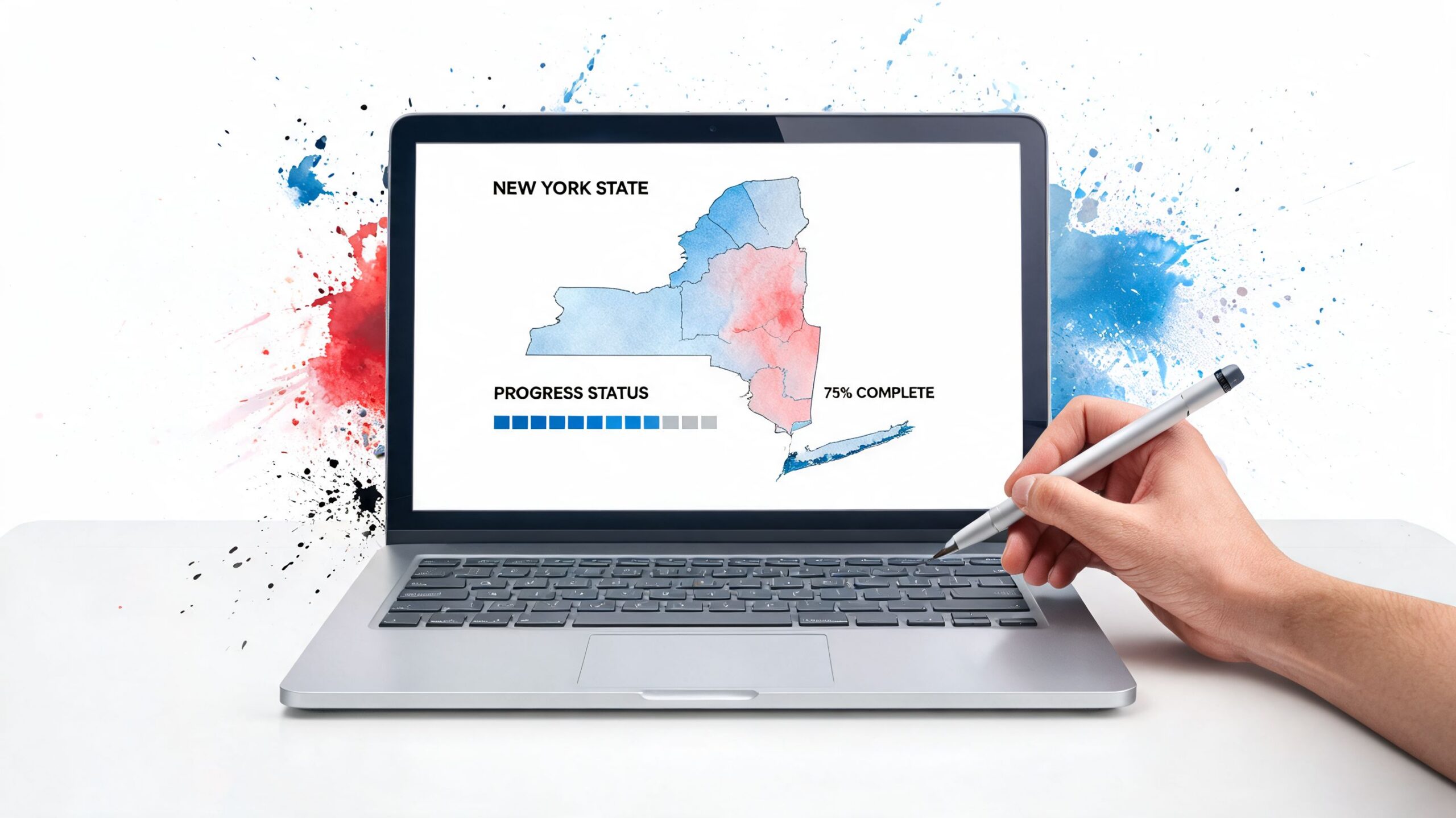
If someone says they want an online driving course ny, they often mean PIRP. New York requires approved PIRP courses to provide 320 minutes of instruction, and finishing one can qualify a driver to reduce up to 4 points on a license and receive a mandatory 10% auto insurance discount. Those benefits apply every 36 months when the course is completed again, according to the New York Safety Council's PIRP overview.
That's useful if you already have a license and you want to clean up your record or lower insurance costs.
The course new drivers ask about
New drivers usually mean the 5-Hour Pre-Licensing Course, not PIRP. Many people make the mistake of picking the wrong course, then wonder why nothing moves forward.
Practical rule: If your goal is to get licensed, make sure you're enrolling in pre-licensing education. If your goal is points or insurance savings, look at PIRP.
There's also a format issue. Some drivers want fully self-paced learning, while others need a live virtual setup. If you want a broader explanation of how online driver education works and what to expect from digital coursework, this online driver's education guide is a good place to start.
Quick comparison
| Course type | Best for | Main outcome |
|---|---|---|
| 5-Hour Pre-Licensing Course | New drivers | Moves you toward the licensing process |
| PIRP | Licensed drivers | Point reduction eligibility and insurance discount |
The big takeaway is simple. New York has options, but you need the right one for your situation.
The Proven Effectiveness of Online Driver Education
Online driver education works when it's built properly. I'm firmly in favor of it for the classroom side of training because it removes the worst barrier for most students, which is scheduling. People can log in, complete lessons at a realistic pace, and stop losing progress because they missed a classroom session.
The bigger question is whether online learning changes behavior on the road. It does.
A major National Safety Council study found that drivers who completed online safety training saw up to a 74% decrease in traffic violation rates in the year after the course, and the same research showed a 70% overall reduction in violations for over 46,000 participants across two years, according to the National Safety Council study on online driver safety training.
That matters because it cuts through the usual complaint that online courses are just box-checking. They aren't, if the course is structured well and the student pays close attention.
Why online courses help real people
Good online programs solve practical problems:
- Flexible timing lets students work around school, jobs, sports, and family schedules.
- Self-paced review helps nervous or brand-new drivers revisit rules they didn't understand the first time.
- Lower friction means more people complete the education instead of putting it off.
That last point matters more than is often acknowledged. A perfect in-person plan that never fits your week is worse than a solid online course you can finish.
Where online learning helps most
Online education is especially strong for the knowledge side of driving. It helps students learn:
- Road rules
- Sign recognition
- Right-of-way decisions
- Hazard awareness
- Basic judgment before they ever sit behind the wheel
For younger drivers, safety education also plays a bigger role than many families realize. This discussion of how the fatality rate for young drivers significantly decreased is a useful reminder that better education and better habits matter before a teen starts driving independently.
Online coursework is excellent for teaching what the road expects from you. It's not the same as teaching your hands, eyes, and judgment to work together in live traffic.
That's the line I wouldn't blur. Use online education for the theory. Then build skill the right way.
Georgia's Path to a License The Joshua's Law Course
Georgia handles teen driver education with a clearer structure than many people expect. If you're a teen working toward a license, Joshua's Law is the center of the process. That's good news, because a clear system is easier to follow and a lot harder to mess up.
Some states create unnecessary confusion around course format and age rules. In New York, for example, there's confusion because self-paced online options are often limited to people 18+, while virtual classroom options may be available for teens 16+, as explained by Safe2Drive's New York course information. That kind of split leaves families guessing.
Georgia's path is more practical when you follow it in order.
What Joshua's Law really means
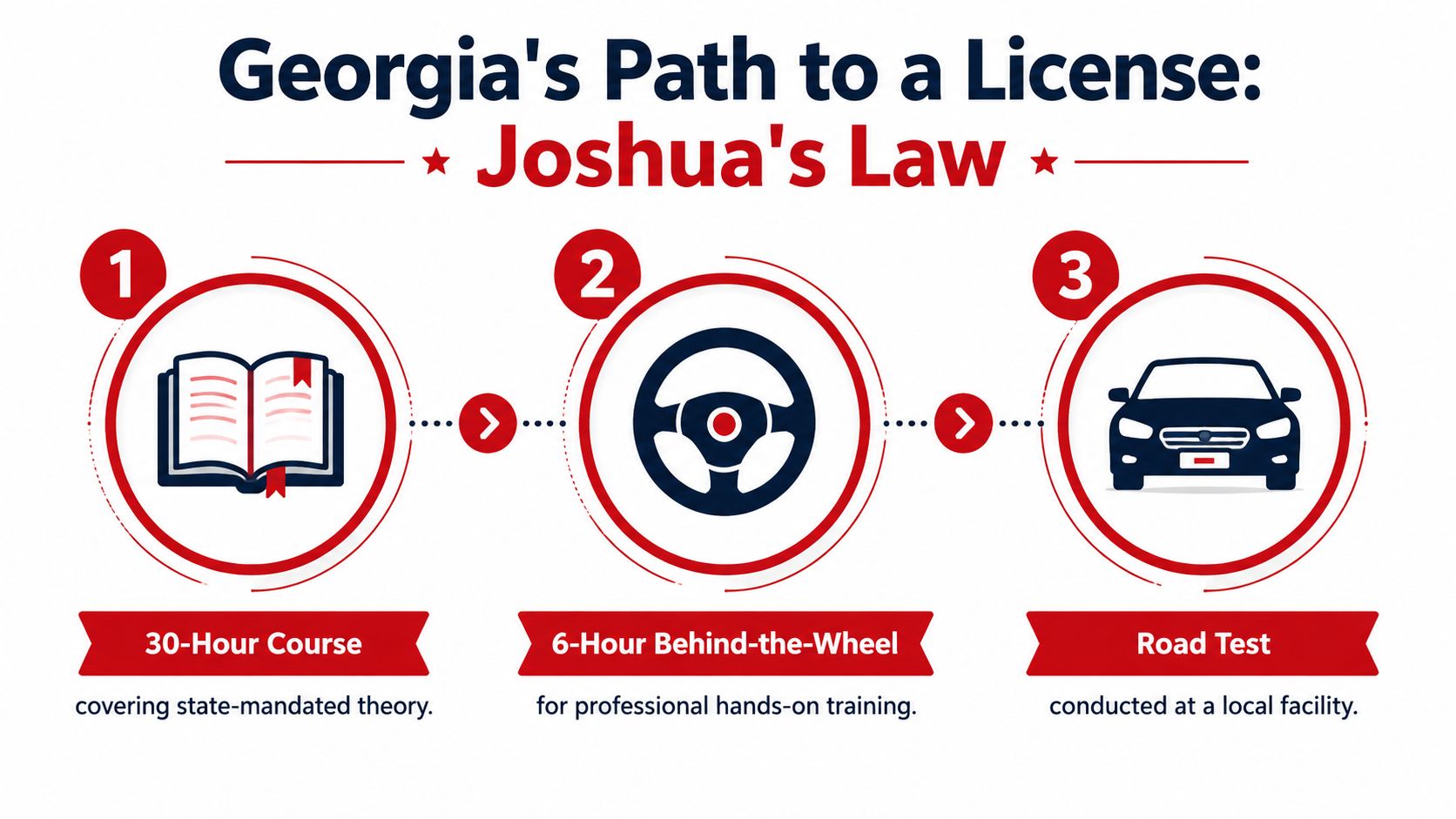
Joshua's Law is not just an online class. It's a driver education path that combines classroom learning with actual driving instruction.
For most Georgia teens, the process looks like this:
Complete the classroom portion
You learn traffic laws, signs, risk awareness, and decision-making.Finish behind-the-wheel instruction
During this instruction, driving starts to feel real. You practice turns, lane control, parking, observation, and traffic flow with an instructor.Prepare for the road test
This final step is where many students stumble if they've done only the bare minimum.
Why the structure works
Joshua's Law works because it separates knowledge from execution, then requires both. That's the right approach.
A student can ace online quizzes and still struggle with lane position, speed control, or scanning at intersections. On the other hand, a student who jumps into driving lessons without understanding signs and rules usually drives tense and reactive. Georgia's system pushes both pieces together.
Instructor advice: Don't shop for the fastest course. Shop for the clearest path from classwork to lessons to testing.
That same planning mindset also helps with family costs. Once a student is actively moving through driver education, it's smart for parents to compare student auto insurance policies so they understand coverage options before a teen starts driving regularly.
The best way to handle the classroom side
If you're taking the online route in Georgia, pick a state-approved program and finish it completely before you start scrambling for the next step. Students who stop after the online portion create their own delays.
If you need a direct place to access and manage the course side of the process, the Joshua's Law course login page makes that part simple. Finish the coursework, keep your records organized, and move straight into driving practice.
Beyond Online Modules The Value of Driving Lessons
Here's my blunt opinion. An online course is not driver training by itself. It's the academic half.
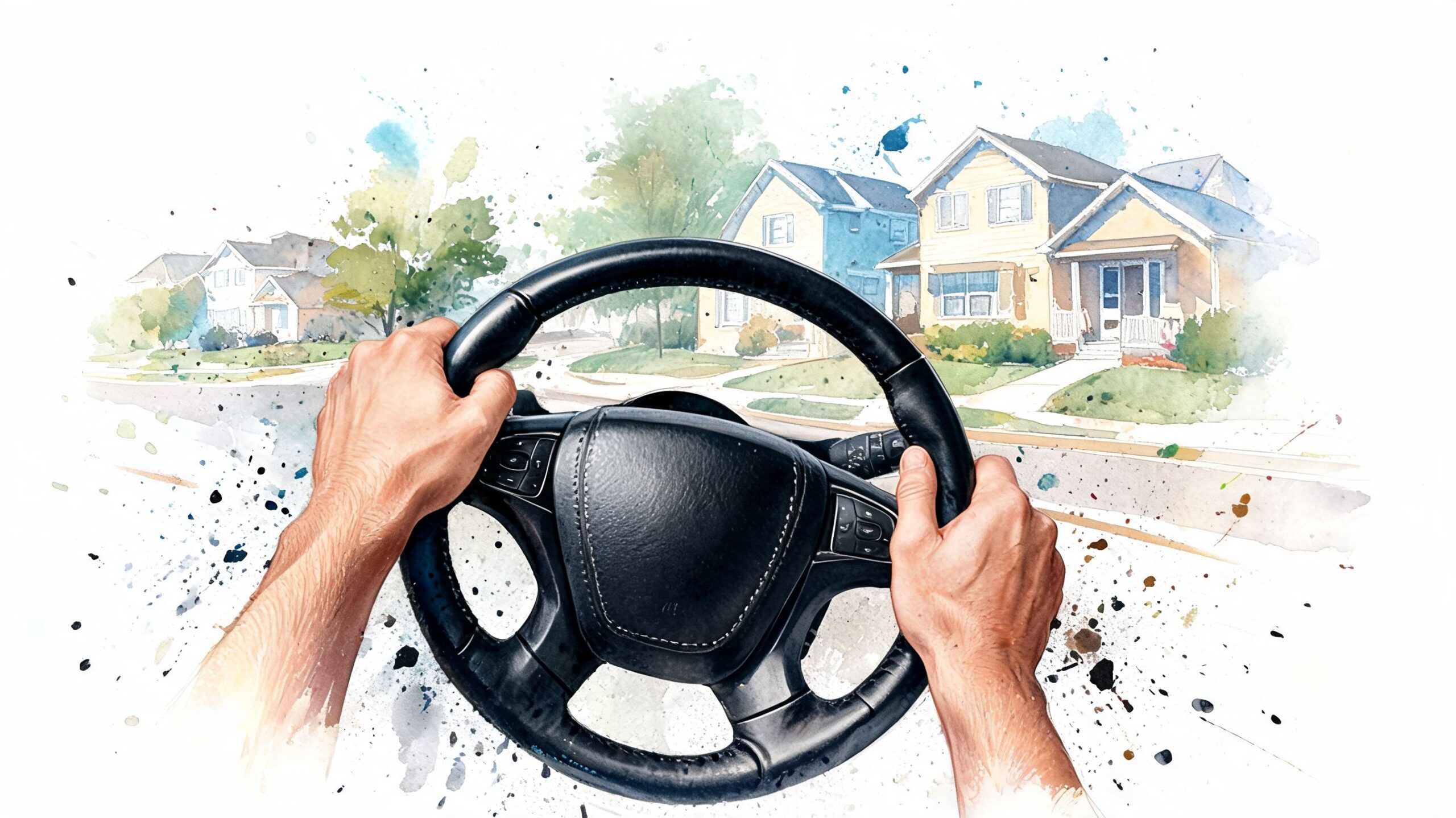
A student can know what a three-point turn is and still botch it in front of a curb, a mailbox, and a line of waiting cars. They can memorize right-of-way rules and still freeze at a busy four-way stop. That gap is exactly why driving lessons matter.
What lessons teach that modules can't
A real lesson teaches timing, control, and calm. Those things don't come from tapping through screens.
A professional instructor corrects the mistakes students don't even notice, such as:
- Late braking at neighborhood stop signs
- Wide turns that drift out of the lane
- Poor mirror checks before lane changes
- Speed inconsistency on regular roads
- Hesitation that creates confusion for other drivers
Confidence gets built the right way. Not fake confidence. Competence first, then confidence.
Different drivers need different lesson packages
Not every student needs the same amount of help, and pretending otherwise wastes money.
A teen who has never driven needs a different package than an adult who already knows the basics but feels anxious in traffic. A student who's almost test-ready may only need a road test prep lesson. Someone who struggles with parking may need targeted repetition, not a generic one-size-fits-all session.
That's why lesson packages matter. The best setup is the one that matches the student's actual skill level, not the one that sounds fastest.
Here's a simple way to look at it:
| Driver type | Best lesson focus |
|---|---|
| Brand-new teen driver | Core skills, traffic awareness, repetition |
| Adult beginner | Calm fundamentals, confidence building, route practice |
| Almost test-ready student | Test maneuvers, correction of bad habits |
| Nervous returning driver | Low-stress road exposure and structured coaching |
What good instruction looks like
Good behind-the-wheel training is specific. The instructor should tell the student exactly what to fix, why it matters, and how to correct it on the next attempt.
A strong lesson should leave the student with fewer mistakes than they started with, not just more time behind the wheel.
This kind of visual walkthrough helps reinforce the point before practice on the road:
Don't wait until the road test is close
The worst time to start lessons is when the road test is already scheduled and the student still can't park cleanly or scan confidently. That creates panic, and panic creates sloppy driving.
Start earlier. Build skill in stages. Then use the final lessons for polish, not rescue.
Completing Your Journey Georgia Road Tests and Scholarships
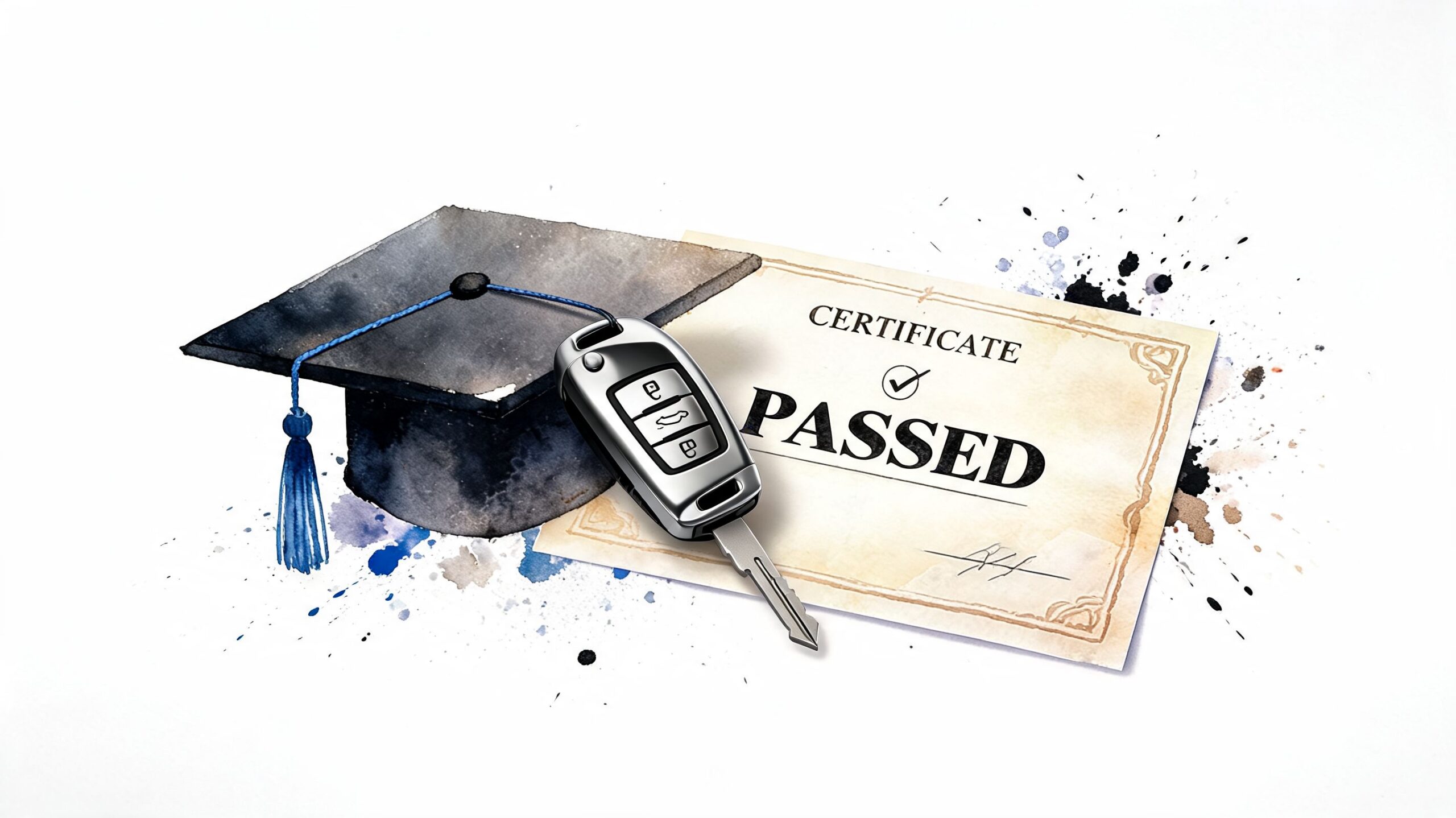
The last stretch matters because at that point, families often get impatient and rush. Don't. A rushed road test usually reveals every weak habit a student hoped wouldn't show up.
A smoother approach is to handle the final steps in order, with the road test as the finish line, not the starting gun.
What to do before test day
Road test prep should be practical, not dramatic. Focus on the habits that commonly unravel under pressure.
Use this checklist:
- Bring your documents and confirm them ahead of time. Last-minute paperwork problems are completely avoidable.
- Practice the basics repeatedly such as stopping smoothly, checking mirrors, signaling early, backing up carefully, and maintaining lane position.
- Drive the day before, not all day before. A short, focused practice session helps more than an exhausting marathon.
- Get comfortable with the vehicle you'll use. If the student is still hunting for controls, they're not ready.
- Follow the examiner's instructions exactly. Students get into trouble when they guess instead of listening.
Why local road testing helps
Testing in a familiar setting helps students settle down faster. It also makes the whole process feel less chaotic.
That matters for anxious drivers. When the surroundings, expectations, and check-in process are simpler, students can spend their energy on driving instead of nerves.
Show up early, sit quietly for a few minutes, and slow your breathing before the test starts. A calm first minute usually leads to a better drive.
Don't ignore the scholarship side
Driver education can be expensive for some families, and that's exactly why scholarship and grant support matters. Georgia's Driver's Education Scholarship Grant Program can help eligible students access training that might otherwise be delayed or skipped.
That support is worth pursuing early. Waiting until the last minute narrows your options and puts pressure on your schedule. Parents should ask about eligibility, application timing, and how funding connects to the full training path, not just the online portion.
A smart plan looks like this:
- Confirm what education you need
- Check scholarship or grant options early
- Schedule lessons with enough practice time
- Book the road test only when the student is fully ready
That approach saves stress and usually leads to better results.
Your All-in-One Solution for Driving in Georgia
If you came here searching for online driving course ny, you probably wanted a fast answer. The fast answer is that New York courses serve specific New York needs. Georgia drivers should stop chasing out-of-state answers and follow Georgia's process from start to finish.
That means getting the classroom requirement done correctly, taking real behind-the-wheel lessons, preparing for the road test with intention, and using scholarship support if it helps your family move forward. That's the practical route. It's also the route that produces safer, steadier drivers.
What Georgia drivers should prioritize
A strong Georgia plan has four parts:
- Approved driver education so you're meeting the state requirement correctly
- Professional driving lessons so you're building actual road skill
- Road test preparation so test day doesn't become a scramble
- Useful local guidance on related topics once you're licensed, including things many new drivers forget to check, such as legal car tint in Georgia
The best part is that this doesn't have to feel complicated. It only feels complicated when students try to piece it together from random search results, mixed state rules, and rushed scheduling.
The recommendation I'd give any student
Keep it simple. Finish the required education. Book driving lessons before bad habits settle in. Don't wait until the test is close to start practicing seriously. And if you're a parent, choose a school that can handle the process cleanly from course enrollment through road test support.
That's the difference between checking boxes and actually getting ready to drive on your own.
If you want one place to handle the full Georgia process, start with A-1 Driving School. You can explore online Joshua's Law options, driving lesson packages for teens and adults, road test services, and scholarship guidance without piecing everything together yourself.