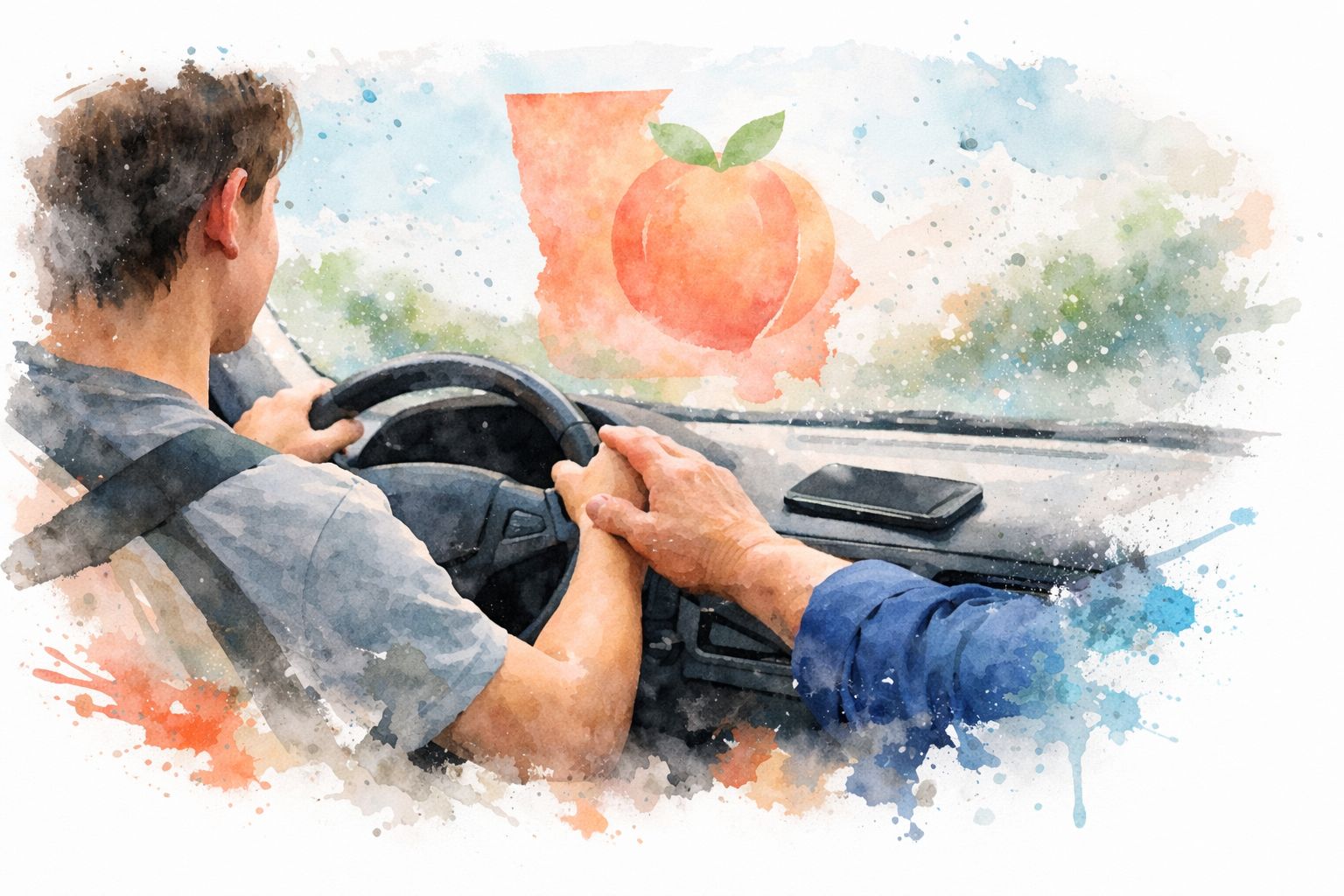
Teen crashes spike early. The first year behind the wheel carries the highest risk for new drivers, which is why Georgia does not treat licensing as a one-step milestone. It uses a staged system that gives teens time to build judgment before they get full driving freedom.
For parents, that changes the job. A license is not the finish line. It is the point where practice, limits, and clear rules matter most at home and on the road.
Georgia families who understand Joshua's Law, supervised driving requirements, and Class D limits usually make better decisions earlier because they know what the state is trying to prevent. The rules are not there to slow teens down. They are there to reduce the exact problems that cause trouble in a new driver's first months, including distraction, speeding, nighttime risk, and too many passengers too soon. Parents can review the Georgia teen driving laws and license restrictions before permit and road test planning starts.
This guide focuses on 10 practical safety habits tied directly to Georgia law and to what works in real instruction. It also reflects how teens learn. One skill at a time, repeated often, in the right order. At A-1 Driving School, that usually means pairing the state-required steps with targeted behind-the-wheel training so teens do not just qualify for a license. They leave with habits that hold up in traffic, at night, in bad weather, and under pressure.
1. Master Georgia's Graduated Driver Licensing Process
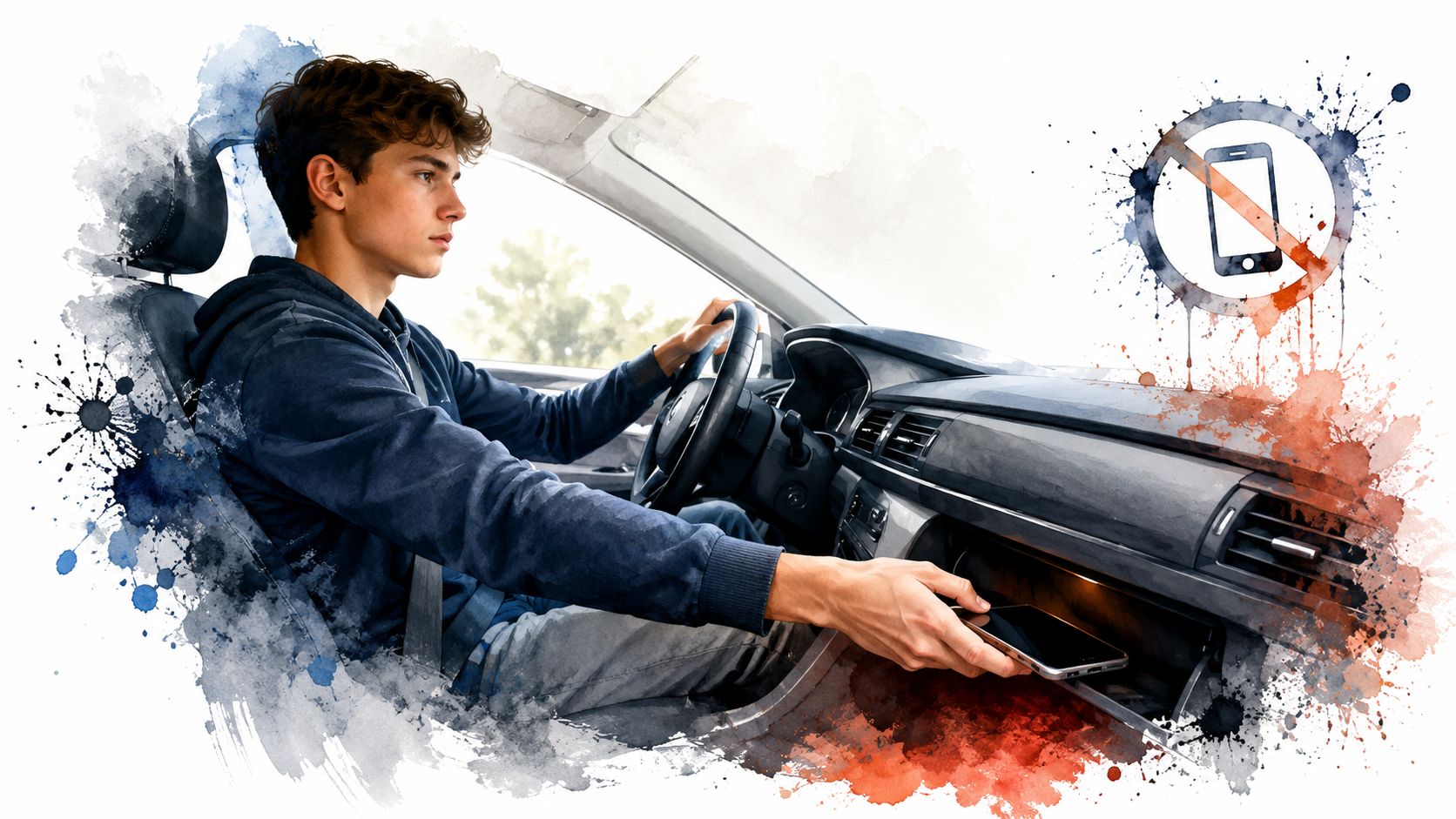
Georgia's licensing path works best when families treat it like a training plan, not a paperwork exercise. A teen starts with a permit, moves to a Class D provisional license, and later graduates to full privileges. That step-by-step approach matches what safety research supports: the National Academies review says the strongest teen-safety approach combines driver education with the legal structure of testing and licensure, plus limited hazardous exposure, more supervised practice, and delayed full licensure through the NCBI review on young drivers.
Joshua's Law is where many Georgia families begin. In practical terms, that means completing the required driver education pieces early so your teen isn't trying to cram coursework, lessons, and permit prep all at once.
What to do early
A smoother path usually looks like this:
- Finish Joshua's Law coursework first: Many teens do better when they complete the classroom or online portion before starting in-car training.
- Track practice from day one: Keep a written or digital log of supervised hours so nothing gets lost.
- Read the state rules together: Georgia families should review the details in this guide to Georgia teen driving laws.
- Check for financial help: If cost is a concern, look into the Georgia Driver's Education Scholarship Grant Program before booking training.
Practical rule: Don't wait until your teen is “almost ready” for the road test to think about Joshua's Law, supervised hours, or lessons. Start the process early and spread the work out.
What doesn't work is rushing from permit to test with minimal structure. What works is a planned sequence: coursework, professional instruction, parent-supervised practice, then road test prep.
2. Commit to Extensive Supervised Practice in Diverse Conditions
The minimum practice requirement gets a teen legal. It doesn't always get them ready.
A new driver who has only practiced on dry afternoons in familiar neighborhoods is still inexperienced in the situations that create the most stress: merging onto a fast highway, driving in rain, handling rush-hour congestion, judging speed at dusk, or parking in a crowded lot. CDC guidance for parents specifically points to parent involvement, supervised practice in varied conditions, and written parent-teen driving agreements in its teen driver prevention guidance.
Build skill, not just hours
A strong practice plan covers different environments on purpose:
- Neighborhood driving: Starts, stops, right turns, scanning, and speed control.
- Main roads: Lane position, light timing, left turns, and gap judgment.
- Highways: Entering, merging, changing lanes, and exiting calmly.
- Bad conditions: Rain, darkness, glare, and heavy traffic with a steady supervisor.
- Parking work: Backing, three-point turns, parallel parking, and tight-space awareness.
Parents often make one of two mistakes here. They either hand over too much freedom too early, or they stay stuck in the same easy routes because those feel comfortable. Neither builds a complete driver.
Driving lesson packages can help fill that gap because they create repetition with an instructor who isn't emotionally tied to the teen's mistakes. That often leads to cleaner feedback and better retention. If your teen needs more work on highways, lane changes, parking, or city driving, targeted behind-the-wheel lessons are usually more useful than just adding random miles.
3. Eliminate All Distractions, Especially Smartphones
A phone pulls a new driver's eyes, hands, and judgment away from the road at the same time. For teens who are still building scanning habits and speed control, that split attention is enough to turn a routine drive into a preventable mistake.
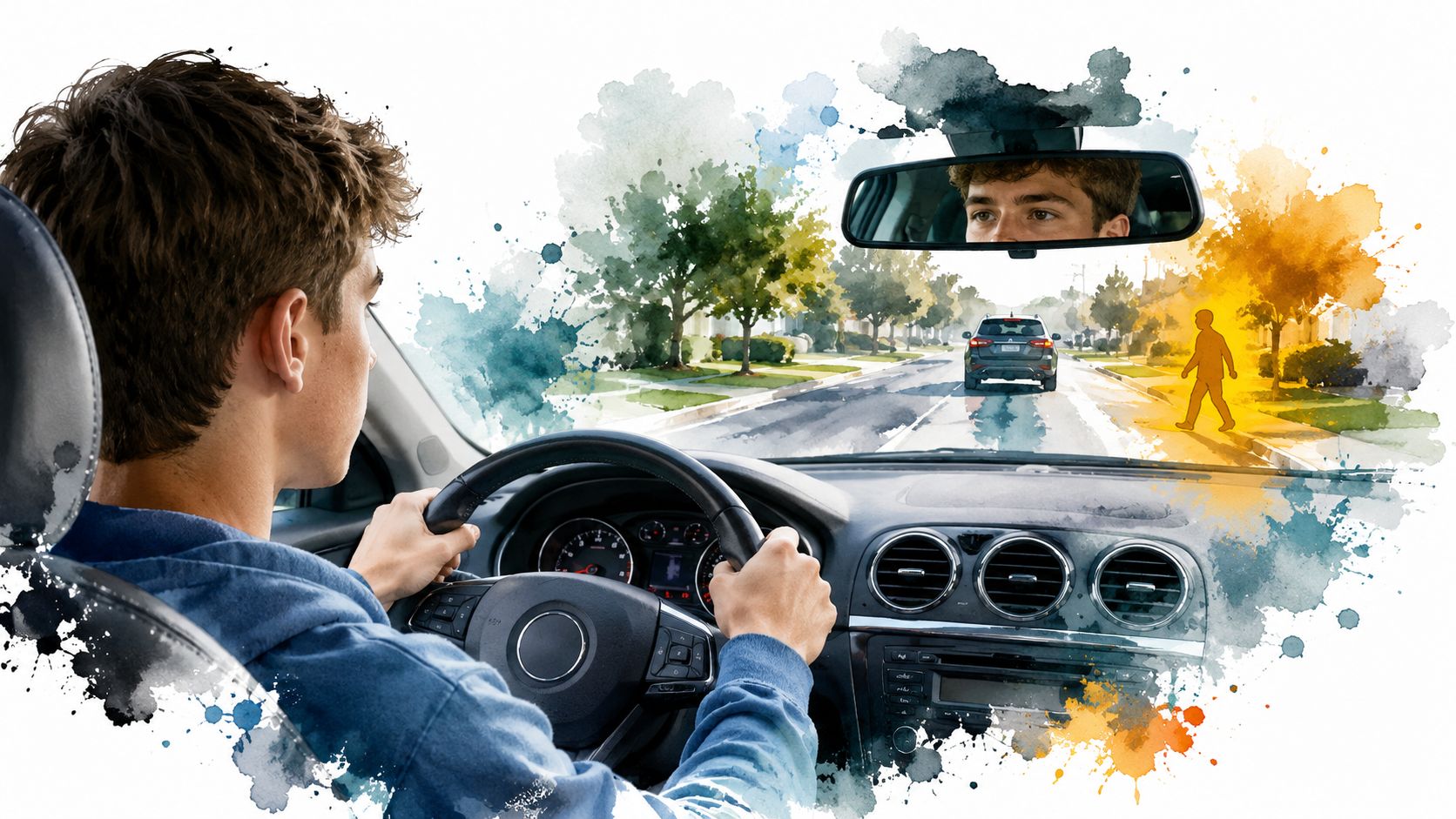
Georgia's hands-free law sets the legal minimum. Families should set a stricter rule for teens under Joshua's Law and Georgia's graduated licensing system: once the car is in gear, the phone is off-limits unless the vehicle is parked in a safe place. That means no reading notifications at a red light, no changing music in traffic, and no entering an address after the trip starts.
The reason is simple. Teen drivers do not have much spare attention yet. An experienced adult may recover from one bad glance. A beginner often misses the brake lights ahead, drifts in the lane, or rolls through a turn too fast.
Make distraction control automatic
The safest phone rule is one that removes decisions before the drive begins. In lessons, that usually works better than warning a teen to "be careful."
- Put the phone out of reach before starting the engine: Glove box, zipped bag, or back seat all work better than a cup holder.
- Turn on the phone's driving mode: Silence calls, texts, and app notifications before backing out.
- Set navigation and music while parked: If the route changes, pull over safely and update it then.
- Give teens permission to ignore parents' calls: Parents often create the pressure without meaning to. Make it clear that no call or text needs an answer until the car is parked.
- Use repetition in training: Instructors and parents should practice the same routine every trip so it becomes habit.
- Review real distraction scenarios: A quick read on the dangers of distracted driving helps teens understand how small choices lead to missed signals, late braking, and crashes.
One trade-off is convenience. Teens want music, maps, and group chats available instantly. Parents want quick check-ins. Safety wins that trade every time.
If a teen still struggles with phone discipline, build that into practice drives. Start each trip with the same checklist: phone away, route set, volume set, mirrors checked, then drive. At A-1 Driving School, that kind of repeatable pre-drive routine is part of building real-world confidence, not just getting through the state requirements.
4. Strictly Adhere to Passenger and Curfew Rules
For a new driver, friends in the car and late-night trips create two predictable problems. Attention drops, pressure goes up, and small mistakes get harder to correct.
That is why Georgia puts clear limits on teens with a Class D license. These rules are not there to frustrate families. They reduce risk during the stage when a driver has the least experience and the hardest time managing distractions, speed, and fast-changing traffic.
In practice, I see the same trade-off over and over. Teens want independence. Parents want flexibility. Georgia law puts safety first, and families should do the same.
Know the Georgia limits before plans are made
A teen should never have to guess whether a trip is legal.
With a Georgia Class D license, passenger limits change over time, and nighttime driving is restricted. Parents should review the current rules with their teen, then apply them to real situations such as football games, birthday parties, after-school jobs, and weekend sleepovers. If the plan would put the teen in violation of the license, change the plan before anyone leaves the house.
That step matters because bad decisions usually happen under social pressure, not in the driveway.
Make compliance easy and automatic
Families get better results when the rule is simple, visible, and consistent.
- Set a household rule that matches Georgia law: No exceptions for convenience.
- Confirm transportation details before social events: Who is driving, who is riding, and what time the teen will be home.
- Rehearse a refusal line: “I can't drive you. My license does not allow it.”
- Use the car as a privilege tied to compliance: If a teen breaks passenger or curfew rules, access to the car should tighten immediately.
- Put the restrictions in writing: A note on the fridge or in the family calendar works better than a verbal reminder.
Parents have to hold the line here. If a teen hears, “Just this once,” the rule stops being a rule.
This is also a training issue, not just a discipline issue. At A-1 Driving School, we work with families on real-world decision-making, including how to plan trips that stay within Georgia's GDL limits and how to handle peer pressure without freezing up in the moment. That kind of preparation helps teens stay legal and stay safer.
5. Always Buckle Up Every Seat Every Trip
A crash can happen on the first mile from home. That is why seat belts need to be part of the start-up routine, every trip, every seat, no exceptions.
Teens usually know belts matter. The weak point is consistency. Short drives, familiar roads, and friends in the car often lead to lazy decisions. Instructors see that pattern all the time. The safest habit is also the simplest one. Nobody moves until everybody is buckled correctly.
Make seat belt checks part of the launch routine
The driver sets the standard inside the car, and that starts before the vehicle goes into gear.
- Buckle first: The driver clicks in before starting the engine.
- Check all seating positions: Front and back seat passengers should be buckled before the car moves.
- Watch for bad belt fit: The shoulder belt goes across the chest, and the lap belt stays low on the hips.
- Confirm it directly: Listen for the clicks and look back if needed.
- Stop the trip if someone refuses: A passenger who will not buckle up does not ride.
A firm rule: the driver is responsible for making sure the car does not move with an unbelted passenger.
Parents should practice this as a script, not just say it once. Have the teen say, out loud, “Seat belts first.” That sounds small, but it builds a repeatable routine under pressure. At A-1 Driving School, we teach teens to use these short pre-drive habits because they reduce hesitation and make safer decisions automatic.
Good visibility supports that same routine. If the driver cannot see clearly out of the glass, every safety habit gets harder to carry out well. Families can tighten up both habits at once with basic maintenance and these DIY strategies for spotless windshields.
6. Perform Basic Vehicle Checks Before Driving
Many preventable teen driving problems start before the car leaves the driveway. A two-minute check catches the issues that create the most trouble for new drivers: poor visibility, low tires, dead lights, and warning lights a teen does not understand.
This matters in Georgia for a practical reason too. The road test includes a vehicle safety inspection, so teens need to know more than how to steer and stop. They need to show the car is legal and safe to operate.
Build a repeatable pre-drive check
Teach the same routine every time so it becomes automatic under time pressure.
- Walk around the car: Look for a low tire, fluid under the vehicle, or anything behind the car before backing out.
- Check the lights: Headlights, brake lights, and turn signals need to work. Other drivers cannot respond correctly if your teen's car is not communicating clearly.
- Clean the glass and mirrors: Smudges, haze, and bug buildup cut visibility fast, especially at sunrise, sunset, and night.
- Scan the dashboard before moving: If a warning light is on, the teen should know whether to stop and ask a parent or instructor before driving.
- Check washer fluid and wipers: In Georgia, sudden rain and road spray can turn a clear windshield into a blind spot in seconds.
Parents get better results when they teach the reason behind each step. A low tire changes braking and handling. Dirty glass makes it harder to judge distance. A burned-out brake light raises the chance of a rear-end crash and can lead to a traffic stop.
Visibility is the easiest place to start. Families can improve it quickly with simple maintenance and habits like these DIY strategies for spotless windshields.
If a family is choosing a first vehicle, pick one that helps a teen learn good habits instead of covering for poor judgment. Look for a car with strong crash protection, electronic stability control, good visibility, and controls that are easy to use without taking eyes off the road. At A-1 Driving School, I've seen teens build confidence faster in predictable, well-maintained vehicles than in cars that are flashy, oversized, or full of distractions.
7. Understand and Manage Speed for Conditions
New drivers often think speeding only means driving above the posted number. That's too narrow. A teen can be fully within the speed limit and still be driving too fast for rain, darkness, traffic flow, curves, or limited visibility.
This is one of the hardest judgment skills to learn because it depends on reading the whole environment. On dry roads with light traffic, the posted limit may be appropriate. In rain, near a stale green light, on a crowded multilane road, or on an unfamiliar curve, a smart driver often needs less speed and more space.

How to coach this skill
Parents and instructors get better results when they coach for observation first.
- Look farther ahead: The teen should identify brake lights, lane backups, stale greens, and merging traffic early.
- Adjust before the hazard: Ease off the gas before entering trouble, not in the middle of it.
- Use larger following gaps in bad conditions: Space buys time.
- Aim for smoothness: Hard braking and sudden acceleration usually mean the teen is reacting late.
A practical exercise is to ask, “What could change in the next few seconds?” If the teen can answer that consistently, speed decisions usually improve. If they can't, they're probably driving on reflex instead of awareness.
8. Never Drive Impaired or Fatigued
Impairment is not limited to alcohol. For teens, fatigue can produce the same driving failures instructors see after substance use. Late braking, missed traffic signals, drifting within the lane, and poor judgment.
Georgia is strict about underage drinking and driving, and parents should be just as strict about exhaustion. A teen who is coming home after late practice, a shift at work, a school event, or hours of studying may be legal to drive, but still not safe to drive. That distinction matters.
Set the rule before your teen needs it
Make the standard clear. If your teen is not alert enough to drive, the car stays parked.
That rule should cover:
- Any alcohol use
- Any marijuana or other drug use
- Prescription or over-the-counter medication that causes drowsiness
- Severe fatigue
- Strong emotions that break concentration
I tell families to agree on the rescue plan in advance. Call for a ride first. Discuss the details after everyone is home safely. That removes the pressure teens feel to “just make it back” when they know they should not be behind the wheel.
Parents should also teach fatigue warning signs in plain language: heavy eyelids, missing an exit, wandering thoughts, rubbing eyes, drifting off the lane center, or not remembering the last few minutes of the drive. A short review of drowsy driving risks and warning signs can help start that conversation.
A practical fix works better than a lecture. Set a household cutoff for late-night driving, keep rideshare or pickup options available, and tell your teen exactly what to do if they feel tired after they have already left. Pull into a safe, well-lit place and call home. That plan is easy to follow under stress, which is the whole point.
9. Practice Defensive Driving and Situational Awareness
Defensive driving matters, but for teens it should stay practical. Don't turn it into abstract jargon. Teach them to scan, predict, and leave room.
A skilled teen driver checks mirrors often, turns their head for blind spots, watches intersections even on green, and notices when another driver is acting oddly. That's the primary job. Not just controlling the car, but reading what everyone else might do next.
Build a repeatable scan pattern
Strong situational awareness comes from routine:
- Check mirrors regularly: Not as a random habit, but as part of every lane change, slowdown, and traffic check.
- Watch wheels, not just vehicles: A car's front tires often show movement before the car fully commits.
- Keep an escape path: Avoid getting boxed in by pacing cars on both sides.
- Look through traffic: See beyond the vehicle directly ahead.
- Treat intersections carefully: Green doesn't guarantee clear.
Most crashes aren't prevented by fast reactions alone. They're prevented because the driver saw the problem developing early.
Professional driving lessons can make a big difference. Instructors can coach scanning, lane positioning, and hazard recognition in real time. That kind of feedback is hard to replicate with casual passenger-seat comments from a parent during a stressful drive.
10. Prepare for and Ace the Georgia Road Test
The road test should confirm skill, not expose last-minute gaps. Teens usually struggle most when they wait too long to practice test-specific maneuvers or they arrive with weak fundamentals hidden by familiar routes.
A better approach is to prepare in layers. First get the basics solid: steering control, complete stops, mirror use, lane discipline, signaling, parking, backing, and turns. Then practice under test-style conditions with someone who will score the drive accurately.
What helps most before test day
A simple prep routine works better than cramming.
- Run a mock test: Practice with an instructor or a parent who won't coach during each move.
- Repeat the core maneuvers: Three-point turns, backing, parking, and smooth stops should feel normal.
- Use the same calm routine every drive: Mirror, signal, brake, check, move.
- Get documents ready the day before: Don't add stress that has nothing to do with driving.
- Make sure the vehicle is test-ready: Clean windows, working lights, legal equipment.
Many Georgia families also like the flexibility of road testing through an approved driving school if that option fits their schedule. Pairing road test prep with a few focused lessons often helps teens clean up the details that examiners notice immediately, like incomplete stops, poor observation, or rushed turns.
10-Point Teen Driving Safety Comparison
| Item | Implementation complexity | Resource requirements | Expected outcomes | Ideal use cases | Key advantages |
|---|---|---|---|---|---|
| Master Georgia's Graduated Driver Licensing (GDL) Process | Medium, multi-step legal process | 30‑hr course + 6‑hr behind‑the‑wheel, supervised hours, fees | Legal compliance, phased skill development, lower teen crash risk | New teen drivers seeking license (16–17) | Structured pathway, proven crash reduction, clear parent guidelines |
| Commit to Extensive Supervised Practice in Diverse Conditions | High, requires planning across conditions | Significant time from parents/instructors, vehicle access, varied environments | Advanced real‑world skills, higher test pass rate, confidence | Teens needing practical experience beyond minimums | Builds competence in adverse conditions, corrects bad habits early |
| Eliminate All Distractions, Especially Smartphones | Low, policy and habit changes | Phone settings (DND), storage solutions, parental enforcement | Dramatic reduction in distraction‑related crashes | All teen drivers, households with heavy phone use | Immediate risk reduction, establishes non‑negotiable safety habit |
| Strictly Adhere to Passenger and Curfew Rules | Low to medium, enforcement + social management | Parental oversight, alternative transport planning | Reduced peer‑related crash risk, legal protection | First year(s) after licensure, night‑time driving situations | Cuts high‑risk exposure, clear legal boundaries |
| Always Buckle Up, Every Seat, Every Trip | Low, simple habit enforcement | No cost, consistent reminders | Reduced severity of injury, compliance with law | Every trip, all vehicle occupants | Most effective crash protection, legally enforceable |
| Perform Basic Vehicle Checks Before Driving | Low to medium, routine task learning | Checklist, basic tools (gauge, flashlight), time | Fewer mechanical failures, readiness for road test | Drivers using family cars, pre‑trip/pre‑test checks | Prevents preventable breakdowns, increases vehicle familiarity |
| Understand and Manage Speed for Conditions | Medium, judgment and anticipation skills | Practice time, instructor coaching, situational exposure | Fewer loss‑of‑control crashes, improved vehicle control | Highway, wet/foggy, winding road driving | Better hazard response, improved fuel economy and safety |
| Never Drive Impaired or Fatigued | Low, decision and planning required | Safe‑ride plans, family contracts, alternative transport | Eliminates a major crash cause, avoids legal penalties | Parties, early‑morning/late‑night events, medication use | Prevents fatal crashes, protects legal and personal future |
| Practice Defensive Driving and Situational Awareness | Medium to high, continuous mental skill | Training, focused practice, instructor feedback | Avoidance of others' mistakes, higher driving confidence | Urban traffic, high‑speed roads, unpredictable environments | Proactive hazard avoidance, possible insurance benefits |
| Prepare for and Ace the Georgia Road Test | Medium, focused preparation | Mock tests, instructor time, required documentation | Higher pass probability, reduced test anxiety, license attainment | Teens ready to take the DDS or third‑party exam | Familiarity with examiner expectations, smoother test day |
From Learner to Licensed Build Lifelong Safe Habits
The best teen driving safety tips all point to the same conclusion. Safety isn't built from one lecture, one course, or one successful road test. It's built from repetition, limits, coaching, and better judgment in the exact situations that cause trouble for new drivers.
That's why Georgia's system works best when families lean into it. Joshua's Law gives teens a formal starting point. Supervised practice adds repetition. Passenger limits and curfews reduce exposure during the riskiest stage. Professional lessons close skill gaps that parents may not spot or may not feel comfortable teaching. When those pieces work together, teens don't just become licensed. They become more stable, more observant, and more predictable behind the wheel.
There's also a practical difference between checking requirements off a list and training for real independence. A teen who completed the online course but hasn't practiced in rain, at night, on highways, or in heavy traffic still needs more work. A teen who passed the permit test but can't manage lane changes calmly or back into a parking space without panic needs more work. Good families recognize that early and fix it before solo driving becomes routine.
Parents should also remember that the first months after licensure are not the finish line. They're the phase that needs the most attention. Keep the rules visible. Keep driving together. Keep correcting small mistakes before they become habits. If your teen needs more time before adding passengers, driving after dark, or testing for the next step, delaying independence is often the safer call.
For Georgia families, the most useful support usually comes from combining online driver's education, Joshua's Law completion, structured driving lessons, and targeted road test preparation. A-1 Driving School is one Georgia option for those needs, including online courses, behind-the-wheel instruction, lesson packages, road test support, and information about the Georgia Driver's Education Scholarship Grant Program. For many teens, that combination of formal instruction and repeated in-car coaching is what turns nervous early driving into safer long-term habits.
The goal isn't solely to create a teen who can pass a test. The goal is to create a driver who makes fewer bad decisions when nobody is there to correct them.
If your teen is starting the Georgia licensing process, A-1 Driving School offers Joshua's Law driver education, online course options, driving lessons, lesson packages, and road test support that can help families build skills step by step.