
A lot of people search for why take defensive driving course right after something stressful happens. Maybe a ticket showed up in the mailbox. Maybe your teen is getting close to permit or license time. Maybe you're a parent trying to sort out Georgia rules without piecing together ten different websites.
Those are all real reasons to look into driver training. A defensive driving class can help in certain situations. But if you're a new driver in Georgia, or you're guiding one, the bigger question usually isn't just how to fix a problem. It's how to build the skills needed to drive calmly, legally, and safely from the start.
That shift matters. A short class taken after a citation serves one purpose. A full driver education path, with classroom instruction, behind the wheel practice, supervised driving, and road test preparation, serves a very different one.
For readers comparing options, it also helps to understand the difference between a basic compliance class and a broader motor vehicle accident prevention course approach that focuses on safer decision-making over time. The names can sound similar, but the outcome you're after should guide the choice.
Introduction More Than Just a Ticket Fix
It is 7:00 p.m. in Georgia, and a parent is at the kitchen table with a permit booklet open, a teen is asking when driving lessons start, and someone types, "why take defensive driving course" into a search bar.
That search can point to two very different kinds of help.
One option is a class taken after a mistake, often to address points, court requirements, or an insurance question. The other is the training a new driver uses to build habits before those problems show up. For families working through the Georgia licensing process, that second path usually deserves more attention.
A short refresher course and beginner driver training serve different jobs, much like a first-aid kit and regular checkups. Both have a purpose, but they are not used for the same moment. If a teen needs to learn how to scan traffic, judge space, and make calm decisions at busy intersections, a basic point-reduction class is not the full answer.
That is why the phrase motor vehicle accident prevention course can add to the confusion. The name sounds broad, but the right choice depends on the driver's goal. A new Georgia driver usually needs structured education, supervised practice, and clear coaching, not just a reactive course option.
For beginners, the essential question is simpler. What training helps a student drive safely enough to earn a license and handle everyday roads with confidence?
Start with the skills that shape every trip:
- Spot trouble early. New drivers need to read traffic before a problem reaches the hood of the car.
- Make space judgments. Turning, merging, and stopping all depend on distance and timing.
- Stay steady under pressure. Heavy traffic, fast decisions, and unfamiliar roads can rattle beginners.
- Follow a repeatable process. The IPDE driving process for scanning and decision-making gives students a clear method instead of guesswork.
That proactive foundation is where schools like A-1 Driving School fit. For many Georgia families, the value is not just handling a past citation. It is getting a student ready for the actual work of driving well from the start.
Proactive Skill Versus Reactive Compliance
A defensive driving course has clear uses. The problem is that many drivers expect it to solve needs it wasn't designed to solve.
The National Safety Council says the first formal Defensive Driving Course in the United States began in 1964, and the program has trained over 80 million drivers worldwide. It also notes that rigorous studies found about a 10% reduction in traffic violations, even though crash reduction wasn't consistent across studies, as outlined on the National Safety Council defensive driving page.
That tells you something important. These classes can influence rule-following. They aren't the same as a full beginner training path.
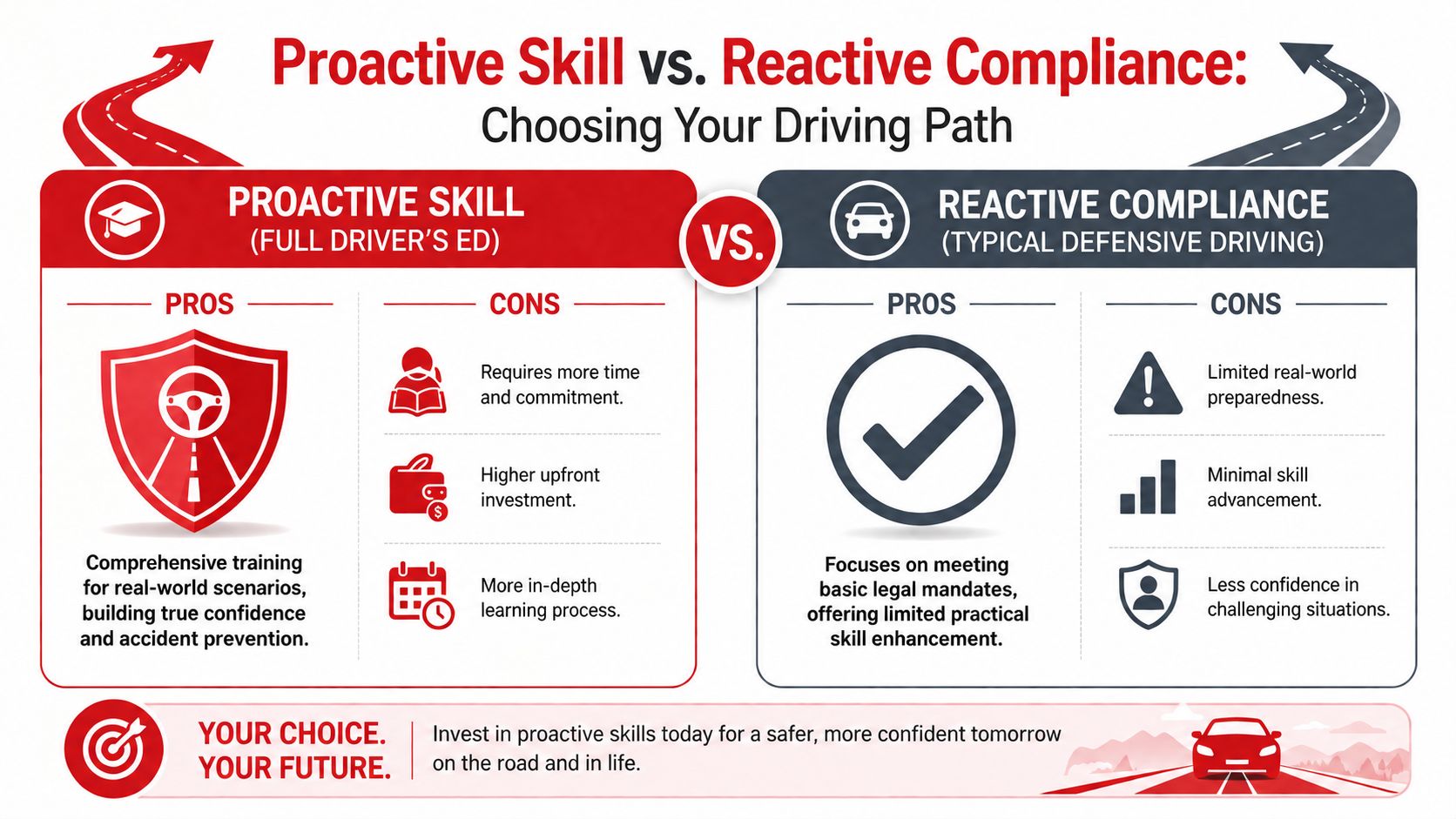
A side by side view
| Path | Main purpose | Typical outcome |
|---|---|---|
| Full driver's education | Build skill before or during licensing | Better habits, guided practice, clearer understanding of road decisions |
| Typical defensive driving | Meet a legal, court, or insurance-related need | Possible point help, possible insurance benefit, rule refresher |
That difference gets missed all the time.
A teen who freezes at four-way stops doesn't need only a certificate. That student needs repetition, coaching, and feedback. An adult who gets nervous changing lanes on busy highways doesn't need a checkbox. That driver needs practical instruction in real traffic.
The insurance discount paradox
People also hear that a defensive driving class always saves money. Sometimes it does. Sometimes it doesn't work the way drivers expect.
One source discussing the insurance discount paradox says discounts are often presented as 5% to 20%, yet 30% of drivers in major markets may not qualify because of provider certification issues or state-specific exclusions. The same source says a 2025 NY DMV audit found 52% of course completers received full PIRP benefits, while 18% saw no discount because of insurer mismatches, according to this article on why taking a defensive driving class is worth it.
That doesn't mean defensive driving has no value. It means you shouldn't choose training only because you hope for a discount.
A short-term financial benefit is helpful. A long-term driving skill is more reliable.
If you're trying to understand the thinking process behind safer decisions, the IPDE process for drivers is a useful framework. It gives new drivers a practical way to identify hazards, predict what could happen, decide on a response, and execute it.
For readers also comparing how behavior behind the wheel affects legal risk, this explanation of how driver actions impact DWI adds helpful context about decision-making and consequences.
Georgia's Foundational Requirement Joshua's Law
For Georgia families, this part is simple. If your driver is 16 or 17, this isn't optional.
In Georgia, Joshua's Law mandates that all 16- and 17-year-olds must complete a DDS-approved 30-hour Driver's Education course before applying for a Class D license, with in-person or online formats both satisfying the requirement, according to this guide to Joshua's Law in Georgia.
That requirement changes the whole conversation. For a teen pursuing a license, the first priority usually isn't a generic defensive driving class. It's completing the correct driver's education path.
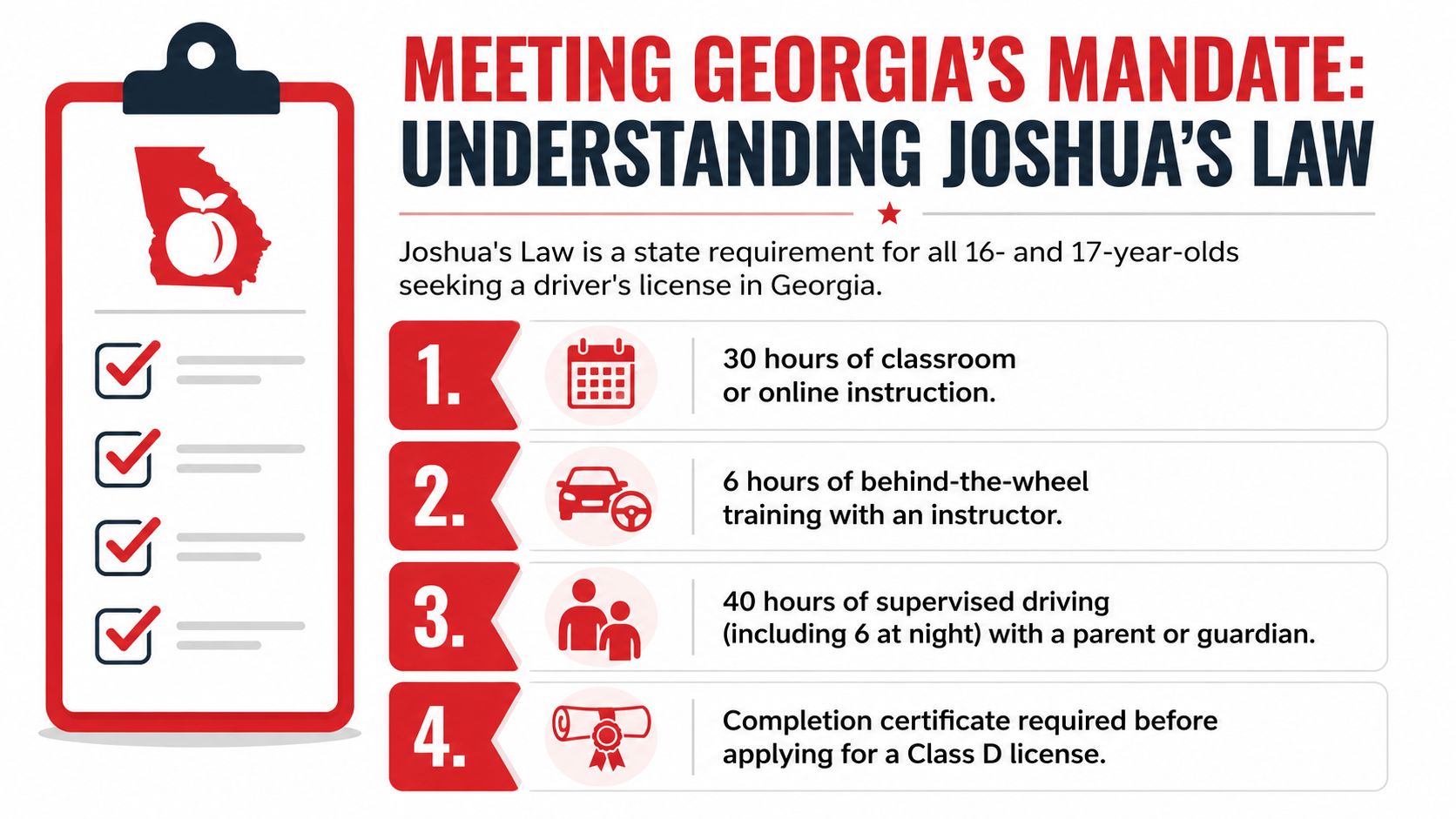
What Georgia families need to complete
The process is easier to manage when you break it into parts:
- Course requirement: The student must complete 30 hours of approved instruction.
- Format choice: The course can be taken in person or online if it's DDS-approved.
- License goal: This work must be completed before applying for a Class D license.
For a broader checklist, Georgia families can review these driver's license requirements in Georgia.
Why this requirement actually helps
Parents sometimes see Joshua's Law as one more task on an already busy schedule. In practice, it gives a new driver a structure. That's useful because beginners rarely struggle with only one thing.
A teen may know the rules but still misjudge speed. Another may understand right-of-way but panic when traffic stacks up behind them. Formal instruction gives those drivers a way to learn in order instead of picking up scattered advice.
This video gives a closer look at the topic.
Parents often ask whether online is "good enough." For the classroom requirement, online can satisfy the rule when the program is DDS-approved. The key is pairing that convenience with meaningful practice on the road.
The A-1 Difference Personalized Driving Lessons
The biggest leap in driver growth usually happens during actual lessons. That's where a student stops thinking of driving as information and starts turning it into actions.
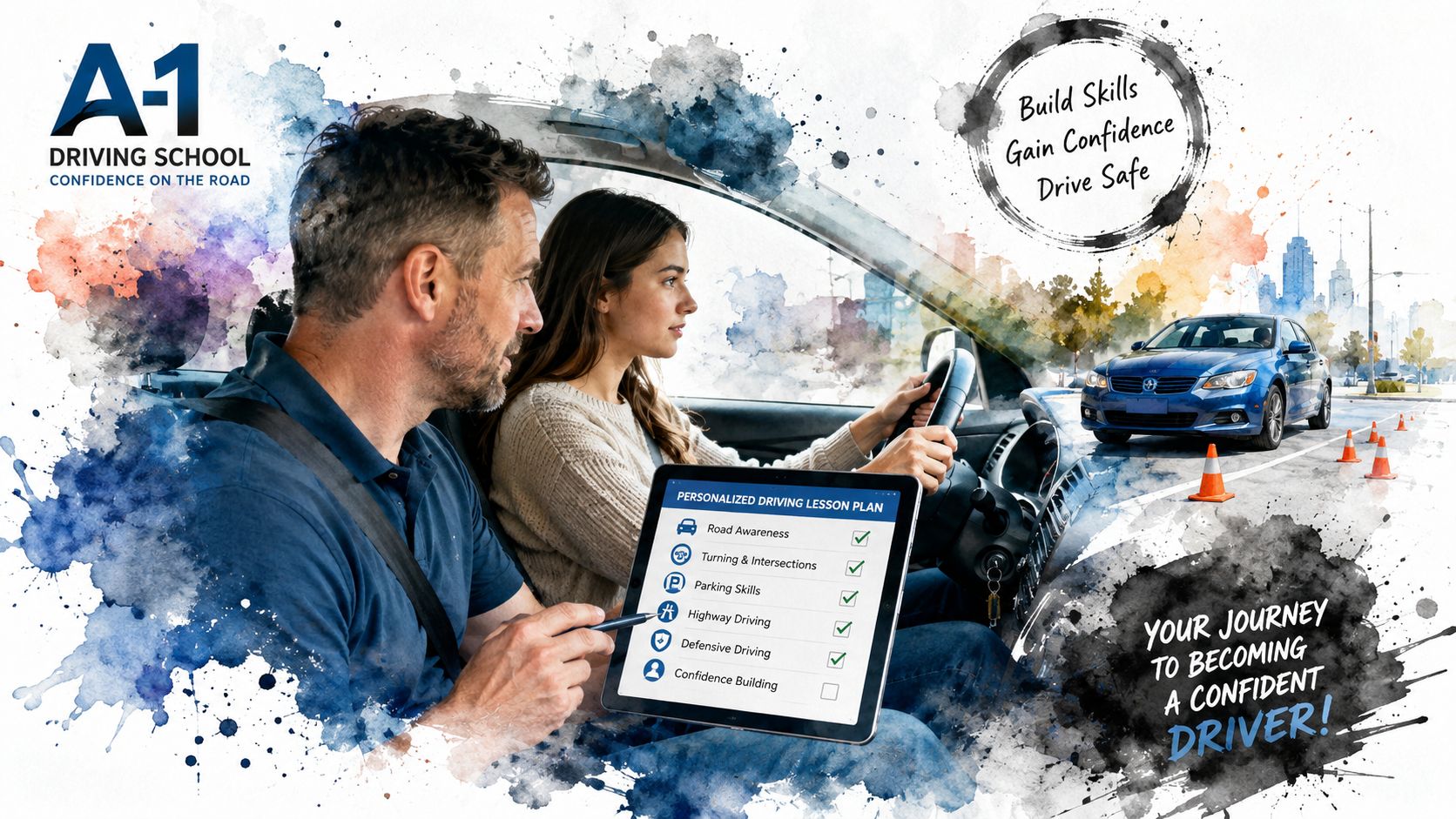
Why lessons with an instructor feel different
A parent can help a teen practice. That's valuable. But a certified instructor sees patterns a family member may miss.
An instructor can spot late mirror checks, drifting lane position, rushed turns, weak scanning habits, and hesitation at unprotected left turns. Even better, the instructor can correct those habits before they harden into routine.
If you're weighing the practical value of professional instruction, this page on the benefits of taking driving lessons from an instructor explains what structured coaching adds beyond casual practice.
The skill many new drivers don't learn soon enough
One of the most useful defensive driving ideas isn't about reacting faster. It's about predicting sooner.
A source discussing this gap says a 2025 National Safety Council report found 78% of accidents involve another driver's error, while 65% of defensive driving materials still focus on reactive compliance instead of proactive hazard prediction. The same source says anticipation can reduce accident likelihood by 40% even when others err, according to this article on reasons to take a defensive driving course.
That idea matters a lot for beginners. New drivers can't control what the car next to them does. They can learn to watch for drift, late braking, sudden lane changes, and rushed turns.
"Don't just watch the car in front of you. Watch the driver who may create the next problem."
What to look for in lesson packages
When families compare driving lesson packages, the best fit is usually the one that matches the student's current stage.
- For beginners: Start with basic steering control, turns, parking, mirror use, and neighborhood traffic.
- For nervous drivers: Look for lessons that build slowly and repeat problem areas without rushing.
- For test prep: Focus on clean stops, lane discipline, backing, signaling, and common road test errors.
- For real-world readiness: Add highway work, busy intersections, lane changes, and city traffic.
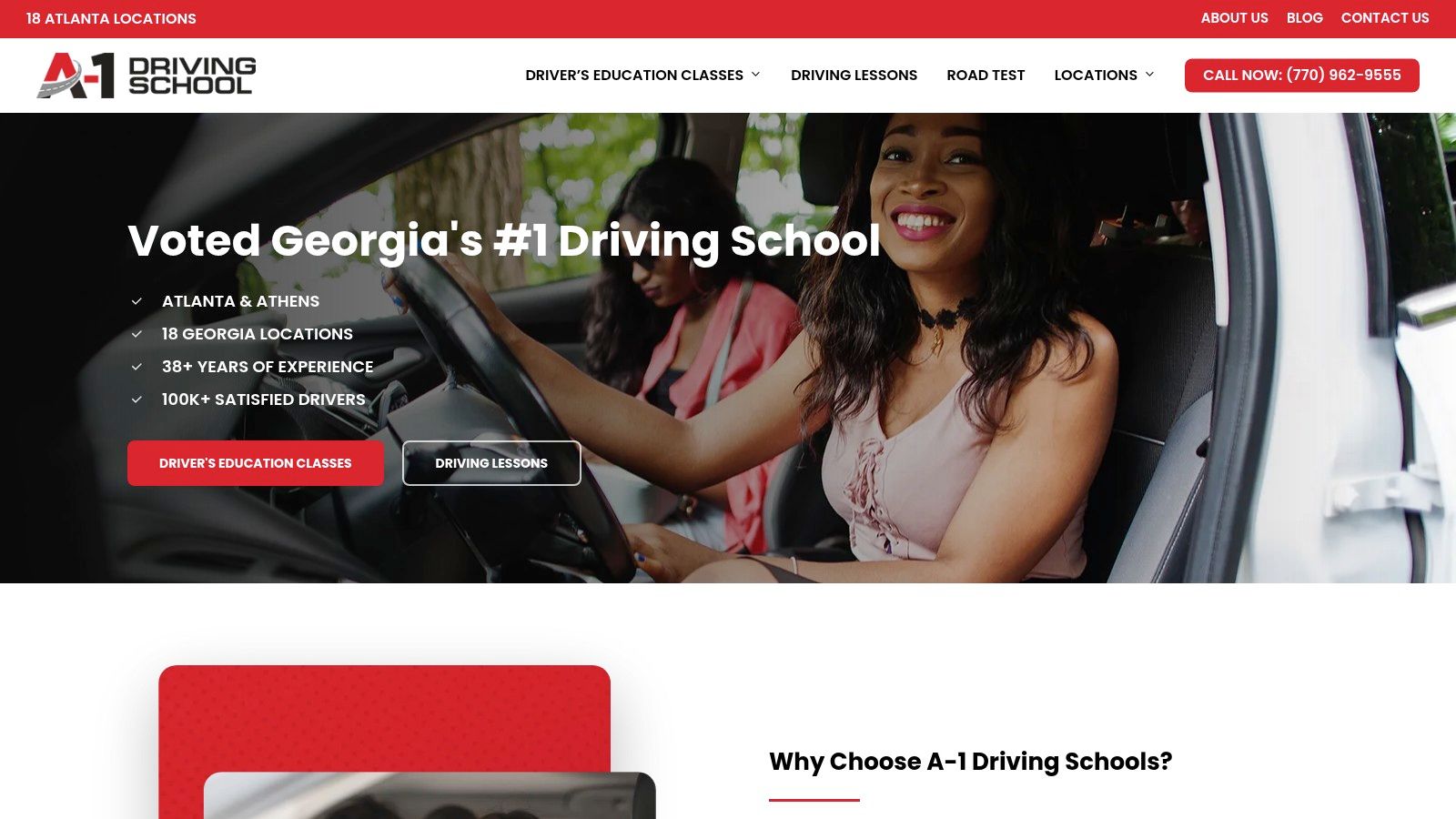
A-1 Driving School offers driving lessons and lesson packages for teens and adults, along with driver's education courses, online options, and road test services in Georgia. For many families, that makes it easier to keep classroom learning, road practice, and test preparation in one place.
Your Complete Path to a Georgia Driver's License
A lot of Georgia families start with the wrong question. They ask, "Do we need a defensive driving course?" For a new driver, the better question is, "What is the full path from permit to license, and what training fits each step?"
That shift matters. A ticket course solves a problem after something went wrong. A licensing plan helps a student build safe habits before they are tested on the road and before they are driving alone.
A practical order that works
For many teens, the process works best when you treat it like building a house. The classroom course lays the foundation. Driving lessons add the frame. Family practice helps everything hold together. Test preparation checks whether the student can use those skills under pressure.
A clear order helps:
Finish the driver's education course
For teens covered by Joshua's Law, this step is part of the licensing path, not an extra. Online classes often make scheduling easier for families balancing school, sports, and work.Begin behind-the-wheel lessons
Students start applying what they learned in class. They practice scanning, speed control, turns, lane position, parking, and decision-making in real traffic.Build in supervised family practice
Professional lessons and home practice work best together. The instructor teaches the method. The family helps the student repeat it until it becomes routine.Get ready for the road test
Road test prep helps students know what will be evaluated, what mistakes to avoid, and how to stay calm during the exam.Ask about cost support early
The Georgia Driver's Education Scholarship Grant Program may help qualifying families with training costs. It is easier to ask early than to wait until lessons are already being scheduled.
Why one coordinated plan helps
Parents often tell me the hardest part is not the driving. It is keeping the process organized.
One place handles the online class. Another handles lessons. Then the family has to sort out practice logs, test prep, and road testing. That kind of handoff creates confusion, especially for first-time drivers who already feel nervous.
A-1 Driving School offers driver education, driving lessons, online options, and road test services in Georgia. For many families, that means fewer moving parts and a clearer sequence from classroom learning to license readiness.
Insurance can also enter the conversation, but it should not be the main reason a beginner starts training. For a new driver, the primary value is stronger preparation. Any insurance benefit is secondary to learning the skills needed to pass the test and drive safely afterward.
Questions to ask before you enroll
Use these questions like a checklist:
- Is the course DDS-approved?
- Does the school offer the training needed for Joshua's Law students?
- Can the classroom portion be completed online?
- Are behind-the-wheel lessons available for the student's age and experience level?
- Is road test preparation or testing available?
- Can someone explain scholarship options in plain language?
Those questions help families tell the difference between a single class and a school that can support the full licensing process.
FAQs Your Next Steps to Becoming a Confident Driver
How do I enroll in a course or lesson package?
Start by deciding what you need. If you're a teen under Joshua's Law, that usually means driver's education first. If you're already licensed but want more confidence, lessons may be the better starting point. If your need is court-related or tied to points, a defensive driving option may fit.
Then choose the format that works for your schedule. Many families prefer online classroom instruction and separate behind-the-wheel appointments because it's easier to manage.
How does the Georgia Driver's Education Scholarship work?
The basic idea is simple. The Georgia Driver's Education Scholarship Grant Program helps qualifying students access professional training at reduced cost or at the state's expense, depending on eligibility. Because rules and availability can change, the best next step is to contact the school directly and ask what documents or qualifications are needed before applying.
Ask about scholarship timing early. Families often wait until they're ready to book lessons, then find out they could have started the funding process sooner.
Can I take my road test at a school location?
In many cases, yes. Some schools offer road testing services, which can be helpful for students who do better in a familiar environment than at a busy DDS location. If that's important to you, ask whether testing, test prep, and vehicle use are available together.
Should a new driver take defensive driving or driver's education?
For a new teen driver in Georgia, driver's education is usually the right first step because it connects directly to licensing requirements and skill building. Defensive driving is more useful when the goal is point reduction, a rule refresher, or a compliance need after a citation.
What if my teen is nervous?
That's common. Nervous drivers usually improve when practice is structured, calm, and consistent. A lesson package that starts with fundamentals and gradually adds traffic, parking, turns, and highway work often works better than pushing too much too soon.
If you're sorting through Joshua's Law, online driver's education, driving lessons, lesson packages, road testing, or scholarship options, A-1 Driving School is one place to review Georgia-specific programs and next steps before you enroll.