Most families start in the wrong place. They compare online course screens, quiz styles, and sale prices, but they don't ask the question that matters in Georgia. Will this option get a teen from Joshua's Law coursework to confident driving lessons, supervised practice, and the road test?
That gap is why online drivers ed reviews can be misleading. A Georgia-approved online course can satisfy the classroom side of Joshua's Law, but it won't by itself create a road-ready driver. Research reviewed by the California DMV found computer-based and internet instruction produced stronger study-exit performance than workbook and classroom formats, while a broader review found driver education improved knowledge, self-perceived ability, and behind-the-wheel performance, even though it didn't clearly reduce crashes or injuries (review summary, systematic review).
That's the lens I'd use as a Georgia instructor. Pick a course that meets the DDS requirement. Then look hard at the practical side: driving lessons, road test prep, scheduling, local support, and whether the school gives you a clean path to a license instead of just a completion certificate. The options below focus on Georgia Joshua's Law courses, but I'm reviewing them through total license readiness, not just online convenience.
1. A-1 Driving School
Need a Georgia option that covers more than the online certificate?
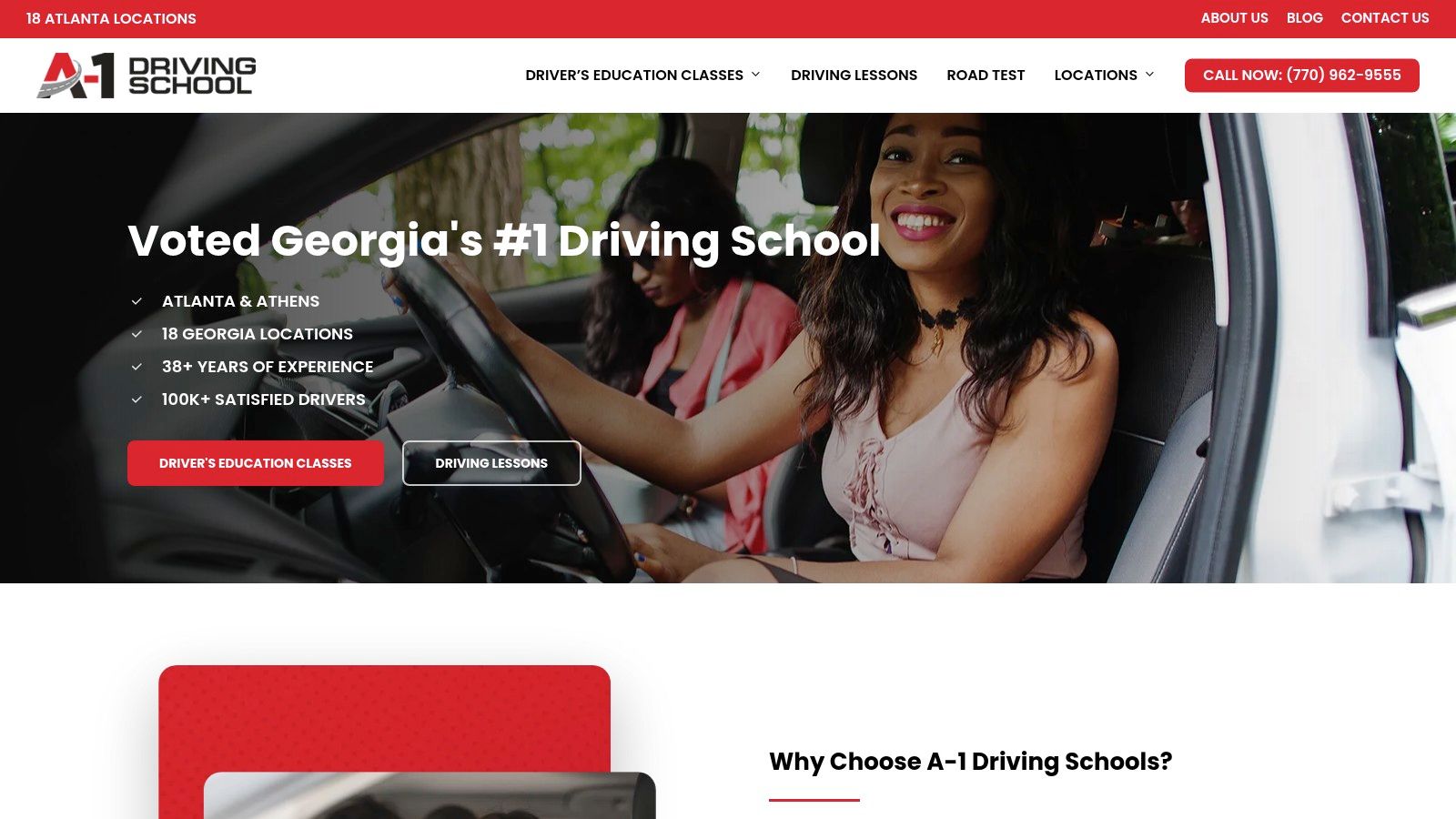
A-1 Driving School is the clearest example in this roundup of a provider built around license readiness, not just online theory. For a Georgia family, that difference matters. A teen may finish Joshua's Law coursework online and still need behind-the-wheel instruction, parking practice, road test prep, and a workable plan to get across the finish line. A-1 handles those pieces under one roof through A-1 Driving School.
That local setup changes the buying decision. Families are not just choosing course design. They are choosing whether the school can support the next steps after the online hours are done.
Why A-1 is different from online-only providers
A-1 operates as a driving school first, with online education as one part of the service.
- Joshua's Law support: Students can complete the classroom requirement and move into practical training without having to start over with another provider.
- Behind-the-wheel lessons: This is the main advantage. Families who need supervised driving instruction, extra confidence-building, or focused skill work can book it through the same school.
- Road test prep and testing support: Test-day readiness often falls apart on logistics, not knowledge. A-1 helps students prepare for that step instead of leaving parents to piece it together.
- Local familiarity: For metro Atlanta families, local instructors, local scheduling, and local operations usually matter more than a polished app.
I'd point a nervous parent here before I'd point them to a theory-only platform. The reason is simple. A completion certificate does not teach lane control, parking, gap judgment, or how to settle down before a road test.
Practical strengths
A-1 also appears built to handle real family scheduling pressure. The school has been serving Georgia drivers for decades, offers multiple learning formats, and works within the metro Atlanta market where appointment coordination can get messy fast.
One detail stands out to me as an instructor. A-1's value is strongest for teens who need a straight path from coursework to seat time. That is the gap many online reviews miss.
Practical rule: In Georgia, judge an online drivers ed option by what happens after the final quiz. If the provider cannot help with lessons, road test prep, or scheduling, parents end up doing that work themselves.
Trade-offs to consider
A-1 is not the right fit for every student.
- Best fit: Georgia families, especially in metro Atlanta, who want one provider for coursework, lessons, and test preparation.
- Less ideal fit: Students outside A-1's operating area, or shoppers who want instant public pricing laid out in a simple online comparison chart.
- What to ask before enrolling: lesson availability, pickup area, package options, road test support, and how quickly a student can move from online study into driving time.
If the goal is total license readiness, A-1 sets the standard for this list because it connects online instruction to the part that builds drivers. That is the core trade-off in Georgia. Online-only courses can cover the classroom requirement. A-1 is built to help finish the job.
2. Aceable
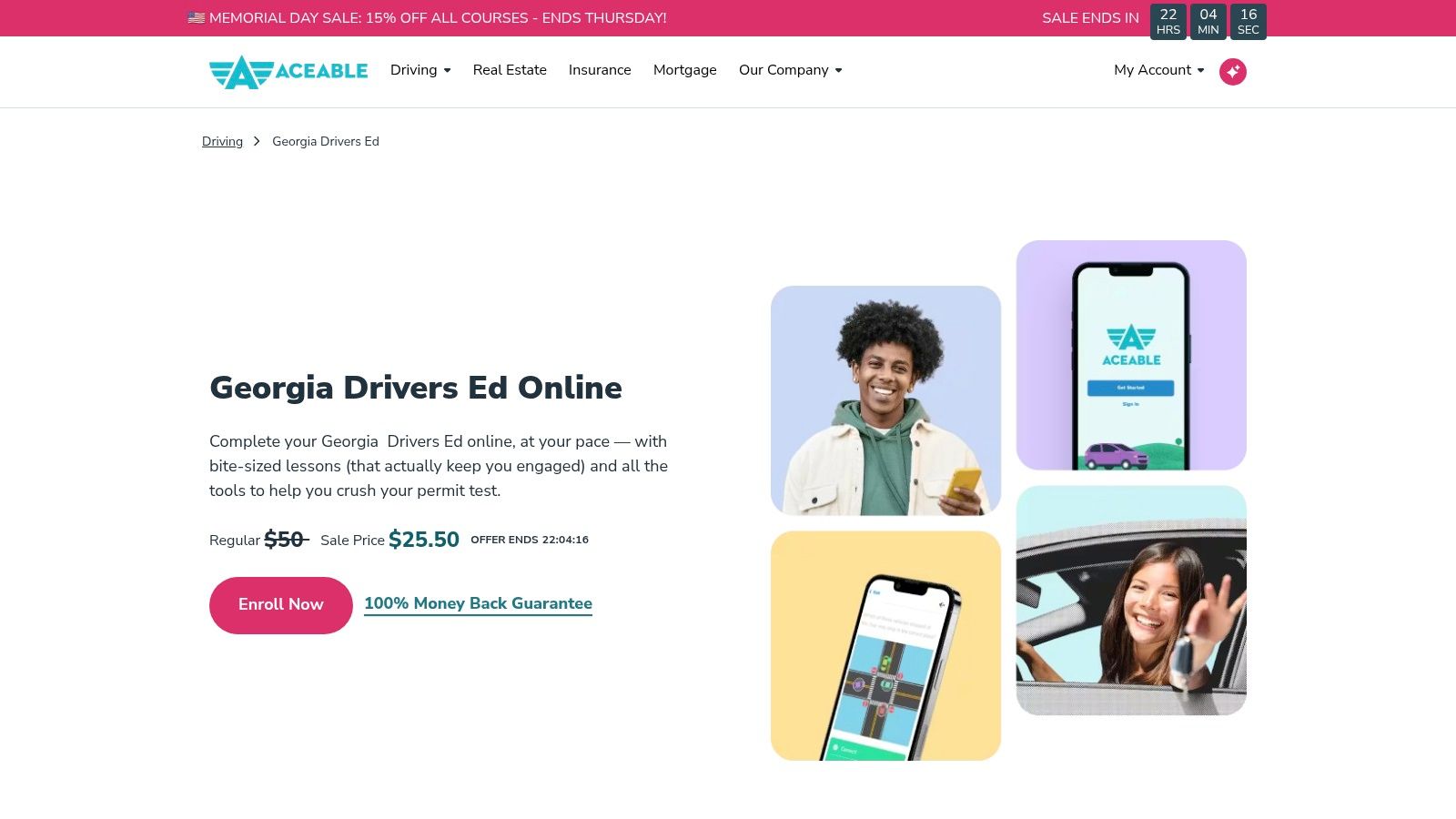
Aceable is one of the better picks for teens who live on their phones and lose focus in long, text-heavy courses. Its Georgia Driver's Ed course is DDS-approved for the classroom side of Joshua's Law, and the platform is clearly designed for short study sessions.
That mobile-first design is the main reason families choose it. The course feels built for modern teen behavior. Log in, complete a short lesson, track progress, come back later.
Best fit for students who hate stale course design
Aceable's strengths are straightforward.
- Short lesson flow: The “snackable” structure is easier for many teens than old-school chapter blocks.
- App and web access: Good if the student switches between devices.
- Georgia-specific positioning: The course page is clear that it's built around the state requirement rather than generic national content.
Public review signals also matter in this category because online driver education is no longer a fringe product. One review roundup notes TeenDrivingCourse.com says it has served over 4 million customers, while DriversEd.com says it has trained over 3 million drivers and has operated for over 20 years (market review context). That doesn't tell you Aceable is best, but it does show families are choosing among mature, high-volume providers where reputation and user experience matter.
Aceable's downside is the same one I see with many app-forward courses. A teen can finish the theory and still be weak in mirrors, lane position, turns, parking, or test-day composure. Some students also get tired of repetitive content once the novelty wears off.
Online coursework can hold attention. It can't replace a quiet instructor correcting speed control in a neighborhood or talking a nervous student through a lane change.
If your teen wants a polished online experience, Aceable is a strong classroom pick. Just pair it with actual driving lessons instead of assuming course completion means they're ready.
3. DriversEd.com
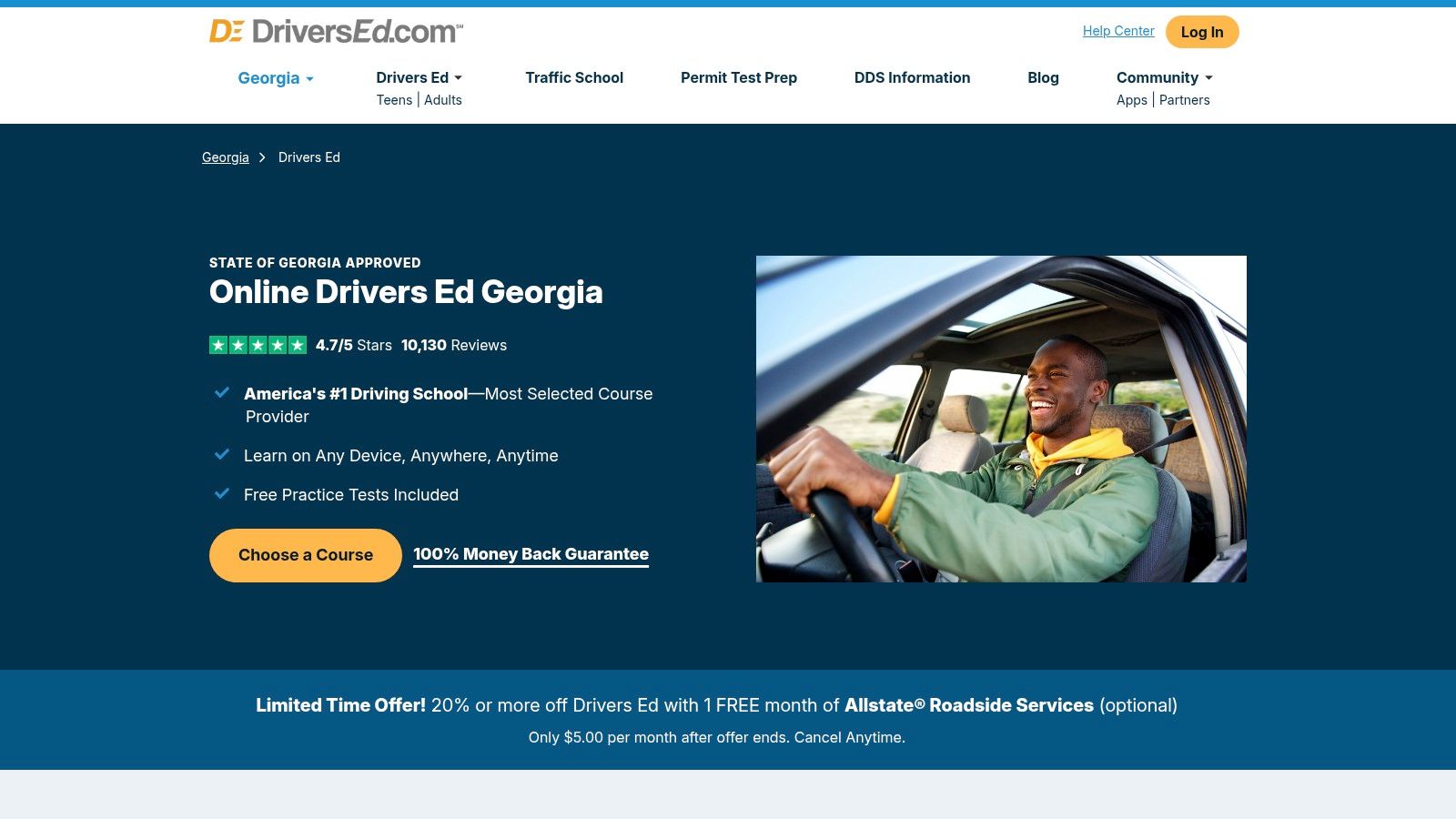
DriversEd.com is the safe choice for families who want a known national provider. Its Georgia online drivers ed course covers the classroom requirement for teen drivers under Joshua's Law, and the platform has the feel of a long-established training business rather than a startup trying to entertain its way through driver education.
That can be a plus. Some parents prefer a provider that feels steady and familiar.
Strong for parents who want a conventional provider
DriversEd.com does a few things well:
- Any-device access: Teens can move through the course on the device they already use.
- Unlimited practice tests: Helpful for students who need repetition before the knowledge exam.
- Clear Georgia FAQs: Good for parents who want administrative questions answered in one place.
There's also broader market context behind this type of provider. One market report values the driver education market at $4.2 billion in 2024 and projects it will reach $7.9 billion by 2033, with North America accounting for over 32% of the global market share in 2024. A separate study cited in the same source segments the market at 55% online and 45% offline (driver education market report). In plain language, online delivery is the mainstream lane now, not the backup lane.
That said, DriversEd.com can feel commercial in ways some families won't love. Watch for upsells, especially anything optional tied to checkout. Promotional pricing can also shift, so read the purchase page carefully before enrolling.
If your goal is “get the classroom requirement done through a reputable national provider,” this one works. If your goal is “get my teen fully prepared to drive in Georgia traffic,” you'll still need local driving lessons and road-test practice after the course ends.
4. I Drive Safely
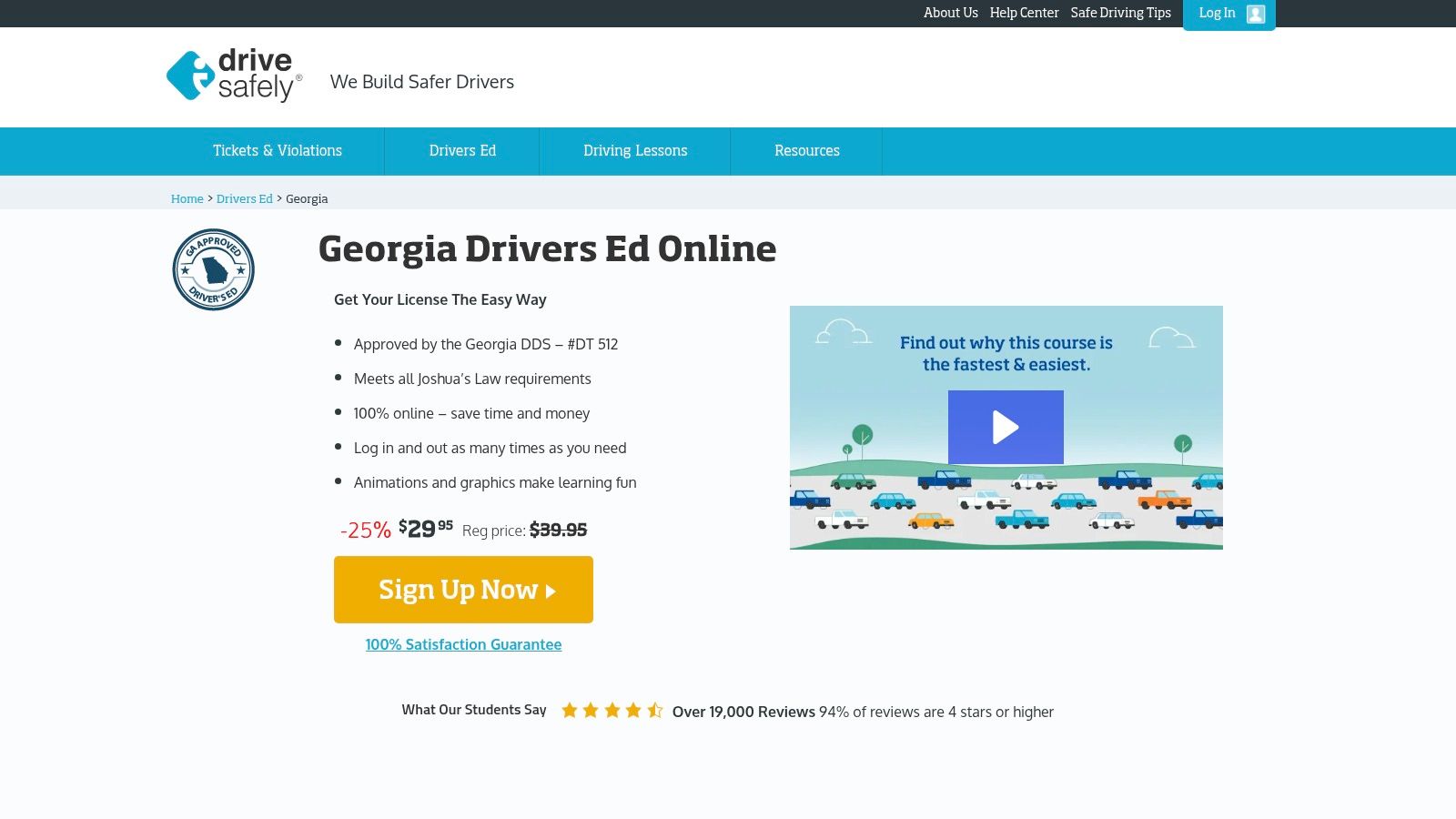
I Drive Safely's Georgia Drivers Ed is a practical option for families who want a self-paced course with a more traditional structure. It's DDS-approved for Georgia, fully online, and leans on animations and graphics to break up the reading.
I'd put this one in the “steady and serviceable” category. It isn't trying to feel like a social app, and for some households that's a benefit.
A good match for parents who want clarity
The course setup is appealing when parents are closely involved.
- Clear Georgia requirement guidance: The site explains the DDS angle in plain language.
- Unlimited retakes: That takes some pressure off students who freeze on quizzes.
- Parent-facing information: Insurance discount and tax-credit guidance can matter when families are doing the paperwork side of driver education.
The strongest reason to choose I Drive Safely is that it tends to reduce confusion. Some online schools focus so much on selling convenience that they under-explain what comes next. This provider does a better job spelling out process details for families.
The drawback is user experience. Compared with app-first competitors, the format feels more web-first and more conventional. That isn't a dealbreaker, but students who want a highly polished mobile feel may lean elsewhere.
A course that explains the Georgia process clearly is often better for parents than a course that simply looks more fun.
As with the others, the missing piece is in-car work. If your teen learns slowly under stress, I wouldn't rely on online theory alone. Use the course for compliance, then get them into professional lessons where an instructor can correct habits early.
5. Safe2Drive
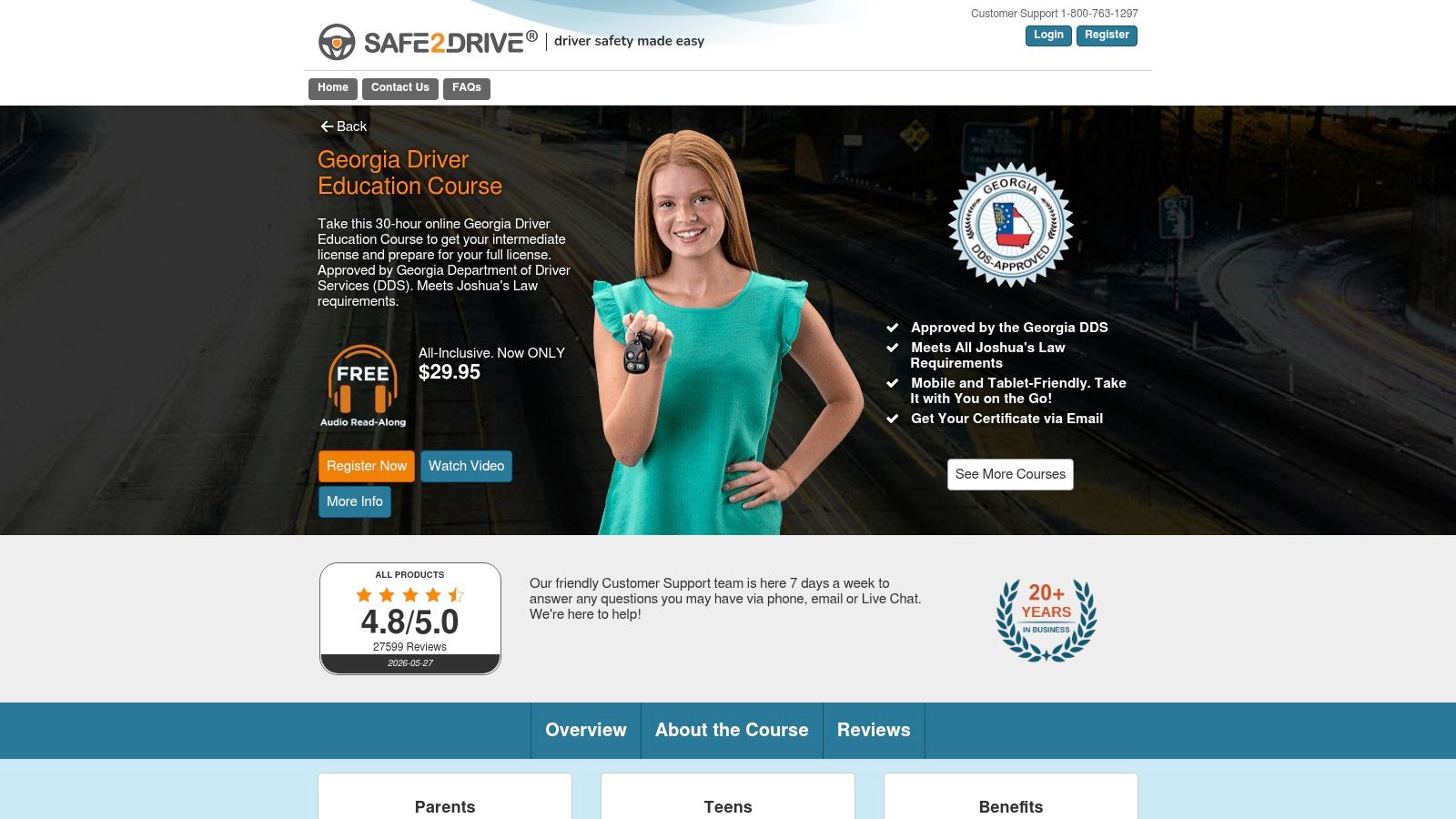
Safe2Drive's Georgia Driver Education appeals to budget-conscious families who want simple administration. The site emphasizes straightforward pricing, no hidden fees messaging, mobile and tablet access, audio read-along, and certificate handling.
That combination matters more than people think. In online drivers ed reviews, a low sticker price can look great until a family runs into delivery fees, retest charges, or confusion about reporting.
Where Safe2Drive makes sense
Safe2Drive is best for families who value utility over style.
- Transparent setup: The course presentation is direct and easy to understand.
- Audio read-along: Useful for students who absorb better by listening.
- Certificate and reporting workflow: Parents like knowing what happens after completion.
That cost-transparency angle is important. Much of the online driver education market talks about affordability, but families often still have unanswered questions about hidden fees, retest charges, certificate delivery, or whether grant-backed access exists for eligible students. One California example shows grant-backed access can reduce the standard cost to zero for eligible students, which highlights that affordability is about total out-of-pocket cost, not just advertised tuition (affordability example).
Safe2Drive's trade-off is easy to spot. The interface is functional, not exciting. If a teen needs a lot of engagement to stay on task, they may find it plain.
I wouldn't choose this course for entertainment. I would choose it if the family wants a clean, low-friction way to complete the classroom requirement and they already have a solid plan for supervised practice or paid driving lessons afterward.
6. Joshua'sLaw.com
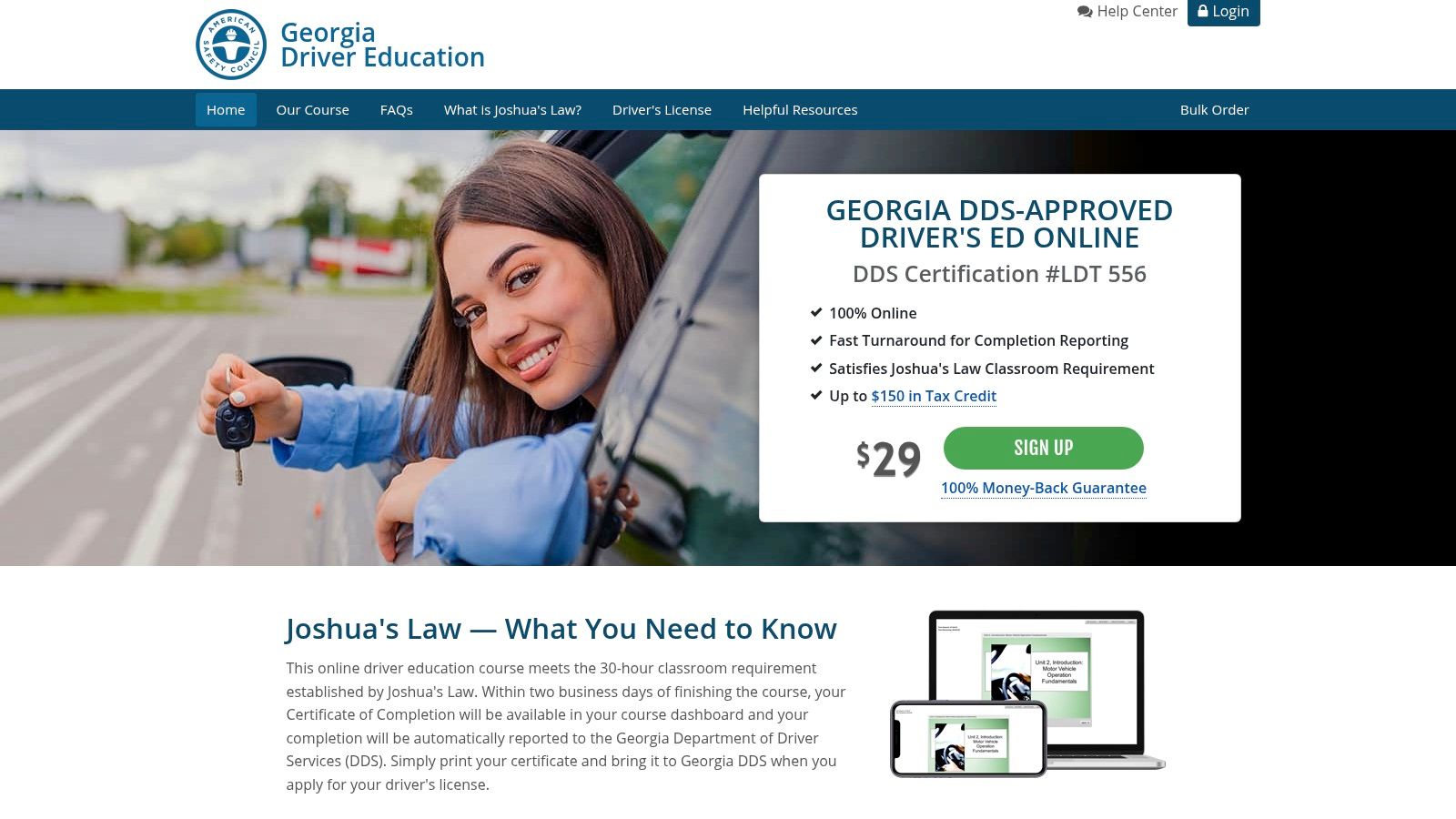
Joshua'sLaw.com has one clear advantage right away. It's Georgia-specific in both branding and process. For a parent who doesn't want to sort through national menus, that simplicity is useful.
The course is administered under American Safety Council and focuses heavily on certificate availability, DDS reporting, and Georgia guidance. That makes it appealing to families who want fewer moving parts and less guesswork.
Best for Georgia-only focus
Some providers are broad marketplaces. Joshua'sLaw.com feels narrower and more directed.
- Georgia-first workflow: That reduces the chance of enrolling in the wrong state product.
- Fast reporting emphasis: Helpful for families working on a tight timeline.
- Money-back guarantee and practice resources: Solid support features for a compliance-focused course.
This is one of the easier options to recommend when the family's top concern is process clarity. It doesn't try to be everything. It tries to get the Georgia classroom requirement done cleanly and documented properly.
The limitation is that it feels more traditional than mobile-native competitors. If your teen is the kind of student who engages best with slicker app design, this may feel dry. Still, dry isn't always bad in driver education. Sometimes plain and clear is exactly what parents want.
From an instructor's standpoint, this is a reasonable online classroom choice. I'd just remind any family using it that Joshua's Law completion is not the same thing as driving readiness. Those are different milestones.
7. NHSA
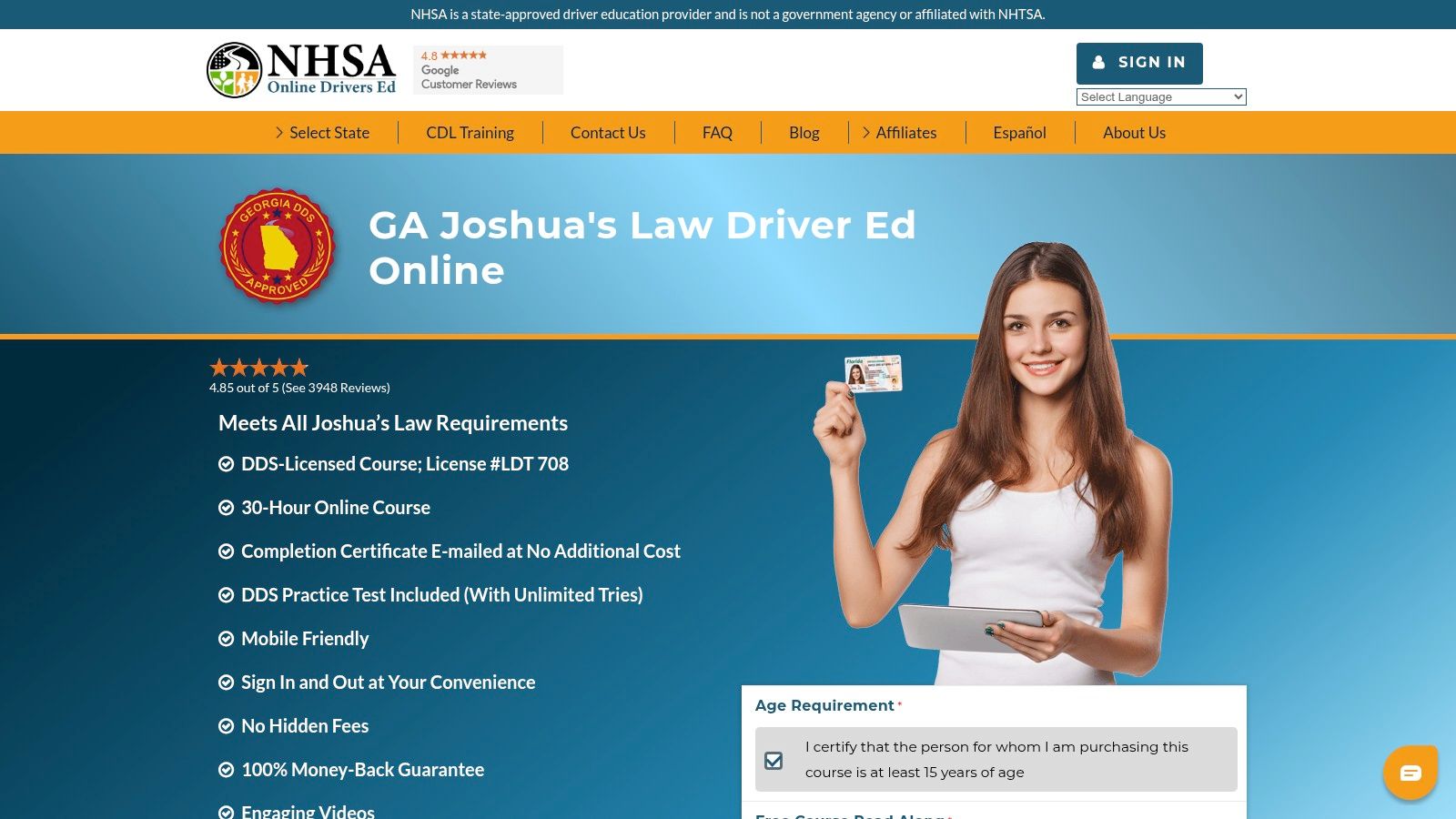
NHSA's Georgia Joshua's Law course is one I'd put on the shortlist for price-conscious families who still want visible licensing information and fast certificate processing. The product page makes a point of showing DDS licensing details, Georgia step-by-step guidance, and common parent resources.
That kind of transparency builds confidence. You can tell quickly whether the provider is trying to answer practical questions or just push checkout.
A sensible low-cost contender
What stands out with NHSA:
- Visible DDS licensing information: Always a good sign when a provider makes approval details easy to find.
- Audio and mobile-friendly delivery: Helpful for students who don't want to sit at a desktop for every lesson.
- Fast certificate handling: Useful when paperwork timing matters.
There is one point of confusion. The brand name can make people think of the federal NHTSA. The site clarifies that this is a private licensed school, but families should still read carefully so they know exactly who they're buying from.
The other thing to watch is promotional pricing. Sale messaging changes, and that's common across the category. Compare the final checkout terms, not just the top-line banner.
If your teen is disciplined and you mainly need an approved Georgia online course without a lot of bells and whistles, NHSA is a reasonable pick. If your teen needs coaching, confidence-building, or correction behind the wheel, save your energy and budget for good driving lessons after the course.
Top 7 Georgia Online Drivers Ed Comparison
| Provider | Implementation complexity | Resource requirements | Expected outcomes | Ideal use cases | Key advantages |
|---|---|---|---|---|---|
| A-1 Driving School | Moderate, mixed in‑person and online delivery, scheduling required | Local access to locations, instructors, vehicles; admin for scholarships | Joshua's Law certification, behind‑the‑wheel readiness, road‑test prep | Georgia teens, school programs, adults needing lessons or road‑test assistance | Long experience, Fulton County school contract, multiple locations, scholarship program |
| Aceable, Georgia Driver's Ed | Low, fully online/app, self‑paced snackable lessons | Smartphone or computer; self‑study time | DDS‑approved 30‑hour certificate with mobile progress tracking | Tech‑savvy teens and families seeking mobile‑first learning | Mobile‑first UX, bite‑sized lessons, strong public reviews |
| DriversEd.com, Georgia Online Drivers Ed | Low, device‑agnostic online course | Any internet‑connected device; time for lessons and practice tests | Joshua's Law completion, unlimited practice tests | Families wanting an established national provider with practice materials | Established brand, transparent pricing, unlimited practice tests, money‑back guarantee |
| I Drive Safely, Georgia Drivers Ed | Low, 100% online, self‑paced with multimedia | Computer preferred; self‑study; multimedia access | DDS‑approved certificate, unlimited retakes and practice | Families wanting multimedia instruction and parent guidance | Animations/graphics, unlimited retakes, parent resources on insurance/tax credits |
| Safe2Drive, Georgia Driver Education | Low, simple online UI, straightforward workflow | Mobile/tablet/PC; minimal setup | State‑approved certificate, DDS reporting, emailed certificate | Cost‑conscious families prioritizing transparent fees and simple admin | Very competitive pricing, no hidden fees, clear certificate handling |
| Joshua'sLaw.com, American Safety Council | Low, Georgia‑focused online course with standard flow | Device access; relies on ASC for reporting | Fast DDS reporting and certificate delivery, money‑back option | Families wanting Georgia‑specific guidance and quick processing | Georgia focus, fast reporting, compliance backed by American Safety Council |
| NHSA, Georgia Joshua's Law Online | Low, mobile‑friendly online delivery with quick processing | Device; self‑study; attention to sales/promotions | DDS‑approved certificate, rapid certificate email, price‑match option | Price‑sensitive families needing fast certificate delivery | Aggressive pricing, price‑match & money‑back guarantees, transparent licensing info |
From Online Course to On-the-Road Confidence
How can you tell whether an online course prepares a teen for a Georgia license, or only gets them to the certificate screen?
That is the central question behind online drivers ed reviews in Georgia. A state-approved online course can satisfy the classroom side of Joshua's Law. It can teach signs, rules, right-of-way, and test material. License readiness takes more than that. New drivers still have to apply those rules in traffic, under pressure, with another car closing in and a decision due in seconds.
I see the same gap every year with teen drivers. Students may pass the online portion and still struggle with lane changes, left turns across traffic, speed control on busy roads, and staying calm during the road test. Families usually find that out late, after the certificate is done and the test date is getting close.
That is why I tell parents to judge these courses by the full path to a license, not only by the checkout price. Online-only providers handle the theory well. They do not replace supervised driving, professional correction, and road test practice in a real car.
A-1 Driving School matters in this comparison for one reason. It covers the parts many online providers leave to the parent to arrange later. A student can complete the classroom requirement, book behind-the-wheel lessons, and get road test preparation through one school. From an instructor's perspective, that usually means fewer delays, fewer mix-ups, and a clearer plan for the family.
Use this checklist before you choose:
- Need only the Joshua's Law classroom requirement? Any Georgia-approved online course on this list can work.
- Need actual driving skill development? Choose a school that also offers behind-the-wheel lessons.
- Have a nervous or inexperienced teen? Start professional lessons early, before weak habits settle in.
- Want less paperwork and fewer scheduling problems? Use one provider for classwork, driving lessons, and test prep if possible.
- Comparing prices? Add the cost of lessons, practice time, and road test prep before calling one option cheaper.
A completion certificate shows the class requirement is finished. It does not show that a teen can judge gaps, handle a four-way stop, merge onto a fast road, or recover after a mistake without freezing.
That is the lens that matters most in Georgia. Online courses can meet the education requirement. A-1 fills in the driving side, which is what turns course completion into real license readiness.