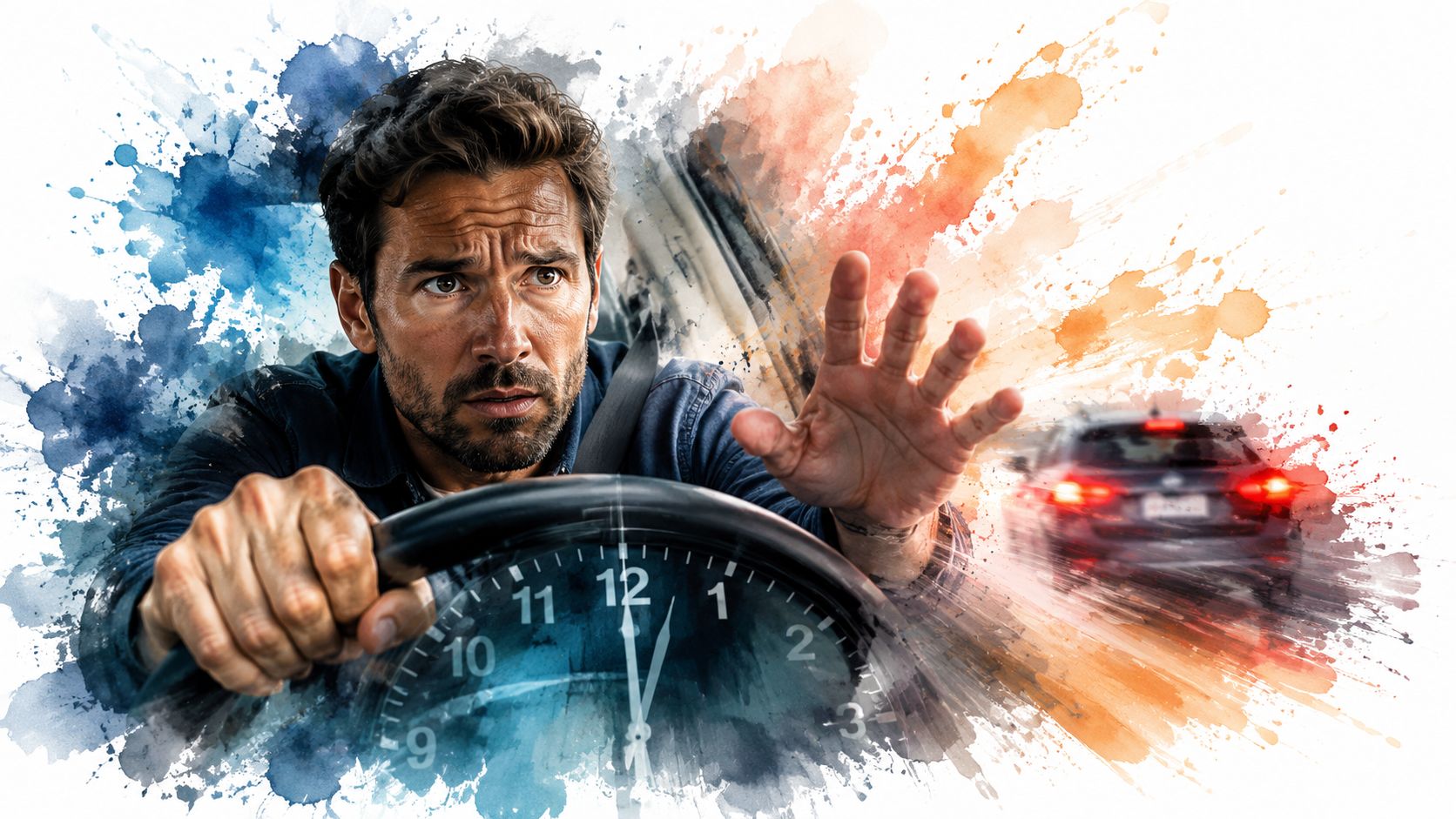
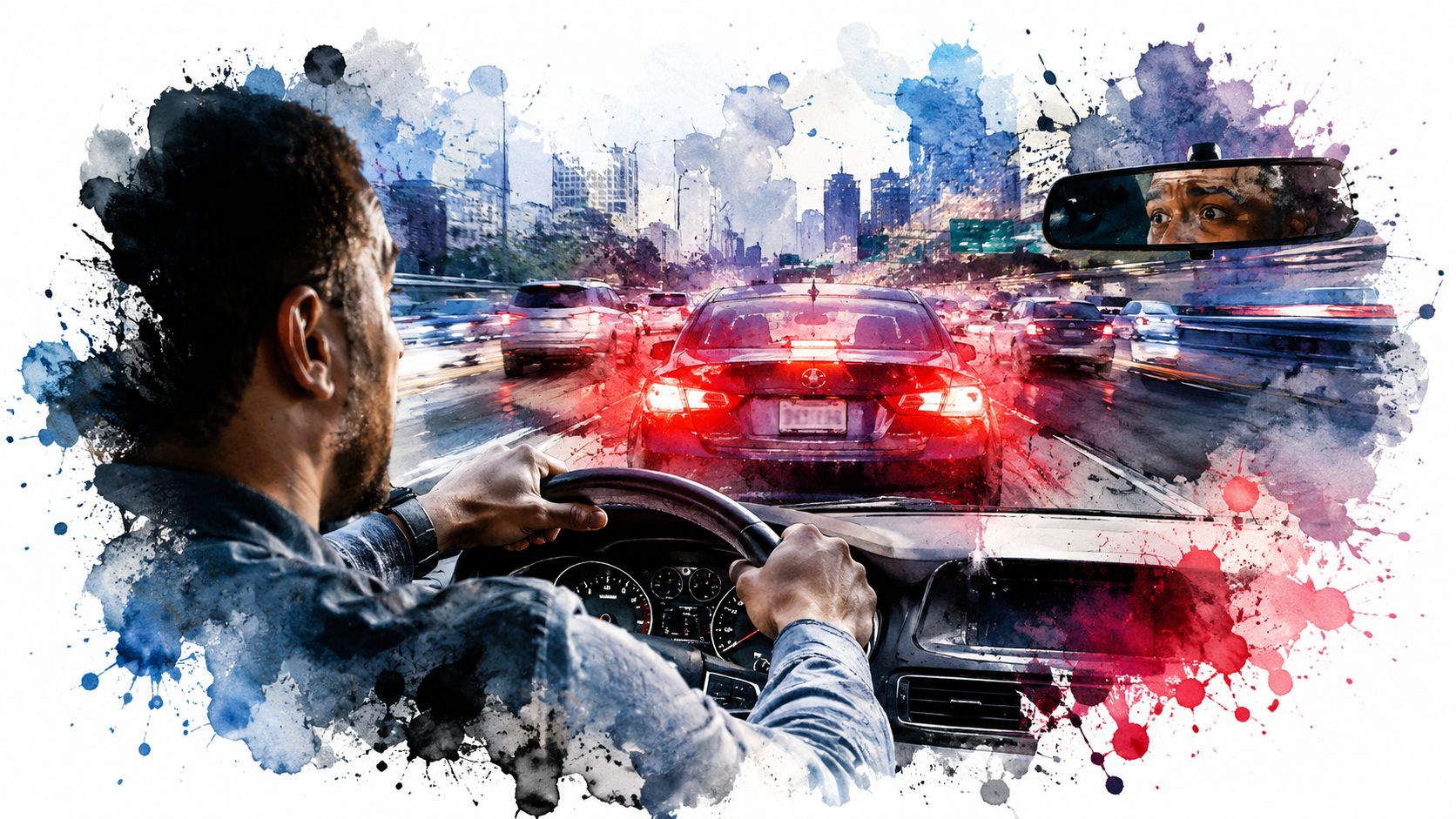
You're driving on I-285, traffic is moving fine, and then the brake lights ahead flare up all at once. In that moment, you don't have time to “think about” driving. You have to notice the problem, choose the right move, and act smoothly.
That's reaction time.
For Georgia drivers, fast and controlled reactions matter long before an emergency. They show up when you judge a yellow light, check a blind spot, ease into a lane change, or stop cleanly behind the car in front of you. They also matter on the Georgia road test, where an examiner is watching how quickly and calmly you respond to everyday situations.
The good news is that reaction time isn't just something you're born with. You can train it. You can measure it. And you can build better habits that help your brain and body work together more quickly behind the wheel.
What Is Reaction Time and Why It Matters for Drivers
A lot of students think reaction time means “fast hands” or “quick feet.” That's only part of it. Reaction time is the full chain from noticing something to doing something about it.
According to this overview of reaction time and cognition, reaction time depends on perception, attention, decision-making, and motor coordination. Fatigue, multitasking, and distractions can slow it down, while sleep and regular physical exercise support quicker responses.
The three parts drivers need
When I teach beginners, I break reaction time into three simple steps:
Perceive
You see the brake lights, the pedestrian at the curb, or the car edging out of a driveway.Decide
You judge what the situation means. Do you brake, steer, cover the brake pedal, or hold your lane?Act
Your foot moves, your hands steer, and the car responds.
That whole process happens fast, but it still takes time. If one part gets delayed, the whole chain gets delayed.
Practical rule: A driver who notices hazards early usually looks “faster” than a driver with quick reflexes but poor attention.
Why this matters on Georgia roads
Georgia road test skills are built on this same pattern. You're constantly being evaluated on whether you can see, judge, and respond with control. That includes:
- Stopping smoothly: Not too late, not too hard.
- Turning safely: Watching traffic, speed, and lane position together.
- Backing and parking: Using mirrors, space judgment, and slow, accurate movement.
- Managing intersections: Reading signs, checking for cross traffic, and moving only when it's safe.
A lot of nervous drivers confuse speed with skill. They rush. That hurts reaction time because the brain gets cluttered. A calmer driver often responds better.
One of the best beginner frameworks for this is the IPDE driving process explained here. It teaches drivers to identify hazards early instead of waiting until the last second. For a broader science-based overview, this clinical guide to faster responses is also useful.
Reaction time can be trained
Many students assume, “I'm either quick or I'm not.” But that's not how it works. Better scanning, stronger focus, and more deliberate practice can improve how quickly you respond in real driving situations.
Think about a student learning parallel parking. On day one, they're overwhelmed. On a later lesson, they spot the curb, adjust the wheel, and correct the car much faster. Their brain didn't become different overnight. It got more efficient through practice.
That's the heart of how to improve reaction time for driving. Train the eyes, train the attention, and train the body to respond smoothly under pressure.
Establish Your Baseline Reaction Speed at Home
Before you try to improve anything, find out where you are right now. A baseline gives you something simple to track. It also makes practice feel more real, because you can compare your results over time.
You don't need fancy equipment to start. In fact, offline drills work well. A National Institute on Aging announcement about physical-only drills reported that drills such as tennis ball wall catches and partner drop drills improved reaction time by 12% in 8 weeks without digital tools.
Try the ruler drop test
This is one of the easiest home tests.
How to do it
- Get a ruler: A standard school ruler works.
- Ask a partner for help: They hold the ruler vertically.
- Place your hand near the bottom: Keep your thumb and index finger open, ready to catch.
- Don't guess: Your partner should drop the ruler without warning.
- Catch it quickly: Note where you caught it.
Do it several times and write down the catch point each time.
What does this tell you? It gives you a rough picture of how quickly your brain notices a change and sends a signal to your hand. That's not exactly the same as braking a car, but the basic process is similar. You detect, decide, and move.
Use a simple digital test too
A digital visual test can help you compare days when you're rested versus distracted. Many drivers use tools like Human Benchmark because the task is simple: wait for the color change, then click as fast as you can.
A few ground rules make your result more useful:
- Sit normally: Don't lean into the screen.
- Test when you feel alert: Not right after waking up or when you're exhausted.
- Run several tries: One fast click doesn't mean much by itself.
- Track patterns: Look for consistency, not perfection.
Don't chase a “best ever” score. Chase a stable, repeatable level of focus.
How to read your results like a driver
The number itself matters less than what affects it.
If your performance drops when you're tired, that's a driving lesson. If you do better after a walk, better sleep, or a calm start, that matters too. Reaction time isn't only about hands moving quickly. It reflects your attention and mental readiness.
Here's a simple way to use baseline testing:
| Test | What it checks | Driving connection |
|---|---|---|
| Ruler drop test | Hand-eye response | Quick physical response to a sudden event |
| Screen click test | Visual processing | Noticing and responding to brake lights or signals |
You can also make the ruler test more driving-specific by changing the setup. Stand instead of sit. Have your partner vary the timing. Try catching with your non-dominant hand. That slight unpredictability is closer to real traffic, where the road never gives you the same cue at the same moment every time.
Brain Training Drills to Sharpen Your Responses
Testing is useful, but improvement comes from repeat practice. The brain gets better at what you ask it to do consistently. That's where neuroplasticity comes in. CogniFit's explanation of response time and neuroplasticity notes that consistent training strengthens neural networks, and that 15 minutes of training two to three times weekly can lead to measurable progress.
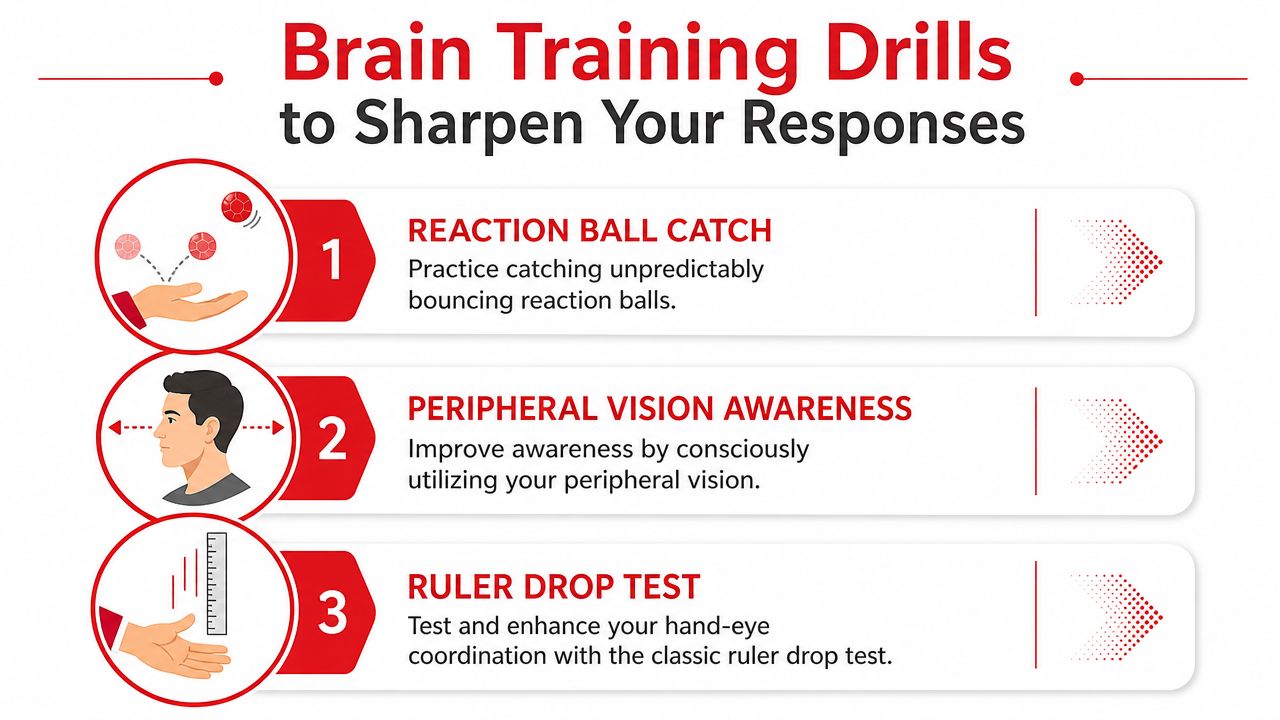
Drill one with a ball and a wall
A tennis ball is one of the best low-cost tools for reaction training.
Throw it against a wall and catch it. Change hands. Change angles. Step left or right before the catch. If you have a reaction ball that bounces unevenly, even better, because it forces your eyes and hands to adjust faster.
Why does this help drivers? Because driving isn't just about one steady gaze straight ahead. You have to process movement, adjust quickly, and stay coordinated.
- For intersections: It trains quick recognition when motion appears from the side.
- For parking lots: It helps with sudden pedestrian or vehicle movement.
- For backing up: It sharpens hand-eye timing.
Drill two with active scanning
Stand in a room and pick a target color. Then scan and name objects of that color as quickly as you can. Next round, switch to shapes, numbers, or letters.
This sounds simple, but it trains your eyes to move purposefully instead of staring in one place. On the road, that translates to checking mirrors, signs, lane markings, and cross traffic without getting stuck on one object.
A lot of students fail to spot hazards early because they over-focus on what's directly in front of the hood. Broad, active scanning is a safer habit.
Drivers who keep their eyes moving usually have an easier time making calm, early decisions.
If you want to see a more game-like version of reactive visual training, this top UK interactive game shows the kind of fast target-response exercise that many coaches use for attention and speed work.
Drill three with two tasks at once
Try this at home. March in place while a family member gives you simple directions such as “left,” “right,” “stop,” or “turn.” Follow the command immediately.
This is useful because driving is rarely a one-input activity. You're steering, checking speed, reading signs, and watching other vehicles at the same time. A drill that combines movement and instruction helps you practice staying organized under light pressure.
Keep it safe and simple. Don't make the task so hard that it turns sloppy.
Drill four with repeated movement
One powerful principle is repetition. A Johns Hopkins Medicine report on practice and motor response found that constant repetitive movement improved reaction-related performance by 20 to 30 milliseconds in a study of healthy adults.
For a driver, this explains why repeated smooth practice matters so much. The more often you rehearse a movement correctly, the less mental effort it takes later.
Good examples include:
- Mirror check to brake cover: Practice moving your eyes to the mirror, back to the road, then resting your foot ready over the brake.
- Hands from turn to straighten: Rehearse smooth steering recovery in an empty practice space.
- Brake then scan: Practice stopping, checking surroundings, and preparing to move again.
These drills aren't flashy, but they work because they build cleaner habits. That's the key answer to how to improve reaction time for driving. You don't just train speed. You train speed with judgment.
The Impact of Sleep Nutrition and Focus on Your Reflexes
A driver can practice drills all week and still perform poorly if the brain is under-rested and overloaded. Think of your reaction speed like an engine. If the engine is badly maintained, pressing the pedal harder won't fix the problem.

Sleep is the first upgrade
Most students underestimate how much tiredness affects simple driving decisions. A sleepy brain notices hazards later, processes information more slowly, and makes rougher decisions.
That's one reason I tell road test students not to cram late into the night. A calm, rested driver usually does better than a stressed driver who stayed up “preparing.” If drowsiness is part of your driving problem, this guide to drowsy driving risks gives a clear look at what fatigue does behind the wheel.
For readers interested in deeper sleep-related wellness habits, this article on SleepHabits on nitric oxide sleep is a useful side read.
Food and hydration affect attention
You don't need a perfect diet to become a better driver. You do need steadier energy.
A heavy, greasy meal right before practice can leave you sluggish. Skipping food entirely can make you distracted and irritable. Many learners do best when they show up lightly fed and hydrated, with enough fuel to focus but not so much that they feel tired.
Try simple habits:
- Eat earlier, not in a rush: Give your body time to settle before driving.
- Choose steady energy: Foods that don't leave you feeling weighed down are often better before a lesson or test.
- Drink water consistently: Mild dehydration can make concentration harder.
Mindfulness improves usable speed
This surprises a lot of people, but a calmer brain often reacts faster. Research cited in this summary of the University of Kentucky mindfulness finding found that mindfulness and meditation practices can improve reaction time by up to 14%.
That doesn't mean you need a long meditation routine. It means presence matters.
Here's a simple pre-drive reset:
- Sit in the parked car.
- Put both hands loosely on the wheel.
- Take a slow breath in.
- Exhale fully.
- Look ahead and name three things you can see.
- Start driving only after your mind settles.
A distracted driver often feels busy, but not effective. A focused driver notices more and reacts earlier.
That's especially important on the Georgia road test. Nerves can make students rush turns, miss signs, or brake too abruptly. A short mindfulness habit helps clear the extra noise so your reactions stay clean and controlled.
Putting It All Together with Professional Driver Training
Home drills can help, but the true test is applying those skills in a moving vehicle with traffic, signs, pedestrians, and pressure. That's where reaction time becomes driving skill.

Why car-based practice changes everything
At home, you can train attention, hand-eye coordination, and focus. In the car, you have to combine them while also controlling speed, lane position, mirrors, and timing.
That's why many learners feel “fine” with online quizzes but freeze at a four-way stop. The issue usually isn't knowledge alone. It's the speed of safe decision-making in a real environment.
A supervised setting gives you something home drills can't provide: live correction. If you brake late, turn too wide, or hesitate too long, an instructor can point out exactly what happened and help you fix it right away.
Road test skills depend on reaction quality
Georgia road test success doesn't come from flashy driving. It comes from controlled responses.
The examiner is looking for habits like these:
- You notice hazards early: Not after the car is already too close.
- You respond smoothly: No panic braking, abrupt steering, or confused hesitation.
- You recover well: If something changes, you adapt without losing control.
- You stay organized: Mirrors, speed, signals, and spacing all work together.
Hazard awareness matters so much because many “slow reactions” start as “late observations.” This hazard perception training resource is useful because it reinforces the idea that better observation often creates better reaction time.
Why structured instruction helps beginners and returning drivers
Teen drivers often need repetition and coaching. Adult drivers may need confidence, especially if they haven't driven in a while or are adjusting to busy metro Atlanta traffic.
Structured training helps both groups by turning vague advice into repeatable habits. Instead of “be quicker,” the lesson becomes:
- check farther ahead
- cover the brake sooner
- reduce clutter in your attention
- keep your hands ready
- respond early, not suddenly
Smooth reactions are usually trained reactions.
That matters whether you're preparing for the Georgia road test, building confidence after earning your permit, or starting from the basics with Joshua's Law coursework, online driver education options in Georgia, and practical road work. Classroom learning explains the rules. On-road instruction teaches your brain and body how to apply them on time.
A Sample Training Plan to Track Your Progress
Improvement comes from consistency, not from one strong day. That matters even more because reaction speed changes across a lifetime. A MindCrowd summary on reaction time and aging reports that visual reaction time degrades by an average of 7 milliseconds per year, which is one reason regular practice matters for long-term driving safety.
A simple weekly plan works better than random effort. You don't need long sessions. You need repeatable ones.
Sample Weekly Reaction Time Training Schedule
| Day | Activity (15-20 minutes total) |
|---|---|
| Monday | Ruler drop test for several rounds, then light stretching and a short focus reset before or after |
| Tuesday | Tennis ball wall catches, switching hands and positions |
| Wednesday | Visual scanning drill at home, spotting colors, signs, or objects quickly |
| Thursday | Digital reaction test, followed by notes on how alert or tired you felt |
| Friday | Dual-task drill such as marching in place while following spoken directions |
| Saturday | Short mindfulness session, then a walk with active scanning of surroundings |
| Sunday | Review your notes, repeat one favorite drill, and compare with your earlier baseline |
How to make the plan useful
Don't judge yourself by one result. Look for patterns.
If your reactions are cleaner after sleep, note that. If you struggle when distracted, note that too. The goal isn't to become “fast” in a random way. The goal is to become reliably ready.
A few simple tracking tips help:
- Write down the date: Memory gets fuzzy quickly.
- Note your energy level: Tired, focused, rushed, calm.
- Keep the same conditions when possible: Similar time of day, similar setup.
- Retest every few weeks: Compare trends, not isolated moments.
What progress should feel like
Better reaction time often shows up before it shows up in numbers.
You may notice that you catch the ball more cleanly, scan intersections more naturally, or feel less rushed at stop signs. On the road, that often looks like smoother braking, earlier hazard detection, and better lane control. Those are the exact habits that make a driver look confident on test day.
If you've been wondering how to improve reaction time, start small and stay consistent. A few focused minutes several times a week can build better attention, better timing, and better control.
If you want expert help turning these drills into real road skills, A-1 Driving School is a smart next step. Georgia teens can build a strong foundation through Joshua's Law courses and online driver's education options, while teens and adults who need the biggest improvement usually benefit most from driving lessons and driving lesson packages with direct instructor feedback. If you're preparing for your exam, A-1 also offers road test support, and eligible families can explore the Georgia Driver's Education Scholarship Grant Program to make training more accessible.