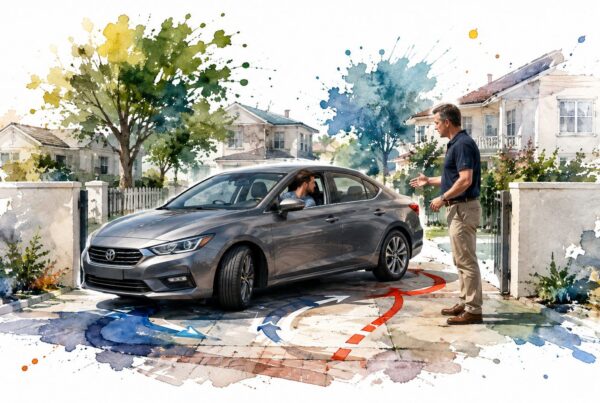

You're sitting in the driver's seat with your learner's permit, adjusting the mirrors while a parent or instructor waits beside you. The car feels familiar from the passenger seat, but every decision now belongs to you: when to brake, how much space to leave, when to merge, and how to respond when traffic changes suddenly. That first drive can feel overwhelming, but safe driving is built through repeatable preparation, guided practice, and gradual exposure to more demanding situations.
Young drivers need that extra structure. In the European Union, drivers aged 18 to 24 represented 16% of car-driver deaths while making up about 8% of the population in that age band during the period covered by the European Road Safety Observatory report on novice drivers. The same report says novice drivers under 25 account for the largest share of crashes and fatalities in most countries, with crash risk two to three times higher than for more experienced drivers.
For Georgia learners, the safest path moves from Joshua's Law education and flexible online course options to professional driving lessons, carefully targeted practice, scholarship support, and Georgia road-test preparation. The advice below keeps defensive driving and impaired-driving awareness focused on the essentials, while giving more attention to the skills, lessons, and resources that help you become road-ready. If you're also comparing vehicles, this guide to sourcing cars for new drivers can help you think about the learning environment as well as the driver.
1. Complete Joshua's Law Driver's Education Requirements Early
Georgia teens seeking a Class D license should treat driver education as the starting point, not a box to check at the end. Joshua's Law requires 16- and 17-year-olds to complete an approved driver education course and 40 hours of supervised driving, including 6 hours at night. Approved course formats include 30 hours of classroom instruction with 6 hours behind the wheel or 30 hours of online instruction with 6 hours behind the wheel, with the remaining supervised driving completed with a parent or guardian, according to the Georgia Department of Driver Services Joshua's Law requirements.
Starting early gives you time to understand the rules before road-test pressure takes over. Many students find it practical to enroll during sophomore year, then use the following months to connect classroom concepts with supervised practice. If school, work, athletics, or family responsibilities make a traditional schedule difficult, an approved online option can provide more flexibility without removing the required learning.
Turn classroom knowledge into driving decisions
Reviewing material more than once can help you recognize how a rule applies in traffic. Don't just memorize signs. Ask why a specific speed choice is safer, how right-of-way changes at an intersection, and what you should do when another driver behaves unpredictably.
Use your instructor as a resource. Bring confusing examples from your practice drives, such as an unclear merge, a crowded four-way stop, or a lane change near an exit. A strong course gives you a vocabulary for discussing those situations before you face them alone.
Explore Georgia Driver's Education and Joshua's Law course options that can fit your schedule, then begin supervised driving while the material is still fresh. Education won't replace practice, but it gives practice a safer direction.
2. Invest in Professional Driving Lessons and Lesson Packages
A family member can help you spend time behind the wheel, but a certified instructor brings a different kind of structure. Professional lessons break driving into manageable skills, observe your habits from the passenger seat, and give immediate feedback before a small mistake becomes a repeated pattern.
That feedback matters when you're learning tasks such as lane positioning, smooth braking, gap judgment, highway merging, and parking. An instructor can also expose you to traffic situations that a family member may avoid, while keeping the experience controlled and appropriate for your current ability.

Choose lessons around your actual gaps
Start lessons soon after completing Joshua's Law education so your instructor can connect theory with vehicle control. A customized package may begin with basic operation and quiet-road practice, then move toward moderate traffic, highways, parking, and road-test skills. A shorter package can suit a learner who needs targeted help, while a more extensive package can provide continuity for someone starting with little driving experience.
Ask for lessons in varied conditions rather than repeating the same easy route. A useful progression might include:
- Basic control: Practice steering, braking, turning, lane position, and smooth starts in a low-pressure setting.
- Traffic management: Work on intersections, lane changes, following distance, and decisions around other vehicles.
- Specific test skills: Request focused practice for parking, three-point turns, observation, and other maneuvers required during testing.
- Confidence building: Schedule highway, nighttime, or rain-related instruction only after your instructor believes the earlier skills are stable.
Write down one or two areas to improve after every lesson. Bundling lessons can also make it easier to maintain consistency instead of spacing instruction so far apart that you have to relearn the same skill. Learn more about the benefits of taking driving lessons from an instructor before choosing between informal practice and a structured lesson package.
3. Master Vehicle Familiarization and Pre-Drive Safety Checks
Before you move, make the car fit you. Adjust the seat so you can reach the pedals without stretching, set the mirrors to reduce unnecessary blind areas, fasten your seat belt, and confirm that passengers are buckled. You should also know where the headlights, wipers, turn signals, hazard lights, parking brake, and defrosters are located.
Spend a few quiet minutes in the vehicle before each lesson. This is especially useful if you're switching between a family car and a driving-school vehicle, because control placement, brake sensitivity, visibility, and dashboard symbols can differ.
Create a routine you can repeat
A pre-drive check doesn't need to be complicated. Walk around the vehicle when appropriate, look for obvious tire problems, check that lights and mirrors are usable, and notice any warning indicator before leaving. If a dashboard symbol is unfamiliar, ask your instructor or consult the vehicle manual instead of guessing.
Your mirrors should support active observation, not replace looking around the vehicle. Practice adjusting them until the process feels automatic, then learn when a shoulder check is still necessary before changing lanes or moving from a parked position.
A vehicle's condition affects the learning experience. Older cars may have different braking, visibility, and safety technology than newer models. A 2025 study reported by ScienceDaily's coverage of vehicle age and driver-assistance features found that vehicles 6 to 15 years old had a 19% higher driver-death risk in fatal crashes, while vehicles older than 15 years had a 31% higher risk compared with vehicles 5 years old or newer. The same report associated each driver-assistance feature with a 6% reduction in driver-death risk. Those findings don't mean technology replaces attention, but they do support choosing and maintaining a suitable learning vehicle.
Use this vehicle inspection checklist to make your checks more systematic.

Once the routine is familiar, your instructor can help you connect each check to a real driving decision.
4. Develop Hazard Recognition and Defensive Awareness
Safe driving isn't only about controlling your own vehicle. You also need to notice what other road users may do next. Look beyond the car directly ahead, scan intersections before entering them, watch for brake lights several vehicles forward, and keep track of open space where you could respond if traffic slows suddenly.
A practical following-distance exercise is the three-second rule. Choose a fixed object, such as a sign, and count until your vehicle reaches it after the vehicle ahead passes. If you reach the object too soon, ease back and create more space. Rain, poor visibility, nighttime conditions, heavy traffic, and unfamiliar roads all call for additional margin.
Practical rule: Don't wait for a hazard to become urgent before changing your speed or position.
Your instructor can narrate decisions during a lesson. For example, they might explain why they're easing off the accelerator near a hidden driveway, delaying a lane change beside a large truck, or leaving extra room near a stopped bus. Listening to that reasoning helps you build the habit of anticipating rather than reacting late.
Practice recognition in realistic settings
Use supervised lessons to progress beyond quiet neighborhood streets. Work toward moderate traffic, multilane roads, busy intersections, highway entrances, parking areas, and rain when conditions are suitable. Night driving deserves deliberate preparation, not a first attempt after an exhausting day.
The UK Highway Code's safety code for new drivers warns that many serious collisions happen at night, particularly between midnight and 6 a.m., and notes that passengers can distract or pressure new drivers into risky behavior. Georgia drivers should also follow the restrictions that apply to their license and avoid letting passengers, phones, music, or navigation compete with the road.
U.S. data show why this caution matters. NHTSA recorded 2,148 young drivers aged 15 to 20 killed in traffic crashes in 2023, along with 180,209 young drivers injured that year, as reported in the National Safety Council teen-driver data. Keep impaired driving awareness simple and firm: never drive after drinking or using drugs, and arrange a safe ride instead.
5. Prepare Thoroughly for Georgia Road Testing
You may know every traffic rule and still lose points by signaling late, stopping incompletely, or checking mirrors too quickly. A road test evaluates how you control the vehicle, observe traffic, communicate, make legal decisions, and remain composed while an evaluator watches. Practice should make these actions as familiar as checking a recipe before cooking.
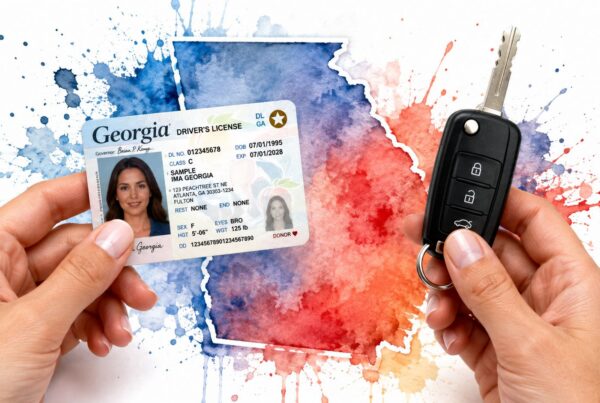
Before scheduling, confirm the permit and vehicle requirements. Georgia requires a valid Georgia Non-Commercial Learner's Permit for the road test. The vehicle must have valid registration and a license plate. If it displays a temporary dealership tag, bring proof of purchase from within the last 30 days, or within 7 days when purchased from a third party. Review the Georgia DDS road-test requirements before test day.
Turn feedback into a test-day routine
A professional lesson can reveal habits that feel correct from the driver's seat. Ask the instructor to score incomplete stops, mirror checks, lane position, signals, turns, and parking against Georgia's testing expectations. Treat each correction like adjusting a repeated movement, then practice it until the action becomes consistent.
Build the final practice session around these checkpoints:
- Vehicle control: Use smooth acceleration, braking, steering, backing, and stopping.
- Observation: Make mirror checks and visual scans visible and deliberate.
- Parking maneuvers: Repeat the techniques that cause anxiety, without rushing.
- Route decisions: Practice intersections, turns, lane changes, and speed choices on roads resembling possible test conditions.
- Test-day readiness: Confirm the vehicle, documents, appointment details, and arrival plan.
The road test marks one stage, not the end of instruction. NIH reports that teens are eight times more likely to be involved in a collision or near miss during their first three months after licensure than during the previous three months on a learner's permit, according to NIH's summary of teen crash-risk research. Continue supervised practice and customized lessons after licensing, especially when a new route or driving condition exposes a skill that still needs work.
6. Use Georgia's Driver's Education Scholarship Grant Program
Paying for instruction can affect how much supervised training a new driver receives. Georgia's Driver's Education Grant Scholarship Program helps eligible students complete a 30-hour classroom course and 6 hours of behind-the-wheel training, according to the Georgia program rules.
The program applies to Georgia residents ages 15 to 17 who hold a valid Georgia instructional permit or driver's license and remain actively enrolled in school. Check these requirements early. Waiting until the road test is near may leave too little time to gather documents or arrange lessons.
Use the grant to build skills in sequence, like assembling a route one section at a time. First confirm eligibility and required paperwork. Then schedule classroom instruction and driving lessons so each part supports the other. A lesson on traffic rules should become a chance to apply those rules behind the wheel, not a separate task to complete.
Before booking training, families can ask:
- Eligibility: Do the student's age, residency, enrollment, and permit or license status satisfy the program rules?
- Covered training: Which classroom and behind-the-wheel services does the grant support?
- Timing: When can training start, and which application steps must be completed first?
- Lesson planning: Can instruction address the student's specific gaps, such as intersections, parking, highway entry, or weather awareness?
Course completion alone does not show road readiness. A student may understand a rule in class yet hesitate when several vehicles approach an intersection. Regular attendance, questions, practice between lessons, and candid feedback help connect knowledge with dependable decisions.
Ask the driving school to match available training with the learner's current ability. Steady progress gives each lesson a clear purpose and leaves room to repeat skills that are not consistent yet.
7. Take Advantage of Online Driver's Education Courses
A student who leaves school late, works irregular hours, or depends on family transportation may struggle to attend a fixed classroom session. A Georgia-approved online Driver's Education course can remove that scheduling barrier and cover the classroom requirement while fitting around those responsibilities. The behind-the-wheel component for the chosen licensing path still must be completed separately.
Use online study like a practice appointment, not background noise. Choose a regular time, keep notes, and review difficult material when you are alert. Short, focused sessions make it easier to remember a rule and recognize where it applies on the road.
Turn course material into supervised practice
Suppose a module explains right-of-way at intersections. Before your next lesson, write down a question about an intersection you use often. Your instructor can then show how to scan traffic, identify the correct priority, and proceed without rushing.
The same approach works for visibility topics. After studying rain, darkness, glare, or windshield condition, ask how each factor changes speed, following distance, lane position, or attention. Classroom information becomes useful when it changes a specific driving decision.
Use this four-part study loop:
- Study one concept: Choose a traffic rule, vehicle system, or safety principle.
- Write one question: Mark anything unclear or worth seeing in practice.
- Apply it during a lesson: Ask the instructor to demonstrate it in a controlled setting.
- Review afterward: Record what felt consistent and what needs another attempt.
Adults can also use online education to complete the classroom portion before arranging professional lessons. Flexibility does not remove responsibility. You still need to finish the approved curriculum, retain the information, and develop physical driving skills with qualified supervision.
A-1 Driving School offers online and instructor-led Driver's Education options, plus customized lessons and road-test assistance. Select the format that supports consistent study, then arrange practical instruction while the course material is still fresh. This connection helps turn correct answers on a screen into calm, repeatable actions behind the wheel.
8. Build Practical Skills Through Progressive Lesson Stages
A new driver shouldn't begin with the most stressful road available. Start with basic control in a simple environment, then add traffic, speed, complexity, and weather as your skills become reliable. This approach gives you enough repetition to make essential actions more automatic before you have to manage several demands at once.
A progressive lesson package may move through stages such as vehicle operation, quiet-road turns and stops, moderate traffic, highway driving, parking, adverse-weather awareness, and test preparation. Your instructor should adjust the pace when a skill isn't stable. Repeating a stage isn't failure. It's how you prevent uncertainty from carrying into a more demanding situation.
Confidence should come from repeated correct decisions, not from avoiding every challenging road.
Let each stage answer a practical question
At the beginning, can you control the vehicle smoothly and stop where you intend? In moderate traffic, can you scan, maintain space, and choose a safe gap? On a highway, can you enter, match traffic appropriately, maintain lane position, and exit without rushing?
Use supervised practice between professional lessons to reinforce recent skills, but don't jump ahead just because you feel impatient. Ask for another explanation or demonstration when a maneuver still feels confusing. You can also request a lesson focused entirely on one weakness, such as parallel parking, lane changes, highway merging, rain, or nighttime visibility.
A longer package may make sense when you want consistent progression rather than isolated appointments. Discuss your current experience, confidence, schedule, and target road-test date with the instructor so the plan reflects your needs. The AAA Foundation research on graduated driver licensing supports structured restrictions and staged learning as important tools for reducing risk among young drivers. In Georgia, that same principle can guide how you organize lessons, even as you continue following the state's specific licensing rules.
8-Point Comparison: Safe Driving for New Drivers
| Program / Action | Implementation complexity | Resource requirements | Expected outcomes | Ideal use cases | Key advantages |
|---|---|---|---|---|---|
| Complete Joshua's Law Driver's Education Requirements Early | Moderate, complete state-approved curriculum (≈30 hrs) | Course enrollment (in-person or online); study time | Legal eligibility for Class D; foundational driving knowledge | Teens preparing for licensure before first road test | Satisfies state law; flexible formats; positions students for testing |
| Invest in Professional Driving Lessons and Lesson Packages | Moderate–High, scheduled, progressive instruction | Paid instructor time; dual-control vehicle; multiple lesson hours | Improved vehicle control, confidence, higher pass rates | Learners needing hands-on practice or habit correction | Personalized feedback; safety-focused; tailored pacing |
| Master Vehicle Familiarization and Pre-Drive Safety Checks | Low, routine instruction and practice | Access to vehicle; brief instructor guidance; short time per session | Fewer mechanical/operational incidents; increased confidence | New drivers before independent driving or lessons | Prevents control-related errors; creates safety habits |
| Develop Defensive Driving Awareness and Hazard Recognition | Moderate, practice and cognitive training | Instructor-led scenarios; varied driving conditions; time | Reduced collision risk; better situational awareness | Drivers in heavy traffic, variable weather, or high-risk areas | Lifelong safety habits; lower accident and insurance risk |
| Prepare Thoroughly for Georgia Road Testing with Professional Test Prep | Moderate, focused simulation and drills | Instructor time; practice on DMV routes; concentrated sessions | Higher first-attempt pass rates; reduced test anxiety | Students about to take the Georgia road test | Familiarity with test procedures; targeted remediation |
| Utilize Georgia Driver's Education Scholarship Grant Program | Low–Moderate, application and verification steps | Income documentation; eligibility verification; limited funding | Lower or no out-of-pocket cost for approved training | Low-income students and families seeking instruction | Removes financial barriers; same quality instruction |
| Take Advantage of Online Driver's Education Courses for Flexible Learning | Low, self-paced online completion | Internet access; device; self-discipline | Joshua's Law completion; flexible pacing | Busy students, working adults, remote learners | Convenience; lower cost; 24/7 access; repeatable lessons |
| Build Practical Skills Through Progressive Driving Lesson Stages | Moderate–High, staged curriculum over time | Multiple staged lessons; instructor and vehicle over weeks/months | Comprehensive competency across situations; test readiness | Novice drivers needing systematic skill-building | Gradual confidence growth; thorough coverage of scenarios |
Turn Practice Into Road-Ready Confidence
Safe driving tips for new drivers work best when they become a routine. Complete the appropriate Joshua's Law course, choose an online format if flexibility matters, and connect every classroom topic to supervised time behind the wheel. Then use professional instruction to address the skills that are hardest to develop through casual practice, including highway entry, busy intersections, parking, night driving, rain, and calm decision-making under pressure.
The first stage after licensing deserves continued support. European data show that novice drivers under 25 have a crash risk two to three times higher than more experienced drivers, while the U.S. data cited earlier show that serious injuries and fatalities affect young drivers and other people involved in their crashes. These facts don't mean a new driver should avoid driving indefinitely. They mean the early learning period should include more margin, more supervision, and better-targeted practice.
A sensible Georgia learning path is straightforward:
- Complete education: Finish an approved classroom or online course that fits your licensing requirements.
- Practice deliberately: Use supervised driving to repeat core skills and gradually add traffic, highways, parking, rain, and nighttime conditions.
- Use professional feedback: Choose customized driving lessons or a lesson package based on your actual gaps.
- Check financial support: If you're a Georgia student who meets the Driver's Education Grant Scholarship Program requirements, ask about available assistance.
- Prepare for testing: Confirm your permit, vehicle documents, and test-day requirements, then use focused road-test preparation to correct avoidable errors.
- Keep learning after the test: Passing the Georgia road test proves you met the testing standard. It doesn't mean every driving situation will feel easy yet.
A-1 Driving School offers instructor-led and online Driver's Education, customized teen and adult driving lessons, Georgia road-test preparation, and testing assistance. The school is family-owned and Atlanta-based, has served Georgia drivers since 1987, and provides training through locations across metro Atlanta, including Athens. Its course and lesson options can help families compare classroom formats, behind-the-wheel instruction, lesson packages, scholarship-related support, and testing services in one place.
Don't rely on unstructured practice alone if you're unsure what to work on next. Contact the school, explain your experience and target timeline, and ask which combination of education, driving lessons, and road-test preparation fits your needs. A clear plan turns each drive into purposeful practice and gives you a safer transition from learner to independent driver.
A-1 Driving School offers Georgia Driver's Education courses, online Joshua's Law options, customized teen and adult driving lessons, lesson packages, scholarship-related support, and road-test preparation. Visit A-1 Driving School to compare course formats, discuss your driving goals, and schedule the instruction you need for confident Georgia road testing.