

Why do families treat every driving class as the same class? A Joshua's Law course moves a teen toward a Class D license. A short defensive driving class is a different program, used when a court or insurer asks for it. Driving lessons sit in the middle. They are the hours that turn a rule book into a road test you can pass.
Teens, parents, and adult learners face the same confusion. Which course is required, which one is optional, and what happens between the learner's permit and the road test? These defensive driving questions and answers use plain language so you can see the next step, not a pile of similar course names.
If you're under 18, the path is a permit, approved driver's education, a parent practice log, and a skills test. If you already drive, you may only need lessons on the skills that still feel shaky. The eight questions below follow that order. Law first, then hours, class format, the test, help paying for training, Class D rules, a short note on defensive driving, and lesson packages.
1. What Is Joshua's Law and What Does Georgia Driver's Education Require?
Joshua's Law sets the gate for a 16- or 17-year-old who wants a Class D provisional license. The Georgia DDS Joshua's Law requirements spell out the path: at least 30 hours of classroom instruction or an approved equivalent online course, plus either 6 hours of behind-the-wheel training with a certified school or the DDS Parent/Teen Driving Guide. Every path also needs at least 40 hours of supervised driving, including 6 hours at night. A parent or guardian verifies that practice, and the teen must hold an instructional permit before behind-the-wheel training starts.
Order matters. The permit comes first, then the instructor's seat, then the supervised log fills in around both. Finishing the classroom piece does not log night driving, and sitting with an instructor before the permit is issued does not count toward the requirement.
A workable sequence looks like this: finish the 30 classroom hours over summer, get the permit, begin the supervised log, then schedule behind-the-wheel training while the log grows. A high school student can run the same sequence through a school program. A-1 Driving School delivers Joshua's Law driver's education in Fulton County Schools and at many Atlanta high schools, and the Joshua's Law driver's education course follows that same approved path in instructor-led and online formats.
Before you pay
- Confirm approval. Ask whether the course is a Georgia-approved Joshua's Law driver's education course, not a ticket class with a similar name.
- Enroll early. Finish well before the road test date you have in mind.
- Store the certificate. You will need it when you apply for the Class D license.
Finish the approved course, keep the certificate, and treat parent practice as its own assignment. One without the other leaves the application incomplete.
2. How Many Driving Lesson Hours Do Georgia Teens Need Before Getting a License?
The parent log and the instructor's seat are different jobs. Supervised practice with a parent or guardian is what the state wants documented. Professional lessons add coached time in traffic, at night, and on roads that feel bigger than the neighborhood loop. Lessons do not erase the log, and a full log does not mean the teen is test-ready.

A useful split looks like this. The parent handles repetition: the same left turn until the mirror check is automatic. The instructor handles the skills parents often avoid, such as highway merges, parallel parking, and busy multi-lane roads. A teen who books a lesson package for highway driving and parking, then uses the instructor's notes for the next family drive, usually improves faster than a teen who only circles a quiet block.
What to log
- Write every session down. Date, start time, length, weather, and where you drove.
- Book lessons early. Do not save every instructor hour for the week of the test.
- Change the setting. Rain, darkness, and heavier traffic belong in the practice, not only on test day.
I recommend at least one coached session before the log is halfway done. Waiting until the last week turns lessons into cramming, and cramming does not stick on a skills test.
3. Online vs. In-Person Driver's Education in Georgia Which Option Is Right for You?
Georgia lets approved driver's education run in a classroom or online. Both can satisfy the Joshua's Law classroom piece when the provider is approved. The format does not change the permit rule or the practice log. It changes how the student sits with the material.

Online work fits a job, sports, or a school load. You study on your own clock, then you still schedule a real car. In-person class fits a student who drifts when nobody is in the room. An instructor can stop, rephrase a right-of-way rule, and see who is lost. We run both an instructor-led Joshua's Law course and an online Joshua's Law course, including at Athens, Buford, and Atlanta-area locations.
A working teen can finish the online classroom over several weeks, then book in-person driving sessions. A student who learns in a group can sit in a metro Atlanta classroom and ask questions out loud. Either way, pair the classroom with scheduled behind-the-wheel lessons. Theory without the car leaves the road test untouched.
How to choose
- Match the habit. Self-paced only works if a weekly study block is already on the calendar.
- Check approval first. An online course that is not Joshua's Law approved will not move a Class D application.
- Keep the car on the calendar. Screen time does not replace instructor time in traffic.
4. How Does the Georgia Road Test Work, and How Do You Prepare for It?
The road test is a skills check in a real car, not a quiz you can retake from notes at the kitchen table. DDS says you must pass a test of your ability to operate a motor vehicle safely, and a finished course does not hand you the license. Bring a car that can legally be on the road.
The Georgia DDS road test page lists the practical pieces. You need proof of insurance, registration, and an unexpired tag on the vehicle you use. Under 18, you also need proof of school enrollment, the driver-education certificate, and a responsible adult who is at least 21 with a valid license. That adult signs the affidavit for the supervised driving, including the nighttime hours.
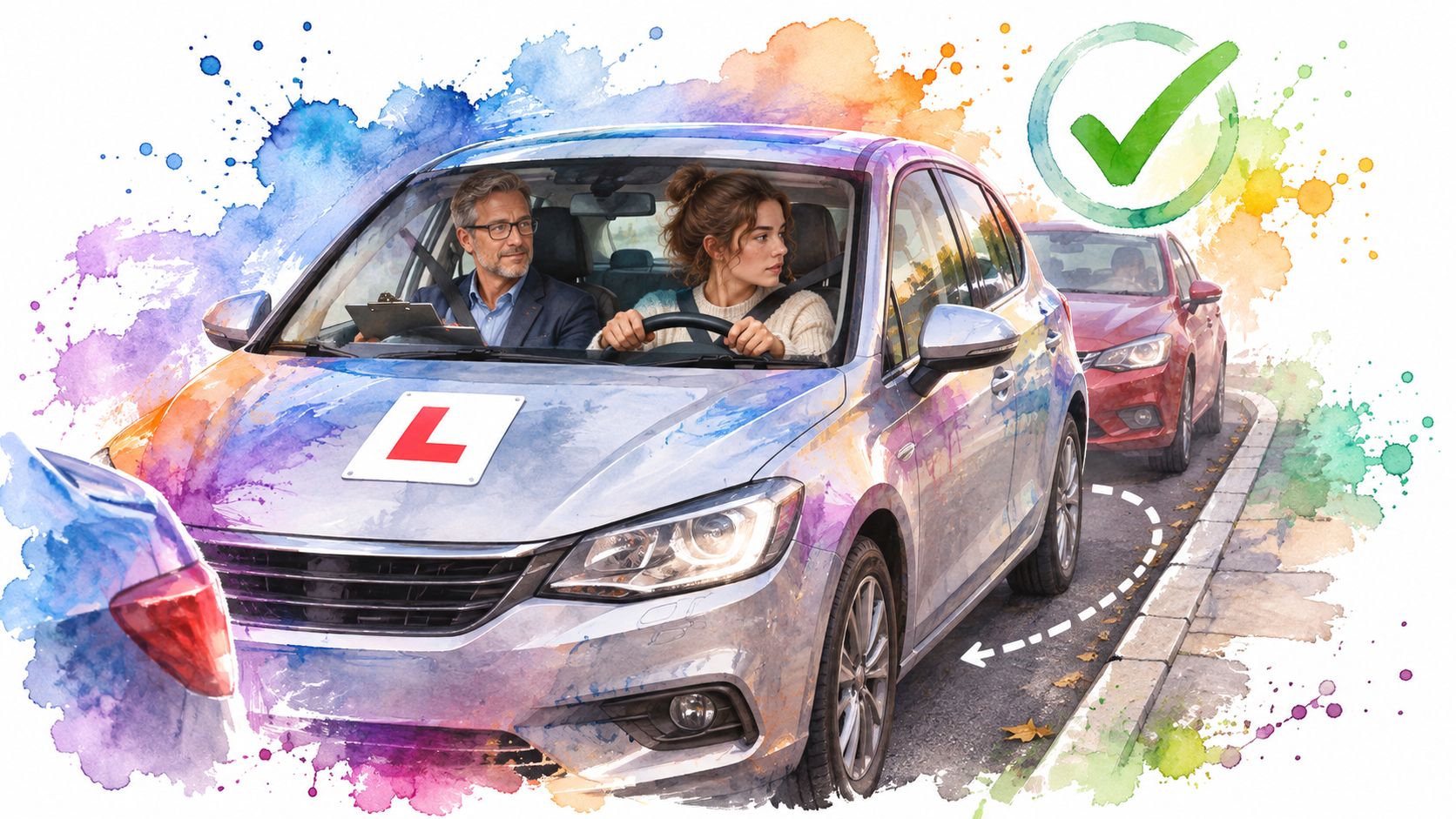
Examiners watch ordinary control. Signals, lane changes, turns, parking, and obeying signals matter more than a perfect speech about the law. A student who spends two lessons on three-point turns and parallel parking, in the same style of car they will test in, walks in calmer than a student who only drove the family SUV on Sundays.
Our road testing includes the Georgia road test, and a prep session can cover the route style and the habits examiners score. Watch a short parking walk-through, then go practice the same move in an empty lot before you book the test.
Arrive early. A dead blinker or a missing document ends the appointment before you shift into drive. We are not responsible for items left in the vehicle before, during, or after a driving test, so take your bag with you.
5. Who Qualifies for the Georgia Driver's Education Scholarship Grant Program?
The Georgia Driver's Education Scholarship Grant Program can cover approved driver training at no cost or at a reduced cost for residents who qualify. The state sets the rules. Household income and Georgia residency are the usual starting points, and the paperwork can change, so read the current list before you assume a yes.
A family that cannot pay full tuition can use the grant for a teen's Joshua's Law course at a provider that accepts it. An adult who needs a license for a new job can apply for training too, if the current rules include that applicant. Approval is not automatic, and limited funding can close a window even when you meet the criteria.
We participate in the Scholarship Grant Program at locations that list it, including Athens and Buford driver's education. Check acceptance before you enroll, because a school that does not take the grant cannot bill the state for your seat. Start with our scholarship eligibility requirements and gather documents while you compare class dates.
What to have ready
- Proof you live in Georgia. A current document with your address, not a screenshot from last year.
- Income paperwork. Whatever the application lists, collected before you hit submit.
- A school that accepts the grant. Ask before you pay a deposit you may not need.
- An early application. Waiting until the teen's test month is how families miss the funding cycle.
Practical rule: Apply while the course calendar still has open seats. A grant with no class left is not a plan.
6. When Can a Georgia Teen Get a Class D License, and What Restrictions Apply?
Age 16 is not a switch that flips the license on. For a Class D license at 16 or 17, the Georgia DDS TADRA chapter says the learner's permit must generally be held for 1 year and 1 day. You also complete Joshua's Law and TADRA requirements, avoid major traffic violations that suspend the permit, and pass the road-skills test. The course, the online class, and the lessons do not replace that test.
Track the issue date on the permit, not the date someone meant to start practicing. A family that books lessons around that holding period can walk into the test when the teen turns 16 and the year-and-a-day mark has passed. A family that waits to start practice until month eleven usually is not ready, even if the calendar says they may test.
The Class D license is intermediate on purpose. Night driving and passenger limits are there to cut risk while the new driver is still learning judgment. Read the current restrictions with your teen on the day the license is issued. DDS can update details, so confirm the list before you schedule the test rather than relying on a friend's older license.
A clean permit matters as much as the log. A major violation can suspend the permit and push the Class D date back. That is a licensing problem, not something a lesson package can patch after the fact.
7. What Is Defensive Driving, and When Do Georgia Drivers Need It?
Defensive driving is not Joshua's Law, and teens do not use it to earn a Class D license. It is a separate habit course. Georgia drivers take it when a court will accept it for an eligible ticket, when they want to ask about points, or when an insurer might offer a discount. Check with that court or insurer before you pay. A certificate that the court will not take does not fix the citation.
The AAA Foundation's 2009 Traffic Safety Culture Index showed why the habits matter more than the label. Among surveyed U.S. drivers, 90% called alcohol-impaired driving a very serious threat and 87% said the same about texting or emailing while driving, yet 67% reported talking on a cellphone while driving in the previous month. Knowing a risk and avoiding it are not the same skill.

We offer a 6-hour defensive driving course online or in the classroom. That is the compliance class. It is not a substitute for a teen's driver's education, and it is not the same program as DUI or risk reduction school. If you want practice judging hazards instead of only hearing a lecture, VideoLearningAI's scenario training guide is a useful look at scenario-style practice. For licensing, stay on the Joshua's Law path and use lessons for the car skills.
Keep the completion certificate and send it by the deadline the court or insurer set. Miss that date and the class may not count.
8. How Do Driving Lesson Packages Work, and Which One Fits Your Needs?
A package is a set of behind-the-wheel sessions booked together, usually at a better rate than single lessons bought one at a time. The point is repetition with the same instructor, not a discount sticker. Teens use packages to add road-test practice on top of Joshua's Law behind-the-wheel time. Adults use them to rebuild a specific skill, such as highway merging, before a commute.
Tell the instructor your level before you pick a size. A nervous adult who has not driven in years needs a different first hour than a teen who only fears parallel parking. We build teen and adult lessons around that skill level, the goal, and the schedule. You can see how classroom work and car time fit together on our online driver's ed and behind-the-wheel packages page.
What actually works
- Name the weak skill. "Highway merges" is a plan. "Get better" is not.
- Meet at least weekly. A month between lessons means you relearn the same mirror check.
- Ask about stacking. A package can sit next to driver's education or a road-test prep session.
- Use the notes at home. The parent drive after the lesson is where the skill sticks.
If you stop after unused hours, we refund the portion of driver's education or lesson fees not yet used once some services have already been rendered. Do not buy the biggest package on day one if you are unsure you will finish it.
How the eight Georgia driving topics compare
| Item | Who It Serves | Format Options | Main Outcome |
|---|---|---|---|
| What Is Joshua's Law and What Does Georgia Driver's Education Require? | Georgia drivers under 18 pursuing a Class D license | In-person or online classroom instruction, plus in-person driving and observation | Complete Georgia's required driver education |
| How Many Driving Lesson Hours Do Georgia Teens Need Before Getting a License? | Georgia teens building supervised driving experience | Parent-supervised practice and optional professional lessons | Log practice hours and strengthen driving skills |
| Online vs. In-Person Driver's Education in Georgia: Which Option Is Right for You? | Georgia students choosing a driver education format | Online, in-person, or virtual classes; in-person driving training | Complete approved education in a suitable learning format |
| How Does the Georgia Road Test Work, and How Do You Prepare for It? | Learner drivers preparing for a Georgia road test | State-administered driving test and optional professional preparation | Demonstrate safe driving skills and work toward a license |
| Who Qualifies for the Georgia Driver's Education Scholarship Grant Program? | Eligible Georgia residents seeking help with driver education costs | State grant for approved driver training | Reduce or cover the cost of driver education |
| When Can a Georgia Teen Get a Class D License, and What Restrictions Apply? | Georgia teens and families planning the licensing process | Graduated licensing with a permit, training, and supervised practice | Understand Class D eligibility, milestones, and restrictions |
| What Is Defensive Driving, and When Do Georgia Drivers Need It? | Georgia drivers seeking eligible ticket, point, or insurance benefits | Online or in-person course | Improve safe driving and potentially qualify for driving-related benefits |
| How Do Driving Lesson Packages Work, and Which One Fits Your Needs? | Teen and adult learners seeking structured driving practice | Bundled, customized behind-the-wheel lessons | Build driving skills through planned practice sessions |
Turning These Answers Into a Plan for Your Georgia License
Start with the requirement that applies to you. A teen under 18 needs an approved Joshua's Law course, a permit held for the required period, a parent-verified practice log, and a passed road test. A licensed adult dealing with a ticket, points, or an insurance question is looking at a different course: the 6-hour defensive driving class, offered online or in a classroom. Sorting out which track you are on comes before anything else.
Put the steps in order and do not swap them. Confirm the course is Joshua's Law approved before you pay. If you choose the online option, set a weekly study block so the certificate is finished before you schedule a test date. If you prefer a classroom, pick a location and a time you will attend. Athens, Atlanta, Buford, Decatur, and Conyers each offer driver's education programs, Athens, Atlanta, and Decatur also offer teen and adult driving lessons, and Athens and Buford list the Scholarship Grant Program and road testing. Match the service to the location before you drive across town for a class that site does not run.
Then run the practice log like a homework sheet. Write the date, the conditions, and what went wrong. Book a professional lesson early, apply the feedback on the next parent drive, and save a later lesson for the exact moves the test scores, including parking and turns. On test day, bring the certificate, the signed affidavit, school proof if you are under 18, and a car with insurance, registration, and a current tag. Arrive early enough to fix a bulb or a dead tag light.
If cost is the blocker, apply for the scholarship while seats are open and ask whether it applies to the course you want. If confidence is the blocker, a lesson package builds more skill than another week of reading the handbook. Parents coordinating through an Atlanta high school can use the same driver's education path A-1 already delivers in Fulton County Schools.
Call A-1 Driving School's Driver's Education Hotline at (770) 603-3320 and say which step you are on: permit, classroom, lessons, scholarship, or road test. You will get a specific next appointment for your situation.
A-1 Driving School has trained Georgia drivers since 1987, with Joshua's Law courses, teen and adult driving lessons, scholarship help, and Georgia road test preparation from permit to test day. If you are sorting these defensive driving questions and answers into a real schedule, start with the class or lesson package that matches your license step. Visit A-1 Driving School to enroll or call the Driver's Education Hotline and book the next session.