
Only 61.7% of written-license test-takers passed on the first try across 36 U.S. states in a recent USA Today analysis, which means 38.3% failed initially. That one number should change how families think about driving permit test prep. This test isn't a quick errand, it's a knowledge check with real consequences, and the students who do well usually prepare in a structured way instead of hoping the handbook sticks after one read. USA Today analysis of first-attempt written-license results
For Georgia teens, the permit test is only one part of the journey. The path includes learning the rules, proving readiness with the right documents, and understanding what comes after the permit, especially if Joshua's Law applies. Families that treat it like a complete process, not just a quiz, usually feel calmer and waste less time at the DDS counter.
Why Most First-Time Permit Test Takers Fail
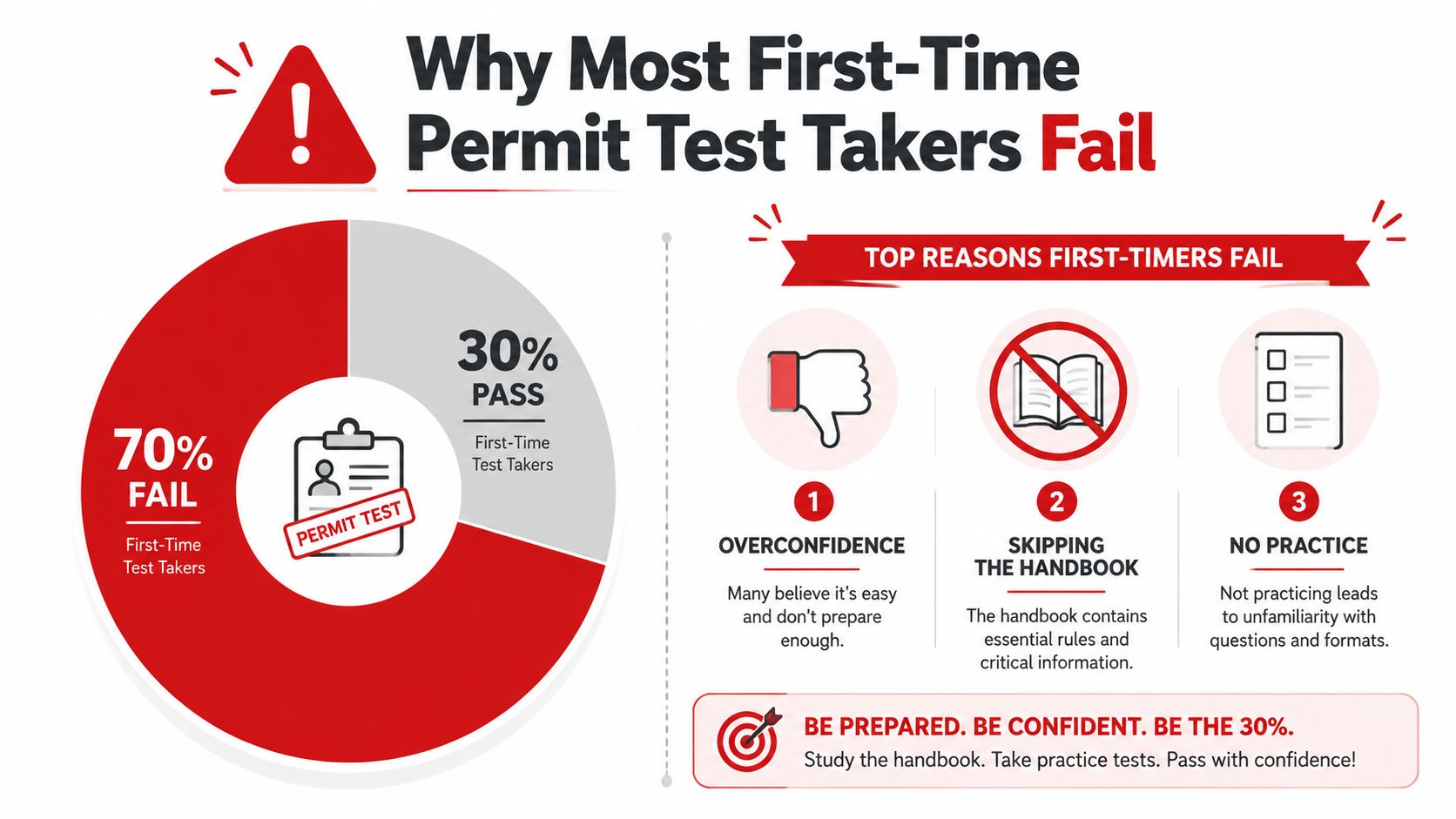
First-time failure isn't rare. In that recent multi-state analysis, 38.3% of test-takers failed their written knowledge test on the first attempt, which tells you something important, memorizing a few answers isn't the same as being ready for a state exam. The test rewards students who can recognize rules, signs, and safe-driving decisions under pressure, not just students who skimmed the handbook once. USA Today analysis of first-attempt written-license results
Why the first try catches people off guard
A lot of students feel confident because the material looks familiar. The problem is that familiarity can fool you, especially when the test asks for exact rule recognition, not general common sense. Georgia's knowledge testing focuses on the driver handbook topics, including traffic laws, road signs, and safe driving practices, so a vague understanding isn't enough.
Practical rule: If you can only answer questions when the wording looks familiar, you're not ready yet.
That's why passive reading wastes time. A student can finish a chapter and still miss questions if they never practiced pulling the information back out of memory. Structured prep works better because it forces the brain to retrieve the answer, the same skill the actual permit test demands.
The state-by-state spread also matters. The same analysis found Vermont at 87.5% pass rate and Missouri at 38.6%, a huge gap that shows testing standards and study expectations aren't identical everywhere. Georgia families should take that seriously, because permit prep has to match the local test, not some generic quiz online. USA Today analysis of state pass rates
The lesson is simple. If the goal is to pass once and move forward, the student needs repetition, feedback, and test-like practice. Skipping straight to random questions can feel productive, but it usually hides weak spots until test day.
Understanding Joshua's Law and Georgia Requirements
Georgia's permit path is more demanding than “study and show up.” For teens who are at least 16 but under 17, Joshua's Law requires 30 hours of classroom instruction and 6 hours of behind-the-wheel training before they can obtain a Class D license. That requirement changes the whole timeline, because passing the written test is just one checkpoint in a larger licensing process. Georgia Joshua's Law requirement
What the handbook and the test are really measuring
The Georgia knowledge test draws from the driver handbook, so students need to learn the rules the state tests. That means the focus stays on traffic laws, road signs, and safe driving practices, not on memorizing trivia or hunting for shortcuts. If a teen can explain why a sign matters and what the rule requires, they're much closer to passing than a student who only remembers the answer pattern.
The state also separates permit readiness from full licensing readiness. A learner's permit lets a new driver practice under supervision, but it doesn't replace the other steps that come later. Parents sometimes blur those stages together, and that's where frustration starts.
A useful way to think about the process is this, the permit test proves knowledge, Joshua's Law proves training, and the road test proves driving skill. Those are different gates, and each one needs its own preparation. The students who move through them smoothly usually build a simple routine, study the handbook, take quizzes, then get behind the wheel with a plan.
For families who want the official Georgia requirements in one place, this Georgia permit requirements guide is worth reviewing before scheduling anything. It helps parents and teens see the order of operations instead of guessing what comes next.
A realistic study rhythm for Georgia teens
The best pace is steady, not rushed. A teen who reads the handbook in short sessions, practices the signs separately, and reviews missed questions the next day learns faster than someone cramming late at night.
Don't treat the permit as the finish line. Treat it as the point where good habits start paying off.
That mindset matters because Georgia's licensing path asks for more than one kind of readiness. Study should prepare the student for the written test, but it should also build the habits they'll need once supervised driving begins.
Choosing Between Online and In-Person Driver Education
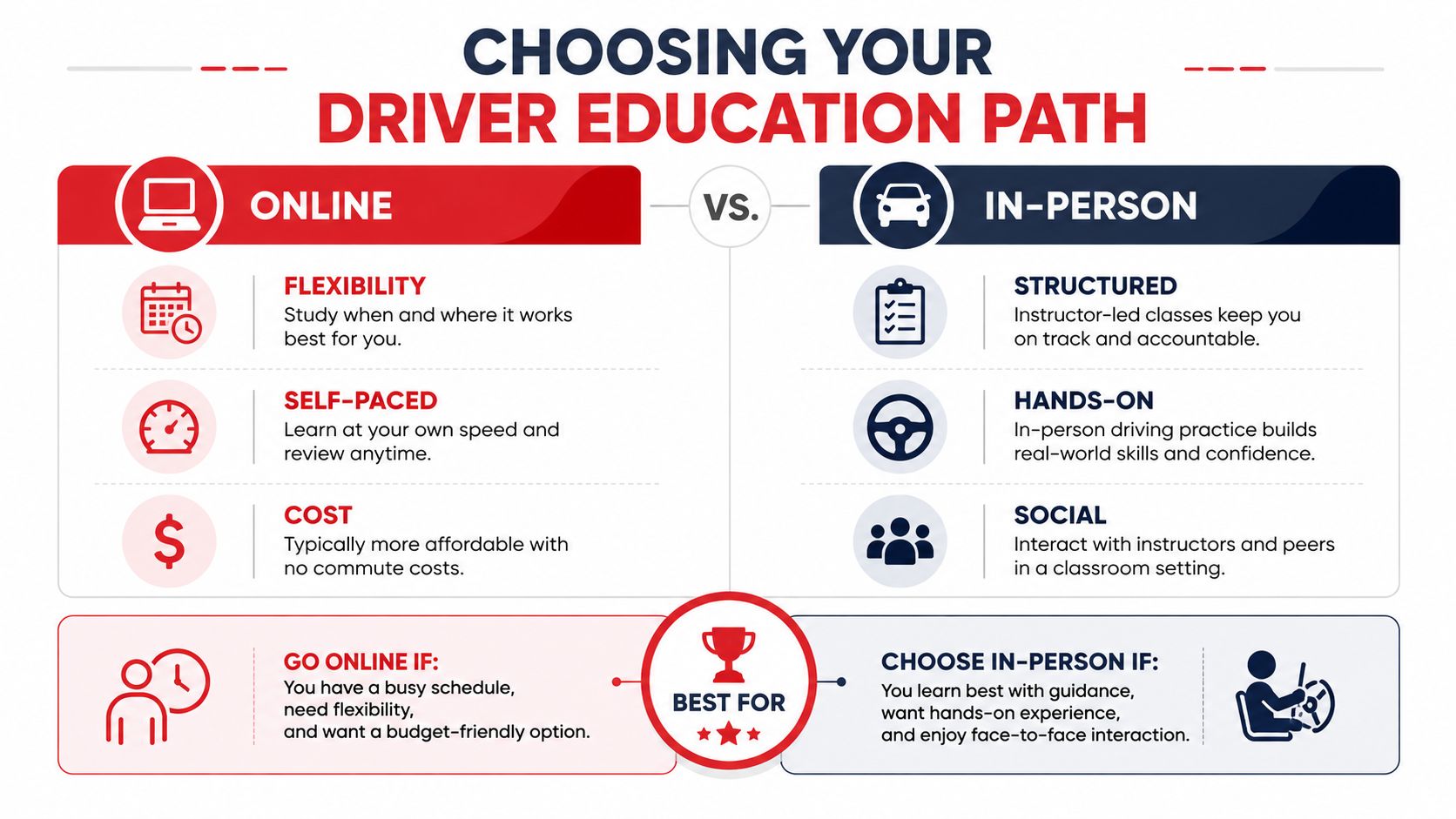
Online and in-person driver education both cover the core material, but they fit different families. Online learning works well when schedules are tight, because students can move through lessons after school, on weekends, or in short sessions between activities. In-person classes suit learners who need more structure, more direct correction, and a classroom environment that keeps them focused.
How the two formats feel different
Online coursework gives a teen room to pause, repeat, and review. That helps students who want to slow down on hard topics, especially road signs and rule distinctions that blur together on first read. In-person instruction gives immediate feedback, which can be useful for families who want a teacher to answer questions on the spot and keep the group moving together.
Georgia families also have to think about the rest of the journey, not just the class format. A course may cover Joshua's Law material, but the student still needs professional behind-the-wheel training and real practice before the road test. That's why many parents prefer a path that ties classroom work, driving lessons, and test prep together instead of piecing everything together from separate providers.
A helpful resource on how digital education is structured is course creation tools for creators. It's not about driver education specifically, but it shows how online learning can be organized into modules, checkpoints, and guided progress, which is the same kind of structure that helps permit students stay on track.
A-1 Driving School offers Georgia driver education in both online and in-person formats, and it also provides virtual learning options across its metro Atlanta footprint. For families comparing course options, the Georgia driver education courses page is a practical place to compare formats before enrolling.
Where scholarship support fits in
Some families also need cost help, and Georgia's Driver's Education Scholarship Grant Program can make training more accessible for qualifying students. That matters because a good course is more than a box to check, it's part of the safety training that leads into the permit and road-test stages. When scholarship support is available, families should check eligibility early so they don't delay the start of class.
The right choice usually comes down to learning style and logistics. Busy families tend to lean toward online instruction, while students who need face-to-face guidance often do better in a classroom. Either way, the course should connect cleanly to the next step, behind-the-wheel training and eventual road test readiness.
Here's a useful video overview for families comparing study paths and course structure.
Building an Effective Practice Test Strategy
Reading is a start, not a finish. The fastest way to build readiness is a loop that moves from learning to recall, then to correction, then back again. A strong practice routine starts with the handbook, adds short lessons, then uses quizzes and state-style practice tests to expose weak spots before the exam.
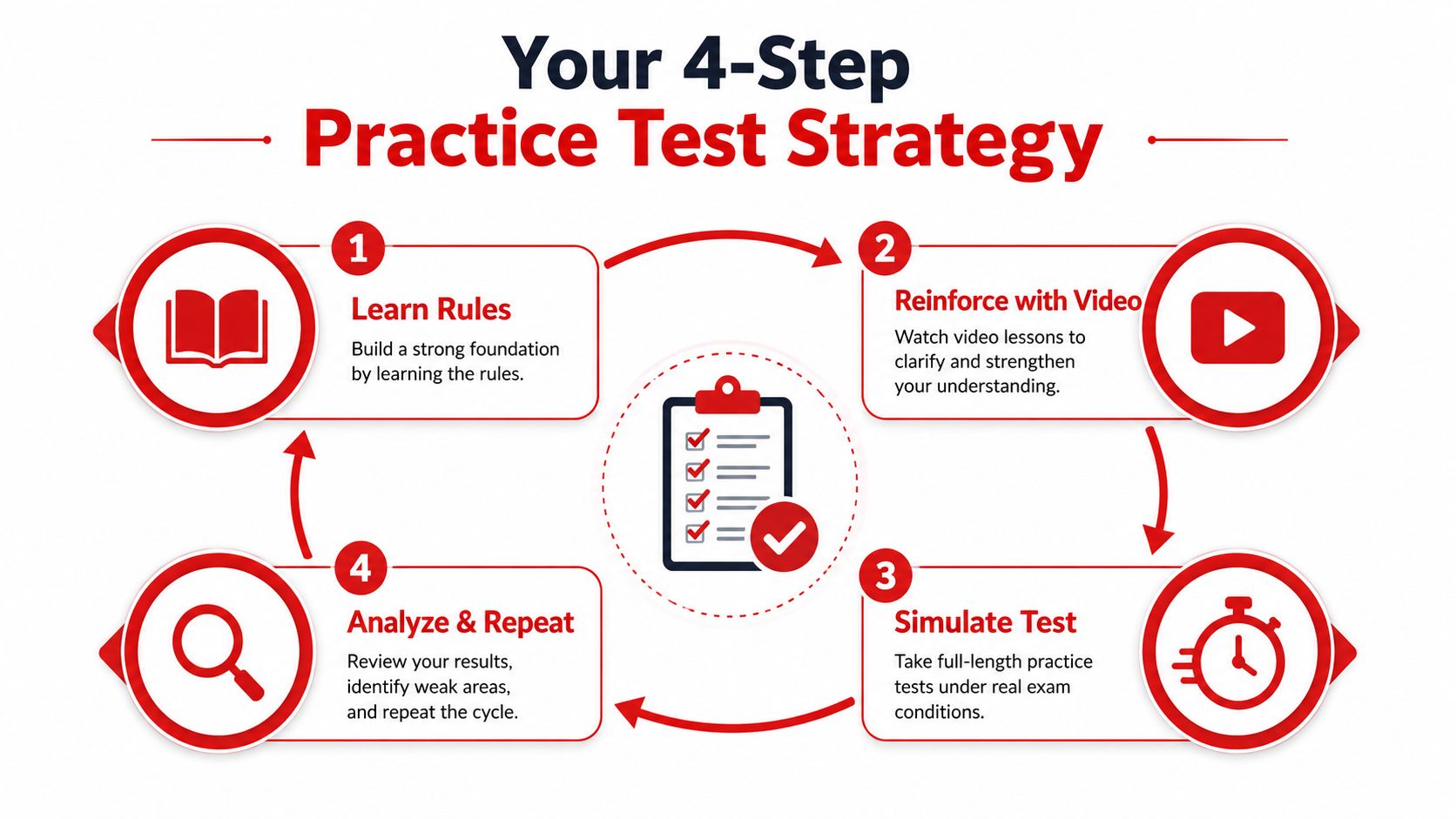
The four-step loop that actually builds memory
First, learn the rule from the handbook. Second, reinforce it with a short lesson or video so the idea has another path into memory. Third, take a chapter quiz or state-style practice set right away. Fourth, review every miss and do it again until the pattern holds.
That sequence matters because it forces retrieval. A student who can explain why an answer is right is much safer than one who only recognized the wording on a practice page. The Georgia handbook topics, especially signs and road rules, become easier when the student keeps testing themselves instead of rereading the same page over and over.
For a state-focused practice resource, the Georgia permit practice test is useful because it keeps the student inside the same topic set they'll see on exam day. That kind of repetition helps reveal whether the mistake is a real knowledge gap or just a careless slip.
What to do with missed questions
Don't just mark an answer wrong and move on. Ask why it was wrong, wrong sign, wrong rule, or rushed reading. Then return to the handbook section that covers it and retest yourself later the same day or the next day.
If the same topic keeps showing up in your missed questions, that topic needs a separate review session, not more guessing.
Students often think they're “almost ready” because they can get through a quiz once. The better sign is consistency across different practice sets. When missed questions shrink and the student can explain the answer without looking, they're much closer to real test readiness.
Test Day Checklist and Common Mistakes to Avoid
A Georgia permit test can stall before the first question if the paperwork is wrong. Bring proof of age, identity, and residence, along with the application and fee, so the office can process the visit. Georgia DDS reminders also point students back to the handbook-based test content, and the official guidance tells applicants to arrive prepared with the documents and time needed for the appointment. California DMV knowledge test preparation guidance
What to bring and what to confirm
Bring original documents, not guesses or photocopies unless the office specifically allows them. Check that your proof of identity and residence matches the names and addresses on the application. Small mismatches create delays that many students do not expect, and those delays can turn a simple visit into a long one.
If you are under 18, a parent, guardian, or approved adult may need to sign in person. Treat the visit as a family task, not a solo errand, so everyone needed for the paperwork is ready at the same time.
Arrive early. Extra time gives you room to check documents, settle in, and avoid the stress that comes from rushing a first official test. If you need an interpreter, arrange that ahead of time so the office visit does not turn into a last-minute scramble.
The mistakes that trip up prepared students
A lot of students miss written questions because they overthink them or mix up road signs with road rules. The question may look simple, but the wrong reading can send them in the wrong direction. On the driving side, the mistakes are easier to see, rolling through stop signs, forgetting turn signals, and failing to check blind spots.
Those habits are small. Examiners notice them quickly.
The fix is to rehearse the routine before test day. A student should already know how to approach a stop, how to scan mirrors, and how to signal early enough for the examiner to notice. Those behaviors should feel automatic before anyone sits in the passenger seat with a clipboard.
Calm beats frantic every time. The student who slows down, checks the checklist, and listens carefully usually does better than the student who tries to rush through the process.
A clean test-day plan removes a lot of avoidable pressure. When the documents are ready, the route to the office is known, and the test habits have been practiced, the student can focus on the test instead of the anxiety around it.
From Permit to Road Test
Passing the permit test opens the next stage, it doesn't end the process. Georgia teens who are at least 16 but under 17 still have to complete the training requirements tied to Joshua's Law, including the 6 hours of behind-the-wheel training and the broader classroom requirement before moving toward a Class D license. That's where structured driving lessons become the bridge between knowledge and actual road skill. Georgia Joshua's Law requirement
A student who just passed the permit test usually needs a plan for the first few drives. The first lessons should focus on basic control, turns, lane position, stopping smoothly, and mirror use. After that, the practice should move into real traffic decisions, judging gaps, handling intersections, and keeping speed steady without drifting.
What families should focus on after the permit
The supervised practice period is where repetition matters most. Parents can help by making each drive have one clear purpose, parking practice one day, lane changes another, then intersection work after that. That keeps practice from turning into random errands with no learning goal.
The road test is a separate, skill-based assessment from the written knowledge exam, and state road-test guidance emphasizes practicing the exact maneuvers on the driver safety checklist before scheduling the test. Texas DMV guidance is direct about this, practice all checklist maneuvers first, because road-test readiness comes from what the driver can do, not from how well they remember facts. Texas road-test checklist guidance
A-1 Driving School includes driving lessons and road test preparation as part of its Georgia training path, so families who want one coordinated option can keep the classroom, permit prep, and road-test practice under one roof. That kind of continuity matters because students don't have to relearn expectations every time they move to a new stage.
The goal after the permit is simple, turn supervised driving into confident driving before the road test becomes the next obstacle.
For many families, the smartest move is to schedule lessons right away instead of waiting until the student feels “ready enough.” Readiness usually grows faster when a teacher is correcting habits while the learner is still building them.
If you want a clear Georgia path from permit prep to driving lessons and road test readiness, start with A-1 Driving School. Their Georgia courses, lesson packages, and road test support can help your teen move from handbook study to real behind-the-wheel confidence with less guesswork and a more organized plan.