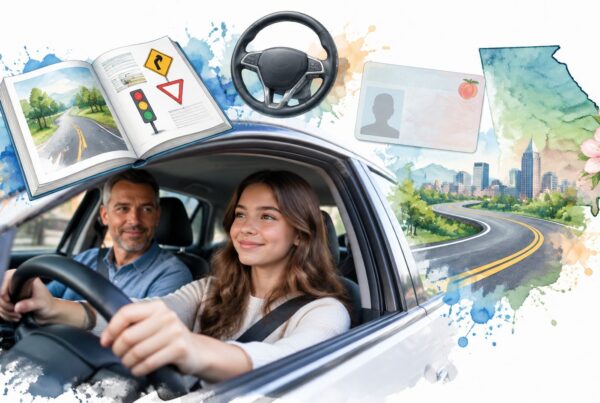
The first time you hand a teenager the keys, you learn two things at once. First, pride hits hard. Second, your stomach drops when you realize that car has to do more than get from point A to point B, it has to teach judgment, calm, and repeatable habits.
In Georgia, that moment usually comes after a long stretch of permit drives, classroom work, and a lot of backseat coaching. The car you choose, and the way you set it up, affects every mile of that process. A good student driver car doesn't need to be fancy. It needs to be easy to see out of, easy to control, and forgiving when a beginner makes the same mistake three times in a row.
The Moment You Hand Over the Keys
The scene is familiar if you've raised a teen anywhere around Atlanta. You're standing in the driveway, the kid is grinning too hard, and you're pretending not to check the mirrors one more time before they pull out. That's when every parent asks the core questions, not the emotional ones. Which car should they practice in, how long until the license, and what do we need to do before the road test?
The answer isn't to chase a cool car. It's to pick a machine that makes learning simpler and mistakes less expensive. Teen and young-driver crash risk stays structurally high in the first years of licensure, and the National Safety Council's 2023 data shows 5,588 deaths in crashes involving at least one young driver ages 15 to 20, including 2,148 young-driver fatalities and 1,114 passenger fatalities, up 4.2% from 2022, while the CDC says drivers ages 16 to 19 have a fatal crash rate almost three times as high as drivers 20 and older per mile driven (National Safety Council teen driver data).
That's why the first year matters so much. The habits built in supervised drives, the way the mirrors are set, and the car's visibility all matter more than the badge on the grille. Families who treat the vehicle as part of the training plan, not just transportation, tend to make smarter decisions before the license ever arrives.
Practical rule: Buy for the first 12 months of learning, not for the next 5 years of driveway pride.
Georgia parents also need a timeline, not just advice. The permit period, the classroom hours, the behind-the-wheel sessions, and the road test all fit together. If you plan that sequence early, you avoid the usual scramble of trying to find a compliant car, a lesson slot, and a test appointment at the same time.
How Georgia Licensing Shapes Your Vehicle Choice
Georgia doesn't treat teen licensing like a casual rite of passage. It's a sequence, and the car you use has to fit that sequence from day one. For many minors, Joshua's Law makes driver education a requirement, not an option, and Georgia's teen licensing framework includes a supervised driving period and additional training before full privileges are granted (Georgia teen novice driver rules).
That matters because the vehicle choice lives inside the licensing calendar. A family that waits until the permit is nearly done usually ends up rushing through school enrollment, practice drives, and test prep. A family that starts with the right car and the right training plan can move in order, from classroom to supervised practice to test day.
Build the plan around the license, not the other way around
Georgia parents should think in stages. First comes the classroom course, which can be online or in person. Then comes the behind-the-wheel work with a certified school. After that, the family car or school car needs to support repeated practice, not just a single road test attempt. The path is even easier to follow if you keep a reference handy for driving in Georgia requirements, especially if you're trying to line up documents, lessons, and testing in the right order.
A-1 Driving School fits into that pipeline by offering 18-plus locations across metro Atlanta and Athens, plus a Fulton County Schools contract that helps anchor teen driver education across a large public-school footprint. The important part for parents is simple. The vehicle you choose should match the kind of instruction your teen will receive, whether that means school fleet lessons, family-car practice, or road test prep in a compliant vehicle.
Rule of thumb: If the car makes the learning process harder, it's the wrong car for this stage.
The best Georgia families don't wait until the last month to think about equipment. They line up the classroom course, the training car, and the road test path early, then let the timeline drive the decisions.
What Actually Matters in a Student Driver Car
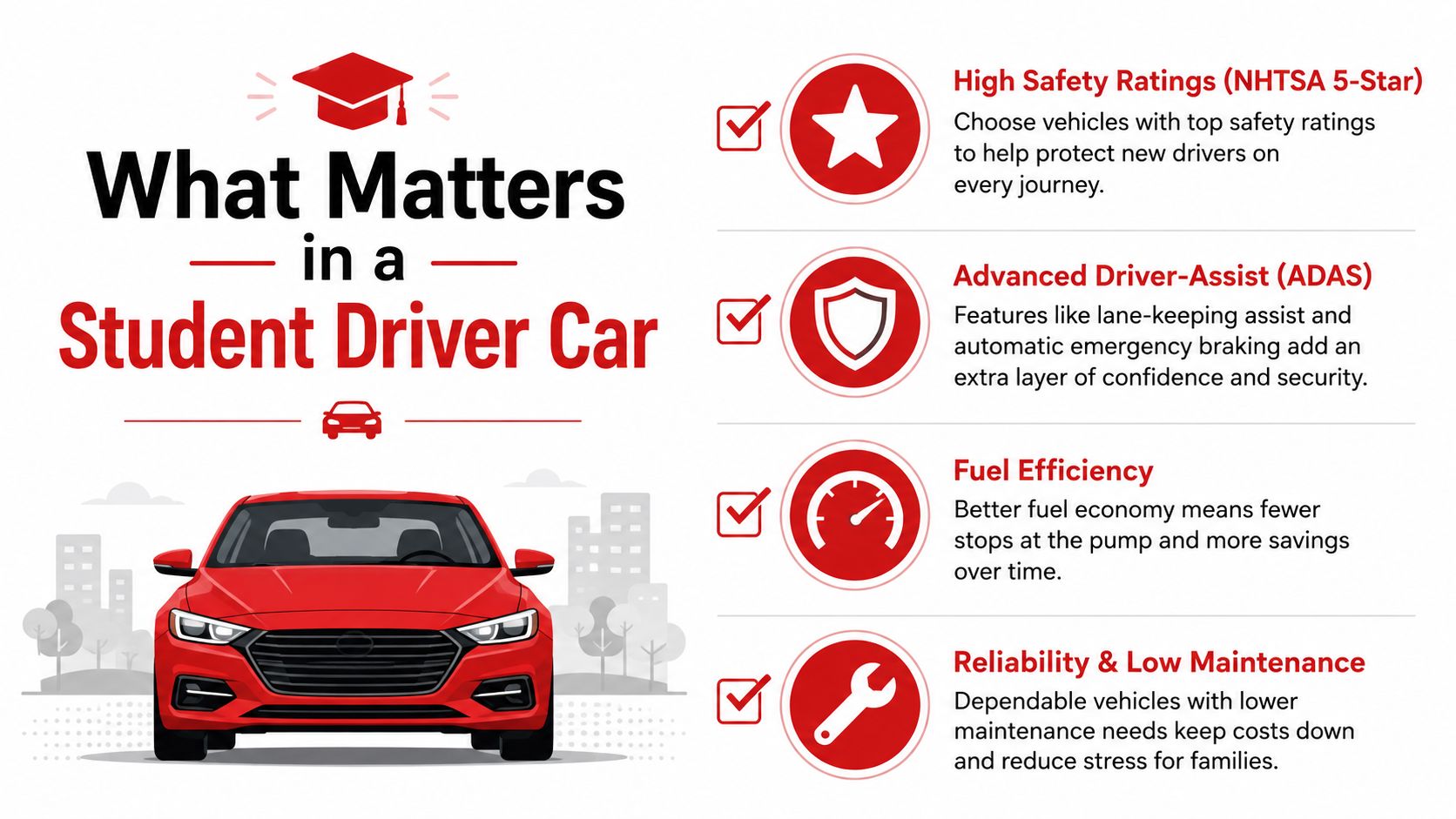
A beginner doesn't need a statement piece. A beginner needs a car that gives clear feedback, keeps the controls predictable, and doesn't punish small errors. That's why I tell parents to stop obsessing over size and start obsessing over visibility, seat fit, and safety systems.
The basic must-haves are plain. Electronic stability control, anti-lock brakes, a rearview camera, and multiple airbags belong on the shortlist. IIHS guidance also pushes parents toward crash avoidance and protection features, and that advice lines up with what helps a nervous teen on local roads, because the car has to give them room to recover when they miss a gap or brake too late.
Bigger isn't automatically better
Parents love the idea that a larger vehicle feels safer. Sometimes it does, but beginners also need to see clearly and judge space accurately. A tall SUV can create more visibility challenges, especially when a new driver is trying to understand lane position, parking, and turn clearance. The smarter move is usually a car that's easy to place in traffic and easy to read from the driver's seat.
Manual transmission is the wrong hill to die on for most teen drivers. It adds another layer of workload when the primary task is learning scanning, spacing, braking, and decision-making. Automatic is the practical choice for almost every student driver I've worked with.
The other overlooked point is fit. If the driver sits too low, too far back, or too close to the wheel, their mistakes multiply. A student driver car should let the teen sit upright, keep both feet comfortable on the pedals, and see the edges of the hood without guessing.
My shortlist for families
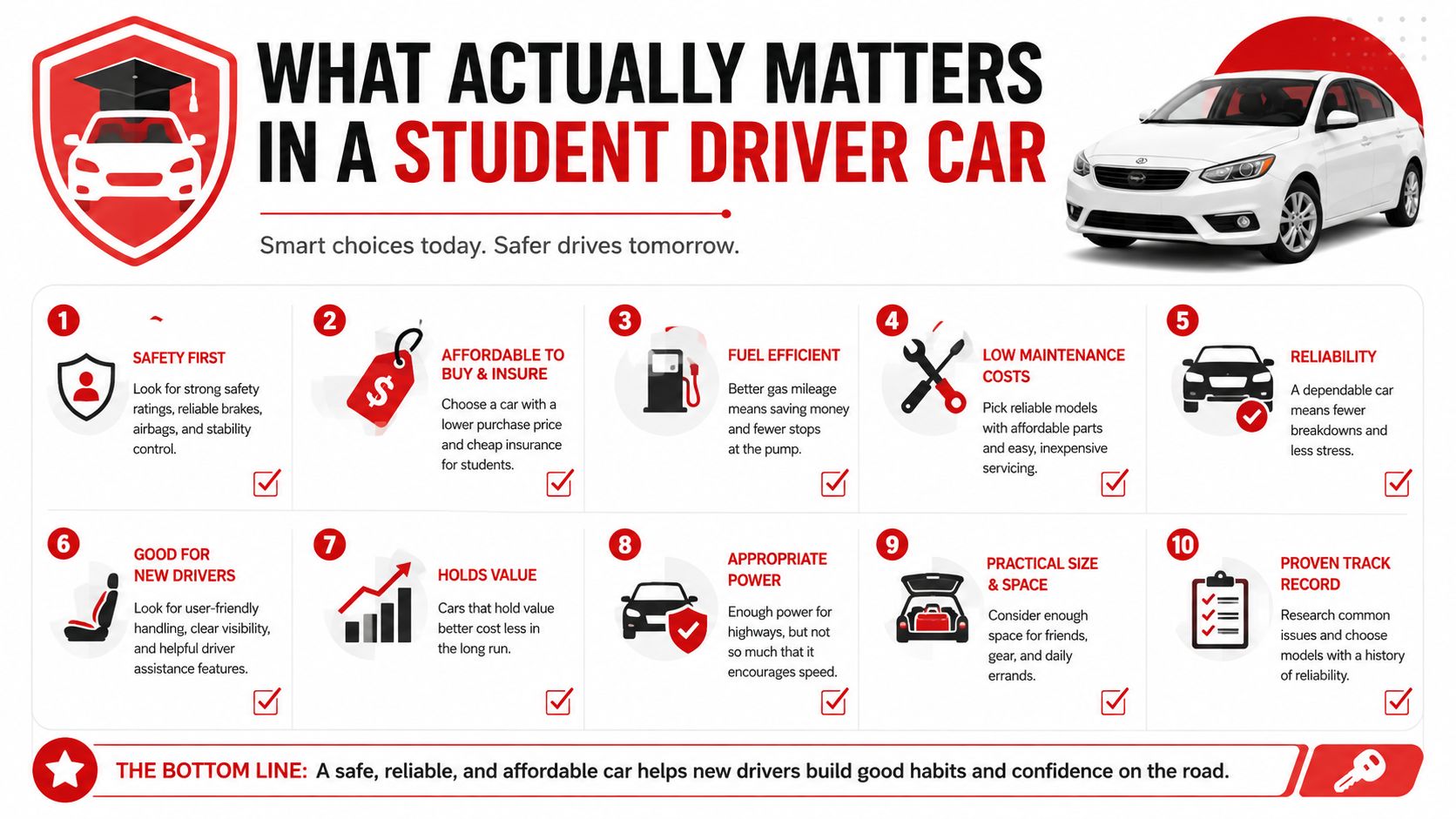
Use this as the filter:
- Visibility first: Pick the car that lets your teen see lanes, curbs, and mirrors without strain.
- Predictable controls: Smooth brakes, simple steering, and an automatic transmission reduce overload.
- Safety tech that helps in practice: Backup camera, stability control, and strong airbag coverage matter more than trim packages.
- Manageable size: Choose the most controllable vehicle in the household, not the biggest one.
- Low stress ownership: Fewer mechanical headaches means fewer distractions during training.
If you want a deeper look at visibility and mirror-related features, A-1's overview of blind-spot features for teen cars is worth reading before you buy.
Family Car, Used Purchase, or School Fleet
Most Georgia families end up with one of three setups. They either use the family car, buy a separate used learner car, or rely on a school fleet for lessons while practicing at home in the household vehicle. I like all three options in the right situation, and I dislike all three when families choose them for the wrong reason.
| Path | Upfront Cost | Safety Tech | Road Test Readiness |
|---|---|---|---|
| Family car | Usually lowest if the car is already in the driveway | Often strongest if the household car is newer | Good if the teen can practice in it regularly |
| Dedicated used car | Higher because you're adding a car, insurance, and upkeep | Depends on the model and age | Good if it's equipped well and kept simple |
| School fleet | Built into lesson pricing | Strong by design for training use | Excellent for instruction, then pair with home practice |
The family car is the easiest place to start. It's already familiar, usually insured, and often has the best safety tech in the driveway. The downside is obvious, one car has to serve the whole household, so scheduling gets tight.
A dedicated used car gives the teen independence, but it comes with more friction. You've got another vehicle to maintain, another policy decision to make, and another chance to buy the wrong thing because the price looks tempting. If you shop that route, use trade-in and financing tactics from Koru with a clear budget in mind, not a wish list.
Where the school fleet fits
School fleet vehicles make the most sense during instruction because they're built for teaching, not commuting. The dual-control setup, including instructor-accessible features, gives the instructor a better chance to catch lane drift, weak mirror checks, or poor following distance before those mistakes turn into habits. That's a real advantage when the student is still learning how the car responds.
A school fleet also removes one big problem, family tension over whose car gets scratched, dinged, or stalled. Parents who want a lower-friction start often use the school for lessons and keep the family car for supervised practice after the teen gets the basics down.
If you're comparing used models, A-1's guide to safest used cars for teens is a practical place to narrow the search. The right answer is usually the most predictable car in the household, not the most impressive one on paper.
Preparing the Vehicle for Lessons and the Road Test
A lot of road test failures start before the engine does. The car is either uncomfortable, poorly adjusted, or not ready for inspection. That's why I make parents treat the vehicle like equipment, not decoration.
Start with the driver's position. Set the seat height so the teen can see the road clearly, move the seat close enough to control the pedals without stretching, and angle the seatback so the driver sits upright instead of slouching. Headrest position matters too, because a badly set headrest turns into a bad habit fast.
The mirrors are essential. NHTSA's blind-spot guidance says outside mirrors should be adjusted to minimize blind spots so vehicles don't disappear there, and that's exactly how I want a teen to learn. The single best safety gain in a student driver car is proper mirror placement, not a sticker on the trunk.
Direct advice: Set the mirrors before every lesson until your teen can do it without help.
The vehicle itself needs a quick mechanical check before test day. Tires, fluids, lights, turn signals, and windshield visibility all have to be in working order. Keep the windshield clean, leave the car with a full tank of gas, and bring the documents that matter, proof of insurance, registration, and a valid learner's permit. A car can be legal on paper and still get rejected if the examiner sees a problem that makes the test unsafe or impractical.
For road test prep, the difference between a school car and a family car matters. School vehicles often come ready with dual controls and instructor mirrors, which is ideal for lessons. Personal cars can absolutely work for the road test, but only if they're set up correctly and the family has checked every detail the day before.
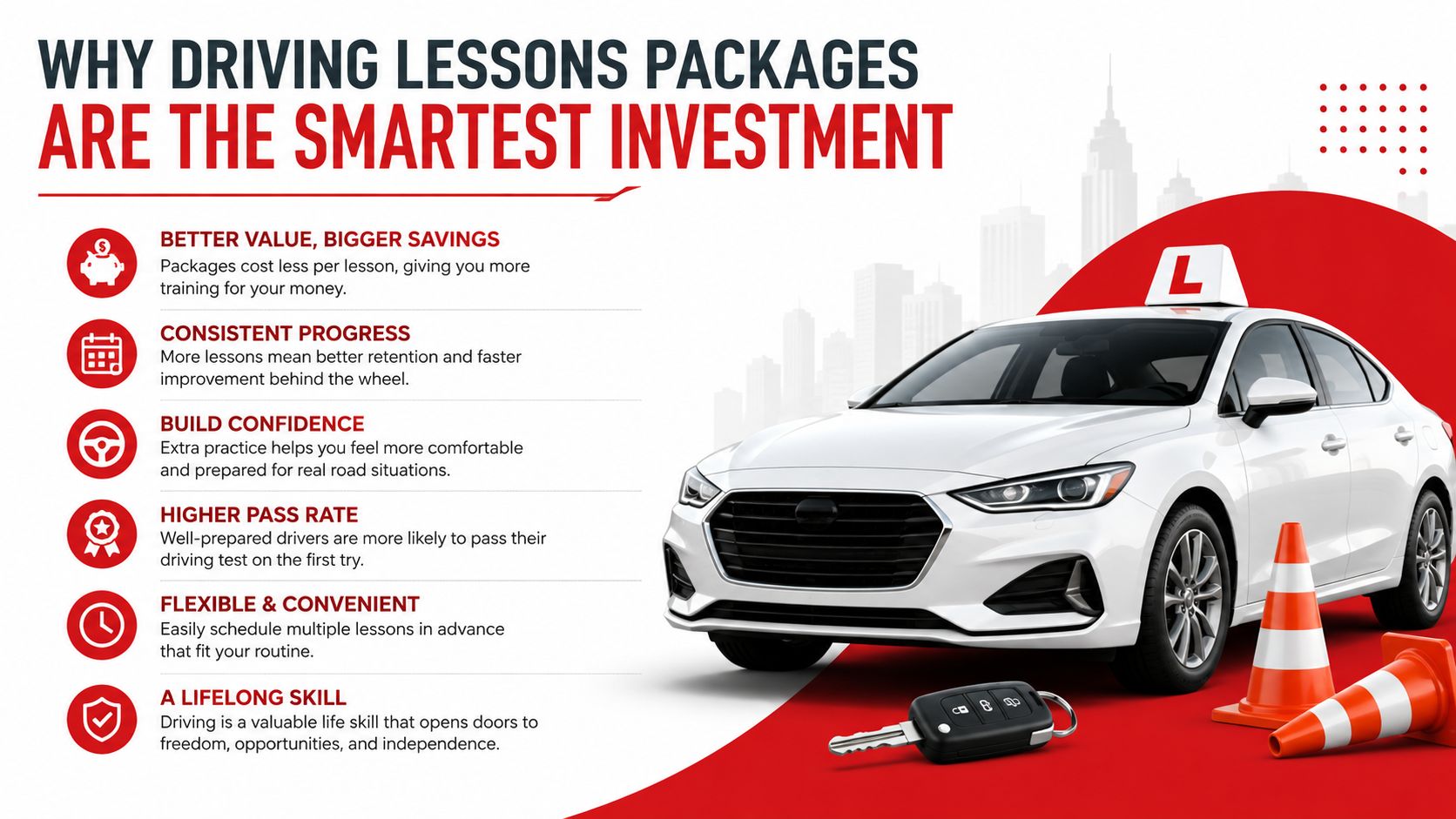
Why Driving Lessons Packages Are the Smartest Investment
Georgia's minimum behind-the-wheel requirement is only the floor. It's enough to satisfy the rule, not enough to make most teens calm, consistent, and road-test ready. That's why structured lessons packages make more sense than booking drives one at a time.
When families buy a package, they usually get a cleaner sequence. Classroom work, then skills work, then test prep, all inside one plan. That reduces drop-off, keeps the teen practicing the same habits, and makes scheduling easier around school, sports, and part-time work.
The scholarship angle changes the math
The Georgia Driver's Education Scholarship Grant Program can cover approved driver education and behind-the-wheel training for qualifying teens. That matters because too many families assume lessons are automatically out of reach when they're not. If you meet the eligibility rules, the grant can take a real bite out of the cost barrier and keep the teen in a structured program instead of relying on random practice sessions.
A-1 Driving School's package model fits that reality well because it lets families line up the classroom course and the on-road training without dragging the process out. For parents who want one clean path from Joshua's Law to road test readiness, that's the point. The teen gets repetition, the parent gets structure, and nobody is trying to piece together a training plan at the last second.
There's also a broader lesson here from professional driver development. The value of new CDL holder training is that structured hours create predictable skill growth, and teen driving works the same way. The more deliberate the practice, the more likely the driver is to show up ready when it counts.
What a package gives you that ad hoc lessons don't
- Consistency: The same instructor can reinforce the same corrections across multiple drives.
- Pacing: Lessons can be scheduled in a useful order instead of scattered across random weekends.
- Readiness: A teen gets enough repetition to reduce panic on test day.
- Budget control: One package is easier to plan around than a stack of one-off bookings.
If you're choosing between “we'll figure it out later” and “let's lock the plan in now,” choose the package. That's the adult move.
Insurance, Registration, and the True Cost of Year One
The sticker price of the car is never the full bill. Once a teen is in the household, insurance and registration start shaping the total cost, and families get surprised by how fast those expenses add up. Even before solo driving starts, the teen is living through a supervised year of practice, and that year costs money whether the car is new or used.
A parent's policy usually takes the first hit when a teen is added, and the supervising adult's record still matters. Good student discounts, driver education completion, and telematics programs can help in some cases, but the mistake is waiting until the permit is almost over to ask the insurance question. Model the cost early, and it gets much easier to decide whether the teen uses the family car or a separate vehicle. If you want a straight answer on how adding a teen can affect your insurance rates, start there before you commit to a car path.
Registration also matters if the car is titled to a minor, and first-time owners need to plan for renewals and Georgia ad valorem timing instead of finding those costs late. My advice is simple. Buy the vehicle and set up the insurance with the practice timeline in mind, not the license day fantasy.
Your Next Step Toward the Road Test
Start with the basics. Confirm Joshua's Law enrollment, pick the car your teen will train in, and book a structured lessons package so the practice hours don't drift. Then check Scholarship Grant eligibility, line up the road test path, and make sure the vehicle is ready for mirrors, paperwork, and a test-day inspection.
If your family wants the classroom course online, that works well for teens balancing school and work. If you want help turning the car into a training tool instead of a stress point, get the lessons on the calendar now. The families who move early usually have a calmer road test day.
A-1 Driving School offers Joshua's Law courses, behind-the-wheel lessons, road test support, and training options that fit Georgia families trying to move from permit to license without chaos. If you're choosing a student driver car or trying to line up lessons, scholarship options, and a road test, visit A-1 Driving School and get the plan started today.