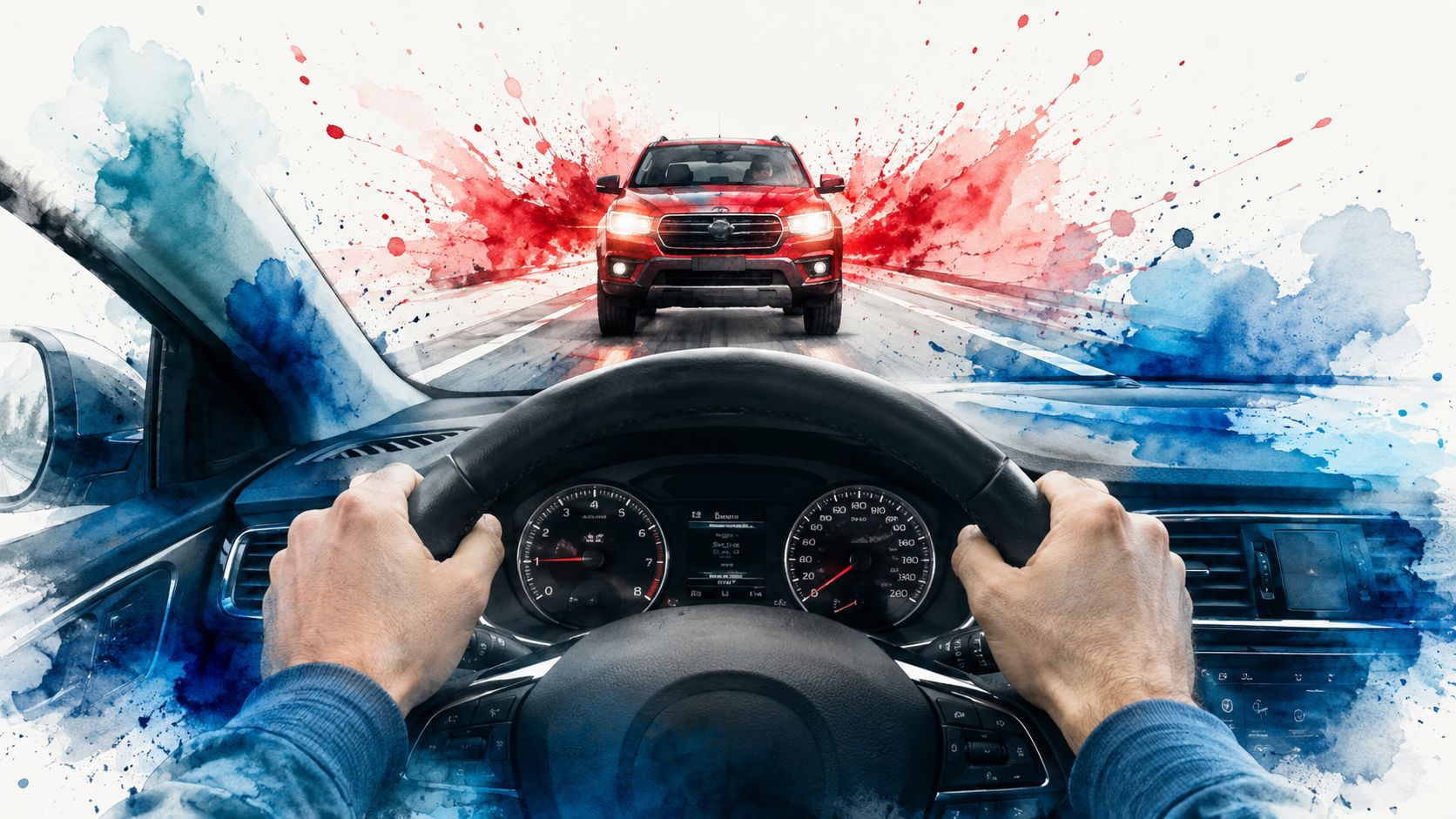
Atlanta traffic teaches this lesson fast. You're holding your lane, keeping up with traffic, and a driver suddenly fills your rearview mirror. They're inches off your bumper on GA-400, flashing lights, darting left and right, trying to force a reaction.
That moment feels personal. It isn't.
Handling aggressive drivers starts with one decision. Stop treating the encounter like a contest. Your job isn't to correct them, slow them down, or show them they're wrong. Your job is to get yourself out of the situation safely. That mindset matters because aggressive driving isn't rare. The AAA Foundation for Traffic Safety reported that 78% of U.S. drivers said they had engaged in at least one aggressive driving behavior in the past year, and aggressive driving is linked to an estimated 66% of traffic fatalities.
For teens and new drivers in Georgia, that matters even more. You can do everything right and still end up near someone who is impatient, angry, distracted, or looking for a confrontation. The safest response is not something that comes naturally. It has to be learned, practiced, and repeated until it becomes automatic.
A useful parallel comes from stress training outside driving. Resources like mindfulness for healthcare workers focus on staying functional under pressure, and that same idea applies behind the wheel. Slow your breathing, narrow your attention to the road, and make the next safe move instead of reacting to the emotion of the moment.
Your Heart Is Pounding An Aggressive Driver Is on Your Tail
A tailgater doesn't always look dramatic at first. Sometimes it's just a pickup riding too close on a two-lane road. Sometimes it's a sedan weaving through traffic on I-285, then locking onto the back of your car because you didn't move over fast enough for their liking. New drivers often freeze here because the behavior feels chaotic and personal.
It helps to name what you're seeing. Aggressive driving can include tailgating, speeding, weaving, forcing lane changes, crowding another vehicle, prolonged horn use, or trying to intimidate someone into moving. Road rage is the more emotional label people use, but from a safety standpoint, the label matters less than the pattern. Another driver is trying to control your decisions through pressure.
That pressure is what causes mistakes. A teen driver gets angry and taps the brakes. An adult driver gets embarrassed and speeds up. A nervous driver stares into the mirror instead of scanning ahead. Those reactions are common, and all of them make the situation worse.
Practical rule: When another driver becomes aggressive, your only win is separation.
It's common to want a script for what to say to themselves in that first five seconds. Use something simple: Stay calm. Make space. Let them go. It's short enough to remember when your heart rate jumps.
What this moment is really testing
This isn't a test of courage. It's a test of judgment.
Drivers get into trouble when they think yielding means weakness. It doesn't. Moving over, easing off slightly when it's safe, and refusing to engage is disciplined driving. Trying to teach a lesson is not disciplined driving. It's emotional driving.
What doesn't work
A few responses almost always escalate the risk:
- Brake-checking: It can trigger a collision or a more aggressive response.
- Making eye contact: Angry drivers often read it as a challenge.
- Gestures or yelling: You won't fix their behavior. You may intensify it.
- Speeding away: If you're rattled, higher speed only reduces your options.
If you remember nothing else, remember this. You are not traffic enforcement. You don't need to punish bad driving. You need to survive it.
In the Moment Your Three-Step Safety Playbook
When students ask how to handle aggressive drivers, I don't give them a long speech. I give them a sequence they can apply under stress. De-escalate. Create space. Disengage.
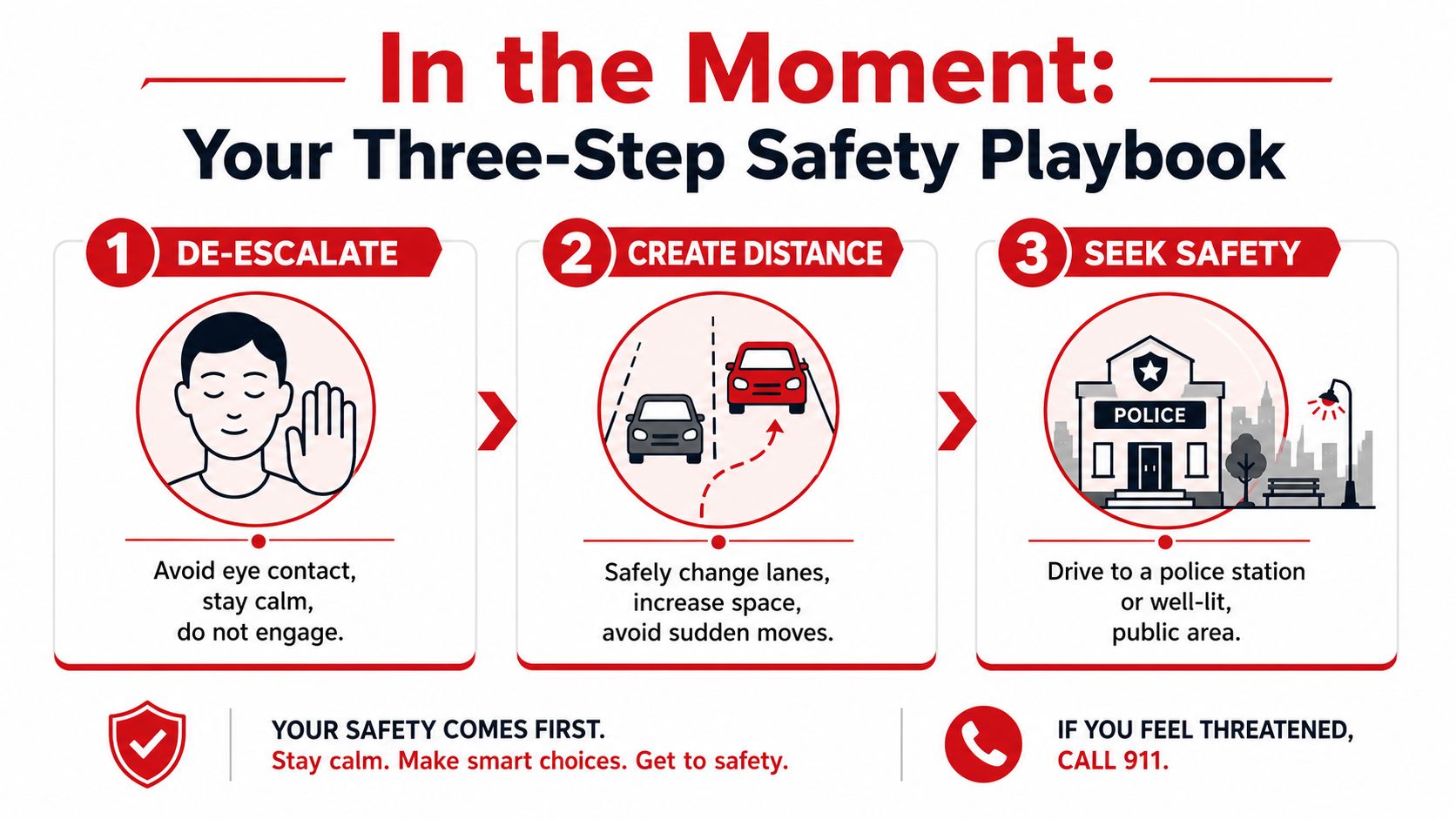
That sequence matches TxDOT guidance on de-escalating, creating space, and disengaging, including avoiding eye contact or gestures, not retaliating, and safely changing lanes or slowing to let the other driver pass. The point is simple. Stop interacting and maximize separation.
De-escalate
This starts before you move the car. First, stop feeding the encounter.
- Keep your face neutral: No stare, no head shake, no sarcastic shrug.
- Keep your hands quiet: Don't point, wave, or gesture.
- Don't answer their aggression: No horn battle, no yelling through glass, no retaliation.
If they're behind you, don't keep checking their face in the mirror. Scan briefly, then return your eyes to where your car is going. Your attention belongs on your lane, your escape path, and the vehicles around you.
Create space
Space is your main tool. If there's an open lane and a safe gap, signal early and move over smoothly. If you're in the left lane and another driver wants to pass, let them pass. If changing lanes isn't safe yet, keep your speed steady and look for the first safe opportunity to increase the distance.
The benefit of good hazard recognition is clear. Drivers who practice the IPDE process for spotting hazards and choosing safe responses usually make cleaner decisions under pressure because they're already scanning, predicting, and planning.
Don't make sudden moves just to satisfy an aggressive driver. A predictable move a second later is safer than a panicked move right now.
Disengage
Once the driver gets around you, let them go. Don't follow. Don't speed up to keep them in sight. Don't pull alongside them at the next light.
A lot of people fail at this stage because they feel insulted and want the last word. The last word on the road is meaningless. The safe outcome is what matters.
Here's the shortest version of the playbook:
- Take the challenge out of your body language
- Use lane position and speed carefully to open distance
- End the interaction completely
Non-negotiable things not to do
Some mistakes are so common that they deserve a separate list:
- Don't brake-check
- Don't camp in a lane to block them
- Don't race them
- Don't mirror their behavior
- Don't keep the conflict alive after they pass
Students sometimes say, “But I had the right of way.” Maybe you did. That doesn't change the immediate safety problem. On the road, being right and being safe are not always the same thing.
What to Do When the Aggressive Driver Starts Following You
Being tailgated is stressful. Being followed is different. At that point, you should treat the situation as a potential threat, not a normal traffic conflict.
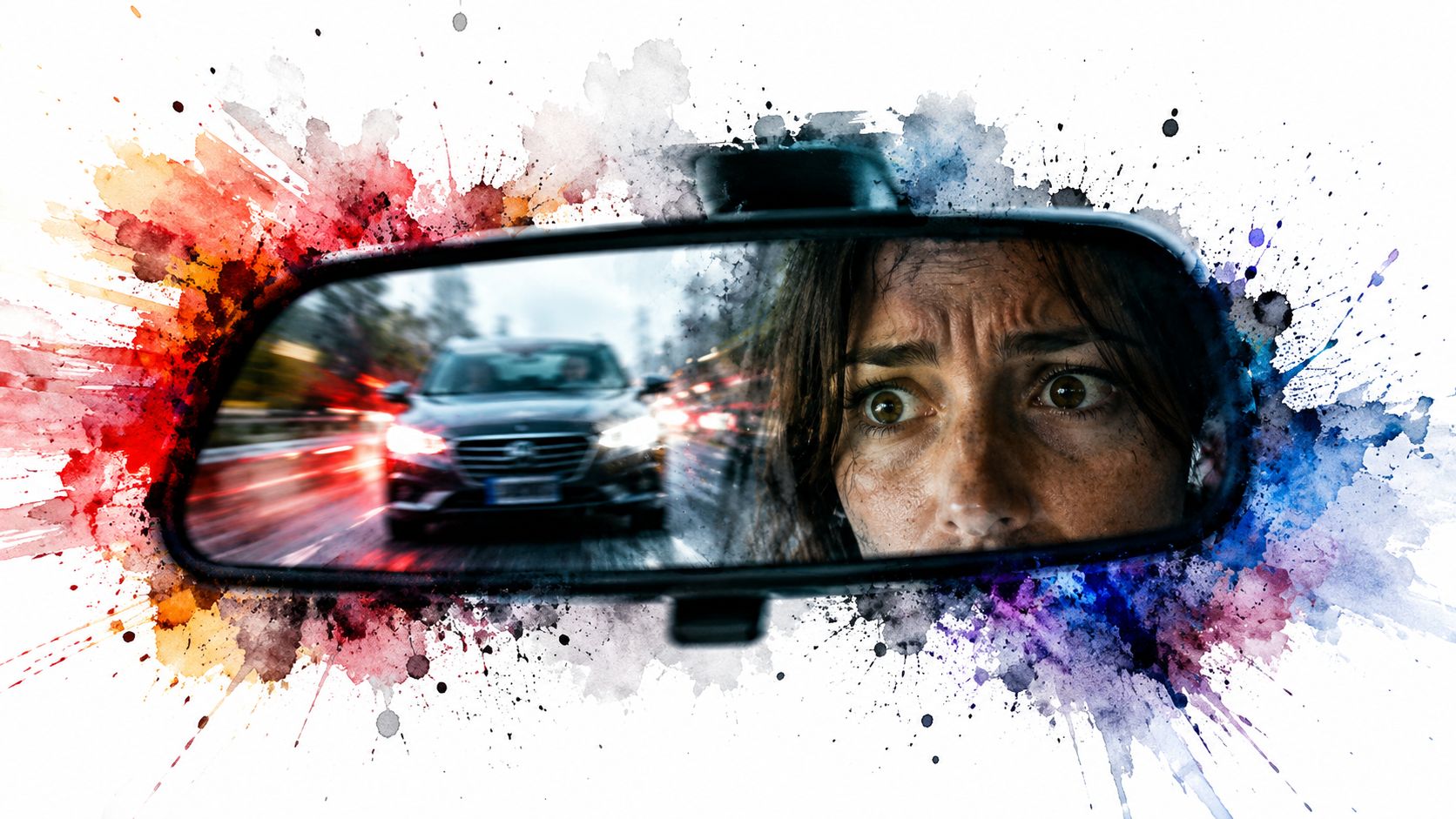
The most important rule comes first. If you feel threatened or are being followed, official guidance says not to drive home. Instead, drive to a public place such as a police station or hospital, keep your doors locked and windows up, and call 911. That one choice protects you from turning a bad encounter into a personal safety problem at your own address.
A simple decision guide
When fear spikes, people need clear if-then thinking.
- If the driver stays behind you through normal turns, assume they may be following.
- If you can safely continue driving, head toward a public place with people, lighting, and cameras.
- If you feel immediate danger, call 911 while continuing toward that public place.
- If traffic prevents a lane change or turn right away, keep driving predictably and don't stop in an isolated area.
Good destinations include police stations, hospitals, fire stations, and busy commercial areas. Avoid empty parking lots, side streets, and your home driveway.
What to tell 911
Keep it short and usable. Give dispatch your location, direction of travel, vehicle description, and the other vehicle's description if you can do so safely. If you know the plate, provide it. If you don't, color, make, model, and any distinctive damage or stickers can still help.
Don't start recording the other driver with your phone while driving. Your priority is control of your car.
For people who want extra confidence under pressure, training in personal composure can help, whether that comes from driver coaching or other structured disciplines. Some beginners also build calm decision-making through activities like street sports BJJ for beginners, where the emphasis is staying controlled instead of reacting emotionally.
A quick visual walkthrough can help fix these steps in memory:
When you arrive at a safe location
Stay in the locked vehicle if the other driver is still nearby. Don't get out to explain, apologize, argue, or film them at close range. Wait for law enforcement or for the situation to settle in a clearly public, visible area.
If you think you're being followed, don't debate it too long. Start making safety decisions early.
That single habit prevents a lot of bad outcomes.
Preventing Encounters Through Proactive Driving
A lot of aggressive-driver situations start before anyone honks, speeds up, or rides a bumper. For new Georgia drivers, especially teens, prevention comes from making your decisions early enough that other drivers never have to guess what you're doing.
One habit does more work than people expect. A consistent 2–3 second following distance reduces the chance that other drivers feel crowded or cut off, and experts describe this as “Don't Offend” driving, meaning another driver should never be forced to change speed or direction because of you.
The habits that lower your odds
Good defensive driving is readable driving. If the people around you can predict you, they are less likely to react late, overreact, or assume you did something on purpose.
For a beginner, that means slowing the whole decision process down. Check mirrors early. Signal before you brake for a turn. Pick your lane before the intersection instead of making a last-second move across traffic. On busy Georgia roads, especially around Atlanta interchanges or fast suburban arterials, late decisions create hard braking and angry responses very quickly.
These habits lower the temperature on the road:
- Signal early: Let other drivers process your move before you make it.
- Pass and move over: If you're not actively passing, clear the left lane and reduce pressure from faster traffic behind you.
- Keep lane changes smooth: One steady move is easier for others to read than a sharp dart into a gap.
- Leave room ahead: Space gives you time to brake gradually instead of starting a chain reaction.
- Avoid forcing corrections: If another driver has to slam the brakes or swerve because of your choice, the risk has already gone up.
Why this matters for younger drivers
This is particularly relevant for younger drivers, who are a higher-risk group for aggressive behavior. New drivers often know the rule but miss the traffic pattern. They ask whether a move is legal, but the better question is whether the move is clear, early, and easy for everyone else to handle.
That judgment is part of driver education, not an extra skill you pick up later. I tell students that the safest driver in traffic is usually the one who looks boring from the outside. No sudden dives for an exit. No sitting in someone's blind spot. No racing to hold position.
One more point deserves attention. If a mistake leads to contact and the other driver leaves, review the steps in this guide on what to do after a hit and run in Georgia. If an aggressive-driving citation later affects your insurance requirements, this overview of SR22 coverage in Georgia explains what that process looks like.
Smooth, predictable driving is often the most skilled driving on the road.
Drivers who leave space, communicate early, and refuse to compete for pavement usually avoid the incidents that trap less experienced motorists. That is not luck. It is trained decision-making.
After the Incident Reporting and Next Steps in Georgia
You made it out of the encounter. Now switch from reaction to recordkeeping.
For new Georgia drivers, especially teens, this is the part that often gets skipped. The danger feels over, so they head home and try to forget it. That is a mistake. Details fade fast, and a clear report is much easier to give when you write it down within minutes instead of trying to rebuild it later.
What to write down right away
Use your phone notes app, a paper receipt, or a voice memo once you are parked in a safe place. Keep it factual and in order.
- Vehicle description: Color, make, model, body style, and plate number if you saw it.
- Location: Road name, nearest exit, intersection, lane, and direction of travel.
- Sequence: What the driver did first, what you did in response, and how the incident ended.
- Evidence: Dashcam footage, photos, screenshots, or witness names and contact information.
New drivers often add assumptions here. Leave those out. Write what you saw and heard, not why you think the other driver did it.
Who to contact in Georgia
The right call depends on what happened. If there was a crash, injury, property damage, a threat, or the driver kept following you, contact law enforcement. If the other vehicle hit you and left, review these steps for what to do after a hit and run in Georgia. The reporting process is similar, and getting the order right helps.
If your insurance situation becomes more complicated after a citation or claim, it also helps to understand SR22 coverage in Georgia before you start making calls.
| Resource | Contact Method | When to Use |
|---|---|---|
| Local police department | Non-emergency line or in person | Dangerous driving report, threats that ended, or documentation after the event when there is no active emergency |
| 911 | Phone call | Active emergency, you are being followed, you feel unsafe, or there is a crash with injuries |
| Your auto insurer | Claims phone line or app | Vehicle damage, claim setup, or submitting photos and incident details |
| Georgia Department of Driver Services | Official state website or service center | Licensing or record questions, especially for teen and first-time drivers |
What to say without making it messy
Give a short timeline. Start with where you were, then state what the other driver did, what you did to create space, and whether there was contact, a threat, or property damage.
Keep your wording plain. “The driver tailgated me on I-75 near Exit 259, changed lanes twice to stay behind me, and struck my rear bumper” is stronger than a long retelling full of guesses and emotion.
That habit comes straight from driver education. Observe, decide, act, then report the facts in that same order. For teen drivers in Georgia, that is not just a test skill. It is how you protect yourself after a real incident.
Build Confidence Behind the Wheel with Expert Training
Reading about aggressive driving helps. Practicing the response is what makes it usable when your pulse jumps and traffic is moving fast.
That's where driver education matters most for teens and new Georgia drivers. The skills behind safe responses aren't mysterious. You learn them in repetition. Mirror checks. Space management. Early signaling. Decision-making under pressure. Smooth lane changes without panic. Those are the building blocks that make the right response feel automatic instead of forced.
Why formal training changes the outcome
Students often assume confidence comes after they get a license. In practice, confidence usually comes after quality instruction and enough guided driving to recognize problems early. That's one reason professional instruction matters so much for Georgia families.
Behind-the-wheel coaching gives you something articles can't. Real-time correction. An instructor can show you when you're lingering too long beside another car, when your lane change timing invites pressure from traffic behind you, or when your speed choice leaves you boxed in. Those small corrections are exactly what reduce conflict later.
For many new drivers, Georgia's required education path is part of that foundation. A Joshua's Law course teaches the rules and responsibilities, but the strongest safety gains come when coursework is paired with actual driving lessons and repetition in traffic, neighborhoods, parking lots, multilane roads, and test-style routes.
Practical options for Georgia families
When parents are comparing programs, it helps to think in layers instead of checking one box.
- Joshua's Law courses: Useful for teens working toward a Class D license and building the legal foundation.
- Online course options in Georgia: A practical fit for busy schedules and families who need flexibility.
- Road testing support: Helpful for students who need familiarity with the process and expectations.
- Driving lessons and lesson packages: Often the most important piece, as habits, timing, and judgment are formed during these lessons.
If you're weighing whether lessons are worth it, this overview of the benefits of taking driving lessons from an instructor is a useful place to start.
Don't overlook financial support
Some families delay training because they assume it's out of reach. In Georgia, the Georgia Driver's Education Scholarship Grant Program can make professional training more accessible for qualifying students. That matters because the drivers who often need structured coaching most are also the ones who benefit most from help getting started.
The larger point is simple. A calm response to an aggressive driver rarely comes from willpower alone. It comes from preparation. The teen who has practiced being passed, being tailgated, changing lanes under supervision, and choosing a safe public destination under stress is far more likely to make a smart decision when it counts.
If you want help building that kind of real-world confidence, A-1 Driving School offers Georgia driver's education, Joshua's Law courses, flexible online options, road testing support, and driving lessons packages designed for teens and adults who need more than textbook knowledge. For families focused on safety, the most valuable investment is often time behind the wheel with a qualified instructor.