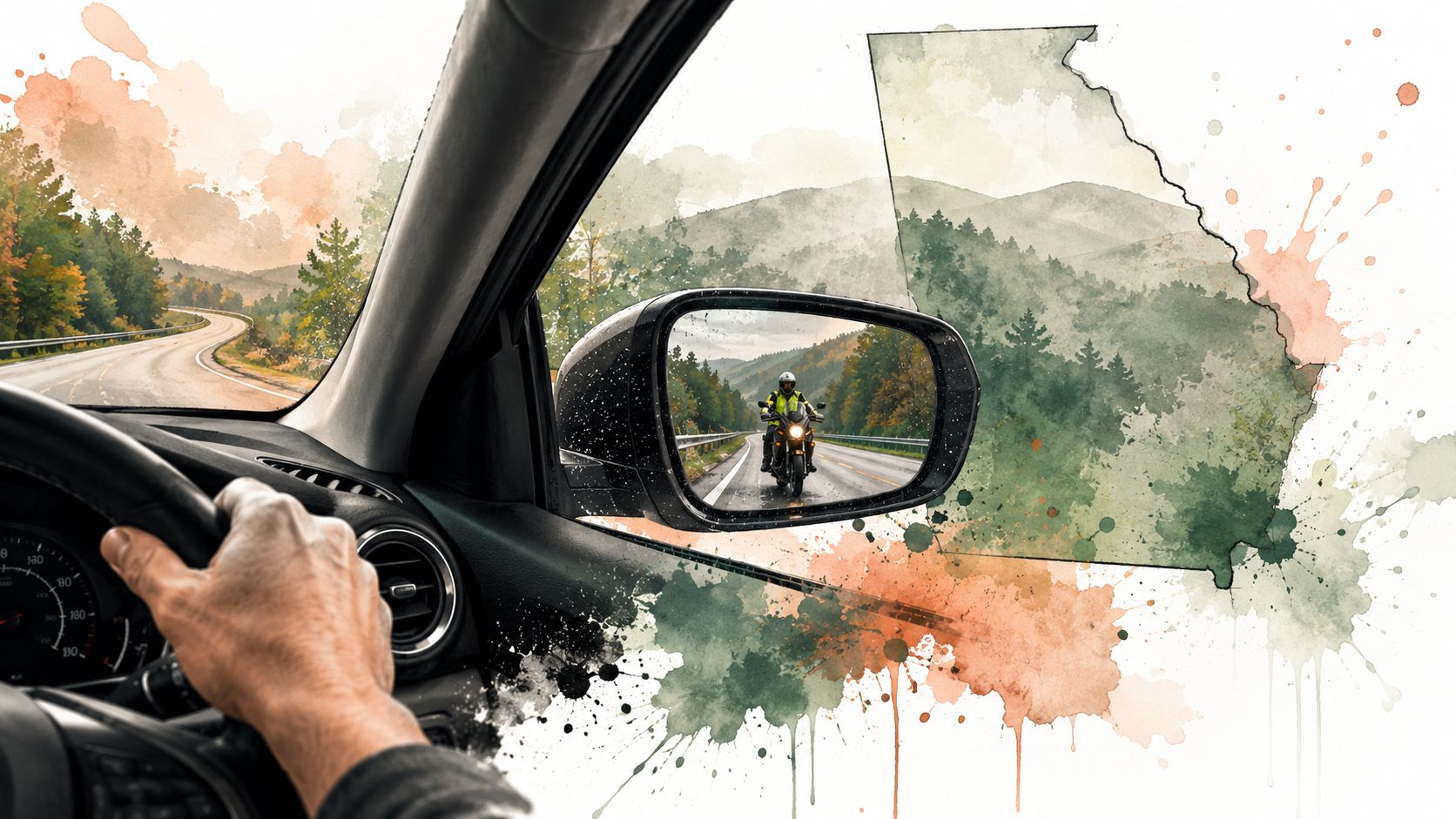
A motorcycle can be easy to miss for one second and impossible to forget the next.
That's why motorcycle awareness matters so much for every Georgia family learning to drive. Per vehicle mile traveled, motorcyclists are nearly 28 times more likely than car drivers to die in a crash, and they made up 15.5% of all traffic deaths in 2023 despite being only 3.3% of registered vehicles according to SAFE TREC's summary of NHTSA motorcycle safety data.
For a teen driver, that number should change how you think about the road. For a parent, it explains why “just be careful” isn't enough. Safe driving is a trained habit. You learn where to look, when to pause, and how to spot the road users that are easiest to overlook.
Sharing the Road Safely in Georgia
Motorcycle awareness isn't a slogan. It's a driving skill.
In Georgia, drivers move through crowded suburban roads, fast interstates, downtown traffic, school zones, and rural two-lane highways. A motorcycle behaves differently in each of those places. It has a smaller visual profile, can hide behind a windshield pillar, and often looks farther away than it really is.
What awareness means in real traffic
A motorcycle-aware driver does a few things differently:
- Scans earlier: You don't wait until the last second to look for a rider.
- Checks longer: You give mirrors and intersections an extra beat.
- Judges cautiously: You don't assume a small object is a slow object.
- Leaves space: You treat a motorcycle like a full-size vehicle with full lane rights.
That last point matters. New drivers sometimes think of motorcycles as “smaller cars.” That mental model causes mistakes. Riders shift position in their lane for visibility, road surface changes, and space management. If a car driver expects the motorcycle to stay centered and predictable at all times, the rider can seem to “appear” suddenly when they were visible all along.
Practical rule: If you're not actively searching for motorcycles, you're more likely to miss one.
Traffic laws also differ from state to state, which can confuse families who travel. If you want a clear example of how motorcycle rules vary, this explanation of the Legality of lane splitting in Texas shows why drivers should never assume motorcycle practices are identical everywhere.
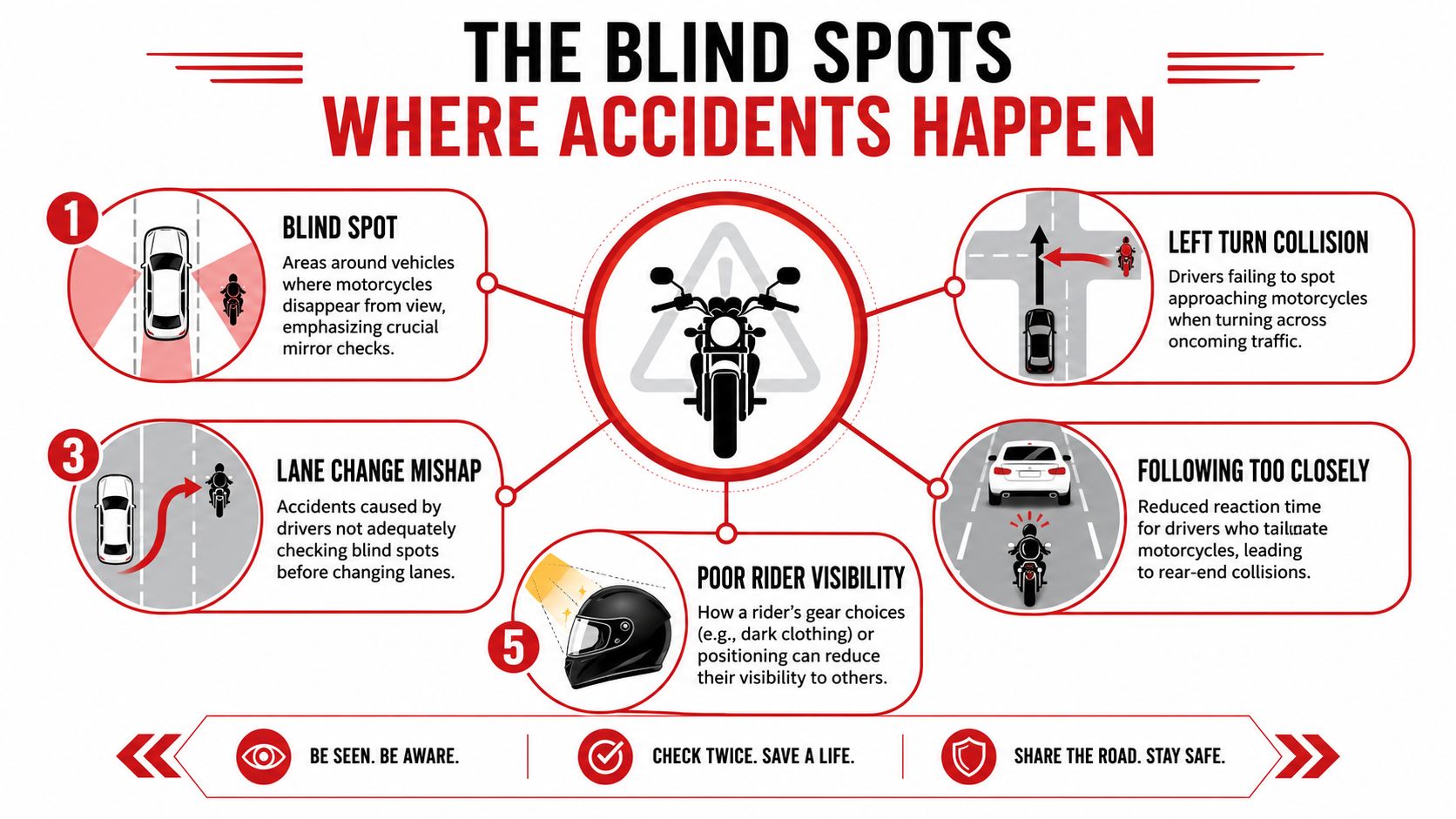
The Blind Spots Where Accidents Happen
Many motorcycle crashes don't happen in random, mysterious ways. They happen in recognizable situations where visibility, timing, and judgment break down.
Texas DOT notes that 37% of motorcycle fatalities happen at a roadway intersection, often when a driver fails to see the rider or misjudges speed during a turn, according to Texas DOT motorcycle safety guidance.
Intersections are the danger zone
A common example is the left turn across traffic. A driver looks ahead, sees a small headlight, and assumes there's plenty of time. But the motorcycle is closer or moving faster than it appears.
This happens because drivers are used to judging the size and speed of larger vehicles. A motorcycle's narrow shape gives the brain less visual information. That makes distance and closing speed harder to estimate, especially for an inexperienced driver.
Why motorcycles disappear
Motorcycles can vanish from view in places teen drivers don't always think about:
- Behind the A-pillar: That front roof support can block a rider for a moment during a turn.
- Inside vehicle blind spots: A motorcycle takes up less visual space than a sedan or SUV.
- During lane changes: Drivers may check mirrors but skip the shoulder check.
- Against busy backgrounds: Storefronts, signs, shadows, and moving traffic make small vehicles harder to pick out.
Many newer cars include driver-assist tools, but those tools aren't a substitute for trained scanning. If your family car has monitoring technology, it helps to understand how blind spot features work in modern vehicles and where their limits still require a human check.
Four situations that deserve extra caution
Left turns at lights and stop signs
Don't rush a gap because the oncoming vehicle “looks small.”Lane changes in multilane traffic
A rider can sit just outside your mirror view longer than you expect.Merging onto faster roads
Speed differences shrink space quickly.Following a motorcycle too closely
Riders may slow for road hazards you don't even notice, such as gravel, potholes, or slick pavement.
A motorcycle's size tricks the eye. That doesn't make it unpredictable. It means the driver has to be more deliberate.
A Driver's Checklist for Motorcycle Awareness
A good driver doesn't rely on luck. A good driver follows a repeatable process.
That's especially important for teens working through driver's education and Joshua's Law requirements in Georgia. The classroom gives you rules. Real awareness comes from applying those rules consistently in traffic, parking lots, neighborhood turns, and lane changes.
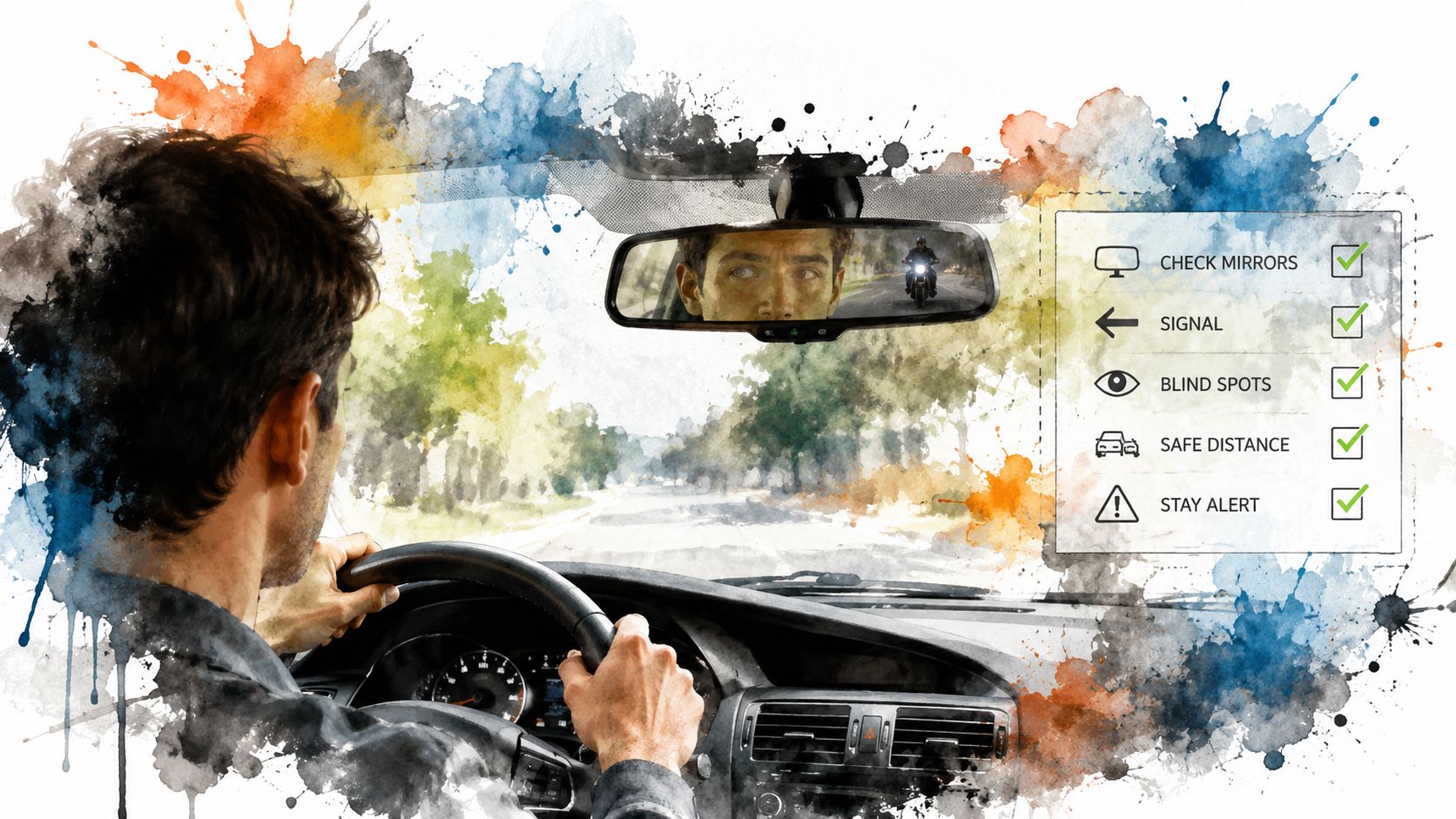
Before you move the car
Start with a habit many new drivers skip. Don't just “look around.” Use an order.
Try this short mental script before turns, merges, and lane changes:
- Mirrors first: Check rearview, then side mirror.
- Road ahead next: Identify any rider approaching your path.
- Shoulder check last: Confirm what mirrors can miss.
- Commit only when clear: If you're unsure, wait.
That extra pause is often the difference between seeing a motorcycle and cutting one off.
The road habits that matter most
Use this checklist every time you drive:
- At intersections, slow your decision-making: If a motorcycle is coming toward you, don't guess its speed based on size alone. Wait until the gap is clearly safe.
- Give motorcycles a full lane: Don't crowd, squeeze, or share the lane with them.
- Leave room behind the rider: If the motorcycle slows suddenly for a road hazard, you need time to react.
- Check twice before changing lanes: Mirror checks are helpful, but they don't replace turning your head.
- Watch the wheels of nearby vehicles: A rider may be hidden, but wheel movement can hint that traffic around them is changing.
- Stay patient in traffic: Aggressive passing creates pressure and reduces your margin for error.
A simple way to think at intersections
Use this question: “If that were a car, would I still go?”
If the honest answer is no, don't turn. A lot of close calls come from treating a motorcycle as a special case instead of as oncoming traffic with the same right of way.
Driving coach reminder: When your brain says “I think I have time,” that's when you slow down your choice.
How this fits with driver's education
This is why good training matters. Joshua's Law course work introduces scanning, right of way, hazard recognition, and space management. But a student driver usually needs practice before those ideas become automatic.
For parents supervising permit practice, keep the coaching language simple:
| Situation | What to say |
|---|---|
| Left turn | “Find the motorcycle early, then decide.” |
| Lane change | “Mirror, shoulder, move.” |
| Following distance | “If they brake, can you stop?” |
| Busy intersection | “Don't rush the gap.” |
Short cues work better than long lectures in the moment.
A Rider's Guide to Staying Visible and Safe
Drivers need motorcycle awareness, but riders also need a plan. The safest mindset is simple: ride as if other drivers may not see you right away.
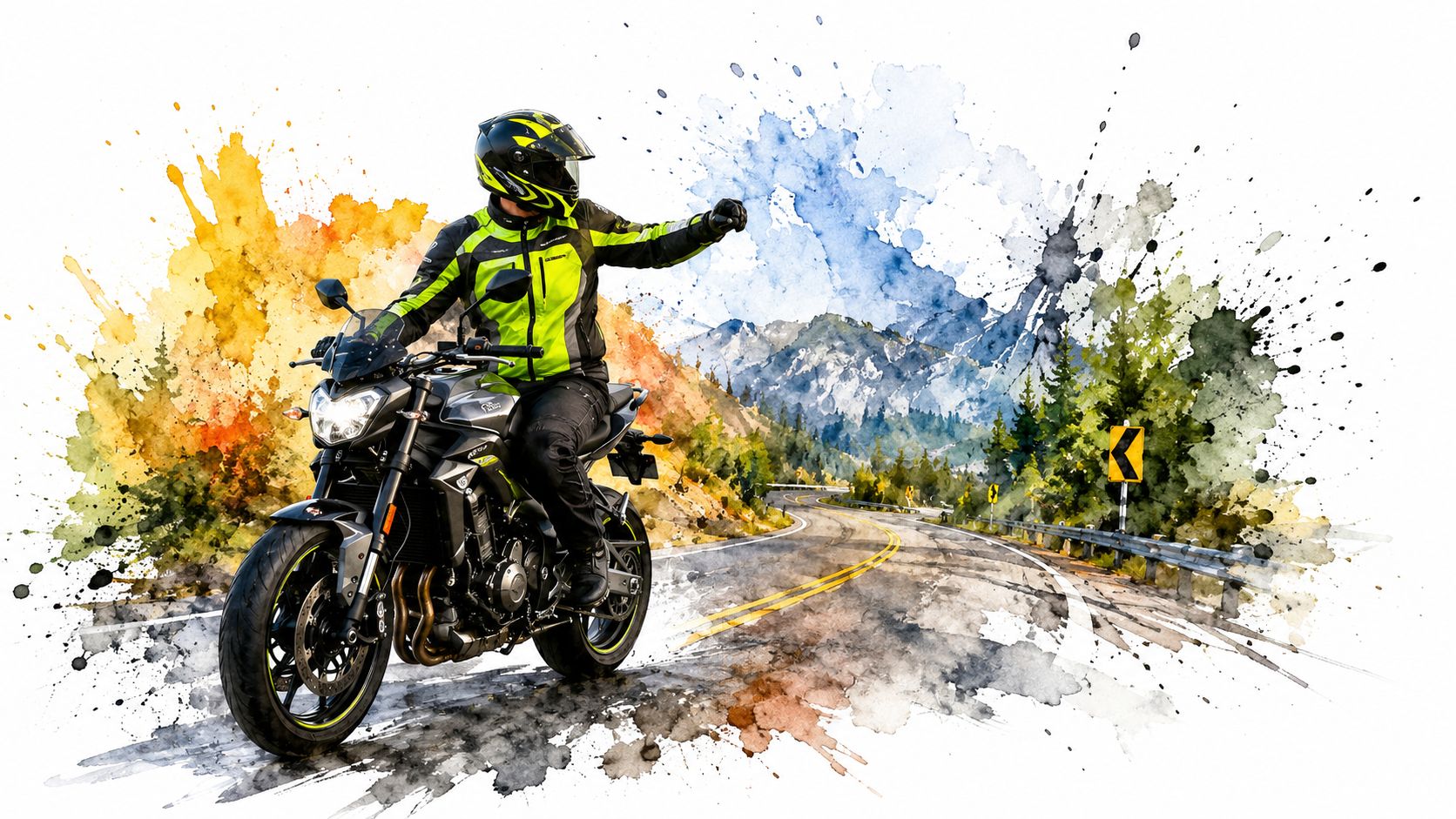
One of the clearest ways to improve visibility is through what safety experts call conspicuity, meaning how easily other road users notice you. A review of motorcycle safety literature found that fluorescent clothing was associated with a 37% reduced accident risk, and a white helmet lowered risk by 24% compared to a dark helmet, according to this motorcycle conspicuity review on ScienceDirect.
Gear that helps you get noticed
Dark gear may look sleek, but visibility matters more than style when traffic is dense or the background is busy.
A rider can improve detection by choosing:
- Fluorescent jackets or vests
- Reflective materials on gear
- Brighter helmet colors
- Headlights on during the day and at night
- Lane positions that keep the bike out of blind spots
If you're thinking through full protective gear, eye protection is part of the conversation too. This guide to motorcycle eyewear in Florida is useful because it breaks down practical considerations riders often overlook.
Riders can also review more everyday motorcycle safety tips for visibility and road positioning before getting back on the road.
Technology and habits work together
Good habits matter most, but smart equipment helps. NHTSA recommends keeping headlights on and using reflective gear, while IIHS reports that ABS reduces fatal-crash rates by 22% on motorcycles with optional ABS compared with the same models without it, and collision insurance claims are 21% lower for ABS-equipped motorcycles. IIHS also reports that in 2024, 67% of motorcycle models came with standard ABS and another 17% offered it as an option, as summarized on the NHTSA motorcycles safety page.
Here's a short visual refresher on rider safety basics:
The street-level mindset
The best riders don't depend on being seen. They increase the odds of being seen.
That means avoiding long stays beside cars, managing following distance, and choosing a lane position that makes the bike more visible in mirrors. It also means expecting mistakes from others and leaving yourself an escape route.
Bright gear helps. Smart lane position helps. Calm judgment helps most.
Beyond Awareness Build Real Driving Skills
Reading about motorcycle awareness is useful. Practicing it with a trained instructor is better.
Most beginners don't struggle because they don't care. They struggle because the road asks them to do too many things at once. Check mirrors. Judge speed. Read signs. Control the car. Watch pedestrians. Then notice the motorcycle tucked just off the left front corner. That's a lot for a new driver.
Why coached practice matters
A strong lesson does something an article can't do. It turns abstract advice into a repeatable action behind the wheel.
An instructor can correct the exact habits that cause motorcycle-related mistakes:
- Late scanning at intersections
- Rushed left turns
- Weak mirror routines
- Missed shoulder checks
- Poor lane-change timing
- Following too closely in traffic
That kind of feedback is especially valuable for Georgia teens working toward independent driving. It also helps adult learners, nervous drivers, and people returning to driving after a long break.
The Georgia path from class to road
For many families, the process works best when it's built in stages:
| Stage | What the student needs |
|---|---|
| Foundation | Driver's education and Joshua's Law knowledge |
| Practice | Guided driving lessons in real traffic |
| Preparation | Focused work on weak skills before the test |
| Licensing | Road test readiness and calm execution |
Online options can help with scheduling, especially for busy students and parents. But online learning works best when it's paired with real-world lessons, because awareness is a physical skill as much as a mental one.
If you want a practical overview of what improves performance fastest, this article on how to improve driving skills with focused practice is a good starting point.
What families should look for
When choosing training, look for programs that make it easy to move from learning rules to applying them:
- Joshua's Law courses, including online choices for flexibility
- Driving lessons and lesson packages, which matter most for skill growth
- Road test support, so students know what to expect
- Scholarship information, because cost can affect access
- Adult lessons too, not just teen programs
That combination helps drivers build habits they can carry onto Georgia roads for years.
Your Next Steps to Becoming a Safer Georgia Driver
Motorcycle awareness comes down to one idea. Notice earlier, decide more carefully, and give riders the space and respect you'd want for yourself.
For teen drivers, that starts with learning the basics the right way and then practicing them until they feel natural. For parents, it means choosing training that goes beyond passing a test. The safest drivers don't just know rules. They use them under pressure, in traffic, at intersections, and during everyday mistakes that happen fast.
If your family is dealing with the aftermath of a serious crash, legal guidance may also matter. For readers outside Georgia looking for that kind of help, Mattiacci Law for motorcycle accidents is one example of a resource focused on motorcycle injury cases.
For most new Georgia drivers, the best next moves are practical:
- Enroll in a Joshua's Law driver's education course
- Choose driving lessons or a lesson package for hands-on practice
- Use online course options if scheduling is tight
- Prepare for the road test with professional coaching
- Check whether you qualify for the Georgia Driver's Education Scholarship Grant Program
Safety isn't luck. It's learned behavior, repeated until it becomes your normal way of driving.
If you're ready to turn motorcycle awareness into real road skill, A-1 Driving School offers Georgia families a clear path forward with Joshua's Law courses, online driver education options, road test support, and essential driving lessons and lesson packages for teens and adults. If cost is a concern, ask about the Georgia Driver's Education Scholarship Grant Program. The best next step is simple: get trained, get coached, and build safe habits before they're tested in traffic.