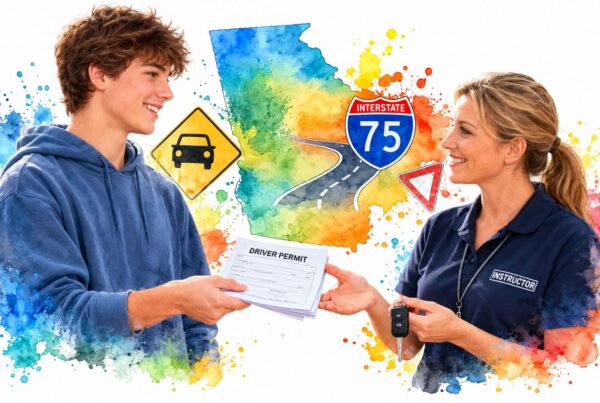

The first solo drive can feel ordinary until several decisions arrive at once. A newly licensed teen leaves school with friends in the car, hears a phone notification, meets changing traffic, and needs to choose a safe speed before turning through a busy intersection. Safe driving depends on making the right choice before pressure takes over.
The best safe driving tips for teens begin before the engine starts. Driver's education, repeated supervised practice, clear family rules, flexible Georgia course options, and focused road-test preparation all help turn good intentions into reliable habits. A-1 Driving School offers Joshua's Law courses, online Georgia options, customized driving lessons and packages, Scholarship Grant Program support, and road-test services that connect classroom learning with practical driving.
Teen-driver risk remains a serious safety issue. In 2024 national teen-driver data from NHTSA, 2,320 people were killed in crashes involving a teen driver ages 15 to 18, including 752 teen drivers, while 85,947 teen drivers were injured. The pathway below focuses on the decisions that help Georgia teens prepare for safer independent driving.
1. Master Pre-Drive Vehicle Checks Through Structured Driver's Education
A safe trip starts with a vehicle that's ready to move. Before pulling out, check the tires, lights, wipers, seat belts, and visible fluid conditions. A teen who learns these checks early is more likely to notice a problem before it becomes a roadside emergency.
Use the same order every time. Walk around the vehicle and look for a damaged or visibly underinflated tire. Check tread condition, headlights, brake lights, turn signals, and windshield wipers. Inside the car, confirm that each seat belt latches properly, adjust the mirrors and seat, and make sure the windshield gives you a clear view.
A-1 Driving School's Driver's Education courses connect vehicle responsibility with everyday driving. During an A-1 lesson, a parent can review the vehicle with the teen, then allow the student to repeat the process independently. A printed checklist kept in the glove compartment can make the routine easier to remember. Families can also use the vehicle inspection checklist as a practical reference.
Turn inspection into a repeatable habit
Create a short mnemonic that matches the vehicle, such as tires, lights, glass, belts, controls. The exact phrase matters less than using the same sequence before every lesson and supervised drive.
- Check the tires: Look for visible damage, low pressure, and worn tread.
- Check the lights: Confirm that headlights, brake lights, and signals work.
- Check the glass and wipers: Keep the windshield clear and verify that wipers operate properly.
- Check the belts and controls: Fasten your seat belt, adjust mirrors, and set climate or navigation controls before moving.
Practical rule: If you discover a safety problem, tell the adult supervising the drive and correct it before leaving.

2. Eliminate Distractions With Focus Training From Professional Instructors
Distraction changes the driving task from one decision to several competing decisions. A phone notification, a passenger asking for a song, or a drink rolling across the console can pull attention away at the exact moment traffic changes. The solution isn't promising to “pay attention.” It's removing predictable distractions before the car moves.
Put the phone in the glove compartment, trunk, or another place you can't reach from the driver's seat. Set navigation, music, mirrors, and climate controls while parked. Tell passengers that the driver won't answer messages, hand over the phone, or search for items while driving.
During supervised lessons, ask an instructor to observe how you manage passengers and controls. A-1's classroom and online Driver's Education options can introduce common distraction scenarios, while driving lessons give teens a controlled setting to practice staying focused in traffic. Use the distracted-driving prevention guidance to reinforce the same rule at home.
Make focus the car's default setting
A practical passenger agreement can be simple: everyone wears a seat belt, nobody pressures the driver to speed, and passengers handle directions or music only when the driver can remain focused. If a passenger creates too much noise or demands attention, the driver should pull over safely before addressing the problem.
- Store the phone: Put it out of reach before starting the engine.
- Prepare first: Enter the route and adjust controls while parked.
- Set passenger expectations: Explain the rules before the trip begins.
- Practice deliberately: Repeat distraction-free driving during every A-1 lesson and parent-supervised drive.
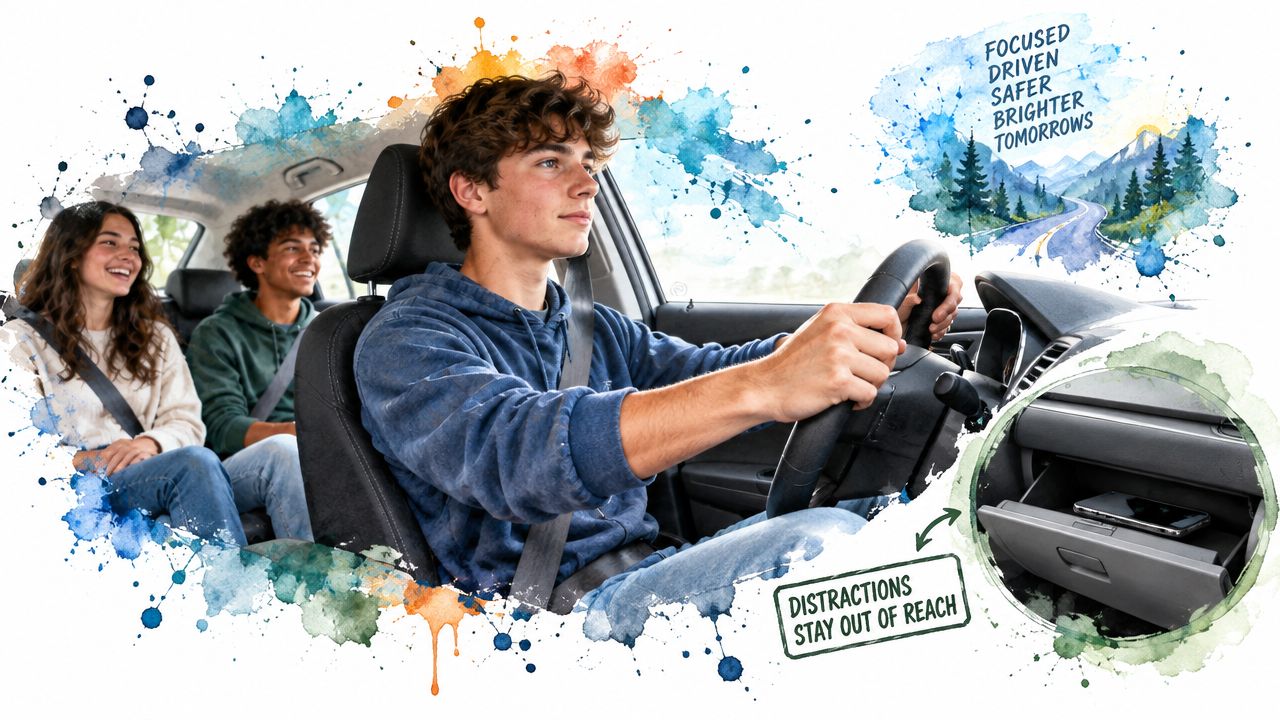
3. Develop Speed Management Skills Through Supervised Driving Lessons
The posted speed limit is a starting point, not an automatic answer for every condition. Rain, poor visibility, traffic congestion, curves, unfamiliar roads, and passengers can all require a more conservative decision. A teen driver needs to learn how the road feels, how much space braking requires, and when slowing down early is safer than reacting late.
Start on quiet streets. Practice holding a steady speed, easing off the accelerator before curves, and braking smoothly before intersections. Then repeat those decisions in busier traffic, on roads with different lane patterns, and in changing weather when a qualified adult or instructor believes conditions are appropriate.
Speed discipline also reduces pressure. Leave earlier, choose the route in advance, and avoid treating an appointment time as a reason to rush. Passenger presence should make a novice driver more deliberate, not more eager to impress.
Ask what the road is telling you
After each drive, discuss specific choices rather than asking only whether the trip “went well.” An A-1 instructor can explain why a certain speed was appropriate, where braking should have started, and how to create more space around the vehicle. Customized lessons can move from residential streets toward larger roads as the teen demonstrates control.
Slow before the problem appears. Speed management is easier when the driver reads the road early instead of waiting for an emergency.
The benefits of taking driving lessons from an instructor include this kind of immediate, situation-specific feedback. Practice speed choices during supervised A-1 lessons, then repeat the same habits with a parent between appointments.

4. Complete Joshua's Law Driver's Education for a Licensing and Safety Foundation
Georgia's Joshua's Law gives teen drivers a structured starting point. For 16- and 17-year-olds seeking a first Class D license, the requirements include an approved driver education course and 40 hours of supervised driving, including 6 hours at night, according to the Georgia DDS Joshua's Law requirements. The approved course can be completed in person or online, and course options include 30 hours of classroom instruction plus either 6 hours behind the wheel or parent-taught driving practice.
That flexibility helps families choose a schedule the teen can complete. An in-person class may suit a student who learns best through direct discussion. An online option may work better around school, sports, work, or family responsibilities. Either way, the course should become the foundation for practice, not a box checked and forgotten.
A-1 Driving School provides instructor-led and online Driver's Education options in Georgia, including Joshua's Law pathways. Students should take notes on right-of-way decisions, signs, hazard recognition, lane positioning, and safe responses to changing traffic, then bring those questions into their driving lessons.
Connect the course to the next drive
Enroll early enough to coordinate classroom learning, supervised practice, and the eventual road test. After each lesson, review one course concept in a real setting. For example, a discussion about scanning should become a deliberate habit at every intersection, while a lesson about following space should guide practice behind buses, trucks, and turning vehicles.
A-1 also serves Fulton County Schools through its Driver's Education relationship with the Fulton County Board of Education. Families can ask about available in-person, online, and virtual learning arrangements before choosing the best fit.
5. Prepare for Georgia Road-Test Success With Specialized Test Preparation
Passing a road test requires more than knowing the rules. The teen must show consistent vehicle control, observation, signaling, lane use, turning, stopping, and response to examiner instructions while managing test-day pressure. Practice should therefore become more specific as the appointment approaches.
Georgia DDS states that road tests are appointment-based only, and walk-ins aren't accepted, as explained on the Georgia DDS road-test page. Schedule ahead, confirm the required documents and vehicle condition, and avoid leaving preparation until the last drive before the appointment.
Rehearse the complete testing routine
Use a final lesson package to repeat the maneuvers that cause uncertainty. Ask the instructor to observe mirror checks, speed changes, lane positioning, stopping points, parking, and communication with the examiner. If parallel parking or another maneuver feels inconsistent, practice it in several locations rather than relying on one familiar driveway.
Arrive rested and allow enough time to avoid rushing into the test center. Follow each instruction carefully. If you don't understand an instruction, ask for clarification rather than guessing.
A-1 Driving School offers Georgia road-test preparation and testing assistance, with services available through its locations, including Athens. Test-focused lessons can also be added to a broader customized package so the student practices general driving and test maneuvers together.
Watch this road-test preparation video before your final practice session:
6. Build Progressive Skills Through Customized A-1 Driving Lesson Packages
A classroom course explains driving decisions. Repeated supervised lessons help a teen perform those decisions when traffic becomes complicated. The most useful progression starts with basic control in a low-traffic area, then adds turns, lane changes, parking, busier intersections, highways, and other situations that match the student's needs.
A-1's customized driving lessons can be organized around the teen's current ability rather than a one-size-fits-all sequence. A student who feels anxious about merging can spend more time preparing mirrors, matching speed, identifying gaps, and entering the lane smoothly. Another student may need extra work on intersections, backing, parking, or maintaining attention during longer drives.
Use lesson packages for continuity
Single lessons can address an immediate concern, but a package makes it easier to build skills in order and revisit them before they fade. Schedule some drives during the conditions the teen will face most often, such as school traffic, an after-school commute, or a weekend route. Parents can then reinforce the instructor's language during practice between appointments.
- Begin with control: Practice steering, braking, starts, stops, and positioning.
- Add complexity gradually: Move from quiet streets to heavier traffic when control is consistent.
- Target personal barriers: Tell the instructor which scenarios create anxiety or confusion.
- Repeat between lessons: Practice the same skill with a parent or trusted adult.
- Review progress: End each drive with one strength and one skill to improve.
A-1 has 18+ locations across Georgia, including Athens, which can help families coordinate lessons around school and work schedules. The key is not rushing to the hardest road. It's building enough repetition that the teen can manage the next level without losing basic safety habits.
7. Leverage Georgia's Driver's Education Scholarship Grant Program for Accessible Training
Training costs can affect when a teen starts. Georgia families should check the Driver's Education Grant Scholarship Program early rather than waiting until the road-test appointment is close. The Georgia rules for the Driver's Education Grant Scholarship Program describe a statewide program for Georgia residents ages 15 to 17. The award can cover up to $500, paid directly to the training provider after course completion, for a driver education course consisting of 30 hours of classroom training and 6 hours of behind-the-wheel instruction.
The program gives eligible families another route into structured education and supervised practice. Start by reviewing eligibility and gathering the requested documentation. Then ask A-1 about current application steps, course availability, and how scholarship support can fit with the teen's licensing timeline.
Plan funding and scheduling together
A scholarship doesn't replace the need for practice. Families should still build a complete pathway that includes classroom learning, parent-supervised driving, customized lessons where needed, and road-test preparation. If the teen has a demanding school or work schedule, an online course may make it easier to complete the classroom component while reserving specific times for driving instruction.
Use the following planning sequence:
- Check eligibility early: Review the program requirements before selecting course dates.
- Prepare documents: Gather materials needed for the application and enrollment process.
- Ask about provider steps: Confirm how A-1 handles eligible scholarship-supported training.
- Reserve practice time: Put supervised drives and lessons on the family calendar.
- Plan beyond the course: Budget time for customized lessons and final road-test preparation.
This approach treats financial support as part of a safety plan, not merely a discount. The teen receives access to instruction while the family creates enough time for skills to develop.
8. Practice Hazard Recognition and Decision-Making in Real Driving Conditions
A hazard can be a pedestrian near a crosswalk, a cyclist approaching from the side, a vehicle drifting across a lane, standing water, or an aggressive driver closing from behind. Safe driving depends on noticing the risk early, predicting what may happen next, and choosing a response that leaves room for error.
The CDC's overview of teen-driver risk reports that the fatal crash rate per mile driven for ages 16 to 19 is nearly 3 times that of drivers ages 20 and older, with the highest risk at ages 16 to 17. That makes hazard recognition especially important during the first period of independent driving. A teen should practice scanning, adjusting speed, increasing space, and avoiding sudden steering or braking before facing these situations alone.
Use classroom scenarios from a Joshua's Law course as prompts during supervised driving. The adult can ask, “What might change here?” before an intersection, a lane merge, or a weather shift. The teen should answer by naming the hazard, explaining the risk, and choosing a safe action.
Build a mental response plan
A-1 instructors can coach students through real traffic without turning every mistake into a crisis. For example, if a pedestrian approaches a crosswalk, the student can ease off the accelerator, scan for movement, and prepare to stop. If another driver behaves aggressively, the teen can maintain space, avoid competing, and allow that driver to move away.
Practice hazard spotting as a passenger, too. Point out brake lights several vehicles ahead, parked cars that may hide pedestrians, changing traffic signals, and vehicles entering from side streets. Then discuss the response after the lesson.
See early, decide early, act smoothly. That sequence gives a novice driver more time and more options.
8-Point Teen Safe Driving Comparison
| Program | Implementation complexity | Resource requirements | Expected outcomes | Ideal use cases | Key advantages |
|---|---|---|---|---|---|
| Master Pre-Drive Vehicle Checks Through Structured Driver's Education | Low, checklist-based training and demos | Minimal: checklist, instructor time, vehicle access, online modules | Habitual pre-drive inspections; fewer mechanical failures | New teen drivers learning vehicle upkeep; Joshua's Law classes | Prevents breakdowns, builds confidence, Joshua's Law-aligned |
| Eliminate Distractions with Focus Training from Professional Instructors | Medium, behavior change and scenario practice | Instructor-led scenarios, vehicles, online modules, time | Reduced in-vehicle distractions; improved sustained attention | Teens prone to smartphone/passenger distractions; road-test prep | Targets top cause of teen crashes; instructor feedback |
| Develop Speed Management Skills Through Supervised Driving Lessons | Medium–High, progressive road practice | Multiple supervised lessons, diverse road environments, instructor time | Better speed judgment; fewer speed-related incidents; test readiness | Teens learning highway/residential speed control; peer-pressure risk | Addresses leading fatality cause; real-time feedback |
| Complete Joshua's Law Driver's Education for Licensing and Safety Foundation | Medium, prescribed 30-hr classroom + 6h behind-the-wheel | Classroom facilities, certified instructors, scheduling, online platform | Legal compliance for Class D; foundational driving knowledge and skills | All Georgia new teen drivers seeking licensure | Legally required, comprehensive curriculum, flexible formats |
| Prepare for Georgia Road Test Success with Specialized Test Preparation | Medium, focused, timing-sensitive training | Targeted lessons, practice on test routes, examiner insight | Higher first-attempt pass rates; reduced test anxiety | Teens scheduled for imminent road test; maneuver practice needed | Specialized test maneuvers, examiner-aware coaching |
| Build Progressive Skills Through Customized A-1 Driving Lesson Packages | High, individualized, staged skill progression | One-on-one instructor time, repeated lessons, varied road access | Personalized competence and confidence in real-world driving | Teens needing tailored instruction or advanced practice | Customized pacing, progressive real-world training, flexible scheduling |
| Leverage Georgia Driver's Education Scholarship Grant Program for Accessible Training | Low–Medium, application and verification process | Documentation, program administration, state grant funds, A-1 coordination | Reduced or no-cost access to driver education and lessons | Low-income families seeking Joshua's Law compliance and lessons | Removes cost barriers; broad statewide access |
| Practice Hazard Recognition and Decision-Making in Real Driving Conditions | Medium–High, layered scenarios and coached responses | Classroom modules, supervised practice, diverse traffic conditions, instructor coaching | Stronger hazard spotting and on-road decision-making; reduced risk | Teens preparing for unpredictable traffic situations; advanced practice | Teaches transfer skills for novel hazards; instructor-guided responses |
Turn Training Into a Safer Driving Routine
Safe driving becomes more dependable when the family treats it as a process. Start with a Joshua's Law course, then choose between in-person and online education based on the teen's learning style and schedule. Georgia DDS allows approved Joshua's Law course options to be completed online or in person, so families can select a format that supports steady participation rather than rushed completion.
Next, create a parent-teen agreement before the first solo drive. Put the rules in writing so nobody has to negotiate them in a stressful moment. Cover phone storage, seat belts, passengers, night driving, speed choices, vehicle access, and what the teen should do after making a mistake or feeling unsafe.
The agreement should also define a safe return-home plan. A teen needs to know they can call a parent for help if a passenger becomes disruptive, weather worsens, fatigue develops, or the vehicle has a problem. The adult can address the situation later, but getting everyone home safely comes first.
Put the pathway on the calendar
Schedule customized driving lessons as soon as the classroom portion is complete. A lesson package can provide continuity while the teen develops vehicle control, traffic awareness, merging, parking, speed management, and hazard recognition. Continue parent-supervised practice between professional lessons, and use each drive to repeat one specific skill.
Families should also check eligibility for the Georgia Driver's Education Grant Scholarship Program. Georgia residents ages 15 to 17 may qualify for support toward an approved driver education course, with state rules describing awards of up to $500 paid directly to the provider after completion. Confirm the current requirements and application process before making enrollment decisions.
As the teen becomes more consistent, book Georgia road-test preparation and testing assistance. Road tests require appointments, and DDS doesn't accept walk-ins, so scheduling ahead prevents a last-minute problem. Use the final lessons to practice test maneuvers, examiner communication, vehicle checks, and calm decision-making.
A-1 Driving School provides a pathway from Driver's Education to customized lessons, lesson packages, scholarship information, and Georgia road-test services. Families can also review broader safety resources, including guidance on what it means to be a safe driver on a Florida license, while keeping Georgia's licensing requirements at the center of their plan.
The aim isn't to produce a teen who merely passes a test. It's to help a new driver repeat safe choices when friends are talking, traffic changes, the phone buzzes, or the road looks unfamiliar. Start with education, practice deliberately, set firm family expectations, and add professional feedback wherever the teen needs more confidence or control.
A-1 Driving School offers Joshua's Law Driver's Education in flexible formats, customized teen driving lessons, lesson packages, Georgia Scholarship Grant Program support, and road-test preparation and testing assistance. Visit A-1 Driving School to choose the next step toward safer, better-prepared teen driving in Georgia.