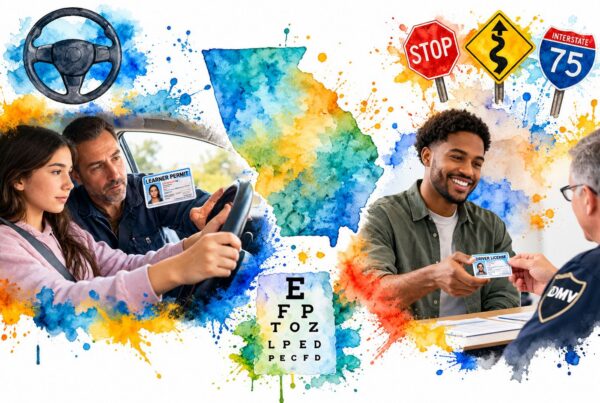

Your teenager is ready to drive, the birthday is approaching, and you're already wondering whether the DDS visit will end with a permit or a second trip home. Georgia's process is manageable, but only when the age, documents, testing, training, and supervision rules are handled in the right order.
The practical answer to how to get a driver's permit in GA starts with the Class CP Instructional Permit. Prepare the paperwork before visiting the DDS, study the Georgia Driver's Manual instead of relying on random practice questions, and use the permit period to build real driving skill. The permit is not the finish line. It's the legally required training phase before a teen can drive alone.
Who Can Apply and When to Start
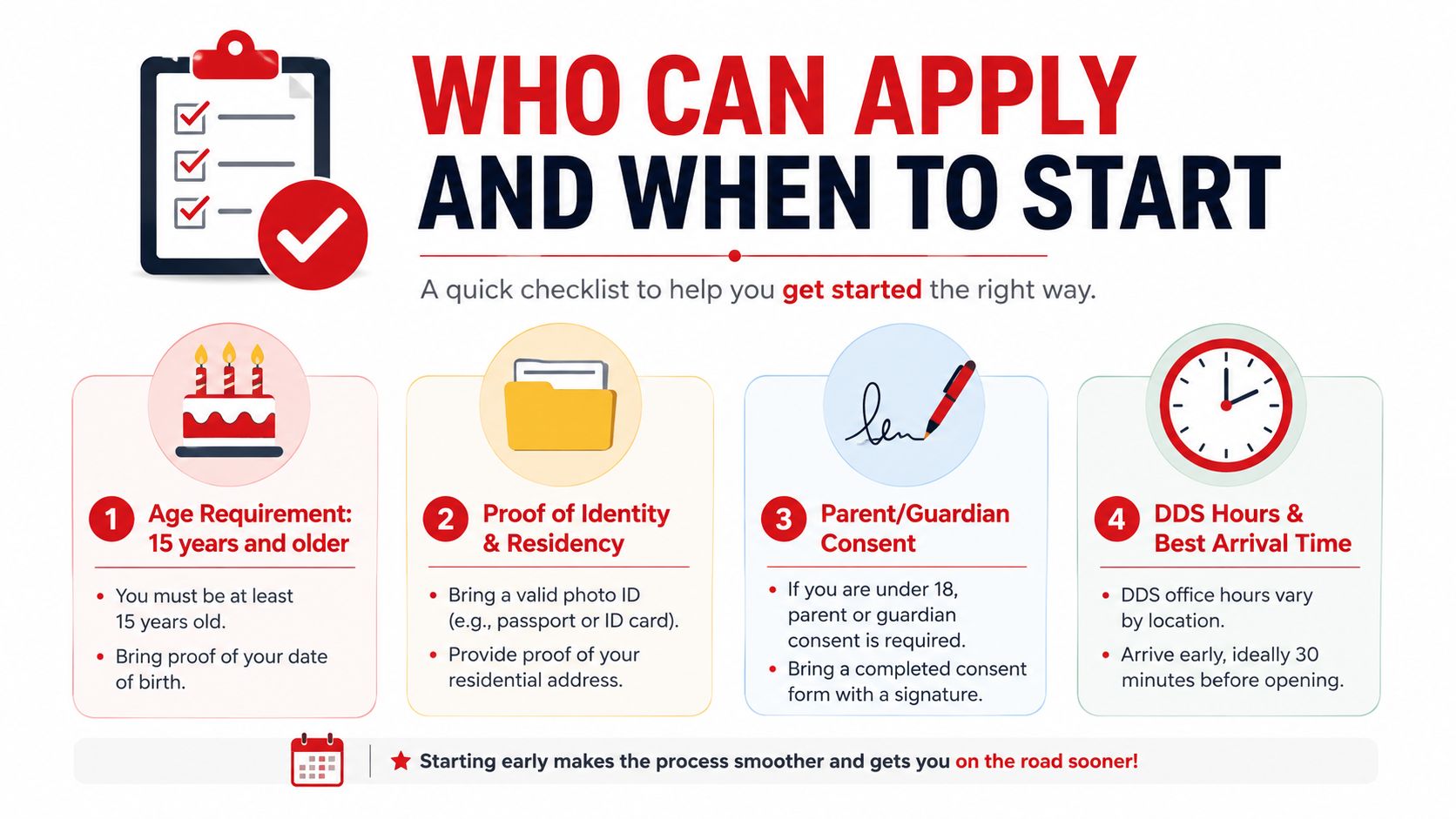
A Georgia DDS visit should begin with a completed folder, not a hopeful teenager and a phone full of screenshots. The standard learner's permit is the Class CP Instructional Permit, and an applicant must be at least 15 to apply, according to the Georgia DDS permit requirements.
Georgia also has a special permit option for 14-year-old minors under a separate DDS provision. That option sits apart from the standard Class CP process, so families should confirm the applicable provision with DDS rather than assume a 14-year-old follows the same path as a 15-year-old applicant.
Start with the eligibility checklist
Before scheduling the visit, confirm that the applicant can:
- Meet the age requirement: The standard Class CP application begins at age 15.
- Pass the required screenings: DDS requires a vision exam and a knowledge exam.
- Bring acceptable documents: Identity, residency, and citizenship or lawful-presence documentation must be provided.
- Pay the permit fee: The verified DDS permit fee is $10.
- Arrange proper supervision: Once issued, the permit allows driving only with a licensed driver who is 21 or older seated in the front seat.
Applicants under 18 need an authorized adult involved in the application. DDS identifies a parent, guardian, responsible adult, or authorized driver training instructor as someone who can sign the form. School-age applicants often need a signed and notarized Certificate of School Enrollment, and that document is valid for only 30 days, so request it close to the DDS appointment.
The most useful preparation is to create a licensing folder well before the appointment. If your family is also sorting out driver education terminology, review what TADRA means in Georgia so the training and licensing language doesn't create confusion.
Documents and Fees You Need at the DDS
Missing paperwork is the fastest way to turn a simple permit visit into an unnecessary return trip. Georgia DDS requires applicants to provide documents covering identity, residency, and citizenship or lawful presence, and the exact combination can vary with the applicant's situation.
Use the official Georgia ID and permit document requirements as your packing reference, then verify the current DDS requirements before leaving home. Bring originals or certified documents where required. Don't rely on a photograph of a document unless DDS specifically accepts that format.
Build the folder in categories
Organize the paperwork so the clerk can review it quickly:
- Identity and lawful presence: Prepare an accepted identity document and the required proof of citizenship or lawful presence.
- Residency: Bring the required Georgia residency evidence. A parent or guardian may need to be present when the residence document is connected to that adult.
- School status: If the applicant is school-age and under 18, obtain the signed and notarized Certificate of School Enrollment close to the appointment. DDS says this certificate is valid for only 30 days.
- Adult authorization: Make sure the parent, guardian, responsible adult, or authorized driver training instructor who must sign is available.
- Relocation paperwork: A new Georgia resident must surrender an out-of-state license, permit, or ID. If that document isn't available, DDS says the applicant may need to provide an MVR instead.
The $10 permit fee is the amount verified by Georgia DDS. Keep payment ready, but don't let the fee distract from document preparation. A missing school certificate or an unresolved out-of-state credential can stop the application even when the payment is available.
Use a physical folder with labeled sections, and keep a second copy of important paperwork at home. The best DDS strategy is boring and organized. That's exactly what prevents delays.
Passing the Vision and Knowledge Tests
The permit testing process has two core parts, a vision screening and a knowledge exam. The knowledge test is based on Georgia driving rules and road signs, so the Georgia DDS Driver's Manual should be the primary study source, not a social media quiz or an old family handout.
Study in short sessions and test recall after each topic. A teen who can explain right-of-way decisions, recognize signs, and apply safe-driving rules is better prepared than someone who has memorized answer patterns without understanding them.
Use a deliberate study routine
A workable routine looks like this:
- Read a focused portion of the Georgia Driver's Manual.
- Write down rules that are easy to confuse, such as sign meanings and right-of-way situations.
- Take practice questions without looking at the answers.
- Review every missed answer, not just the score.
- Repeat the weak topics until the teen can explain the rule aloud.
Corrective lenses should be brought to the vision screening if the applicant normally uses them. If the applicant has a vision concern, handle it before the DDS visit rather than treating the screening as an experiment.
The knowledge exam and permit requirements are also covered in Georgia's learner's permit overview, which confirms the vision screening, knowledge exam, $10 fee, two-year permit validity, and required adult supervision. The permit is valid for two years, but that doesn't mean a teen should postpone practice. Early, supervised driving creates time to correct habits before the road test phase.
A structured driver education course can help students connect written rules to actual driving decisions. Choose a course that explains the reasoning behind signs, lane positioning, intersections, and hazard awareness. Cramming the night before is a poor substitute for understanding the rules.
Joshua's Law and A-1 Driver's Education Options
Joshua's Law becomes central when a teen moves from the permit toward a Class D license. Georgia requires 16- and 17-year-olds applying for a Class D license to complete an approved driver education course and 40 hours of supervised driving, including 6 hours at night, as confirmed by the Georgia DDS Joshua's Law requirements.
The course path can be classroom-based, online, or blended. The important question isn't which format sounds most convenient. It's whether the teen will complete the instruction, retain the material, and receive the required documentation for the licensing process.
Compare the available formats
| Format | Classroom Hours | Behind-the-Wheel Hours | Best For | DDS Reporting |
|---|---|---|---|---|
| In-person classroom | 30 | 6 through an approved school path | Students who learn through live instruction and questions | Completion handled through the approved provider |
| Online course | 30 online | 6 through a certified school | Families needing flexible scheduling | Completion handled through the approved provider |
| Hybrid path | 30 through a selected classroom or online combination | 6 through a certified school | Students balancing school, activities, and driving practice | Confirm reporting details with the provider |
A-1 Driving School offers Georgia driver education courses in formats that can fit different schedules, including classroom and online options. Its in-person format suits students who need a set schedule and direct instructor interaction. An online option can work better for families managing school activities, work, or transportation challenges.
The verified course structure includes 30 hours of instruction plus 6 hours behind the wheel through a certified school path. Parent-supervised practice remains important because the course teaches the foundation, while repeated supervised driving develops judgment, control, and consistency.
A 15-year-old can begin the permit process before completing Joshua's Law. The training must be completed before the teen qualifies for the next licensing step. Families should choose the course early enough that completion records don't become the final missing item when the teen becomes eligible.
Driving Lessons and Road Test Prep That Move You Forward
Parent practice is necessary, but it shouldn't be the only training a new driver receives. Parents often teach the same habits they use every day, including habits they don't realize are unsafe or difficult for a road test examiner to overlook.
Professional lessons add a neutral instructor who can identify steering, braking, mirror, lane-position, and observation problems before they become test-day failures. A bundled package is usually easier to manage than booking isolated lessons and trying to coordinate a vehicle, instructor, and road test separately.
What a useful package should cover
Ask whether the package includes practical services such as:
- Pickup and drop-off: This can remove a transportation obstacle for families with tight schedules.
- Highway instruction: The student should learn lane changes, merging, spacing, and speed control in appropriate traffic conditions.
- Parking practice: Parallel parking and controlled backing deserve repeated practice, not a rushed lesson before testing.
- Parent-observation rides: Parents learn the same correction language and can reinforce it during home practice.
- Road test transportation: A same-day ride to the testing location can reduce vehicle and scheduling complications.
A-1 Driving School is a family-owned Georgia provider that has served drivers since 1987, according to its publisher information. It offers driving lessons, course options, and road test assistance, with instructors serving Atlanta, Marietta, and surrounding areas.
Instructor's rule: Don't buy lessons based only on the number of hours. Ask what maneuvers, locations, feedback, and road test support the package actually includes.
The Georgia DDS road test requirements require a valid Georgia non-commercial learner's permit, a passed driver's license knowledge exam, and an affidavit confirming 40 hours of supervised driving, including 6 hours at night. Professional instruction doesn't replace that supervised practice requirement, but it can make the practice more productive.
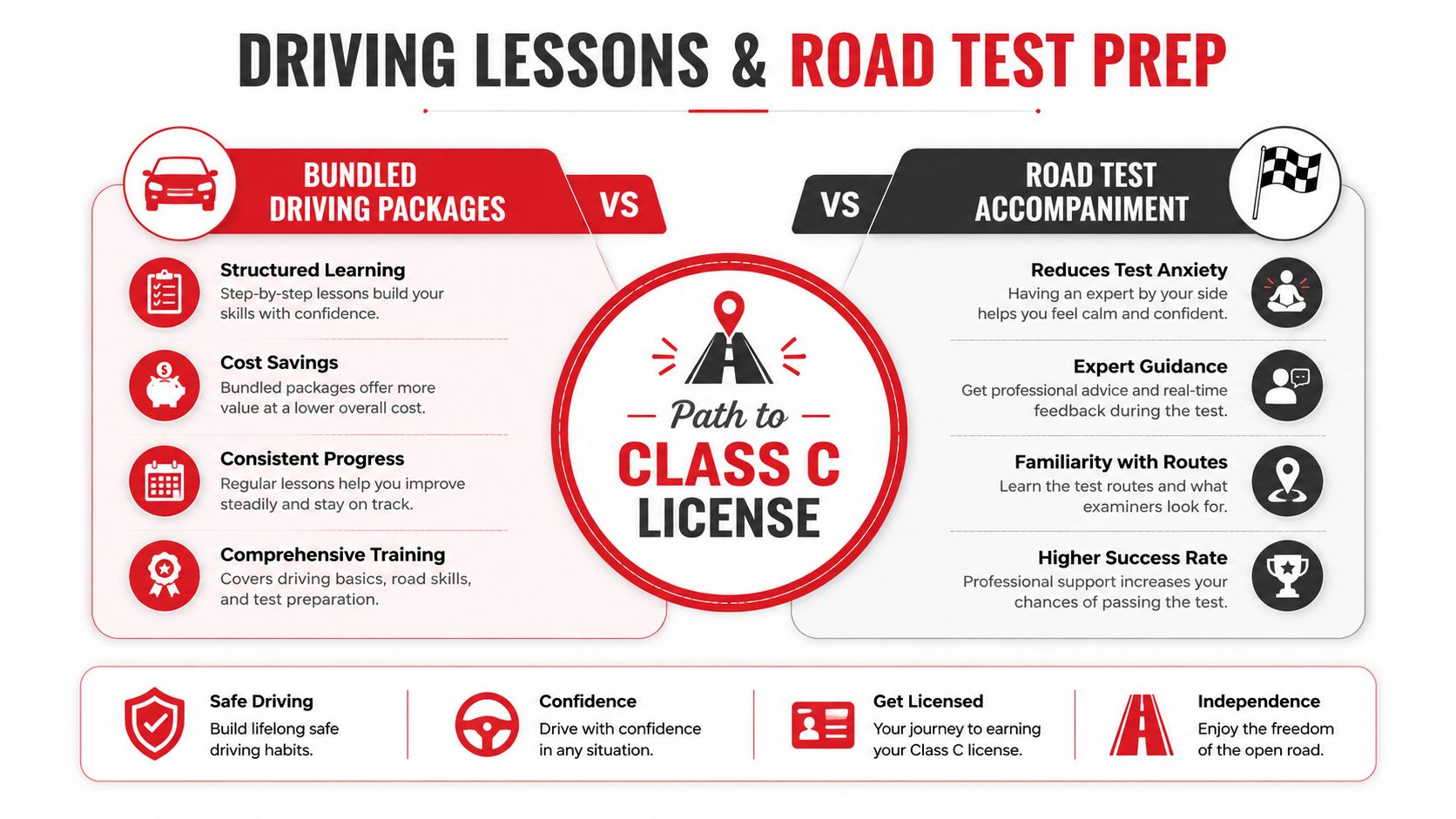
A calm, prepared student still has to meet the official standard. Road test accompaniment is valuable because it removes avoidable distractions, such as arriving without a suitable vehicle or practicing only in an empty parking lot.
Scholarship Funds and the Road Test Sign-Off
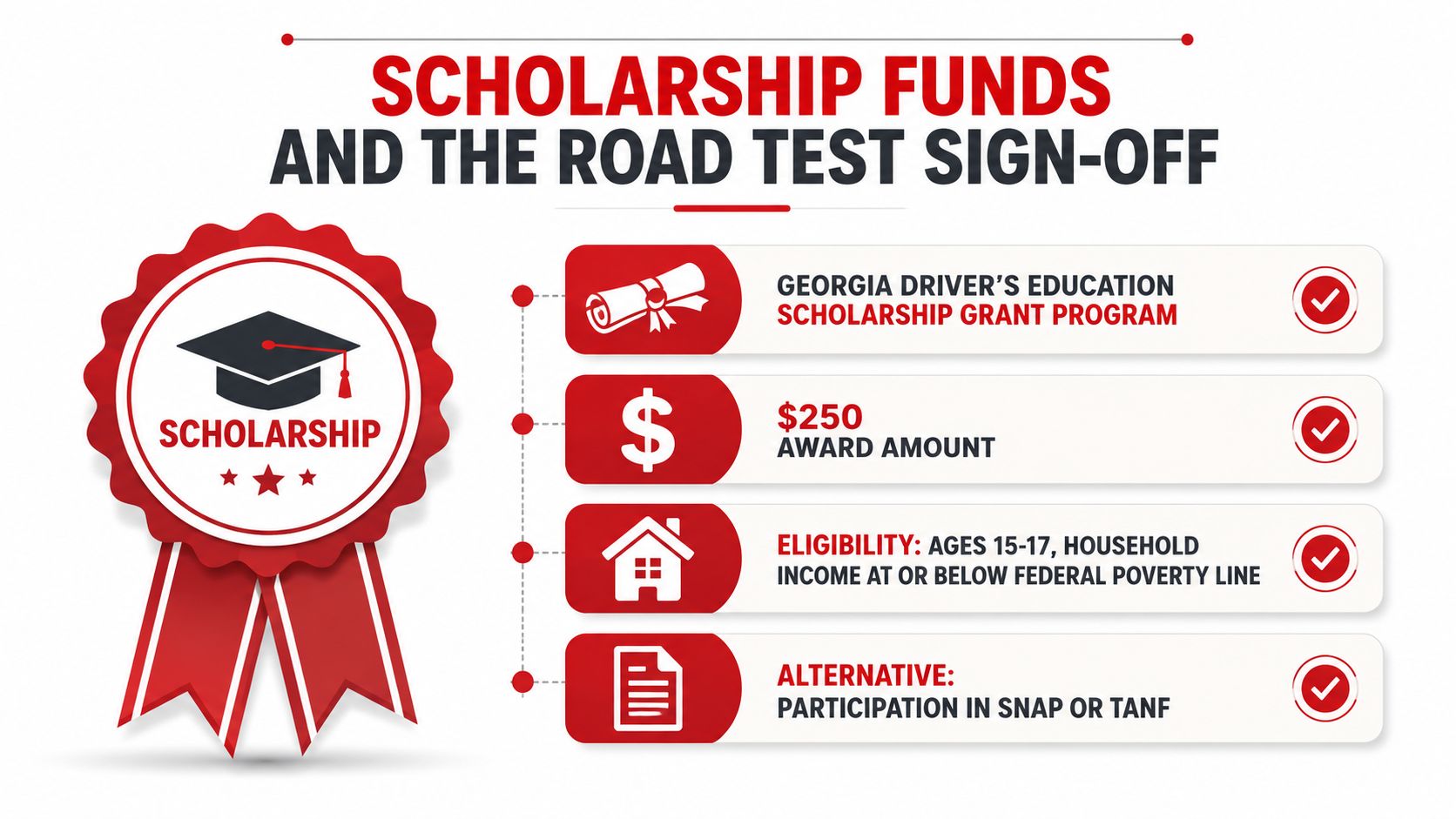
Georgia's Driver's Education Scholarship Grant Program can help eligible families pay for driver education. The program is limited to Georgia residents who are actively enrolled in school, are 15 through 17, and hold a valid Georgia instructional permit or driver's license, according to the Georgia scholarship grant rules.
That eligibility rule matters because families shouldn't assume every teen qualifies automatically. Confirm the student's residency, enrollment, age, and permit or license status before planning around scholarship funding.
Apply before training becomes urgent
Use this order:
- Confirm eligibility: Check that the student meets the Georgia residency, school enrollment, age, and permit or license conditions.
- Prepare the application materials: Keep the student's permit or license information and school details organized.
- Ask the driving school about processing: A participating provider can explain how approved scholarship funds and training enrollment are coordinated.
- Reserve training early: Don't wait until the road test is near to discover that a course or lesson schedule is full.
A scholarship can support the education requirement, but it doesn't remove the need for supervised driving. The teen still needs to complete the applicable instruction, practice consistently, maintain the required driving record, and satisfy DDS testing requirements.
The road test stage also requires a clear sign-off. Georgia DDS requires an affidavit confirming 40 hours of supervised driving, with 6 hours at night, before the road test. A certified instructor can help families understand what training documentation and parent verification are needed, but the family must still provide truthful records and complete the required practice.
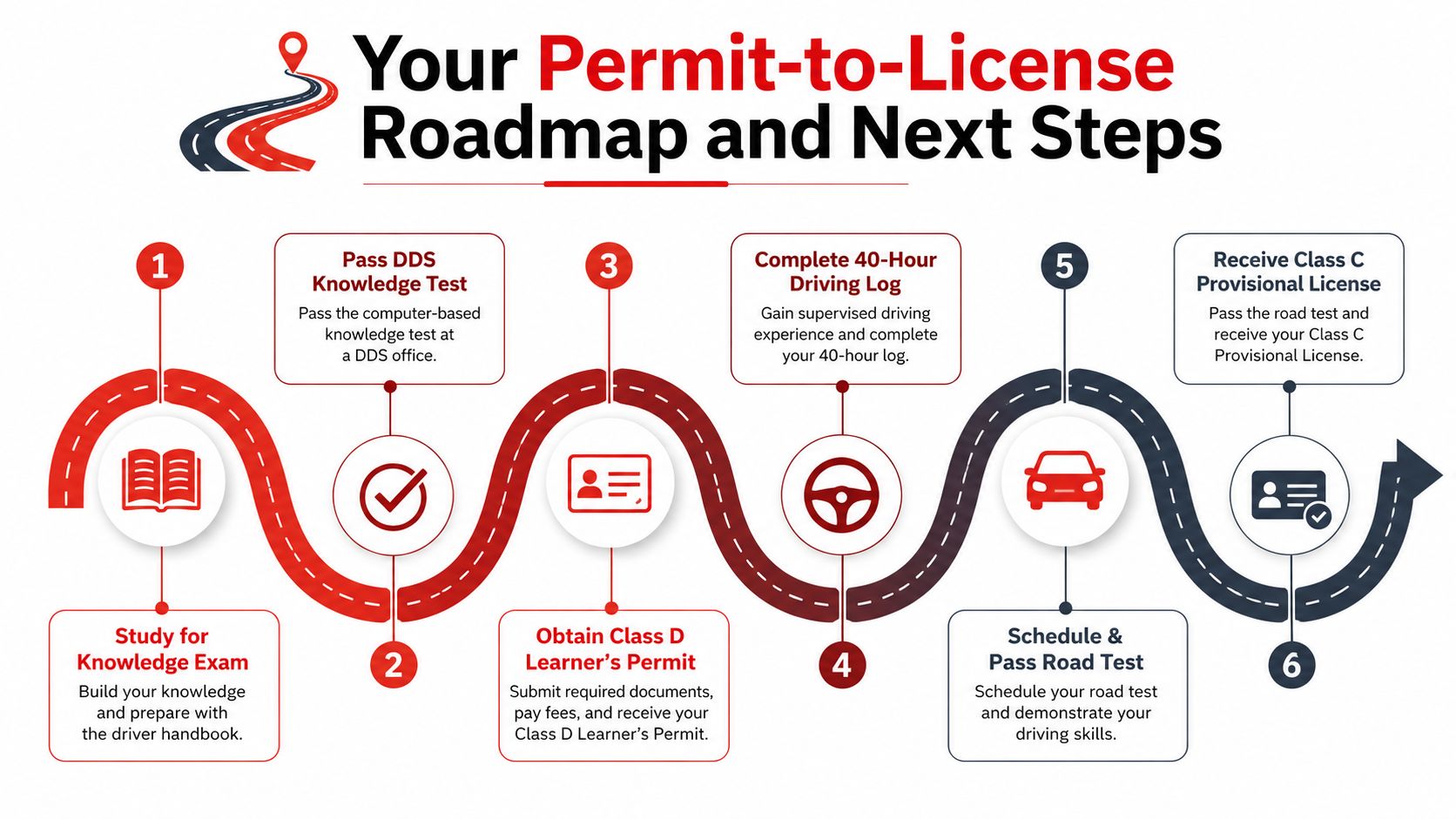
Your Permit-to-License Roadmap and Next Steps
The Georgia permit journey has a fixed backbone. First, the applicant earns the Class CP permit by meeting the documentation, vision, knowledge, and fee requirements. Then the teen uses the permit for supervised training instead of treating it as a card that only sits in a wallet.
Georgia requires a teen to hold the learner's permit for 1 year and 1 day before qualifying for a Class D license, and the applicant must be at least 16 for that next step, according to Georgia DDS general licensing information. The teen must also complete Joshua's Law, record 40 hours of supervised driving with 6 hours at night, and pass the road test.
Keep the sequence visible
- Study the Georgia Driver's Manual and prepare for the vision and knowledge exams.
- Gather the DDS documents and confirm the school enrollment paperwork if applicable.
- Apply for the Class CP permit at the appropriate age.
- Begin supervised driving with a licensed adult who meets Georgia's supervision rule.
- Complete approved driver education and the required behind-the-wheel training.
- Log the required practice, including nighttime driving.
- Hold the permit for 1 year and 1 day, then confirm age and all licensing requirements.
- Schedule and pass the road test with the required affidavit and documentation.
Adults follow a different licensing path, and applicants who are 18 or older don't use the same teen graduated-license timeline. They still need to satisfy the applicable DDS testing and documentation requirements.
The strongest next move is to enroll in the classroom or online Joshua's Law course, schedule professional driving lessons, ask about scholarship eligibility, and reserve road test preparation before the calendar becomes crowded. Visit A-1 Driving School to compare classroom, online, behind-the-wheel, and road test support options, then choose a package that matches your teen's schedule and current skill level. Get the training scheduled early so the permit period builds toward licensing instead of becoming a year of unstructured practice.
Start the Georgia permit process with the documents, study plan, and supervision arrangement ready, then use A-1 Driving School for Joshua's Law education, flexible online or classroom training, driving lessons, and road test preparation. Visit A-1 Driving School to reserve the course or driving lesson package that will move your teen from a Class CP permit toward a Georgia license.