You've just heard the words you were waiting for, and your shoulders probably dropped the second the examiner said it. That relief is real. So is the sudden question that hits right after it, what happens now, especially if you're in Georgia and still need to turn that passing result into a license, insurance, and a plan for the next few weeks.
The first rule is simple, stay calm long enough to handle the paperwork correctly. Passing the driving test is a milestone, but the practical work starts the same day, and the choices you make in the first hour shape how smoothly the rest of the process goes. If you're a teen driver, or a parent standing beside one, this is the moment to switch from test-day nerves to next-step discipline.
The First Hour After You Passed the Driving Test
The best part of the day is the instant you realize the examiner is done marking and you're looking at a passing result. The harder part is that your focus can disappear right after that, and that's when people miss something small but important. Take a breath, then treat the next hour like the final step of the test, not the celebration after it.
What to do before you leave the lot
Start with the official score notice and confirm the result on the spot. If the licensed examiner gives you a signed certificate, keep it flat and clean, then take a photo of both sides for your own records before it gets folded into a wallet or buried in a backpack. If there's any follow-up condition noted on your paperwork, such as an eye-related requirement, write it down immediately so it doesn't get forgotten later.
Practical rule: don't let the excitement override basic safety. Leave the testing site carefully, get home first, and celebrate after the administrative details are handled.
That also means calling or texting the adult who's picking you up as soon as you have a quiet moment. A parent, guardian, or trusted ride home should know the result, especially if the passing certificate needs to be filed into a Georgia DDS appointment soon. Social media can wait until the paperwork is secure, because it's smarter to protect the document than to post the news before anything is filed.
The emotional shift matters too. A lot of new drivers feel a sudden rush and then a blank spot, like the biggest stress has ended and they're not sure what comes next. That's normal, but it's also why the first hour should be about organized moves, not impulsive ones.
Turning Your Passing Result Into a Georgia Driver's License
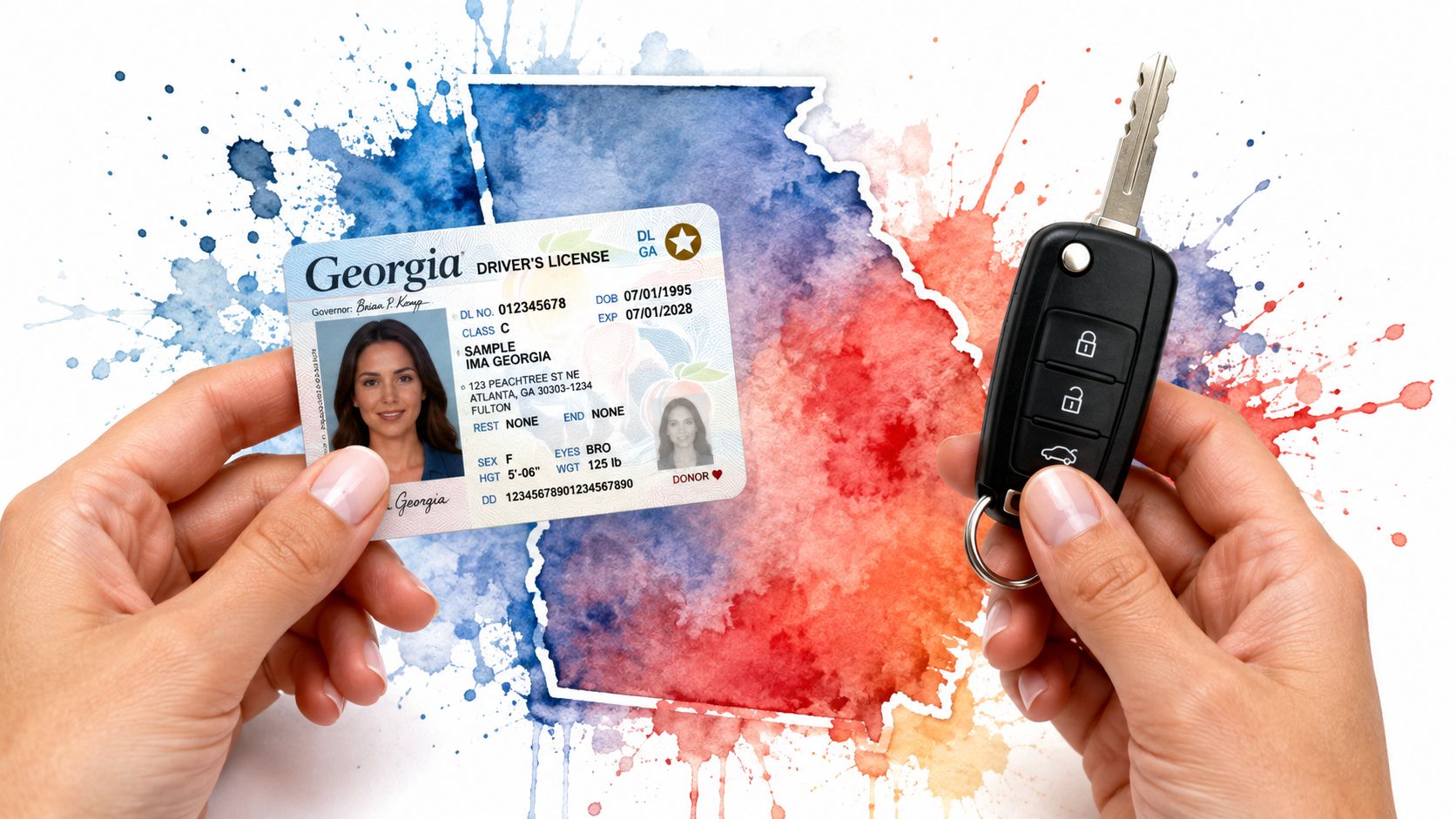
In Georgia, the passing result is only one step in the license process. To move from test pass to Class C license, you'll need to bring the right documents to the DDS and make sure your passing certificate is still valid when you arrive. The cleanest path is to line everything up before you ever walk into the office.
The documents the DDS expects
Bring your certified driving school certificate, your original Social Security card, two proofs of Georgia residency, and proof of identity. If you're converting from a learner's permit, expect that permit to be surrendered at the DDS counter when the full license is issued. The practical difference matters, because a learner's permit allows supervised practice, while the Class C license gives you the full driving privilege that comes with passing.
A certificate that's sitting in a drawer is useless if it expires before your appointment. If that happens, call the DDS and your driving school right away so you're not guessing about the next step. Planning the visit early keeps the process from turning into a second waiting game.
Here's a simple way to organize the trip:
| Georgia DDS License Application Requirements | Details |
|---|---|
| Requirement | Certified driving school certificate, original Social Security card, two proofs of Georgia residency, and proof of identity |
| Timing | The passing certificate is valid for 30 days before the DDS visit |
| Fee | $32 license fee |
| At the counter | Your prior permit is surrendered, and you receive a temporary paper license |
| Final license | The Class C license is mailed after processing |
For a plain walkthrough of the Georgia license process, this Georgia driver's license guide is a useful reference.
The counter visit is usually the point where confusion spikes, because people expect the plastic card to appear immediately. In reality, the DDS issues a temporary 30-day paper license first, then mails the permanent Class C license later. That's normal, and it's part of why keeping your documents in order matters more than trying to rush the system.
Insurance, Restrictions, and Supervised Driving Rules
The moment you leave the DDS with a temporary license, your legal status changes, but your driving habits still need structure. New drivers often assume the hard part is over, then get caught by insurance details or provisional rules that still apply. Georgia expects you to stay compliant, not just licensed.
What changes after the license is issued
Insurance comes first. A newly licensed teen usually needs to be added to a family policy or evaluated for a first-time policy, and the family should confirm the vehicle has the coverage required by Georgia law. If the car is adapted for a disability or special seating need, a practical resource like Seat Belt Extenders driving tips can help families think through vehicle fit and safety before regular driving starts.
Georgia's Joshua's Law rules also matter for drivers under 18 who hold a Class D license. Those drivers still need supervised practice and must follow the provisional restrictions that come with teen licensing. The state guidance on the first-stage licensing path also ties the process to supervised driving, nighttime practice, and parent involvement.
If the insurance lapses, don't treat it like a minor paperwork issue. Fix it right away and confirm the active policy before the next trip.
The easiest way to think about it is this. The license says you may drive, but the restrictions say how you're expected to drive during the early months. That's a big difference from the unrestricted privileges that begin once a driver reaches full licensing age.
For families who want a clean explanation of coverage basics, Georgia liability insurance basics is a practical starting point. It helps parents and new drivers understand how the policy and the vehicle should line up before solo driving becomes routine.
Why Taking the Road Test at a Certified Driving School Matters
A Georgia DDS center and a DDS-certified private driving school can both lead to the same legal result, but the experience feels very different. The score is based on the same standard, yet the setting can shape how calm and prepared a student feels when the keys are finally theirs. That difference matters most for nervous teens and families who want the test to feel familiar instead of overwhelming.
The test is the same, the environment is not
At a certified driving school, the student often tests in a vehicle they've already practiced in, on routes they already know. That lowers the number of surprises on test day. The examiner is still DDS-certified, and the vehicle still needs to meet Georgia's safety expectations, but the atmosphere is usually more controlled and less intimidating than a crowded state office.
| Factor | Georgia DDS Center | Certified Driving School |
|---|---|---|
| Testing setting | State testing environment | School-based testing environment |
| Vehicle familiarity | Often less familiar | Usually more familiar |
| Scheduling | Tied to DDS availability | More flexible in many cases |
| Retest experience | New appointment process | Often the same site or school setting |
| License issuance | Issued through DDS | Still issued through DDS |
Georgia's road test rules still require the applicant to hold a valid Georgia non-commercial learner's permit, and the road-test vehicle must have a valid registration or plate, with special rules if a dealer tag is being used. The road test itself doesn't hand out the final license, either. The school can administer the test, but the DDS remains the licensing authority.
For some learners, that setup is the difference between passing while tense and passing while able to show what they know. It doesn't change the legal standard, but it can change the confidence a new driver carries into independent driving after the test.
Online and In-Person Driver's Education Options in Georgia
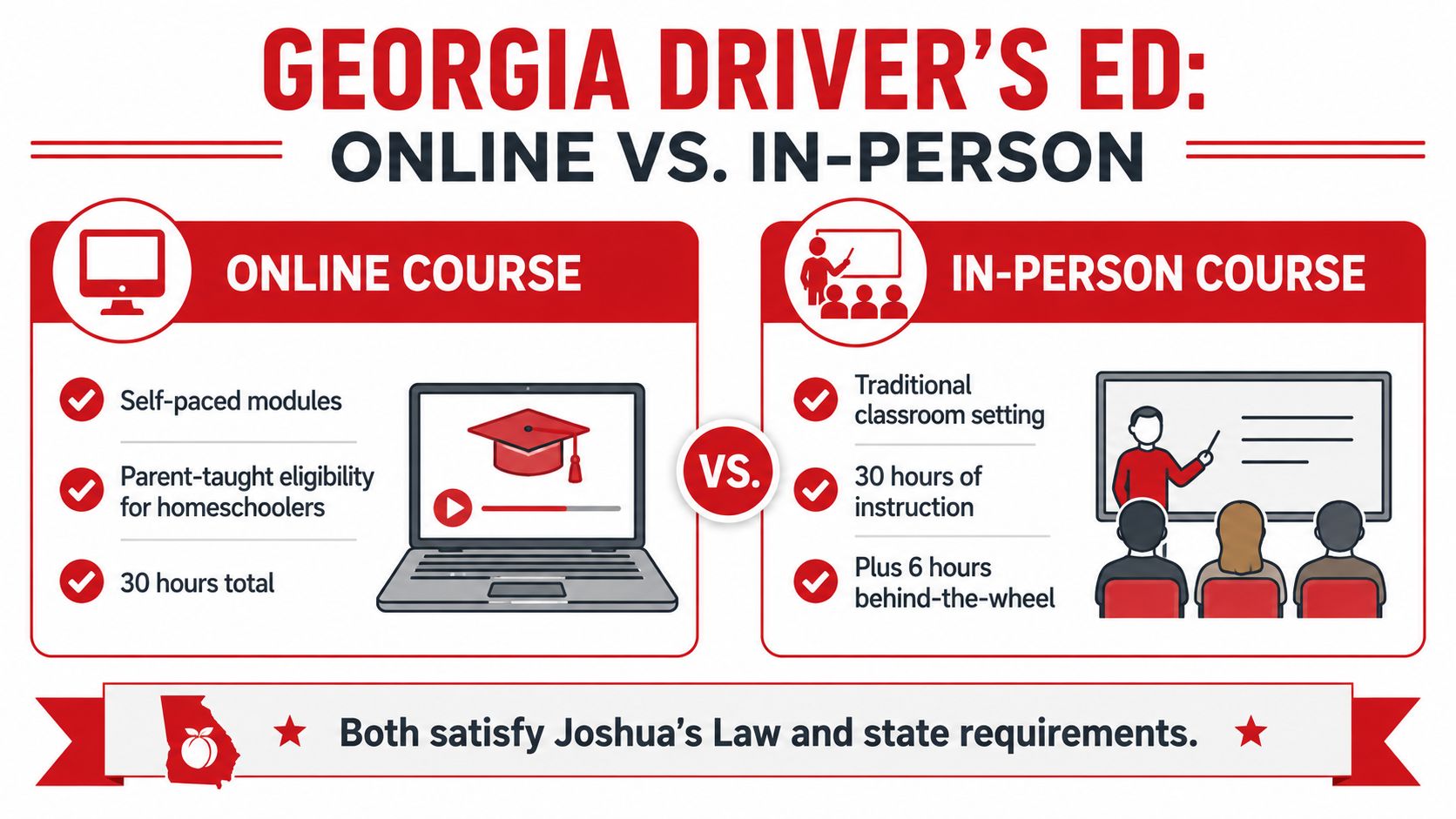
Joshua's Law gives Georgia families more than one path, and the right choice depends on schedule, learning style, and how much hands-on guidance a teen needs. Georgia's approved routes include 30 hours of classroom instruction with either 6 hours of behind-the-wheel training and supervised practice, or a parent-taught path paired with certified instruction. The state also allows the same structure through a certified virtual format, which matters for busy households and teens balancing school work with extracurriculars.
Choosing the format that fits the student
Online courses work well for students who focus better on their own schedule. They're useful for homeschool families and teens who need flexibility, especially when the rest of the week is packed. In-person classroom instruction is a better fit for learners who benefit from live explanations, peer questions, and immediate feedback when a rule or maneuver doesn't make sense on the first try.
The driving part still matters either way. Joshua's Law requires the same real-world practice component, including supervised driving time and nighttime practice, because the road test can't measure every situation a new driver will face later.
A good way to choose is to match the format to the teen's temperament:
- Self-paced learner: online modules may keep the student engaged without feeling rushed.
- Needs structure: scheduled classroom sessions can reduce procrastination.
- Busy family calendar: online instruction can reduce conflict around driving to class.
- Wants live support: in-person learning makes it easier to ask questions and hear examples from the instructor.
Families also ask about the class that leads into the road test itself. A-1 Driving School offers Georgia driver's education in both online and in-person formats, along with supervised instruction that fits the Joshua's Law pathway.
Using the Georgia Driver's Education Scholarship Grant Program
For qualifying families, the Georgia Driver's Education Scholarship Grant Program can remove a major barrier to finishing the required training. The program is limited to Georgia residents who are actively enrolled in school and are between ages 15 and 17, and applicants must have a valid Georgia instructional permit or driver's license to qualify. That makes timing important, because a missed window can delay the whole training plan.
How eligible families should approach it
The safest first move is to confirm the student's status before picking a provider. Families should gather proof of residency, proof of school enrollment, and the other application materials the program requires, then apply through the state's process before enrolling in a course. If the student is approved, the grant is applied through the certified provider rather than handed over as cash to the family.
Keep the scholarship paperwork together with the driving-school documents. If one file is missing, the whole enrollment can slow down.
This is also where families should watch school changes carefully. If a teen switches programs midstream, the enrollment record should be updated so the grant and class registration stay aligned. The point of the scholarship is to make completion possible, not to create a second paperwork hurdle.
For a direct overview of how the program works, A-1 Driving School's Georgia driving scholarship page gives families a practical place to start. The school's scholarship process is especially helpful when parents are trying to connect the grant to a certified course and the behind-the-wheel hours required under Joshua's Law.
Building Real Confidence With Follow-Up Driving Lesson Packages
Passing the road test means a student can drive alone, but it doesn't mean every real-world situation feels easy yet. New drivers still meet steep hills, wet pavement, night traffic, and crowded lane changes after the test, and those moments expose gaps that a short exam can't fully measure. That's why follow-up lesson packages matter so much in the first few weeks after passing.
What the next layer of training should cover
A strong post-test plan doesn't start over from zero. It targets the situations that make a new driver tense, then practices them with an instructor in a controlled way. Highway merging, wet-weather handling, parking on hills, and busy metro traffic all deserve attention because they're part of everyday driving, not just test-day performance.
Practical takeaway: the license proves basic readiness. Repeated coached driving builds routine, judgment, and smoother reactions under pressure.
Bundled lesson packages make sense. One session can fix a single issue, but a package lets the student build from one skill to the next without long gaps in between. That sequencing helps the instructor reinforce habits, correct weak spots, and expose the driver to unfamiliar routes before those roads become part of the daily commute.
For families in Atlanta-area traffic, that kind of coaching can be more useful than another passive milestone. A-1 Driving School offers follow-up lessons and lesson packages that can include road confidence work and specific practice goals, which is useful for teens who want more than a one-time checkoff after the test. The value isn't in more driving for its own sake, it's in structured driving that turns a pass into real competence.
Here's a useful example of the mindset shift. The test ends with approval, but professional coaching asks, can this driver merge cleanly, react calmly, and repeat the skill in different conditions? That's the point where confidence becomes repeatable.
A good follow-up rhythm also helps families avoid the drift that happens after the excitement fades. If a student only drives short familiar trips, habits can stay narrow. If the practice includes new routes, clear instructor feedback, and repeated exposure to harder conditions, the driver starts to feel steady instead of lucky.
Your 30-Day Action Plan After Passing
The first month after passing should feel organized, not random. Think of it as a sequence of small wins that turn a single exam result into stable driving habits. If a family stays on schedule, the new driver gets licensed, insured, practiced, and supported before confidence has time to slide.
Days 1 through 7
Visit the DDS with the required documents, pay the fee, and secure the temporary paper license once the transaction is complete. Then call the insurance company or log into the family policy portal and make sure the new driver is correctly covered.
Days 1 to 7 are also the right time to review the restrictions that still apply, especially if the driver is under 18 and operating under Georgia's provisional licensing rules. A clean understanding at the beginning prevents misunderstandings later.
Days 8 through 21
Book the first follow-up lesson while the test is still fresh in memory. That timing helps the instructor spot habits before they harden. After that, schedule low-traffic highway practice and work on supervised driving in different conditions, not just the same neighborhood loop.
This is a good moment to document the car too. If you're adding a teen driver to a vehicle, a visible marker can help, and a simple Custom Sticker Shop decal is one example of how families sometimes personalize a vehicle while keeping it easy to identify.
Days 22 through 30
Confirm whether any scholarship deadline or course paperwork still needs attention if your family qualifies for grant support. Then book the next lesson package, especially if the first week of solo driving revealed nerves around parking, merging, or night driving. The faster you address weak spots, the less likely they are to become bad habits.
A practical month-end checklist looks like this:
- DDS completed: License paperwork filed and temporary document secured.
- Insurance updated: New driver added or policy confirmed active.
- Practice logged: Supervised driving in different conditions.
- Skill follow-up booked: Lesson package reserved before habits settle.
- Scholarship check done: Grant paperwork reviewed if the family qualifies.
Passing the driving test is a proud moment, but it's not the finish line. It's the start of learning how to drive well on ordinary Georgia roads, with real weather, real traffic, and real responsibility. If you want that next stage to feel calmer and more structured, A-1 Driving School offers Georgia driver's education, road test support, and follow-up driving lessons built for the weeks after you pass. Visit A-1 Driving School to choose the next step that fits your schedule and keep the momentum going.