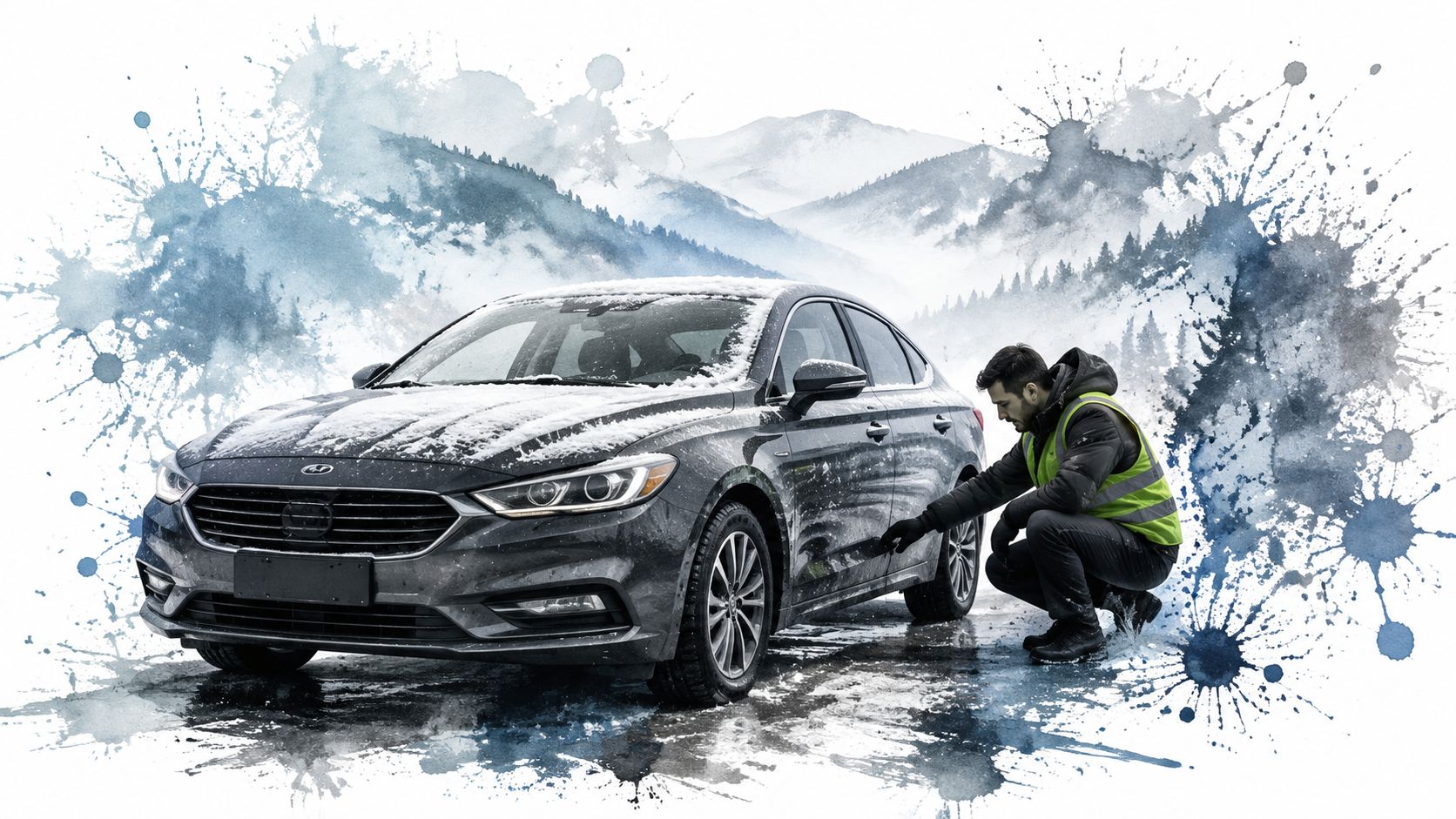
You're merging onto I-285 on a cold Atlanta morning, the windshield is clear, the pavement looks merely wet, and then the car ahead taps its brakes on a bridge deck that's a sheet of black ice. If you've driven north toward Dahlonega or Blairsville after a freeze, you know the other version of the same problem, shaded curves, mountain stretches that never fully thaw, and drivers who trust the road more than they should.
That's winter driving safety in Georgia. It isn't about blizzards and months of snowpack, it's about ordinary roads turning dangerous fast when temperatures dip, rain freezes, or sleet arrives at the wrong time. Nationally, the Federal Highway Administration says 24% of weather-related vehicle crashes happen on snowy, slushy, or icy pavement, another 15% happen during snowfall or sleet, and those conditions cause more than 1,300 deaths and more than 116,800 injuries each year, with snowfall or sleet alone accounting for nearly 900 deaths and nearly 76,000 injuries annually. FHWA winter driving data
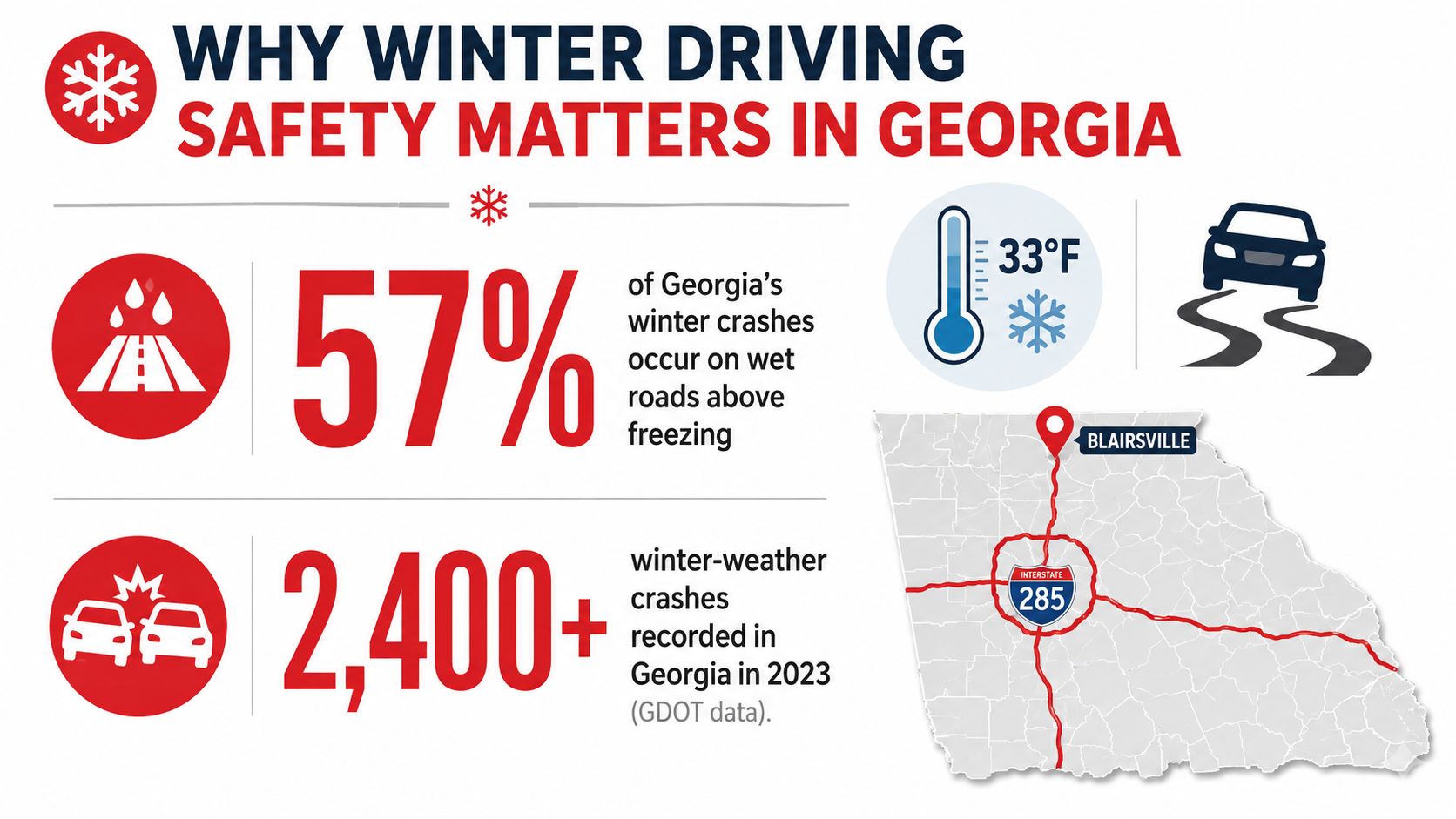
Georgia drivers don't need Minnesota habits. They need a layered plan that fits a state where a freeze-thaw cycle can make a bridge icy before sunrise, and where a short mountain drive can turn into a traction problem in seconds. That means preparing the car, changing how you drive, knowing what to do when a skid starts, and having a training path that turns classroom advice into real habits.
Why Winter Driving Safety Matters in Georgia
A Georgia winter morning often starts with a false sense of normalcy. The commute feels routine, the pavement looks damp, and the car seems ready, until a cold snap leaves a patch of black ice on a bridge or a wet road turns slick as the temperature drops near freezing. That's why winter driving safety matters here even when the forecast doesn't look dramatic.
The danger in Georgia is often the surprise. In metro Atlanta, the problem is the freeze-thaw cycle on overpasses, ramps, and shaded sections that can catch commuters off guard. In North Georgia, the issue is different, because curves, elevation, and longer gaps between services create more chances for trouble when the road surface changes without warning.
The federal numbers show this isn't paranoia. Winter weather contributes a large, recurring share of the road-safety burden, and the risk lands in ordinary conditions, not just rare storms. FHWA winter driving data
NOAA's road-weather research has long treated winter conditions as an extreme hazard for motorists, with winter-weather conditions causing approximately 1,000 fatalities annually on U.S. roadways. Federal and safety summaries also cite an average of 1,836 deaths and 136,309 injuries per year due to icy and snowy roads, which shows how broad the harm becomes when icy-road conditions are defined more widely. NOAA road-weather research
For a Georgia driver, the practical lesson is simple. Don't wait for snow to think about winter driving. Treat cold mornings, sleet, fog, and road spray near freezing as the primary problem, because that's where most of the risk shows up.
Pre-Trip Vehicle Preparation
A good winter drive starts before the engine does. If you're leaving from a driveway in Cobb County or a mountain cabin outside Blue Ridge, the first mistake is assuming the car is fine because it ran yesterday. Cold weather punishes weak tires, weak batteries, and tired wipers fast.
Start with the parts that touch the road
Tires matter more than people think. Cold air lowers pressure, and low pressure makes the car feel vague right when you need clean steering response. Check tread depth, too, because worn tread can't channel water or slush the way it should.
If you drive in North Georgia, all-season tires can be enough for many trips when tread is still healthy, but they're not magic. A driver who expects regular mountain travel, shaded back roads, or higher-elevation cold snaps should think harder about traction than someone who mostly stays on cleared suburban roads.
Don't ignore the battery and visibility gear
Batteries are another weak point during cold snaps. A battery that has been fading all year can show its age the first time a frosty morning arrives. Wipers, washer fluid, brakes, and lights all need the same kind of attention, because winter weather makes small defects harder to tolerate.
60-second walkaround: look under the car for fluid drips, check that every light works, and clear snow or ice from the roof before you pull out. That quick habit prevents avoidable trouble before the drive even starts.
If you want a structured pre-drive routine, use a checklist like the one in this vehicle inspection checklist from A-1 Driving School. It's a practical way to keep the same standards every time the weather turns.
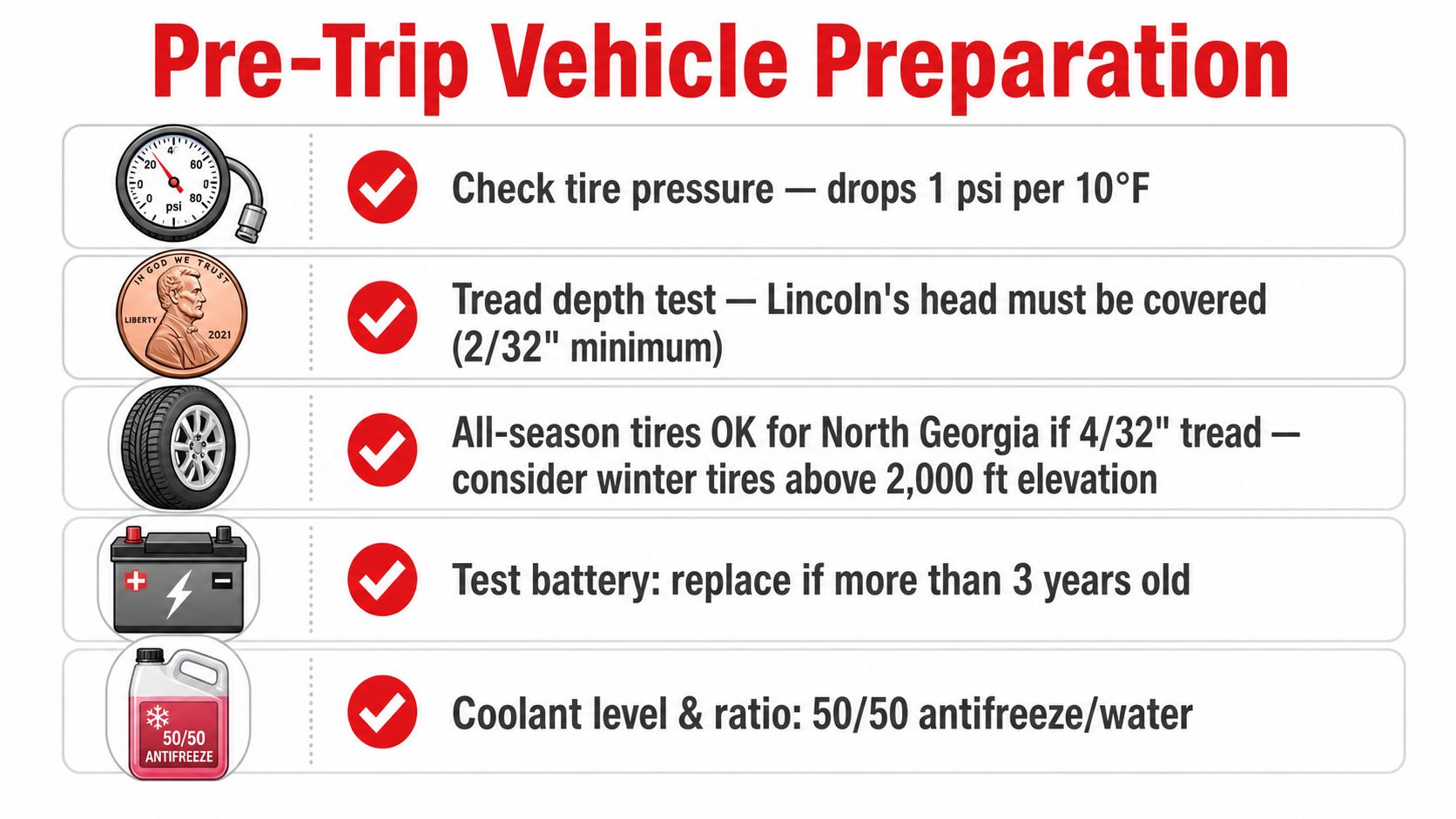
Make winter prep a habit, not a guess
A frozen windshield, a dead battery, or dim headlights is more than an inconvenience. It changes how other drivers see you and how you see them. The less you have to improvise in the driveway, the less likely you are to make a bad decision once traffic starts moving.
Keep the inspection simple. Tires, battery, wipers, washer fluid, brakes, and lights. That's the essential winter prep list for Georgia, not a fantasy version built for a state that gets snow all season.
Driving Techniques for Snow, Ice, and Fog
The biggest winter mistake I see from new drivers is suddenness. They press the gas too hard, brake too late, or make a sharp correction when the car begins to slide. On a cold morning, smooth driving beats aggressive confidence every time.
Use gentle inputs and leave more space
The National Safety Council recommends increasing following distance to 8 to 10 seconds on snow or ice, because traction drops and stopping distance rises sharply. That gap gives you room to slow down with gentle, continuous inputs instead of hammering the brake and asking the tires to do too much at once. NSC winter driving guidance
Practical rule: slow down first, then steer and brake. On slippery pavement, speed reduction is the first move, not the last one.
That means no cruise control on slick surfaces. It also means braking earlier, accelerating gradually, and steering with light pressure instead of chasing the lane with small jerks. Posted speed limits are for ideal conditions, not winter roads, and OSHA is blunt about slowing down because stopping distances are longer on snow, water-covered ice, and ice. The National Weather Service winter safety guidance also stresses reduced traction and more following distance. Winter driving safety PDF
Here's how that looks in real life. A teen leaving a Marietta high school on the first cold morning of the year may think the parking lot is just damp. If the car ahead stops short and the steering wheel is already turned, there's no room for overreaction. The better move is to roll off the throttle early, brake lightly, and keep the car straight as long as possible.
Fog changes visibility, not physics
Fog on Georgia interstates creates a different kind of risk. You can't steer well around what you can't see, so low beams matter, and so does patience. Don't stop in a travel lane because visibility drops, and don't assume your taillights make you obvious to the driver behind you.
If the road is wet, foggy, and cold at the same time, treat it like a traction problem and a visibility problem together. That combination is where overconfidence turns into a hard stop on the shoulder or, worse, a chain reaction in traffic.
Skid Recovery and Emergency Handling
The first two seconds of a skid matter more than anything else. The driver feels the car go light, the steering stops responding the way it should, and panic usually makes the slide worse. A calm correction is what brings the car back.
Read the skid before you fight it
A front-wheel skid feels like the car wants to go straight even though you've turned the wheel. The correction is to ease off the throttle and steer toward the direction you want the front of the car to go. A rear-wheel skid feels different, because the back end starts stepping out and the car rotates faster than it should.
In that case, turn the steering wheel in the direction the back of the car is sliding. If the slide starts on a curve, ease off the gas and keep your eyes on the path you want, not on the curb or ditch you're trying to avoid.
Look where you want to go, not where the car is heading.
Brake behavior depends on the car
If ABS starts pulsing under your foot, keep steady pressure on the brake pedal and let the system do its job. Don't fight the pulse by slamming harder. In older cars without ABS, controlled pumping can help, but only if the driver knows the car and has practiced the feel before winter weather hits.
A foggy early-morning commute on GA-400 can be the worst time to test your instincts. Visibility drops to a few car lengths, the road looks harmless, and then the rear end steps out when you touch the brake too hard. The recovery is still the same: calm inputs, no panic steering, and eyes down the lane where you want the car to settle.
For drivers who want more seat time on the mechanics of recovery, A-1's advanced driving techniques are worth a look. Real practice builds the muscle memory that can't be learned from a quick video.
North Georgia vs Metro Atlanta Winter Conditions
Georgia winter driving isn't one thing. A driver in Blairsville faces a different problem set than a commuter on the Perimeter, and the right habits change with the terrain.
| Factor | North Georgia Mountains | Metro Atlanta |
|---|---|---|
| Road risk | Shaded curves, elevation, longer cold spots | Freeze-thaw on overpasses, ramps, bridge decks |
| Visibility | Fog and early-dark conditions in rural stretches | Sudden fog and spray on major interstates |
| Route planning | Build in extra time and know alternate roads | Watch for black ice on familiar commuter routes |
| Emergency focus | Longer gaps between services, more isolation | Traffic backups and fast-changing lane conditions |
| Tire and kit priorities | Better tread, traction tools, warm gear | Reliable tires, scraper, washer fluid, clear windows |
North Georgia drivers need to respect how long icy patches can linger in shade and on higher ground. A curve that looks fine in the sun can stay treacherous long after the rest of the road has improved. The bigger issue is often distance, because help can be farther away and travel speeds are already lower on mountain roads.
Metro Atlanta drivers face a different trap. They know the roads, so they trust them too much. The first hard freeze after rain can leave a polished patch on a bridge deck, and a normal commute can turn ugly before drivers realize the surface changed.
The best response is regional thinking. If you live closer to the mountains, think traction and isolation. If you live in the metro area, think bridges, overpasses, and the false comfort of “just wet” pavement.
Emergency Kit and What to Do If You Get Stranded
A winter emergency kit doesn't need to be fancy. It needs to be useful when the weather gets ugly, the shoulder is narrow, and the phone signal isn't great. OSHA recommends a flashlight, jumper cables, sand or kitty litter, a shovel, a snow brush and ice scraper, warning devices, blankets, food, water, medication, and a cell phone, and AAA also advises cold-weather gear, a flashlight, a scraper, blankets, medications, and extra food and water in the vehicle. OSHA winter driving kit guidance
Build the kit for Georgia roads
For Georgia, I'd add a reflective vest for rural visibility, a printed map for spots with weak cell coverage, and a spare phone battery for longer mountain drives. A long-handle scraper helps when the windshield is coated in freezing rain, and traction material matters when a shoulder is muddy, slushy, or packed with snow.
Keep the kit in a bag you can grab quickly. If you have to move items around every time you go grocery shopping, you won't keep it stocked.
What stranded actually looks like
If you're stuck, stay with the vehicle. It's easier for rescuers to find a car than a person walking in bad weather, especially on rural roads or near traffic. Run the engine for short intervals with a window cracked, but check the exhaust pipe first so snow or ice doesn't block it.
Tie a bright cloth to the antenna or door handle if you have one, and keep the interior visible from outside. If you can do it safely, stay warm with blankets and conserve energy instead of wandering off.
Single most important rule: stay put, stay visible, stay warm.
That advice sounds simple because it is. People get into trouble when they leave a car too early or try to “fix” a bad situation in the dark without a plan.
How Driving Lessons Build Real Winter Confidence
Most winter mistakes aren't knowledge problems, they're habit problems. A driver may know to slow down, but still brakes too hard when the road feels slick. That's where structured practice matters, because driving lessons turn advice into reflexes.
A good instructor can coach smooth acceleration, early braking, hazard scanning, and skid recovery in conditions that don't involve real risk. That's the value of targeted behind-the-wheel practice, especially for teens who are still building judgment and for adults who haven't driven in icy conditions before. A-1 Driving School offers driving lessons with an instructor that fit that need, along with training that pairs classroom learning with road experience.
For families working through Georgia licensing steps, A-1 also offers online Driver's Education courses that meet Joshua's Law requirements, along with in-person classroom options. That matters because winter safety knowledge sticks better when it's part of a full driver-education path, not a one-off tip sheet. A-1 also provides road testing services and participates in the Georgia Driver's Education Scholarship Grant Program for eligible students.
The winter lesson here is similar to what emergency teams learn in ERT skills from ProMed Certifications. Practice is what keeps the response calm when conditions turn ugly. Drivers need the same thing, repeated enough that the right move feels normal when the wheels start to slip.
Driving lessons packages are especially useful for winter-minded families because they let students work on the exact skills this guide covers without waiting for a bad weather day. That includes gentle inputs, lane control, recovery from a slide, and the confidence to make a conservative call when the road looks questionable.
If you want to turn winter advice into real driving skill, start with a lesson plan that's built for Georgia roads, not generic northern assumptions. A-1 Driving School gives Georgia drivers a path from classroom to road test, with online and in-person education, scholarship support for those who qualify, and lessons that make winter driving feel manageable instead of mysterious.
If you want your teen, or yourself, to handle Georgia's cold mornings with more confidence, visit A-1 Driving School and look at the driving lessons, lesson packages, Joshua's Law course options, and road testing services. The right training turns winter driving safety from guesswork into a repeatable skill.