What kind of first car helps a Georgia teen become a safer driver?
Price and mileage matter, but they are not the whole decision. The better question is whether a car gives a new driver clear visibility, predictable braking and steering, manageable size, and safety features that support learning instead of covering up weak habits.
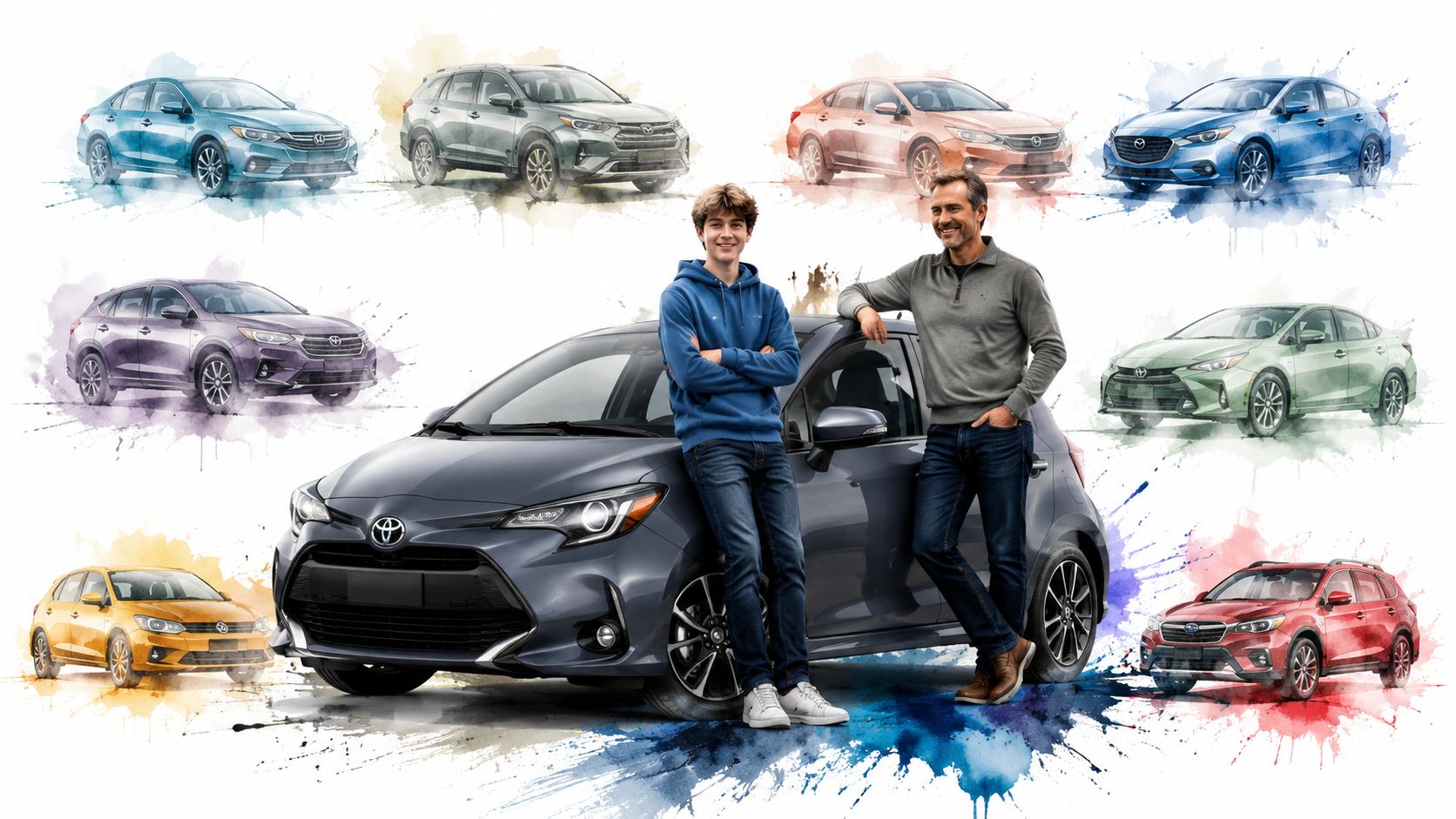
That is the standard I use when I talk with Georgia parents and teens about first cars. A good beginner vehicle should be easy to place in a lane, calm in stop-and-go traffic, affordable to insure and maintain, and forgiving during parking, merging, and highway practice. The National Highway Traffic Safety Administration tracks teen driver crash risk closely, and its teen driving safety data makes the stakes clear.
The car is only part of the job.
In Georgia, the aim is pairing the right vehicle with structured practice. That includes Joshua's Law training, focused driving lessons, and road test prep that matches the roads teens experience here, from crowded suburban left turns to higher-speed interstate merges. A-1 Driving School helps families do both. Choose a sensible car, then build skill in it with instruction that fits a beginner's needs. If you are comparing safe used options before buying, start with A-1's guide to the safest used cars for teens.
1. Honda Civic The Reliable Choice for New Drivers
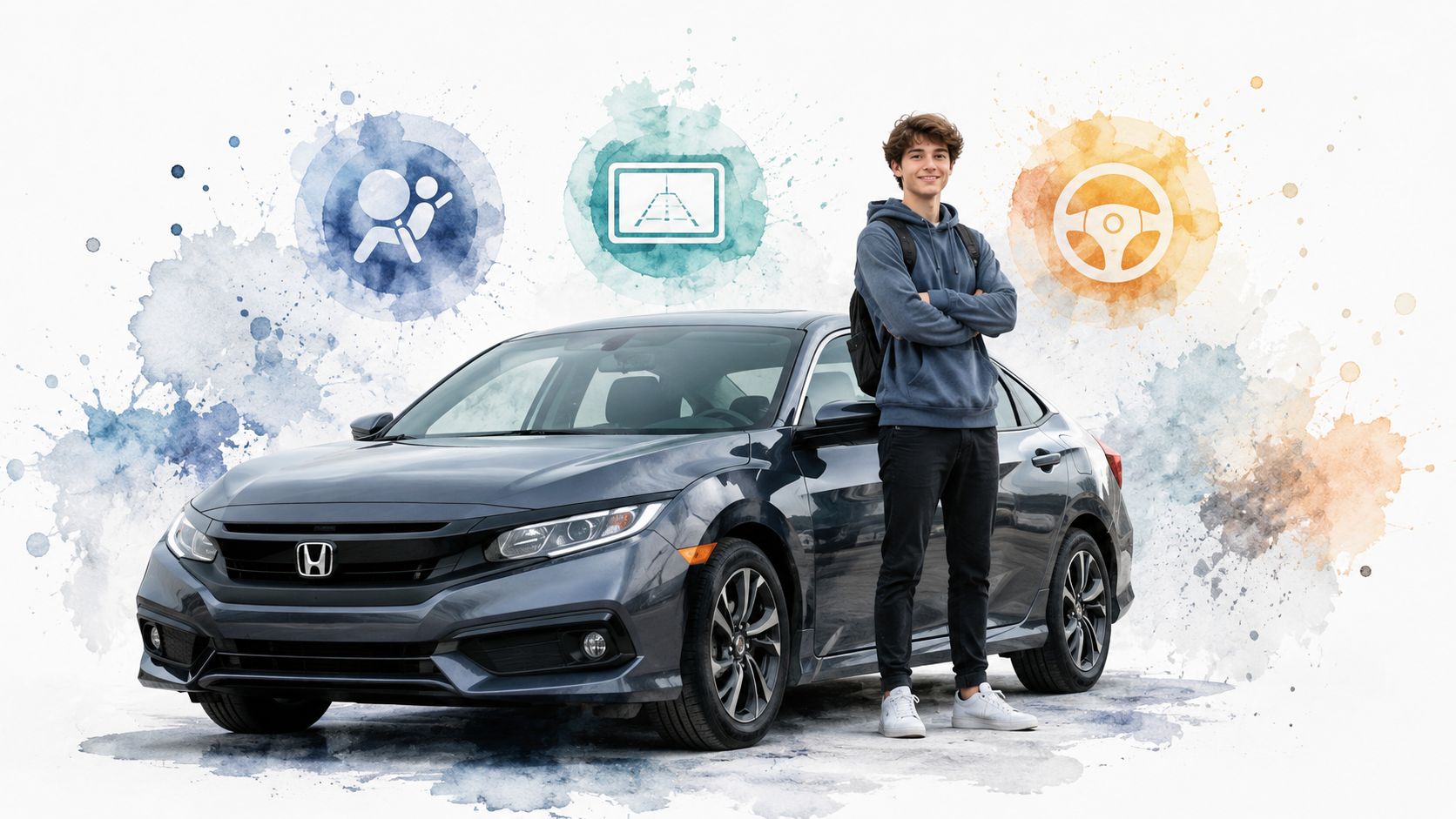
What makes a first car easier to learn in on Georgia roads? With the Honda Civic, it usually comes down to clear controls, predictable handling, and a size that helps a teen judge space without feeling cramped in traffic.
The Civic has been a smart first-car pick for years because it gives beginners useful feedback. Steering inputs feel natural. Braking is easy to modulate. The car is small enough for parking-lot practice, but settled enough for highway sessions on roads like I-75 or GA-400, where new drivers need to learn lane discipline and merge timing without fighting the vehicle.
Why the Civic teaches good habits
A Civic rewards attention to basics. A teen can feel the difference between a smooth stop and a rushed one. They can also learn proper lane placement and backing technique without the extra stress that comes with a larger SUV.
Practical rule: Choose the sedan over the coupe if visibility is the priority. New drivers usually do better with clearer sightlines and easier access to the rear seats.
I like the Civic for early lessons because it exposes weak habits before they become routine. If a student turns too late, brakes too abruptly, or parks with poor wheel control, the car makes that obvious in a manageable way. That is useful in training.
A few buying tips matter here:
- Pick the sedan first: Four doors and better visibility usually make daily learning easier.
- Check driver fit: Make sure the seat, mirrors, and steering wheel adjust well for a shorter teen.
- Avoid overbuying trim: A simpler Civic often gives a new driver fewer distractions and lower repair risk.
- Use the transmission choice wisely: A manual can teach stronger timing and clutch control, but an automatic is the more practical fit for many families.
For parents comparing used models, the Kelley Blue Book guide to the best cars for teens and Consumer Reports' teen-driver recommendations both support compact sedans like the Civic for their reliability, safety reputation, and manageable ownership costs.
In Georgia, the car choice should match the training plan. After you buy, pair that Civic with Joshua's Law coursework, focused practice, and road test prep so your teen learns the car in the same conditions they will face. A-1 Driving School also explains the licensing process step by step in its guide on how to get a driver's license in Georgia.
2. Toyota Corolla The Budget-Friendly Workhorse
Need a first car that keeps the learning process simple and the ownership costs predictable? The Toyota Corolla has earned that reputation for years. It is easy to place on the road, easy to park, and usually easy on a family budget.
For beginning drivers in Georgia, that matters. Atlanta traffic, busy suburban intersections, and repeated trips for permit practice can overwhelm a teen fast. A Corolla helps by keeping the car itself from becoming the problem. The controls are straightforward, the power delivery is manageable, and the car usually feels settled in everyday driving.
Where the Corolla fits best
The Corolla works well for students who need consistency. I like it for teens who are still building judgment at stop signs, in left turns, and during lane changes because the car responds in a predictable way. That lets practice time stay focused on the driver's decisions, not on correcting for a twitchy vehicle.
There is a trade-off. The Corolla is competent, but it is not especially engaging. Some students become passive in cars like this and start relying on the vehicle's ease instead of sharpening observation and timing. That is where structure matters. Pair the car with supervised practice and teen driving safety habits that address Georgia roads and risks.
For safety proof, the 2022 Toyota Corolla NHTSA crash test page lists a 5-star overall safety rating. That is the kind of baseline most parents want before they start comparing trim levels, mileage, and insurance costs.
A-1 Driving School can help families turn a solid car choice into a real training plan. Joshua's Law classes, private lessons, and road test prep give teens a way to learn the Corolla under the same conditions they will face on Georgia roads. A-1 Driving School explains that path clearly in its guide on how to get a driver's license.
- Use the backup camera correctly: Treat it as a parking aid, not a substitute for mirrors and shoulder checks.
- Practice braking with purpose: The Corolla's calm manners make it a good car for learning firm, controlled stops.
- Check seating position carefully: A teen who sits too low or too far back will miss useful sightlines over the hood and through intersections.
- Compare sedan and hatchback visibility: Driver height changes which one feels easier to judge in tight spaces.
3. Mazda3 Engaging Yet Beginner-Friendly
Want a first car that teaches more than point A to point B driving? The Mazda3 stands out because it gives a beginner clear feedback. Steering inputs matter. Braking smoothness matters. Corner entry speed matters. A teen can feel the difference between calm, deliberate driving and rushed, sloppy habits.
That makes the Mazda3 a strong choice for skill-building, especially for Georgia families who want a car that works in daily traffic but still teaches discipline on busy suburban roads, highway on-ramps, and tight school parking lots.
Best for teens who want to become good drivers
The Mazda3 fits a student who wants to improve, not just get through practice hours. It is practical enough for school, work, and errands, but it also rewards attention. Instructors see that quickly. A teen who turns too abruptly or brakes late will notice it. A teen who looks ahead, plans early, and uses smooth inputs will usually drive this car well.
That trade-off matters. The Mazda3 can help a focused beginner build real car control, but it is not the best match for a teen who gets overconfident or treats responsiveness like permission to drive too fast. Parents should be honest about that before buying one.
A-1 Driving School can turn that responsiveness into a training advantage. With Joshua's Law classes, private driving lessons, and road test prep, teens can learn the habits that keep a car like this under control on real Georgia roads. Start with A-1's teen driving safety tips for Georgia beginners and build practice around the car's strengths.
A few Mazda3-specific coaching points help:
- Use light steering pressure: New drivers often overcorrect. The Mazda3 responds better to smaller, earlier inputs.
- Practice speed control before curves: This car makes it obvious when a driver enters a turn too fast.
- Work on lane changes at highway speed: Good mirror checks and calm steering matter more in a responsive car.
- Choose the body style carefully: The sedan suits straightforward commuting. The hatchback adds cargo room, but some teens will want extra time judging rear visibility.
As noted earlier, teens face higher crash risk than experienced drivers. In a car like the Mazda3, that is a reason to train with structure, not guess. Done right, it becomes one of the better first cars for a Georgia teen who wants to build judgment, not just confidence.
4. Honda Fit The Smart Choice for Compact Learners
The Honda Fit is one of the easiest cars to recommend for a teen who's intimidated by size. It's compact without feeling cramped, and it gives beginners a clear sense of where the car begins and ends.
That's a bigger deal than many parents expect. Students who struggle with parking, right turns, and narrow lanes often gain confidence faster in a car they can read easily from the driver's seat.
Small footprint, big learning value
The Fit is excellent for practicing daily-driving fundamentals. Backing into a space, turning into a tight lot, or merging into moderate traffic feels less stressful when the car itself is manageable. It also gives a teen room to make and correct small mistakes without feeling lost inside the vehicle.
This is one of the best cars for beginning drivers who live in dense suburbs, apartment complexes, or neighborhoods with crowded school parking lots. It turns routine hassles into useful practice.
A small car can build confidence fast, but only if the driver keeps working on mirror use and space judgment instead of relying on the car's size.
A few practical notes matter here:
- Make parking a weekly skill drill: The Fit rewards repetition.
- Use it for supervised highway merges: Its manageable handling helps students focus on timing and mirror checks.
- Adjust seat height carefully: The upright seating position is helpful, but shorter drivers should dial in the fit before driving regularly.
The Honda Fit isn't the flashiest option on this list. For a new driver, that can be a strength. Simple, visible, and easy to place beats stylish but awkward almost every time.
5. Subaru Impreza All-Weather Safety and Reliability
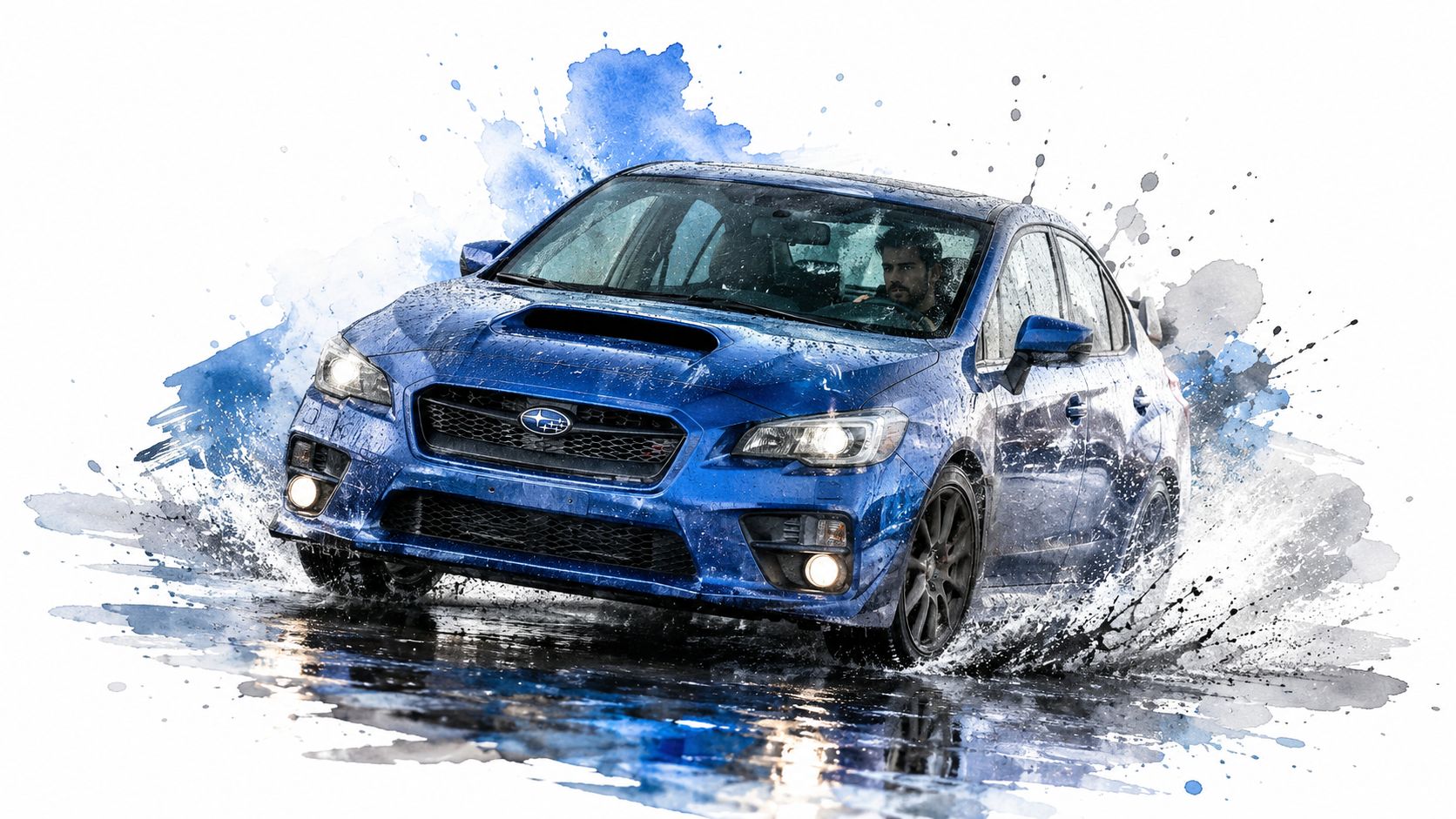
What helps a Georgia teen most on a rainy commute to school: more power, or a car that stays predictable when the pavement turns slick? For many families, the Subaru Impreza earns a spot on this list because it feels settled in the kind of weather Georgia drivers experience. Heavy rain, standing water, polished intersections, and sudden visibility changes matter more here than snow.
Its standard all-wheel drive is the headline feature, but a key benefit for a beginner is confidence with limits. The car often feels composed pulling away from wet stoplights and tracking through curves in bad weather. That can lower anxiety for a new driver who tenses up as soon as roads get shiny.
The trade-off parents should understand
I tell Georgia families the same thing every time. All-wheel drive helps the car put power down. It does not shorten stopping distance on wet pavement, and it does not cover up late braking, poor tires, or distracted driving.
That distinction matters with teens because a car that feels secure can tempt them to drive too fast for conditions. The Impreza is a strong learner car when the adult in the passenger seat keeps the lesson honest. Practice following distance in rain. Practice smooth braking before the intersection. Practice backing off speed when visibility drops.
Driver-assistance features are still worth prioritizing, especially automatic emergency braking and forward collision warning. The Insurance Institute for Highway Safety has reported that front crash prevention systems reduce many common rear-end crashes, which is useful for beginners still building judgment in traffic. A car like the Impreza gives the student a stable platform, but training is what turns that hardware into safe habits. That is where A-1 Driving School helps. Joshua's Law classes, private lessons, and road test prep give Georgia teens a controlled way to learn wet-weather spacing, scanning, and speed management in the actual conditions they will face.
A few practical points make a difference:
- Use the first rainy practice drive on familiar roads: New weather and a new route at the same time is too much for many beginners.
- Check tires before praising the car: AWD cannot make up for worn tread.
- Teach braking early: Students often notice traction on takeoff and miss how easily stopping distances grow in the rain.
- Keep the technology in perspective: Safety features can assist, but the driver still has to see the problem early and respond correctly.
Families comparing compact sedans may also research ownership patterns in similar small-car categories, including articles like Elantra reliability for Tampa drivers. For the Impreza, the bigger question is simple. If your teen will drive in frequent rain, on darker suburban roads, or during early-morning school traffic, this Subaru gives them a forgiving setup that rewards calm, trained inputs.
6. Hyundai Elantra Value-Packed Performance and Safety
The Hyundai Elantra fits the family that wants modern features without stepping into a premium price bracket. It usually feels more current than older bargain options, and that matters when a teen is learning in a car with driver aids, screen controls, and more onboard prompts.
What I like most about the Elantra is that it often gives beginners a newer-car experience without asking them to manage a larger or more powerful vehicle. The visibility is generally usable, the cabin controls are approachable, and the car is easy to settle into after a few drives.
Good value, but teach the tech
Modern safety features can help a new driver, but they can also create false confidence if nobody explains what they do. In an Elantra, I'd spend time before the first real drive showing the teen how alerts work, where menu settings live, and what the backup camera can and can't show.
That orientation matters because many beginning drivers are more distracted by unfamiliar technology than by the actual road. The solution isn't to avoid newer cars. It's to train with them properly.
- Set up the cabin while parked: Mirrors, seat, climate, and phone settings should be done before leaving.
- Explain every alert tone: A teen should know what each warning means instead of guessing.
- Confirm sightlines in person: Visibility depends on the driver's build and seating position.
Families also look at ownership confidence when choosing a first car. If reliability is part of your comparison, this discussion of Elantra reliability for Tampa drivers adds helpful context, even though your final decision should still come down to the specific car's condition and fit for the driver.
7. Toyota Prius Eco-Conscious Efficiency with Safety
Could a hybrid make a better training car for a Georgia teen? In many cases, yes. The Prius rewards patience, smooth inputs, and planning ahead, which are the same habits we want from a beginning driver on busy suburban roads, Atlanta traffic, and stop-and-go school routes.
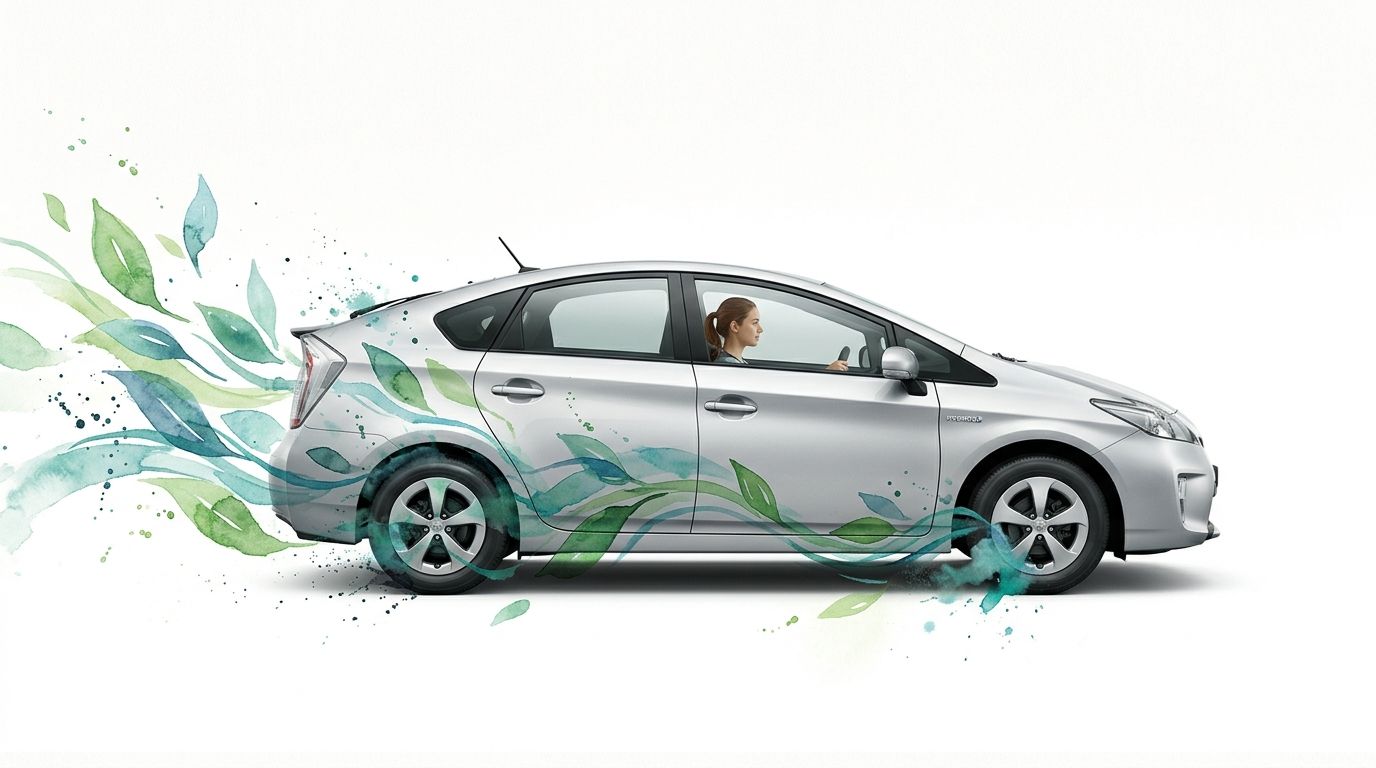
A Prius usually does not flatter aggressive driving. That is a good thing for a learner. Teens tend to get better results when the car encourages measured acceleration, early braking, and consistent lane control instead of quick, rushed corrections.
What beginners need to learn first
The first adjustment is braking feel. Regenerative braking can feel different from a conventional gas car, especially in low-speed traffic and parking lots. I would address that early with repeated stops in an empty lot, then short drives through neighborhoods before adding multilane roads.
The second adjustment is attention. The cabin is quiet, and that can make a new driver feel more comfortable than they should. In Georgia, where teens may deal with school pickup congestion, pedestrians, and emergency vehicles on busy surface streets, they still need active scanning habits and good mirror checks on every drive.
A Prius also makes sense for families watching long-term costs. Fuel savings matter if the car will be used for school, work, activities, and repeated practice sessions. The trade-off is that parents should pay close attention to battery condition, service history, and overall maintenance if they are shopping used.
A-1 Driving School can help a teen learn those Prius-specific habits the right way. Joshua's Law courses build the knowledge base, private lessons give students time to practice smooth braking and traffic awareness, and road test prep helps them apply those skills under pressure.
Easy to drive does not mean easy to master. The Prius rewards discipline, timing, and attention.
This short video gives a useful visual look at the Prius experience:
- Practice smooth stops first: Regenerative braking gets easier with repetition.
- Use gentle throttle inputs: That improves control and keeps the car predictable.
- Train for quiet-car awareness: Keep scanning, listening, and checking mirrors.
- Inspect any used Prius carefully: Battery health and maintenance history matter.
8. Kia Forte Korean Value Meets Modern Safety Features
Need a compact sedan that feels current without making a beginner work too hard? The Kia Forte deserves a look.
It gives new drivers a clean, predictable setup. The controls are easy to learn, visibility is generally friendly for a compact car, and the size works well for teens who still need repetition with parking, lane position, and everyday traffic decisions.
A practical choice for Georgia routines
The Forte fits the way many Georgia teens drive. Short trips to school. Afternoon traffic around shopping centers. Evening drives to practice, work, or tutoring. In that kind of routine, a car that is simple to place on the road and easy to park matters more than flashy specs.
The trade-off is obvious once a teen gets inside. A modern screen, phone pairing, and extra features can pull attention away from the road if the family has not set rules early. I tell parents to treat the tech like any other part of driver training. Learn it in the driveway first, then expect the teen to keep eyes up and hands settled once the car is moving.
As noted earlier in the article, newer compact cars often bring stronger standard safety tech than older budget options. That is one reason the Forte can make sense for families who want current features without stepping into a larger vehicle.
A-1 Driving School helps teens turn that advantage into actual driving skill. Joshua's Law classes cover the judgment piece. Private lessons help students handle common Georgia situations like busy left turns, multilane traffic, and school-zone pace changes. Road test prep helps them stay calm and consistent in a car that may feel easy at first, but still requires disciplined scanning and speed control.
- Set up the cabin before driving: Phone pairing, music, climate, and navigation should be handled while parked.
- Watch speed on open suburban roads: The Forte is easy to drive smoothly, which can make speed creep up without a beginner noticing.
- Practice parking until it is routine: Its compact size helps, but good habits still need repetition.
- Keep the focus on fundamentals: Mirror checks, lane position, and braking judgment matter more than any screen feature.
Top 8 Cars for Beginning Drivers, Safety, Reliability & Value
| Model | Learning curve (implementation complexity) | Resource requirements (cost & insurance) | Expected outcomes (safety & confidence) | Ideal use cases | Key advantages |
|---|---|---|---|---|---|
| Honda Civic | Low, forgiving handling and intuitive controls | Mid-range purchase; low maintenance; very good insurance | High reliability, steady confidence building, strong resale value | First-time drivers, daily commuting, long-term ownership | Exceptional reliability, Honda Sensing safety, abundant support & parts |
| Toyota Corolla | Very low, simple, predictable driving experience | Excellent value; minimal maintenance; excellent insurance | Consistent safety and low ownership cost; confidence through predictability | Budget-conscious beginners, commuting, fuel-efficient needs | Legendary reliability, strong safety ratings, outstanding fuel economy |
| Mazda3 | Moderate, engaging steering that teaches technique | Competitive pricing; reasonable insurance; moderate used availability | Improved vehicle control and skill development | Beginners who want a fun-to-drive car and technique growth | Responsive handling, premium interior feel, excellent visibility |
| Honda Fit | Very low, compact, nimble, excellent sightlines | Very affordable purchase and insurance; low running costs | Fast improvement in parking and close-quarters confidence | Urban learners, parking practice, versatile cargo needs | Exceptional visibility, versatile interior, easy maneuvering |
| Subaru Impreza | Low–moderate, AWD adds stability but different feel | Moderate price; slightly higher fuel costs; good insurance | Enhanced all-weather confidence and stable emergency handling | Regions with rain/snow, drivers needing extra traction | Standard AWD, EyeSight safety suite, strong stability in poor weather |
| Hyundai Elantra | Low, modern tech with gentle learning curve | Excellent value; industry-leading warranty; competitive insurance | Comfortable, tech-assisted safe driving with low ownership risk | Value-focused beginners wanting modern features | Long warranty, contemporary safety tech, attractive styling |
| Toyota Prius | Moderate, hybrid systems and regenerative braking to learn | Moderate purchase; major fuel savings; hybrid-specific maintenance; good insurance | High fuel efficiency, smoother driving habits, eco-friendly confidence | Eco-conscious beginners, long commutes, city driving | Exceptional fuel economy, hybrid tech, strong safety features |
| Kia Forte | Low, intuitive infotainment and controls | Excellent value; strong warranty; competitive insurance | Confident, feature-rich driving with low ownership costs | Beginners seeking modern features at an accessible price | High feature value, user-friendly tech, strong warranty coverage |
Final Thoughts
The best cars for beginning drivers aren't always the newest, the cheapest, or the most exciting. The right choice is the one that helps a new driver stay alert, build confidence gradually, and practice good habits every time they leave the driveway.
For many families, compact sedans make the most sense because they're easier to place on the road and less intimidating in traffic. That's why models like the Honda Civic, Toyota Corolla, Mazda3, Hyundai Elantra, and Kia Forte keep showing up on serious shortlists. If a teen needs maximum parking confidence and city-friendly maneuverability, the Honda Fit is hard to beat. If wet-weather stability matters more to your household, the Subaru Impreza deserves a look. If efficiency and smoothness are part of the goal, the Toyota Prius has real strengths.
The bigger point is that a safer car doesn't replace training. It supports training. In Georgia, that matters because Joshua's Law requires 16- and 17-year-olds to complete a DDS-approved 30-hour Driver's Education course before applying for a Class D license, and that course can be taken in person or online, according to this Georgia Joshua's Law guide. Joshua's Law also requires teens under 18 seeking a Class D license to complete 40 hours of supervised driving, including 6 hours of night driving, as outlined in this course overview.
That's where parents often need more than a car recommendation. They need a path. The strongest results usually come from combining a sensible vehicle with formal driver's education, focused driving lessons, and road test preparation in the same process. A teen can own a good car and still struggle with left turns, lane changes, reversing, or highway merges if nobody teaches those skills directly.
A-1 Driving School is built for that practical side of the journey. The school offers Joshua's Law courses, online course options in Georgia, private driving lessons, driving lesson packages, road test preparation, and Georgia road testing support. For families trying to make driver training more affordable, the Georgia Driver's Education Scholarship Grant Program is also worth exploring through the school. That matters because the goal isn't just passing a test. It's helping a new driver become calm, competent, and consistent in the car you chose.
If you're deciding between two vehicles, pick the one your teen can see out of clearly, park confidently, and operate without confusion. Then invest in training that makes the most of that choice. That's the combination that works.
A-1 Driving School has helped Georgia drivers since 1987, and it's one of the strongest options for families who want more than a basic class. If your teen needs a Joshua's Law course, an online driver's education option in Georgia, road test prep, or hands-on driving lessons and lesson packages, A-1 gives you a direct path from classroom learning to real-world driving. Families should also ask about the Georgia Driver's Education Scholarship Grant Program if cost is a concern.