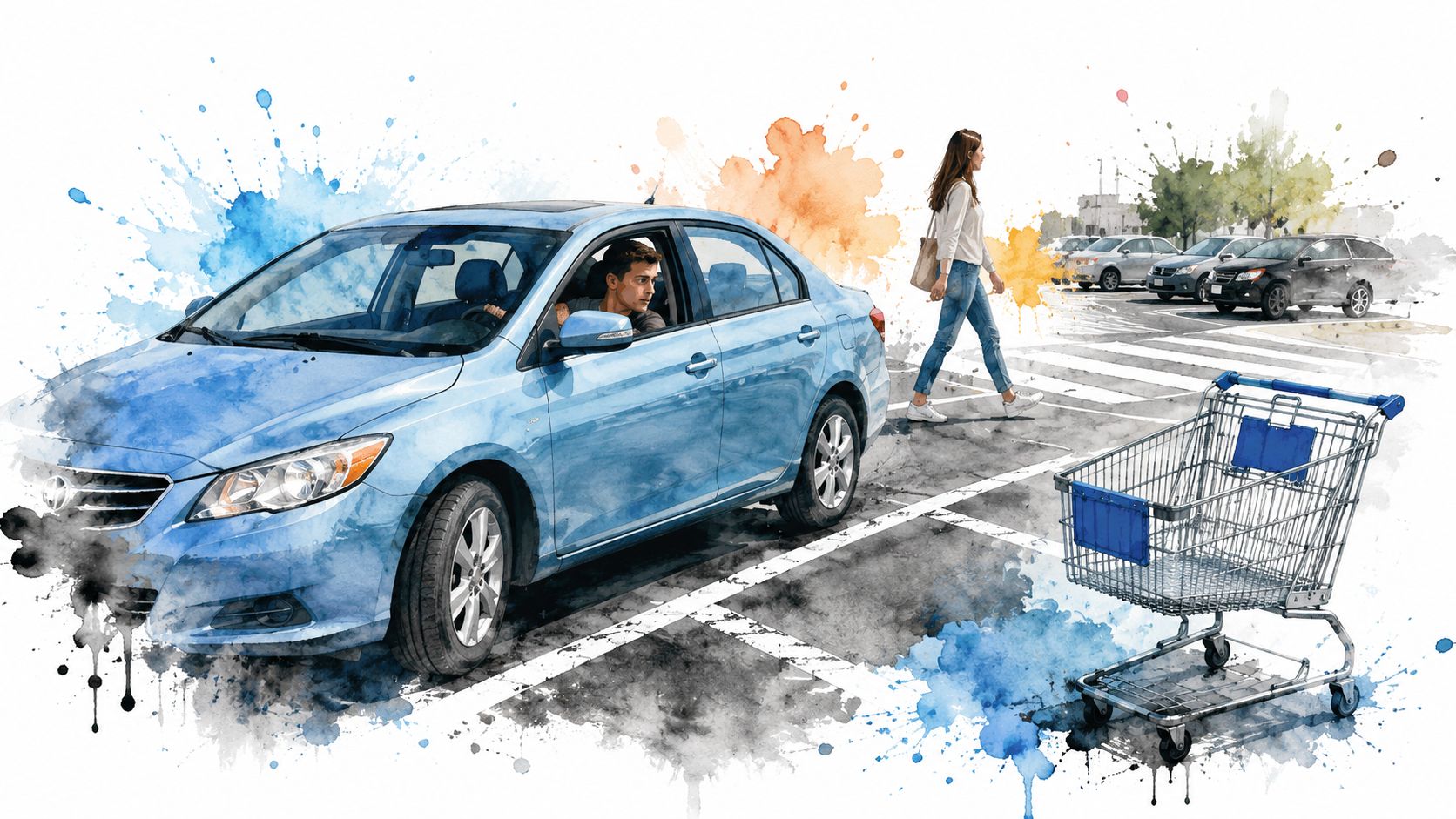
You turn into a crowded Georgia shopping-center parking lot and immediately face several moving pieces. A pedestrian appears between parked vehicles, a shopping cart rolls across an aisle, a child changes direction near a storefront, and the vehicle ahead begins backing out. At the same time, sunlight, shadows, and taller vehicles keep changing what you can see.
Safe parking lot driving isn't about finding a space as quickly as possible. It depends on controlling your speed, scanning deliberately, choosing a safer position, and leaving with a clear plan. National Safety Council guidance identifies parking facilities as a significant setting for crashes and reports that 9% of pedestrian deaths in parking lots involve backup incidents. The National Safety Council's parking lot safety guidance also emphasizes walking behind a vehicle before reversing, using mirrors and cameras as aids rather than replacements for shoulder checks, and slowing when visibility is blocked.
The eight parking lot safety tips below connect everyday decisions with the skill progression Georgia learners need. Classroom Driver's Education builds knowledge, supervised driving lessons develop judgment, and hands-on parking practice strengthens vehicle control. A-1 Driving School offers instructor-led and online Driver's Education, customized driving lessons and packages, road-test preparation and testing assistance, plus Georgia access options such as the Driver's Education Scholarship Grant Program. You can also compare these habits with Palo Alto parking lot safety tips for a broader view of parking-area awareness.
1. Always Back Into Parking Spaces to Improve Exit Visibility
Backing into a space can make the exit easier to see because your vehicle leaves the space moving forward. Instead of reversing blindly into an aisle later, you position the car so you can check pedestrians, cyclists, carts, and passing vehicles before driving out. That forward movement still requires care, but it usually gives you a clearer view than backing between parked cars.
A teen driver may feel more comfortable pulling nose-first into a space because it seems simpler. The difficult part often comes later, when the driver must reverse into an active aisle with limited sightlines. A vehicle can hide a child, a pedestrian, or another car until the last moment.
Build the maneuver slowly
Use mirrors and look over your shoulder before backing. Turn the wheel deliberately, keep the vehicle moving at a crawl, and continue checking instead of relying on a single glance. Reference points, such as the edge of the adjacent vehicle or the parking-space line, can help you judge distance while you develop spatial awareness.
Practice the technique with an instructor before using it in a crowded shopping center. A-1 Driving School's reverse parking techniques guide can reinforce the process, while customized driving lessons give a learner feedback on steering, positioning, and observation.
Practical rule: If you can't clearly see the area behind you, stop and improve your view before continuing.
Use these habits:
- Check before moving: Look in your mirrors and over your shoulder before backing.
- Back deliberately: Move slowly and keep scanning throughout the maneuver.
- Use reference points: Judge distance from lines, curbs, and neighboring vehicles.
- Practice strategically: Work with an instructor in a quiet area before attempting a busy lot.
- Know when to wait: Avoid practicing reverse parking during peak activity until the skill is consistent.
A-1 Driving School instructors can help new drivers connect parking technique with broader lot navigation, so the maneuver becomes controlled practice rather than a rushed guess.
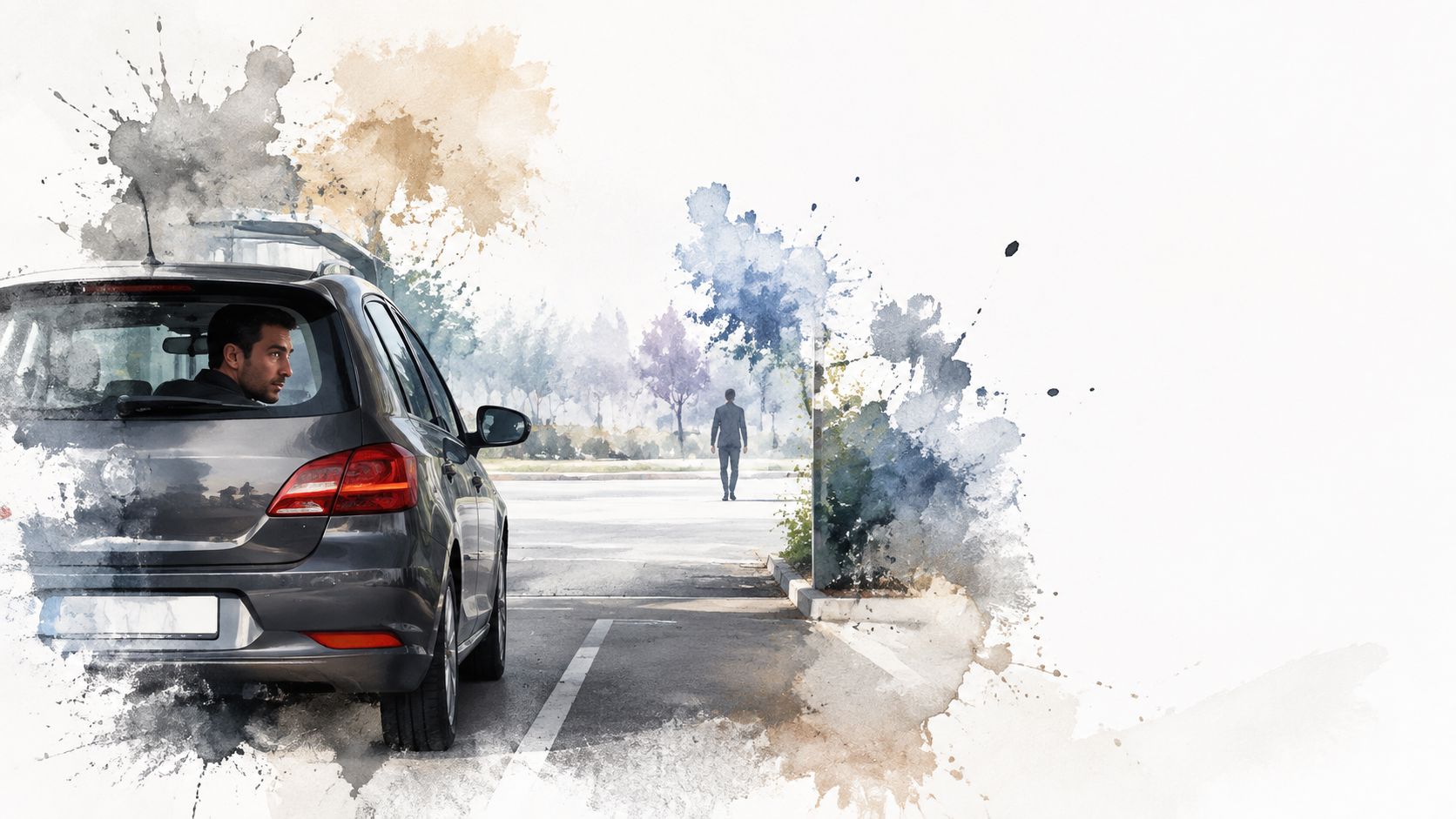
Once the vehicle is positioned, don't stop observing. The safest exit still depends on a complete scan of the aisle and nearby spaces.
2. Stay Alert and Keep Your Head on a Swivel in Parking Lots
A child steps between two parked cars just as a vehicle begins to roll through the aisle. The driver may have only a moment to notice the movement and stop. Parking lots create these conflicts because pedestrians, reversing vehicles, shopping carts, and open doors can appear from several directions at once.
Build a scanning habit before the car moves. Sweep the path ahead, check both sides, and watch nearby vehicles for brake lights, reversing lights, wheel movement, or open doors. Look beneath and between parked vehicles for feet, legs, bicycles, or shadows. A clear lane in front of you does not prove that the next space is clear.
Scan for movement, not permission
A pedestrian may not see your vehicle. A parked car may start reversing without a turn signal. Retail lots deserve close attention because people often cross aisles while carrying bags, pushing carts, or guiding children.
A study of 480 vehicle-pedestrian crashes across parking facilities in 45 New Jersey municipalities found that 73% occurred in retail land uses, including shopping centers, big-box retailers, and grocery stores. The Institute of Transportation Engineers research summary also reports that nearly 40% occurred between 12 pm and 4 pm, more than 70% happened in daylight, and over 50% took place in parking aisles. Bright conditions and a familiar store do not replace an active scan.
Use this sequence as you move:
- Clear distractions first: Put your phone away before shifting into gear.
- Scan hidden zones: Check between vehicles, under their sightlines, and near aisle openings.
- Control your speed: Keep enough time and space to stop immediately.
- Read vehicle behavior: Watch lights, wheels, doors, and driver movement.
- Give extra room: Leave a wider buffer around children, older adults, and people carrying bags.
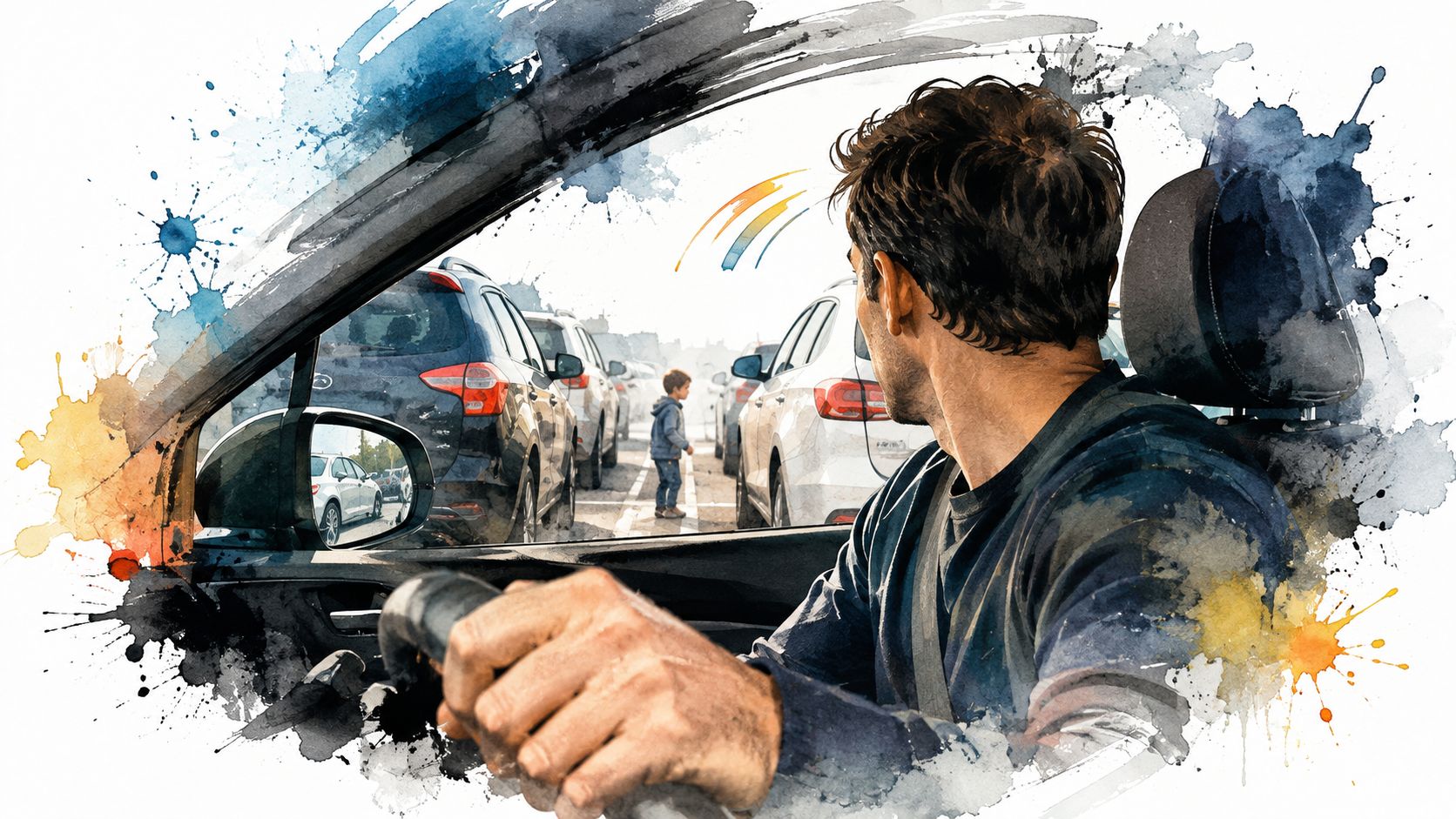
This same hazard-scanning skill supports Georgia driver training. Joshua's Law Driver's Education, supervised practice, and lessons from A-1 Driving School can help teens connect observation with vehicle control. Instructors can identify a missed hazard, explain the risk, and let the learner respond again. That practice can support later lesson packages, online course options, scholarship access, and road-test preparation without treating a parking lot as a low-risk shortcut.
3. Park in Well-Lit, Populated Areas Whenever Possible
You arrive at a nearly empty lot after sunset. Two spaces are open: one is closest to the entrance, while the other sits beneath working lights beside a visible storefront. The second choice usually gives you better sightlines, more nearby activity, and a clearer walk to the business.
Choose the space by what you can see and how easily you can leave. Park near a storefront, attendant station, or active pedestrian route when possible. Avoid positions surrounded by tall vehicles, landscaping, dark corners, or blocked aisle views. A well-maintained, marked space also reduces confusion for drivers and pedestrians.
Lighting matters because it helps reveal movement around the vehicle. Parking-lot lighting advice from Riverside Sealing & Striping explains how placement and coverage affect visibility across a facility. Use the same principle while walking back to your car. Check the route before you commit to the space.
Before parking, ask:
- Can I see approaching pedestrians and nearby vehicles?
- Will larger vehicles block my view when I exit?
- Are the lights working, and is the route to the entrance clear?
- Is the car visible from a business or attendant station?
- Would another space reduce blind areas or isolation?
At night, driving safely in low-light conditions requires attention to glare, reduced visibility, and quieter surroundings. If the area feels isolated or difficult to leave, choose a more visible position rather than accepting the first open space.
A Georgia teen can practice this decision during supervised driving by comparing two available spaces and explaining the hazards each creates. The exercise builds hazard scanning before vehicle control becomes automatic. It also gives parents and instructors a practical way to connect parking-lot judgment with driving lessons packages, Joshua's Law education, online course options, scholarship access, and road-test preparation through A-1 Driving School.
4. Never Leave Your Engine Running or Keys in the Ignition
A quick stop can create a serious gap in vehicle control. Leaving a vehicle running near a curb in hot weather risks unintended rollaway, especially on a sloped surface, and exposes people nearby to exhaust. An unattended running car also makes the car an easy target for theft. Never leave a child alone in a running vehicle.
Use the same exit routine whether you are returning a cart, picking up an item, or stepping inside for only a moment. Convenience is not a secure parking process. For a new driver, repeating the routine during supervised practice helps turn it into an automatic part of hazard scanning and vehicle control.
Build a repeatable exit sequence
Park completely, apply the parking brake, select the correct gear, turn off the engine, remove the key, and lock the doors. An unattended running vehicle may roll if the parking brake is not fully engaged, particularly on an incline. The final check catches rushed mistakes before the driver walks away.
A parent can model the sequence and use a brief verbal prompt until the teen completes it independently. This practice fits naturally into Georgia driving lessons packages and road-test preparation through A-1 Driving School, where learners need consistent vehicle-control habits under supervision.
- Stop completely: Wait until the vehicle is fully settled before opening the door.
- Secure the vehicle: Apply the parking brake and confirm the transmission position.
- Take the keys: Keep them with you rather than leaving them in the ignition.
- Lock immediately: Check the doors before walking away.
- Protect children: Never leave children unattended in a running vehicle.
Joshua's Law education covers responsibility and vehicle operation. Online course options and scholarship access can support the classroom portion, while supervised parking-lot practice gives Georgia learners repeated chances to perform the sequence correctly. The goal is simple: secure the car every time, even when a quick stop creates pressure to hurry.
5. Maintain Safe Speed in Parking Lots and Always Use the Parking Brake
A child steps between parked cars just as another vehicle begins backing out. The driver has only a moment to respond. A controlled pace creates that time, especially when parked vehicles, storefronts, aisle crossings, and turning cars interrupt the view.
The plan for this guidance uses a 5 to 10 mph maximum speed as a practical training target. Treat it as guidance, not a universal legal limit. Follow posted signs and local rules, then slow further when visibility is limited or pedestrians are nearby.
Let visibility set the pace
Use the accelerator lightly and keep scanning before each turn, crossing, and parking-space exit. Smooth control works like leaving room between steps: it gives you more options if a cart rolls into the aisle or a vehicle appears from behind a row.
A rushed driver often accelerates, coasts, then brakes sharply. Supervised practice can replace that pattern with steady observation and gentle braking. Georgia learners can build this progression through driving lessons packages, online course options, and hands-on practice connected with Joshua's Law education. Scholarship access may help families arrange the classroom portion, while A-1 Driving School can support vehicle-control practice and road-test preparation.
- Ease off early: Reduce speed before blind corners and aisle crossings.
- Scan continuously: Check for pedestrians, carts, reversing vehicles, and changing gaps.
- Brake smoothly: Use gradual pedal pressure so nearby people are less likely to be startled.
- Set the parking brake: Engage it fully after the vehicle stops, especially on a slope or slick surface.
- Confirm control: Check that the vehicle is secure before opening the door.
The parking brake adds security after stopping, but it does not replace the correct transmission or gear selection. Practicing both actions helps learners develop the consistent vehicle control needed for Georgia's road test. A-1 Driving School driving lessons can include speed management, braking, turns, and parking-brake use in supervised settings.
6. Use Your Horn and Headlights to Alert Others in Parking Lots
A vehicle approaches a blind corner between two rows of cars. You cannot see a pedestrian, cyclist, or driver on the other side, so slow down, prepare to stop, and use a brief horn tap when appropriate. The signal alerts others to your presence, while your controlled speed gives you time to respond.
Use the horn as a calm warning. Repeated or aggressive honking can startle people and cause unpredictable movement. A short signal communicates your presence, but it never confirms that the other person heard or understood you.
Headlights also improve visibility in dim areas. They help identify your vehicle while you maneuver and make its movement easier to notice. If you flash them near pedestrians, continue watching the person's path and stop whenever the situation remains unclear.
Make every signal part of a scan
Horn and headlight use should fit into the same hazard-scanning progression Georgia learners practice for driving. First, reduce speed. Then check the aisle, sightlines, and nearby people before deciding whether a signal will help. This sequence builds vehicle control for supervised practice, driving lessons packages, Joshua's Law education, online course options, and road-test preparation through A-1 Driving School.
- Tap briefly: Use the horn near blind corners or hidden approaches.
- Use headlights carefully: Make the vehicle easier to notice in low visibility.
- Watch reactions: People may not hear or understand the signal.
- Stay ready to stop: Keep control instead of proceeding because you signaled.
- Request feedback: Ask an instructor to review your timing during lessons.
A signal supports observation; it does not replace it. Scholarship access may help families arrange education and supervised practice, while an instructor can explain when a warning improves communication and when stopping is the safer decision. Learning that distinction keeps the horn and headlights useful without turning them into substitutes for attention.
7. Walk Around Your Vehicle Before Backing to Check for Obstacles
A shopping cart can roll behind a vehicle while you load bags. A child can move near the bumper while an adult handles a stroller. Cameras and mirrors may not show these hazards, so a brief walk-around gives you information before the vehicle moves.
Parents should make this pause part of loading and unloading, especially when children are present. Ask the learner to walk around the rear and sides, describe what they see, and then complete the driver-seat scan. The routine works like a preflight check: each step confirms that the intended path remains clear.
Use this sequence:
- Walk around first: Check behind and beside the vehicle before starting the engine or selecting reverse.
- Inspect the ground: Look for children, bicycles, carts, loose objects, and hazards close to the tires.
- Check underneath when possible: A low object may be hidden by the vehicle's body.
- Scan again inside: Use the mirrors, camera, and shoulder check before backing.
- Pause in busy areas: Repeat the check even when the stop is brief.
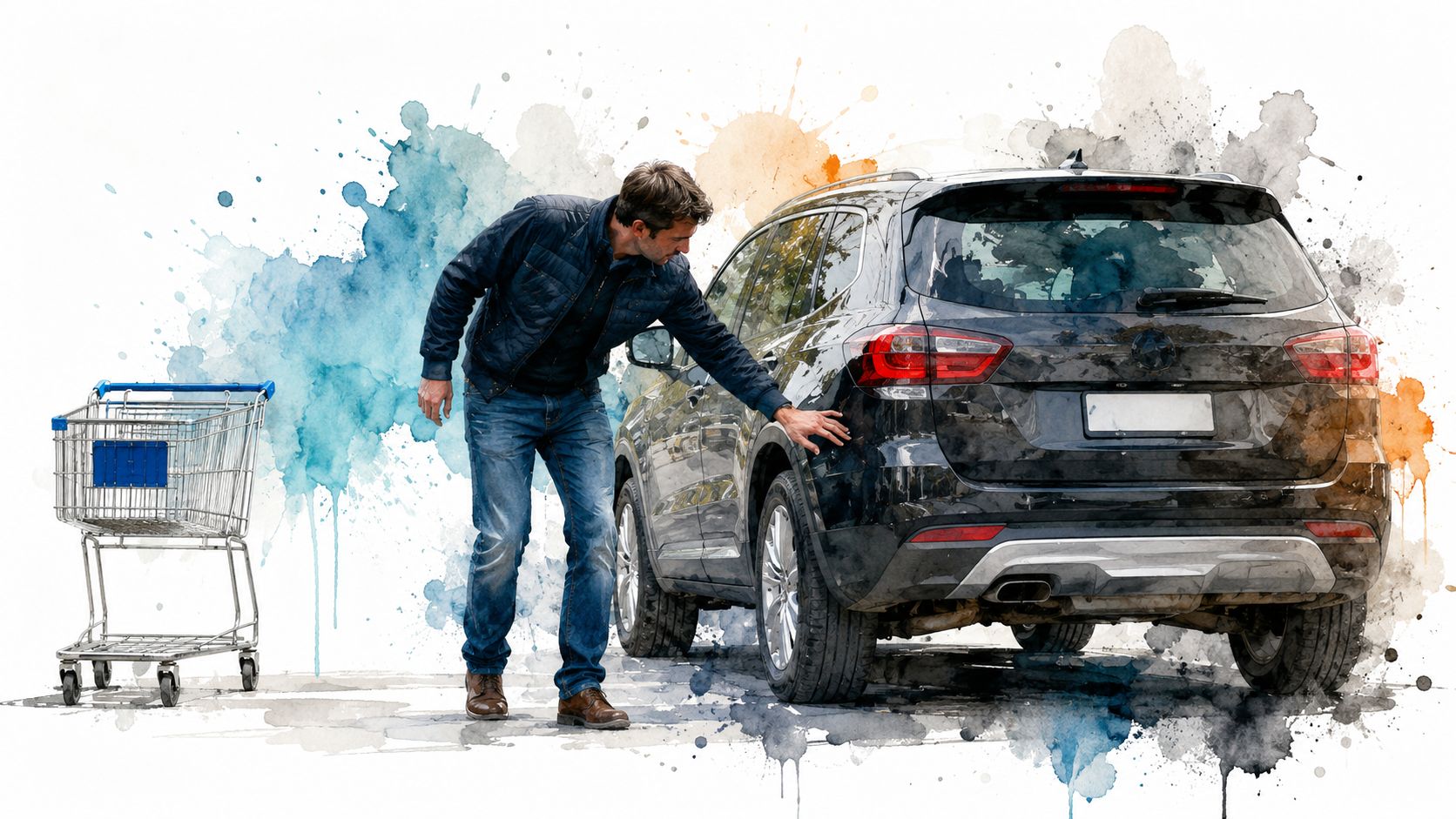
The outside check does not replace observation from the driver's seat. People and vehicles can enter the area after you walk around, so keep watching until the vehicle is fully clear.
For Georgia learners, this habit builds hazard scanning and vehicle control together. During supervised practice or driving lessons packages, an instructor can watch whether the learner checks consistently, then connect the routine to Joshua's Law education, online course options, scholarship access, and road-test preparation through A-1 Driving School. The goal is a repeatable process, not a rushed glance.
A learner who can explain each check is more prepared to use it independently. Before backing, remember: walk around, inspect the path, scan again, and move only when the view stays clear.
8. Avoid Using Your Phone and Stay Focused While Driving in Parking Lots
A notification appears as you turn between two rows. At the same moment, a child steps around a parked SUV and a cart rolls near your bumper. Parking lots change quickly, so a brief glance at a phone can hide more than one developing hazard.
Before entering, set the GPS, choose the destination area, and place the phone in a glove compartment or bag. If a message arrives, wait until the vehicle is legally and safely parked. Eating, adjusting navigation, or reaching for a device can also divide attention and reduce vehicle control.
Make focused driving a visible habit
Teen passengers copy what adults demonstrate. A parent who puts the phone away shows that pedestrians, carts, and moving vehicles require attention in every driving environment, not only on the roadway. Keep both hands available and continue scanning while moving slowly through the lot.
Eye contact may help when a pedestrian is near your path, but it does not confirm that the person sees your vehicle or will remain still. Leave room to stop.
Use this quick routine before the vehicle moves:
- Store the phone: Put it away before shifting into gear.
- Set navigation early: Program the GPS before entering the parking area.
- Wait for messages: Check notifications only after parking safely.
- Keep control: Use both hands when steering through busy rows.
- Model focus: Show teen passengers what attentive driving looks like.
A-1 Driving School's distraction-prevention guidance supports the same focus taught in Driver's Education and driving lessons. During supervised practice, instructors can observe scanning, speed management, and steering control without divided attention. That progression helps Georgia learners prepare for driving lessons packages, Joshua's Law education, online course options, scholarship access, and road-test preparation through A-1 Driving School. Focused parking-lot decisions become practice for the hazard scanning and vehicle control required on the road.
8-Point Parking Lot Safety Comparison
| Practice | Implementation complexity | Resource/time requirements | Expected outcomes | Ideal use cases | Key advantages |
|---|---|---|---|---|---|
| Always Back Into Parking Spaces to Improve Exit Visibility | Moderate, requires practiced maneuvering | Extra time per entry, practice sessions with instructor | Clear forward sightlines when exiting, fewer backing collisions | Busy parking lots, crowded areas, drivers with limited visibility | Improved exit visibility, reduced pedestrian/cyclist collision risk |
| Stay Alert and Keep Your Head on a Swivel in Parking Lots | Low technically, high cognitive demand | Ongoing attention, training to build scanning habit | Earlier hazard detection, faster reaction to unexpected movement | Crowded lots, family shopping trips, teen drivers | Broad situational awareness, proactive hazard avoidance |
| Park in Well-Lit, Populated Areas Whenever Possible | Low, decision-based | May require walking farther or extra time to find spot | Reduced theft/vandalism risk, improved personal safety | Night parking, isolated locations, solo travelers | Deterrence of crime, increased witness and camera presence |
| Never Leave Your Engine Running or Keys in the Ignition | Very low, habit formation | Minimal time, requires discipline to follow checklist | Lower theft risk, fuel saved, prevents unintended rollaway | Short stops, errands, when leaving vehicle unattended | Strong theft prevention, reinforces responsible vehicle security |
| Maintain Safe Speed in Parking Lots and Always Use Parking Brake | Low, behavioral with simple technique | Time to slow down, habit to engage parking brake each stop | Reduced collision severity, prevention of rolling on inclines | Sloped lots, busy pedestrian areas, loading/unloading zones | Better control, reduced accident severity, vehicle stability |
| Use Your Horn and Headlights to Alert Others in Parking Lots | Low, requires good judgment | Immediate, no equipment beyond vehicle signals | Improved communication with pedestrians/drivers, prevented surprises | Low visibility situations, blind corners, reversing near pedestrians | Low-cost, immediate alerting to avert collisions |
| Walk Around Your Vehicle Before Backing to Check for Obstacles | Low, adds a short pre-drive task | ~20–30 seconds per exit, consistent habit building | Direct detection of children, carts, bicycles; fewer backing accidents | Families with small children, vehicles with large blind spots | Highest prevention of reversing incidents via direct visual check |
| Avoid Using Your Phone and Stay Focused While Driving in Parking Lots | Moderate, requires habit change and enforcement | Put phone away, pre-program GPS, ongoing self-discipline | Reduced distraction-related incidents, improved reaction time | All drivers, especially teens and multitaskers | Significantly lowers collision risk by restoring full attention |
Turn Parking-Lot Practice Into Road-Test Confidence
Parking-lot skills become valuable when you practice them as one connected routine. Choose a quiet lot with clear markings and begin before traffic increases. Walk around the vehicle, check the ground and sides, enter with the phone put away, and set the seat, mirrors, and controls before moving.
Start with controlled forward movement. Follow the lane markings, reduce speed before crossings, and scan between parked vehicles. Practice stopping smoothly, allowing pedestrians to pass, and reading the brake lights and reversing lights of nearby cars. Then rehearse parking, applying the parking brake, securing the vehicle, and preparing for the exit.
Backing practice should include more than steering into a space. Check around the vehicle first, use mirrors and shoulder checks, move slowly, and stop whenever the view becomes uncertain. Practice both backing into a space and leaving a space with a forward path when the setting permits. An instructor can correct steering timing, vehicle position, and observation habits before they become difficult to change.
Georgia learners also need a clear path through education and supervised driving. Joshua's Law is aimed at 16-year-olds applying for a Class D license, and Georgia highway-safety guidance states that, as of July 1, 2021, 17-year-olds must also complete Joshua's Law driver training before receiving a Class D license. The guidance requires 40 hours of supervised driving, including 6 hours at night, with parent or guardian sworn verification. Georgia highway-safety guidance on Joshua's Law explains those requirements.
Georgia law provides four approved ways to satisfy the driver-education requirement. These include classroom or approved online instruction combined with behind-the-wheel training and supervised driving, or classroom or online instruction combined with parent-taught behind-the-wheel training. The Georgia Department of Driver Services requirements confirms that approved classes may be offered online, making the online option a formal pathway rather than an informal substitute.
Eligible teens may also review the Georgia Driver's Education Scholarship Grant Program. The state rule limits eligibility to Georgia residents who are actively enrolled in school, are between ages 15 and 17, and already hold a valid Georgia instructional driving permit or driver's license. Georgia's scholarship rule provides the specific age, residency, enrollment, and licensing conditions.
Road-test preparation should include parking-lot control, observation, turns, stops, and the ability to follow directions without rushing. The Georgia Department of Driver Services states that a road-test appointment requires the relevant Georgia licensing documents, and for CDL skills testing, the learner's permit must be held for at least 14 days before the skills test. Georgia road-test information provides the appointment and eligibility details, so confirm the requirements that apply to your test.
A-1 Driving School can help connect the pieces through customized driving lessons and driving lessons packages, hands-on parking practice, Joshua's Law Driver's Education, online course options, road-test preparation, and testing assistance. Families can use instructor feedback to target skills that remain inconsistent, while adult drivers can choose focused lessons for parking, vehicle control, or test preparation.
Visit the school's website, review the education and lesson options that fit your situation, and build a practice schedule that turns these parking lot safety tips into repeatable habits.
A-1 Driving School offers instructor-led and online Driver's Education, Joshua's Law course options, customized driving lessons and packages, hands-on parking practice, and Georgia road-test preparation and testing assistance. Visit A-1 Driving School to explore enrollment and choose the course or lesson option that matches your next driving goal.